LEARN
pliability

Pushing hard in the gym often feels fine the next morning, only for stiffness and soreness to hit full force on day two. That delayed response is Delayed-Onset Muscle Soreness, commonly known as DOMS, and understanding how long it lasts and what drives recovery helps athletes and casual gym-goers train smarter. The soreness timeline varies based on workout intensity, fitness level, and how well the body is supported between sessions.
Most cases of DOMS resolve within 24 to 72 hours, but without the right recovery habits, that window can stretch longer and chip away at training consistency. Targeted mobility work, adequate rest, and proper nutrition all play a role in how quickly muscles repair and return to full function. For anyone looking to build a structured recovery routine, Pliability offers a mobility app designed to reduce muscle tightness and improve range of motion between sessions.
Table of Contents
How Long Does DOMS Last?
Why Your Muscle Soreness Might Last Longer Than Expected
Should You Exercise With DOMS?
How to Beat and Recover From DOMS Quicker
Don't Just Wait for DOMS to Go Away—Build a Better Recovery Routine
Summary
Delayed-onset muscle soreness follows a consistent biological timeline rooted in the body's immune and repair responses. DOMS typically begins 6 to 12 hours after exercise, peaks between 24 and 72 hours, and resolves within 3 to 5 days in most cases without any treatment, according to the Cleveland Clinic. The delay happens because soreness comes not from the muscle tears themselves but from the inflammatory cleanup process that follows, which takes time to fully develop.
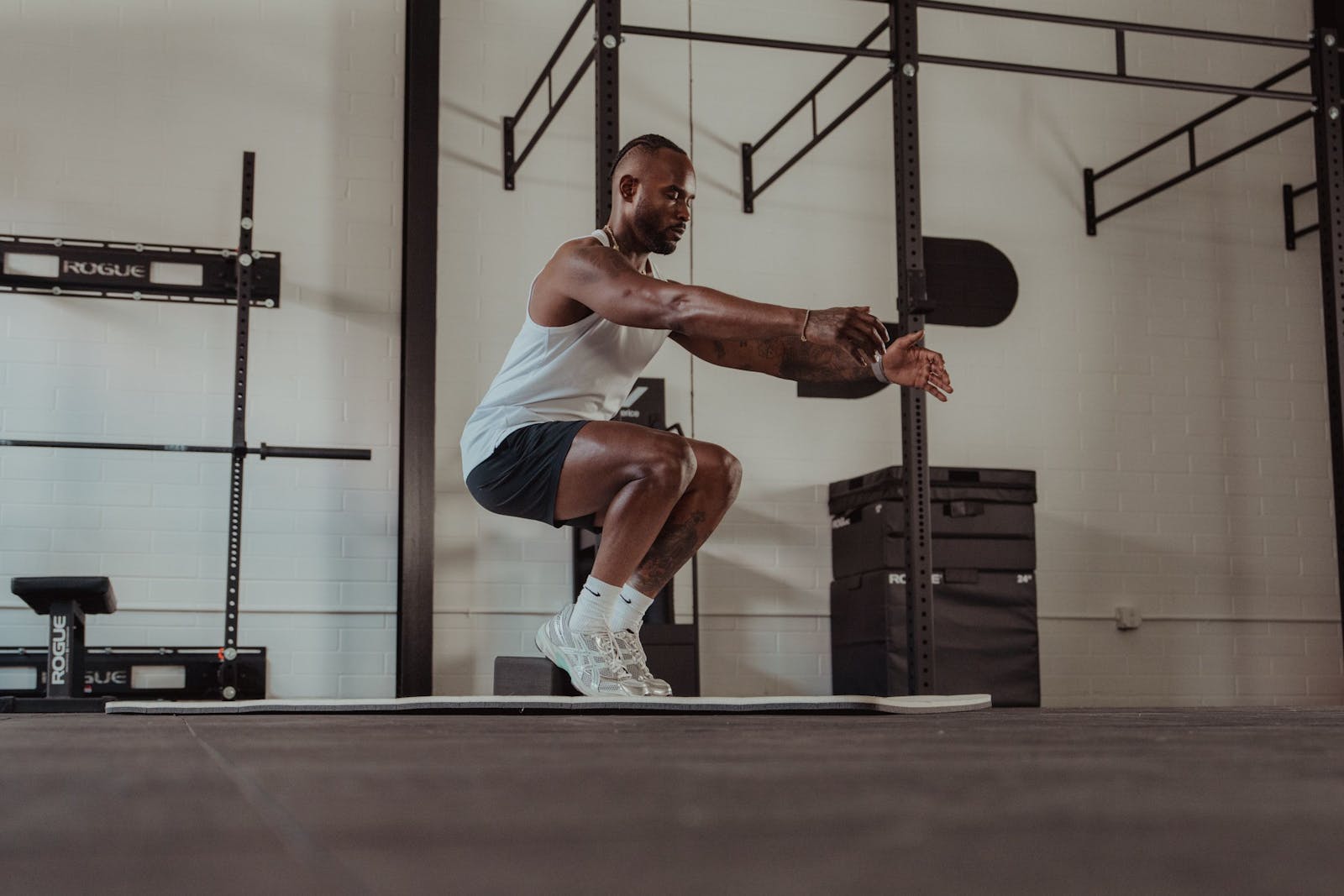
Eccentric contractions are the primary driver of DOMS severity. Movements that lengthen a muscle under load, such as the descent phase of a squat or walking downhill, concentrate force across a smaller cross-section of tissue and cause greater structural disruption. Research published in PubMed found that eccentric exercise can cause strength loss of up to 50% that lasts up to 7 days, underscoring how significant the initial tissue damage can be.
Soreness duration is not fixed and varies based on several compounding factors. A 2023 study in the International Journal of Sports Physical Therapy identified training load variables, including time above 80% of maximum heart rate and total distance covered, as the strongest predictors of DOMS severity. Age, sleep quality, protein intake, and movement novelty all shape how long the repair cycle takes, meaning two people doing the same workout can have recovery timelines that differ by several days.
Soreness is not a reliable indicator of a productive workout. DOMS measures mechanical stress and novelty, not adaptation or growth. Research by Cheung, Hume, and Maxwell in Sports Medicine confirms that significant strength loss can follow eccentric exercise-induced soreness, meaning the discomfort reflects tissue disruption rather than progress, and that chasing soreness as a goal can interrupt training quality rather than improve it.
Massage is one of the most evidence-supported recovery tools available. A 2018 systematic review and meta-analysis found that massage reduced DOMS by an effect size of 0.92 compared with passive recovery, representing a large and meaningful difference. Foam rolling after exercise can also reduce soreness by up to 30%, according to NASM, but that benefit only materializes with consistent application rather than occasional use.
Cold-water immersion reduces acute soreness by limiting inflammation in the hours immediately after training, but it comes with a meaningful tradeoff. Recent research suggests that regular cold exposure may blunt the muscular adaptations that strength and hypertrophy training are designed to produce, making it a tool best used selectively during high-frequency training blocks rather than as a default recovery method after every session.
Pliability's mobility app addresses the consistency gap in recovery by providing expert-guided routines that adapt to a user's training schedule, making structured active recovery a daily practice rather than something improvised or skipped when time is short.
How Long Does DOMS Last?

DOMS usually starts within 6 to 12 hours after exercise, gets significantly worse between 24 and 72 hours, and slowly goes away. According to the Cleveland Clinic, most cases get better within 3 to 5 days without treatment. This timeline matches how your body naturally fixes itself.
"Most cases of DOMS resolve within 3 to 5 days without treatment, peaking in intensity between 24 and 72 hours post-exercise." — Cleveland Clinic
DOMS Phase | Timeframe | What Happens |
|---|---|---|
Onset | 6–12 hours post-exercise | Initial soreness begins |
Peak Intensity | 24–72 hours post-exercise | Most discomfort felt |
Recovery | 3–5 days post-exercise | Soreness gradually fades |
🔑 Takeaway: DOMS is temporary — even at its worst, the 72-hour peak is a normal part of your body's natural repair process, not a sign of serious injury.
⚠️ Warning: If soreness lasts beyond 5 days or is severely limiting your movement, it may signal something more than standard DOMS — consult a healthcare professional.
Why do your muscles hurt in the first place?
Eccentric muscle contractions—the lowering phase of a squat, descent in a push-up, slowing down in a sprint—create greater mechanical stress than concentric movements because fewer motor units are recruited to handle the same load. This concentrated tension tears microscopic structures within muscle fibers, triggering an inflammatory response that floods the area with neutrophils and macrophages to clear debris. These immune cells produce reactive oxygen species that damage healthy surrounding tissue, which is why soreness often feels worse on day two than immediately after training. This secondary injury process, not the initial muscle tear itself, drives the delayed timeline and escalating discomfort.
Does intensity actually predict how sore you'll get?
Yes, but the relationship is more complicated than "harder equals worse." A 2023 study in the International Journal of Sports Physical Therapy found that training load variables—time spent above 80% of maximum heart rate and number of decelerations—were significant predictors of DOMS severity. A 2024 study showed that athletes who trained to exhaustion reported greater pain sensitivity in the 48 hours following exercise than those who stopped before fatigue. DOMS duration and intensity are proportional to how hard you pushed and how prepared your body was for that stimulus.
Why does the soreness come later rather than immediately?
When you exercise with eccentric contractions—lengthening muscles under load like lowering a barbell or descending a squat—you create tiny tears in muscle fibers. These movements use fewer motor units than concentric ones, concentrating force across a smaller tissue cross-section and causing more structural disruption. Research published in PubMed found that eccentric exercise can cause strength loss of up to 50% lasting up to 7 days, demonstrating the severity of initial damage.
What triggers the delayed pain response in your muscles?
Soreness doesn't come from the tears themselves, but from the immune response that follows. Your body sends neutrophils and pro-inflammatory macrophages to clear cellular debris through phagocytosis, creating reactive oxygen species that damage surrounding tissue. Protein synthesis speeds up, new muscle fibers form, and inflammation peaks. This process takes time, which is why you feel fine leaving the gym but struggle to sit down two days later.
What determines how long your DOMS lasts?
A 2023 study in the International Journal of Sports Physical Therapy found that training load variables—specifically the number of decelerations, time spent above 80% of maximum heart rate, and total distance covered—were the strongest predictors of DOMS severity. A separate 2024 study reinforced this, showing that people who trained to exhaustion reported significantly greater pain sensitivity in the 48 hours after training compared to those who stopped before fatigue set in.
Does your conditioning level change how sore you get?
Conditioning matters. Someone accustomed to a specific movement pattern experiences less disruption than someone encountering that stimulus for the first time. DOMS hits harder only when you introduce a new exercise, increase the weight meaningfully, or train a muscle through a greater range of motion than usual. DOMS signals progress: evidence that your body encountered something it was not yet built for and is now adapting to it.
Is passive rest actually helping your recovery?
Most people handle post-workout soreness by waiting it out, but rest alone does not speed up repair or reduce swelling in surrounding tissue. Structured mobility work, like the guided routines in our mobility app, keeps blood moving through affected tissue, supports range of motion during recovery, and provides a more active pathway through the repair cycle.
But here is what most people never ask: why does the same workout leave one person barely sore and another barely able to walk for five days?
Related Reading
Why Your Muscle Soreness Might Last Longer Than Expected

Soreness is not a report card. The belief that tough workouts equal productive ones leads people to chase discomfort as proof of effort. DOMS measures mechanical stress and novelty, not adaptation or growth.
"DOMS measures mechanical stress and novelty — not adaptation or growth. Chasing soreness is not the same as chasing progress." — Pliability
⚠️ Warning: If you're using soreness level as your primary measure of a successful workout, you're tracking the wrong metric entirely.
💡 Tip: Shift your focus from how sore you feel to performance indicators like strength gains, endurance, and consistency — these are the real signals of progress and adaptation.
What DOMS Measures | What DOMS Does NOT Measure |
|---|---|
Mechanical stress | Muscle adaptation |
Novelty of movement | Workout productivity |
Tissue disruption | Strength or growth gains |
DOMS does not equal muscle growth
Muscle growth requires progressive overload, adequate protein, and adequate recovery—none of which soreness confirms. You can be intensely sore after a workout that produces minimal muscle-building stimulus, and you can make significant strength gains from sessions that leave you feeling fine the next morning. According to research published by Cheung, Hume, and Maxwell in Sports Medicine, strength loss of up to 50% can occur following eccentric exercise-induced DOMS, meaning soreness signals tissue disruption rather than productive training. This temporary functional loss interrupts progress rather than accelerating it.
Why does soreness stick around longer for some people?
Your training history matters significantly. Someone who bench presses 60kg regularly will experience less soreness lifting 70kg than someone whose highest weight has been 50kg, because the neuromuscular system adapts to movement patterns and weight ranges. The NHS notes that soreness can affect people for two to five days, though researcher Karoline Cheung's work suggests effects can extend beyond 96 hours in some cases, particularly with novel exercises. Recovery quality amplifies this effect: two athletes performing the same workout can have markedly different results depending on sleep, nutrition, and whether they prioritize recovery as part of training or treat it as secondary.
What factors combine to extend recovery time?
The failure point is usually a mix of factors that most people never connect to recovery time. New exercises introduce movement patterns your neuromuscular system hasn't coordinated before, increasing eccentric load on unfamiliar tissue. High training volume floods the repair cycle with more cellular debris than the immune response can efficiently clear. Poor sleep cuts growth hormone output, a primary driver of muscle protein synthesis during recovery. Low protein intake leaves the body without sufficient raw material to rebuild, further stretching the repair window.
Age plays a measurable role too. Older adults experience slower satellite cell activation, the process by which muscle stem cells initiate repair, which extends the soreness timeline even when training load stays constant. Recovery capacity is shaped by sleep quality, nutrition, stress load, and movement habits.
Does staying still actually make soreness last longer?
Most people respond to prolonged soreness by staying completely still, which may seem logical but often works against the repair process. Passive rest reduces blood flow to already-damaged tissue. Structured mobility work keeps blood moving through sore areas, supports range of motion, and provides a more active recovery pathway. Routines in our mobility app are built specifically for this window, offering guided movement that meets you where you are rather than demanding performance you lack.
Cheung, Hume, and Maxwell's research confirms that DOMS typically resolves within 5 to 7 days post-exercise without treatment, though this timeline is not fixed. Sleep, protein timing, hydration, and active recovery all compress that window. Long-lasting soreness often reflects recovery demands rather than workout effectiveness.
What you do in the 24 hours after soreness peaks might matter more than anything you did in the gym.
Should You Exercise With DOMS?
Mild to moderate DOMS is not a stop sign: it signals that repair is underway. Carefully chosen movement supports this process rather than interrupting it.
"Light exercise at 50% of normal intensity may help reduce DOMS discomfort temporarily." — Cleveland Clinic
🎯 Key Point: Feeling sore doesn't mean you're broken: it means your muscles are actively rebuilding. Movement is medicine, provided the intensity is right.
Low-intensity movement increases blood flow to affected tissue, delivering oxygen and nutrients while clearing metabolic waste. This reduces stiffness and discomfort without speeding up structural repair itself. According to the Cleveland Clinic, light exercise at 50% of normal intensity may help reduce DOMS discomfort temporarily. The key is a deliberate reduction in load—not repeating yesterday's session, but keeping the body moving without adding stress to rebuilding tissue.
Approach | Intensity | Effect on DOMS |
|---|---|---|
Full session repeat | 100% of normal | ⚠️ Adds stress to rebuilding tissue |
Light active recovery | 50% of normal | ✅ Reduces discomfort, supports blood flow |
Complete rest | 0% | Neutral — no added benefit over light movement |
⚠️ Warning: Pushing through DOMS at full intensity doesn't accelerate recovery — it risks compounding damage to tissue that is still under repair.
🔑 Takeaway: The goal during DOMS isn't to train harder — it's to move smarter. Dropping to 50% intensity keeps circulation active and discomfort manageable without derailing the repair process.
When movement helps and when it doesn't
The "no pain, no gain" mentality creates problems here. Training through significant soreness produces lower-quality reps, reduced range of motion, and compensatory mechanics that shift load onto joints and secondary muscles. The American College of Sports Medicine distinguishes between productive training stress and accumulated fatigue: they are not the same thing. Mixing them together extends recovery rather than shortening it.
What happens when you push through soreness or do nothing at all?
Most people handle soreness by either pushing through at full intensity or doing nothing at all. Full-intensity training on already damaged tissue imposes a mechanical load before repair is complete, deepening fatigue and delaying the next quality session. Pure rest misses the circulation benefit that light movement provides. A mobility app like Pliability offers structured, low-intensity recovery routines that guide purposeful movement, making active recovery something you can execute consistently.
A simple decision framework
The situation you're in determines what to do next. Use this pathway:
What does your soreness level tell you to do?
Mild soreness with full range of motion indicates normal muscle healing. Light cardio, mobility work, or reduced-intensity yoga-style movement reduces stiffness, maintains movement quality, and won't delay your next training session.
Severe soreness with reduced range of motion or noticeable weakness indicates tissue is still actively healing. Avoid heavy resistance on the same muscle group; train a different area or use gentle movement instead. This protects the healing process and preserves effectiveness for your next high-intensity session. Sharp pain, swelling, or worsening symptoms are not DOMS—stop and get it checked before training again.
Knowing what to do is only half the equation. The harder part is knowing how to do it in a way that speeds things up.
Related Reading
How To Recover Muscles Faster
How To Relieve Sore Muscles
How To Activate the Parasympathetic Nervous System Quickly
Active Recovery
How To Get Rid Of Doms
Contrast Therapy Timing
How Many Rest Days Should I Have
How to Beat and Recover From DOMS Quicker

Sleep is the foundation of recovery. During deep non-REM sleep, the body releases anabolic hormones that help muscles repair and give energy back to the body. Without this foundation, every other recovery strategy is built on sand. Dr. Luke Gupta of the Better Sleep Clinic describes it as "the perfect environment to support growth and repair." Make sleep a priority before adding other recovery tools — everything else builds on a base that either exists or doesn't.
"Sleep is the perfect environment to support growth and repair." — Dr. Luke Gupta, Better Sleep Clinic
💡 Tip: Prioritize sleep above all other recovery tools. No amount of ice baths, stretching, or supplements can compensate for consistently poor sleep quality.
⚠️ Warning: Skipping or cutting short your sleep to fit in an extra workout is one of the most counterproductive mistakes you can make — it actively delays muscle repair and prolongs DOMS symptoms.
Recovery Tool | Effectiveness Without Sleep | Effectiveness With Sleep |
|---|---|---|
Stretching & Mobility | Minimal | High |
Nutrition & Protein | Reduced | High |
Ice Baths / Cold Therapy | Limited | High |
Active Recovery | Marginal | High |
What you eat shapes how fast you bounce back
Nutrition is a powerful tool, not a wellness trend. Eating more protein provides the material your body needs for muscle protein synthesis. Tart cherry juice and antioxidant-rich foods like pomegranates and kale reduce muscle pain and speed up recovery. Creatine, omega-3, and vitamins C and D all have research supporting their potential to reduce post-exercise soreness. Your body repairs itself faster with proper nutrients at the right time.
Movement and heat as circulation tools
It may seem sensible to stay completely still when sore, but that can work against you. Low-intensity movement, such as walking, increases circulation, which delivers nutrients to damaged tissue and clears metabolic waste from the area.
How do movement and heat actually support muscle repair?
Light movement, such as a 20-minute walk, improves blood flow, delivers nutrients to damaged tissue, and removes metabolic byproducts from the repair process. Heating pads work similarly by widening blood vessels in specific areas to increase localized blood flow. Neither approach directly fixes tiny tears, but both create conditions that help your body repair them more efficiently. Think of them as logistics support for a repair crew already on the job.
How does massage reduce post-exercise soreness?
According to an Evidence-Based Approach for Choosing Post-exercise Recovery Techniques, a 2018 systematic review and meta-analysis found that massage was the most effective recovery technique, reducing DOMS by an effect size of -0.92 compared to passive recovery. Self-massage of the calves, thighs, glutes, arms, and shoulders using oil or lotion works on the same principle as professional sports massage: mechanical pressure that improves tissue mobility and reduces localized pain. Compression clothing increases blood flow and reduces swelling during and after training, and compression socks worn for up to 24 hours after your session can reduce soreness intensity.
Can foam rolling and recovery tools make a consistent difference?
The NASM Blog reports that 20 minutes of foam rolling after exercise can reduce DOMS by up to 30% with regular use. A mobility app like Pliability removes guesswork by providing expert-led recovery routines tailored to your training schedule, transforming recovery into a daily habit rather than an occasional intervention.
Cold-water immersion benefits with a tradeoff
Cold-water immersion and cryotherapy reduce acute soreness by limiting inflammation in the hours after training. The tradeoff: regular cold-water immersion may blunt muscular adaptations that certain training types are designed to produce. During high-frequency training blocks, cold exposure helps manage soreness. For long-term strength or hypertrophy gains, use it selectively rather than after every session.
Knowing which tools work only partially separates people who recover well from those stuck in the same cycle of soreness.
Related Reading
How Often Should You Do Contrast Therapy
Should You Workout With Doms
What Are Doms In Weightlifting
Best Recovery Methods For Athletes
Benefits Of Contrast Therapy
Workout Recovery Tips
Ice Bath Vs Contrast Therapy
Does Drinking Water Help With Sore Muscles
Does Protein Help With Muscle Soreness
Don't Just Wait for DOMS to Go Away—Build a Better Recovery Routine
Using recovery tools regularly changes how long soreness interferes with your training. Most people build routines based on habit or guesswork, stretching the same areas and wondering why the same muscles remain tight week after week.
⚠️ Warning: Relying on guesswork instead of a structured recovery routine is one of the most common reasons athletes hit repeated soreness plateaus.
If that pattern sounds familiar, Pliability offers a structured path. Instead of guessing which mobility work is right for your body, our app builds a personalized daily routine around your restrictions, guided by experts and designed to fit your schedule.
"Consistent, targeted mobility work done three times per week produces a 30% improvement in mobility within two weeks—recovery stops feeling like waiting and starts feeling like progress."
🔑 Takeaway: A 30% mobility improvement in just two weeks is not a minor gain—it's the difference between training on your terms and training around your soreness.
Recovery Approach | Result |
|---|---|
Guesswork stretching | The same muscles stay tight |
Structured routine (3x/week) | 30% mobility improvement in 2 weeks |
Personalized daily plan | Recovery feels like progress |
The goal is not to eliminate soreness entirely, but to stop letting it control your training schedule. Start your free 7-day trial and complete your first recovery session in under five minutes.
💡 Tip: Your first session takes less than 5 minutes. There is no easier entry point to building a recovery habit that sticks.
Move better in 10 minutes a day.
10,000+ five-star reviews.