LEARN
Pliability Team

Pushing hard in training comes with a cost: that deep, achy soreness that sets in one to two days later, known as delayed onset muscle soreness. Learning how to get rid of DOMS without losing training momentum is a challenge nearly every active person faces at some point. The good news is that several evidence-backed strategies can ease muscle soreness fast and keep progress on track.
Recovery does not have to mean stepping back from training entirely. Guided stretching and targeted mobility work can reduce soreness, restore range of motion, and help the body adapt between sessions. For a structured approach to this, Pliability's mobility app offers routines built specifically to support recovery without disrupting performance.
Table of Contents
What Causes DOMS and Why Doesn't Rest Alone Fix It?
Should You Work Out With DOMS or Wait Until the Soreness Is Gone?
How to Get Rid of DOMS by Targeting the Right Recovery Bottleneck
How to Prevent DOMS From Slowing Down Future Workouts
Don't Wait for DOMS to Slow You Down Before You Start Recovering
Summary
Delayed onset muscle soreness is a biological event, not simply a sign of fatigue. It appears 12 to 24 hours after training, peaks between day one and day three, and typically resolves within 5 to 7 days without treatment according to research published in Sports Medicine. The delay itself reflects microscopic muscle fiber damage and an inflammatory response, not energy depletion, which is why passive rest alone is one of the least efficient ways to move through it.
Eccentric contractions are the primary driver of DOMS severity. According to NASM, eccentric movements cause up to 3 to 5 times more muscle damage than concentric contractions. This explains why unfamiliar exercises, downhill running, or a new leg day can produce disproportionate soreness even when overall training volume feels manageable.
Soreness is not a reliable signal to stop training entirely, but it does require an honest assessment of function. Light exercise at around 40% intensity can reduce DOMS pain by up to 40% by improving circulation and reducing stiffness, without accelerating tissue damage. The decision to train, modify, or rest should be based on range of motion and movement quality, not discomfort alone.
Recovery stalls at specific, identifiable bottlenecks rather than uniformly across the body. Inadequate protein intake (0.7-1 g per pound of body weight daily), poor sleep quality, dehydration, and depleted glycogen each independently slow different parts of the repair process. Identifying which factor is limiting recovery shortens the duration of soreness more reliably than applying generic remedies across the board.
Consistency in mobility work between sessions produces measurable results. Users who stretched a minimum of three times per week reported a 30% increase in mobility within two weeks, which means the compounding effect of regular movement reduces accumulated stiffness and shortens the recovery window after hard training. Foam rolling for 20 minutes post-exercise can also reduce DOMS by up to 30%, according to NASM, particularly when paired with adequate hydration.
Progressive overload pacing has a direct effect on how severe DOMS becomes in the first place. Increasing training intensity by no more than 10% per week (as noted by the Cleveland Clinic) keeps mechanical stress within the range the body can adapt to rather than simply accumulate. Research published in PubMed also shows that the repeated-bout effect can reduce DOMS by up to 50% after a second bout of the same exercise, meaning consistency itself builds structural resilience over time.
Pliability's mobility app addresses the gap between passive rest and full training by offering guided stretching, breathwork, and recovery routines that support the body's repair process without adding load to tissue that is still rebuilding.
What Causes DOMS and Why Doesn't Rest Alone Fix It?

You pushed hard; your body needs time, so you rest. But soreness that lingers two days after a workout isn't a simple energy deficit — it's a biological event with its own timeline. DOMS (Delayed Onset Muscle Soreness) is triggered by microscopic muscle fiber damage and the inflammatory response your body launches to repair it. That process involves cellular signaling, fluid accumulation, and tissue remodeling — none of which are simply resolved by lying still. Waiting without doing anything is one of the least efficient ways to move through it, because passive rest doesn't accelerate the repair cascade — it just lets it run at its slowest possible pace.
"DOMS isn't a sign of energy depletion — it's a structured biological repair process that responds to active intervention far better than passive waiting." — Pliability
⚠️ Warning: Don't confuse fatigue with DOMS. Feeling tired means you need rest. Feeling sore two days later means your body is mid-repair — and that process responds to targeted recovery strategies, not just sleep.
💡 Tip: The key to beating DOMS faster is understanding that your muscles aren't broken — they're rebuilding. Supporting that process with active recovery, mobility work, and proper nutrition can meaningfully shorten your timeline back to full performance.
Recovery Approach | Effect on DOMS |
|---|---|
Passive rest only | Slowest resolution: repair runs at baseline pace |
Active recovery (light movement) | Increases blood flow, accelerates waste removal |
Targeted mobility/stretching | Reduces stiffness and supports tissue remodeling |
Nutrition + hydration | Fuels the cellular repair cascade directly |
🔑 Takeaway: DOMS has a biological clock — but it's not fixed. How you treat your body during that 48–72-hour window determines how quickly you get back to performing at your best.
Why does DOMS show up hours after training instead of right away?
DOMS is not the same as the burn you feel during a hard set. That burning sensation during exercise comes from metabolite buildup, mainly lactate, and it clears within minutes of stopping. Delayed-onset muscle soreness shows up 12 to 24 hours after training, peaks between day one and day three, and, according to research published in Sports Medicine by Cheung, Hume, and Maxwell, symptoms typically resolve within 5 to 7 days without treatment. The delay itself is the clue: something slower than fatigue is happening inside the muscle.
What's actually happening inside the muscle
The trigger is tiny damage to muscle fibers, especially from eccentric contractions—the phase where a muscle lengthens under load, like lowering a bicep curl or absorbing impact while running downhill. According to the NASM Blog, eccentric contractions cause 3 to 5 times more muscle damage than concentric contractions, which explains why a single downhill run can leave you struggling to sit down the next morning. Your body responds by triggering inflammation, flooding the area with immune cells and increasing blood flow to repair the damage. That inflammatory response also sensitizes surrounding nerves, making even light pressure or a gentle stretch feel disproportionately uncomfortable.
Why does passive rest fall short of real recovery?
Here's where the "just rest" logic breaks down: inflammation, nerve sensitivity, and structural damage don't resolve on their own schedule. Muscle protein synthesis, the process that rebuilds damaged fibers, requires adequate protein, quality sleep, and often gentle movement to stimulate circulation and nutrient delivery. Glycogen replenishment depends on carbohydrate intake and timing, not the passage of hours alone. Rest removes additional stress but doesn't actively drive these repair mechanisms forward.
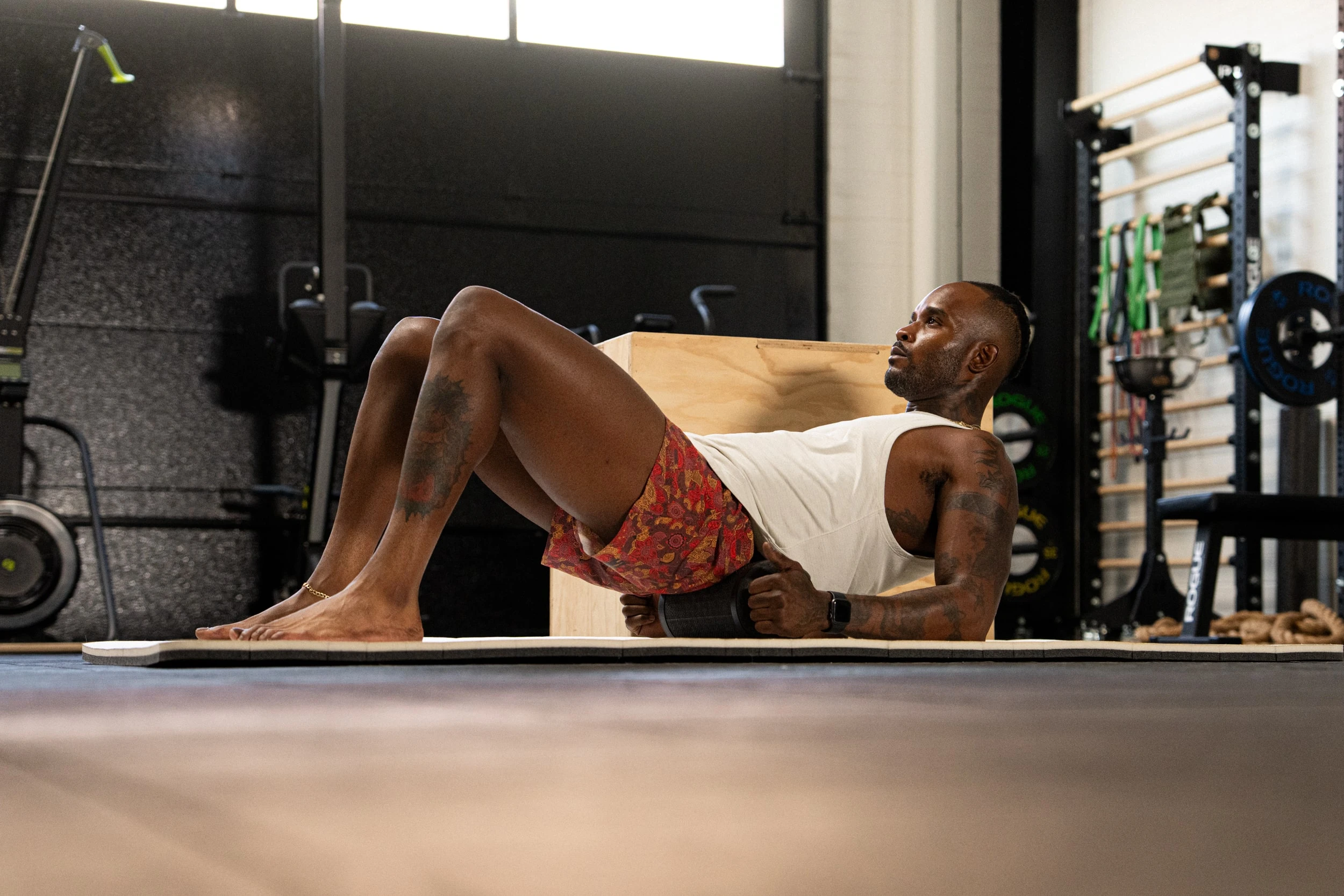
Most people default to passive recovery because it's the easiest choice. Structured mobility work, gentle stretching, and breath work increase blood flow to damaged tissue, support inflammatory clearance, and reduce nervous system hypersensitivity that amplifies soreness beyond the underlying damage. Our mobility app helps you replace passive waiting with intentional, low-load movement that works alongside the body's repair process through daily recovery routines.
Is soreness a sign of recovery or a barrier to it?
The critical difference: DOMS is a sign of recovery, not recovery itself. Two people can feel identical soreness after the same workout yet recover in three days versus six, depending entirely on how well they sleep, eat, hydrate, and move afterward. Time matters, but it's not the cause.
But knowing why soreness happens is only half the answer. The harder question is what to do about it when tomorrow's workout is already scheduled.
Related Reading
Should You Work Out With DOMS or Wait Until the Soreness Is Gone?

Soreness by itself isn't a reliable sign to stop training. What truly matters is what it tells you about your current functional capacity — and that depends entirely on how severe the soreness actually is.
"Soreness alone is not the deciding factor — your functional capacity is the real metric that determines whether you should train or rest." — American Heart Association Journal
💡 Tip: Before every workout, do a quick self-assessment of your soreness level. Mild stiffness is very different from severe, movement-limiting pain — and your training decision should reflect that difference.
Soreness Level | Functional Impact | Training Recommendation |
|---|---|---|
Mild | Minimal movement restriction | ✅ Train as normal |
Moderate | Some stiffness, reduced range | ⚠️ Modify intensity |
Severe | Significant pain, limited capacity | 🛑 Rest or active recovery |
⚠️ Warning: Ignoring severe DOMS and pushing through at full intensity can compromise your movement quality and increase your risk of injury — soreness is a signal, not a challenge to overcome recklessly.
🔑 Takeaway: DOMS is not a binary stop-or-go signal. Use your functional capacity — your ability to move, load, and perform — as the real deciding factor in whether to train.
When mild soreness is a green light
Mild DOMS feels like a dull ache or stiffness that appears when you move but doesn't limit your movement. Your muscles are in the early stages of repair, with inflammation present but not overwhelming. According to Veloforte, light exercise at 40% intensity can reduce DOMS pain by up to 40% by flushing metabolic waste, reducing stiffness, and keeping the nervous system primed. A slow walk, an easy cycling session, or a guided mobility routine all qualify. The goal is circulation, not output.
When moderate soreness calls for a smarter plan
Moderate soreness is where most people either push too hard or stop entirely, missing the best path. Your muscles are still losing meaningful strength, your range of motion is slightly limited, and poor form becomes more likely. Train around the soreness, not through it: lower the intensity, switch to muscle groups that aren't sore, and treat the session as active recovery. Skipping heavy compound lifts or high-intensity intervals protects the work you've already done.
Why does ignoring moderate soreness extend your recovery?
Many athletes stick to their training plans without adjusting them, even when sore. Ignoring moderate soreness often worsens it by the next workout, turning a potential two-day recovery into five days. Structured mobility and breathwork routines help here. A mobility app like Pliability provides a purposeful, low-load option that keeps you moving without stressing the rebuilding tissue.
When severe soreness is a hard stop
Severe DOMS is a different category entirely. When your range of motion is noticeably limited, when you've altered your gait to protect the sore area, or when the pain is sharp rather than dull, your body needs rest, not light activity. The Cleveland Clinic notes that DOMS typically peaks 24 to 72 hours after exercise, meaning severe soreness at the 48-hour mark represents the peak of a biological process that must complete. Training through it creates compensatory movement patterns that redistribute load onto joints and connective tissue not designed to carry it—thereby creating injuries.
How do you decide whether to move, modify, or rest?
The decision framework is built on function rather than feeling. Mild soreness with full range of motion and normal movement quality: move. Moderate soreness with slight restriction: modify, reduce load, or rotate muscle groups. Severe soreness with altered mechanics or sharp pain: rest completely. Your body communicates something specific each time; the skill is learning to read it accurately.
But knowing when to train and when to rest takes you only so far. The faster path forward depends on something most people overlook.
How to Get Rid of DOMS by Targeting the Right Recovery Bottleneck

Recovery gets stuck at specific places where problems happen. Most people treat DOMS as one problem with one answer, when soreness actually lingers because one particular system isn't getting what it needs to finish repair.
"Soreness lingers not because recovery is slow — but because a specific bottleneck is blocking the system that needs to finish the job."
💡 Tip: Before reaching for a generic recovery fix, identify which system is falling short — whether that's inflammation clearance, nutrient delivery, or sleep quality — so you can target the real problem instead of guessing.
⚠️ Warning: Treating DOMS as a single, uniform issue is one of the most common recovery mistakes. A one-size-fits-all approach wastes time and can leave your bottleneck unaddressed, making soreness last far longer than it should.
Recovery Bottleneck | What It Affects | Key Fix |
|---|---|---|
Inflammation clearance | Swelling, stiffness | Active movement, cold/heat therapy |
Nutrient delivery | Muscle repair speed | Protein timing, hydration |
Sleep quality | Tissue regeneration | 7–9 hours, sleep hygiene |
Inadequate Protein
Tiny muscle damage requires amino acids to rebuild. Insufficient protein intake slows the repair process, prolonging swelling. Consume 0.7 to 1 gram of protein per pound of body weight daily, with at least 20 to 40 grams in the meal or shake closest to your workout. Adequate protein intake reduces the duration of soreness by approximately 1 full day for those previously undereating protein.
Insufficient Sleep
The problem is not about motivation—it's about hormones. When you sleep deeply, your body releases growth hormone, which helps repair muscle tissue. Even losing 90 minutes of sleep noticeably lowers growth hormone output and extends the inflammatory phase of DOMS. Prioritize sleep quality: maintain a regular bedtime, keep your room cool, and avoid screens for an hour before bed. Athletes who prioritize sleep quality alongside training volume recover from training stress faster than those who sleep the same number of hours but have broken or light sleep.
Dehydration
Muscle tissue is about 75% water, and even mild dehydration (around 2% of your body weight) impairs the cellular processes that clear metabolic waste from damaged fibers. Waste, including lactate and inflammatory byproducts, accumulates longer when fluid transport is compromised, prolonging soreness. Drink half your body weight in ounces daily, plus 16 to 24 ounces for every hour of moderate exercise. According to the NASM Blog, foam rolling for 20 minutes after exercise can reduce DOMS by up to 30%, and hydration enhances this effect by keeping fascia flexible and responsive to compression work.
Depleted Glycogen
Most people focus on protein for recovery and overlook that carbohydrates fuel the repair process itself. Glycogen depletion after intense training leaves muscles in a low-energy state, slowing the cellular machinery that rebuilds fiber structure. Post-workout carbohydrate intake of 0.5 to 0.7 grams per pound of bodyweight within two hours of training, combined with protein, replenishes glycogen and shifts the body out of the catabolic state faster, reducing the soreness window. Rice, oats, fruit, and sweet potatoes are all effective options.
Lack of Active Recovery and Structured Mobility Work
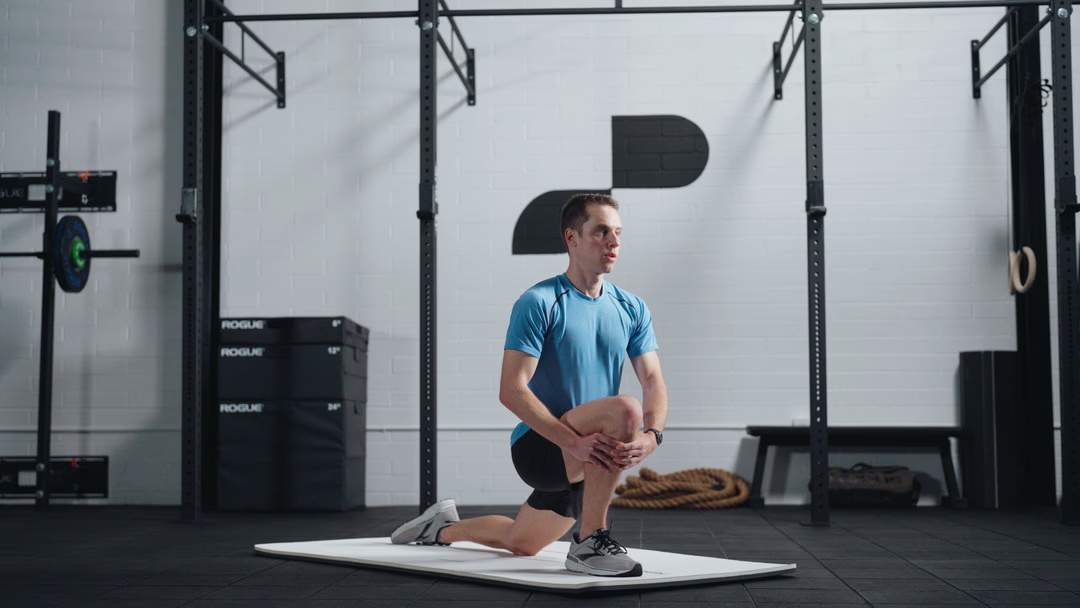
The most overlooked bottleneck isn't what you consume; it's how you move between sessions. Passive rest keeps blood pooled away from damaged tissue. Light, intentional movement—particularly structured stretching and mobility work—drives circulation into areas that need it. Most people default to either doing nothing or jumping back into full training, missing the productive middle ground. Pliability addresses this gap with guided recovery routines built around expert-led stretching and breathwork. Users who stretch consistently at least three times per week report a 30% increase in mobility within two weeks, reducing stiffness and shortening recovery time after hard training.
Excessive Training Volume
When training volume outpaces recovery capacity, soreness becomes permanent rather than a signal. The mechanism is straightforward: the inflammatory response from session one hasn't resolved before session two adds new damage. The fix is to organize volume throughout the week and build deliberate deload periods every three to four weeks. According to the NASM Blog, DOMS typically peaks 24 to 72 hours after exercise, meaning programming decisions made before you feel sore determine how severe the soreness becomes. Managing volume proactively is the difference between a body that adapts and one that accumulates damage.
But knowing how to clear soreness faster is only half the equation.
Related Reading
How To Recover Muscles Faster
How To Relieve Sore Muscles
How To Get Rid Of Lactic Acid In Muscles
Crossfit Recovery
How To Activate the Parasympathetic Nervous System Quickly
Active Recovery
How To Get Rid Of Doms
Contrast Therapy Timing
How Many Rest Days Should I Have
How to Prevent DOMS From Slowing Down Future Workouts

Recovery starts right after you finish your last rep. The habits you build between workouts decide whether next week's exercise builds on what you did this week — or just repeats the same damage.
"The habits you build between workouts decide whether next week's exercise builds on what you did this week or just repeats the same damage."
💡 Tip: Start your recovery routine immediately after training — even 5 minutes of intentional cool-down can make a measurable difference in how your muscles respond.
⚠️ Warning: Skipping post-workout recovery habits is the most common reason athletes plateau — your body needs active recovery signals, not just rest.
Recovery Strategy | When to Apply | Key Benefit |
|---|---|---|
Hydration & nutrition | Within 30 minutes post-workout | Replenishes glycogen stores |
Light movement/walking | 24–48 hours after training | Boosts blood flow to sore muscles |
Sleep optimization | Every night | Drives muscle repair and growth |
Progressive overload the habit that prevents compounding soreness
The failure point is usually a sudden jump in training volume. When you increase weight, reps, or session frequency too quickly, your muscles face mechanical stress they haven't yet adapted to, and the inflammatory response scales with it. According to the Cleveland Clinic, gradually increasing workout intensity by no more than 10% per week can help prevent DOMS from becoming debilitating. That 10% rule is the difference between stimulus and damage, between a body that gets stronger and one that gets beaten up.
Why do your muscles get easier to train over time?
The first session always hurts the most. Research published in PubMed shows the repeated bout effect can reduce DOMS by up to 50% after a second bout of the same exercise, because your neuromuscular system adapts its protective response once it recognizes the movement pattern. Consistency beats intensity: showing up regularly, even at lower loads, builds structural resilience that makes hard training feel manageable.
Why does tracking recovery matter as much as tracking training?
Most people track workouts but not recovery. They log sets and reps without noting soreness, sleep quality, or mobility restrictions. Recovery tracking closes that gap. When you connect training inputs to recovery outputs, patterns emerge: sessions that produced the worst soreness, weeks where sleep dropped, and performance followed, and movements that consistently tighten your hips. That feedback loop separates athletes who keep improving from those who plateau or get hurt.
How does a structured daily approach make a difference?
A structured daily approach makes a difference. Most people stretch occasionally after hard workouts, then skip it when busy—inconsistency prevents your body from adapting. A mobility app like Pliability integrates expert-led stretching, breath work, and recovery routines into daily practice, not just when needed. Users who committed to stretching a minimum of three times per week saw a 30% increase in mobility in just two weeks.
Mobility and sleep as active recovery tools
Mobility work between sessions keeps tissue flexible, reduces connective tissue stiffness, and signals your nervous system to calm down in response to stress. Breath work activates the parasympathetic nervous system, accelerating the shift from inflammation to repair. Sleep consistency matters more than total hours: going to bed and waking at the same time each day helps keep cortisol rhythms stable, and elevated cortisol is one of the clearest predictors of prolonged muscle soreness and impaired tissue repair.
How do you build a recovery system that outpaces soreness?
DOMS isn't something you get rid of. It's something you outpace by building a recovery system that runs alongside your training. The athletes who recover fastest aren't doing more after a hard session; they're doing the right things consistently before the next one arrives.
Knowing when to start is what most people get wrong.
Don't Wait for DOMS to Slow You Down Before You Start Recovering
The challenge isn't knowing that recovery matters—it's figuring out which part of your recovery is actually holding you back. If you're sleeping well but skipping mobility, your solution looks different than someone who's not eating enough protein or ramping up training too quickly. Before changing your routine, identify your biggest recovery bottleneck, so you know exactly where to focus first.
⚠️ Warning: Jumping straight into a new recovery routine without identifying your specific bottleneck means you could be solving the wrong problem entirely — wasting time and effort with little to show for it.
"Recovery isn't one-size-fits-all — sleep, nutrition, and mobility each play a distinct role, and neglecting even one can silently stall your progress." — Recovery Performance Principle
Recovery Pillar | Signs It's Your Bottleneck | First Fix |
|---|---|---|
Sleep | Persistent fatigue, poor focus | Prioritize 7–9 hours of consistent sleep |
Nutrition | Slow muscle repair, low energy | Hit your daily protein targets |
Mobility | Tightness, restricted movement | Add a daily mobility session |
Training Load | Constant soreness, plateaus | Audit your weekly ramp-up rate |
If you want a structured place to start, a mobility app offers a personalized daily program built around your body and goals. Begin with the Body Scan to identify areas of tightness and restricted movement, then follow daily mobility sessions that help you recover more effectively between workouts.
💡 Tip: The Body Scan feature eliminates guesswork from recovery. Instead of following a generic routine, you get a program targeting your specific areas of restriction for faster, smarter results.
Available on iPhone, iPad, Android, and the web, Pliability makes it simple to turn recovery into a daily habit. Start your free 7-day trial today and discover how consistent mobility can transform your recovery.
🎯 Key Point: You don't need to overhaul your routine. Start with mobility. A free 7-day trial is all it takes to feel the difference that daily, structured recovery can make.
Related Reading
How Long Does Doms Last
How Often Should You Do Contrast Therapy
Workout Recovery Tips
Ice Bath Vs Contrast Therapy
Should You Workout With Doms
Best Recovery Methods For Athletes
Does Drinking Water Help With Sore Muscles
Benefits Of Contrast Therapy
Does Protein Help With Muscle Soreness
What Are Doms In Weightlifting
Move better in 10 minutes a day.
10,000+ five-star reviews.