


LEARN
pliability
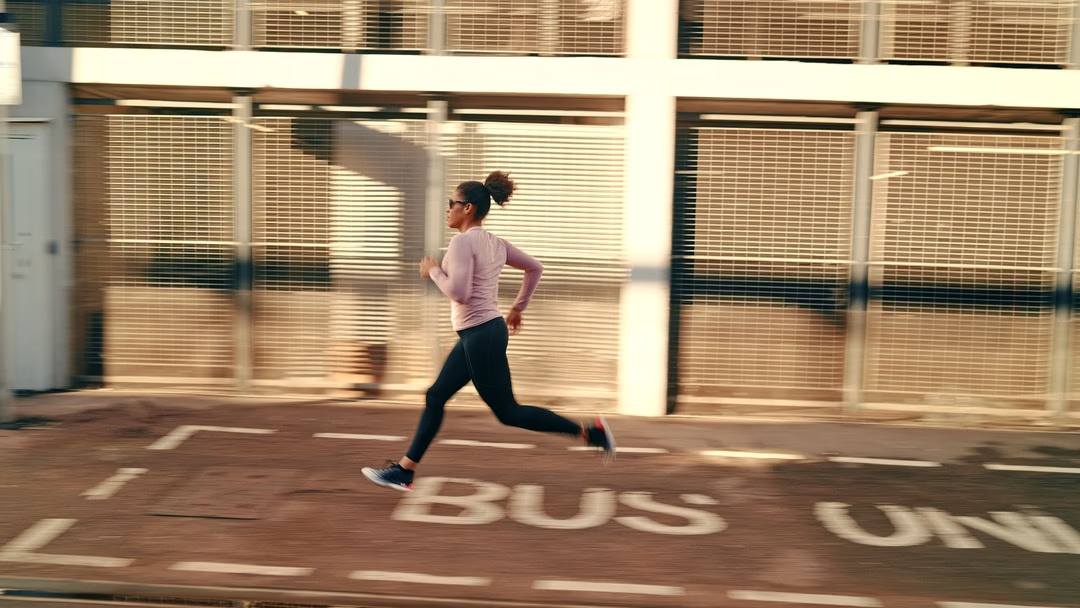
Pushing hard on a run and waking up to heavy, stiff legs the next morning is a familiar experience for most runners. Post-run muscle soreness, known as DOMS, is one of the most misunderstood aspects of training. It can signal adaptation and progress, but it can also mean the body needs more recovery time before the next effort. Knowing the difference helps runners train smarter and avoid the cycle of fatigue that stalls improvement.
Managing DOMS effectively comes down to understanding what the muscles need after a hard effort and responding with the right recovery tools. Targeted mobility work, soft tissue release, and structured stretching can reduce soreness, restore range of motion, and help runners feel ready sooner. For those looking to build a consistent recovery routine around their training, pliability's mobility app offers guided sessions designed specifically for runners dealing with tight, fatigued muscles.
table of contents
Should You Run With DOMS or Take a Recovery Day?
Why Running Causes DOMS in Some Workouts but Not Others
How to Tell If Your Soreness Is Normal DOMS or an Injury
How to Recover From Running DOMS Faster
Check Your DOMS Running Recovery Readiness in 2 Minutes
summary
Delayed onset muscle soreness in runners is a normal biological process, not an automatic signal to stop training. Muscle soreness typically peaks 24 to 72 hours after exercise and resolves within five to seven days, following a predictable arc that reflects adaptation rather than damage. Collapsing this nuance into a blanket rule, either "always rest" or "always push through," leads to either overtraining or unnecessary lost fitness.
The type of workout explains most of why soreness varies so dramatically between sessions. Downhill running causes up to 10 times more muscle damage than flat running because of the eccentric contractions required to control descent. Speed sessions recruit fast-twitch fibers that rarely activate during easy miles, while sudden mileage increases the load on connective tissue faster than it can remodel, significantly compounding the demand for repair.
Fascia plays a larger role in post-run soreness than most runners realize. Research published in the International Journal of Molecular Sciences found that fascial connective tissue contains up to six times more nociceptors than muscle tissue, making it a primary driver of the deep, diffuse ache that runners often attribute entirely to their muscles. This helps explain why soreness can feel disproportionately severe even after moderate efforts.
Distinguishing DOMS from injury depends on timing, location, and the body's response to movement. DOMS arrives 24 to 48 hours after exercise, spreads diffusely across a muscle group, and eases with gentle warm-up activity. Injury pain arrives quickly, concentrates in a specific spot, and either holds steady or worsens as load increases. Soreness lasting longer than four to five days also shifts the pattern toward injury rather than normal adaptation.
Sleep is among the most underestimated recovery variables for runners. Athletes who consistently sleep well recover from hard workouts considerably faster than those who chronically shortchange sleep. Foam rolling, stretching, and nutrition choices all matter, but none fully offsets a consistent sleep deficit when it comes to rebuilding tissue after eccentric loading.
Massage and active recovery both show meaningful results in reducing DOMS severity. A meta-analysis of 99 recovery studies ranked active recovery among the most consistently effective methods for reducing both soreness and perceived fatigue, while separate research found massage can meaningfully reduce DOMS. The threshold for effective active recovery sits at roughly 30 to 60 percent of peak effort, not workout intensity.
pliability's mobility app addresses the structure gap many runners face by pairing guided stretching and targeted recovery routines with daily check-ins that help distinguish normal adaptation from signals that need attention before the next training session.
should you run with DOMS or take a recovery day?

Most runners treat sore muscles as a stop sign, resting until discomfort disappears completely. This instinct feels logical but causes unnecessary lost training days, disrupted consistency, and frustration unrelated to actual injury.
A single rule, either 'push through' or 'always rest', leaves runners either overtrained or undertrained.
Tip: Not all soreness is created equal. Mild DOMS signals your muscles are adapting and growing stronger, not that you should stop moving entirely.
Mild delayed-onset muscle soreness doesn't automatically require rest. The right call depends on four key factors: severity, cause, planned run type, and whether the discomfort is muscular adaptation or something sharper and more localized. A single blanket rule, either "push through" or "always rest", leaves runners either overtrained or undertrained.
Factor | Run = OK | Rest = Recommended |
|---|---|---|
Severity | Mild, diffuse ache | Sharp, localized pain |
Cause | New workout, volume increase | Unknown origin or impact injury |
Run Type | Easy, low-intensity recovery run | High-intensity intervals or race |
Discomfort Type | Muscular adaptation soreness | Joint, tendon, or nerve pain |
Warning: If soreness is sharp, localized to a joint, or worsening with movement, stop and consult a professional: this goes beyond normal DOMS.
Takeaway: The smartest recovery decision isn't about toughness or caution: it's about reading the right signals and matching your response to what your body is actually telling you.
why does the "always rest when sore" belief persist?
The psychology here matters more than the physiology. Pain triggers a threat response: your nervous system doesn't distinguish between minor muscle fiber damage and actual tissue injury. Both feel like discomfort, and discomfort historically signaled danger. Add decades of conflicting fitness messaging ("no pain, no gain" versus "never train sore"), and most runners lack a reliable way to understand what their body is telling them.
How does social media distort the way runners read soreness?
Social media amplifies this problem. Recovery content tends to show extremes: elite athletes bragging about training through everything, or cautionary posts warning that any soreness signals impending breakdown. Neither reflects how adaptation actually works. Muscle soreness typically peaks 24 to 72 hours after exercise and resolves within five to seven days. That timeline is not a warning: it's a biological schedule that fundamentally changes how you interpret the signal.
what does research actually say about running through soreness?
The American College of Sports Medicine distinguishes between DOMS, which reflects normal muscle damage from eccentric contractions and the body's inflammatory repair process, and injury, which involves structural damage requiring rest. A randomized trial by Zainuddin and colleagues found that light aerobic exercise during active DOMS did not worsen muscle damage and temporarily reduced soreness perception. Dupuy's meta-analysis of 99 recovery studies ranked active recovery among the most consistently effective methods for reducing both DOMS severity and perceived fatigue.
The operative word is "light." Research by Tufano confirms that the effective range is roughly 30 to 60 percent of peak effort, not workout intensity.
How does structured recovery keep consistency from quietly eroding?
Most runners handle recovery informally, relying on intuition or habit. Without structure, recovery becomes reactive rather than intentional, and consistency erodes. A mobility app like pliability addresses this gap by pairing guided stretching and targeted recovery routines with daily structure that sustains the habit.
how to read soreness severity in practice
Rate your discomfort on a scale of one to ten. A one or two (spread out on both sides, tender when pressed deeply but not sharp) indicates DOMS. An easy run at conversational pace is appropriate. A three or above, especially if localized to one side, specific enough to point to with a single finger, or present during push-off, requires attention before it becomes a full injury.
What does the soreness timeline tell you?
DOMS typically peaks 24 to 72 hours after exercise. Soreness worsening past that window signals a problem. Beginners face additional risk because their connective tissues, tendons, and bones haven't yet adapted to the increased load of running. For newer runners, low-impact active recovery builds more long-term consistency than pushing through soreness their bodies aren't ready to handle.
But knowing when soreness is safe to run through is only half the picture. The more interesting question is why some workouts leave you barely stiff the next morning while others leave you walking down stairs sideways.
why running causes DOMS in some workouts but not others

The type of workout you did explains almost everything about how you feel today. Not all running creates equal stress on muscle tissue: the difference between a recovery jog that leaves you fresh and a downhill tempo that has you gripping the stair railing comes down to specific mechanical forces your body either knows how to absorb or does not.
Not all running creates equal stress on muscle tissue: the difference comes down to specific mechanical forces your body either knows how to absorb or does not.
Workout Type | Mechanical Stress | DOMS Risk |
|---|---|---|
Recovery jog | Low: minimal eccentric load | Low |
Flat tempo run | Moderate: controlled muscle engagement | Moderate |
Downhill tempo | High: heavy eccentric braking forces | High |
Tip: If you're gripping the stair railing the morning after a run, your workout likely involved significant eccentric muscle loading: the #1 mechanical trigger for DOMS.
Warning: Don't assume an easy-feeling run means low muscle damage. Downhill running can feel deceptively comfortable during the effort while causing substantial tissue stress that shows up 24–72 hours later.
downhill running and eccentric contractions
Downhill running reliably causes soreness because of eccentric contractions: when your quadriceps lengthen while contracting to control descent. Eccentric contractions cause up to 10 times more muscle damage than concentric contractions (the shortening phase used on flat ground). This tissue disruption triggers inflammation and fluid shifts into the damaged area, with swelling peaking around 48 hours later. Your quads aren't weak; they're unprepared for that volume or grade.
speed sessions and sudden mileage increases
Speed sessions activate fast-twitch muscle fibers that rarely engage during easy aerobic miles. These fibers are powerful but energy-intensive and structurally fragile, resulting in high mechanical stress per fiber at high intensity. Sudden mileage increases compound this by raising total load on tendons, fascia, and connective tissue faster than they can rebuild. Most runners underestimate how long connective tissue takes to adapt compared to muscle. Fascia remodels slowly and carries a disproportionate share of post-run discomfort signals. Research published in the International Journal of Molecular Sciences via PMC found that fascial connective tissue contains up to six times as many nociceptors as muscle tissue, identifying it as a primary driver of the deep, diffuse ache that runners often misattribute to their muscles.
hill repeats and returns after a break
Hill repeats combine the worst of both worlds. The uphill phase loads the Achilles tendon and calf complex concentrically, while the downhill recovery jog reintroduces eccentric stress to the quads in a fatigued state. Repeating that cycle eight to twelve times causes tissue damage across multiple structures simultaneously. Returning after a break creates a similar problem: cardiovascular fitness recovers faster than structural readiness, so you feel capable of your previous volume or pace before tendons, fascia, and bone density have caught up. The result is a body that can sustain the aerobic effort but cannot absorb the mechanical load, and DOMS (along with injury risk) increases accordingly.
Why does a targeted recovery routine outperform waiting it out?
Most runners handle soreness from these sessions by waiting it out or reaching for an ice pack. That addresses the symptom rather than the signal. A structured daily mobility and recovery routine targeting the specific tissues under load works differently. Platforms like pliability build expert-led stretching and recovery sessions around this targeted tissue work, giving runners a repeatable system rather than a reactive one. The difference between guessing and having a protocol matters most in the 24 to 48 hours when DOMS peaks and the temptation to either do nothing or push through is highest.
recovery capacity as the hidden variable
How sore you get depends on what your body has available to repair. Sleep quality, hydration, training age, and recent training density all influence inflammatory response and recovery speed. Two runners doing the same hill repeats can experience completely different outcomes because their recovery capacity differs. A runner sleeping six hours nightly, carrying high stress, and training seven days without mobility operates with a depleted repair budget. The same workout hits differently when the body has resources to respond.
Why does knowing the cause of soreness matter for your next run?
Understanding what caused your DOMS helps you decide whether today's run will help or hurt.
But knowing the cause is only the beginning. The harder question is whether what you're feeling is a normal adaptation or something that needs medical attention.
how to tell if your soreness is normal DOMS or an injury
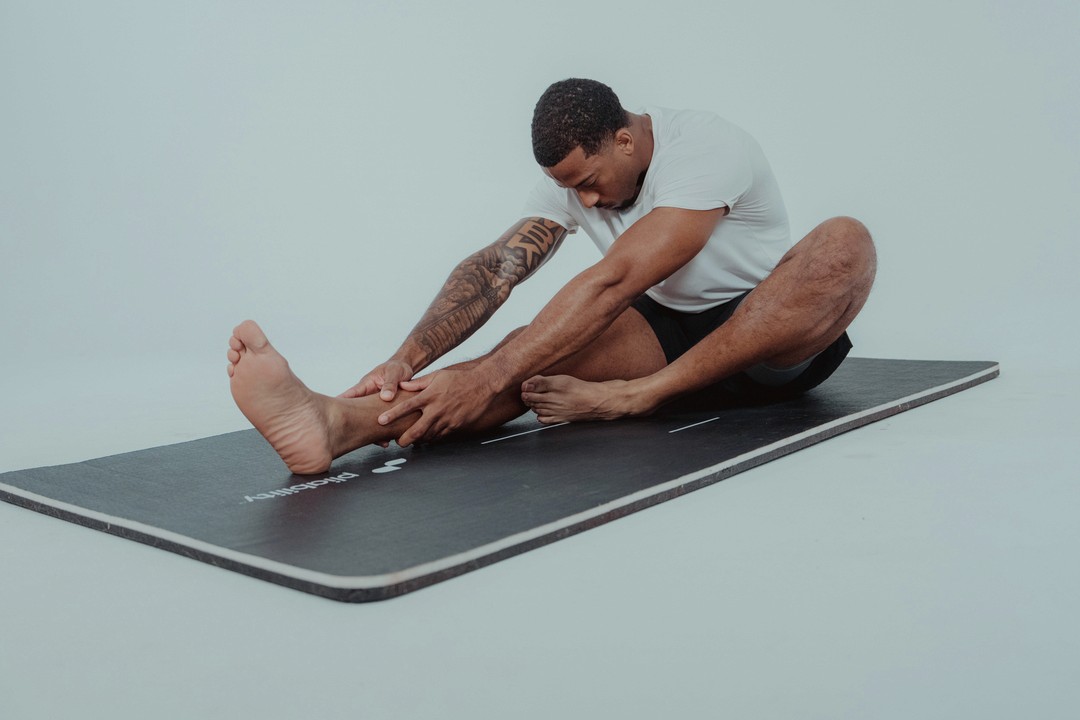
Not all pain after running is DOMS. Some pain signals an injury that needs immediate attention, not just your body getting used to exercise. You can tell the difference if you know what key signs to look for.
Knowing whether your pain is normal muscle soreness or a warning sign of injury is one of the most critical skills any runner can develop.
Sign | Normal DOMS | Potential Injury |
|---|---|---|
Onset timing | Peaks at 24–72 hours post-run | Immediate or sharp during run |
Pain type | Dull, achy soreness | Sharp, stabbing, or burning |
Location | General muscle area | Specific, pinpointed spot |
Duration | Resolves within 3–5 days | Persists or worsens over time |
Impact on movement | Mild stiffness, still functional | Limits range of motion significantly |
Key Point: DOMS is typically bilateral and diffuse: if your pain is sharp, one-sided, or pinpointed, that's a critical red flag that warrants medical attention.
Warning: Never push through pain that is worsening with activity. Running through a true injury can turn a minor issue into a long-term setback that sidelines you for weeks or even months.
timing tells you more than intensity
Normal muscle soreness starts 24 to 48 hours after exercise. Pain during or immediately after a run indicates something structural: a strained muscle, irritated tendon, or overloaded joint. DOMS peaks the morning after. Sharp, sudden-onset soreness suggests injury rather than normal soreness.
diffuse versus focal, where the pain lives
DOMS spreads across a muscle group. After a hard tempo run, your quads might feel uniformly heavy and tender across their entire length. Injury pain concentrates in a specific spot: if you can press one area and reproduce the exact pain, or if discomfort is locked into a joint like your knee or ankle rather than surrounding muscle tissue, that suggests a structural problem. Tendons do not get DOMS. If your Achilles is talking to you, that conversation is not about adaptation.
how movement responds to the pain
Normal DOMS loosens with gentle movement. A slow warm-up walk, light jogging, or dynamic mobility work reduces that stiff, heavy feeling within the first ten minutes. Injury pain does the opposite: it stays the same or worsens as you load the tissue. If soreness worsens during a run rather than improving, that change signals your body is working through unresolved damage.
Most runners figure this out on their own, going by how they feel rather than using a consistent method. A structured daily mobility practice helps you understand how your body moves normally, making it easier to spot changes early. Apps like pliability offer guided recovery routines that help you notice when something feels off before it becomes a problem that sidelines you for weeks.
the severity gradient and the red flags
Mild DOMS feels like general muscle fatigue and tenderness that responds to movement and resolves within one to three days. Moderate DOMS is a more pronounced stiffness that limits range of motion temporarily but loosens with activity. Red flags differ: sharp or stabbing pain during movement, visible swelling around a joint or muscle, pain that worsens during warm-up rather than improving, and one-sided soreness when the training load was even on both sides. Soreness lasting longer than four to five days may indicate injury rather than normal DOMS, providing a useful boundary for deciding whether to wait or seek treatment.
what does asymmetric soreness tell you about injury risk?
Soreness on both sides after a hard run (both quads, both calves, both hamstrings) fits the DOMS pattern because both legs did the same work under the same load. Pain on one side, where one side is much worse, breaks that logic. If one leg is significantly more sore despite running the same race, the difference suggests that one side took on something the other did not: a compensation pattern, a biomechanical imbalance, or an acute tissue event. This pattern is more consistent with localized injury than with systemic post-run muscle adaptation and warrants attention before the next training session.
How do you move from diagnosis to recovery?
Once you identify the type of soreness, the next step is figuring out how to recover and return to training effectively.
how to recover from running DOMS faster

Getting over soreness after a hard run isn't something that just happens on its own. The choices you make in the 48 to 72 hours after a hard run either help you get ready to train again faster or make it take longer before you can do quality training.
The choices you make in the 48 to 72 hours after a hard run are the difference between a fast recovery and a delayed return to quality training.
Recovery Window | What You Do | Outcome |
|---|---|---|
0–24 hours | Active recovery, hydration, nutrition | Faster muscle repair |
24–48 hours | Light movement, sleep, protein intake | Reduced inflammation |
48–72 hours | Gradual return to easy effort | Ready for quality training |
Tip: The 48- to 72-hour window is critical: what you do during this period has a direct impact on how quickly you return to peak performance.
Warning: Ignoring post-run recovery choices doesn't just slow you down: it can push your next quality session days further away than necessary.
active recovery keeps blood moving, not muscles working
The failure point most runners hit is treating soreness as a reason to stop moving entirely. Complete rest allows metabolic waste products to accumulate in fatigued tissue and slows blood flow, prolonging the inflammatory cycle. A 20- to 30-minute walk, easy cycling session, or gentle swim increases blood flow to the area without stressing damaged muscle fibers. This clears inflammatory byproducts faster and reduces stiffness within 24 hours. This works consistently when soreness is spread throughout the muscles; it does not work if the underlying issue is a structural injury, where any activity can worsen the damage.
protein and carbohydrates the repair equation
Your muscles need raw material to repair after hard exercise. Protein provides the amino acids required to rebuild damaged muscle fibers, the tiny structures stressed during downhill running and speed work. Consume 20 to 40 grams of quality protein within two hours after a hard workout, then again at your next meal. You also need to replenish carbohydrates: your body depletes stored energy during long runs or races and must refill these stores before muscles can work at full capacity. If you don't eat enough carbohydrates during recovery, your body will use protein for energy instead of repairing muscle tissue.
sleep is the recovery variable most runners underestimate
Most runners focus on post-run nutrition while overlooking sleep's critical role in recovery. During deep sleep, your body releases growth hormone, which builds muscle protein and reduces inflammation from hard exercise. Athletes who consistently sleep well tend to recover from tough workouts considerably faster than those who chronically shortchange sleep. If you optimize everything else but get six hours or less of sleep, you lack sufficient recovery time, and no amount of foam rolling will compensate.
mobility work and massage reduce neuromuscular stiffness
The stiffness you feel 48 hours after a hard run comes from two things: structural damage (tiny tears in muscle fibers) and neuromuscular tension (your nervous system tightening to protect damaged tissue). Targeted mobility work (slow, controlled movement through the ranges of motion most stressed during your run) tells your nervous system to ease that protective tightening. A structured daily routine focusing on hip flexors, hamstrings, calves, and thoracic rotation outperforms random stretching because it targets the specific patterns running stresses most. Runners who skip this step often carry leftover stiffness into their next workout, which alters their running mechanics and increases injury risk in the following weeks. Our mobility app helps you stay consistent with expert-led routines built for recovery. For hands-on soft-tissue work, massage can meaningfully reduce DOMS, making it one of the best recovery tools for runners dealing with serious post-run soreness.
training load: the signal your next session should answer
When to run again is not a calendar question but a readiness question with specific signals: soreness that eases within the first five minutes of easy movement, full range of motion without sharp resistance, and no focal tenderness in joints or tendons. If those three conditions are met, an easy aerobic run is appropriate. If soreness remains significant at rest, range of motion is restricted, or you are compensating for your stride to avoid pain, take another recovery day. Ignoring these signals compounds fatigue across training blocks, suppresses immune function, and statistically increases the risk of soft-tissue injury in the weeks that follow. Progressive overload only works when recovery between loads is sufficient for adaptation to complete.
Knowing the right recovery tools is only half the equation. The harder question is knowing when your body is ready to use them again.
check your DOMS running recovery readiness in 2 minutes
Most runners make critical mistakes about readiness by only looking at morning soreness, which is not a reliable indicator. Soreness level, movement quality, recent training load, and sleep recovery all play a role in true readiness: missing any one of these gives you an incomplete picture.
Soreness level, movement quality, recent training load, and sleep recovery all play a role in true readiness: missing any one of these gives you an incomplete picture.
Warning: Relying on soreness alone to judge recovery is one of the most common mistakes runners make, and one of the most costly for long-term performance.
Readiness Input | What It Reveals |
|---|---|
Soreness Level | Degree of muscular stress from recent effort |
Movement Quality | Whether compensation patterns are developing |
Recent Training Load | Cumulative fatigue vs. recovery balance |
Sleep Recovery | Central nervous system restoration status |
pliability's Running Recovery and Mobility Check combines all four inputs in under two minutes, determining whether your soreness stems from normal eccentric load, incomplete recovery, a mobility restriction intensifying pain, or a signal to reduce intensity. A structured daily mobility routine built around your actual training load (like what pliability provides) eliminates guesswork and establishes a repeatable recovery habit that adapts as your running does. Start your 7-day free trial today.
Tip: A daily mobility check taking less than two minutes is the difference between training smarter and training blind: consistency beats complexity every time.
Key Point: pliability's system doesn't flag soreness; it identifies the specific cause, so you can take the right action instead of guessing.
Related Reading






Move better in 10 minutes a day.
10,000+ five-star reviews.