


LEARN
pliability

Pushing hard in the gym, only to wake up two days later barely able to walk down the stairs, is a familiar experience for many athletes and fitness enthusiasts. That deep, lingering ache, known as delayed onset muscle soreness, is the body signaling that it needs time to rebuild. Understanding how many rest days to take each week is the difference between steady progress and stalled gains, chronic fatigue, or an injury that sets training back by weeks.
Recovery is not one-size-fits-all, and the right number of rest days depends on training intensity, fitness level, sleep quality, and how well the body is actually bouncing back. Rather than guessing, tracking movement quality and how the body feels day to day leads to smarter decisions about when to push and when to pull back. For those looking to take a more structured approach, the mobility app from pliability helps build recovery routines that support consistent progress without burning out.
table of contents
Why Rest Days Are Just as Important as Workout Days
How Many Rest Days Should I Have for Adequate Recovery?
Signs You're Taking Too Many (or Too Few) Rest Days
How to Build a Rest-Day Schedule That Matches Your Goals
Recover Better Between Workouts with pliability: Free for 7 Days
summary
Muscle protein synthesis peaks 24 to 48 hours after exercise, meaning workouts are the stimulus and rest is where actual adaptation occurs. Skipping recovery doesn't accelerate results; it interrupts the repair process that produces them.
Most people need between one and three rest days per week, but the right number depends on training experience, exercise type, and intensity. Beginners benefit from roughly three rest days per week while their bodies build the connective tissue density and motor efficiency needed for faster recovery. Advanced lifters may sustain one rest day per week, but only when programming accounts for the physiological demands of high-volume training.
Exercise type and intensity set the actual recovery ceiling, and the two variables don't move in sync. High-impact activities like running place greater stress on joints and tendons than low-impact alternatives, often requiring two to three rest days per week regardless of fitness level. The American College of Sports Medicine recommends at least two rest days between high-intensity sessions because systemic fatigue and central nervous system strain resolve more slowly than localized muscle soreness.
Too few rest days produce clear signals: persistent soreness that doesn't clear between sessions, declining performance despite consistent effort, disrupted sleep, and hormonal shifts including elevated cortisol and reduced testosterone. Too many rest days carry a quieter cost. Cardiovascular efficiency begins declining after roughly 10 to 14 days of inactivity, and neuromuscular coordination dulls faster than most people expect. UCLA Health notes that most people benefit from one to two rest days per week to maintain the balance between stimulus and recovery.
Building an effective rest-day schedule requires matching recovery frequency to training load rather than convenience. The hard/easy principle offers a practical framework: place rest or low-intensity days immediately after peak-demand sessions, not at the end of the week by default. Schedules should also adapt when life stress rises, sleep drops below seven hours, or performance trends shift, because stress accumulates across all sources, not just the training log.
pliability's mobility app addresses the common habit of treating rest days as blank space by offering guided stretching and recovery routines that maintain tissue quality, keep circulation active, and preserve range of motion between training sessions.
why rest days are just as important as workout days
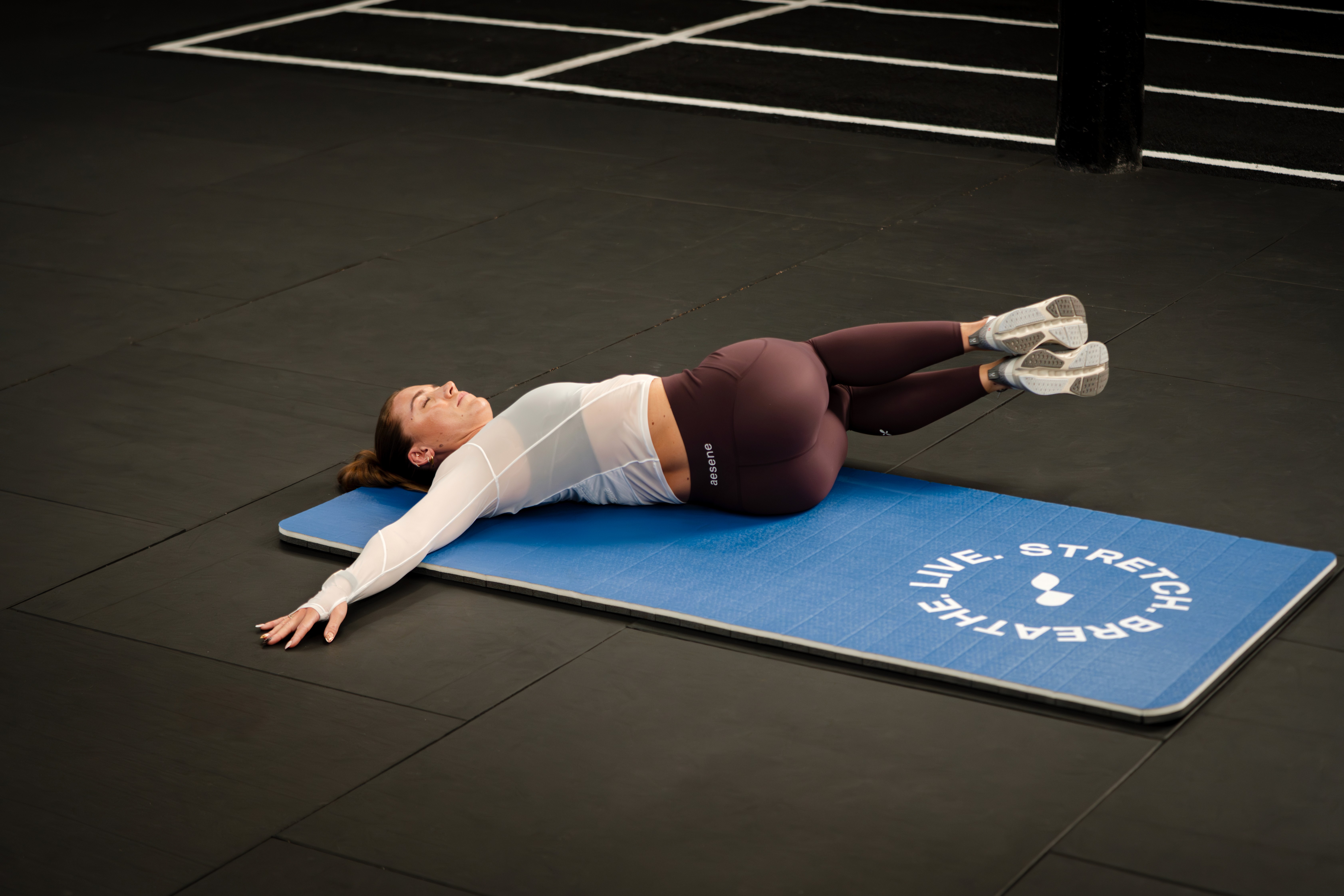
Many people push through fatigue and soreness because they worry about falling behind. But here's the critical truth: the body does not grow during the workout: it grows during recovery.
"The body does not grow during the workout: it grows during recovery. Skipping rest days isn't dedication; it's a barrier to real progress."
Key Point: Rest days are not a sign of weakness: they are essential to the muscle-building and repair process. Without adequate recovery, your hard work in the gym goes to waste.
Warning: Constantly pushing through fatigue and soreness without rest can lead to overtraining syndrome, increased injury risk, and diminished performance over time.
Training Phase | What Happens | Why It Matters |
|---|---|---|
During Workout | Muscle fibers experience micro-tears | Creates the stimulus for growth |
During Recovery | Muscle repair and growth occur | This is where real gains are made |
Without Rest | Overtraining and breakdown set in | Progress stalls or reverses |
Best Practice: Treat rest days with the same intentionality as your workout days: they are not optional; they are a non-negotiable part of any effective training plan.
what happens when you skip rest days?
Skipping rest does not speed up progress; it breaks it down. Declining performance is usually the first warning sign, followed by chronic fatigue that makes every session feel harder. Then comes the cascade: elevated injury risk, stalled muscle growth, and burnout. The American College of Sports Medicine and the National Strength and Conditioning Association both identify overtraining syndrome as a direct consequence of insufficient recovery, characterized by performance decrements that can persist for weeks or months after training stops.
why does adaptation require recovery time?
The belief that more workouts yield better results follows logically: effort produces adaptation, so more effort should produce greater adaptation. The flaw lies in timing. Adaptation occurs after training, when the body repairs micro-damaged muscle fibers, replenishes glycogen stores, and recalibrates the nervous system. According to UCLA Health, muscles need approximately 48 hours of recovery time after strength training before they can perform at full capacity again. Training through that window repeatedly erodes progress rather than building on it.
why rest days are not a pause in your training plan
Rest days are part of the training plan. Natalya Vasquez, CPT, founder of Bridal Bootcamp San Diego, explains that your body and mind need time to recover and reset, and more training isn't always better. Treating rest as a deliberate training variable rather than reluctant downtime changes everything. The Body Coach recommends 1 to 2 rest days per week for most people doing moderate- to high-intensity exercise, a baseline that most active people fall short of.
What does active recovery actually do for your body?
Complete disengagement is one valid option, but not the only path. Active recovery (including mobility work, breathwork, and stretching) reduces delayed-onset muscle soreness and maintains muscle function between sessions, according to peer-reviewed exercise physiology research. A mobility app like pliability builds on this principle: it helps make rest days more productive with intentional movement, and effective recovery routines are individual, not generic.
rest days protect your mental edge, too
The physical argument for rest is well established; the mental one is underappreciated. Dread is a signal. When training feels like punishment rather than a choice, the body communicates something the mind resists. Rest days interrupt that cycle before it becomes resentment, restoring the psychological energy that keeps training sustainable over months and years. This mental reset separates people who train consistently for a decade from those who burn bright for ninety days and disappear.
But knowing rest matters differs from knowing how much rest is right for you specifically.
how many rest days should I have for adequate recovery?

Most people need between one and three rest days per week. This range shows how differently trained bodies take in stress, repair tissue, and get ready to work again. The number that works for you depends on specific, measurable factors.
"Most people need between one and three rest days per week, a range that reflects how uniquely every body absorbs stress, repairs tissue, and rebuilds strength."
Tip: If you're unsure where you fall in the 1–3 rest-day range, start with 2 rest days per week and adjust based on how quickly your energy and performance bounce back.
Warning: Taking fewer than one rest day per week is a common mistake that can lead to overtraining, stalled progress, and increased injury risk: more is not always better.
Training Level | Recommended Rest Days Per Week |
|---|---|
Beginner | 2–3 days |
Intermediate | 1–2 days |
Advanced | 1 day (minimum) |
why do beginners need more recovery time than advanced lifters?
The failure point for most beginners isn't effort but underestimating how foreign the new movement is to an untrained body. When you start lifting or running, your neuromuscular system encounters mechanical loading it has never processed before. Muscle fibers sustain microscopic damage, not because something went wrong, but because that's how adaptation begins.
The repair process takes longer because the body hasn't yet built the enzymatic machinery, connective tissue density, or motor pattern efficiency to recover quickly. Beginners should train on an every-other-day schedule, roughly three rest days per week, before progressing to two rest days as consistent training builds those internal repair systems.
How does training experience compress the recovery window for advanced athletes?
Advanced lifters can handle higher volumes and fewer rest days because their muscles, tendons, and nervous systems have physically adapted to handle greater stress and recover more efficiently. This involves measurable changes in satellite cell activity, mitochondrial density, and connective tissue strength that reduce the recovery time needed.
UCLA Health reports that muscles need 48 hours of recovery time after strength training, a requirement that remains important even for experienced lifters during high-intensity training. Competitive athletes may have only one rest day per week, but only because their training plans carefully account for this biology, often with a coach's guidance.
how exercise type and intensity set the actual recovery ceiling
High-impact activities like running place cumulative stress on joints, tendons, and connective tissue that low-impact work doesn't. Even experienced runners need two to three rest days per week from running because repetitive ground-force loading builds up faster than the body can clear it. Cycling and swimming deliver cardiovascular stimulus without the same structural toll, allowing them to be layered into recovery weeks without the same spacing requirements.
Why does intensity change how much recovery time you actually need?
Intensity is the multiplier that changes everything. A moderate 30-minute session and a 90-minute high-intensity effort create different recovery demands, even when targeting the same muscle groups. The American College of Sports Medicine recommends at least two rest days between high-intensity sessions regardless of fitness level, because whole-body fatigue, glycogen depletion, and central nervous system strain don't resolve on the same timeline as localized muscle soreness. Most people who feel perpetually flat mid-week aren't undertrained: they're under-recovered.
What happens when rest days include structured mobility work instead of nothing?
Most people view rest days as empty time. When rest days include structured mobility work, targeted stretching, and movement that supports tissue quality without adding load, recovery becomes active rather than absent. A mobility app like pliability is built on this principle: guided recovery routines on rest days complete your training week rather than interrupt it. The body repairs more efficiently when circulation stays active and range of motion is maintained, which is why people who treat rest days as mobility days consistently report less next-day stiffness and better session quality.
how your goals change the math
The right number of rest days changes as your training load, life stress, and body's signals shift.
How does your goal determine the right number of rest days?
Your goal determines how many rest days make sense. For muscle gain, the key variable is whether each muscle group gets enough time between sessions. Training five days per week at moderate to high intensity can work with one to two rest days, provided the programming strategically rotates muscle groups. For fat loss, rest days matter far less than most assume: caloric deficit, exercise intensity, and nutritional consistency drive the outcome. For endurance athletes, rest days protect connective tissue from overuse while the aerobic system consolidates adaptations between long efforts.
too few rest days are what your body is actually telling you
Pain that doesn't go away between workouts is the clearest early sign: not the good kind of soreness from a hard workout that fades after a day, but a dull, built-up heaviness that persists into your next session. When your lifts decline despite consistent effort, or your sleep worsens despite physical fatigue, your nervous system is signaling that you are overtraining.
What happens inside your body when recovery time is too short?
Without enough recovery time, your body never fully clears the inflammatory byproducts of intense training. Cortisol stays elevated, testosterone drops, and muscle protein synthesis gets interrupted before completion. UCLA Health notes that intense strength training sessions require at least 48 hours of recovery time. When you repeatedly compress that window, the deficit compounds. Irritability and low motivation aren't psychological weaknesses; they're hormonal consequences of a system running without adequate repair time.
too many rest days, the quieter problem nobody warns you about
The failure point is subtle: you feel rested and ready, but your conditioning has quietly started to slide. Cardiovascular efficiency begins declining after roughly 10 to 14 days of inactivity, and neuromuscular patterns dull faster than expected. Your work capacity shrinks, your first session back feels disproportionately hard, and the momentum that makes training sustainable erodes.
How does detraining show up before you notice it?
Detraining manifests as plateaus unresponsive to effort, gradual reductions in endurance, and loss of body awareness and confidence. According to UCLA Health, most people benefit from 1 to 2 rest days per week, balancing training stimulus with recovery while preventing detraining. The solution is filling rest days with intentional, low-demand activity that maintains readiness without adding training stress.
What keeps rest days restorative instead of counterproductive?
Most people treat rest days as empty space, which is why they stop feeling restorative. Structured mobility work, like routines in our mobility app, keeps the body in active recovery rather than passive holding. Connective tissue stays supple, range of motion is maintained, and the nervous system receives a signal that movement remains part of the daily rhythm at a lower intensity. This consistency separates athletes who return sharper after rest from those who return stiff and sluggish.
reading the signals accurately
The same symptom can mean opposite things depending on context. Fatigue after three days of hard training points toward insufficient rest. Fatigue after five days off points toward detraining and loss of movement quality. Matching your recovery strategy to your training load requires reading both signals, not just the most urgent one.
Once you can read these signs clearly, the next question most people skip entirely is: how do you build a schedule that accounts for all of it?
how to build a rest-day schedule that matches your goals

Building a rest-day schedule starts with one honest question: what are you actually training for? Your answer determines how often you rest, what you do on those days, and when you adjust.
"Your rest-day strategy is not an afterthought: it is the foundation that determines whether your training builds you up or breaks you down."
Training Goal | Recommended Rest Days/Week | Ideal Rest-Day Activity |
|---|---|---|
Fat Loss | 1–2 days | Light walking, mobility work |
Muscle Building | 2–3 days | Active recovery, stretching |
Endurance Performance | 1–2 days | Low-intensity cross-training |
General Fitness | 2–3 days | Flexible: listen to your body |
Tip: Before you ever plan a rest day, define your goal clearly: a muscle-building plan and an endurance plan require completely different recovery strategies.
Warning: The most common mistake athletes make is treating rest days as identical regardless of their goal: this leads to underrecovery or, just as damaging, unnecessary detraining.
step 1: define your goal clearly
Your goal shapes your recovery needs more than any other factor. A person training for general health needs a different rest time than someone pursuing a powerlifting total or marathon finish. Be specific: "Add 20 pounds to my squat in 12 weeks while training four days a week" rather than "get stronger." That specificity reveals how much stress your schedule must handle and how much recovery it must protect.
step 2: assess your current recovery honestly
Keep track of your sleep quality, soreness, and performance throughout the week. If your Thursday workouts consistently feel worse than your Monday workouts, you may not be taking enough recovery time between sessions. According to Houston Gym, most people should take at least one to two rest days per week to meet their fitness goals: this is the minimum rest anyone needs when training regularly, not just advice for beginners.
step 3: choose rest frequency based on training load, not preference
Most people schedule rest days based on convenience rather than on how their bodies work. Rest frequency should follow the hard/easy principle: place a rest or low-intensity day after your most demanding sessions. If your hardest session is Wednesday, Thursday is your recovery day. If you run a long effort on Saturday, Sunday becomes your reset. The day after peak stress is when recovery earns its value.
How do you make rest days more than passive waiting?
Rest days that include structured mobility work, light movement, and deliberate breathing constitute a different type of training. Apps like pliability offer expert-led stretching and recovery routines that give rest days purpose and structure, allowing your body to absorb stress from the previous session rather than waiting passively for the next one.
step 4: use active recovery with intention
Active recovery is best on your rest days, when your body is sore but not broken. Walking, restorative yoga, light cycling, and guided mobility work all qualify, provided intensity stays well below your training threshold. A range of rest day and recovery goals can support muscle recovery. Match the activity to your fatigue level: a 20-minute mobility session is more useful than a 45-minute "easy" run that adds to your load.
step 5: adjust when the signals change
A schedule that worked in week one may not work in week six. When performance improves and soreness clears faster, convert a rest day into active recovery. When life stress increases, work demands rise, or sleep drops consistently below 7 hours, your body needs more recovery, even if training load hasn't changed. Stress accumulates from all sources. Adjust the schedule to match the full picture, not just the training log.
The gap between a good recovery plan and a great one lies in a place most athletes never look.
recover better between workouts with pliability: free for 7 days
Structured mobility work on rest days transforms recovery from passive downtime into purposeful training. pliability identifies your specific restrictions through a body scan, then provides guided routines that fit into otherwise idle time.
"Recovery is where progress happens, and structured mobility work is the difference between rest days that rebuild and rest days that simply pass." (pliability)
Tip: Purposeful mobility work during recovery accelerates your gains far more than passive downtime.
Warning: Skipping structured recovery leaves your body's specific restrictions unaddressed, compounding over time.
Your free 7-day trial delivers a personalized mobility program within minutes, built around your body and training schedule. Whether you lift, run, or simply want to move without stiffness, pliability works on iPhone, iPad, Android, and the web, so your recovery goes wherever you do.
Who It's For | Key Benefit |
|---|---|
Lifters | Restore the range of motion between sessions |
Runners | Reduce tightness and injury risk |
General fitness | Move without stiffness, every day |
Key Point: Recovery is where progress actually happens, and pliability ensures every rest day counts toward your goals.
Best Practice: Start your free 7-day trial today and receive a personalized mobility program in minutes: no guesswork, no wasted time.
Related Reading






Move better in 10 minutes a day.
10,000+ five-star reviews.