LEARN
Pliability Team

Pushing hard in the gym often comes with a familiar consequence: waking up the next morning with legs that feel like concrete. That stiffness and muscle pain after exercise, known as delayed onset muscle soreness, is the body's natural response to physical stress. Knowing how to relieve sore muscles effectively, without disrupting the adaptation process, is what separates consistent progress from a cycle of pain and missed sessions.
Recovery does not have to mean doing nothing. Targeted mobility work improves blood flow, reduces tension, and supports the body as it repairs and grows stronger. A mobility app like Pliability offers guided recovery routines that ease soreness without working against the process that drives results.
Table of Contents
Why Do Muscles Get Sore After Exercise?
Why Most Muscle Recovery Advice Doesn't Actually Work
How to Relieve Sore Muscles (6 Proven Tactics to Use)
When Sore Muscles Are a Sign You Should See a Doctor
Find Out What's Keeping Your Muscles Sore and Take Action Today
Summary
Delayed-onset muscle soreness is caused by microscopic disruptions in muscle fibers during exercise, not by lactic acid buildup, as commonly believed. The inflammatory response that follows, including immune cell activity and nerve sensitization, is what creates the sensation of soreness. According to the Cleveland Clinic, DOMS symptoms typically peak 24 to 72 hours after exercise and resolve within 3 to 5 days.
Popular recovery methods like static stretching and passive rest consistently underperform in research settings. A 2021 meta-analysis published in the Journal of Strength and Conditioning Research reviewed 99 recovery interventions and found that most produced only small, inconsistent effect sizes on DOMS reduction. The failure is not that these tools are harmful, but that they are treated as complete solutions rather than as one part of a larger system.
Sleep and nutrition have a greater impact on muscle repair than most recovery products. Research published in Nutrients (2022) found that even one to two nights of sleep deprivation can reduce muscle protein synthesis by up to 18%. That same research confirmed that muscle protein synthesis increases by approximately 50% following resistance exercise, but only reaches its potential with adequate daily protein intake of 1.6 to 2.2 grams per kilogram of body weight.
Eccentric contractions produce significantly more muscle damage and soreness than concentric ones, because the muscle resists force while lengthening. This also explains why returning to training after a break of two to three weeks can make familiar workouts feel much harder, as the body's adaptation resets during that period.
Reactive recovery, doing something only when soreness becomes uncomfortable, creates a cycle where the body never fully adapts between sessions. Consistency in recovery practice matters more than any single post-workout intervention, and research on soft tissue work supports this pattern. A 2015 study found that massaged muscles showed only half as much scar tissue formation as non-massaged muscles, pointing to the value of regular, not occasional, tissue maintenance.
Distinguishing between normal DOMS and something more serious requires a reliable baseline for how your body feels day to day. Normal soreness is diffuse and bilateral, improving with light movement, whereas conditions like exertional rhabdomyolysis or compartment syndrome present with dark urine, severe localized swelling, or pain that worsens with passive stretching and require immediate medical attention.
Pliability's mobility app addresses the consistency gap by providing structured daily recovery routines, including targeted stretching and breath work, so recovery becomes a regular practice rather than a reactive one.
Why Do Muscles Get Sore After Exercise?

You felt great leaving the gym. Then you woke up the next morning, and your legs staged a protest. That gap between effort and consequence comes from what your body does in the hours after you train β a process driven by microscopic muscle damage, inflammation, and your body's remarkable ability to repair and rebuild stronger.
"The soreness you feel isn't a sign of failure β it's a sign your body is actively adapting to the demands you placed on it."
π‘ Tip: That post-workout soreness has a name β Delayed Onset Muscle Soreness (DOMS) β and it typically peaks 24β72 hours after exercise. It's one of the most misunderstood signals your body sends.
β οΈ Warning: Feeling sore doesn't always mean you had a better workout. Chasing soreness as a measure of progress is one of the most common training mistakes athletes make.
Factor | What's Happening | Peak Timing |
|---|---|---|
Muscle Micro-tears | Small damage to muscle fibers during effort | 12β24 hours post-workout |
Inflammation Response | The body sends repair signals to damaged tissue | 24β48 hours post-workout |
Full DOMS Peak | Maximum soreness and stiffness felt | 48β72 hours post-workout |
π Takeaway: Soreness is not the enemy β it's your body's repair process in action. Understanding the why behind the ache is the first step to training smarter, recovering faster, and making consistent progress.
Acute soreness versus DOMS
The burn you feel mid-set or right after a hard workout is acute muscle soreness, which subsides within a couple of hours as metabolic byproductsβmainly hydrogen ionsβclear once blood flow returns to normal. Delayed-onset muscle soreness is a distinct process that appears later and has a specific biological cause, which most people misunderstand.
What is actually happening inside your muscles
When you exercise, especially during movements that lengthen a muscle under load (think the lowering phase of a squat or the descent of a bicep curl), you create tiny disruptions in muscle fibers. Your body responds with an inflammatory cascade: immune cells flood the area, cytokines signal repair, and local nerve endings become sensitized to pressure and movement. That sensitivity is what you feel as soreness. According to the Cleveland Clinic, DOMS symptoms typically peak 24 to 72 hours after exercise, which explains why you can finish a workout feeling strong and spend the next two days wincing every time you sit down.
Why eccentric movement hits hardest
Eccentric contractionsβwhere muscles lengthen while producing forceβcreate the most structural disruption. Lowering a barbell slowly, walking downhill, or the descent phase of a squat all qualify. Cedars-Sinai notes that eccentric muscle contractions are the primary cause of DOMS, producing micro-tears in muscle fibers during these lengthening movements. This explains why a long downhill hike leaves your quads sore the next day, even though it feels easier than climbing. The nervous system becomes sensitized during this inflammatory window, so even light touch or gentle movement can feel disproportionately uncomfortable: your pain threshold drops temporarily as the body protects the repair zone.
Why the lactic acid theory is wrong
The lactic acid buildup explanation doesn't hold up to scrutiny. Dr. Corbin Hedt, a physical therapist at Houston Methodist, points out that lactic acid clears from muscle within about an hour after exercise, long before DOMS begins. Blood lactate levels return to baseline well before the soreness window opens. The American College of Sports Medicine confirms that DOMS is driven by structural disruption and the subsequent inflammatory response, not metabolic waste buildup. Lactate may serve as a recovery signal, prompting the body to prioritize repair in the muscles that worked hardest.
Why do you not get sore after every workout?
Soreness is not a reliable measure of workout quality. Your body adapts: when you repeat the same movement patterns at the same intensity, your nervous system becomes better at handling the mechanical load, and muscle fiber damage decreases. Soreness can appear when you try new exercises, increase training volume quickly, increase eccentric loading, or return after a break. A systematic review in the Journal of Strength and Conditioning Research found that eccentric contractions cause significantly greater muscle damage and DOMS than concentric ones because the muscle resists force while lengthening, creating more internal tension per fiber. This explains why even a two- to three-week break resets your adaptation and makes familiar workouts feel brutal again.
Should you push through soreness or rest completely?
Most people respond to DOMS by either pushing through aggressively or stopping movement entirely. Both miss the point. The repair process that causes soreness builds stronger, more resilient muscle tissue. The goal is to support it through consistent recovery practice, not to fight or ignore it. Our Pliability app offers guided mobility and recovery routines done regularly, so your body gets the support it needs to rebuild without unnecessary setbacks. According to the Cleveland Clinic, DOMS usually resolves within 3 to 5 days without treatment, but the quality of your recovery during that period shapes how quickly you return to full strength and how prepared your body is for the next training session.
Yet knowing all this does not explain why so many recovery strategies people swear by consistently fail to deliver.
Related Reading
Why Most Muscle Recovery Advice Doesn't Actually Work

Most people believe the best way to relieve sore muscles is to rest completely, stretch more, or use the latest recovery gadget. Pain feels like damage. When your legs hurt after a hard training session, every instinct tells you to stop moving and protect the area. Rest feels responsible; stillness feels safe. Add a social media feed full of athletes swearing by ice baths, massage guns, and compression boots, and the message becomes clear: recovery is something you buy or something you avoid.
What does recovery actually need to accomplish?
The failure point is a misunderstanding of what recovery is for. Soreness is not the problem to solve; it is a signal that repair is underway. The goal is to give the biological repair process the conditions it needs to complete. A 2021 meta-analysis published in the Journal of Strength and Conditioning Research reviewed 99 recovery interventions and found that the most popular methods, including static stretching and passive rest, produced only small, inconsistent effect sizes on DOMS reduction. The American College of Sports Medicine (ACSM) has consistently noted that while these methods may temporarily reduce perceived soreness, they do not meaningfully accelerate muscle repair or restore functional strength.
What actually undermines muscle recovery the most?
What hurts recovery most is not the absence of a foam roller. According to Muscle Recovery and Nutrition research published in Nutrients (2022), losing sleep for even one to two nights can reduce muscle protein synthesis by up to 18%, thereby undermining standard recovery protocols. The same research confirms that muscle protein synthesis increases by approximately 50% following resistance exercise, but that adequate protein intake of 1.6 to 2.2 grams per kilogram of body weight per day is required to maximize the recovery window. Most people chasing recovery gadgets skip the fundamentals that make a real difference.
Why does consistency matter more than any single recovery tool?
Recovery is not an event but a process that responds to consistency far more than to any single intervention. Many people handle this sporadically, only when soreness becomes uncomfortable enough to demand attention. That reactive pattern creates a cycle where the body never fully adapts, and each training session feels like starting from scratch. Our daily mobility app, like Pliability, addresses this directly by building structured stretching, breath work, and recovery routines into regular daily practice, giving the body the consistent input it needs rather than occasional bursts of attention.
Supporting muscle repair means addressing sleep, nutrition, movement quality, and nervous system regulation together, rather than chasing trending solutions. Popular advice fails not because it is wrong, but because it treats a single variable as the complete equation.
How to Relieve Sore Muscles (6 Proven Tactics to Use)

Soreness is a signal. The question is what you do with it.
"Delayed onset muscle soreness (DOMS) typically peaks 24 to 72 hours after exercise β understanding it is the first step to recovering faster." β Sports Medicine Research
π‘ Tip: Don't ignore muscle soreness β treat it as your body's built-in feedback system telling you exactly where recovery is needed.
β οΈ Warning: Pushing through severe soreness without proper recovery can lead to overtraining, increased injury risk, and setbacks in progress.
Tactic | Best For | When to Use |
|---|---|---|
Active Recovery | Light movement | 24β48 hours post-workout |
Cold/Ice Therapy | Acute inflammation | Immediately after intense effort |
Heat Therapy | Tight, stiff muscles | 48+ hours after exercise |
Foam Rolling | Myofascial release | Before or after training |
Hydration | Flushing metabolic waste | All day, every day |
Protein Intake | Muscle repair | Within 30β60 minutes post-workout |
Sleep | Full-body recovery | 7β9 hours nightly |
π Takeaway: Sore muscles aren't a problem to push past β they're an opportunity to apply the right recovery tactics and come back stronger.
1. Stay Hydrated Consistently
Problem: Insufficient fluid for cells to repair themselves and support nutrient transport.
Mechanism: Water carries oxygen and amino acids into muscle tissue while flushing metabolic waste produced during exercise. Without adequate hydration, circulation slows, nutrient delivery drops, and inflammation persists longer.
Evidence: Muscle tissue is roughly 75% water by weight. Even mild dehydration of 2% body mass reduces both performance and recovery capacity, according to research published in the Journal of Athletic Training.
Fix: Spread water intake throughout the day rather than drinking heavily before exercise. Use habit stacking: drink half a glass of water each time you use the bathroom, and a full glass when you brush your teeth in the morning and at night.
Expected Outcome: Better blood flow to sore muscles, reduced cramping, and faster removal of inflammatory byproducts.
When it doesn't work: If soreness stems from excessive training or insufficient protein intake, water alone won't resolve it. Address your training volume and diet simultaneously rather than relying solely on hydration.
2. Fuel Muscle Repair With Targeted Nutrition
Problem: Insufficient raw materials for muscle protein synthesis after training.
Mechanism: Exercise breaks down muscle fibers. Rebuilding them requires amino acids from food protein; timing affects repair efficiency. Carbohydrates refill glycogen stores depleted during exercise, influencing your energy and bodily function for 24 to 48 hours afterward.
Evidence: The International Society of Sports Nutrition recommends 1.4 to 2.0 grams of protein per kilogram of body weight daily for active people, with post-exercise intake of 20 to 40 grams of high-quality protein shown to maximize muscle protein synthesis.
Fix: Before training, focus on easily digestible carbohydrates paired with moderate protein: a banana with peanut butter, a protein shake, or oats. After training, eat lean protein with complex carbohydrates: ground turkey with roasted vegetables, a double-protein smoothie, or Greek yogurt with berries.
Expected Outcome: Faster tissue repair, reduced soreness in the 24-to-48-hour window, and improved energy for subsequent training sessions.
When it works: When total daily protein intake falls below recommended levels or post-workout meals are frequently skipped or delayed.
When it doesn't: If training load is the main cause of soreness, protein timing cannot compensate for insufficient recovery between sessions.
What to do instead: Lower training frequency or intensity while maintaining nutrition quality, and verify your program allows sufficient recovery between hard efforts.
3. Never Skip the Cooldown
Problem: When you stop moving suddenly after hard exercise, blood can pool in your outer tissues, increasing swelling and causing tightness and stiffness within hours.
Fix: Spend 5 to 10 minutes after every workout slowly bringing your intensity down. Try walking, slow cycling, or light bodyweight movement. This keeps your blood flowing while your heart rate comes down naturally.
Expected Outcome: You will experience less tightness after exercise, less stiffness the next day, and a smoother transition from exertion to rest.
When it works: Consistently, for anyone who stops sessions abruptly. This is one of the highest-return, lowest-cost habits in recovery.
When it doesn't: If soreness is already established, a cooldown cannot reverse it. Its primary value is preventive.
What to do instead: If you have missed the cooldown window, gentle movement in the hours following training, such as a slow walk or light stretching, can partially replicate the circulatory benefit.
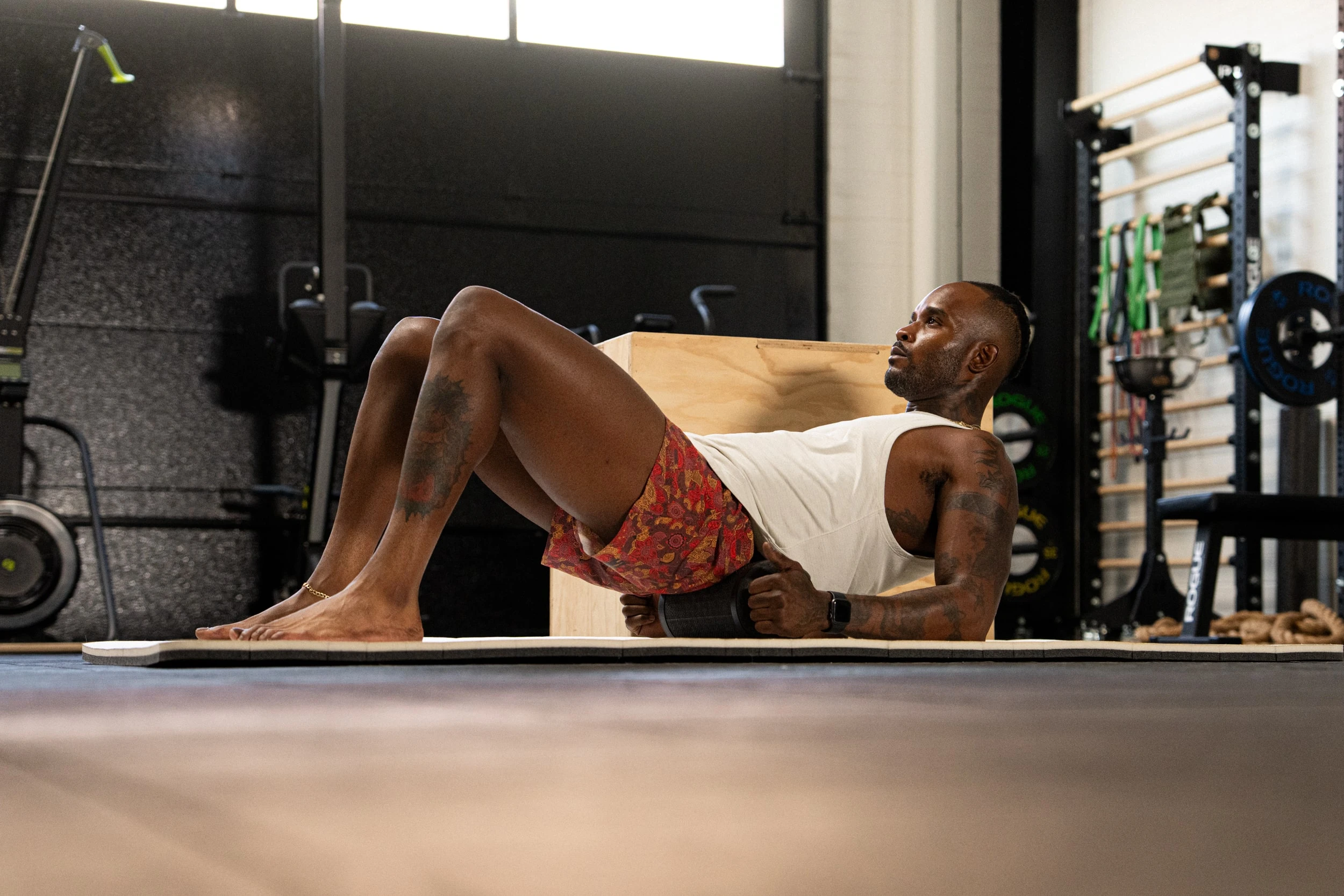
4. Use Foam Rolling to Release Fascial Tension
Problem: Adhesions and tightness in the fascia restrict blood flow and increase soreness.
Mechanism: The fascia is the connective tissue layer surrounding your muscles. After hard training, it can tighten and develop adhesions that limit your range of motion and trap localized inflammation. Foam rolling applies sustained pressure to mechanically release these restrictions and stimulate blood flow to the area. According to a 2015 study cited by NBC News Better, massaged muscles show only half as much scar tissue formation as non-massaged muscles.
Fix: Spend five to seven minutes foam rolling after each session, moving slowly over sore areas and pausing on tender spots for 20 to 30 seconds. Keep a roller accessible at home to establish a daily habit.
Expected Outcome: Reduced fascial tension, improved range of motion, and measurably lower perceived soreness in the 24 to 48 hours after training.
When it works: Best for soreness caused by tight fascia, limited movement, or poor tissue quality.
When it doesn't: Foam rolling will not speed up healing of deeply damaged muscle fibers or fix soreness caused by overtraining.
What to do instead: Use foam rolling alongside adequate sleep and protein intake for better recovery results rather than relying on it alone.
5. Stretch With Purpose, Not Habit
Problem: When your muscles lose flexibility and your joints can't move as far after training, you're more likely to get hurt and feel stiffer the next day.
Mechanism: Warm-up stretching prepares your neuromuscular system by raising tissue temperature and activating motor patterns. Post-workout stretching drives flexibility gains because warm tissue is softer and more receptive to lengthening.
Fix: Before training, use dynamic stretches involving movement: leg swings, hip circles, inchworms, and arm rotations. After training, hold static stretches for 30 to 60 seconds in each position, focusing on the muscle groups you worked. Hamstrings, hip flexors, and thoracic spine are commonly undertreated and sore.
Expected Outcome: Improved flexibility over time, reduced stiffness the next day, and lower likelihood of compensatory movement patterns that lead to injury.
When it works: When inflexibility or restricted range of motion contributes to soreness or movement dysfunction.
When it doesn't: Stretching alone won't resolve soreness caused by high training volume or nutritional deficits.
What to do instead: Pair stretching with breath work, which calms the nervous system and accelerates the shift from a sympathetic to a parasympathetic state after hard effort. A structured daily mobility practice, like the expert-led routines in Pliability, makes a meaningful difference: users who show up consistently at least three times per week have reported a 30% increase in mobility after two weeks, because repetition compounds.
Active recovery keeps blood moving through sore tissues without adding new stress. A 20-minute walk, a casual bike ride, or a beginner yoga sequence maintains circulation high enough to clear metabolic waste from muscles as fibers rebuild. According to a 2015 study cited by NBC News, massaged muscles display only half the scar tissue of non-massaged muscles, demonstrating that mechanical stimulation during recovery changes how your muscles heal.
Dynamic stretches like the Inchworm, low-impact swimming, or playing with your kids or a pet all qualify. The common thread is movement without intensity.
6. Treat Rest Days as Active Recovery
Problem: Doing nothing on rest days allows metabolic waste to accumulate in muscle tissue and reduces blood flow needed for repair.
Mechanism: Light movement on recovery days keeps blood flowing through sore tissue without adding new stress to muscles, speeding up the removal of inflammatory byproducts and delivering repair nutrients to damaged fibers more effectively than complete rest.
Fix: On rest days, choose low-intensity, low-impact movement: a 20- to 30-minute walk, gentle bike ride, beginner yoga session, or dynamic stretching. If spending the day at a desk or on a couch, aim to move for at least five minutes every 20 minutes.
Expected Outcome: Faster clearance of soreness, improved mood (movement reliably raises dopamine and serotonin), and better readiness for your next training session.
When it works: When soreness results from normal training adaptation rather than injury or overtraining.
When it doesn't: If pain is sharp, localized to a joint, or worsens with movement, active recovery is not appropriate.
Related Reading
How To Recover Muscles Faster
How To Relieve Sore Muscles
How To Get Rid Of Lactic Acid In Muscles
Crossfit Recovery
How To Activate the Parasympathetic Nervous System Quickly
Active Recovery
How To Get Rid Of Doms
Contrast Therapy Timing
How Many Rest Days Should I Have
When Sore Muscles Are a Sign You Should See a Doctor

Soreness after a hard workout is expected. Pain that makes you wonder if something is wrong is different. Knowing how to tell the two apart is critical for your long-term health.
"DOMS typically peaks 24 to 72 hours after exercise, then gradually goes away. If what you feel doesn't follow that pattern, pay attention." β Cedars-Sinai
Delayed onset muscle soreness (DOMS) follows a predictable pattern: it builds over 24 to 72 hours, then gradually fades. If your pain doesn't follow that timeline β or gets worse instead of better β that's your body sending a warning signal you shouldn't ignore.
β οΈ Warning: Pain that is sharp, sudden, or worsening beyond the 72-hour window is not normal DOMS. This is when you should consult a doctor immediately.
π Takeaway: The 24β72-hour peak rule is your benchmark. Anything that deviates from this pattern β especially lingering or intensifying pain β deserves professional medical attention.
Type | Typical Timeline | What To Do |
|---|---|---|
Normal DOMS | Peaks at 24β72 hours, then fades | Rest, hydrate, recover |
Prolonged Soreness | Lasts beyond 72 hours with no improvement | Monitor closely, consider seeing a doctor |
Sharp or Worsening Pain | Any time β doesn't follow the DOMS pattern | See a doctor immediately |
Normal DOMS vs. something more serious
Normal DOMS is spread out, affects both sides of your body, and feels dull. It spreads across a muscle group rather than a single point, worsens when you move while cold, and improves once blood flows through the area. A muscle strain is sharp, localized, and tied to a specific moment during your workout. Strains involve actual tearing of muscle fibers beyond the microscopic level and worsen with any contraction of the affected muscle, not just the first few steps of the morning.
How do tendon injuries differ from muscle soreness?
Tendon injuries occur where muscle connects to bone, not through the muscle itself. Stiffness that improves with movement but returns under load is a warning sign, not reassurance. Tendons receive limited blood flow, heal slowly, and respond poorly to pushing through pain.
Which conditions require immediate medical attention?
Two conditions require immediate medical attention. Exertional rhabdomyolysis occurs when muscle breakdown exceeds the body's clearance rate, flooding the kidneys with myoglobin. Signs include unusually dark urine (brown or cola-coloured), severe swelling, and weakness disproportionate to the exercise. Compartment syndrome involves pressure building within a muscle compartment that restricts blood flow. The primary sign is pain that worsens with gentle muscle stretch, accompanied by tightness, numbness, or burning. Neither condition improves with rest, hydration, or foam rolling.
How does building a recovery baseline help you spot warning signs?
A consistent mobility and recovery practice built around targeted stretching, breathwork, and structured movement establishes a clearer baseline for how your body normally feels. That baseline makes early warning signs easier to spot. Our mobility app reinforces body awareness through daily recovery routines, so the difference between productive soreness and something requiring attention becomes harder to miss.
Most people delay seeking help not because they can't identify warning signs, but because they're unsure what to do once they do.
Related Reading
Workout Recovery Tips
Does Protein Help With Muscle Soreness
Ice Bath Vs Contrast Therapy
What Are Doms In Weightlifting
Should You Workout With Doms
Best Recovery Methods For Athletes
How Often Should You Do Contrast Therapy
Does Drinking Water Help With Sore Muscles
Benefits Of Contrast Therapy
How Long Does Doms Last
Find Out What's Keeping Your Muscles Sore and Take Action Today
If your muscles stay sore for days after every workout, the issue is rarely the training itself: it's recovery habits that lack structure.
"The problem isn't how hard you trainβit's the recovery structure you're missing afterward."
β οΈ Warning: Ignoring post-workout recovery habits doesn't just slow your progress; it compounds soreness over time, making every session harder than necessary.
A mobility app like Pliability eliminates guesswork. In under five minutes, you can start a free 7-day trial, complete a personalized mobility assessment, and receive a daily recovery routine built around how your body actually moves. Users who show up consistently at least three times per week have seen a 30% increase in mobility in just two weeks. Our structured routine replaces guessing with a plan, whether you're managing tight legs after a run, stiff shoulders after lifting, or full-body soreness from returning to exercise.
Soreness Type | Common Cause | Pliability Solution |
|---|---|---|
Tight legs | Post-run fatigue | Targeted lower-body mobility routine |
Stiff shoulders | After lifting | Upper-body recovery flow |
Full-body soreness | Returning to exercise | Personalized full-body assessment plan |
π― Key Point: A personalized daily routine built around your movement patterns is the difference between guessing and real, measurable recovery gains.
π Takeaway: Users training 3+ times per week with Pliability saw a 30% mobility improvement in just 2 weeksβproof that structured recovery outperforms random stretching every time.
Move better in 10 minutes a day.
10,000+ five-star reviews.