


LEARN
pliability

Hard training sessions take a real toll on the body, leaving muscles tight, energy depleted, and the motivation to move again harder to find. Active recovery exercises fill the space between rest and training, allowing the body to repair without going completely still. Done consistently, these movements reduce soreness, support steady progress, and keep the body ready to perform without the risk of burnout.
Knowing which exercises to use and how to sequence them makes a significant difference in how quickly the body bounces back. For anyone who wants guided routines built around recovery and flexibility, pliability's mobility app removes the guesswork and makes it easier to move well on lighter days.
table of contents
What Are Active Recovery Exercises?
How Active Recovery Actually Helps Your Body Recover
10 Best Active Recovery Exercises
How Often Should You Do Active Recovery?
Turn Active Recovery Into a Structured System You Can Actually Follow
summary
Active recovery works through circulation, not rest. When you perform low-intensity movement after training, your muscles contract rhythmically, which pushes blood through the capillary beds, delivering oxygen and nutrients to damaged tissue while flushing out metabolic waste. Research published in Sports Medicine - Open (2024) found that active recovery reduces blood lactate levels approximately 50% faster than passive rest within just 10 minutes post-exercise.
The lymphatic system has no pump of its own and depends entirely on physical movement to clear inflammatory waste from muscle tissue. When you stop moving after a hard session, lymphatic flow slows, and cellular debris accumulates in the spaces between muscle cells, which is a primary driver of post-training swelling and tenderness. Low-intensity, rhythmic movement acts as a mechanical pump for the lymphatic system, accelerating tissue clearance during the hours when it matters most.
Active recovery sessions are most effective when kept within a specific intensity range. NASM defines this as 30 to 60% of maximum heart rate, with sessions typically lasting 20 to 45 minutes. Exceeding that ceiling shifts the session from recovery to training, adding stress to a system that is still repairing from the previous effort.
Recovery frequency should be planned, not improvised. NASM recommends 1 to 2 active recovery days per week for most training programs, with timing adjusted based on training type. After resistance training, muscles need roughly 48 to 72 hours to fully repair, according to research in Frontiers in Physiology, which means active recovery fits cleanly into those windows without interfering with adaptation.
Not every low-energy day calls for active recovery. Acute injury, severe joint pain, and extreme systemic fatigue are signals that the body needs complete rest, not stimulation. The distinction between surface-level muscle fatigue and central nervous system burnout determines whether gentle movement will accelerate or slow healing.
Consistency is the variable that separates people who recover well from those who remain chronically tight; people who follow structured recovery routines several times per week tend to see steady, measurable gains in mobility. pliability's mobility app addresses this by providing guided recovery and flexibility routines matched to training load and soreness level, so the decision of what to do on a lighter day is already made.
what are active recovery exercises?

Recovery is not a pause in your progress. It is part of the process itself.
"Active recovery sessions typically last 20 to 45 minutes to promote blood flow without causing additional muscle fatigue." (NASM)
Key Point: Recovery isn't downtime; it's active work your body needs to rebuild, repair, and perform at a higher level.
Most people treat rest days as a full stop, waiting for soreness to pass. But complete rest does not speed up the biological repair your muscles need. When you train hard, your body builds up metabolic waste, experiences tiny tissue stress, and loses fluid and energy reserves. Lying still does not flush that waste or deliver the oxygen and nutrients your muscles require. Circulation does that, and circulation requires movement. According to NASM, active recovery sessions typically last 20 to 45 minutes to promote blood flow without causing additional muscle fatigue.
Tip: Even light movement on rest days (like a 20-minute walk or gentle stretching) can dramatically accelerate how quickly your muscles recover and rebuild.
Warning: Skipping movement entirely on rest days can slow circulation, allowing metabolic waste to linger in your muscles longer than necessary.
Recovery Type | Effect on Circulation | Effect on Muscle Repair |
|---|---|---|
Complete Rest | Minimal movement | Slower waste removal |
Active Recovery | Increased blood flow | Faster nutrient delivery |
Overtraining | Stressed system | Tissue breakdown |
what does active recovery actually involve?
Active recovery is low-intensity movement designed to keep your body engaged between harder training sessions without adding stress to the system. Think a slow walk, gentle cycling, a yoga flow, or foam rolling and dynamic stretching. These are not watered-down workouts. They are a different tool entirely, one that works with your body's repair process rather than ignoring it.
The belief that soreness signals damage requiring rest is a persistent misconception in fitness. Soreness is a normal biological response, not a stop sign. Athletes in endurance sports have understood this for years, which is why easy recovery runs, low-resistance cycling, and mobility work are standard in serious training programs. The sports science consensus is clear: gentle movement between hard efforts produces better recovery outcomes than passive rest alone.
why does skipping active recovery slow you down over time?
Most people do nothing on rest days because it's easier and requires no planning. Over time, this choice carries a hidden cost: tighter muscles, slower recovery between sessions, and a higher risk of injury. Our pliability mobility app solves this by providing guided daily routines focused on recovery and flexibility, so movement supports repair rather than adding additional stress on your body.
Recovery is an active biological process. Your body is not waiting passively for soreness to fade; it is working. The question is whether your choices on rest days support that work or slow it down.
how active recovery actually helps your body recover

Your muscles recover through movement, not rest alone. Low-intensity activity supplies oxygen-rich blood to tissues, allowing the biological cleanup process that follows hard training.
"Recovery is not a passive process: active movement drives oxygen-rich blood into fatigued tissues, accelerating the body's natural repair cycle."
Tip: A light 20-minute walk or gentle cycling session meaningfully boosts blood flow to sore muscles, making active recovery far more effective than doing nothing.
Takeaway: The key to faster recovery isn't total rest: it's strategic low-intensity movement that keeps circulation high and supports your body's natural healing process.
how does movement actually speed up recovery?
When you walk, cycle gently, or move through a light mobility flow, your muscles contract rhythmically at low force, squeezing blood vessels and capillary beds in ways rest cannot. This increases circulation to tissues stressed during training. More blood flow delivers oxygen and nutrients faster to damaged fibers and removes metabolic byproducts: hydrogen ions, carbon dioxide, and inflammatory markers that accumulated during high-intensity effort. The stimulus is movement. The mechanism is circulation. The outcome is a shorter, less painful recovery.
What does the research say about active versus passive rest?
According to a 2024 umbrella review published in Sports Medicine - Open, active recovery reduces blood lactate levels about 50% faster than passive rest within 10 minutes after exercise. This means the difference between feeling stiff and sore two days later versus feeling ready to move again tomorrow.
the system most people forget
The lymphatic system has no pump. Unlike your cardiovascular system, which has the heart continuously driving circulation, your lymphatic network depends on physical movement to push fluid through its vessels. When you stop moving after a hard workout, lymphatic flow slows and inflammatory waste (including cellular debris and excess fluid from tissue damage) builds up between muscle cells. This buildup is a primary driver of the swelling and tenderness that follows intense training. Low-intensity movement, involving gentle rhythmic muscle contractions, acts as a mechanical pump for the lymphatic system.
Why does staying still on rest days work against recovery?
A common pattern among people who train consistently is to treat rest days as a binary choice: either train hard or do nothing. That approach leaves the lymphatic system largely inactive during the hours when it needs to work hardest. Apps like pliability address this directly by offering targeted, expert-led recovery routines calibrated to low intensity, so the decision of how to move on a lighter day is already structured and appropriate.
Which specific movements trigger these responses most effectively?
Once you understand how it works, the next question becomes clear: which specific movements most effectively trigger these responses in which bodies?
10 best active recovery exercises

Your body's recovery needs change based on training volume, sleep quality, stress load, and what you did the day before. The ten structured workouts below are organized by intent, not movement type alone, so you can match what you do to what your body needs that day.
Key Point: Matching your recovery workout to your body's specific daily needs is far more effective than following a one-size-fits-all approach.
"Active recovery is performed at low intensity, typically 30 to 60% of maximum heart rate, to promote blood flow without adding stress to recovering muscles." (NASM)
According to NASM, active recovery is performed at low intensity (typically 30 to 60% of maximum heart rate) to promote blood flow without adding stress to recovering muscles. The moment intensity climbs above that threshold, you are no longer recovering: you are training.
Warning: Exceeding 60% of your maximum heart rate during a recovery session immediately shifts the stimulus from recovery to training stress, undermining the entire purpose of the day.
The following workouts can be completed as individual sessions or combined into a single recovery day. Pairing Workout 1 (Bodyweight) with Workout 3 (Stretching) and Workout 9 (Foam Rolling), for example, gives you a complete session that covers joint lubrication, tissue quality, and mobility restoration, without taxing your system.
Workout Pairing | Primary Benefit | System Targeted |
|---|---|---|
Workout 1 (Bodyweight) | Joint lubrication | Muscular system |
Workout 3 (Stretching) | Mobility restoration | Connective tissue |
Workout 9 (Foam Rolling) | Tissue quality | Fascia & soft tissue |
Tip: Combining 3 complementary recovery workouts into a single session maximizes recovery output without crossing into training territory.
Intent-based categories give you a clear framework before you lace up your shoes, solving the default problem of either doing nothing or accidentally doing too much on recovery days.
Takeaway: Organizing recovery by intent (not just movement type) is the critical difference between a day that genuinely restores your body and one that quietly adds to your accumulated fatigue.
active recovery workout 1: bodyweight only
Purpose: Lubricate joints with synovial fluid, maintain neuromuscular activation, and preserve movement habits on low-energy days without adding training stress.
When to use: On days following moderate training sessions when the body feels stiff or sluggish but not fatigued. Ideal for beginners or anyone without access to equipment.
When NOT to use: Avoid jump squats and single-leg deadlifts after maximal lower-body training days or when leg fatigue is high. Substitute Workout 3 or Workout 9 instead.
Why it works: Bodyweight movement at low intensity increases local blood flow to muscles and tendons, stimulates synovial fluid production in joints, and keeps the nervous system engaged without triggering a stress response. The combination of lower-body, core, upper-body, and mobility work ensures that no major system remains dormant.
The combination and how to perform it
All exercises use only your body weight. You need one solid object to grip for the rack lat stretch: a pole, pillar, or banister.
Bodyweight Calf Raises: 10 reps. Stand with feet hip-width apart, slowly rise onto the balls of your feet, hold for 1 second at the top, then lower with control.
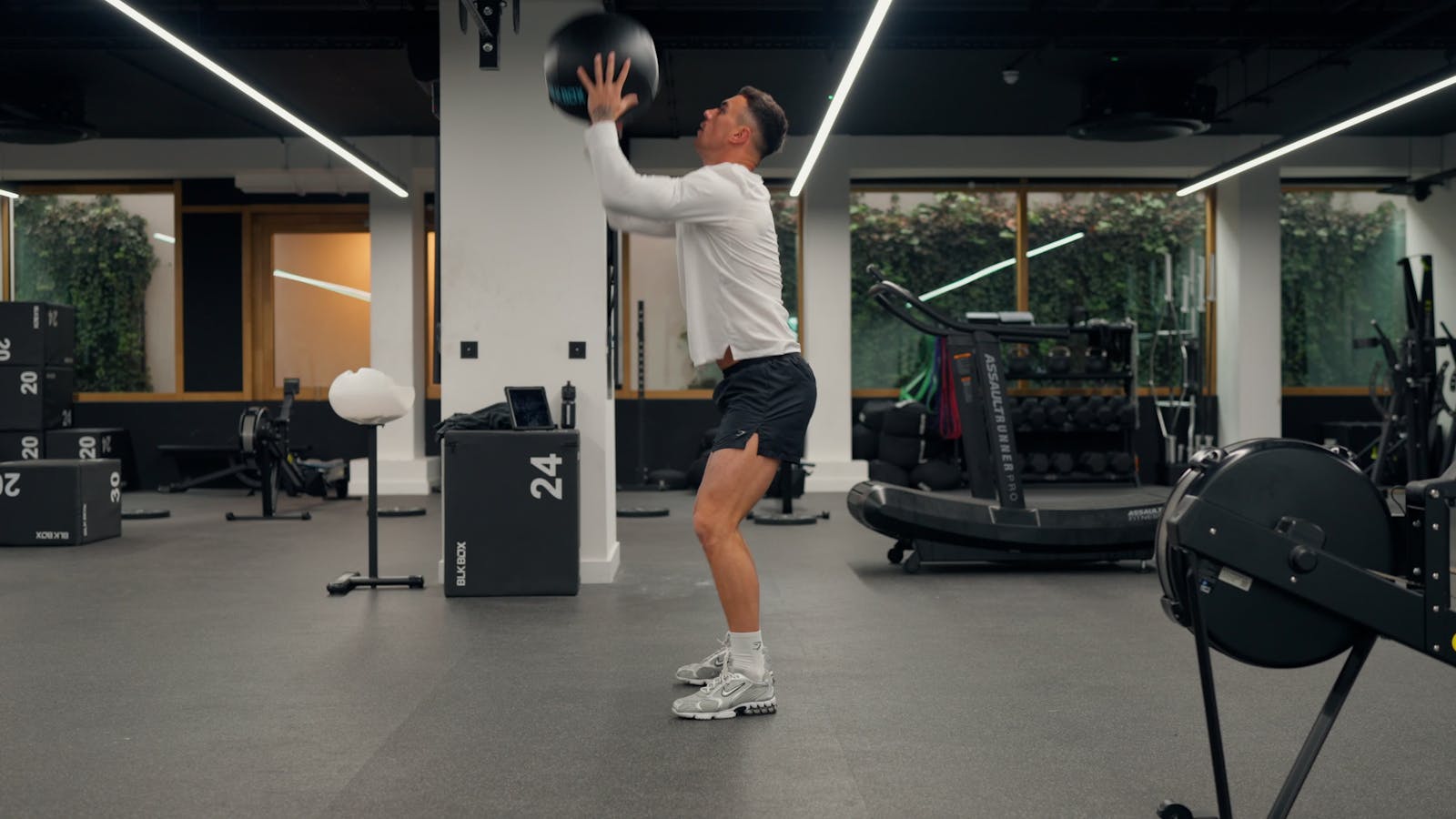
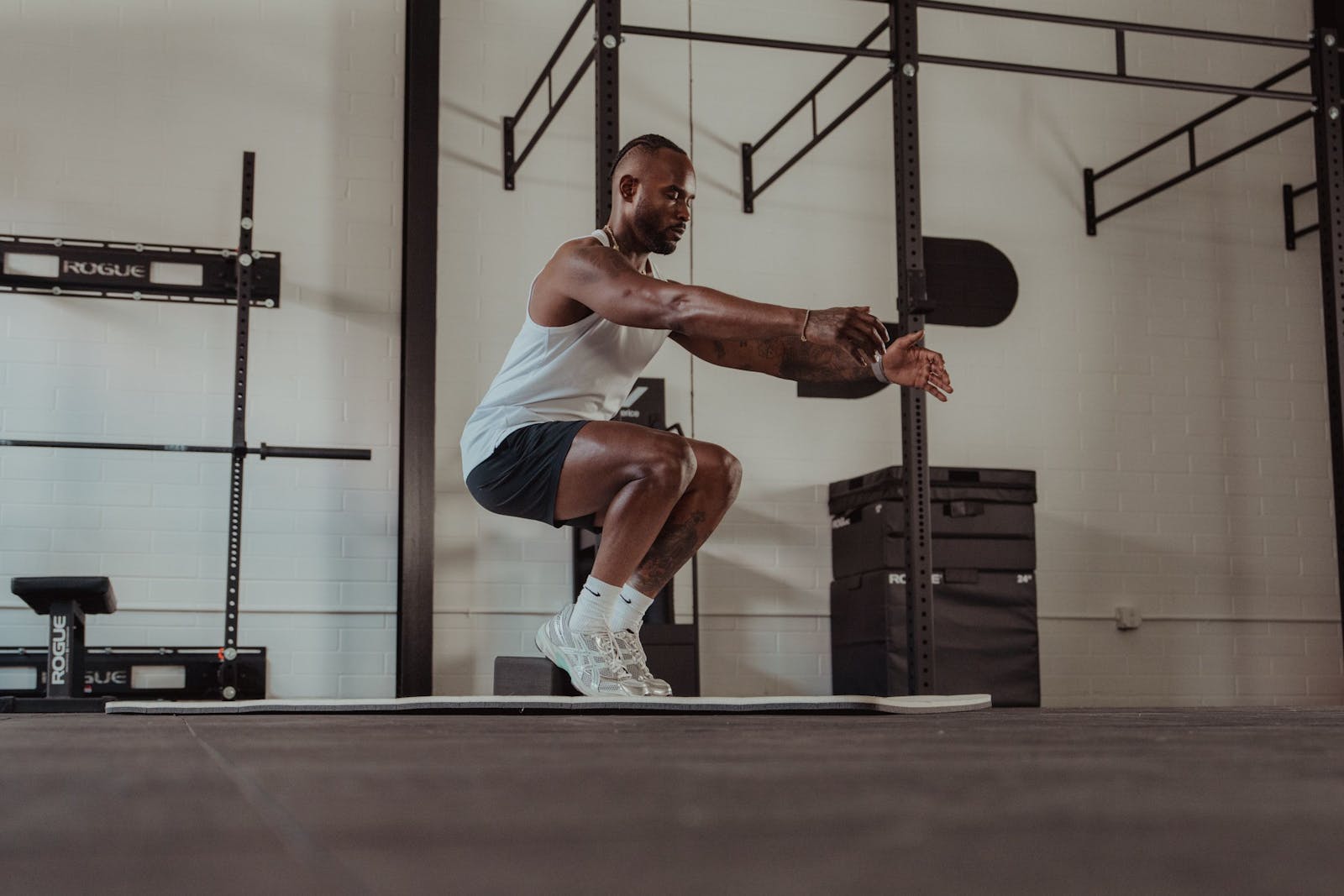
Bodyweight Jump Squat: 10 reps. Stand with feet shoulder-width apart. Squat to parallel, then drive through your heels to jump. Land softly with bent knees at a comfortable pace, not explosively.
Bodyweight Single Leg Deadlift: 10 reps per leg. Stand on one foot with a slight knee bend. Hinge at the hip, reaching the opposite hand toward the floor as the free leg extends behind you. Return to standing with control.
Rocking Frog Stretch: 10 reps. Start on all fours with knees wide and feet turned out. Rock your hips back toward your heels, feeling the inner groin and hip flexors open.
Side Crunch: 10 reps per side. Lie on your side with your legs stacked, and lift your upper body laterally while contracting your obliques. Lower slowly.
Ab Crunch: 10 reps. Lie on your back with knees bent and feet flat. Place hands behind your head without pulling on your neck. Curl your upper back off the floor and lower with control.
Lying Floor Leg Raise: 10 reps. Lie flat on your back with legs straight. Keep your lower back pressed into the floor as you raise both legs to 90 degrees, then lower slowly without touching the ground.
Push-up: 10 reps. Position your hands slightly wider than shoulder-width apart, with your body in a straight line from head to toe. Lower your chest to the floor, then press back up. Modify to knees if needed.
Rack Lat Stretch: 10 seconds per side. Grip a pole or solid object at hip height, step back, and hinge at the hips until your torso is parallel to the floor. Let your chest drop to stretch the lat.
Arm Circles: 10 reps. Stand tall with arms extended to your sides. Make slow, controlled circles forward for 5 reps, then reverse for 5 reps.
How to structure it
Do all ten exercises consecutively with minimal rest and repeat for two rounds. Alternatively, do two sets of each exercise with 30 seconds of rest between sets. Choose the option that suits your available time.
active recovery workout 2: more advanced movement
Purpose: Maximize recovery quality while exposing movement weaknesses in hip mobility, core stability, and tissue quality through targeted soft tissue work.
When to use: On days following upper body or full-body training when the lower body and hips need attention. Best suited for intermediate to advanced athletes familiar with hip mobility patterns.
When NOT to use: Do not use after maximal strength training days when systemic fatigue is high. The hip crossover and side plank with hip dip demand stability that a depleted nervous system compromises, increasing injury risk. If exhausted, use Workout 9 instead.
Why it works: Movements like the 90/90 hip crossover and rock-back extension rotation target the hip capsule and thoracic spine, areas that accumulate restrictions under heavy training loads. Lacrosse ball and foam roller work addresses myofascial tension directly, improving tissue extensibility and reducing localized soreness.
The combination and how to perform it
You need a lacrosse ball and a foam roller.
Cradle Walk to Forward Lunge: 15 reps per leg. Walk forward, lifting one knee into your chest and cradling it with both hands, then step that foot forward into a lunge. Alternate legs with each step.
90/90 Hip Crossover: 15 reps per leg. Sit on the floor with both knees bent at 90 degrees, one leg internally rotated, and one externally rotated. Slowly rotate your hips to the opposite side, bringing the back leg forward while keeping your torso upright.
Side Plank with Hip Dip: 15 reps per side. Set up in a side plank on your forearm with feet stacked. Lower your hip toward the floor without touching it, then drive it back up, keeping your core tight and hips square.
Plank: Hold to failure or up to 2 minutes. Keep forearms on the floor with your body in a straight line, avoiding sagging or piking at the hips.
Rock Back Extension Rotation: 15 reps per side. Start on all fours, rock your hips slightly back toward your heels, then rotate your thoracic spine by reaching one arm toward the ceiling. Follow your hand with your eyes.
Push Up with Feet Elevated: 15 reps. Place your feet on a bench or chair. The elevated position increases load on the upper chest and shoulders at a manageable intensity.
Plantar Fascia Lacrosse Ball: Roll the ball slowly under the arch of each foot, pausing on tender spots for 10 to 20 seconds.
IT Band Foam Rolling: Position the foam roller under the outer thigh, just above the knee. Slowly roll up toward the hip, pausing on tight spots and breathing through the pressure.
Hip Flexor Foam Rolling: Lie face down with the roller positioned under one hip flexor. Slowly roll along the muscle belly, pausing on areas of tension.
active recovery workout 3: stretching
Purpose: Restore your range of motion, reduce residual muscle tension, and activate your parasympathetic nervous system through sustained, low-intensity flexibility work.
When to use: Any day, including consecutive days. This works especially well after prolonged sitting, following intense training weeks, or as a standalone evening routine.
When NOT to use: Avoid holding stretches at the end of your range of motion after an acute injury or when a specific area is swollen. Move around the painful joint rather than directly into it.
Why it works: When you stretch gently for extended periods, your muscles become less sensitive over time, allowing you to move further and bend more easily. Stretching also activates your body's calming response, lowering stress hormones and heart rate, which accelerates recovery during sleep.
The combination and how to perform it
Do each stretch for the listed duration. Rest 30 seconds between sets if you do a second round.
Prone Quad Stretch: 15 to 30 seconds per side. Lie face down, bend one knee, and reach back to hold your ankle, gently pulling your heel toward your glute. Keep your hips pressed into the floor.
Figure 4 Glute Stretch: 15 to 30 seconds per side. Lie on your back with knees bent. Cross one ankle over the opposite knee, flex the crossed foot, and gently press the knee away from you. For a deeper stretch, lift the bottom foot off the floor.
Inchworm: 2 to 5 reps. Stand with feet hip-width apart. Hinge forward and walk your hands out to a plank position. Walk your feet toward your hands and stand. This warms the hamstrings, shoulders, and thoracic spine simultaneously.
Superman: 15 to 30 seconds. Lie face down with arms extended overhead. Simultaneously lift your arms, chest, and legs off the floor, hold, and breathe.
Hollow Body Hold: 15 to 30 seconds. Lie on your back, press your lower back into the floor, extend your arms overhead, and lift your legs to about 45 degrees. Hold without letting your lower back arch.
World's Greatest Stretch: 15 seconds per side. Start in a lunge position with your right foot forward. Place your right hand on the floor inside your right foot. Rotate your left arm up toward the ceiling, following it with your eyes. This targets the hip flexors, thoracic spine, and hamstrings in one movement.
Rack Pec Stretch: 15 to 30 seconds per side. Stand beside a wall or rack with your forearm flat against the surface at shoulder height. Gently rotate your torso away from the arm until you feel a stretch across the chest and front shoulder.
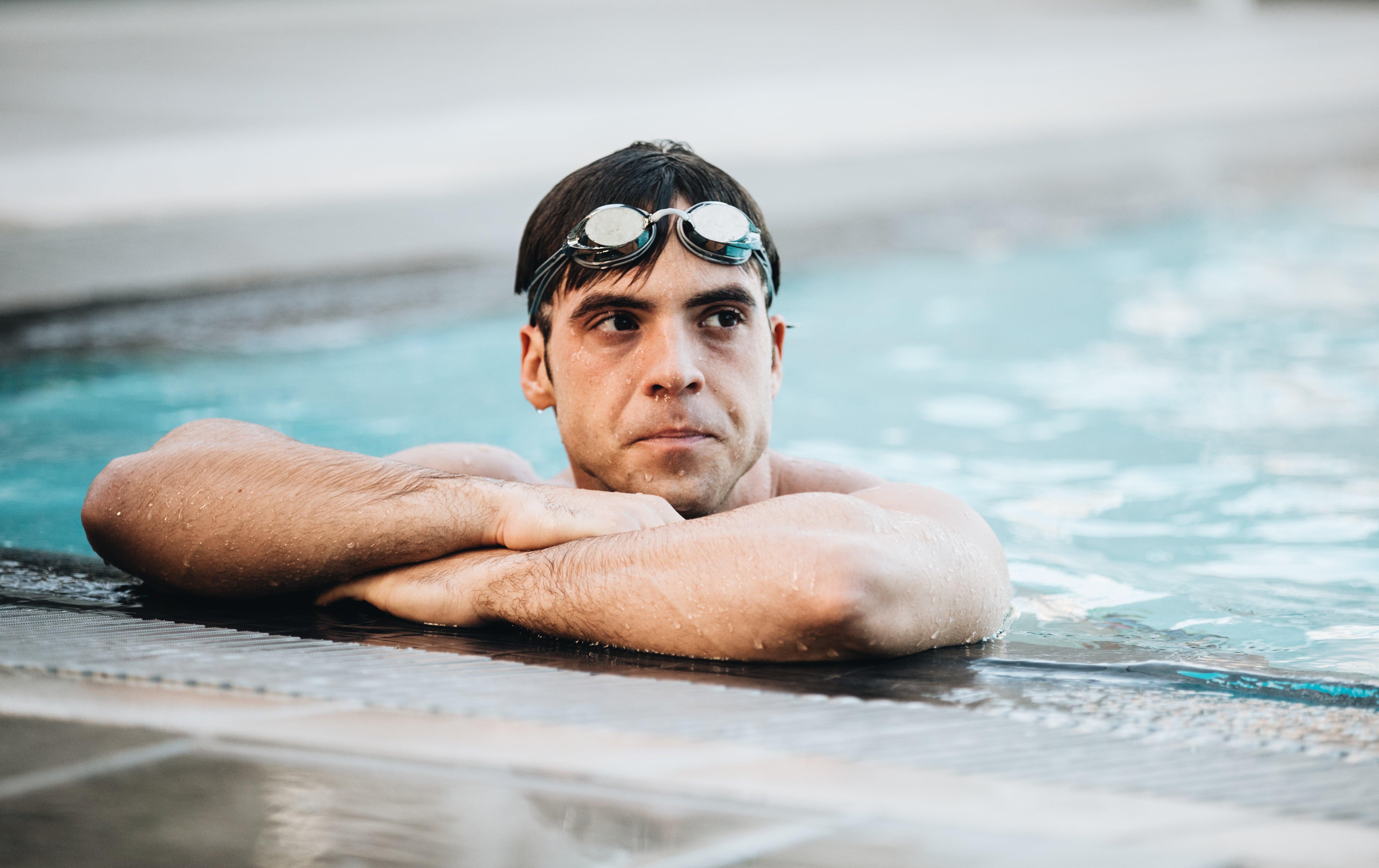
active recovery workout 4: swimming, lap pool
Purpose: Deliver full-body heart and lung exercise and active muscle flushing through water-based movement that removes gravitational joint load.
When to use: After heavy lower-body training, following high-impact running weeks, or when joint soreness makes land-based movement uncomfortable. Swimming enables full-body movement without compressing joints.
When NOT to use: Avoid if you have an open wound, an active skin infection, or an acute shoulder injury that limits overhead range of motion. Modify stroke selection based on your limitations.
Why it works: Water provides resistance in all directions without heavy eccentric loading. Hydrostatic pressure acts like a full-body compression garment, reducing peripheral swelling and supporting venous return. This makes swimming one of the most efficient active recovery tools for athletes managing significant training volume.
The combination and how to perform it
Keep a steady, relaxed rhythm the whole time.
Backstroke: 4-6 laps
Breaststroke: 4-6 laps
Side Stroke: 4-6 laps, switching sides after each lap
Flutter Kick: 2-3 minutes, holding the pool wall or a kickboard
Water Walking: 2-3 laps
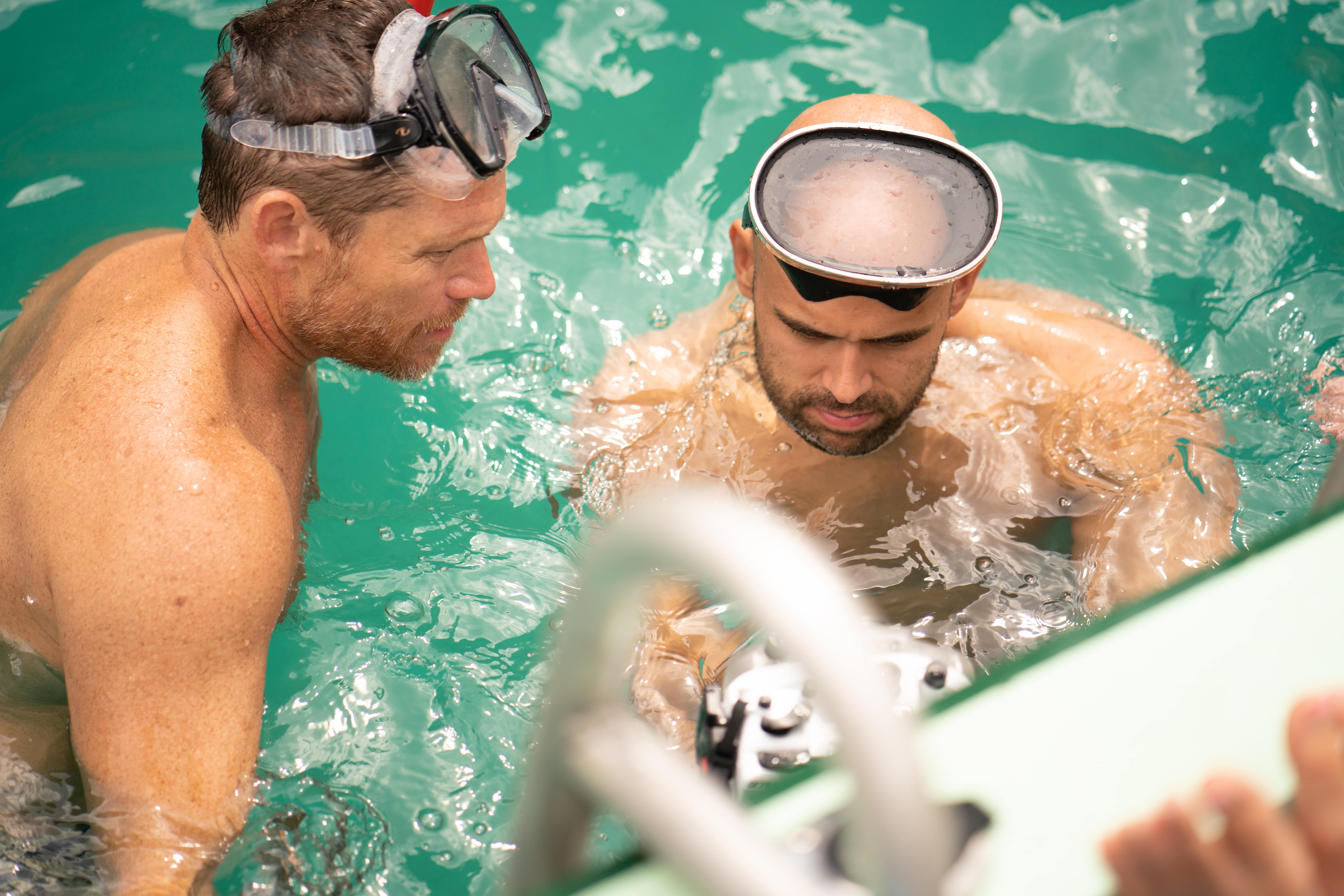
active recovery workout 5: wading pool or hot tub workout
Purpose: Warm water immersion combined with gentle mobilization reduces muscle tension, improves joint range of motion, and activates the body's recovery response without requiring open water or lane space.
Why it works: Heat dilates blood vessels and helps clear waste products from tired muscles faster. Water's gentle resistance lets you move without stressing already fatigued muscles.
When to use: Best used 24-48 hours after intense training, particularly when NASM reports that delayed onset muscle soreness (DOMS) peaks 24-72 hours after exercise. Gentle water-based movement proves most effective during this window.
When NOT to use: Avoid if experiencing dizziness, heart and blood vessel instability, or if heat worsens symptoms. Not suitable as a replacement for medical treatment of acute injury.
What movements make up the wading pool or hot tub workout?
Keep your posture strong while doing these movements:
Arm Circles: Stand with your feet shoulder-width apart and stretch your arms out to the sides. Do small, slow circles forward for 30 seconds, then reverse for 30 seconds. Then do larger circles forward and backward for 30 seconds each. Repeat for 2 more rounds.
Leg Swings: Hold onto the poolside for balance. Stand on one leg and swing the other leg forward and backward, gradually increasing the range of motion. After 10 swings, switch legs. Complete 2 more rounds on each leg.
Torso Twists: Stand with your feet about shoulder-width apart. Slowly twist your upper body from side to side, letting your arms swing naturally. Do 10–20 twists on each side.
active recovery workout 6: 30-minute light cardio workout
Purpose: Raise your heart rate enough to get blood flowing and maintain your aerobic base without causing fatigue or requiring extra recovery time.
Most people choose either to work hard or to do nothing. This workout occupies the middle ground and works better than it feels like it should.
Why it works: According to NASM, active recovery involves low-intensity exercise at 30-60% of your maximum heart rate. This range improves blood flow, delivers oxygen to muscles, and clears lactic acid without creating new training stress.
When to use: Any day after moderate-to-high intensity training when your legs feel heavy but not broken. Also effective as a daily movement habit on non-training days to maintain consistency without accumulating fatigue.
When NOT to use: Do not use this as a replacement for real rest when you are sick, running a fever, or experiencing signs of overtraining such as elevated resting heart rate, mood changes, or declining performance across multiple sessions.
The combination
Choose your preferred cardio equipment, or walk or jog in nature.
Warm-up (5 minutes): Start slow, gradually increasing to a comfortable, sustainable pace.
Steady pace (20 minutes): Maintain a steady pace for 20 minutes. Your heart rate should be elevated but not so high that you cannot converse.
Cooldown (5 minutes): Gradually lower your pace over 5 minutes until you come to a complete stop.
active recovery workout 7: active recovery yoga flow
Purpose: Relax your spine, restore joint mobility, activate your parasympathetic nervous system, and reduce residual tension in major muscle groups through breathwork.
Why it works: Slow, careful movement through poses like Cat-Cow and Child's Pose signals your nervous system to calm down. This active movement targets connective tissue, improves lymphatic function, and prepares your body for the next training session.
When to use: Ideal, the morning after a hard training day, or as a standalone session on a rest day when your body needs movement but your nervous system needs calm. Also works well as a pre-sleep wind-down after high-stress days.
When NOT to use: Avoid deep forward folds or spinal flexion if managing a disc injury or acute low back flare-up. Modify or skip poses that reproduce pain.
The combination
Mountain Pose: Stand at the top of your mat with feet hip-width apart. Engage your core, stand tall, and relax your shoulders. Take a few slow, deep breaths.
Forward Fold: Fold forward from your hips, bending your knees as needed. Let your arms hang freely and relax your head, neck, and shoulders. Take a few deep breaths.
Cat-Cow Pose: From the tabletop position, inhale to lift your chest and tailbone while arching your back and looking upward. Exhale to round your spine and tuck your chin. Flow between the two poses with each breath cycle.
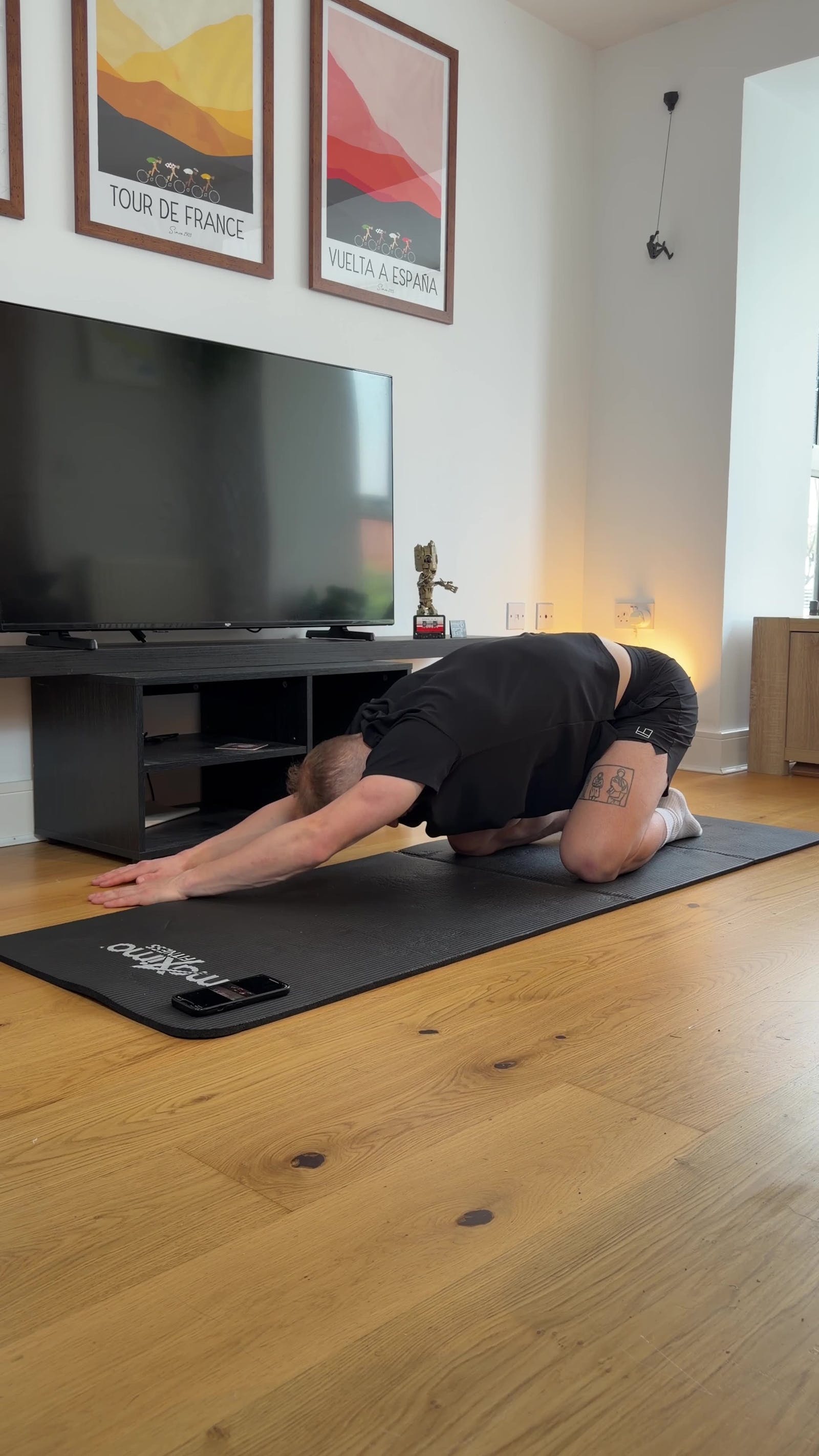
Child's Pose: Lower your hips back toward your heels and extend your arms forward. Rest your forehead on the mat and relax your entire body. Take several slow, deep breaths.
Many athletes skip this because it doesn't feel like training. That's exactly why it works.
active recovery workout 8: jump rope interval workout
Purpose: Keep your heart and lungs in good shape, get better at coordinating your movements, and get your blood flowing by doing rhythmic movements that don't put too much stress on your body, with built-in rest breaks.
Why it works: Short intervals at a relaxed pace keep the heart rate in the active recovery zone without building mechanical stress. The coordination demand engages the neuromuscular system without excessive strain.
When to use: Best suited for days following upper body or core-focused training sessions, when your legs are fresh and your cardiovascular system needs a light stimulus.
When NOT to use: Do not use this workout the day after maximal lower body training, heavy plyometric sessions, or any session that fatigued your calves, ankles, or Achilles tendons. Repetitive impact can compound existing tissue stress.
The combination
Jump rope for 20-30 seconds at a slow, steady pace.
Rest 30-60 seconds or until your heart rate lowers.
Repeat the sequence for 10-20 total rounds.
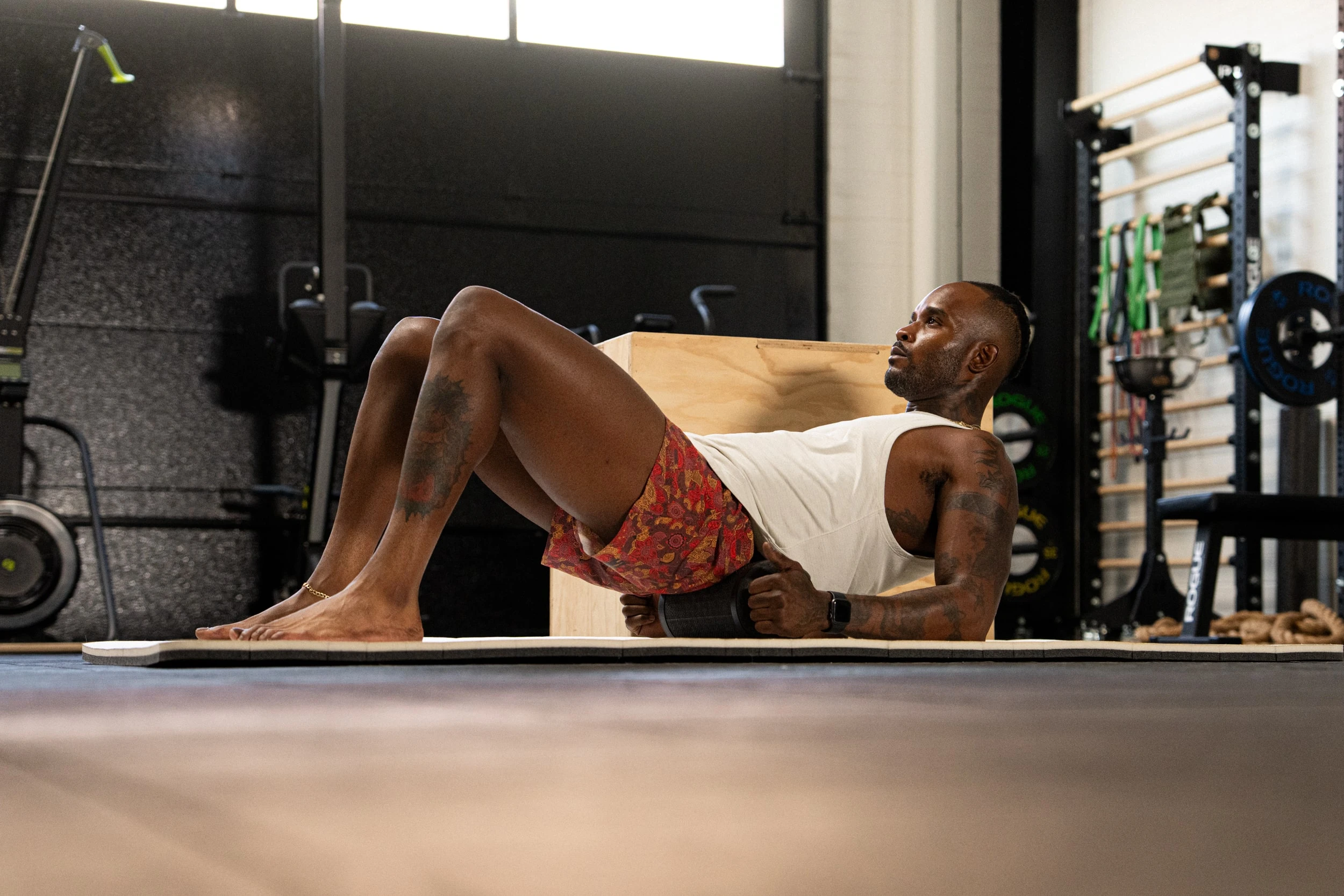
active recovery workout 9: foam rolling sequence
Purpose: Reduce muscle tightness, improve tissue quality, and increase blood flow to chronically tight or overworked muscle groups through self-myofascial release.
Why it works: Steady pressure on tight tissue breaks up adhesions and triggers muscle relaxation through your nervous system, improving range of motion, reducing soreness, and enhancing movement quality.
When to use: Use this right after training, on rest days, or before a workout to improve movement quality before adding weight. It's one of the few recovery tools you can use at almost any time without issue.
When NOT to use: Avoid rolling directly over new injuries, bruised tissue, varicose veins, or bony areas. If rolling causes sharp, shooting, or nerve-like pain rather than helpful discomfort, stop and consult a professional.
The combination
Place the foam roller under areas of pain or discomfort.
Target commonly tight areas: calves, hamstrings, quadriceps, and glutes.
Breathe slowly and deeply as you roll tight muscles gently over the roller.
A common mistake is rolling too fast. Slow down and let the pressure work.
active recovery workout 10: resistance band circuit
Purpose: Wake up muscles that don't get used much: glutes, rotator cuff, and upper back. Use controlled, light resistance without overstressing your central nervous system.
Why it works: Compound movements like squats and deadlifts prioritize prime movers over smaller stabilizers. This circuit targets stabilizers directly using a 4-2-1 tempo (4 seconds lowering, 2 seconds holding, 1 second lifting), building neuromuscular control and reducing injury risk.
When to use: On active recovery days following upper- or lower-body training when primary movers need rest but stabilizers benefit from activation, or as prehabilitation before heavier training blocks.
When NOT to use: Do not perform immediately after maximal strength training if total-body fatigue is high, as form breaks down when the nervous system is depleted, turning a motor control circuit into a liability.
The combination
Do 12-15 reps of each exercise for 1-3 sets at a 4-2-1 tempo.
Banded Bridge: Place the band just above the knees. Lay on your back with knees bent, feet flat hip-width apart, heels about 6 inches from your rear end, and arms extended at your sides with palms up. Press through your heels and squeeze your glutes to raise your hips until your knees, hips, and shoulders form a straight line. Hold for 2 seconds, then lower over about 4 seconds.
Lateral Band Walk: Place the mini-band just above your knees, then stand with your feet hip-width apart. Keep a slight knee bend as you sidestep with control. Maintain a tight core so your upper body doesn't sway, and pick your feet up fully with each step. Take 10–15 steps in one direction, then back.
External Rotation: Anchor a resistance band to a fixed point at elbow height. Stand tall with shoulder blades back and down. Pin the elbow of your working arm to your side (a small towel between elbow and ribs helps keep it there). Rotate your forearm outward against the band, then return with control.
how often should you do active recovery?

How often you do something is not a feeling: it's a choice you make ahead of time, based on what your body is doing between sessions.
Tip: Don't leave recovery to chance. Planning your active recovery days in advance is as important as scheduling your hardest training sessions.
"NASM recommends 1 to 2 active recovery days per week for most training programs."
This range works with different training loads while helping you avoid the critical mistake of treating every non-training day as recovery. Recovery days are planned activities with a specific purpose, not just filler.
Training Load | Recommended Active Recovery Days |
|---|---|
Light training week | 1 day per week |
Moderate training week | 1–2 days per week |
Heavy training week | 2 days per week |
Warning: Treating every off-day as a passive rest day is one of the most common recovery mistakes. Without intentional active recovery, you risk slower adaptation and missed performance gains.
Takeaway: Follow the NASM-recommended range of 1 to 2 active recovery days per week and treat them as a non-negotiable part of your program, not an afterthought.
when active recovery is the right call
Active recovery works best in three scenarios: high soreness without risk of injury (gentle movement speeds up muscle rebuilding), stiffness from inactivity (low-intensity mobility work helps), and localized muscle fatigue without central nervous system burnout. This distinction matters: surface-level muscle fatigue and deep systemic exhaustion require different responses.
when should you stop and rest instead?
An acute injury is a hard stop, as is severe joint pain that changes how you move or put weight on a limb. These signal damaged tissue that needs protection, not stimulation. Extreme fatigue, where motivation is gone, sleep quality has dropped, and everything feels heavier, indicates your nervous system needs complete rest. Pushing active recovery into that state delays healing rather than speeds it up.
How does a structured approach remove the guesswork on rest days?
Most people choose either to train hard or do nothing. A mobility app like pliability removes the guesswork from that uncertainty. Instead of deciding from scratch what a recovery day should look like, the app delivers targeted routines matched to your body's current state, whether a 20-minute hip mobility flow or a full-body stretch session calibrated to post-training soreness. The outcome is measurable, not theoretical.
timing by training type
After resistance training, research published in Frontiers in Physiology shows that muscles need roughly 48 to 72 hours to repair between sessions, so active recovery fits within those windows without interfering with adaptation. After endurance training, a single session within 24 hours works well because the cardiovascular system recovers faster than skeletal muscle tissue. During deload weeks, training frequency can increase because training stress is intentionally reduced, and additional movement supports tissue quality without adding load.
Active recovery is most effective when it matches recovery demand rather than training intensity.
turn active recovery into a structured system you can actually follow
Most people approach recovery on instinct (a stretch here, a walk there) with no system behind it. This inconsistency slows progress. Our mobility app eliminates guesswork with personalized, guided recovery sessions matched to your training load, soreness level, and mobility needs. Users who follow structured routines at least three times per week tend to see steady, measurable gains in mobility within two weeks.
Takeaway: Measurable mobility gains in 14 days aren't luck: they're what happens when guesswork is replaced with a structured, personalized system.
Tip: Consistency drives recovery results. Committing to structured sessions 3x per week is the threshold needed to achieve meaningful mobility improvements.
Warning: Don't wait until your body forces a rest day: proactive recovery built into your weekly routine is what separates athletes who plateau from those who keep progressing.
Start your 7-day free trial today and build your first active recovery routine before your next rest day arrives.
Related Reading




Move better in 10 minutes a day.
10,000+ five-star reviews.