


LEARN
pliability

No, soreness by itself is not a reliable sign that a workout built muscle. Waking up the morning after a hard session, barely able to walk down the stairs, feels like proof it worked, but soreness and muscle growth start from the same trigger and then follow separate paths. Understanding what delayed-onset muscle soreness actually signals helps distinguish productive training from unnecessary damage and changes how athletes approach both effort and recovery.
Real progress depends less on how wrecked you feel the next day and more on how consistently your body can perform and adapt. Distinguishing between the two shifts the focus toward smarter recovery habits that support strength and hypertrophy over time.
table of contents
Is Soreness a Sign of Muscle Growth? What the Science Actually Says
What Muscle Soreness Actually Tells You (And What It Doesn't)
How Muscle Growth Actually Works
How to Treat Sore Muscles
Stop Using Soreness as Your Recovery Scorecard
summary
Soreness and muscle growth share the same origin but follow different paths. Both begin with training stress, yet soreness reflects your body's inflammatory response to unfamiliar mechanical load while growth reflects its structural adaptation to consistent, progressive demand. Current research does not show a reliable correlation between how sore you feel and how much muscle you build: the two are related to the same stimulus but not the same outcome.
The primary driver of hypertrophy is mechanical tension, not the inflammation that causes post-workout ache. A single bout of exercise opens a window of elevated muscle protein synthesis that begins within a few hours and lasts roughly a day. That window is created by tension and effort, and what happens inside it, primarily protein intake and sleep quality, determines whether the signal becomes structural change or fades.
Training frequency matters far more than soreness levels when it comes to building muscle. Training a muscle group twice per week tends to produce meaningfully more growth than training it once per week. That difference has nothing to do with how sore you feel and everything to do with giving muscles repeated stimulus within a recovery window.
Experienced trainees often feel far less sore than beginners, not because their workouts are less effective, but because their nervous system has adapted to familiar movement patterns. Soreness ratings typically peak around two days after a hard session, then ease over the following days, a timeline that lines up with inflammation resolving rather than with muscle protein synthesis, which runs on a longer, separate schedule.
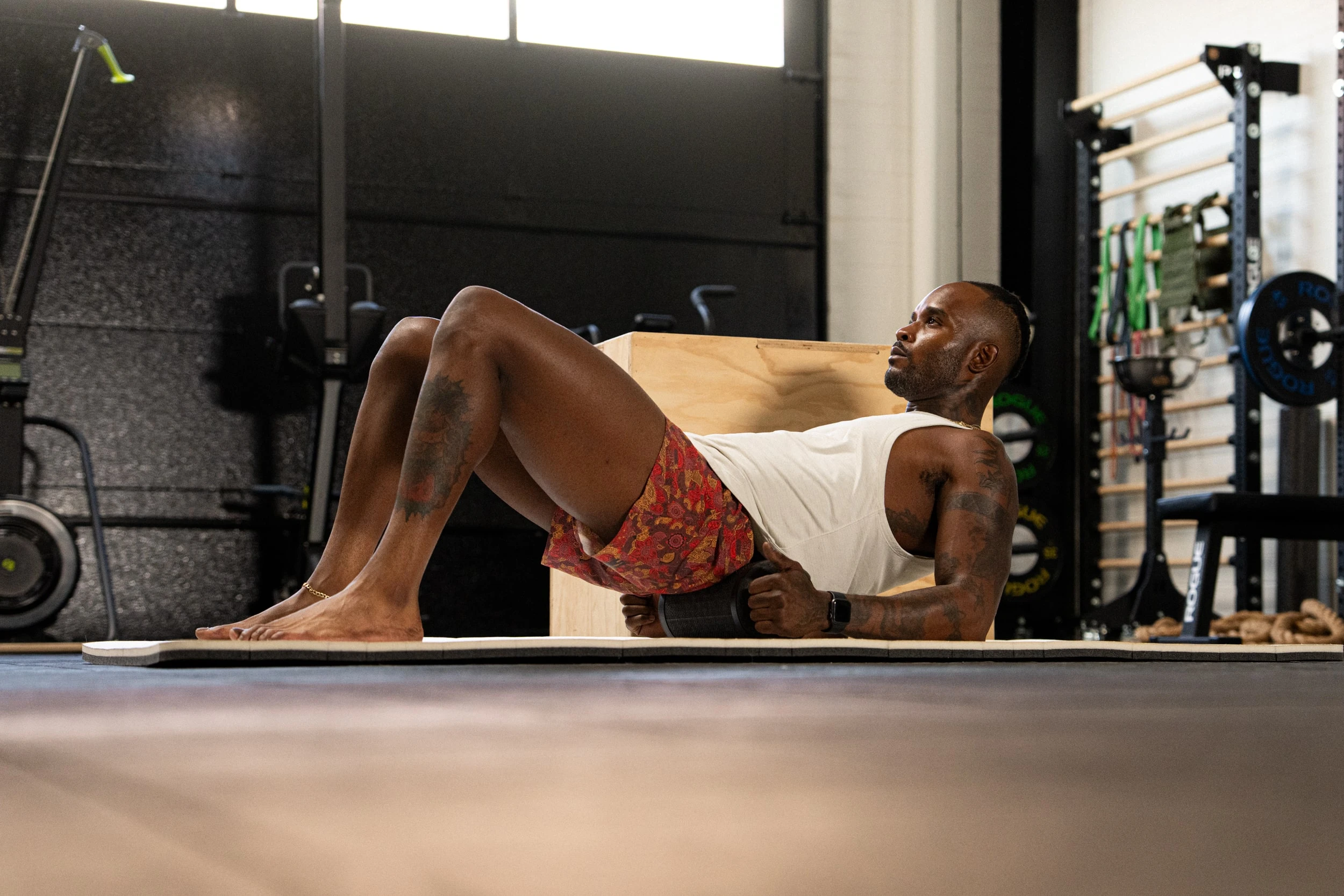
Massage is one of the most evidence-supported tools for reducing soreness between sessions. A systematic review published in Frontiers in Physiology found that massage produced a large effect in reducing delayed-onset muscle soreness compared to passive recovery. Foam rolling works on a similar principle of self-myofascial release and can meaningfully reduce the window between soreness and readiness when applied consistently.
The difference between normal soreness and injury is one that too many people learn the hard way. Diffuse muscle fatigue that fades within 48 to 72 hours is generally safe to train around, while sharp localized pain, swelling, reduced range of motion, or soreness that intensifies after 72 hours signals something beyond normal training stress. Confusing high pain tolerance with smart training does not build resilience; it builds a longer history of injuries.
is soreness a sign of muscle growth? what the science actually says

Muscle soreness is not a reliable indicator of whether your workout worked. Many gym-goers treat post-exercise ache as proof that muscle growth is happening, but exercise science shows that soreness and muscle growth are related to the same stimulus, not the same outcome.
"Soreness and muscle growth share a common trigger, but one does not guarantee the other. Chasing the burn is one of the most persistent myths in fitness."
Tip: If you finish a workout without feeling sore the next day, that does not mean the session was wasted. Adaptation, progressive overload, and consistency are far more important indicators of growth.
Warning: Treating soreness as your primary metric for a successful workout can lead to overtraining, poor recovery, and counterproductive results over time.
Indicator | Reliable Sign of Muscle Growth? |
|---|---|
Post-exercise soreness | Not reliable |
Progressive overload over time | Highly reliable |
Increased strength or reps | Highly reliable |
Muscle pump during training | Partially reliable |
why does soreness follow a hard workout?
When you try a new movement, increase your training load, or return after time off, your muscles experience microtrauma to their fibers and connective tissue. Your body responds with inflammation, and 24 to 72 hours later, you feel it. DOMS typically peaks within that window, which is why people connect soreness with progress. The workout happened, the soreness followed: pattern recognition, not physiology.
does muscle soreness mean your muscles are growing?
The short answer is no. Muscle damage and soreness are not essential for muscle adaptation and growth. Research published in the Journal of Strength and Conditioning Research reinforces this, finding that hypertrophy can occur in the complete absence of noticeable DOMS. Muscle growth is driven by satellite cell repair of microscopic fiber tears and proper recovery afterward. Soreness is a byproduct of the process, not a requirement.
Multiple studies show no reliable connection between muscle soreness and muscle growth. The "no pain, no gain" mindset pervades gym culture but lacks rational support. Experienced trainees feel far less sore than beginners, not because their workouts are less effective, but because their bodies have adapted to the stimulus. Reduced soreness over time reflects successful neuromuscular adaptation, not a plateau.
are sore muscles a sign of progress?
Soreness is more closely linked to new movements and eccentric loading than to training quality. Introduce an unfamiliar movement, add volume after a break, or shift emphasis to the lowering phase of a lift, and DOMS will follow regardless of whether meaningful muscle growth occurs. Progress is measured by consistent performance gains, improved technique, and physical changes resulting from progressively overloading the muscles.
What does soreness actually tell you about your training?
Most people who train without soreness question whether the session counted. Soreness is one signal among many and tells you little about whether your training is working. When soreness does appear after a hard session, it can remind you to support recovery through protein intake.
Research suggests that consuming a high-protein meal or shake after exercise restores strength and power more quickly during the recovery window, even when soreness persists. Targeting 1.6 to 2.2 grams of protein per kilogram of bodyweight daily gives your muscle fibers the nutrients needed to repair and rebuild efficiently.
What soreness signals about your body, training age, and your recovery status is a more layered conversation than most fitness content explores.
what muscle soreness actually tells you (and what it doesn't)

Muscle soreness is information, but not what most people think it is. The ache two days after a hard session tells you your tissues experienced mechanical stress they weren't fully prepared for, nothing more, nothing less. It does not tell you whether that stress produced growth, whether your workout was effective, or whether you should repeat it.
"Soreness is a signal of mechanical stress, not a reliable measure of workout effectiveness, muscle growth, or training progress."
What Soreness Tells You | What Soreness Does NOT Tell You |
|---|---|
Your tissues experienced unfamiliar stress | Whether muscle growth occurred |
Your body is in a recovery phase | Whether your workout was effective |
You pushed beyond your current threshold | Whether you should repeat the session |
Tip: Use soreness as a recovery cue, not a performance metric. Feeling sore doesn't mean you trained harder. It means you trained differently.
Warning: Chasing soreness as a sign of a good workout is one of the most common training mistakes. No soreness after a session doesn't mean it failed to drive adaptation.
what is the difference between acute soreness and DOMS?
Two different types of soreness get grouped together as "sore." Acute muscle soreness (AMS) is the burning feeling during or immediately after exercise, caused by waste product buildup and electrolyte shifts that resolve within an hour. Delayed-onset muscle soreness (DOMS) is the stiffness that appears 12 to 24 hours later, caused by tiny tears in muscle fibers that trigger an inflammatory repair response. Eccentric exercise tends to cause the greatest soreness response, with symptoms that can last up to a week. Treating these as the same signal leads to poor training and recovery decisions.
what does DOMS actually mean biologically?
When you lower a barbell slowly, step downhill, or control the descent of a squat, your muscle fibers lengthen under tension. This eccentric phase creates more mechanical disruption than the lifting phase. Your body responds by sending inflammatory proteins to damaged tissue, triggering repair that temporarily increases nerve sensitivity: the sensation you feel as soreness. The old explanation of lactic acid buildup is incorrect. Lactic acid clears within roughly an hour of exercise, whereas DOMS lingers for days because it reflects genuine tissue repair, not chemical residue.
Why does how you respond to DOMS change how fast you recover?
Most people handle DOMS by pushing through aggressively or stopping movement entirely, both of which slow recovery. Active recovery, mobility work, and intentional breathwork support circulation and reduce inflammation-related stiffness without stressing the repairing tissues.
how do you tell good soreness from a signal you should not ignore?
DOMS feels like a dull ache or stiffness that improves with light movement and fades over a few days. Bad soreness is sharp, localized to a joint rather than a muscle belly, or worsens with movement. Swelling, bruising, or pain lasting beyond four or five days signals structural damage, not an effective session. Training through them is not toughness, it's a fast path to a longer setback.
Does more soreness actually mean a better workout?
The "no pain, no gain" mentality has distorted how people understand their bodies. Many believe extreme soreness proves a workout succeeded, treating pain as evidence of effectiveness. Research consistently shows that DOMS decreases with adaptation even as muscle growth continues: the more experienced you become, the less sore you typically feel after a productive session. Soreness peaks when your body is least adapted, not when it performs best.
But if soreness is not the signal of growth, what is? The answer is more specific and actionable than most people expect.
how muscle growth actually works

Soreness and muscle growth both start with training stress but go in very different directions. Soreness is how your body reacts with inflammation when you put unfamiliar mechanical stress on it. Growth is how your body structurally responds to consistent, progressive demand. One is a side effect. The other is the goal.
"Soreness signals novelty. Growth signals adaptation. Chasing one while ignoring the other is one of the most common mistakes in training."
Factor | Soreness | Muscle Growth |
|---|---|---|
Cause | Unfamiliar mechanical stress | Consistent, progressive demand |
Type of Response | Inflammatory reaction | Structural adaptation |
Role in Training | Side effect | Primary goal |
Reliability as Progress Indicator | Low | High |
Key Point: Soreness is not a requirement for growth. Feeling sore after a workout does not mean you trained effectively. It simply means your body encountered something unfamiliar.
Warning: Chasing soreness as a metric of a good workout is a trap. Your body adapts quickly, meaning less soreness over time, but that doesn't mean muscle growth has stopped. It often means you're getting stronger.
why is soreness a poor measure of muscle growth?
Your muscles grow when you repeatedly challenge them and then provide the resources and time to adapt. The problem is that soreness feels like evidence of work, so people treat it as a sign of progress. It isn't. A workout can produce a powerful hypertrophic stimulus with almost no soreness once your body has adapted to a movement pattern. Conversely, an entirely new exercise can leave you unable to walk for three days without producing meaningful muscle growth.
what actually drives muscle growth
The main driver is mechanical tension: the force your muscles create under load when they contract. When strong enough and used regularly, it signals satellite cells to repair and strengthen tissue. A single workout opens a window of elevated protein synthesis that begins within a few hours and lasts roughly a day. This window is created by tension and effort, not soreness. What you do inside that window, specifically protein intake and sleep, determines whether the signal becomes structural change or fades.
Why does progressive overload keep muscle growth happening?
Progressive overload keeps that signal relevant over time. Your body adapts to any fixed demand within weeks, making a month-one challenge maintenance work by month three. Adding weight, increasing reps, or reducing rest periods forces continued adaptation. The first few weeks of a new program produce mostly neurological adaptation as your nervous system learns the movement before muscles commit to growing. Visible muscle growth follows only if training stress continues to increase. Most people plateau from stopped progression, not reduced effort.
Is soreness actually a signal that muscles are growing?
Muscle growth is a biological process, not a feeling. The signal that drives adaptation is mechanical tension applied progressively to muscle fibers over time, not post-workout discomfort. Soreness can follow a productive session but is a side effect of novelty and stress, not the mechanism of growth itself.
weeks 1-4: your brain leads the way
The first month of training focuses on your nervous system. Your muscles aren't growing much yet. Your nervous system is learning to recruit motor units more efficiently, coordinate stabilizing muscles, and produce force with less wasted effort. Lifters often feel discouraged because they expect visible change and don't see it. The absence of dramatic soreness or visible size isn't a sign that nothing is working, it's a sign that the most foundational layer of adaptation is being built.
weeks 4-12+: now the muscle responds
Once the neurological foundation is in place, the structural work begins. Resistance training creates mechanical stress on muscle fibers, and your body responds by repairing and reinforcing them to handle future demands. Muscle fiber cross-sectional area tends to increase over 8 to 12 weeks of consistent resistance training. This structural change occurs during recovery, not during the workout itself.
Why does recovery matter as much as the workout itself?
The training session is the trigger. Sleep, protein, and hydration are the actual building materials. Skipping recovery stops the adaptation your body is trying to complete, like filing a work order and then preventing anyone from showing up to do the job.
what actually drives the process
Four things produce steady, measurable muscle growth: progressive overload (adding weight, reps, or intensity over time), sufficient protein intake (roughly 0.7 to 1 gram per pound of bodyweight), adequate recovery time, and consistency across weeks. Remove any one of them, and the system slows. Research suggests that muscle growth occurs when sets are stopped five repetitions short of failure, producing results similar to training sets all the way to failure. This confirms that pushing to complete exhaustion is not required for adaptation: consistent, structured effort is what matters most.
Does active recovery actually help you train sooner?
Most people either push through soreness or rest until it fades. Light movement, mobility work, and structured stretching during recovery increase blood flow to fatigued tissue without adding new stress. Treating recovery as a scheduled input rather than a response to soreness changes your entire progress arc.
Is soreness a reliable sign that your workout worked?
The goal is not to feel exhausted after every session, but capable, coordinated, and stronger than last month. Chasing soreness as proof of effort is like judging a carpenter by blisters rather than by what they built. Progress shows up in the weight on the bar, reps completed, and movements that once felt awkward now feel natural.
What you do in the hours after training may matter more than the session itself.
how to treat sore muscles

Soreness is normal after new exercises, increases in intensity, or time off. It's not a problem to solve, it's feedback. How you recover between sessions determines whether you keep progressing or get sidelined.
"Recovery is not the absence of training: it's where adaptation actually happens."
Tip: Treat soreness as a signal, not a setback. Your body is telling you it's adapting, give it what it needs to come back stronger.
Warning: Ignoring recovery between sessions is one of the most common mistakes athletes make. It leads to stalled progress, burnout, or worse, injury.
Recovery Method | Best For | When to Use |
|---|---|---|
Rest & Sleep | Full-body recovery | Always, every night |
Light Movement | Reducing stiffness | 24-48 hours after soreness |
Hydration & Nutrition | Muscle repair | Immediately post-workout |
Stretching & Foam Rolling | Targeted relief | Daily, especially after training |
should you still train when your muscles are sore?
The most practical approach is managing which muscles you load. If your quads are fatigued after a hard leg session, train the upper body instead. A push/pull/legs split rotates stress across muscle groups, keeping you consistent without compounding damage to tissues still rebuilding. Consistency drives progress, and protecting it means being strategic about where you direct effort while soreness runs its course.
Movement still matters when sore. Low-impact activity like swimming, walking, or yoga keeps blood circulating through fatigued tissue, supporting repair without adding mechanical stress. The goal isn't to avoid affected muscles entirely but to keep them moving at a level that promotes recovery. Static rest often leaves muscles feeling tighter and more uncomfortable the next day than light movement does.
what recovery methods actually reduce muscle soreness?
Most people wait for soreness to fade on its own, but this approach takes time and yields suboptimal results. According to a systematic review published in Frontiers in Physiology, massage was the most effective way to reduce delayed onset muscle soreness, with a large effect size of -0.92 compared to passive recovery. Foam rolling works almost as well, with two to three minutes on worked muscle groups reducing tightness significantly.
Cold therapy is worth trying after high-volume or high-intensity sessions. The same Frontiers in Physiology review found that cold water immersion produced a moderate effect size of -0.55 for reducing soreness. Ice packs applied for up to 15 minutes can reduce swelling in localized areas. Nutrition is equally important: protein helps muscle fibers repair themselves, and carbohydrates restore glycogen and reduce inflammation.
when does soreness signal something more serious?
Warming up properly before your next workout is more important than most people realize. Light foam rolling, dynamic stretching, and movement patterns that match your workout prepare your muscles for hard work and reduce the risk of injury. If soreness persists beyond 72 hours or worsens with movement, it may indicate something more serious than normal muscle soreness.
What you do between workouts shapes what you can do during them.
when to train through it and when to stop
Mild soreness (muscle fatigue that resolves within 48 to 72 hours) is generally safe to train around. You can shift focus to unaffected muscle groups, keep intensity moderate, and use movement as part of recovery. Sharp, localized pain, swelling, reduced range of motion, or soreness worsening after 72 hours signals structural stress beyond normal training fatigue. Continuing to load the tissue at that point transforms a manageable problem into a serious one. Pushing through warning signs doesn't build resilience, it builds injury history.
What does a genuinely productive training week actually look like?
The real measure of a good training week is whether you recovered well enough to train again, and again after that. Consistency built on smart recovery outperforms intensity built on ignored signals every time.
What you do in the hours after training may matter more than most people expect.
stop using soreness as your recovery scorecard
The real question was never "how sore am I?" It was always "how ready am I?" Those are different questions, and only one predicts whether your next session will build you up or break you down. Soreness measures damage; readiness measures capacity, and confusing the two is what turns smart training into guesswork.
Training smart around soreness is easier with the right tools. pliability gives you an in-app mobility assessment to find where you're tight or restricted, Daily Sessions for a quick guided recovery flow on the days you're sore, and Paths built around your sport or a specific goal. Use Build Your Program to fit mobility and recovery work around your training week, and turn to the Rebuild hub when you're working back from a rough stretch of soreness or fatigue.
Sign up today for a 7-day free trial on iPhone, iPad, Android, or the web, and build a routine around what your body actually needs, not how sore it feels.
Related Reading



Move better in 10 minutes a day.
10,000+ five-star reviews.