LEARN
Pliability Team

How to Reduce Delayed Onset Muscle Soreness After Workouts
Hub: Active Recovery Target Keyword: How to Reduce Delayed Onset Muscle Soreness
Meta Title: How to Reduce Delayed Onset Muscle Soreness After Workouts
Meta Description: Learn how to Reduce Delayed Onset Muscle Soreness with simple post-workout tips for faster recovery and less discomfort.
Pushing hard in a workout, only to wake up the next day barely able to walk down the stairs, is a familiar experience for many athletes and fitness enthusiasts. Delayed onset muscle soreness can disrupt training schedules, slow progress, and make consistent effort feel like a losing battle. Understanding how to reduce delayed onset muscle soreness means more than just managing discomfort. It means recovering faster, staying consistent, and protecting the momentum built in every session.
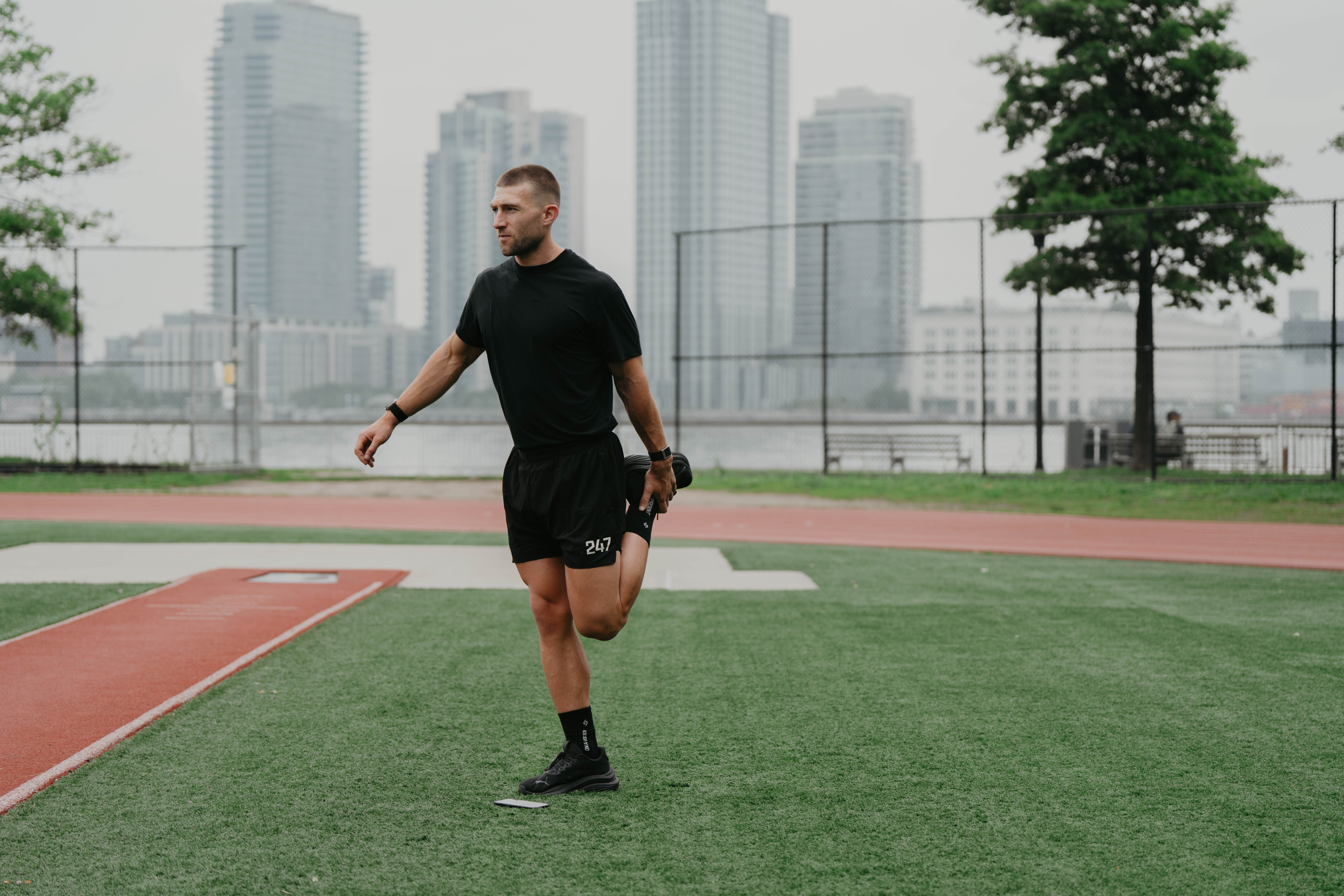
Effective recovery comes down to targeted, structured work that directly addresses muscle fatigue and soft-tissue health. Guessing which stretches to do or skipping recovery altogether only prolongs the problem. For guided routines built around flexibility, mobility, and post-workout recovery, the mobility app from Pliability gives athletes a clear, reliable path to keep their bodies moving between sessions.
Table of Contents
What Is Delayed Onset Muscle Soreness (DOMS)?
Is DOMS a Sign of a "Good" Workout?
How to Reduce Delayed Onset Muscle Soreness
How to Prevent Severe DOMS After Future Workouts
Take 3 Minutes to Build a Recovery Plan That Matches Your Training Style
Summary
Delayed-onset muscle soreness is caused by microscopic tears in muscle fibers during exercise, not by the exercise itself. The repair process that follows triggers a localized inflammatory response, which is what produces the ache. According to research published in Sports Medicine by Cheung, Hume, and Maxwell, symptoms can range from mild tenderness to severe debilitating pain, with peak soreness typically occurring 24 to 72 hours after exercise.
Soreness is not a reliable indicator of workout quality or muscle growth. The NSCA and ACSM both classify DOMS as an inflammatory response to unfamiliar movement patterns, not a direct marker of productive muscle protein synthesis. Research on the repeated-bout effect shows that soreness can decrease by more than 50% after just a second exposure to the same stimulus, meaning trained athletes often experience far less soreness than beginners and build muscle more efficiently.
Nutrition plays a direct role in how quickly the body moves through the repair process. Consuming 20 to 30 grams of complete protein alongside carbohydrates post-workout has been shown to significantly accelerate tissue repair compared with either macronutrient consumed alone. Electrolytes, including sodium, potassium, magnesium, and calcium, are lost through sweat, and when they go unreplenished, the neuromuscular system remains compromised longer, prolonging both fatigue and perceived soreness.
Massage and foam rolling produce measurable biological changes rather than just providing comfort. One meta-analysis found that a 20- to 30-minute massage applied within two hours of exercise reduced DOMS for up to 96 hours by increasing blood flow and lowering circulating markers of inflammation, including Creatine Kinase and Interleukin-6. Research supports foam rolling for 90 to 120 seconds per sore muscle site to improve range of motion, with shorter durations showing less consistent results.
The 24 to 48-hour window after training is where deliberate recovery work produces the most measurable return. Research found that massage reduced DOMS by an effect size of 1.7 compared to passive recovery, which is considered a large clinical effect. Sleep further consolidates adaptation during this window, with protein synthesis, hormonal repair signals, and neurological encoding of movement patterns all accelerating during deep sleep stages.
Progressive overload capped at no more than a 10% weekly intensity increase is one of the most effective ways to prevent severe DOMS before it starts, according to NASM guidance. Limiting novel exercises to one or two per session also reduces disproportionate microtrauma, since unfamiliar movements create significantly greater tissue stress relative to the actual load than practiced movements do. Hydration supports all other recovery mechanisms, with general guidance recommending 9 to 13 cups of fluid daily, along with specific intake targets before, during, and after training.
Pliability's mobility app addresses the 24 to 48-hour recovery window directly by providing guided routines built around breathwork, targeted stretching, and circulation work that fit into daily practice rather than treating recovery as an afterthought.
What Is Delayed Onset Muscle Soreness (DOMS)?

You know the feeling. You finish a workout feeling strong, and then two days later you grip a stair railing as it owes you money. That creeping stiffness showing up — not the next morning but the morning after — catches people off guard, even experienced athletes.
"The hallmark of Delayed Onset Muscle Soreness is its timing: discomfort peaks 24 to 72 hours after exercise, long after the workout itself is over." — Exercise Science Research
💡 Key Fact: DOMS doesn't strike immediately. The delayed timeline is what makes it disorienting: your body feels fine right after training, then soreness creeps in a full day or two later.
The confusion is frustrating. You did a "normal" session with nothing that felt extreme. And yet you're lowering yourself into a chair with the caution of someone defusing something. That gap between effort and consequence makes delayed onset muscle soreness feel almost personal.
⚠️ Common Misconception: DOMS isn't a sign that something went wrong — it's a sign that your muscles were challenged in a new or intense way. The soreness reflects microscopic muscle damage that triggers repair and growth.
Feature | What It Means |
|---|---|
Onset timing | Peaks 24–72 hours post-workout |
Common cause | Unfamiliar or high-intensity exercise |
Affected tissue | Microscopic muscle fiber tears |
Duration | Typically resolves within 3–5 days |
What is actually happening when delayed onset muscle soreness sets in?
Delayed-onset muscle soreness is the stiffness, tenderness, and dull ache that follow exercise beyond your current fitness level or the introduction of an unfamiliar movement pattern. According to the American College of Sports Medicine, symptoms begin 12 to 24 hours after exercise, and research published in Sports Medicine confirms that DOMS symptoms range from mild muscle tenderness to severe, debilitating pain, peaking 24 to 72 hours after exercise. The soreness is not a warning to stop; it is a biological invoice for the adaptation your body has started processing.
What is actually happening in your muscles?
DOMS comes from tiny structural damage to muscle fibers. Eccentric movements, where muscles lengthen under load like lowering a dumbbell or running downhill, create the most mechanical strain. This triggers microtears, initiating a localized inflammatory response. Fluid accumulates, nerve endings become more sensitive to pain signals, and the result is the familiar stiffness that impedes movement.
The lactic acid myth, put to rest
For decades, lactic acid was blamed for post-workout soreness, but this explanation is incorrect. Lactic acid leaves muscle tissue within an hour of exercise, long before DOMS symptoms appear. The real causes are inflammatory byproducts of muscle repair, not metabolic waste from exertion. This distinction matters: attempting to clear lactic acid with ice baths or aggressive flushing differs fundamentally from supporting the actual repair process that occurs in the days that follow.
Who gets DOMS, and how does it change over time?
The German Journal of Sports Medicine notes that DOMS peaks between 24 and 72 hours after unfamiliar or hard exercise, affecting both elite athletes and beginners. Training experience does not confer immunity to DOMS; rather, it shortens recovery time and reduces the severity of soreness. Research on the repeated bout effect shows that performing the same exercise a second time, even days later, produces 40 to 50 percent less soreness because muscles have begun to adapt. Trained athletes still experience DOMS with new movements or higher intensities, though their recovery time shortens. Steady, regular training outperforms sporadic hard workouts because the body adapts more efficiently.
What should your recovery actually look like during DOMS?
Most people respond to DOMS by resting completely or pushing through at the same intensity. Both miss the point. Gentle movement, targeted stretching, and structured mobility work support blood flow to damaged tissue and reduce stiffness over 48 to 72 hours. Apps like Pliability offer guided recovery routines matched to your training load, keeping you mobile during active muscle rebuilding rather than treating soreness as a reason for complete rest.
The more useful question is what your specific recovery should look like, and that answer depends more on your training style than most people expect.
Related Reading
Active Recovery Exercises
Muscle Strain Vs Soreness
Doms Vs Rhabdo
What Is Contrast Therapy
Types Of Doms
Doms Running
Is Soreness A Sign Of Muscle Growth
How To Reduce Delayed Onset Muscle Soreness
Is DOMS a Sign of a "Good" Workout?

Most people believe that the more sore you are, the better your workout was. That belief is wrong.
"Soreness does not equal muscle growth — you can grow without soreness and be sore without making meaningful gains." — Exercise Science Consensus
⚠️ Warning: Chasing soreness as a metric is one of the most common mistakes in fitness. It tells you almost nothing about whether your workout was effective.
Soreness does not equal muscle growth. You can grow without soreness and be sore without making meaningful gains. Soreness is physical, immediate, and feels tied to effort in a way that seems honest. Early gym culture, 1980s bodybuilding doctrine, and influencer content have reinforced the message that suffering signals real work. When you feel destroyed the day after a session, your brain connects pain to effort to results. The logic feels airtight. It is not.
💡 Tip: Instead of measuring workout quality by how sore you feel, track progressive overload — are you lifting more, moving better, or recovering faster over time? Those are the real indicators of progress.
Soreness | Actual Progress |
|---|---|
Feels like proof of effort | Measurable strength gains |
Fades within 24–72 hours | Builds consistently over weeks |
Can occur with zero muscle growth | Tied to progressive overload |
Reinforced by gym culture myths | Backed by exercise science |
🔑 Takeaway: DOMS (Delayed Onset Muscle Soreness) is a byproduct of training — not a goal, not a guarantee, and certainly not the benchmark for a good workout.
What soreness actually measures
Delayed onset muscle soreness is your body's response to new and eccentric mechanical stress, not a sign of muscle growth. The NSCA and ACSM both recognize DOMS as an inflammatory response to unfamiliar movement patterns, not a direct indicator of productive muscle protein synthesis. Soreness diminishes as your body adapts, even as gains continue.
Why does soreness fade even when progress continues?
Research on the repeated-bout effect shows that soreness can decrease by more than 50% after a second exposure to the same stimulus, sometimes within the first week of consistent training. Trained athletes experience less soreness than untrained beginners who do identical workouts, yet build more muscle more efficiently. Soreness is worst when you are least adapted and fades as you become most capable.
If I'm Not Sore, Was My Workout Effective?
The repeated bout effect demonstrates this clearly. When you repeat the same movement pattern within a short timeframe, your neuromuscular system adapts quickly. Research shows that soreness from a given exercise can drop by 40 to 60 percent after one prior exposure to that stimulus, often within 48 to 72 hours. Trained athletes experience significantly less DOMS than untrained individuals performing identical workloads, not because their sessions are less productive, but because their tissues have become more efficient at managing mechanical stress. A seasoned lifter who feels nothing after squats is not undertrained; their body has simply learned to absorb the work without triggering the same inflammatory cascade.
Why does chasing soreness work against your progress?
The "no pain, no gain" mindset turns a side effect into a goal. Your workout goals should be to push beyond your previous limit: running slightly farther, adding two more reps, or introducing a new movement pattern that challenges your muscles differently. Swapping a leg press machine for free-weight lunges or trading a stationary bike for an elliptical can provide enough additional stimulus to drive adaptation without causing serious soreness.
How does structured mobility work change the soreness equation?
Regularly doing structured mobility work produces measurable results. Users who stretched three times per week using Pliability saw a 30 percent improvement in mobility within two weeks. Combining targeted stretching with breath work addresses both muscular tension and nervous system activation that prolong soreness, offering a more complete approach than foam rolling alone or passive rest.
Where does DOMS show up compared to an actual injury?
DOMS lives in the muscle belly: your quads, glutes, hamstrings, biceps. It arrives 12 to 48 hours after training, peaks around 24 to 72 hours, and fades without intervention. Pain in a joint, pain that arrives immediately during exercise, visible swelling or redness, or pain that doesn't improve after two days is not DOMS. Sharp, localized pain that limits your range of motion warrants rest and professional assessment, not another hard session. Treating minor joint issues like routine soreness by pushing through is how they become chronic.
Why is chasing soreness the wrong way to measure progress?
If you have been chasing soreness as proof that your training is working, you have been measuring the wrong thing. Soreness measures disruption; progress measures adaptation. Once these are no longer confused, the question shifts toward something more useful.
How to Reduce Delayed Onset Muscle Soreness

Reducing DOMS isn't about stopping the repair process — it's about supporting it in a smart way so your body spends less time recovering and more time building forward. The eight strategies below each target a specific biological mechanism, forming a complete recovery system rather than a collection of random tips.
"Recovery is not passive — it's an active biological process that responds directly to the strategies you apply." — Sports Science Research
💡 Tip: Think of these eight strategies as a system, not a checklist. Each one targets a specific mechanism, so combining them delivers compounding recovery benefits.
⚠️ Warning: Skipping recovery strategies doesn't just mean more soreness — it means slower progress, reduced training capacity, and a higher risk of overuse injury.
Strategy Type | Primary Target | Recovery Benefit |
|---|---|---|
Nutrition & Hydration | Muscle protein synthesis | Faster tissue repair |
Active Recovery | Blood flow & waste clearance | Reduced inflammation |
Sleep & Rest | Hormonal repair cycles | Accelerated rebuilding |
Cold/Heat Therapy | Inflammatory response | Decreased soreness duration |
Mobility & Stretching | Tissue flexibility | Improved range of motion |
Compression | Fluid retention & swelling | Lower perceived pain |
Pacing & Load Management | Neuromuscular fatigue | Smarter training adaptation |
Supplementation | Oxidative stress reduction | Enhanced cellular recovery |
1. Try Active Recovery Workouts
Rest and active recovery are not the same thing. According to Cheung, Hume, and Maxwell in Sports Medicine, you can lose up to 50% of your strength after eccentric exercise-induced DOMS. This makes complete immobility costly for anyone seeking to improve performance. Light movement, specifically low-intensity cycling or walking at around 60% of peak output, increases circulation and clears metabolic waste faster without adding eccentric stress to damaged tissue.
How should you adjust training when soreness limits full effort?
Some studies show no statistically significant difference between passive and active recovery in reducing soreness scores, particularly in female soccer players assessed 22 and 46 hours after the tournament. For active people unable to take multiple days off, reduce intensity and duration for one to two days, or shift the load to less-affected muscle groups. Research also shows that introducing small isometric contractions or low-intensity concentric work before a training block, sustained for at least two weeks, can reduce the severity of DOMS when harder sessions begin.
2. Consume Enough Macronutrients and Electrolytes
When you exercise, your muscles sustain damage, triggering an inflammatory repair process that requires raw materials. Consuming 20 to 30 grams of complete protein with carbohydrates after your workout accelerates tissue repair more effectively than either nutrient alone. Carbohydrates replenish glycogen stores, protein supplies amino acids for structural repair, and together they shorten the inflammatory phase.
Why do electrolytes and antioxidants matter for recovery?
Electrolytes are often overlooked, yet muscle contractions depend on sodium, potassium, magnesium, and calcium—all lost through sweat. Without replacing them, the neuromuscular system remains compromised longer, extending fatigue and soreness. Antioxidant-rich foods like tart cherries, blueberries, and leafy greens reduce oxidative stress in damaged tissue, creating a cleaner environment for repair.
3. Consider Getting a Massage or Using a Foam Roller
A study analyzing multiple research papers found that a 20 to 30-minute massage administered immediately after exercise or within two hours post-exercise effectively reduced DOMS for up to 96 hours. Massage increases blood flow to damaged tissue, accelerating nutrient delivery and waste removal whilst reducing circulating inflammatory markers including Creatine Kinase and Interleukin-6.
Can foam rolling deliver the same benefits as massage?
Foam rolling provides similar benefits by applying self-directed pressure to your muscles. Research shows that rolling for 90 to 120 seconds on each sore muscle improves range of motion and reduces stiffness. Many athletes combine guided recovery routines with a mobility app and foam rolling, since stretching addresses muscle length while rolling targets tissue density.
4. Apply Heat or Ice Strategically
Ice reduces acute inflammation and numbs localized pain in the first 24 to 48 hours, making it most useful when swelling and sharp sensitivity are present. Heat increases blood flow and relaxes stiff connective tissue, proving more effective in the 48 to 72-hour window when stiffness peaks but acute inflammation has begun to settle. According to Cheung, Hume, and Maxwell, DOMS symptoms typically resolve within 5 to 7 days without treatment, but thermal therapy can compress that timeline by keeping circulation active through the repair window.
Which thermal method works best for reducing soreness?
Cold water immersion at 50 to 59 degrees Fahrenheit for 10 to 15 minutes has shown promise in a 2016 review published in Sports Medicine, reducing DOMS intensity across multiple exercise types. Some people find alternating heat and ice produces the best results, using the contrast to create a pumping effect on local circulation. The best approach is the one you will do consistently.
5. Manage Pain Carefully and Hydrate Relentlessly
Over-the-counter options like ibuprofen, naproxen, and acetaminophen provide quick relief. A 2019 study in Medicine and Science in Sports and Exercise found that menthol-based topical pain relievers effectively reduced pain, and topical arnica reduced muscle tenderness over the 72-hour period after exercise, as reported in the European Journal of Sport Science. These options matter when soreness disrupts sleep or daily function.
Why is hydration so critical to muscle recovery?
Hydration is the most consistently neglected recovery tool. When dehydrated, the heart cannot pump blood efficiently, slowing oxygen and nutrient delivery to damaged muscle tissue and impairing the clearance of metabolic waste. General guidance supports 9 to 13 cups of fluid daily: roughly 2 to 2.5 cups two hours before exercise, 1 cup during warm-up, 1 to 1.25 cups every 10 to 20 minutes during training, and 1 cup within 30 minutes after finishing. Hydration is the medium through which all other recovery mechanisms operate.
Building these strategies into a system prevents the worst DOMS from occurring.
Related Reading
How To Recover Muscles Faster
Aftercare For Doms
Bicep Doms
How To Relieve Sore Muscles
How To Get Rid Of Doms
How To Get Rid Of Lactic Acid In Muscles
How Many Rest Days Should I Have
Contrast Therapy Timing
Doms In Calves
How To Activate the Parasympathetic Nervous System Quickly
Crossfit Recovery
Active Recovery
How to Prevent Severe DOMS After Future Workouts
Soreness is not the enemy. Unmanaged training stress is. Most people respond to a tough workout by either pushing harder the next session or avoiding the gym entirely for a week — and both responses miss the actual lever. Prevention is not about training less — it's about training with enough structure that your body can take in the stimulus, repair, and come back stronger without the kind of damage that sidelines you for days.
"Prevention is not about training less — it's about training with enough structure that your body can take in the stimulus, repair, and come back stronger without the kind of damage that sidelines you for days."
⚠️ Warning: The two most common mistakes after a brutal session are training too hard too soon or disappearing from the gym entirely — both responses actively undermine your recovery and set you up for repeat damage.
💡 Pro Tip: The real key to preventing severe DOMS is structural consistency — giving your body a predictable stimulus it can adapt to, rather than random spikes of intensity that overwhelm your repair systems.
Response Type | What It Looks Like | Why It Fails |
|---|---|---|
Push Harder | Training at full intensity the next day | Compounds muscle damage before repair is complete |
Avoid Entirely | Skipping the gym for a week | Breaks adaptation momentum and resets tolerance |
Structured Prevention | Controlled load, progressive stimulus | Allows full recovery and sustainable strength gains |
Before you train, load the deck in your favor
The best prevention strategy starts before you touch a barbell or lace up your shoes. Progressive overload done right means your body faces slightly more stress each session, not significantly more. According to the NASM Blog, gradually increasing workout intensity by no more than 10% per week helps prevent severe DOMS because the neuromuscular system adapts in layers, not in leaps. Your warm-up prepares the connections between your nervous system and working muscles before eccentric load is applied; a cold muscle subjected to heavy eccentric demand experiences unnecessary soreness.
How do in-session decisions shape your recovery tomorrow?
Volume control and failure management during a session are where most people accumulate excessive damage. Training to failure on every set, or stacking new exercises back-to-back, amplifies the eccentric stress your body must process overnight. A movement your body has never performed creates disproportionate micro-trauma relative to the actual load. Controlling this by limiting new movements to one or two per session and keeping total working sets within your recovery capacity is prudent.
What does consistent post-training recovery actually look like?
Most people handle post-training recovery the same way: stretch for five minutes, drink a protein shake, and hope for the best. This leaves the 24- to 48-hour period after training largely unmanaged. A mobility app like Pliability treats that window as structured daily practice, with guided routines built around breathwork, targeted stretching, and circulation work that fits into the time most people spend scrolling before bed. Consistent recovery requires a system.
The 24 to 48-hour window where adaptation is won or lost
Research published in An Evidence-Based Approach for Choosing Post-exercise Recovery Techniques found that massage reduced DOMS by an effect size of 1.7 compared to passive recovery, a large effect by any standard. The 24- to 48-hour window after training is when inflammation peaks, and deliberate circulation work (massage, percussive therapy, or structured movement) yields the most measurable results. Sleep helps your body build protein, send out hormonal repair signals, and encode movement patterns in your brain during deep sleep stages. Insufficient sleep during this window increases soreness and delays training improvements.
Why does soreness duration matter more than soreness intensity?
Workouts that cause the most soreness are often the hardest to repeat over time. A session that leaves you limping for four days does not build more muscle than one you recover from in 36 hours; it costs more. The goal is not to eliminate soreness completely, since some soreness signals that your body is adapting, but to train regularly week after week without your body becoming the problem.
Building a recovery system requires no extra time beyond what you already have.
Take 3 Minutes to Build a Recovery Plan That Matches Your Training Style
Most soreness after training peaks in the 24–72-hour window, making the next 48 hours critical for recovery work. You can build a structured recovery plan in under 3 minutes based on your current soreness level and training pattern.
Our mobility app identifies your tightest areas and builds a personalized DOMS recovery plan around:
A 10-minute daily guided mobility routine
Targeted work for your most fatigued muscle groups (e.g., quads, hamstrings, back)
Timing optimized for the 24–48-hour recovery window where adaptation is most active
Light movement protocols designed to reduce stiffness without adding new muscle damage
Users who follow at least three sessions per week see up to a 30% improvement in mobility within two weeks. Consistency separates those who recover well from those who delay treatment.
Start your free 7-day trial today and build a recovery system that keeps you training consistently.
Related Reading
Best Recovery Methods For Athletes
Does Drinking Water Help With Sore Muscles
Ice Bath Vs Contrast Therapy
Should You Workout With Doms
Does Protein Help With Muscle Soreness
What Are Doms In Weightlifting
Benefits Of Contrast Therapy
Workout Recovery Tips
How Often Should You Do Contrast Therapy
How Long Does Doms Last
Move better in 10 minutes a day.
10,000+ five-star reviews.