


LEARN
pliability
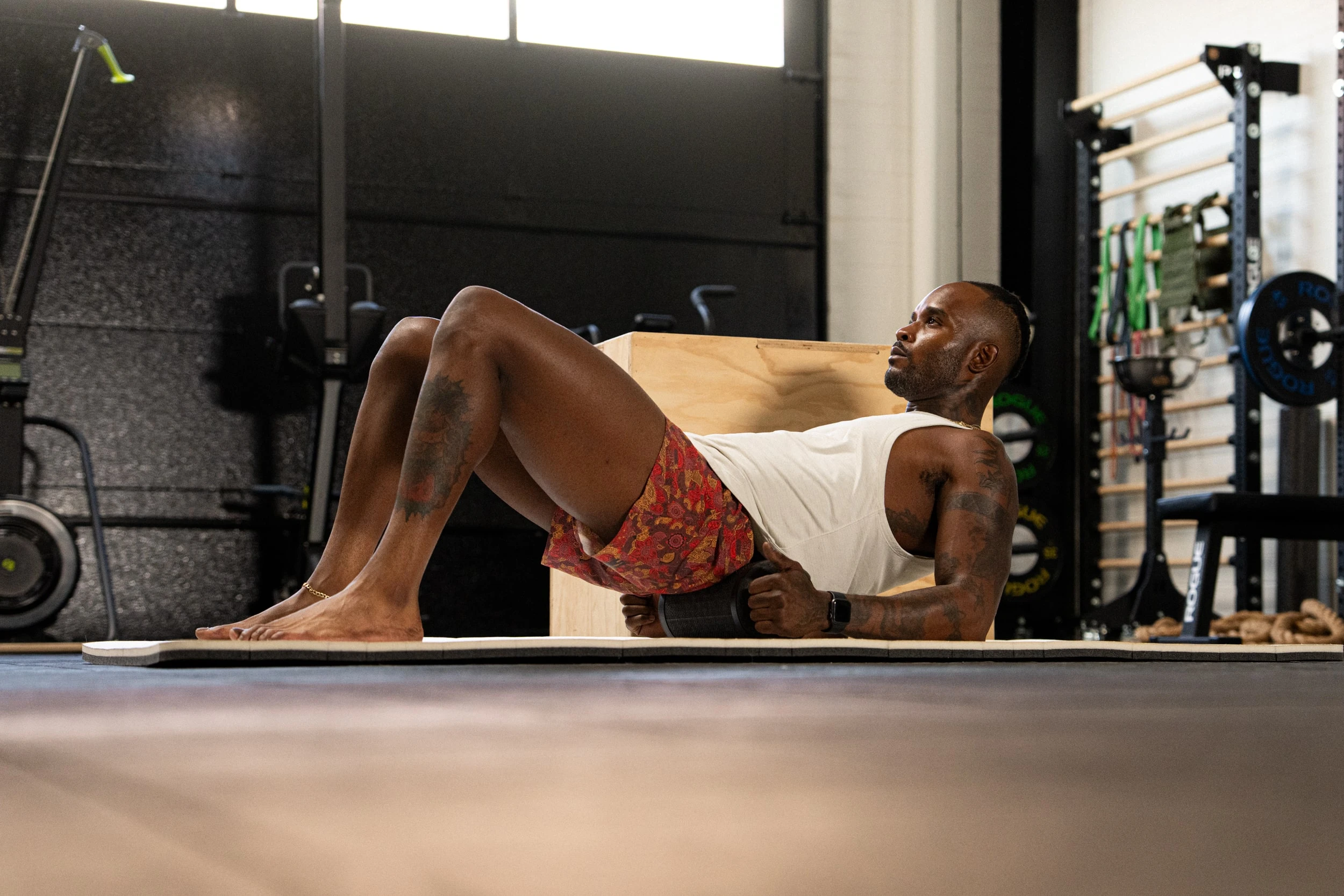
After a tough workout, the muscles aren't the only thing that needs recovery. The nervous system does too. When the body stays locked in a stress response, delayed-onset muscle soreness hits harder, sleep suffers, and the next session starts at a deficit. Learning how to quickly activate the parasympathetic nervous system is one of the most practical recovery skills an athlete can develop.
The right techniques, from breathwork to targeted movement, can shift the body out of fight-or-flight and into genuine rest. These approaches support heart rate variability, vagus nerve activation, and deeper muscle recovery without guesswork. For a structured way to put this into practice, the mobility app from pliability offers guided routines designed to make nervous system recovery a consistent part of any training plan.
table of contents
Why Your Body Won't Calm Down (Even When You Want It To)
Why Trying to Relax Often Makes Stress Worse
How to Signal Safety to Your Nervous System
8 Fast Ways to Activate Your Parasympathetic Nervous System
Build a Daily Routine That Helps Your Nervous System Relax
summary
Cortisol does not simply disappear when a stressful event ends. Cortisol can remain elevated well after a stressor has passed, meaning the body continues running an emergency protocol long after the threat is gone. This delay is one of the primary reasons people feel wired, restless, or unable to sleep even when circumstances have settled.
The nervous system responds to physiological signals, not conscious decisions. According to research on Polyvagal Theory published in Frontiers in Integrative Neuroscience, 80% of vagal nerve fibers are afferent, meaning they carry information from the body to the brain rather than the other way around. This structure explains why techniques like slow exhalation, cold water exposure, and muscle relaxation work when willpower and positive thinking do not.
Roughly one in three adults report feeling more stressed when they actively try to relax, a phenomenon sometimes called relaxation-induced anxiety. This happens because the nervous system reads incoming physiological data (breathing rate, heart rate, muscle tension) rather than internal intentions. Strategies like scrolling social media or forcing stillness can inadvertently reinforce sympathetic activation rather than reduce it.
The scale of chronic stress is larger than most people recognize. The American Institute of Stress reports that 77% of people regularly experience physical symptoms caused by stress, including disrupted sleep, digestive issues, brain fog, and persistent fatigue. These are not abstract complaints but measurable downstream consequences of a nervous system that cannot shift into the parasympathetic state where tissue repair and recovery actually occur.
Specific breathing techniques produce direct, measurable physiological changes. Diaphragmatic breathing at 5 to 6 breaths per minute has been shown to significantly increase parasympathetic activity, and the 4-7-8 method (inhale for 4 seconds, hold for 7 seconds, exhale for 8 seconds) is a structured approach for triggering that response. Extended exhalation activates the vagus nerve through respiratory sinus arrhythmia, which is one of the most reliable indicators of parasympathetic tone that researchers can track.
Consistency matters more than intensity when training the nervous system to recover. Short bursts of movement every 90 minutes help metabolize circulating cortisol, while daily breathwork and mobility sessions build a physiological baseline that makes calm progressively easier to access. The nervous system learns to recognize and respond to familiar inputs more quickly over time, which is why occasional practice yields far weaker results than daily repetition.
http://pliability.com addresses this by offering structured daily breathwork and mobility sessions designed to provide consistent parasympathetic activation cues.
why your body won't calm down (even when you want it to)
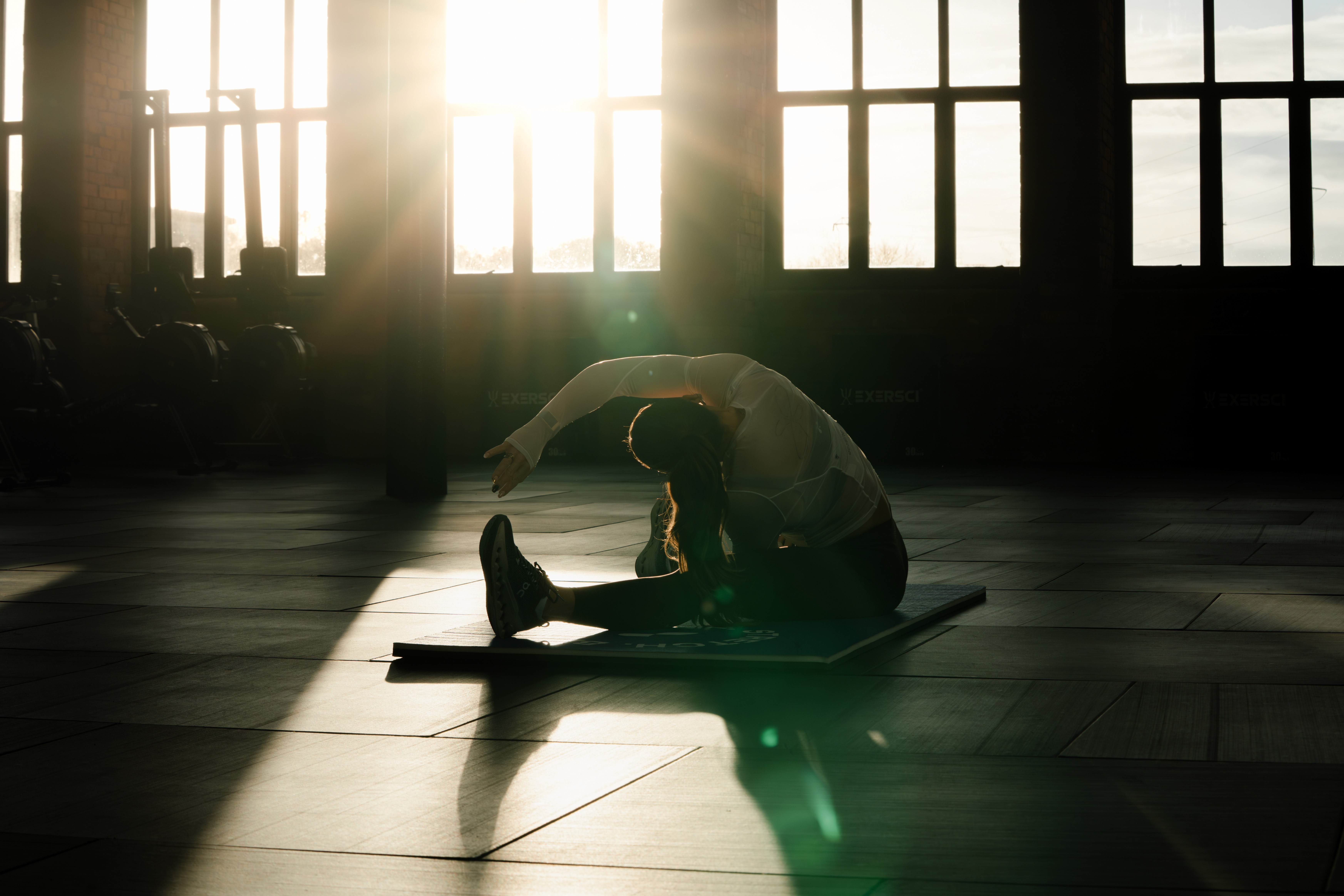
Relaxation isn't a choice you make with your mind. It's a biological state your nervous system either enters or doesn't, based on signals it's constantly reading from your body and environment.
"Relaxation is not a decision: it's a biological state your nervous system either enters or doesn't, driven entirely by the signals your body sends."
Warning: Telling yourself to relax doesn't work because relaxation bypasses conscious choice entirely. Your body has to believe it's safe before it will let go.
Your autonomic nervous system runs on autopilot between two modes: sympathetic (speeding up heart rate, dilating pupils, making breathing shallower, slowing digestion) and parasympathetic (turning things back down to calm). Your brain switches between them automatically based on how safe or dangerous it thinks things are, not through a choice you make.
Mode | State | Key Effects |
|---|---|---|
Sympathetic | Fight or Flight | ↑ Heart rate, shallow breathing, and slowed digestion |
Parasympathetic | Rest & Digest | ↓ Heart rate, deeper breathing, restored digestion |
Key Point: Your nervous system is always scanning for threat signals, and it will override your desire to relax if it decides the environment isn't safe.
Tip: To shift into parasympathetic mode, you need to send your body physical signals of safety, not just think calming thoughts.
why stress doesn't stop when the stressor does
People assume that once a stressful event ends, the body resets automatically. It doesn't. Cortisol levels can stay elevated well after a stressful event ends. Your body continues running the emergency protocol long after the emergency has passed.
Why does the brain keep the stress response running after danger passes?
The HPA axis, formed by the hypothalamus, pituitary gland, and adrenal glands, keeps cortisol circulating until the brain receives a clear signal that the threat is gone. Positive thinking doesn't send that signal. The brain reads your heart rate, breathing pattern, and muscle tension, not what you're telling yourself. Chelsea Long, an exercise physiologist at the HSS Tisch Sports Performance Center, explains that the vagus nerve works as a two-way channel, sending information from the body back to the brain. That feedback loop determines whether your nervous system stays alert or calms down.
What happens when the nervous system stays stuck in overdrive?
The American Institute of Stress reports that 77% of people regularly experience physical symptoms caused by stress: digestive discomfort, disrupted sleep, joint pain, brain fog, and persistent exhaustion that rest doesn't resolve. These stem from a nervous system stuck in sympathetic overdrive, unable to shift into the parasympathetic state where recovery occurs.
Most people respond by trying harder to relax, which creates a frustrating loop: the harder you try, the more activated you feel. Since your nervous system responds to biological signals rather than conscious intent, calming it requires changing those signals directly. Forcing stillness when your body is biochemically ready for action strengthens the stress response rather than weakening it.
why trying to relax often makes stress worse
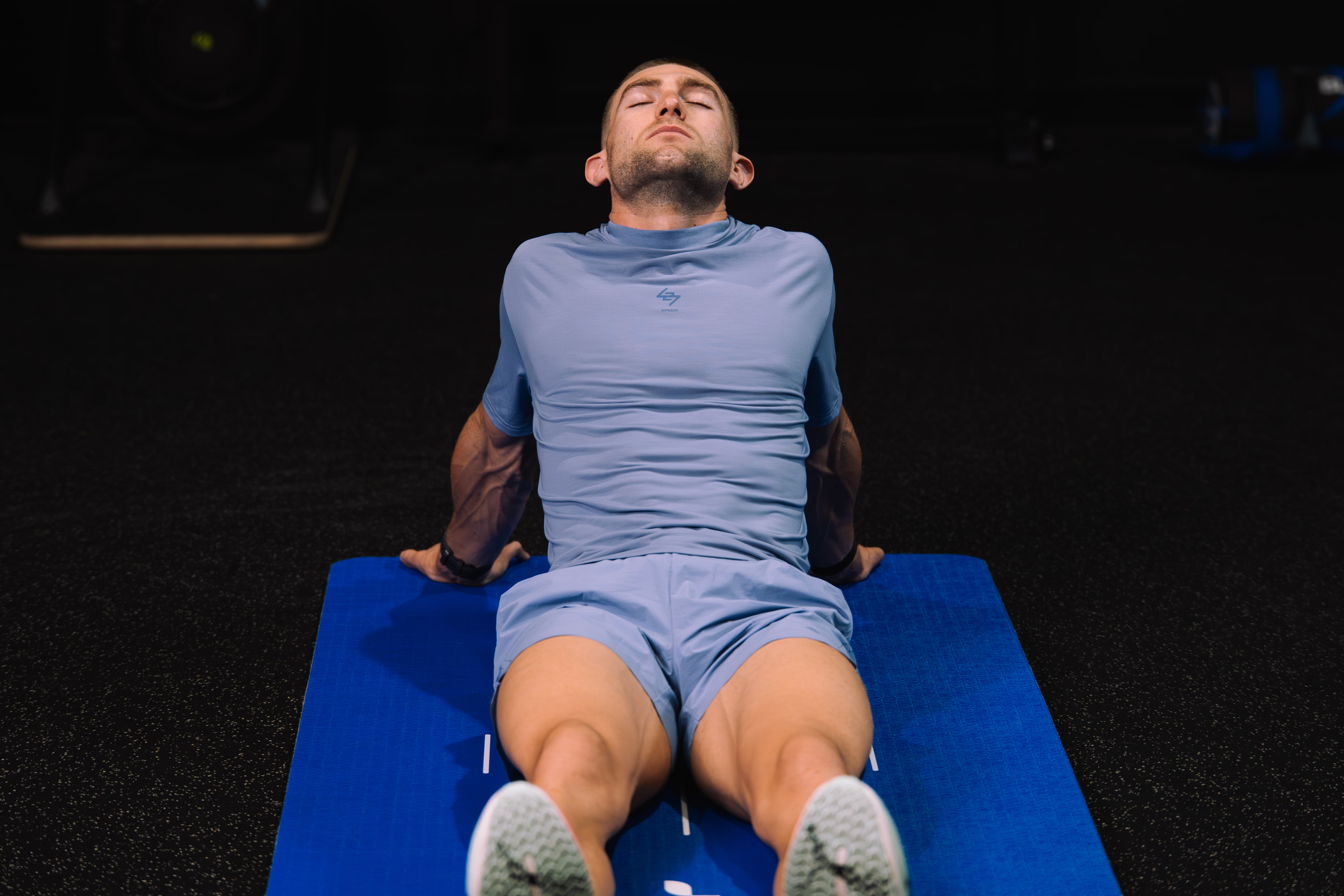
Some people say they feel more stressed when they actively try to relax. This phenomenon, sometimes called relaxation-induced anxiety, sounds backward until you understand how the nervous system processes safety signals.
Warning: If relaxation techniques are making you feel worse, you're not broken. You may be experiencing a well-documented stress response that affects a significant portion of the population.
Takeaway: Trying harder to relax can backfire for a large share of people. Understanding the nervous system's role in processing calm is the essential first step to finding what works.
why does willpower fail to override a stressed nervous system?
The instinctive toolkit (forced deep breaths, phone scrolling, alcohol, or self-talk) tries to override a physiological state using willpower and distraction. But your nervous system reads incoming data: heart rate, muscle tension, breathing rhythm, and sensory input. It decides whether a threat has passed based on that evidence alone. Telling yourself to relax while your chest is tight and breathing is shallow contradicts the signal your body is sending.
how do common distractions make the problem worse?
Scrolling social media worsens this. Quick visual stimulation, unpredictable rewards, and low-grade emotional arousal activate the sympathetic nervous system rather than the parasympathetic one. Alcohol temporarily reduces cortisol perception but weakens vagal tone and disrupts sleep architecture. Distraction delays processing; it doesn't resolve it.
why trying harder backfires
Each time you fail to calm down, it signals to your brain that something remains wrong. That failure reactivates the HPA axis and sustains elevated cortisol levels. Neurobiologist Stephen Porges created the Polyvagal Theory, which explains how the nervous system responds to signs of safety: a mismatch between top-down cognitive effort and bottom-up physiological state. You cannot think your way into a calm state any more than you can consciously lower your blood pressure by deciding to. The nervous system responds to evidence, not instruction.
Why does the body need physical input to shift out of stress?
Most people treat stress relief as a mental problem requiring mental solutions. Yet autonomic regulation is primarily physiological, driven by sensory input, movement, breath mechanics, and feedback from the body to the brain. Guided breathwork works not by distracting from stress but by slowing, controlled exhalation directly stimulating the vagus nerve, increasing vagal tone and measurably shifting autonomic balance toward parasympathetic dominance. Structured mobility and recovery work operate on the same principle: physical input changes neurological output. Platforms like pliability build this into daily guided sessions, pairing breathwork with targeted movement so the body receives consistent physiological cues supporting recovery.
The fastest way to activate the parasympathetic nervous system isn't to convince your brain you're safe. It's to show your body that you are.
how to signal safety to your nervous system
Every technique that truly calms the body works in the same fundamental way: it changes something your body can measure, and your nervous system reads that change as a sign that the danger has passed. This is signal processing: not willpower, not positive thinking, but measurable physiological input that your brain is hardwired to respond to.
"Your nervous system doesn't respond to intentions: it responds to signals. Change the signal, and you change the state."
Key Point: You can't think your way to calm: you have to send the right physical signals to your nervous system for it to register safety.
Tip: Focus on actions your body can measure, like slowed breathing, reduced muscle tension, or lowered heart rate. These are the exact inputs your nervous system uses to decide whether threat or safety is present.
Signal Type | What Changes | What the Nervous System Reads |
|---|---|---|
Slow breathing | CO₂ and O₂ balance | Safety: no fleeing needed |
Muscle relaxation | Tension levels drop | No physical threat present |
Lowered heart rate | Cardiovascular output | Danger has passed |
Soft eye gaze | Visual threat scanning stops | The environment is safe |
why does the body send signals to the brain first?
Your nervous system continuously scans your body, reading your breathing rate, muscle tension, heart rhythm, and sensory input, then updates its threat assessment in real time. Change the inputs, and the output changes accordingly. According to Polyvagal Theory: A Science of Safety (Frontiers in Integrative Neuroscience), 80% of vagal fibers are afferent, meaning they carry signals upward from the body to the brain rather than downward. The nervous system is built to listen to the body first.
the signals your nervous system actually reads
Most people try to calm down by thinking through the stress, replaying it, and reframing the situation. The problem is that cognitive reappraisal engages the prefrontal cortex, which is partially offline during heightened sympathetic activation. Platforms like pliability address this by pairing breathwork sequences with guided movement, giving the body structured physical cues that bypass the thinking brain. Consistency matters: the nervous system learns to recognize and respond to familiar inputs more quickly over time, so daily practice compounds in ways that occasional sessions cannot.
Slower breathing and longer exhalation.
When your exhale lasts longer than your inhale, your heart rate drops because the vagus nerve slows the sinoatrial node, the heart's natural pacemaker. This phenomenon, called respiratory sinus arrhythmia, is one of the most reliable indicators of parasympathetic tone that researchers can measure. A longer exhale directly instructs the cardiovascular system.
Research on the physiological sigh, a double inhale followed by a slow exhale, shows it reduces physiological arousal faster than most other breathing patterns by deflating collapsed air sacs in the lungs and triggering a pronounced vagal response.
Vagal stimulation.
The vagus nerve is the main pathway of the parasympathetic nervous system. You can activate it by humming, applying cold water to the face, practicing slow diaphragmatic breathing, and gargling. Each method mechanically stimulates vagal afferent fibers, signaling the brainstem to reduce sympathetic output. Heart rate variability (HRV) rises within minutes of effective vagal stimulation, which is why HRV is used as a measure for recovery readiness in athletic performance. You don't need a 30-minute meditation session to change your autonomic state: you need the right physical input applied consistently.
Muscle relaxation, predictable movement, and reduced sensory overload.
Progressive muscle relaxation works because chronic tension in skeletal muscles sends continuous low-grade threat signals to the brain. Predictable, rhythmic movements such as walking, rowing, or structured mobility activate the cerebellum and basal ganglia, reducing limbic reactivity. Reducing sensory overload (dimming lights, lowering sound, removing visual clutter) lowers the threat-assessment burden on the nervous system, allowing it to allocate resources toward recovery rather than surveillance.
Facial cooling, specifically cold water applied near the eyes and cheeks, activates the diving reflex through the trigeminal nerve. Each works through a different pathway but accomplishes the same outcome: it changes what the body reports, prompting the brain to update its safety assessment.
8 fast ways to activate your parasympathetic nervous system

These eight techniques work because they each interrupt the threat-detection loop at a specific place in your body's physical response.
"Each of the eight techniques targets a distinct physiological entry point, meaning you have multiple ways to break the stress cycle before it takes hold."
Key Point: These aren't random relaxation tips: each method is strategically designed to intervene at a precise stage of your body's threat-response mechanism.
Tip: Try all eight techniques to find which entry point works fastest for your unique nervous system: what works in 5 minutes for one person may take longer for another.
Technique | Where It Interrupts the Response |
|---|---|
Breathing exercises | Respiratory & vagal signals |
Cold water exposure | Skin & temperature receptors |
Progressive muscle relaxation | Muscular tension pathways |
Grounding (5-4-3-2-1) | Sensory processing centers |
Humming or singing | Vagus nerve stimulation |
Slow movement/yoga | Proprioceptive feedback loops |
Mindful eating | Digestive & gut-brain axis |
Social connection | Oxytocin & limbic regulation |
1. limit stress inputs at the source
The failure point is usually invisible: you are consuming stress you never chose. Smartphones give us instant access to global trauma all day, and our nervous systems cannot distinguish between a threat happening to us and one happening on a screen. The body responds to both with the same cortisol spike.
How do you decide which stressors deserve your energy?
Set a specific time to check the news and social media, rather than letting them run in the background all day. This isn't about ignoring what's happening in the world; it's about choosing which stressors get your nervous system's attention and energy.
Is all stress worth avoiding?
Not all stress is worth avoiding. Exercise is physiologically stressful but builds resilience. The distinction worth making is between stress that produces something (growth, connection, skill) and stress that simply depletes. Giving praise triggers an oxytocin release stronger than receiving it, making generosity one of the most efficient mood regulators available.
2. controlled slow breathing
Diaphragmatic breathing at a slow, controlled pace increases parasympathetic nervous system activity. The 4-7-8 technique (breathe in for 4 seconds, hold for 7 seconds, exhale for 8 seconds) provides a structured method for triggering this response.
Why it works
When you breathe out longer, it activates the vagus nerve via respiratory sinus arrhythmia. Holding your breath increases your body's carbon dioxide tolerance and makes the next exhale more calming.
How to do it
Breathe in through your nose for 4 seconds, hold your breath for 7 seconds, then breathe out completely through your mouth for 8 seconds. Repeat four times.
How quickly can it help
Most people notice a change in heart rate and muscle tension within two to three minutes.
Best use case
Pre-performance anxiety, post-conflict tension, or any moment when your mind is racing but your body needs to settle first.
Limitations
If breath-holding triggers panic, skip the hold phase and make the exhale twice as long as the inhale. This technique does not replace treatment for panic disorder or clinical anxiety.
3. voo breathing and humming
Why does VOO breathing work?
The vagus nerve runs through the vocal cords. When you make sounds for an extended period, especially low sounds, the vibration directly stimulates the vagus nerve. sending your brain a clear message that your body is safe.
How do you do voo breathing?
Take a deep breath in. When you breathe out, make a low "vooo" sound or hum continuously until your lungs are empty. Repeat three to five times.
How quickly can Voo breathing help?
The vagal response happens within the first complete breath out.
When is VOO breathing most useful?
In the car, in the shower, or during any private moment on a high-stress day. Also effective right before a difficult conversation or presentation.
What are the limitations of VOO breathing?
Most people need privacy, though it is not a solution to long-term stress.
4. cold water exposure
Why does cold water exposure work?
Cold water activates the diving reflex through the trigeminal nerve, causing an immediate drop in heart rate and a surge in parasympathetic activity. Brief cold water immersion has been shown to stimulate the vagus nerve and activate the parasympathetic nervous system.
How do you do cold water exposure?
Put your face in cold water for 30 seconds, run cold water over your wrists and back of neck, or take a 60-second cold shower to end it.
How quickly may cold water exposure help?
Your heart rate slows within seconds when exposed to cold.
When is cold water exposure best used?
Sudden stress spikes, adrenaline rushes after arguments, or quick ways to calm down before serious situations.
What are the limitations of cold water exposure?
This treatment is not appropriate for people with heart and blood vessel conditions, Raynaud's disease, or cold sensitivity without medical clearance.
5. exercise snack breaks
Stress hormones build up during prolonged sitting without being released. Doing one to two minutes of hard movement every one to two hours (run in place, do body squats, or take the stairs quickly) helps clear them. Intensity matters more than duration.
Why does short, intense movement reduce stress hormones?
Short bursts of aerobic activity break down circulating cortisol and adrenaline, completing the stress cycle that prolonged sitting interrupts. Moderate aerobic exercise also improves heart rate variability over time, the clearest measurable sign of parasympathetic fitness.
How do you practice exercise snack breaks?
Set a timer for every 90 minutes. When it goes off, do 60 to 90 seconds of vigorous movement.
How quickly can exercise snack breaks help?
You can notice changes in your mood and tension within five minutes of moving around. Improvements in heart rate variability build up over weeks of regular practice.
Best use case
Desk-based work environments where stress accumulates without physical release.
Limitations
Excessive training volume in already-fatigued individuals can exacerbate autonomic dysregulation. The goal is moderate, consistent movement, not punishment.
How does daily parasympathetic practice compound over time?
Most people think about recovery as something they do after damage happens: a Sunday stretch session, a meditation app opened during a crisis. pliability works differently. Short, expert-led breathwork and mobility sessions practiced daily produce cumulative results that build over time. When parasympathetic activation becomes a daily habit instead of an emergency measure, the nervous system stops expending extra energy in threat mode.
6. progressive muscle relaxation
Why does progressive muscle relaxation work?
When you deliberately tense and then release muscle groups, you teach your nervous system to recognize the difference between held tension and genuine release. Clinical trials consistently show reductions in cortisol, blood pressure, and subjective anxiety scores within a single session.
How do you practice progressive muscle relaxation?
Starting at your feet, tense each muscle group firmly for five seconds, then release for 10 seconds. Move progressively upward through calves, thighs, abdomen, hands, arms, shoulders, and face.
How quickly may progressive muscle relaxation help?
A full-body scan takes 10 to 15 minutes and typically produces measurable relaxation by the end.
When is progressive muscle relaxation best used?
Tension before sleep, muscle recovery after working out, or persistent physical tension unresponsive to breathing exercises.
What are the limitations of progressive muscle relaxation?
You need a quiet place and about 15 minutes for this exercise. It's not suitable for urgent situations or when time is limited.
7. address sleep as a physiological priority
Sleep is where your body performs its deepest recovery work. During deep sleep, your heart rate drops, stress hormones clear, and your brain's cleaning system flushes out waste products. When sleep is disrupted, your nervous system becomes more sensitive to stress the next day, causing stronger reactions to minor problems.
Why does prioritizing sleep reduce stress reactivity?
Going to bed at the same time every night helps regulate your body's internal clock, which controls cortisol release. A dark, cool room (around 65 to 68 degrees Fahrenheit) allows your body temperature to drop, initiating deep sleep. Putting away phones and computers 60 minutes before bed reduces blue light exposure that can suppress melatonin production.
How do you build a consistent sleep routine?
Pick a time to wake up each day and stick to it. Count backward to determine your bedtime. About an hour before sleep, dim the lights. Avoid caffeine after early afternoon. Keep your bedroom cool.
How quickly can better sleep improve stress and mood?
It takes two to three weeks of consistent sleep and wake times to stabilize your circadian rhythm. However, even a single night of better sleep can improve your mood and stress management.
Who benefits most, and what are the limitations?
This approach works best for people who experience chronic sympathetic dominance, elevated baseline anxiety, or trouble recovering from workouts.
If insomnia persists beyond four weeks despite improved sleep habits, cognitive behavioral therapy for insomnia (CBT-I) has strong clinical evidence and should be the next step rather than additional supplements.
8. mindset practices that shift the nervous system's baseline
The brain's negativity bias is a survival feature no longer needed for its original purpose. Dr. Rick Hanson's HEAL model counters it: Have a positive experience, Enrich it by staying with it for 10 to 20 seconds, Absorb it on purpose, and optionally Link it to a difficult feeling to let the positive override the negative.
Why does sustained positive attention rewire the nervous system?
If you focus on a positive experience for 10 to 20 seconds, your brain stores it in long-term memory. Over time, this changes how your nervous system rests by building more safety signals your brain can use.
How do you actually practice this in daily life?
After any good moment, pause. Notice it specifically, name what you feel, and hold your attention on it for at least 15 seconds before moving on.
How quickly can this practice shift your baseline?
Individual moments of enriched positive attention produce small but measurable shifts in mood. Consistent practice over weeks changes the baseline.
Who benefits most from this approach?
Long-term low-level worry, negative thought patterns, or getting better after stressful times when your nervous system has been working hard for a long time.
This is not a replacement for therapy when trauma, clinical depression, or anxiety disorders are present. Mental health treatment is physical treatment: the brain and body are not separate systems.
Knowing the techniques is one thing. Fitting them into a workable day is where most people struggle.
build a daily routine that helps your nervous system relax
Your nervous system responds to doing things over and over, not wanting to be calm. Small, structured activities done every day build a physical baseline that makes it easier to feel calm over time.
Tip: Consistency is the mechanism: your nervous system learns safety through repetition, not intention.
Routines that jump around create problems. pliability offers guided daily mobility and breathwork sessions in under five minutes, with a body scan that shows exactly where tension is holding. Measurable mobility gains within just two weeks come from structured repetition, not scattered effort.
Routine Type | Nervous System Impact | Result |
|---|---|---|
Consistent daily practice | Builds a calm physical baseline | Steady mobility gains over time |
Irregular, intense sessions | Creates unpredictability | Minimal lasting change |
Guided breathwork + body scan | Targets specific tension points | Measurable, trackable progress |
Takeaway: Nervous system regulation is a physical skill, and like any skill, it's built through daily repetition, not occasional effort.
Warning: Skipping your routine (even for just a few days) can interrupt the neurological patterns your body is working to establish. Consistency is non-negotiable.
Start your free 7-day trial today and build a daily routine your nervous system can actually learn from.
Related Reading


Move better in 10 minutes a day.
10,000+ five-star reviews.