


LEARN
pliability
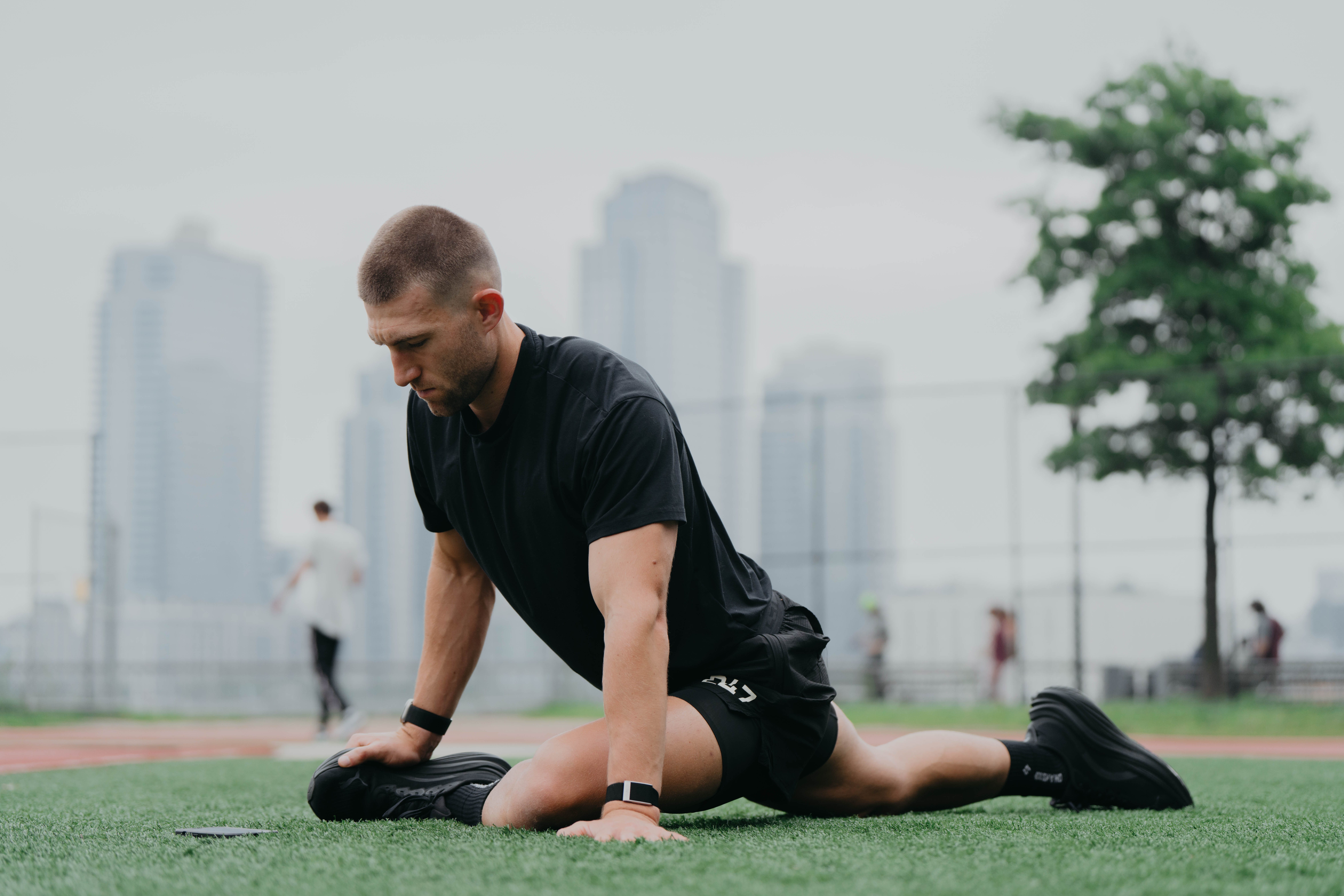
Sharp twinges climbing stairs or dull aches after long days signal how knee pain can quietly dominate daily life. Traditional strengthening exercises often worsen discomfort, creating a cycle where movements meant to help actually increase pain. Isometric knee exercises offer a different approach, building strength and stability without repetitive motion stress. These controlled holds help reclaim pain-free movement and restore confidence in knee function.
Proper form and exercise selection remain crucial for success with isometric training. Guided routines designed specifically to reduce knee pain provide controlled, joint-friendly movements that strengthen without strain. Clear instructions for each isometric hold make it simple to incorporate these low-impact techniques into daily routines while tracking your progress toward stronger, more resilient knees.
table of contents
Why Knee Pain Gets Worse When You Try to Strengthen It
What Isometric Knee Exercises Actually Do Inside the Joint
10 Isometric Knee Exercises That Reduce Pain Without Irritating the Joint
When Isometric Knee Exercises Work, and When They Are Not Enough
Progress Your Knee Isometric Training Into a Structured Load Progression System
summary
Isometric knee exercises work because they eliminate the eccentric strain and repetitive friction that amplify inflammation in sensitized joints. Research involving 13 participants with knee osteoarthritis demonstrated measurable pain reduction and functional improvement following isometric strengthening protocols, indicating that static loading builds tolerance without crossing the threshold at which tissue damage outpaces repair. The nervous system responds to sustained tension by activating descending pain-modulation pathways, temporarily reducing pain sensitivity without masking symptoms with distraction.
Most traditional strengthening approaches fail during acute pain phases because dynamic movements create high joint shear forces that irritate already compromised tissue. When patellofemoral joints are sensitized by overuse or sudden increases in volume, compressive forces during squats or lunges amplify inflammation rather than resolve it. The Cook and Purdam tendinopathy continuum model demonstrates that tendons progress through reactive, disrepair, and degenerative phases, each requiring different loading strategies. Pushing a reactive tendon with high-volume strengthening can extend recovery time by months.
Isometric training plateaus after four to six weeks because it teaches muscles to generate force in a single fixed position, rather than across the full arc of movement required for daily activities. Static holds build tolerance to mechanical stress without developing the eccentric strength needed to absorb impact during walking or running. Research on spine biomechanics has found that healthy individuals can hold a side plank for 80 to 85 seconds on average, providing a benchmark for assessing lateral core endurance and identifying strength asymmetries that perpetuate knee instability.
Progression logic follows a clear sequence: isometric holds build initial tolerance, isotonic exercises add controlled movement through range of motion, eccentric training develops deceleration strength, and plyometric work restores reactive power. Each phase typically requires two to three weeks of consistent loading before tissues adapt enough to handle the next level. Rushing this timeline reintroduces the same irritation that took weeks to calm, creating a frustrating cycle in which progress resets whenever the load increases too quickly.
Many people with knee osteoarthritis experience some immediate pain reduction from isometric holds, because the nervous system interprets sustained muscle tension as safe stress rather than a threat. This cortical pain inhibition kicks in during prolonged contraction when the brain receives continuous proprioceptive input signaling muscle engagement without joint motion. The analgesic response generated during 30- to 45-second holds creates a window in which tissue can adapt to mechanical demand without triggering inflammatory cascades.
why knee pain gets worse when you try to strengthen it

Most people believe the solution to knee pain is to strengthen the knee through movement and exercise: build stronger quads, fire up the glutes, stabilize the hips, and the pain will disappear. It's the default advice from fitness culture, rehab messaging, and trainers everywhere.
That "strengthen first" approach often backfires because it addresses symptoms rather than root causes of knee dysfunction. It makes intuitive sense: weak muscles can't support joints properly, so strengthening them should fix the problem. The "no pain, no gain" mentality reinforces this thinking, while rehab protocols emphasizing movement-first recovery create fear that rest will cause deconditioning. When pain appears without a clear cause, doing more feels empowering, like taking control.
In reality, the majority of knee pain cases involve compensation patterns and tissue restrictions that need to be addressed before strengthening can be effective. Strengthening inflamed or restricted tissues often increases pain and creates deeper compensation patterns that become harder to resolve over time.
why does more movement sometimes worsen knee pain?
This approach often fails in painful or sensitized knees. More movement can temporarily worsen symptoms, not from weakness, but from an already irritated joint. Runners often jump from two sessions per week to four, convinced that increased volume builds resilience for summer races.
Instead, they hit a wall around the ten-minute mark, forced to stop mid-run with sharp pain. You could run fine last month, so why does the same distance now trigger pain that lingers for days?
How can strengthening exercises backfire on sensitive joints?
The mechanism explains why strengthening can backfire. Dynamic movements like squats, lunges, or running create high joint shear forces, where the kneecap grinds against the femoral groove with each repetition.
When the patellofemoral joint is sensitized from overuse or sudden volume increases, compressive and shear forces amplify irritation rather than resolve it. Tendons in reactive tendinopathy stages respond poorly to continued loading, becoming more inflamed with each session. The tissue needs time to adapt, but traditional strengthening protocols demand immediate capacity that the joint lacks.
why is movement intolerance so common in early recovery
The Cook and Purdam tendinopathy continuum model shows tendons progress through reactive, disrepair, and degenerative phases, each requiring different loading strategies. Pushing a reactive tendon with high-volume strengthening can drive it into the disrepair phase, extending recovery by months. ACL rehab protocols explicitly account for load sensitivity phases, recognizing that recovering joints need carefully controlled exposure rather than aggressive strengthening from day one.
How do mobility routines provide a safer alternative?
Mobility routines that focus on controlled, low-impact movements offer a different path. Rather than overwhelming a sensitive joint with dynamic loads it cannot handle, targeted stretching and isometric holds build capacity without triggering inflammatory responses that impede recovery. Guided, progressive programs can walk you through joint-friendly progressions with real-time feedback, helping distinguish productive discomfort from signals that tissue tolerance has been exceeded. This approach treats mobility as a preventive foundation rather than a reactive fix applied after pain takes hold.
Understanding why strengthening backfires is only half the picture; what happens inside the joint when you shift to controlled, static loading changes everything.
what isometric knee exercises actually do inside the joint

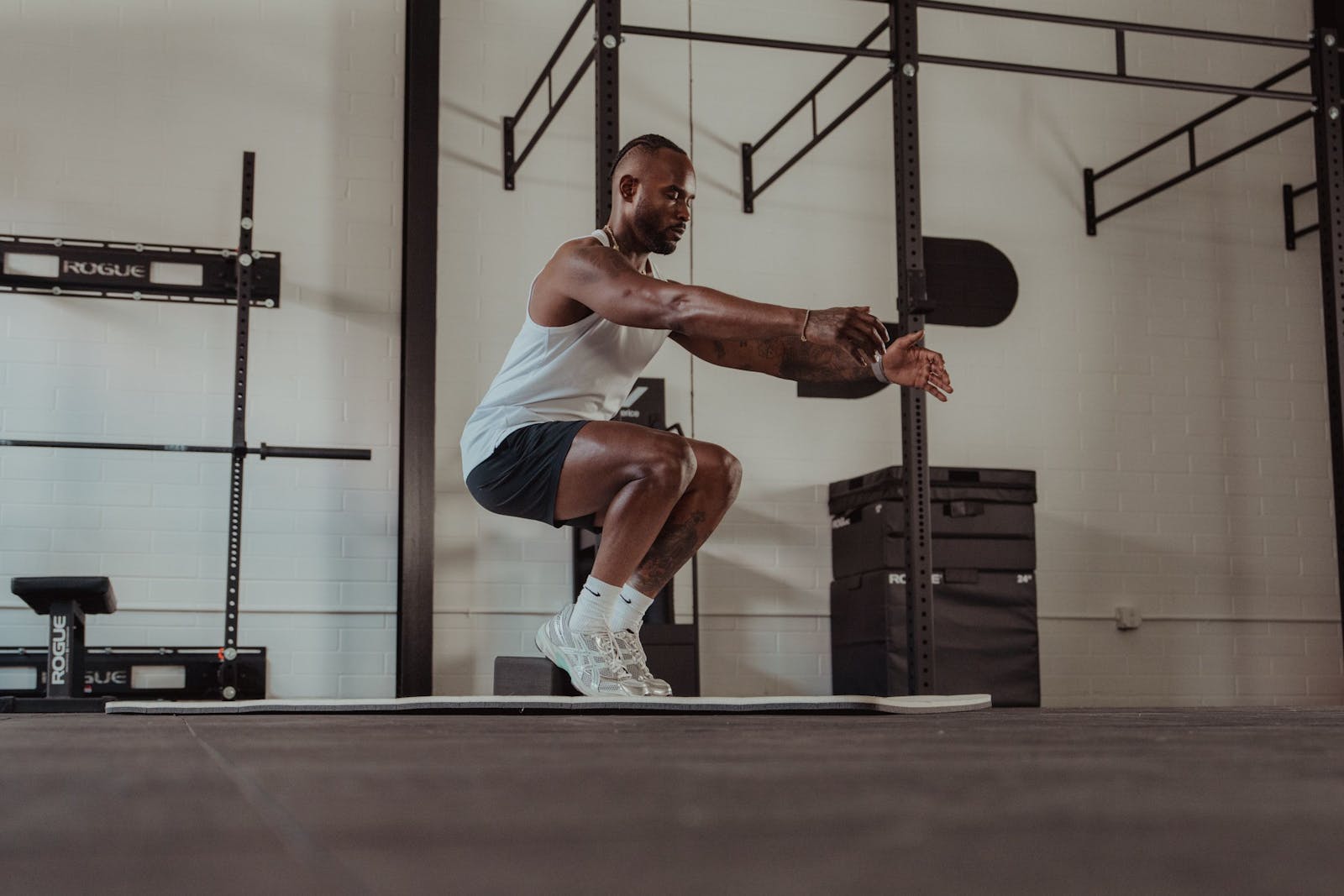
Static muscle contraction happens when a muscle creates tension at a fixed joint angle without movement. In a wall sit or quad set, muscle fibers generate force without the knee bending or straightening. This matters because it changes how load travels through tissue and how your nervous system interprets that stress.
Isometric contractions create high muscle activation while placing minimal stress on joint structures, making them useful for rehabilitation and strength building without aggravating existing injuries. During an isometric quad contraction, for example, the quadriceps muscles fire at high intensity while the kneecap remains stationary, allowing targeted strengthening without the wear and tear of repetitive joint motion.
how does eliminating movement reduce joint stress?
Dynamic exercises like squats or lunges create eccentric strain during the lengthening phase, generating higher peak forces on tendons and increasing shear stress across joints. Isometric holds eliminate that eccentric phase: the muscle contracts and tension builds, but the tendon avoids the stretch-shortening cycle that irritates sensitized tissue.
You get mechanical loading without the repetitive friction that amplifies inflammation when cartilage or synovial fluid is compromised.
What metabolic changes occur during sustained contractions?
When you hold a muscle tight without moving, blood flow slows in that area, creating an environment where oxygen delivery decreases and waste products accumulate. Your muscles must work harder to process lactate and utilize oxygen more efficiently.
Research involving 13 participants showed that pain decreased and function improved in patients with knee osteoarthritis after performing isometric strengthening exercises. This suggests that holding a muscle in place builds strength and tolerance without causing irreparable damage.
how does your brain reduce pain during sustained muscle tension?
Pain control in the brain starts during long isometric contractions. When you hold tension for 30 to 45 seconds, your brain receives continuous signals from your muscles indicating they are working without joint movement.
This steady signal activates pain-reducing pathways from the brain, temporarily lowering pain sensation in that area. Your nervous system creates this pain-relief response when it senses a controlled, safe load.
Why do static holds build better muscle control than dynamic movements?
Motor unit recruitment remains stable during static holds in ways that dynamic movements cannot replicate. In a squat, motor units fire in bursts to manage acceleration and deceleration. In a wall sit, recruitment stays constant, forcing the nervous system to maintain activation without the variability introduced by joint motion.
That consistency builds endurance and coordination at specific joint angles, which translates to better control during dynamic loading and prevents compensatory movement patterns that shift stress onto vulnerable structures.
How can isometric exercises help when joints are already irritated?
When joints are already irritated, dynamic strengthening adds mechanical stress faster than tissue can adapt. Guided, progressive isometric holds with feedback on duration and intensity can help build load tolerance at angles that don't trigger pain.
The goal isn't to avoid movement forever; it's to establish a foundation in which the muscle can handle tension before reintroducing the complexity of joint motion.
Pain reduction and strength gains follow the same causal path: static contraction reduces joint shear; lower shear decreases mechanical irritation; reduced irritation improves load tolerance; better tolerance allows longer holds; longer holds recruit more motor units; and greater recruitment builds functional capacity. This mechanism only works if you apply it to movements within your current pain-free range.
10 isometric knee exercises that reduce pain without irritating the joint
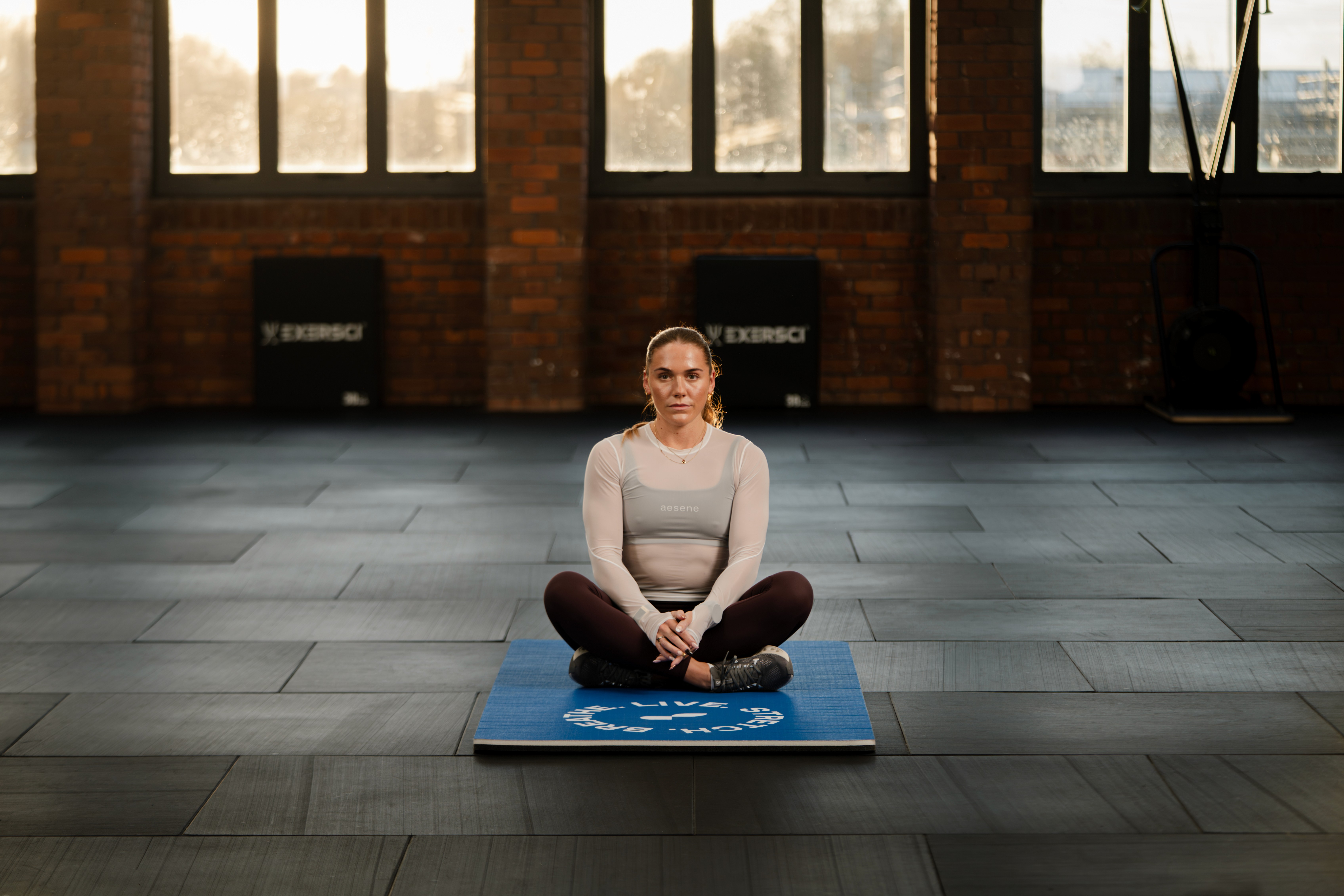
The exercises below target specific mechanical problems: quad inhibition after injury, instability during weight-bearing, tendon irritation from compression spikes, and motor unit recruitment deficits that keep joints vulnerable. Each works by creating tension without movement, loading tissue to build tolerance rather than triggering the inflammatory cascade that worsens pain. You hold a position, sustain contraction, and let the nervous system recalibrate its threat response while the muscle adapts to mechanical demand.
Effective isometric work requires precision in three areas: the joint angle you choose, the contraction intensity you sustain, and the duration you hold before fatigue compromises form. Get those wrong, and you either underload the tissue (no adaptation occurs) or overload it (irritation returns). The protocols below reflect what works when joints are sensitized and dynamic movement still provokes pain. Poor form in isometric exercises can either provide no benefit or worsen knee irritation, so precision in angle, intensity, and duration is essential.
1. split squat hover
This exercise addresses quad weakness and hip instability following knee injuries or pain-related leg avoidance. When one leg compensates during walking or stair climbing, the weaker quad loses its ability to recruit muscle fibers, and the hip stabilizers lose coordination. The split squat hover forces both quads to contract simultaneously while the back leg remains elevated, balancing strength differences without the stress of lowering and rising.
How does the static hold benefit knee recovery?
The static hold removes uneven loading on the patellar tendon while creating steady tension across the quadriceps. Research examining 13 people with knee osteoarthritis found that isometric strengthening exercises reduced pain and improved function without damaging joint structures. The fixed knee angle spreads compression evenly, reducing focused stress on irritated cartilage or inflamed synovial tissue.
What is the proper execution technique?
Start in a half-kneeling position with your back knee on the ground and front knee bent at 90 degrees. Lift the back knee two inches off the floor and hold for 30 to 45 seconds at 70% effort: you could push harder but maintain control without shaking. Use this during acute pain phases when squats or lunges provoke discomfort, or as a warm-up before lower-body training to activate inhibited quads.
2. wall sit with heel raise
Lateral knee pain and patellar tracking issues often stem from weak soleus muscles that fail to stabilize the tibia during knee bending. When the soleus cannot handle the load with a bent knee, the quadriceps overcompensate, and the patella tracks laterally, creating friction along the lateral retinaculum.
How does this exercise target tracking problems?
The wall sit with heel raise trains the soleus and quads together in the exact position where tracking problems occur, building tolerance to the squeezing and twisting forces during walking or running.
The exercise loads the soleus in its shortened position (knee bent, ankle pointed down) while the quads maintain steady tension. This dual demand improves coordination between the front and back muscle chains, reducing compensatory patterns that drive patellar maltracking. The static nature eliminates eccentric strain, which aggravates tendinopathy, while creating metabolic stress that triggers adaptation.
What is the proper execution technique?
Position your back against a wall with your knees bent to 90 degrees and your feet hip-width apart. Lift both heels off the ground and hold for 30 to 40 seconds at 70% effort. Your quads should burn within 20 seconds, and your calves should feel tight but not cramping. Use this exercise when you experience side knee discomfort after activity or when kneecap pain flares during knee bending movements.
3. heel raise (gastrocnemius focus)
When your Achilles tendon becomes irritated and your calf weakens, instability can travel up your kinetic chain to your knee. If the gastrocnemius cannot absorb impact during push-off, the knee joint experiences excessive anterior shear force, and the patellar tendon compensates for lost ankle propulsion. The standing heel raise targets the gastrocnemius specifically because the straight-leg position shifts the load away from the soleus, thereby addressing proximal calf weakness that contributes to knee instability.
How does the heel raise exercise work?
It works by creating sustained tension in the calf muscle without the repetitive stretch-shortening cycles that inflame the Achilles tendon. The isometric hold at peak plantarflexion loads the tendon in its most mechanically advantageous position, improving collagen alignment and increasing load tolerance.
How do you perform the heel raise correctly?
Stand with your legs straight and lift both heels as high as you can. Hold the top position for 30 to 45 seconds at 70% effort, keeping your weight evenly distributed across the balls of both feet. Use this during early Achilles rehab when dynamic calf raises cause pain, or as a warm-up before running to prepare the gastrocnemius for impact absorption.
4. bridge (single or double leg)
When your hamstrings and glutes don't function properly, your knee moves excessively forward under load, increasing pressure on the kneecap. Your quad muscles then pull your shin bone forward, forcing your knee to absorb forces that your hips should share.
How does the bridge exercise restore posterior chain function?
The bridge restores hamstring and glute activation by placing them under load in a shortened position, retraining the posterior chain to stabilize the knee during hip extension.
The static hold at the top maximizes glute and hamstring tension without the hip flexor dominance that occurs during dynamic bridging. This sustained contraction improves motor unit recruitment in chronically inhibited muscles, reducing compensatory quad dominance that drives patellar compression. The single-leg variation increases demand on stabilizing hip abductors, addressing lateral instability that contributes to IT band friction and lateral knee pain.
How do you perform the bridge exercise correctly?
Lie on your back with your knees bent and feet flat on the ground. Push through your heels to lift your hips toward the ceiling until your body forms a straight line from your shoulders to your knees. Hold at the top for 30 to 45 seconds at 70% effort. For single-leg progression, straighten one leg while maintaining hip height.
Use this exercise when knee pain stems from weak glutes or excessive quad dominance during squatting. It effectively reduces anterior knee irritation during post-activity flare-ups.
5. Copenhagen plank
Weak hip adductors destabilize the knee laterally. When standing on one leg, the knee caves inward excessively. When the adductors cannot control thighbone rotation, the knee collapses inward, and the patellar tendon experiences uneven tension that accelerates irritation.
How does the Copenhagen plank target knee stability?
The Copenhagen plank works on the inner thigh muscles in a way that matches the side-to-side stability your body needs when running and cutting, building strength exactly where knee injuries occur.
It works by creating tension in the inner thigh muscles through hip movement against gravity, without the fast, forceful movements of lateral exercises. The static hold improves your nervous system's control over thigh rotation, reducing the inward knee-collapse pattern that can cause ACL strain and inner knee pain. It also challenges your obliques and hip flexors to work together for balanced core and hip stability.
How do you perform the Copenhagen plank correctly?
Lie on your side and place your top leg on a raised surface (such as a bench or box). Lift your hips into a side plank by pressing down through the raised leg, creating tension in the inner thigh. Hold for 20 to 30 seconds at 70% effort, keeping your body in a straight line. Use this during ACL rehab progressions when valgus collapse appears during squatting or when medial knee pain correlates with weak hip adductors.
6. beast hold
When your whole body has tension issues, it compensates with movement patterns that stress your knees during hard activities. When your core muscles can't stabilize your spine, your hips and knees must handle twisting forces they weren't designed for.
How does the beast hold create total-body stability?
The beast hold creates tension throughout your body from hands to feet, training your nervous system to distribute load across multiple joints rather than concentrating stress on your knees. The exercise forces your anterior core, hip flexors, quads, and shoulder stabilizers to contract simultaneously in a position that mirrors the stability your body needs during running and jumping.
The low position (knees hovering off the ground) creates significant demand on your quads without the compression spikes that occur with deeper knee bends.
What's the proper technique for beast holds?
Start on your hands and knees, then lift your knees two inches off the ground so only your hands and toes support your weight. Keep your back flat and hips level. Hold for 20 to 30 seconds at 70% effort, breathing steadily to maintain tension without bracing.
Use this as a warm-up before lower-body training to activate core and hip stability, or during early rehab when full-body coordination is compromised.
7. reverse Nordic
When your quads are weak in deep knee bends, you're more likely to sustain ACL injuries and patellar tendinopathy. When the quads can't control the lengthening movement beyond 90 degrees of knee flexion, the joint relies on passive restraints (ligaments and cartilage) to absorb force. The reverse Nordic trains quad strength at end-range flexion, building tolerance to the deep knee angles that provoke pain and instability.
How does the reverse Nordic strengthen quads at deep knee angles?
It works by loading the quads off-center as you lower backward and holding the bottom position without movement. The exercise creates maximum tension in the rectus femoris and vastus muscles at their longest length, improving sarcomere addition and increasing strength in the weakest range. The controlled lowering phase teaches the quads to decelerate knee bending, protecting the ACL during cutting and landing.
How do you perform the reverse Nordic exercise properly?
Kneel on a padded surface with your feet anchored under a couch or held by a partner. Keep your hips extended and lean backward, lowering your torso toward the ground in a straight line from your knees to your shoulders. Hold the lowest controllable position for 10 to 20 seconds at 60% effort. Use this exercise during late-stage ACL rehab when deep knee flexion strength is limiting, or when patellar tendinopathy improves with shallower exercises but deep flexion still causes pain.
8. soleus wall sit isometric hold
The soleus absorbs five to eight times your body weight during running. When fatigued, the knee joint absorbs impact forces that should be distributed through the ankle, triggering compensation: the gastrocnemius overworks, the Achilles tendon inflames, and the knee moves excessively forward during push-off. The soleus wall sit isolates this muscle in its primary function (knee bending with plantarflexion), building the endurance needed to protect the knee during repetitive loading.
How does the isometric hold improve muscle function?
This exercise places the soleus muscle under steady tension with a bent knee, the exact position it occupies while running. The small heel raise intensifies muscle work without the backward stretching that exacerbates Achilles tendinopathy. Holding this static position improves the soleus's oxygen utilization, enabling it to sustain longer work periods without fatigue and preventing compensatory muscle overload.
What is the proper execution technique?
Get into a wall sit position with your knees bent to 90 degrees. Lift one heel one inch off the ground and hold it for 30 to 45 seconds at 70% effort, then switch sides. You should feel deep tension in the lower calf of the raised leg. Use this during Achilles tendinopathy rehab when dynamic calf work causes delayed pain, or as a warm-up before running to prepare the soleus for impact absorption.
9. side plank isometric hold
When your lateral core or hip abductors are weak, your pelvis drops during single-leg stance and your femur rotates inward, creating a chain reaction that drives knee valgus and IT band friction. Without adequate oblique, quadratus lumborum, and glute medius stability, the knee tracks medially, increasing lateral compartment compression and overloading the IT band and lateral structures.
What does research show about side plank effectiveness?
Research on spine biomechanics has found that healthy individuals without pain can hold a side plank for 80 to 85 seconds on average, a useful benchmark for lateral core endurance. The exercise creates sustained tension in the obliques, quadratus lumborum, and glute medius without the dynamic instability of standing balance work, improving motor unit recruitment in lateral stabilizers and reducing the pelvic drop and hip-drive patterns that lead to knee valgus and IT band syndrome.
How do you perform the side plank correctly?
Lie on your side with your elbow directly under your shoulder and feet stacked. Lift your hips until your body forms a straight line from head to feet. Keep your top arm on your hip or extended toward the ceiling for balance. Hold for 40 to 85 seconds depending on your baseline capacity, keeping your top hip stacked over your bottom hip. If you cannot maintain neutral alignment, drop to your knees to modify.
Use this exercise for lateral knee pain connected with pelvic instability or running-related IT band issues, as part of screening protocols to identify side-to-side imbalances, or as a warm-up component when glute activation is poor. Differences greater than 15 seconds between sides, or one side fatiguing noticeably faster, point to lateral chain weakness or an asymmetry worth addressing on the weaker leg.
10. single-leg wall sit isometric
This exercise targets quadriceps inhibition after injury, strength imbalances between legs, and pain during loaded knee flexion.
It isolates the quadriceps in a fixed position, eliminating compensatory movement patterns while loading the patellar tendon without compression spikes. Research involving 13 participants demonstrated measurable improvements in pain and functional capacity among patients with knee osteoarthritis using isometric strengthening protocols. The static hold permits tendon adaptation without irritation from eccentric lowering or concentric pushing.
Stand with your back flat against a wall, feet hip-width apart and positioned about two feet from the base. Slide down until your working leg reaches a 90-degree angle at the knee, lifting the opposite leg off the ground. Keep your lower back and shoulders pressed firmly into the wall. Hold for 30 to 45 seconds at roughly 70% effort: significant muscle engagement without shaking failure. If you cannot maintain form, reduce the depth or time.
Use this during acute pain phases when dynamic squatting aggravates symptoms, as part of early ACL rehab to rebuild quad strength without joint stress, or after activity flare-ups when the knee feels unstable under load. If a noticeable strength difference exists side-to-side, it becomes a diagnostic and corrective tool for the weaker leg, which often corresponds to the symptomatic one.
Why do isometric exercises need progression?
Most people try these exercises once or twice, feel some relief, then wonder why the pain returns. Isometric work is the starting point. Knowing when these holds suffice and when they don't is where the real challenge begins.
when isometric knee exercises work, and when they are not enough

Isometric knee exercises work well during sharp pain, reactive tendinopathy stages, and early recovery after injury when movement is limited. They create muscle tension without joint motion, strengthening your quadriceps, hamstrings, and hip stabilizers without triggering the inflammatory response that dynamic motion often causes. For knees unable to handle bending, extending, or weight-shifting, isometrics bridge the gap between rest and functional movement. They're especially useful during the acute pain phase, when traditional strengthening would aggravate symptoms and delay healing. That said, isometrics have limitations: they won't improve your range of motion, functional movement patterns, or prepare your knee for the dynamic demands of daily activities and sports.
when do isometrics solve the problem
A randomized controlled study of 42 patients (21 per group; aged 40 to 65 years) found that isometric quadriceps exercises reduced pain and improved function in people with knee osteoarthritis. Static holds at specific joint angles activate muscle without the compressive or shear forces that aggravate inflamed tissues. For patellar tendinopathy that flares during stair descent, a wall sit at 90 degrees maintains quadriceps strength without the eccentric load that irritates the tendon. The same principle applies to post-surgical ACL reconstruction in the first two weeks, when joint stability is fragile and dynamic loading risks graft integrity.
why do isometric exercises eventually become insufficient?
Isometric work becomes insufficient once you need eccentric strength, dynamic joint stability, or sport-specific power. A static hold at one angle doesn't train your knee to slow down during landing, absorb force through a full range of motion, or react to unpredictable shifts in direction. Many people complete weeks of isometric quad sets and wall sits, feel less pain at rest, then return to running only to have their knee buckle on the first downhill stretch. The issue isn't effort, it's a mismatch between the adaptation trained for (static tension at a fixed angle) and the demand encountered (eccentric control under dynamic loading).
What neural limitations affect isometric training?
The limitation is both neural and mechanical. Isometric contractions strengthen muscle fibers at the specific angle you hold, but they don't teach your nervous system to coordinate muscle firing across changing joint positions. When you land from a jump, your quadriceps must lengthen under load (eccentric phase) while your hamstrings and glutes stabilize the femur and tibia. Isometrics don't replicate that coordination and plateau quickly: after four to six weeks, your body adapts to the static demand, and further gains require dynamic movement or external resistance.
what do isometric exercises replace in knee rehab?
Isometric exercises substitute for movement that causes pain during early-stage rehab. They cannot replace full-strength training, eccentric adaptation, or return-to-sport preparation. The rehab progression works as follows: isometric holds build baseline strength and pain tolerance; isotonic movements build functional capacity; eccentric exercises train deceleration and tissue resilience; and plyometric drills prepare the knee for explosive demands.
Why do gaps in progression cause re-injury?
Skipping steps creates gaps. If you jump from wall sits to box jumps without eccentric squats or step-downs in between, your knee must absorb impact forces it hasn't learned to control. Re-injury happens not because the isometric work was wrong, but because it was incomplete.
Knowing the progression and executing it are different challenges, especially when managing pain that comes and goes unpredictably.
progress your knee isometric training into a structured load progression system
The mistake most people make is treating isometric knee exercises as the final destination rather than the foundation. Once your knee tolerates static holds for 30 to 45 seconds without flare-ups, you need a structured load progression that bridges the gap between pain-free stillness and pain-free movement. Without that bridge, you build strength that exists only in the exact position you trained, leaving your knee vulnerable the moment you change angles, add speed, or introduce impact.
The progression sequence follows your nervous system's readiness to handle increasing complexity. Start with isotonic exercises like slow-tempo leg extensions or step-ups that move through range while maintaining control, then advance to eccentric-focused movements such as controlled lowering from a step or slow-descent squats that build deceleration strength. Only after your knee handles eccentric loading without symptom recurrence should you introduce plyometric drills like box jumps or agility hops that restore reactive power. Each phase requires two to three weeks of consistent loading before your tissues adapt enough to handle the next level.
Before you progress, test your current tolerance: hold a wall sit at 60 degrees for 45 seconds, then immediately perform five slow bodyweight squats through the full range. If you feel sharp pain, increased swelling, or symptoms that persist beyond 30 minutes, you're not ready for dynamic loading yet. If your knee feels stable and symptom-free, you've earned the right to progress.
Your daily baseline should include one to two sessions of your current progression phase, separated by at least six hours to allow metabolic recovery without losing the training stimulus. Track three simple metrics: hold duration for isometric exercises, controlled repetitions for dynamic movements, and post-session symptom response within the first two hours. If any metric regresses for two consecutive sessions, drop back one phase rather than pushing through.
rebuild your knee with pliability
Working out the guesswork of when to hold, when to progress, and when to back off is exactly where pliability's mobility app fits in. Daily Sessions build the isometric habit, guided Paths progress your loading over weeks, and Build Your Program lets you shape a routine around your own knee and training demands.
Not sure where to start? Use the in-app mobility assessment to see how your current range and stability compare, then work through the Rebuild hub, which is built specifically for training around an injury or a long layoff. Try it free for 7 days on iPhone, iPad, Android, or on our website, and turn today's isometric holds into a real progression instead of a guessing game.
Related Reading


Move better in 10 minutes a day.
10,000+ five-star reviews.