


LEARN
pliability

Athletes jumping rope before competitions aren't just warming up their cardiovascular system. Those quick, explosive hops can function as genuine plyometric training when performed correctly, building the kind of power that translates directly to improved athletic performance. The distinction between jump rope as cardio and plyometrics depends on factors such as jump height, landing mechanics, and recovery time between repetitions.
Programming jump rope for plyometric benefits requires understanding proper biomechanics and ensuring your body can handle the repetitive impact forces. Your joints need adequate mobility, and your muscles must respond quickly to make every jump efficient and every landing safe.
table of contents
Is Jump Rope Considered Plyometrics or Just Cardio?
How Jump Rope Activates Plyometric Training Mechanisms
Jump Rope vs Traditional Plyometrics for Athletic Performance
Should You Use Jump Rope as Plyometric Training?
Make Jump Rope and Plyometrics Work Better Together
summary
Jump rope qualifies as a plyometric exercise because each landing and rebound cycles your calf muscles and Achilles tendon through the same stretch-shortening cycle that defines all plyometric movements. The vertical ground reaction force during a standard bounce skip is meaningfully lower than running and higher than walking, placing it on the low-intensity end of the plyometric spectrum. This makes it an effective entry point for building elastic strength in the lower leg without the joint compression that comes from depth jumps or bounding.
A comparative study of junior amateur boxers found that jump rope training improved lower-body strength and punching performance to about the same extent as a traditional plyometric program over an eight-week block. Both groups trained three days per week, and the jump-rope group matched the traditional plyometric group in peak rate of force development in the legs, jab reaction time, and punch velocity. The practical difference is volume: a five-minute jump rope session can involve hundreds of small plyometric contacts, while a traditional program might include a few dozen high-intensity jumps.
Jump rope builds endurance, coordination, and tendon stiffness through high-volume, low-force repetition, while traditional plyometrics like depth jumps develop maximal power output through low-volume, high-force loading. A depth jump from an elevated box creates ground reaction forces several times your body weight with very brief ground contact times, while jump rope stays much lighter per contact with slightly longer ground contact. This difference in force and velocity determines whether you're training elastic rebound or maximal power production.
Jump rope primarily develops reactive strength in the ankles and calves rather than the explosive hip and knee power you'd build with box jumps or squat jumps. The movement pattern keeps your center of mass relatively stable, while sprinting and vertical jumping require aggressive force production through the hips and quads. Basketball and volleyball athletes need maximum ground reaction force generated through larger muscle groups, which traditional plyometrics deliver more effectively than the jump rope's lower-leg focused loading pattern.
Tight calves limit ankle dorsiflexion, reducing your ability to absorb force during landings, while restricted hips compromise your ability to load properly before explosive movements. Without adequate ankle dorsiflexion, hip extension, and calf tissue elasticity, high-impact landings compress joints instead of loading tendons. When tissues can't move through full ranges under control, your nervous system compensates with inefficient patterns that leak force and increase injury risk.
is jump rope considered plyometrics or just cardio?

Yes, jump rope is a plyometric exercise. Each time you land and spring back up, your calf muscles and Achilles tendon undergo the stretch-and-shorten cycle that defines plyometrics. It sits on the lower-intensity end of the plyometric spectrum, closer to ankle hops than high-impact movements like box jumps or depth jumps. Jump rope combines cardiovascular benefits with plyometric training, making it a dual-purpose exercise that builds both endurance and explosive power in your lower body. To maximize the plyometric benefit, focus on minimal ground contact time and explosive push-offs rather than just maintaining a steady rhythm for cardio.
Exercise Type | Plyometric Intensity | Primary Benefits |
|---|---|---|
Jump Rope | Low-Moderate | Coordination, endurance, and reactive strength |
Ankle Hops | Low | Basic plyometric foundation |
Box Jumps | High | Explosive power, vertical leap |
Depth Jumps | Very High | Maximum power development |
what is the stretch-shortening cycle in plyometrics?
A plyometric exercise uses the stretch-shortening cycle: a muscle is quickly stretched under load and then immediately contracts to produce force. Like pulling back a rubber band before releasing it, the stretch stores elastic energy that the rapid contraction releases as explosive power.
What are the three phases of plyometric movement?
This cycle has three phases: the muscle lengthens while absorbing force during landing; it rapidly transitions from lengthening to shortening; and it contracts powerfully to launch upward. The faster this transition, the more elastic energy you capture and the more powerful the movement. Depth jumps, bounding, and box jumps exemplify this pattern, as does any movement following a stretch-then-shorten sequence.
how does jump rope create the stretch-shortening cycle?
When you jump rope, your feet, knees, and hips bend minimally on each hop. Most of the work occurs in your calves and the Achilles tendon complex, which stretches briefly when you land and then snaps back to push you off the ground. Jump rope qualifies as a stretch-shortening cycle movement because of this quick extend-and-contract pattern.
What makes jump rope different from regular strength exercises?
The key feature is the quick rebound: you spend minimal time on the ground, which separates plyometric movements from regular strength exercises. Your tendon acts like a spring, and faster cycling trains that spring-like recoil more effectively. Athletes who recognize this distinction treat jump rope as a tool for building elastic strength, not cardio.
how does jump rope compare to other plyometric exercises?
Jump rope is on the low-intensity end of plyometrics. The vertical ground reaction force during a standard bounce skip sits well below running and above walking, compared to depth jumps from a raised platform, which can create forces several times your body weight. This makes jump rope an excellent starting point for plyometric training, especially for those new to explosive work.
Does lower intensity mean lower effectiveness?
Lower intensity doesn't mean lower effectiveness. A study on junior amateur boxers found that eight weeks of jump rope training improved lower-body strength and punching performance, compared with a traditional plyometric program that included lateral jumps, vertical jumps, horizontal jumps, ankle hops, and low-level hurdle drop jumps.
Both groups trained three days per week and matched in peak rate of force development in the legs, jab reaction time, and punch velocity. The practical difference is volume: a five-minute jump rope session involves hundreds of small plyometric contacts, while a traditional program might include a few dozen high-intensity jumps. You're trading peak force per repetition for a higher number of lower-force repetitions, which accumulates to significant training stimulus over time.
How can you prepare your body for jump rope training?
Many athletes begin jump rope work without preparing their ankles and calves for the repeated elastic load, then wonder why their Achilles tendons act up or their landings feel heavy. Plyometric work requires joints that move freely and muscles that respond quickly. When your ankle mobility supports efficient landing mechanics, and your calf complex handles the spring-like recoil, every jump becomes safer and more effective.
But understanding the mechanism is only half the picture. What happens inside your body when you jump rope?
how jump rope activates plyometric training mechanisms

Every jump rope bounce runs your body through the stretch-shortening cycle, the same mechanism that powers depth jumps and sprinters' strides. You land, your calves and Achilles tendon absorb force and stretch, storing elastic energy like a compressed spring. The amortization phase, the brief moment between landing and takeoff, determines how much stored energy you recover. Keep it short, and the tendon snaps back, adding free force to your next jump. Let it linger, and that energy dissipates as heat, wasted. Minimizing ground contact time during jump rope work is what maximizes the elastic energy return from your tendons and improves plyometric power output.
the SSC in continuous motion
Traditional plyometrics, such as box jumps, deliver one explosive effort followed by rest. Jump rope eliminates rest. Each bounce cycles through eccentric loading (landing), a millisecond transition, and concentric rebound (takeoff) without pause. A study on jump rope training in university students found that this repeated stretch-shortening pattern simultaneously builds reactive power and endurance. Rapid ground contact time, often under a fifth of a second per jump, trains your nervous system to react faster than conscious thought allows, with ankle stiffness and tendon elasticity determining how efficiently you convert each ground contact into upward propulsion.
why it feels different
Jump rope doesn't feel like bounding or depth jumps because the force per repetition stays lower. You're not maximizing vertical displacement or absorbing bodyweight from height. Instead, you're stacking volume, hundreds of low-amplitude rebounds that prioritize endurance and coordination over peak power output. The muscle activation patterns shift toward the calves and soleus rather than demanding full hip and knee extension from the glutes and quads. That's why your lower legs burn first, and why ten minutes of rope work feels more like sustained effort than explosive intervals.
the mechanism that matters
Plyometrics are defined by how force is absorbed and immediately returned, not by jump height or landing intensity. Jump rope qualifies because it trains elastic recoil, neuromuscular timing, and tendon stiffness: the same mechanisms that make any plyometric movement effective. It does so at lower intensity with higher repetition, reducing joint stress while refining coordination before progressing to higher-impact variations.
where reactive strength develops
The quick turnaround between landing and takeoff trains your body to produce force quickly, improving your reactive strength index without the joint loading of depth jumps. Your nervous system learns to coordinate muscle firing patterns more quickly, synchronizing hand-foot-torso movements into an automatic rhythm.
This neuromuscular efficiency transfers to other athletic movements where timing and coordination matter more than raw strength. The calves act as primary drivers, the core stabilizes to prevent energy leaks, and the upper body maintains rhythm.
How does this compare to other plyometric exercises?
But knowing how it works doesn't tell you if it's the right tool for your goals or how it compares to the plyometrics you already know.
jump rope vs traditional plyometrics for athletic performance
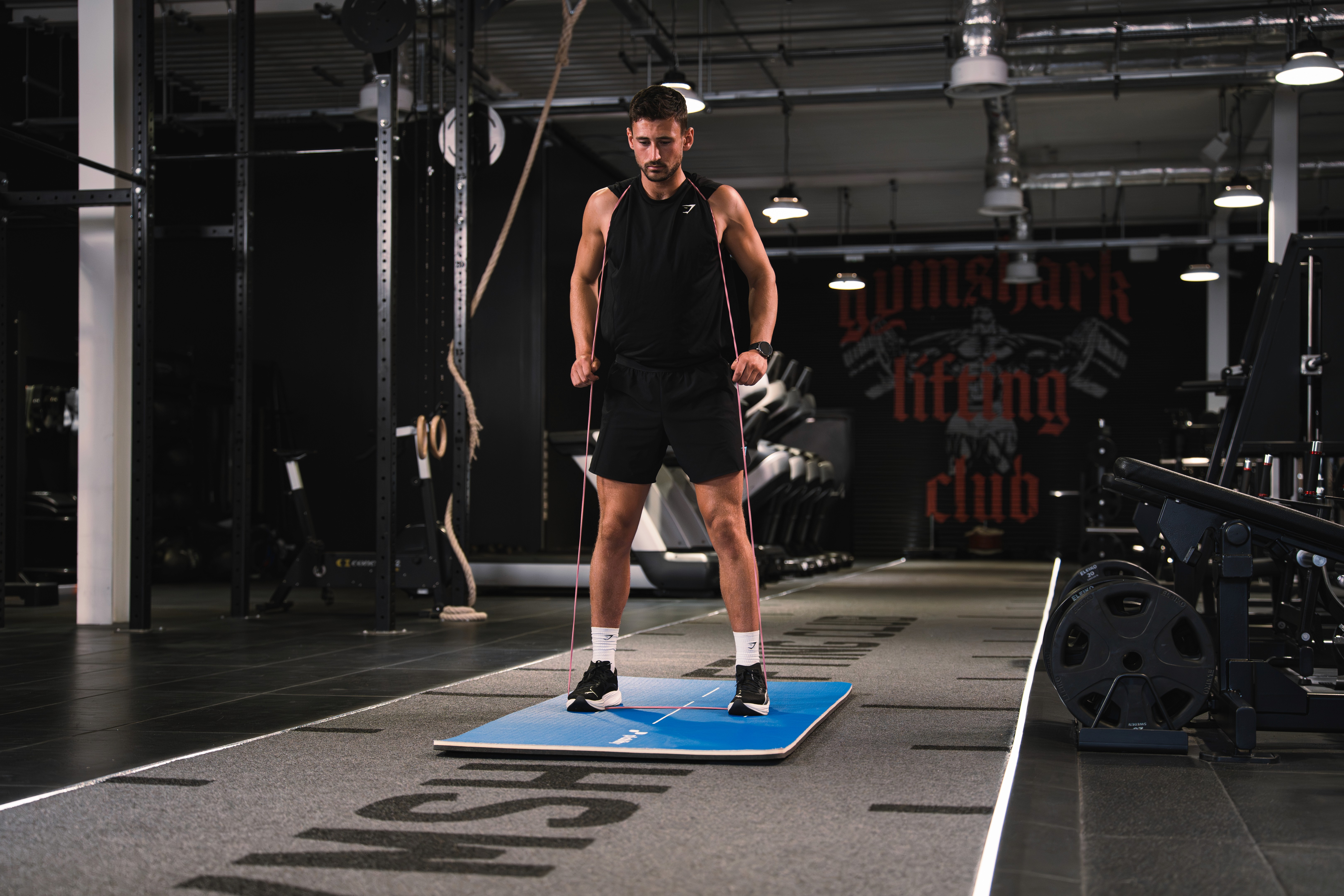
Jump rope builds endurance, coordination, and tendon stiffness through high-volume, low-force repetition. Traditional plyometrics, such as depth jumps and box jumps, develop maximum power output, explosive strength, and sprint performance through low-volume, high-force loading. They train different adaptations because their mechanical demands differ in force, velocity, and neural recruitment. Combining both makes sense for most programs: jump rope for warm-ups and conditioning phases, traditional plyometrics for peak power development blocks.
Training Method | Volume | Force | Primary Adaptations | Best For |
|---|---|---|---|---|
Jump Rope | High | Low | Endurance, coordination, and tendon stiffness | Conditioning, footwork |
Traditional Plyometrics | Low | High | Power output, explosive strength | Sprint performance, vertical jump |
how does jump rope develop reactive strength differently?
Jump rope builds reactive strength in the ankles and calves by training the Achilles tendon to stiffen when it hits the ground and release energy efficiently, the same quality that helps you move faster during court sports, sprinting, and cutting movements. Unlike box jumps or squat jumps, it focuses on coordination and rhythm by forcing you to maintain a consistent pace, which develops the neurological side of reactive ability.
Why is jump rope effective for Achilles tendon rehabilitation?
For people recovering from Achilles tendon issues, jump rope is introduced in later rehab stages to restore the tendon's ability to handle fast, repetitive loads while regaining its spring-like function. The relatively low force per contact makes it more manageable than high-impact plyometrics while training the same elastic properties. Separate research involving young basketball players found that short-term jump rope training improved body composition and athletic performance markers, demonstrating its value for younger athletes in building foundational movement quality.
how do traditional plyometrics create higher force loads?
Traditional plyometrics stress the stretch-shortening cycle with higher forces and shorter ground contact times. A depth jump from an elevated box creates ground reaction forces exceeding twice your body weight, requiring maximum neural drive to absorb and redirect that energy in a fraction of a second.
Jump rope rarely approaches that same force per contact, with slightly longer ground contact times. This difference in force and velocity determines whether you're training elastic rebound or maximum power production.
Why does motor unit synchronization matter for explosive power?
High-force plyometrics increase motor unit synchronization, meaning more muscle fibers fire simultaneously to produce peak force. Jump rope trains motor unit endurance and timing precision instead.
If your goal is a higher vertical jump or faster sprint acceleration, you need the high-force stimulus that only traditional plyometrics provides.
why doesn't more jumping equal more explosiveness?
Doing more jumps does not make you more explosive. High-volume training builds work capacity and tendon strength, but explosiveness requires intensity. Separate research on junior boxers has found that plyometric training focused specifically on power output produces measurable performance gains, reinforcing that the type of plyometric training matters more than total jump volume.
You could do a thousand jump rope repetitions every day and still not improve your standing broad jump if you never expose your muscles to the high-velocity, high-force demands that teach them to produce peak power.
How does mobility work support plyometric training?
Mobility work helps you access the range of motion and tissue quality needed to safely absorb plyometric forces. Without sufficient ankle dorsiflexion, hip extension, and calf tissue elasticity, high-impact landings compress joints instead of loading tendons.
But knowing the difference between jump rope and traditional plyometrics leaves one question unanswered: which one belongs in your program now?
should you use jump rope as plyometric training?
Jump rope works as plyometric training for building tendon strength, improving ankle reactive strength, or maintaining conditioning between high-intensity sessions. It doesn't replace traditional plyometrics for maximum vertical jump, sprint acceleration, or sport-specific explosive power. Your choice depends on which adaptation you're targeting: use jump rope for active recovery days and tendon preparation, but prioritize traditional plyometrics when training for maximum power output and sport-specific explosiveness.
how does jump rope benefit beginners and recovering athletes?
Beginners benefit most from jump rope as their primary plyometric exposure. The lower force per contact allows tendons to adapt gradually without the joint compression from depth jumps or bounding. According to Harvard Health, a short daily jumping-rope session provides sufficient plyometric stimulus to build foundational reactive strength while keeping injury risk manageable.
Athletes recovering from Achilles or calf strains use it the same way: high-volume, low-threat loading that rebuilds tissue tolerance before progressing to higher forces.
How does jump rope prepare you for advanced plyometric training?
Jump rope activates the stretch-shortening cycle before heavier plyometric work. A few minutes of double-unders or high-knee skipping primes the nervous system for faster ground contacts during box jumps or broad jumps.
It delivers hundreds of plyometric contacts without dedicated equipment or floor space, making it one of the most space-efficient tools for maintaining reactive foot speed.
what are the limitations of sprint training?
Sprint training requires hip and knee extension power that jump rope doesn't build. Sprinting demands aggressive forward movement through full triple extension, while jump rope maintains a steady center of mass. For improving your 40-yard dash or acceleration, depth jumps and bounding train the specific force directions and muscle recruitment patterns needed. Jumping rope sharpens your calves but won't build the posterior-chain dominance that drives sprint performance.
Why doesn't it maximize vertical jump development?
Vertical jump development follows the same logic. Basketball and volleyball athletes need maximum ground reaction force from the hips and quads. Jump rope improves cardiovascular capacity and muscular strength, but force production stays concentrated in the lower leg rather than distributed across the full kinetic chain. Box jumps and depth jumps teach your body to absorb and redirect higher forces through larger muscle groups, translating directly to higher jumps. Jump rope builds ankle stiffness that supports power but won't create it.
the substitution test that clarifies everything
Jumping rope serves as an effective alternative to low-to-moderate-intensity plyometrics for conditioning, injury prevention, or foundational movement quality. When pursuing peak power output or sport-specific explosiveness, traditional plyometrics become necessary. This preparation determines whether your plyometric work builds performance or accumulates fatigue.
The challenge is determining how jump rope and box jumps fit together without creating overtraining or conflicting adaptations.
make jump rope and plyometrics work better together | get 7 days free
Understanding whether jump rope counts as plyometrics matters only if it changes how you train. Both methods train the stretch-shortening cycle, but at different intensities and for different adaptations. Most athletes need both within a structured system that accounts for mobility, recovery, and progressive loading. Your ability to benefit from jump rope conditioning or explosive box jumps depends on ankle range of motion, tissue quality, and movement control. Tight calves limit ankle dorsiflexion, reducing your ability to absorb force during landings. Restricted hips compromise your ability to load properly before a depth jump. When tissues can't move through full ranges under control, your nervous system compensates with inefficient patterns that leak force and increase injury risk.
pliability is a mobility app built to close that gap. Take the in-app mobility assessment to see where your ankles, calves, and hips are limiting you, then follow the Daily Sessions or pick a Path built around jump rope and plyometric work. Build Your Program to target ankle dorsiflexion and hip range specifically, and if you're rebuilding after an Achilles or calf issue, the Rebuild hub is built for that.
Sign up for seven days free on iPhone, iPad, Android, or the web. Your jump rope, your box jumps, and your overall performance improve together when your body has the movement capacity to support what you're asking of it.
Related Reading








Move better in 10 minutes a day.
10,000+ five-star reviews.