


LEARN
pliability

Deceleration training teaches your body to slow down, stop, and absorb force safely under control: braking hard after a sprint, sticking a landing without knee collapse, planting and cutting sharply. Most ACL injuries happen during these deceleration moments, not on contact, because when muscles can't handle braking forces, joints absorb the impact instead. Most athletes spend years building acceleration and explosive power and assume that strength and explosiveness make braking automatic. They don't. Braking requires eccentric control: the ability to lengthen muscles under tension while producing force. Without it, every cut is a gamble, every landing stresses unprepared structures, and every direction change leaks power you could redirect into your next move.
Control the eccentric phase and you store elastic energy that rebounds into your next action: athletes who move faster lower their center of mass smoothly during cuts, plant with stability, and explode out of transitions without wasted motion. Slowing down safely also reduces your risk of injury, because every athletic movement follows the same pattern: speed up, slow down, change direction, speed up again. If the slowing-down link is weak, the whole chain breaks down. Deceleration shows up constantly in every sport: moving backward in basketball to block a shot, stopping in soccer after a sprint, shifting side to side before a tennis forehand, landing from a box jump. Field athletes, tactical operators, and combat sports competitors all depend on managing momentum when instant stops or direction changes are required, and poor mechanics in these moments put knees, ankles, hips, and lower backs under stress they weren't built to handle repeatedly.
the science: how your body absorbs force
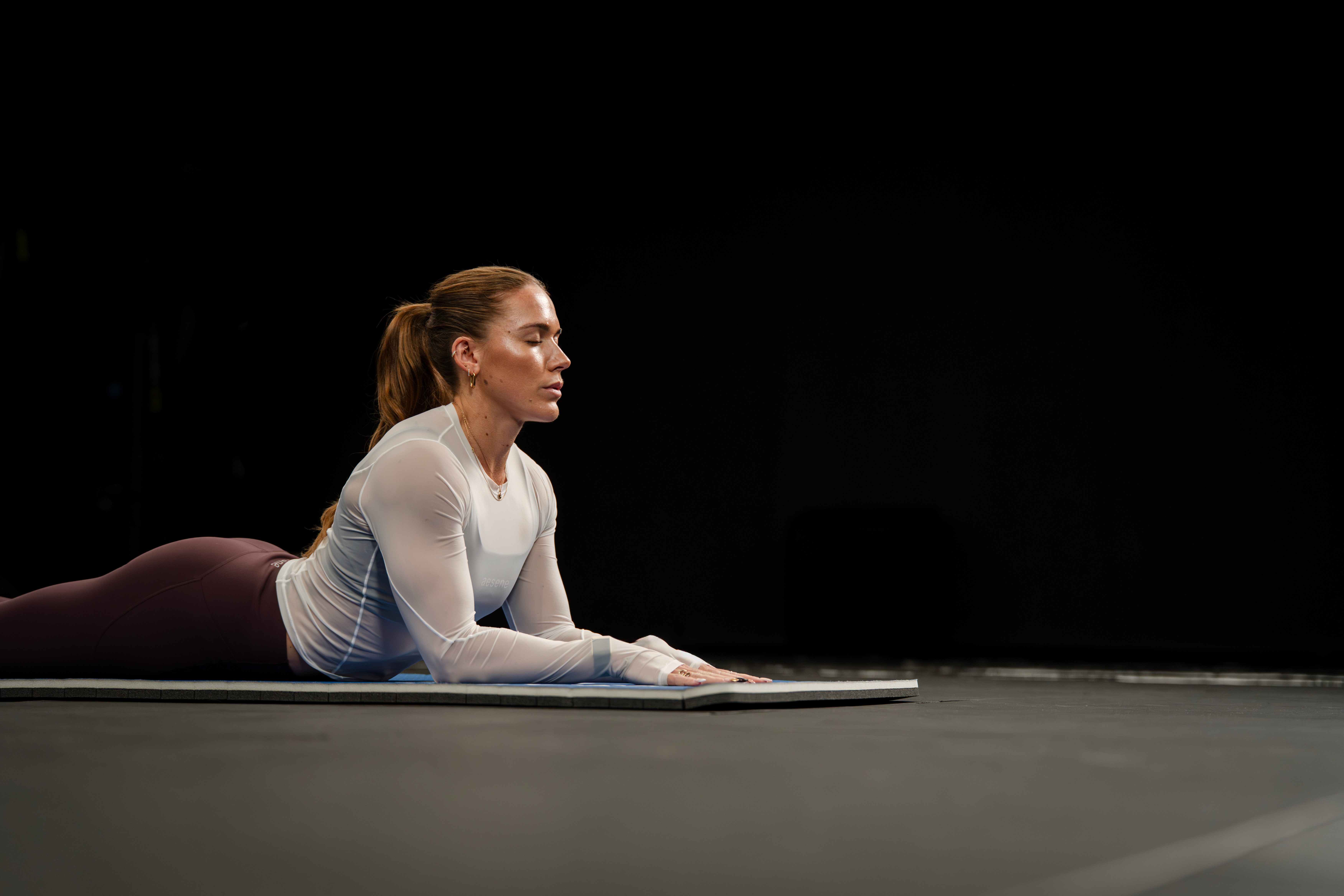
Most athletes train to produce force. Elite athletes also train to absorb it. Deceleration training centers on eccentric force absorption, lengthening muscle fibers under tension while controlling momentum, which spreads impact across tendons, ligaments, and connective tissue instead of concentrating it in joints. That's why some bodies handle rapid direction changes easily while others break down.
Slowing down is a team effort. The quadriceps handle the primary braking load at the knee, the hamstrings stabilize the tibia against the forward shear that stresses the ACL, the glutes control hip extension and keep the pelvis level, the calves and ankle stabilizers manage ground contact, and the core holds spinal alignment. When these muscles fire in sequence, force gets absorbed smoothly across the chain. When one link weakens, force bypasses the muscle and travels straight into the joint.
Three factors decide how well your body handles impact: joint angles (a lower center of mass improves force distribution), ground contact (proper foot placement increases stability), and muscular tension (stronger eccentric contractions reduce joint stress). Research published in Sports Medicine shows high-intensity horizontal decelerations occur frequently in team sports, which is why these patterns need repeated, deliberate practice.
Slowing down is also a nervous-system skill: high-level athletes change direction in a fraction of a second because their neural pathways are trained to respond without hesitation. It isn't just a straight-line skill either. Athletes stop, turn, pivot, and rotate through all three planes of motion, sagittal, frontal, and transverse, and most injuries happen when athletes lack the stability to decelerate in the frontal or transverse plane. Straight-line sprint training only touches one of the three.
deceleration training vs acceleration training in sports
Acceleration training teaches your body to produce force. Deceleration training teaches it to absorb and control that force. Most programs overload the first and ignore the second, building athletes who are fast in a straight line but unstable the moment they need to stop, pivot, or change direction under pressure. Explosive power is popular because it's easy to measure and see: faster sprints, higher jumps, quicker first steps. But most of the action in team sports is deceleration, not straight-line speed, so training time rarely matches how the games are actually played.
Training Type | Focus | Benefits | Common Sports |
|---|---|---|---|
Acceleration | Force production | Speed, power, explosiveness | Track and football starts |
Deceleration | Force absorption | Injury prevention, agility, control | Basketball, soccer, tennis |
Skip the deceleration work and force transfer breaks down on the field: a basketball player plants hard to change direction and the knee absorbs the load instead of the glutes and hamstrings, a soccer midfielder's trunk rotates ahead of the hips and creates shear through the lower back, a linebacker decelerates late and mistimes a tackle because the body never learned to control momentum at that speed. These aren't strength problems, they're control problems: the muscles are strong enough, but the nervous system hasn't practiced the timing and sequencing that high-speed braking demands.
how to progress deceleration training safely (beginner → advanced)
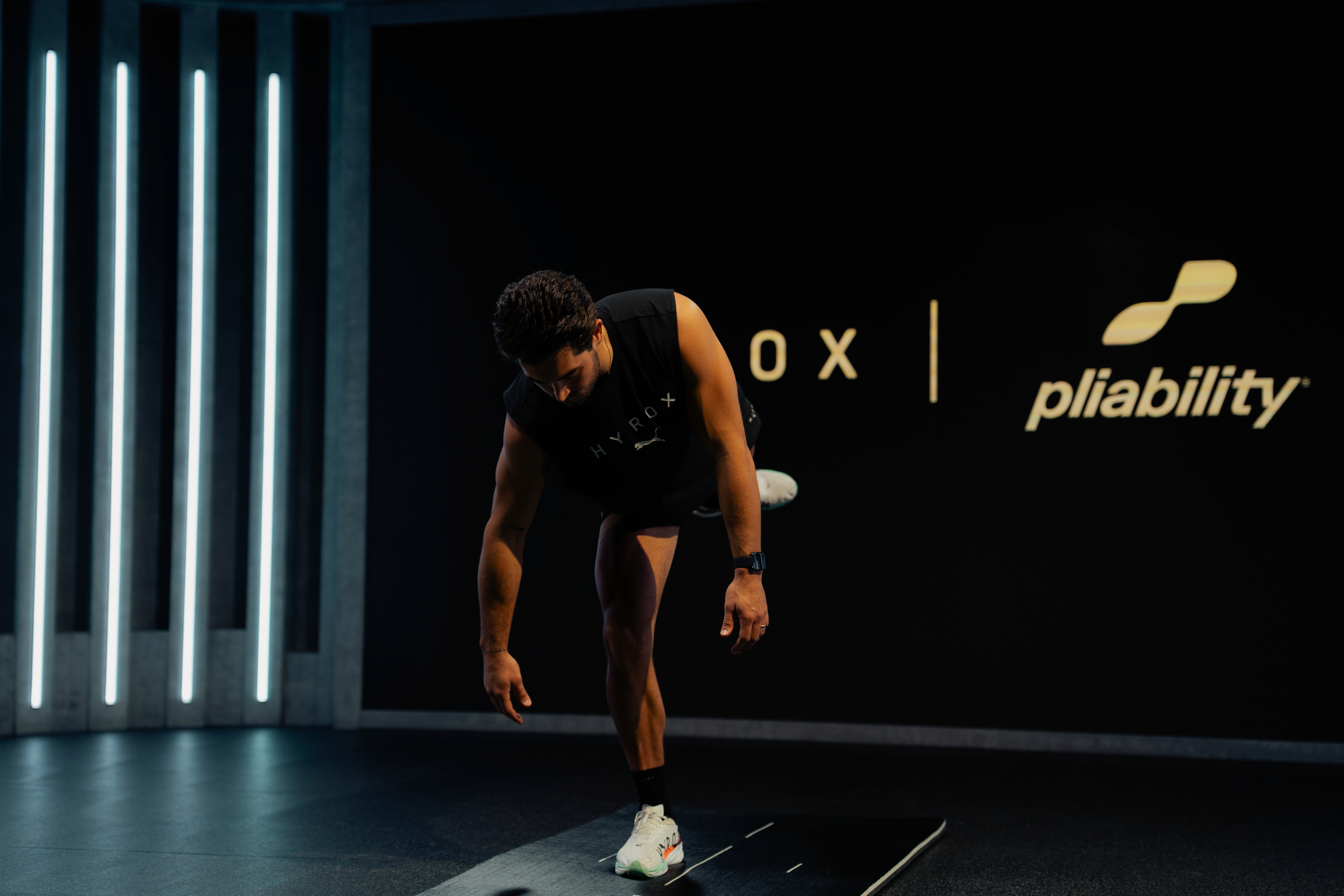
Progression isn't about doing more, it's about doing what your body can control. Skip steps and connective tissue pays the price: most non-contact ACL injuries during deceleration happen because athletes moved into high-speed drills before learning to absorb force cleanly. Build capacity in layers: control first, then speed, then complexity. Don't move to the next stage until you can perform the movement cleanly and consistently, connective tissue adapts more slowly than muscle does.
beginner: build the foundation
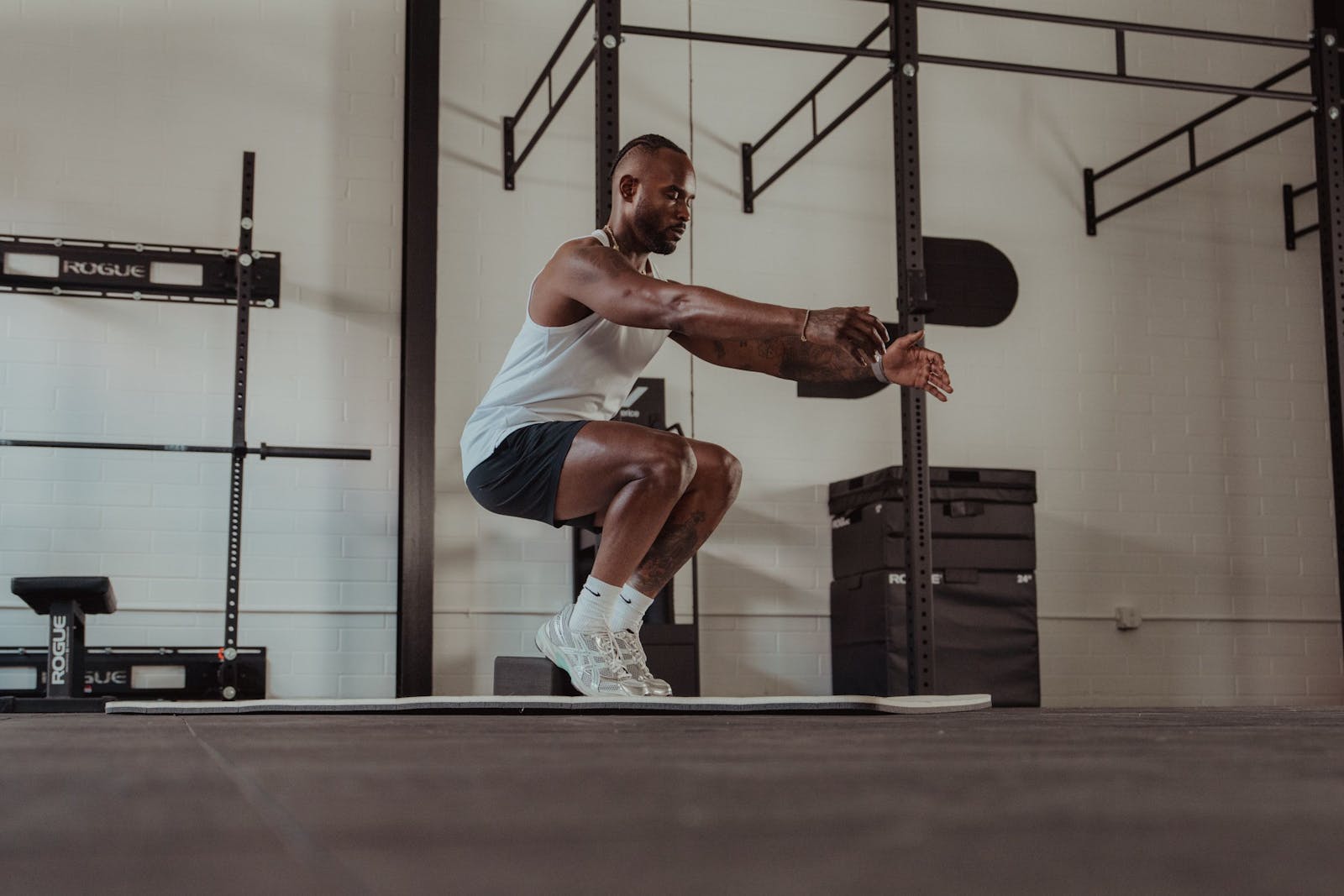
Start with movements that teach your body to slow down without speed: slow eccentric squats, step-downs from low boxes, split-squat eccentrics, and two-legged stick landings. Focus on foot placement under your center of mass, knee tracking over toes, and a stable trunk that doesn't collapse forward. If you can't control a slow descent, you won't control a fast one.
intermediate: add single-leg demand and moderate speed
Once basic control feels automatic, add asymmetry and tempo: lateral bounds into a stick landing, single-leg snap-downs, moderate-speed sprints ending in a controlled plant, and 45-degree cutting drills, all of which force one leg to handle the entire braking load. Prioritize clean movement over raw speed while managing eccentric stress on one side.
advanced: train for game-speed chaos
Reactive change-of-direction drills, multi-step cutting sequences, and rotational deceleration into immediate re-acceleration mirror the demands of competition, where your body has milliseconds to organize itself, absorb momentum, and explode into a new direction. If mechanics fail here, an earlier progression was rushed: advanced work only holds up when the foundation does.
recognizing overload before it becomes injury
Watch for knee pain that persists after training, soreness lasting beyond 48 hours, stiff or uncontrolled landings, or an inability to hold positions you managed last week. These aren't signs of weakness, they're signs you got stronger faster than your tendons and ligaments could adapt, and ignoring them turns small stress into real damage.
move better under speed, load, and pressure
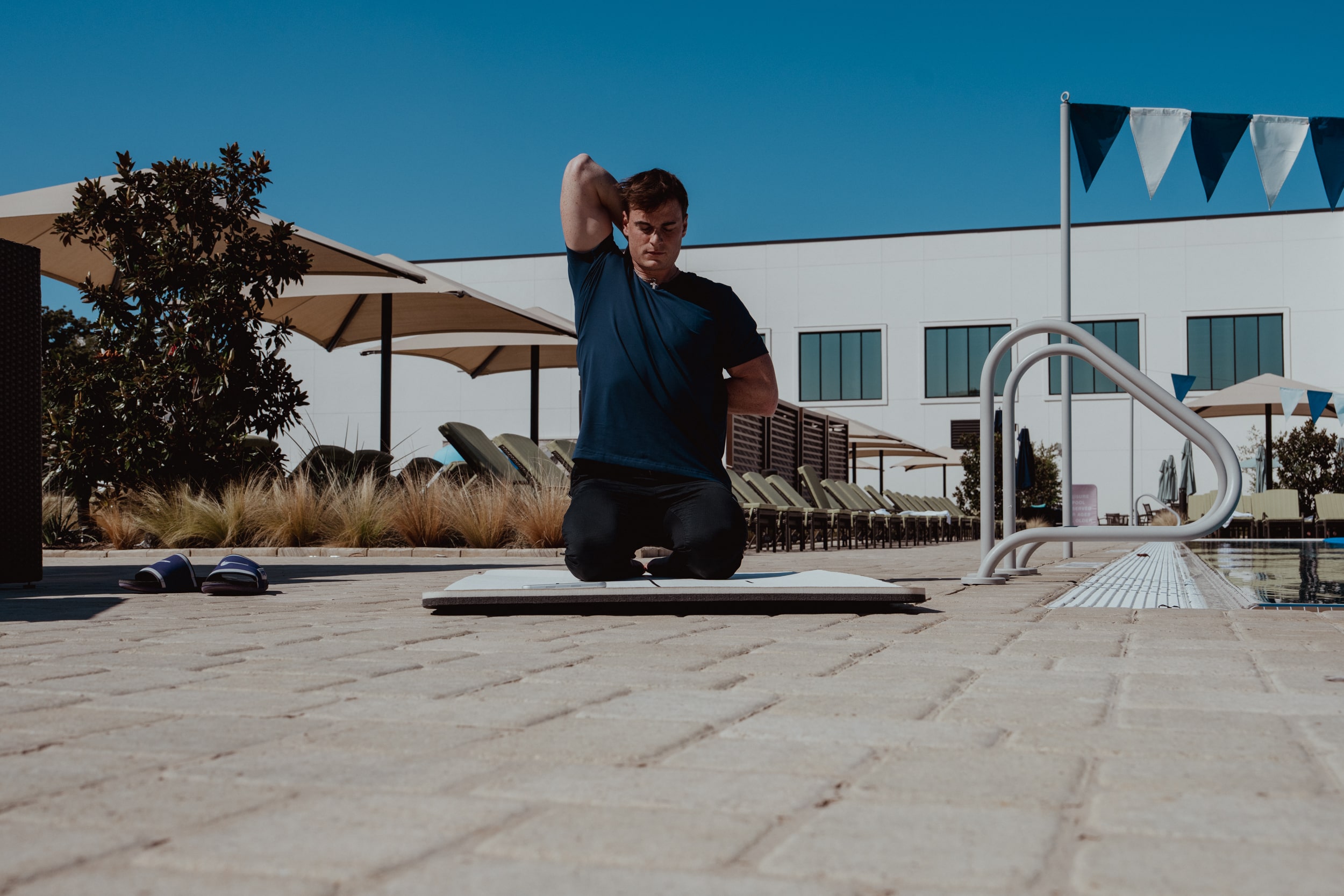
Deceleration training fails if your body can't access the positions needed to absorb force safely. Tight hips prevent stable landing stances. Restricted ankles force knees forward during cuts, creating valgus collapse. Limited thoracic mobility locks your upper body and makes rotational deceleration inefficient. Generic stretching after training doesn't address these deficits, and passive flexibility without motor control doesn't translate to movement quality under speed or load.
pliability builds that targeted work into guided video sessions: Daily Sessions give you a fresh routine each day, Paths run a multi-week progression for building hip, ankle, and thoracic range on purpose, and Build Your Program shapes a plan around your own training load. Take the mobility assessment, which uses body scanning to find where you're actually restricted, so your mobility work targets the positions you need for clean braking mechanics instead of generic stretches. Start with 7 days free on iPhone, iPad, Android, or the web.
Related Reading




Move better in 10 minutes a day.
10,000+ five-star reviews.