


LEARN
Cody Mooney
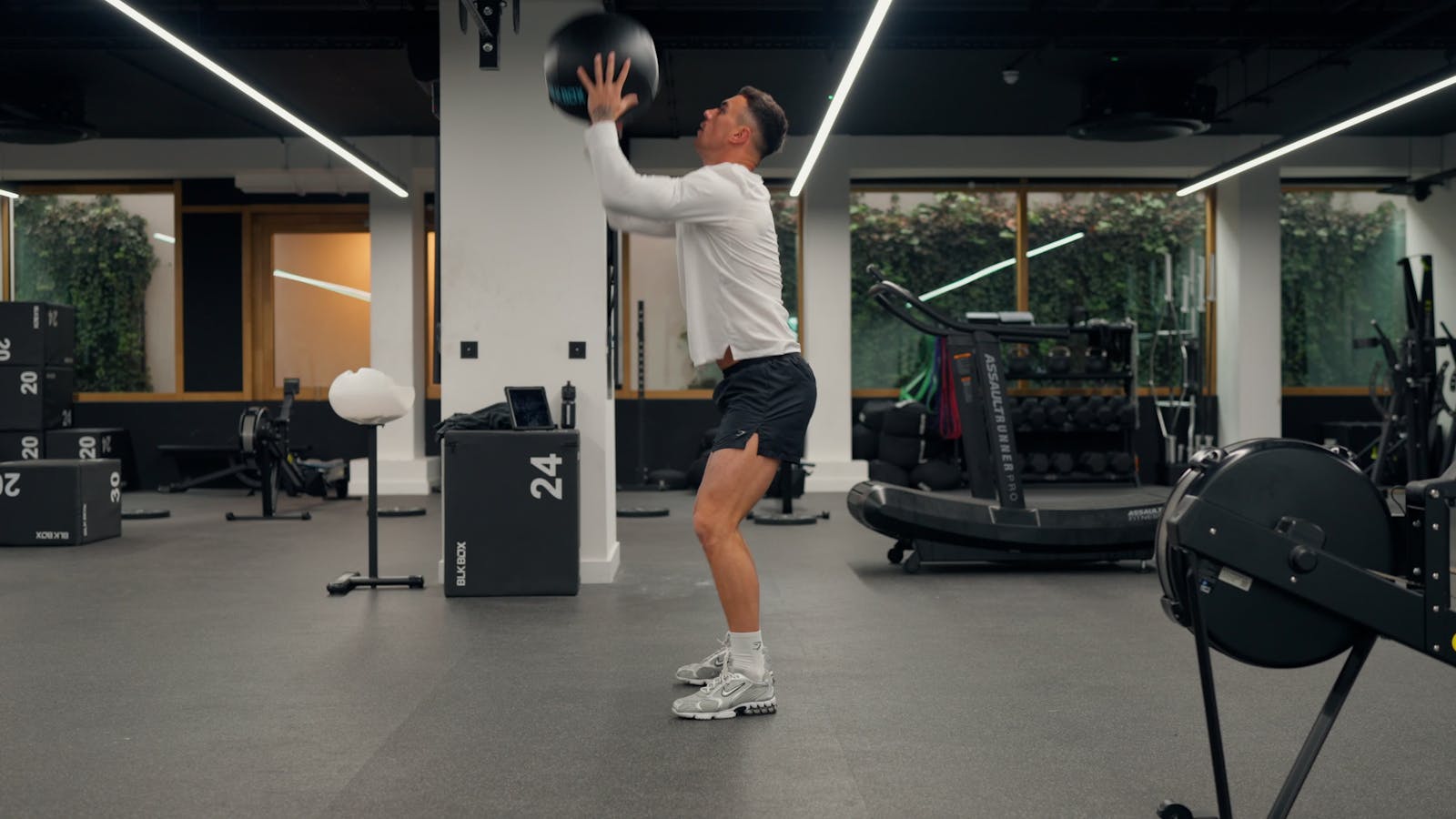
Ask almost anyone who has raced HYROX where their form falls apart, and a lot of them point to the same place: the wall balls. It's the final station, waiting after eight kilometers of running and seven other stations, and it demands 100 clean repetitions of a squat below parallel with a throw to an overhead target. Miss the depth or the target and the rep simply doesn't count: no warnings at this station, just rep or no rep, and you can't move on until all 100 are done. With your heart rate near maximum and your legs already cooked, the reps quietly get shallower, the chest starts to drop, and the no reps pile up.
Most athletes blame fatigue or conditioning. Those matter. But there's a mechanical culprit underneath that many people miss: limited mobility in the ankles and hips. And for HYROX athletes specifically, that restriction often traces straight back to all the running.
the squat depth a wall ball rep demands
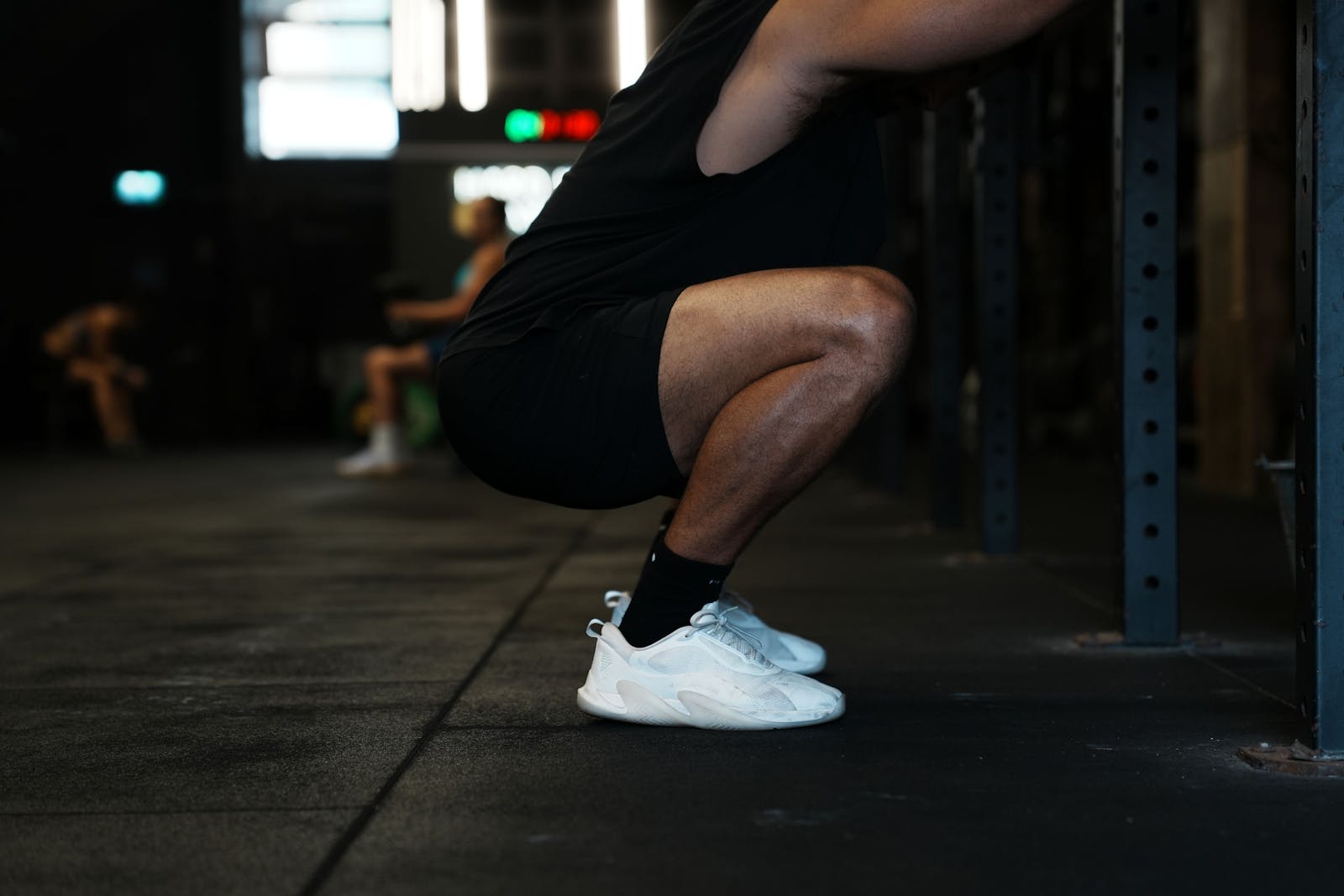
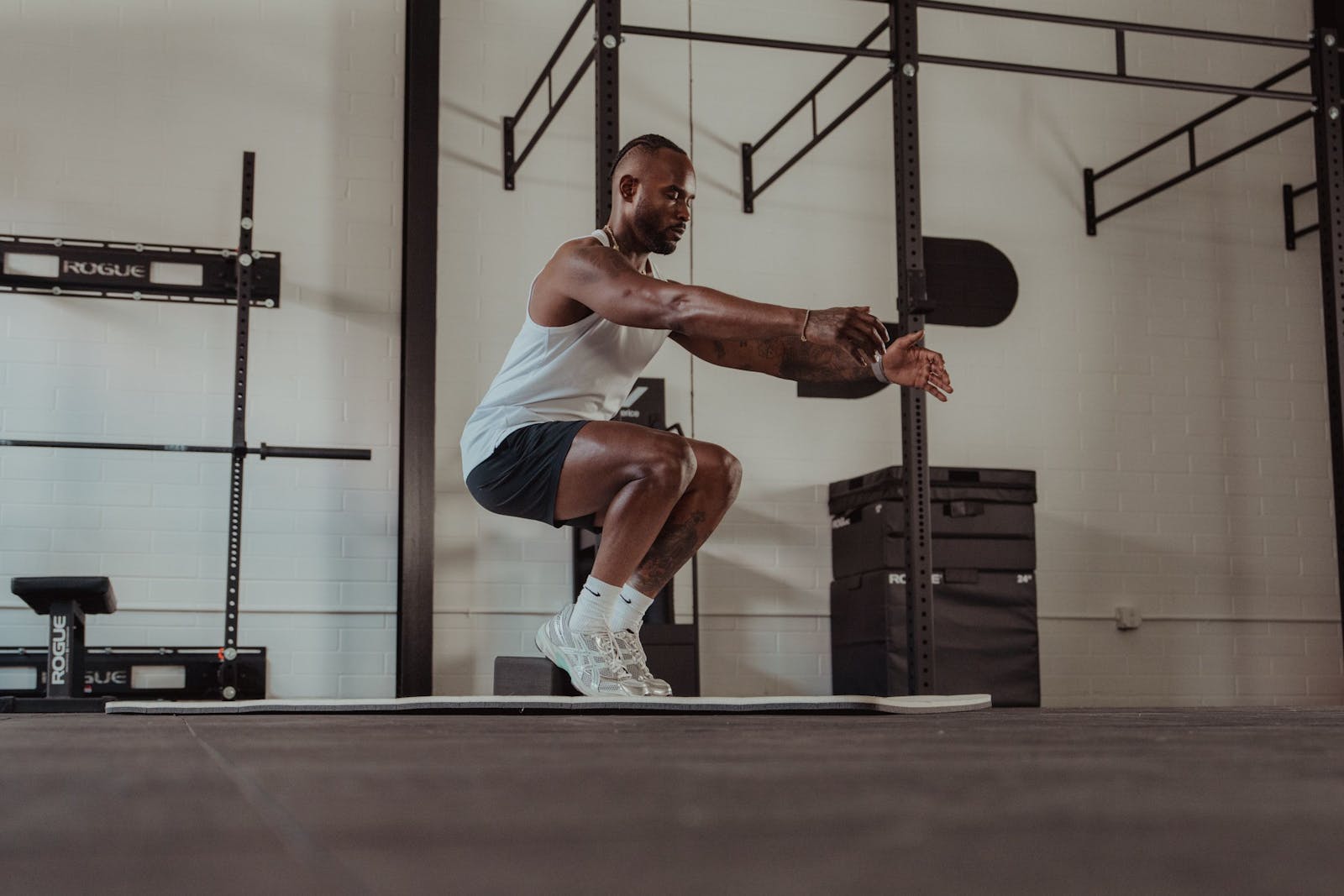
To score a wall ball rep, your hip crease has to drop clearly below the top of your knee. That deep squat isn't just about strength. It's a mobility problem first. To sit into a full squat while keeping the medicine ball at your chest and your torso upright enough to throw straight up, you need your knees to travel forward over your toes, which requires meaningful ankle dorsiflexion, and you need your hips to flex deeply while your pelvis stays in a good position.
If either of those ranges is short, the squat has to find the range somewhere else. That's where form breaks down.
what limited ankle mobility does to your squat
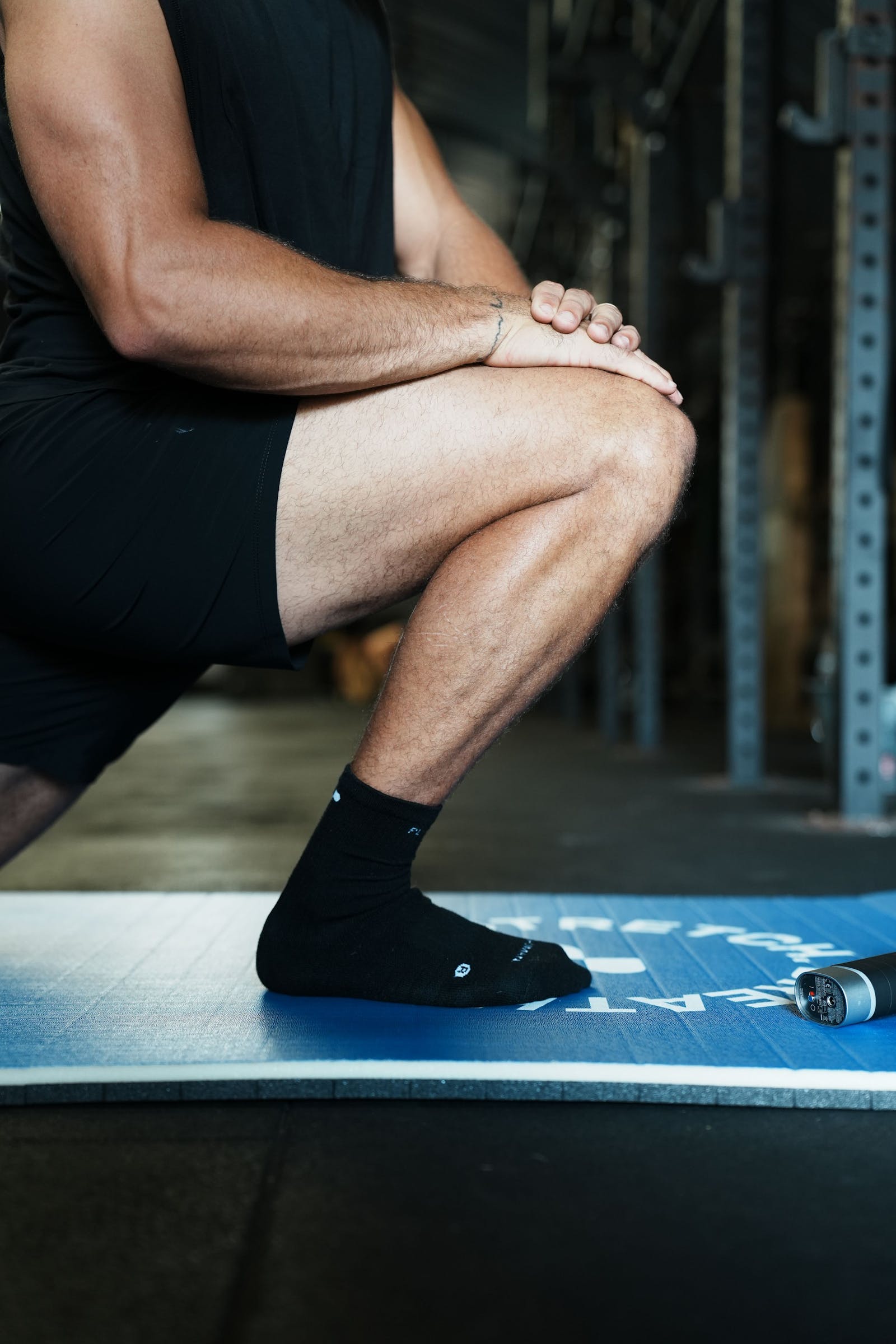
The ankle piece is the one athletes underrate the most. When ankle dorsiflexion is limited, the whole squat pattern changes in predictable ways. A study examining limited ankle dorsiflexion during squatting found that people with restricted ankles (under 30 degrees on a weight bearing lunge test) squatted with significantly greater forward trunk lean, more hip and lower back flexion, and more anterior tilt of the pelvis compared to those with freer ankles. Research on the barbell squat found the same tradeoff: the less dorsiflexion an athlete has, the more the trunk is forced to pitch forward.
Now picture that at the wall ball station. A forward leaning torso makes it far harder to drive a ball straight up to the target, wastes energy fighting your own position, and loads the lower back in exactly the way you don't want when you're deeply fatigued. Stiff ankles don't just make the squat uncomfortable. They quietly sabotage the throw and the efficiency of every single rep.
how running volume tightens ankles and hips
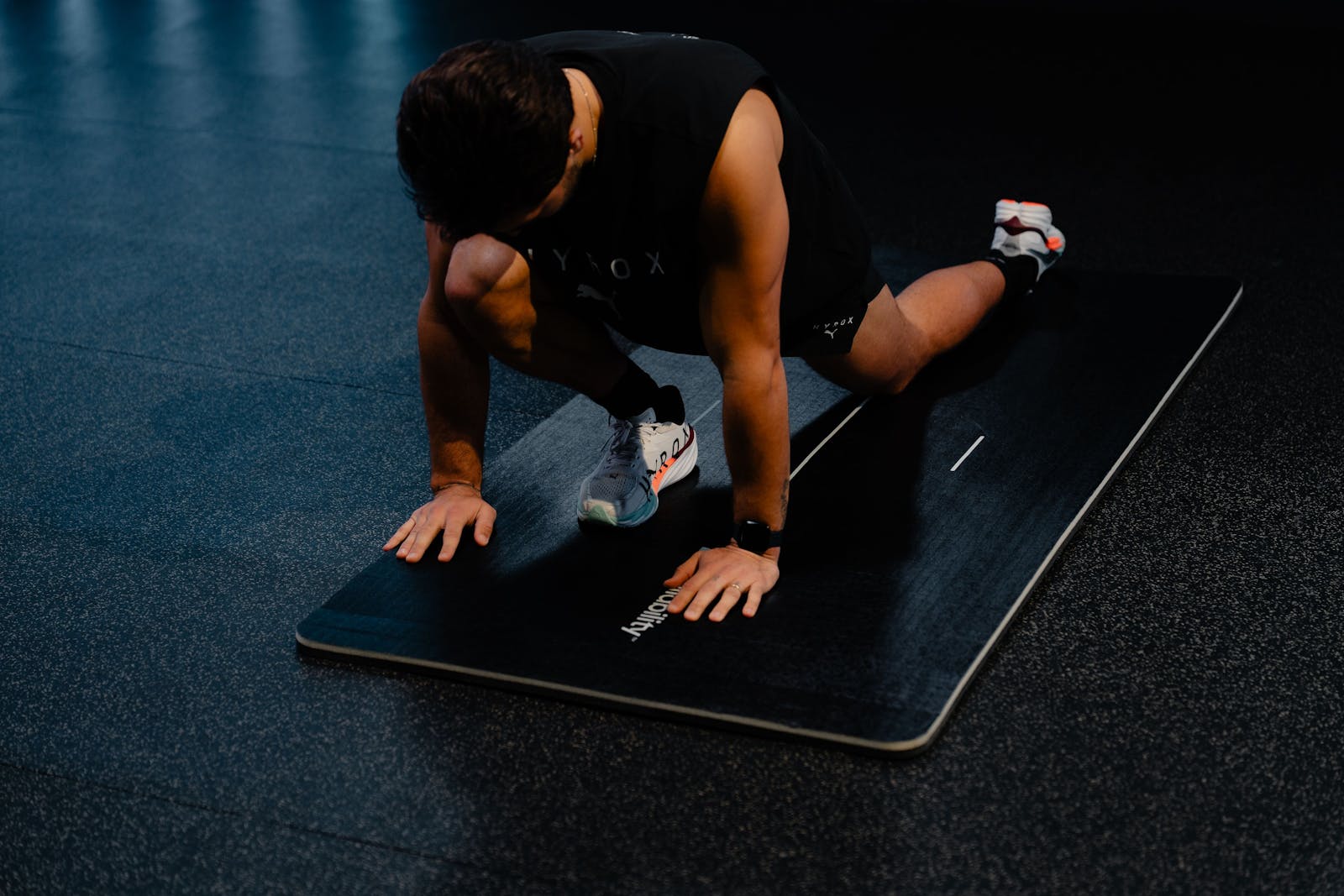
Here's the part that catches HYROX athletes off guard. The same running volume that builds their engine can be part of what leaves their ankles and hips tight.
Running is thousands of repetitions of a fairly narrow movement. Each stride loads the calf and Achilles through repeated push off, and keeps the hips cycling through a limited range rather than moving into deep flexion or full extension. Over high mileage, the tissues adapt to that specific demand. A classic study in the Journal of Orthopaedic & Sports Physical Therapy compared long distance runners to non runners and found the runners had significantly tighter hamstrings and soleus muscles. The soleus is a key calf muscle that directly limits ankle dorsiflexion when it's stiff, and tight calves and restricted ankles tend to travel together, forcing the knee and hip to compensate.
So the HYROX athlete trains exactly the way the sport rewards, stacking running volume, and unintentionally reinforces the calf and hip restrictions that show up the moment they need a deep, upright squat at the end of the race.
why stretching alone doesn't fix your squat depth
One important nuance keeps this honest. What feels like tightness during a movement isn't always short tissue. Often it's a control issue: the nervous system limits the range you can actively access because you haven't built strength and stability throughout that range. This is why runners who stretch their calves and hips for months sometimes find the restriction in their squat barely budges. Passive length alone doesn't transfer to a loaded, fatigued, dynamic movement like a wall ball.
That's the key insight. The fix isn't just more stretching. It's mobility work that opens the ankle and hip and then trains you to own that range with control, so it actually holds up under load and fatigue.
build wall ball mobility with pliability
This is exactly the gap pliability is built to close for hybrid athletes. As the official stretching partner of HYROX, our sessions pair opening up the ankles and hips with active, controlled work through that new range, the combination that carries over to a real below parallel squat. The mobility assessment uses body scanning to pinpoint whether it's your ankles, your hips, or both that are limiting your depth, so you can target the actual restriction instead of guessing, and Daily Sessions and Build Your Program slot the work easily around your running and station days.
Your wall balls at the end of a HYROX race are only as good as the range you can access when you're exhausted. Build clean, controlled ankle and hip mobility now, and that final station stops being the place your form goes to die. Start with 7 days free on iPhone, iPad, Android, or the web, and make mobility part of the plan: train, stretch, race, repeat.
Selected references: "Effect of Limited Ankle Dorsiflexion on Lower Limbs and Trunk Kinematics During Squatting," The Foot, 2025. Fuglsang et al., "Effect of ankle mobility and segment ratios on trunk lean in the barbell back squat," Journal of Strength & Conditioning Research, 2017. "Lower Extremity Muscular Flexibility in Long Distance Runners," Journal of Orthopaedic & Sports Physical Therapy, 1993. Brandt et al., physiological analysis of HYROX station demands, 2021.
This article is for educational purposes and isn't a substitute for personalized medical advice. If you have persistent pain, a recent injury, or a diagnosed condition, check with a healthcare provider or physical therapist before changing your training.
Related Reading



Move better in 10 minutes a day.
10,000+ five-star reviews.