


LEARN
pliability

Plyometric training, jumps, bounds, and other explosive movements, builds power, speed, and agility faster than lifting or cardio alone. The gains show up in vertical jump height, sprint mechanics, tendon and bone strength, balance, and conditioning, and most of them appear within weeks of consistent training.
The demands are real, though. Jumping and landing load your muscles, tendons, and joints hard and fast, so mobility work belongs in your routine before you add plyometrics, not after you get hurt.
how plyometrics build explosive power

Plyometrics train a specific skill: how fast your muscles switch from absorbing force to producing it. Traditional strength and cardio training don't teach your nervous system to produce force at the speed athletic movement demands, no matter how heavy you lift or how far you run.
The mechanism is the stretch-shortening cycle. Your muscles lengthen under tension and store elastic energy (the eccentric phase), stabilize briefly (amortization), then release that energy in a rapid, powerful contraction (concentric phase), the way a basketball player loads into a squat before exploding upward for a rebound. The shorter the amortization phase, the more explosive the movement. This is a nervous-system adaptation, not a muscle-size one: your brain learns to fire more motor units, faster, and shrink the delay between loading and exploding.
An umbrella review of nine systematic reviews found plyometric training consistently improves reactive strength, sprint performance, and change-of-direction speed across diverse athletic performance populations, with gains typically showing up within weeks. Traditional strength training builds your capacity to generate force; plyometrics teach your nervous system to apply that force faster, which is the piece heavy lifting alone never trains. Plyometrics also run mostly on anaerobic energy systems, so they complement steady-state cardio rather than replace it.
benefits of plyometric training

Plyometrics turn raw strength into usable, explosive movement, and the benefits stack across several systems.
power, speed, and agility
Plyometric training teaches your nervous system to recruit fast-twitch fibers faster and more completely than slow, controlled lifts, which is why it drives measurable gains in vertical jump height, sprint speed, and change-of-direction control. Sprinters spend less time pushing off the ground while applying more force in that shorter window; plyometric drills train your muscles and tendons to handle that same fast loading and unloading cycle, which lowers impact stress on your joints with each stride. The same coordination carries over to agility: your body learns to decelerate under control before it changes direction, which matters because most non-contact knee and ankle injuries happen during deceleration, not acceleration. That control comes from eccentric strength, your ability to absorb force as a muscle lengthens under tension, and it's harder to build through regular lifting: a slow, controlled squat doesn't teach your body to handle the fast, unpredictable forces of a sudden direction change. That control matters most for runners and athletes who need to stop and redirect without compensating. Start with bilateral, two-footed drills before progressing to single-leg work, since unilateral movement exposes side-to-side imbalances that two-footed jumps hide.
tendon, bone, and joint resilience
Repeated jump loading makes tendons stiffer and more responsive, so they transmit force from muscle to bone more efficiently and waste less energy. That same mechanical loading stimulates bone-forming cells, increasing density at the hip, spine, and femur, which matters most for women: according to the Bone Health and Osteoporosis Foundation, up to 50 percent of women over 50 will break a bone due to osteoporosis. The same compression and decompression cycles that toughen bone also feed cartilage and support joint stability, which is one reason plyometric work shows up in later-stage rehab after ankle sprains: ligaments and joint capsules adapt to that same loading by getting thicker and stronger, adding joint stability without costing you range of motion.
balance and fall prevention
Jumping and landing on unstable footing trains proprioception: your body's sense of where it is in space without looking. Your brain gets better at predicting how much force a landing needs and recovering balance after an unexpected stumble. Those same adaptations carry over to everyday moments, like navigating uneven ground or catching yourself when you trip, and they matter most for older adults, since falls are a leading cause of injury and lost independence later in life.
conditioning and calorie burn
Because plyometric movements spike heart rate and demand high energy output in short bursts, they work well inside HIIT-style conditioning. The catch is sustainability: a session of continuous box jumps fatigues you far faster than a 30-minute run, so plyometrics work best as a high-intensity addition to your training, not a full replacement for steady-state cardio. The payoff is efficiency: a short, well-structured session delivers a high-intensity stimulus in a fraction of the time steady-state cardio requires.
how to use plyometrics safely

Plyometrics are high-intensity nervous-system work: they only pay off with maximum effort, precise landing mechanics, and real recovery time between sessions. Space sessions 48 to 72 hours apart, and treat every rep as quality over quantity. This isn't cardio: fatigue breaks down landing mechanics fast, and that's where injuries start.
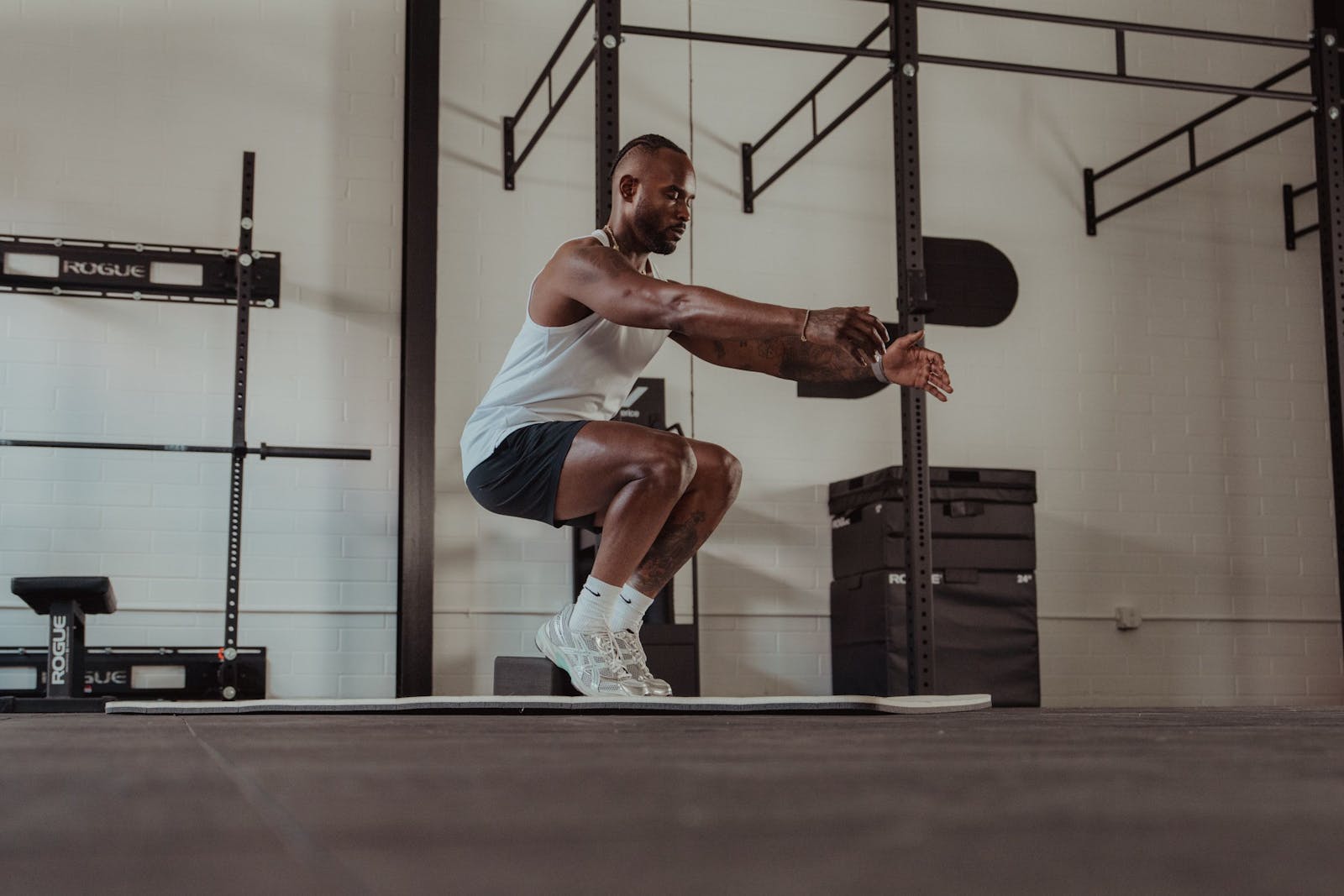
Progression matters more than intensity. Most injuries come from skipping landing mechanics and jumping straight to box jumps or depth drops before your body is ready. Drop squats build that foundation: stand hip-width apart, rise onto your toes, then drop quickly into a squat with thighs parallel to the ground and knees tracking over your toes, and hold for a few seconds. If you can't stick that landing quietly and without wobble, you're not ready for repeated explosive movement.
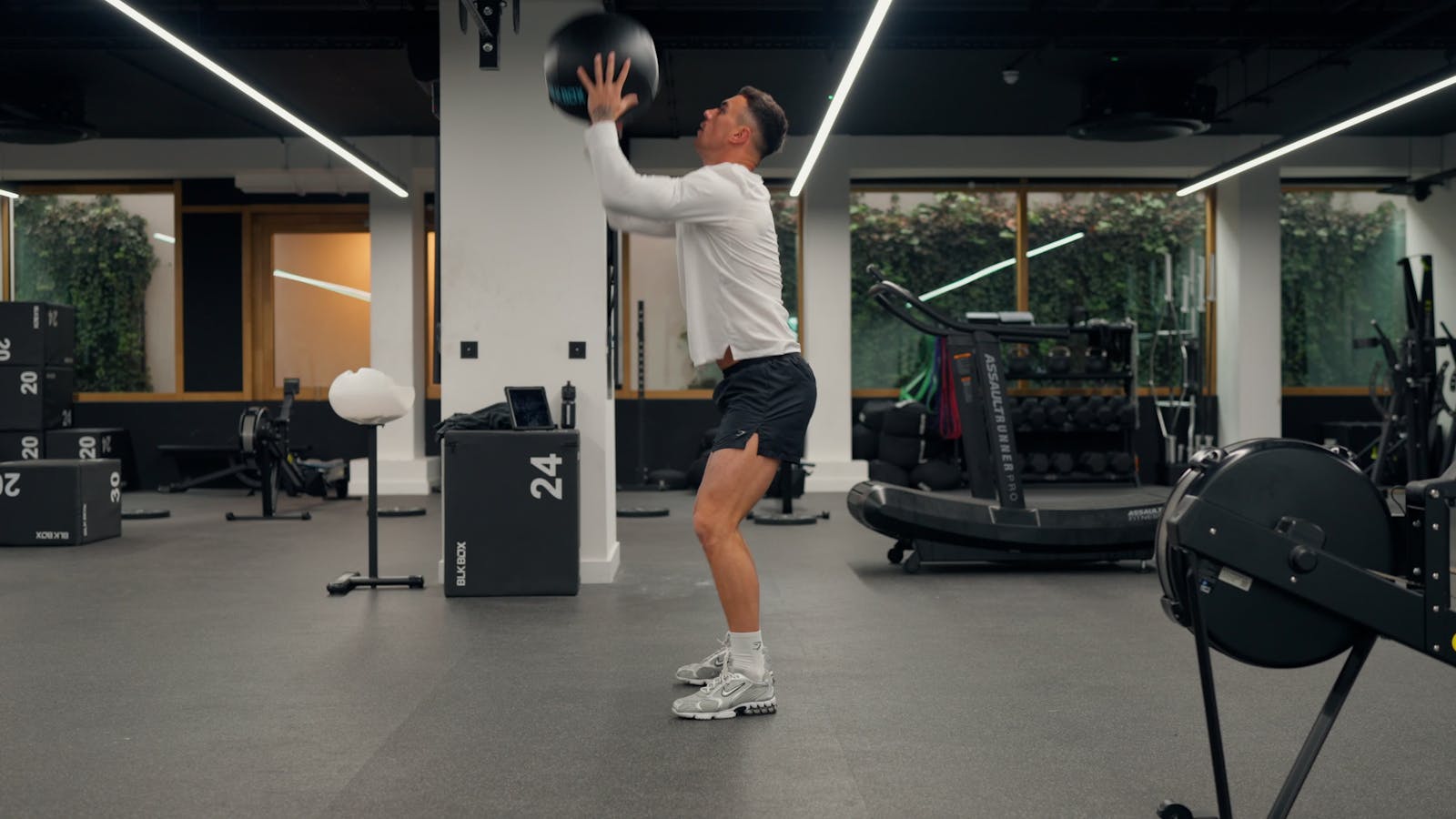
Start with bilateral, low-impact moves: pogo jumps, jump rope, medicine ball slams, and step-ups onto low boxes, three to four sets of four to six reps, one to two times a week, with at least 48 hours between sessions. That builds the work capacity you need before moving to squat jumps, box jumps, and lateral bounds, then to depth jumps, single-leg hops, and reactive change-of-direction drills as your landing mechanics and strength catch up. Keep sessions under 30 minutes, reps per set at 10 or fewer, and rest two to three minutes between sets: treat lower-intensity work like jump rope and pogo hops as separate capacity-building sessions, not circuit-style conditioning blended in with maximal-effort bounds, which defeats the purpose of both. Mobility matters here too: without enough range in your hips, ankles, and upper back, you can't land properly or absorb force through your full range of motion, and that's exactly where plyometric injuries start.
get more from plyometrics by improving the mobility behind your movement
Plyometrics deliver results quickly, but only if your body can handle the forces involved. Tight hips, stiff ankles, and restricted movement patterns sabotage landing mechanics and force transfer, turning explosive training into a setup for strain or plateaus. When ankle dorsiflexion is limited, your knees compensate during landings; when hip flexors stay chronically tight, your glutes can't fire properly during jumps, and that stress redirects into structures not built to handle it.
Better mobility means cleaner movement under fatigue, faster recovery between sessions, and the ability to train at higher intensities without breaking down. It's the difference between explosive training that holds up over years and training that wears you down.
pliability's Daily Sessions give you a fresh guided mobility routine every day, and Paths string sessions together into a multi-week progression if you're building toward more explosive, injury-resilient movement. Take the mobility assessment to see exactly where you're restricted, then use Build Your Program to build a routine around it. If you're coming back from an injury, the Rebuild hub has session series built for that.
Try pliability free for 7 days on iPhone, iPad, Android, or the web.
Related Reading


Move better in 10 minutes a day.
10,000+ five-star reviews.