LEARN
Pliability Team

Speed on the track doesn't come from running alone. Strength training for sprinters bridges the gap between current performance and potential, transforming how muscles fire during explosive first steps and throughout races. Proper strength work boosts acceleration off the blocks, increases power output with each stride, and refines the mechanics that separate good sprinters from great ones.
Building strength in the weight room matters, but how the body moves between positions determines whether that strength translates to the track. Improving range of motion and movement quality helps generate more force in squats and deadlifts while maintaining the fluid mechanics needed to carry that power through each phase of sprinting. Targeted routines that prepare the hips, ankles, and posterior chain for the demands of heavy lifting and explosive sprinting are available in Pliability's mobility app.
Table of Contents
Why Strength Training Is Essential for Sprint Speed (Not Optional)
How Strength Training Enhances Athletic Performance for Sprinters
18 Best Strength Training Exercises for Sprinters
How to Structure a Sprint Strength Program (Without Slowing Speed)
Unlock Sprint Mechanics With Mobility That Actually Transfers Into Speed
Summary
Ground contact times under 0.1 seconds separate elite sprinters from everyone else. Research published in the Journal of Applied Biomechanics shows that Olympic-level 100m sprinters maintain ground contact for 0.08 to 0.09 seconds at maximum velocity, while sub-elite athletes hover around 0.12 to 0.14 seconds. That 40-millisecond difference determines who reaches the podium. Heavy squats and deadlifts require 0.3 to 0.5 seconds to reach peak force, creating a mismatch between weight room strength and track performance unless programs specifically address rate of force development.
Sprinters need fundamentally different strength than bodybuilders or powerlifters. The posterior chain drives sprint speed while the quadriceps contribute minimally. Research by Miyake et al. (2017) found no significant difference in quadriceps size between sprinters and non-sprinters, and no correlation between quad mass and 100-meter times. Electromyographic studies show that hamstring activation increases more than that of any other muscle group as running speed climbs, making posterior chain loading the priority rather than balanced lower-body development.
Horizontal force application matters more than total force magnitude. A 2023 force plate analysis revealed that elite sprinters applied 78% of their ground reaction forces horizontally during acceleration, compared with 62% for slower athletes, even though both groups generated similar total force. Vertical strength from squats doesn't automatically translate to horizontal speed without technical sprint work, plyometrics, and mobility that allow the hips and ankles to achieve the ranges required for efficient force angles.
In-season and off-season training windows require opposite approaches to volume and intensity. Off-season tolerates higher volumes across two to three weekly sessions to build maximal strength reserves. In-season strength work drops to one or two maintenance sessions using low volume and high intensity, preserving force capacity without creating residual fatigue that compromises sprint performance. Programs that maintain off-season volume during competition season ask the central nervous system to recover from both maximal lifting and maximal sprinting simultaneously, leading to performance decline rather than adaptation.
Neural intention during lifting determines whether strength transfers to speed. Research by Behm & Sale (1993) demonstrated that the cognitive intent to move explosively improves high-velocity strength regardless of actual bar speed. Heavy loads lifted with explosive intent train rapid motor unit recruitment while simultaneously building maximal strength, creating a higher force ceiling that the nervous system learns to access in fractions of a second. Slow, grinding reps build force over seconds rather than milliseconds, missing the quality that separates fast athletes from strong ones.
Pliability's mobility app addresses the movement restrictions that prevent weight-room strength from being expressed at sprint speed by targeting hip extension range, ankle stiffness control, and posterior chain positions that allow force to transfer cleanly through the kinetic chain during ground-contact phases of under 0.1 seconds.
Why Strength Training Is Essential for Sprint Speed (Not Optional)

Most sprinters believe that lifting heavier weights automatically makes them faster. That belief is wrong because sprint speed depends on how quickly you can develop force, not on lifting the heaviest load. Heavy lifting improves your maximum force ability, but sprinting at elite levels requires ground contact times under 0.1 seconds, nerve firing rates fast enough to activate high-threshold motor units instantly, and the ability to transfer horizontal force efficiently. Traditional strength work alone doesn't provide this.
🎯 Key Point: The real secret to sprint speed isn't about how much weight you can lift—it's about developing explosive power and rapid force production that translates directly to the track.
"Elite sprinters must generate maximum force in ground contact times under 0.1 seconds—a timeframe that demands specialized training beyond traditional heavy lifting." — Sports Biomechanics Research
⚠️ Warning: Many athletes waste months focusing solely on maximum strength without addressing the rate of force development and neuromuscular coordination that actually determine sprint performance.
What makes ground contact time so critical for sprinting performance?
Elite sprinters keep their feet on the ground for between 0.08 and 0.09 seconds during their fastest running phases, according to 2022 biomechanics research in the Journal of Applied Biomechanics. Sub-elite athletes need 0.12-0.14 seconds. That 40-millisecond difference separates winners from everyone else. Your body must generate over 1,000 pounds of force in less time than it takes to blink.
Why don't heavy squats translate to faster sprinting speeds?
Heavy squats and deadlifts typically require 0.3 to 0.5 seconds to reach peak force production. If you can squat 500 pounds but need half a second to generate that force, you've built a powerful engine with a transmission too slow for sprinting. Maximal strength sets your force ceiling while rate of force development determines how much of that ceiling you can access during the brief moment your foot strikes the track.
Why does maximal strength matter for speed?
Maximal strength is your force reservoir; rate of force development is how quickly you access it. A 2021 study of NCAA Division I sprinters found that athletes who produced 3,500+ Newtons in under 0.15 seconds ran the 100 meters 0.23 seconds faster than those who needed 0.20+ seconds to reach similar peak forces. Both groups were strong. Only one group was fast where it mattered.
How do heavy lifts create neurological adaptations?
Heavy compound lifts create nervous system changes that help you express force quickly. At 85% of your one-rep max, your nervous system activates high-threshold motor units made up of fast-twitch fibers, which contract faster and generate more force than slow-twitch fibers. Regular heavy lifting makes these activation patterns easier to access, so your body can deliver maximum force on demand.
Why doesn't vertical strength translate to horizontal speed?
Being strong vertically doesn't automatically mean you'll be fast horizontally. World Athletics Level 5 coaching manuals stress that sprinting depends on pushing force backward into the ground to move your body forward. A 2023 study using force plates comparing elite and amateur sprinters found that top performers used 78% of their ground reaction forces horizontally during acceleration phases, compared to 62% for slower athletes. Both groups generated similar total force; faster athletes directed more of it in the right direction.
Where do lifting-heavy-only programs fail?
This is where lifting-heavy-only programs fail. A back squat teaches your body to produce vertical force against gravity, but sprinting requires horizontal force projection while maintaining postural control at speeds exceeding 20 miles per hour. Without technical sprint work, plyometrics that bridge the gap between weight-room strength and track-specific power, and mobility work that allows your hips and ankles to move through the ranges required for efficient force angles, you're building capacity your body can't use effectively.
The weight room raises your potential, but only if the rest of your training teaches your body how to use it. Programs that make sprinters slower fail because heavy lifting replaced rather than supported the technical and explosive work that converts strength into speed.
Related Reading
How Strength Training Enhances Athletic Performance for Sprinters

Strength training improves sprinting performance by developing two distinct qualities: maximal force production and rate of force development. The first determines how much force your muscles can generate; the second determines how much of that potential you can access in the 0.08 to 0.09 seconds your foot contacts the ground at top speed. Both require different training approaches and serve distinct roles in the sprinting motion.
🎯 Key Point: You need both qualities, but in the right proportions and trained with the right methods.
💡 Tip: The timing component is crucial - having massive strength means nothing if you can't access it in the split second your foot hits the ground during a sprint.
"Rate of force development is often more important than maximal strength for sprinting performance, as ground contact times are extremely brief at top speeds." — Sports Science Research, 2023
What makes sprinter strength different from bodybuilder strength?
The strength a sprinter needs looks nothing like the strength a bodybuilder develops. Bodybuilding programs build bigger muscles through numerous exercises with medium-heavy weights and muscle fatigue. Sprinter strength focuses on training the nervous system rather than muscle size: teaching the brain to activate more motor units simultaneously, fire them faster, and coordinate timing across muscle groups during explosive actions.
How do elite sprinters develop strength differently?
A study by Handsfield et al. (2016) found that elite sprinters had proportionally greater strength in their hip extensors, hip flexors, and knee flexors compared to non-sprinters, even when overall muscle mass differences were small. The difference lay in how efficiently and powerfully those muscles could contract.
Why can similar strength levels produce different sprint times?
Two athletes with similar squat numbers can produce vastly different sprint times. One built strength through slow, grinding reps that develop force over seconds; the other trained with explosive intent, teaching their nervous system to access that strength in fractions of a second. The weight room raises your ceiling, but only explosive training teaches you how to reach it when it counts.
Which muscles actually drive sprinting performance?
The muscles that help you sprint fast aren't evenly distributed throughout your body. Research shows that hip extensors (especially the gluteus maximus and semitendinosus), hip flexors (psoas major and rectus femoris), and knee flexors (hamstring group) separate elite sprinters from recreational athletes. Electromyographic analysis by Kyrolainen et al. (2005) found that hamstring activation increases more than any other muscle group as running speed rises, suggesting these muscles drive velocity rather than provide support.
What surprises many athletes is how little the quadriceps matter for sprinting success. Miyake et al. (2017) found no significant difference in quadriceps cross-sectional area between sprinters and non-sprinters, and no correlation between quad size and 100-meter personal bests. The posterior chain drives speed.
How should training programs reflect muscle importance?
Programs that treat all lower-body muscles the same way miss an important fact. If your strength work spreads the workload evenly between squats, leg extensions, and hamstring curls, you're expending equal energy on muscles that don't contribute equally to performance. Sprinter-specific programming prioritizes the posterior chain because that's where sprint speed originates.
Most athletes have enough hip and ankle mobility for basic movement patterns, but that range diminishes under load or fatigue. When your hamstrings can't lengthen fully during the late swing phase, your stride shortens. When your hips can't extend completely at toe-off, you lose propulsive force. Our mobility app Pliability provides targeted routines that maintain the ranges your strength training requires, ensuring the force you build in the weight room translates to the track.
How does your nervous system determine force production?
Maximum strength creates potential. Your nervous system determines how much of that potential becomes usable force during a sprint. Strength programs for sprinters must prioritize explosive execution over heavy grinding. When you lift with the intent to move the bar as fast as possible, you train the neural pathways that matter for sprinting.
Research by Behm & Sale (1993) showed that the cognitive intention to produce force quickly improves high-velocity strength, regardless of actual movement speed. Your brain doesn't distinguish between "trying to move fast under a heavy load" and "moving fast under a light load." Both teach rapid motor unit recruitment and improve the rate of force development. Heavier loads also build maximum strength, providing a higher force ceiling for explosive access.
Which exercises best develop explosive strength?
Olympic lifts, plyometrics, and heavy compound movements done with explosive intent belong in a sprinter's program. They train different points on the force-velocity curve while teaching the nervous system to produce force quickly. Programs relying only on slow, controlled lifting fail because they never challenge the ability to convert strength into speed when ground contact lasts less than a tenth of a second.
The exercises you choose determine whether these qualities develop.
Related Reading
18 Best Strength Training Exercises for Sprinters

Each exercise develops a specific quality that helps you sprint faster: the ability to produce force quickly, maintain stiffness during ground contact, or coordinate explosive movement patterns that mirror sprinting. Some build raw power; others teach your nervous system to access that power in fractions of a second.
🎯 Key Point: What separates these movements from generic gym exercises is their mechanical similarity to sprinting itself. They train triple extension, unilateral force production, elastic energy storage, or the postural control needed to transfer power without energy loss. When programmed correctly, they make you faster.
"The most effective strength training exercises for sprinters are those that mechanically mirror the demands of sprinting itself - developing explosive power, unilateral force production, and elastic energy storage."
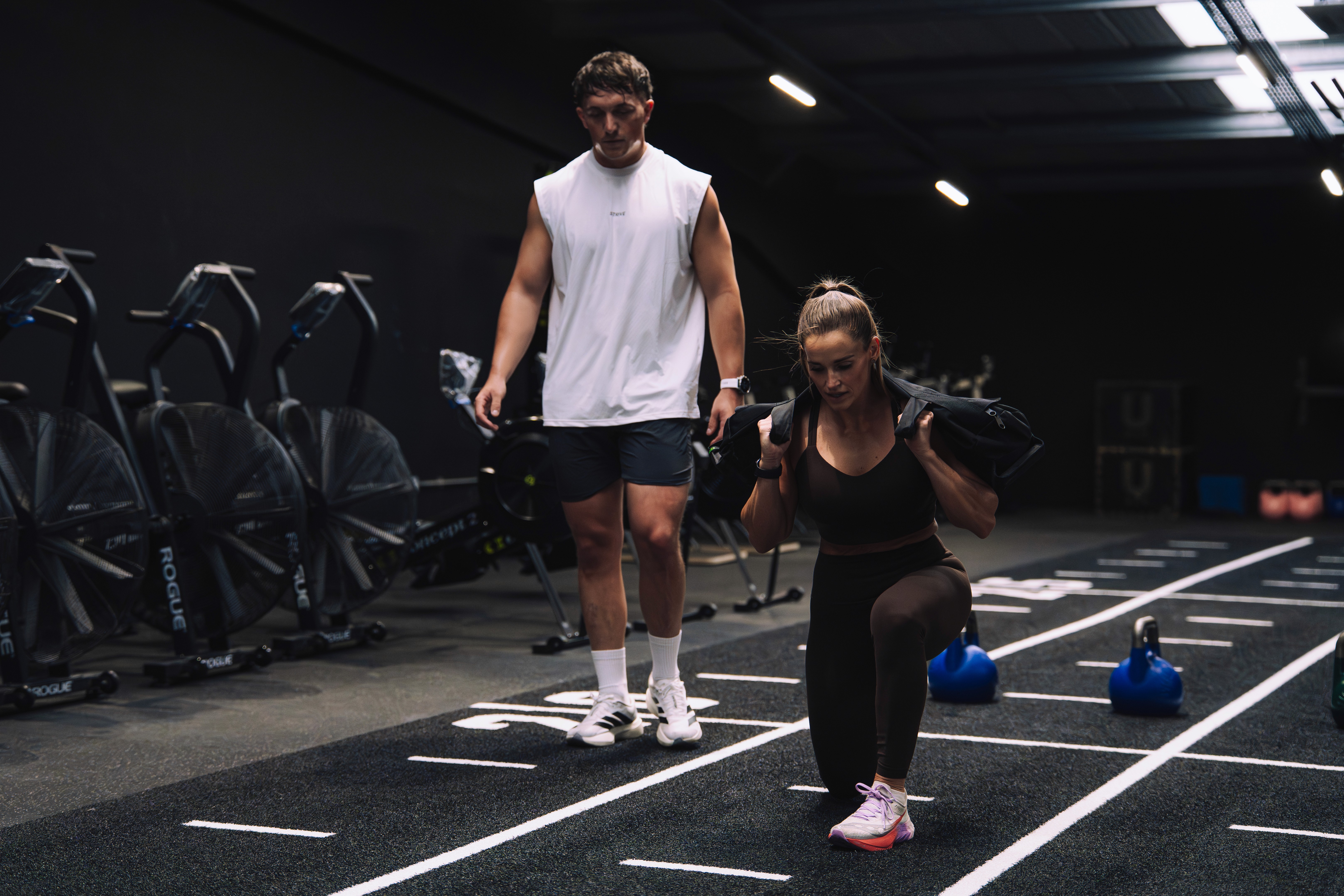
⚠️ Warning: Generic gym exercises won't translate to sprint performance - focus on movements that develop the specific qualities your nervous system needs to access maximum power in the shortest time possible.
1. Squat (Back Squat / Front Squat)
Research confirms that squat strength directly correlates with sprint speed, making both back and front squats essential for sprinters.
Back squats allow heavier loads to build maximum force production. Front squats match the upright body position at top speed and emphasize quad development, building powerful knee drive during starts and early acceleration. Both build leg strength with different emphasis: back squats target posterior chain development, while front squats prioritize quadriceps power.
What squat depth works best for sprint performance?
A parallel or slightly above-parallel squat depth trains the range of motion that translates directly to sprint mechanics. Heavy quarter squats also show excellent transfer to sprint speed, according to research.
How do you perform back squats and front squats properly?
Back squat: Place the bar on your upper back with your shoulder blades squeezed together. Breathe in, tighten your core, and unrack the bar. Take two steps back, adjust your foot position, and squat as deep as possible while maintaining good form, then push back up.
Front squat: Grip the bar slightly wider than shoulder width and place it on your front shoulders against your throat. Breathe in, tighten your core, and unrack the bar. Take two steps back, squat as deep as possible while maintaining good technique, then push back up.
2. Step Up
Sprinting uses one leg at a time, as do step-ups. They build strength, balance, and stability in each leg while revealing differences between your two legs.
Why are step-ups so effective for sprint training?
Step-ups activate your glutes more than squats and hip thrusts, building the gluteus maximus and quadriceps of the leading leg for the hip extension power and knee drive needed to propel your body forward.
Weighted step-ups build strength, while bodyweight jump step-ups develop explosive power and rate of force development. The latter proves particularly effective for translating to sprint speed by training rapid force application during the brief ground contact phase.
How do you perform step-ups correctly?
Stand in front of a bench or box, place your foot on the raised surface, and step up until your leg is straight. Lower yourself in a controlled manner, keeping your foot on the bench for the next repetition.
For jump step-ups, stand behind a plyometric box at knee height in a split stance with a slight hip hinge. Drive the lead leg down forcefully onto the box, then push yourself explosively into the air.
3. Pull-Up / Chin-Up
Pull-ups (palms forward) and chin-ups (palms toward you) are among the best exercises for your latissimus dorsi, teres major, rhomboids, and traps. Chin-ups also heavily engage your biceps.
How do pull-ups and chin-ups improve sprinting performance?
Sprinting uses your whole body. Your arms and upper body help you accelerate, especially at top speed. The muscles that pull things stabilize your torso and maintain correct posture while sprinting. Weak lats compromise your form, wasting energy on flailing instead of efficient movement. Strong lats enable backward arm drive that balances leg action and maintains the forward lean needed for acceleration.
What is the proper form for pull-ups and chin-ups?
Pull-ups: Grip the bar with palms facing away, slightly wider than shoulder-width. Keep your chest up and eyes on the bar, then pull until your chin clears the bar or it touches your upper chest. Lower with control until your arms are fully extended.
Chin-ups: Grip the bar with palms facing you, about shoulder-width apart. Pull until your chin clears the bar, or it touches your upper chest. Lower with control until your arms are fully extended.
4. Overhead Press (Dumbbell or Barbell)
The overhead press is a classic strength-training exercise in which you press a weight from shoulder height to full arm extension. It primarily trains the deltoids, triceps, and upper traps and, when performed standing, engages the core and lower back for stability.
How does overhead pressing improve sprinting performance?
Strong shoulders move force efficiently through your body. Research shows your arms contribute up to 10% of the propulsive force applied to the ground. While sprinting demands horizontal speed, generating that speed requires vertical force: the stronger you are vertically, the more power you apply to each stride.
The overhead press builds shoulder stability, preventing energy leaks during aggressive arm action at maximum velocity. Weak shoulders collapse under repetitive stress from high-speed arm swings, compromising posture and rhythm.
How do you perform the overhead press correctly?
Place a barbell in a rack at chest height. Grip slightly wider than shoulder width, step close, inhale, and brace your core. Unrack the bar, let it rest against your front delts as you step back, then press up to straight arms while exhaling.
For the dumbbell shoulder press, lift the dumbbells to shoulder height. Inhale, brace your core, and press up to straight arms while exhaling. Lower with control back to your shoulders.
5. Standing Hip Flexor Raise
The standing hip flexor raise targets the iliopsoas, a muscle critical for knee drive during sprinting. Strengthening the hip flexors improves stride frequency, turnover, and sprint mechanics, making this exercise valuable for sprinters.
How can you add resistance to hip flexor raises?
You can load the movement with a dumbbell at the knee, an ankle weight, a cable machine, a kettlebell, or a resistance band. The key is directly challenging hip flexion.
Isolation work for hip flexors boosts both hip flexion strength and sprint performance. Most compound exercises don't adequately challenge hip flexors through their full range, making this isolation work valuable for addressing a common weak link.
What is the proper technique for standing hip flexor raises?
Stand on a small, raised surface, such as a step platform or a set of weight plates. Place one foot on the elevated surface and thread the other through a kettlebell handle or cable machine handle. Tighten your core and maintain upright posture.
Lift your knee toward your chest by bending your hip while keeping your standing leg stable. Pause briefly at the top, then slowly lower with control. Repeat for the desired reps, then switch legs.
6. Plank (Regular Plank and Plank With Leg Raise)
The plank is an isometric core exercise where you hold your body in a straight line on your forearms and toes. It's a key component of core training for sprinters.
How do planks benefit sprinting performance?
The main benefit is teaching your body to build core stiffness and stability through your torso. During a sprint, this stiffness transfers power from your leg drive through your body without energy loss from a weak midsection, and it helps your torso resist rotational forces from arm and leg opposition.
Planks with a leg raise add a dynamic component, forcing your hips, lower back, and abs to work together to keep your spine steady while one leg is elevated, mimicking the single-leg support phase of sprinting.
How do you perform planks correctly?
Stand on your elbows and feet. Tighten your abs and form a straight line from your head to your feet, keeping your back flat. Do not let your hips sink or rise too high.
For planks with a leg raise, slowly lift one leg to about hip height without bending the knee. Hold briefly, then lower your leg back to the starting position. Repeat with the opposite leg while maintaining a strong plank position throughout.
7. Hang Power Clean
The hang power clean is a weightlifting exercise where you explosively pull a barbell from a standing hang position (bar at mid-thigh) and catch it on your shoulders in a partial squat. It's particularly useful for sports requiring explosive power.
How does the hang power clean improve sprinting performance?
The main benefit is triple extension: extending your hips, knees, and ankles simultaneously, which mirrors the push-off phase of sprint strides. This coordinated explosion trains your body to produce force through the exact sequence sprinting demands.
Hang power cleans train the neuromuscular system to generate high forces in short timeframes, which is critical for sprinting success, where force production speed matters as much as total force capacity.
How do you perform the hang power clean correctly?
Hold the bar with an overhand grip about shoulder-width apart. Tighten your core, then lower the bar along your thighs to knee level by bending your hips and knees.
Reverse the movement by straightening your legs and knees simultaneously in a fast, smooth motion. Bend your knees slightly to catch the bar on your front shoulders, then stand with straight legs and lower the bar with control.
8. Romanian Deadlift
The Romanian deadlift (RDL) is one of the best exercises for sprinters and a staple in most sprinter training routines. It targets the posterior chain (hamstrings, glutes, and erector spinae) and emphasizes the hip hinge more than conventional deadlifts.
How do Romanian deadlifts benefit sprinters specifically?
The greatest benefit for sprinters is hamstring strength, particularly eccentric strength. Sprinting places intense stress on the hamstrings as they extend the hip and eccentrically slow the lower leg before foot strike. The eccentric strength built with RDLs improves control during the swing phase, enhancing mechanics and leg turnover speed.
RDLs strengthen the entire posterior chain network. A strong posterior chain, including the glutes, is essential for generating speed, maintaining upright posture during sprints, and transferring force efficiently. Since weak hamstrings are the number one injury risk for sprinters, RDLs serve as both a performance and injury prevention tool.
How do you perform the Romanian deadlift correctly?
Start by lifting the barbell off the floor or taking it down from a rack. Stand with your feet hip-width apart, breathe in, and tighten your core. Bend at your hips and lean forward, keeping your knees nearly straight. Lean as far forward as you can while maintaining good form—avoid rounding your back. You need not touch the barbell to the floor. Return to standing by reversing the movement. The dumbbell Romanian deadlift serves as a good alternative to the barbell version.
9. Rows (Cable, Dumbbell)
Rowing exercises build upper-body power for the backward arm drive, which balances leg action and propels you forward. Strong upper back muscles prevent shoulder rounding when fatigued, maintaining efficient breathing and arm swing.
The seated cable row lets you use substantial weight safely, while the dumbbell row works one side at a time, mimicking the alternating arm action in sprinting and revealing strength imbalances between sides.
How do you perform cable rows correctly?
For cable rows, attach a narrow handle and stand upright with your chest out and shoulders back. Lean forward slightly, allowing your shoulder blades to slide forward. Breathe in, pull your shoulder blades back, and draw the handle toward your lower stomach while leaning back slightly.
What is the proper dumbbell row technique?
For dumbbell rows, place a dumbbell beside a bench. Stand facing the bench with your left hand and left knee on top, keeping your back flat and parallel to the ground. Grip the dumbbell with your right hand, breathe in, and pull it by driving your elbow toward the ceiling.
10. Push-Up / Bench Press
Push-ups and bench presses are classic upper-body exercises that work your chest, front shoulders, and triceps while improving pushing strength. Bench presses allow heavy weights for maximum strength gains, while push-ups build strength using only body weight.
Sprinters benefit from slightly more pulling exercises to improve muscle balance around the shoulder joint and prevent posture problems. Push-ups and bench presses strengthen the muscles responsible for forward arm drive, which is essential for maintaining rhythm, generating momentum, and counterbalancing the legs.
Weak front shoulder and chest muscles cannot produce the forceful forward arm swing needed to match aggressive leg turnover, limiting your stride frequency.
How do you perform push-ups and bench press correctly?
For push-ups, start with your hands slightly wider than shoulder-width apart. Make a straight line from your head to your feet and tighten your stomach muscles. Lower yourself as far down as you can while breathing in, then push yourself back up to straight arms while breathing out.
For bench press, lie on the bench with your shoulder blades pulled together and down and your back slightly arched. Grip the bar slightly wider than shoulder-width. Breathe in, hold your breath, and unrack the bar. Lower it with control until it touches your chest near your sternum, then push up to the starting position while breathing out.
11. Calf Raise
The calf raise strengthens your calf muscles, which generate force during toe-off (the final phase of pushing off the ground) to increase stride length and speed. Working with the Achilles tendon, the calf muscles act like a spring. During ground contact when you sprint, they stretch and store elastic energy, which quickly releases during push-off, improving the stretch-shortening cycle and making each stride more powerful.
Which calf raise variation works best?
The leg press calf raise puts less stress on your spine and allows your ankles to move through a longer range of motion. The standing calf raise is also a good choice. Perform calf presses with straight legs (or nearly straight, with a small knee bend), as this works better than the seated calf press.
How do you perform calf raises correctly?
For leg press calf raises: Place the balls of your feet on the lower edge of the platform with your heels free. Straighten your legs without hyperextending your knees, maintaining slight tension throughout. Lower your toes in a controlled manner for a full range of motion and a good stretch. Push through your toes and press them away from your body for full calf contraction, then slowly return to the starting position.
For standing calf raises: place your toes and the balls of your feet on the foot support, position the shoulder pads against your shoulders, lower yourself by bending your ankles in a controlled manner, then push yourself up by straightening your ankles.
12. Dead Bug
The dead bug is a core stability exercise in which you lie on your back, extend one arm and the opposite leg simultaneously, and keep your torso stable.
Why is the dead bug exercise important for sprinters?
This movement trains anti-extension and cross-limb coordination, both of which are critical for sprinters. Anti-extension means your core resists arching under pressure—such as when driving your knee up or exploding from the blocks—while improved cross-limb coordination supports the alternating arm-leg pattern of sprinting.
It strengthens the core so your arms and legs generate force while your pelvis and spine remain stable. Without this stability, power leaks through excessive spinal movement instead of driving you forward.
How do you perform the dead bug exercise correctly?
Lie on your back with your arms extended toward the ceiling and your legs stacked over your hips, knees bent 90 degrees. Tighten your core and keep your lower back on the floor.
With control, straighten your right leg and lower your left arm over your head while keeping your lower back on the floor. Reverse and repeat on the other side.
13. Sled Push / Sled Pull
The sled push and sled pull bridge the gap between the weight room and the track. You move a weighted sled by pushing against handles or pulling with a harness attached around your waist or shoulders.
How does sled training improve sprint performance?
Sled training improves sprint acceleration by training you to apply force into the ground more effectively. It builds horizontal force production and strengthens sprint muscles in ways that more closely resemble actual sprinting than traditional weightlifting, leading to greater power output for explosive starts.
Most sprinters benefit from heavier sleds than some coaches prescribe. Light sleds lack sufficient resistance to push acceleration mechanics to their limits, while heavier loads force maximum horizontal force production with each step.
What is the proper technique for sled exercises?
Load the sled with your desired weight. Stand behind it and grip the handles with both hands. Lean slightly forward, keep your back flat, and engage your core. Push forward by driving through your legs with steady, controlled steps.
For sled pulls, attach a harness securely around your waist or shoulders. Lean slightly forward into a sprint position with an engaged core, then drive explosively through your legs with powerful, short strides while maintaining good sprint mechanics.
14. Bulgarian Split Squat
The Bulgarian split squat is a single-leg squat where you place your rear foot on a bench or step behind you. It targets your quads, adductors, and glutes using the same movement pattern required to generate force on the track.
Why does this exercise benefit sprinters?
Training with one leg builds balance, stability, strength, and coordination—all essential for sprinters pushing off the blocks. It also stretches the hip flexors and quads of the back leg, enabling longer strides and better hip extension.
Training one leg at a time directly matches what sprinting requires: single-leg force production. Most bilateral exercises, like back squats, allow your stronger leg to compensate for your weaker one. Bulgarian split squats expose these imbalances and correct them, ensuring both legs contribute equally to sprint performance.
How do you perform the Bulgarian split squat?
Place a bar on your upper back or hold dumbbells in your hands. Stand about one long step in front of a knee-height bench with your back toward it, and place your rear foot on the bench behind you.
Breathe in and squat down with control until your rear knee nearly touches the floor. Breathe out and straighten your front leg to return to standing. Your back foot provides support only. Repeat for the desired reps, then switch legs.
15. Cable Hip Abduction
The cable hip abduction is an isolation exercise that targets the gluteus medius, minimus, and tensor fascia latae: muscles essential for lateral stability and explosive power in sprinters, though often overlooked compared to the gluteus maximus.
Why are hip abductors important for sprinting performance?
These muscles keep your pelvis level when one leg is off the ground (roughly 80% of the time in sprinting). Weakness causes your pelvis to dip, knees to collapse inward, form to break down, and injury risk to increase.
Cable hip abductions build strength in your outer hips, improve stride alignment, keep your knees tracking properly, and reduce IT band problems. They also stabilize your hips during acceleration and top speed, which is especially important for 200-meter sprinting and cornering.
How do you perform cable hip abductions correctly?
Attach an ankle strap to the low pulley. Stand sideways to the machine with the farther leg attached to the cable. Engage your core and glutes, keeping a slight bend in the free leg.
Lift the attached leg outward against resistance while keeping your upper body still. Lower with control to the starting position. Repeat for the desired reps, then switch legs.
16. Hanging Leg Raise / Toes-to-Bar
The hanging leg raise and toes-to-bar build core and hip flexor strength. Core strength prevents rotation or tilting during sprinting and directs leg power into forward motion. Hip flexor strength improves the speed of leg recovery and forward drive power. Lifting your legs against gravity builds the explosive hip flexion strength needed for rapid knee drive while maintaining an upright posture during the acceleration and maximum-velocity phases.
How do hanging leg raises and toes-to-bar improve sprinting performance?
The primary benefit is strengthening the hip flexors through a large range of motion while forcing the core to stabilize the pelvis and spine. Sprinting requires rapid knee lift, quick leg recovery, and the ability to maintain torso stability while the limbs move explosively. Hanging leg raises directly train these qualities.
Toes-to-bar increase the demand further by requiring greater hip flexion, trunk control, and shoulder stability. They also train the coordination needed to move the legs aggressively without excessive swinging or lumbar extension.
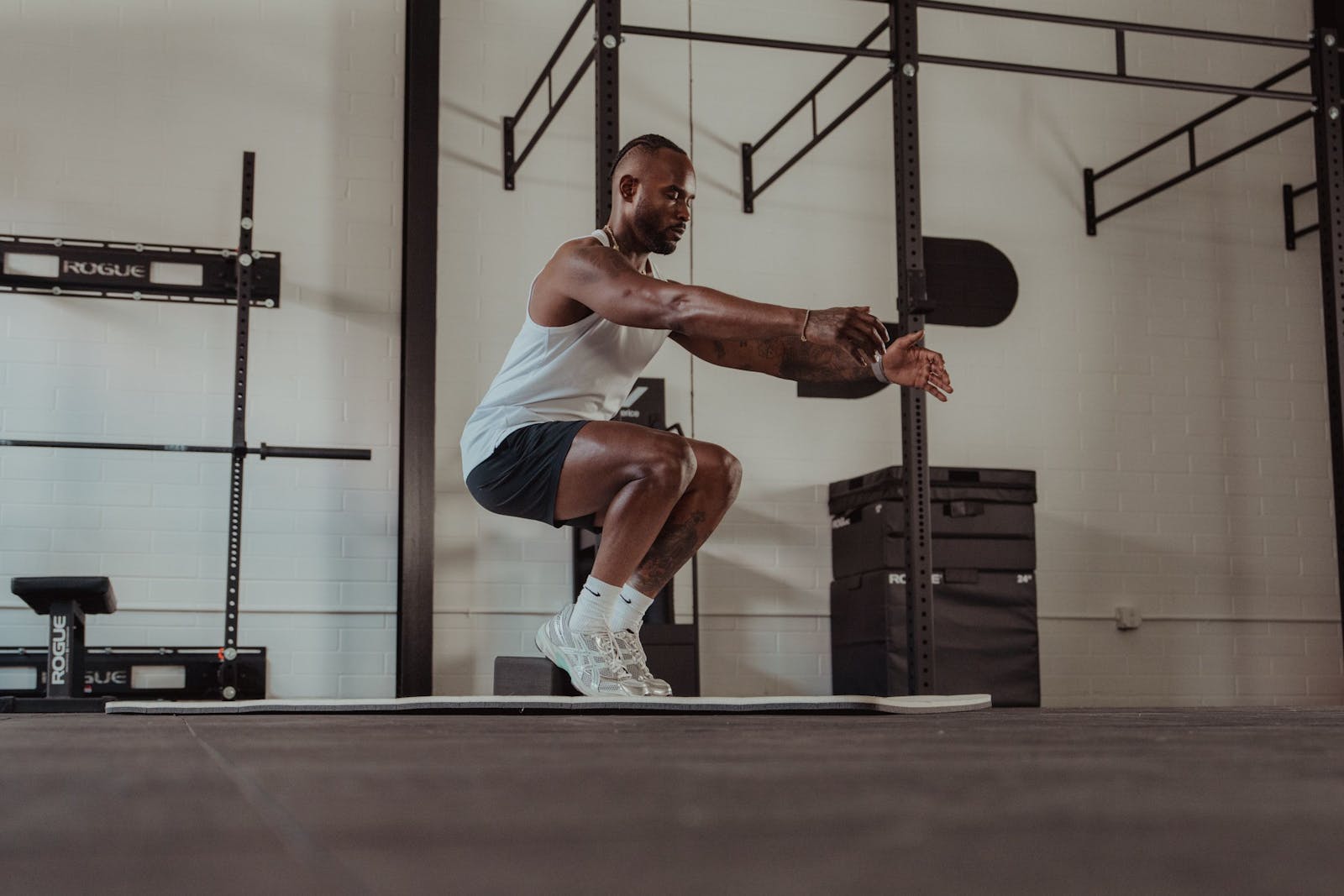
17. Box Jump
The box jump is a plyometric exercise where you explosively jump onto a raised platform and land under control. It trains lower-body power, coordination, and rapid force production.
Why are box jumps valuable for sprinters?
Sprint performance depends on how quickly you can produce force. Box jumps train the stretch-shortening cycle, teaching your muscles and tendons to store and release energy rapidly during explosive movements.
Unlike heavy strength exercises, box jumps emphasize speed of movement rather than maximum force. This helps improve the rate of force development, which is critical because sprinters have only fractions of a second to apply force into the ground during each stride.
How do you perform box jumps correctly?
Stand in front of a sturdy plyometric box with your feet shoulder-width apart. Bend your hips and knees slightly while swinging your arms backward.
Explosively extend your hips, knees, and ankles while swinging your arms forward. Jump onto the box and land softly with your knees slightly bent. Stand fully upright before stepping down under control. Avoid jumping down repeatedly, as this increases unnecessary impact stress.
18. Nordic Hamstring Curl
The Nordic hamstring curl is one of the most effective exercises for building eccentric hamstring strength. It involves lowering your body forward from a kneeling position while resisting the movement with your hamstrings.
Why should sprinters perform Nordic hamstring curls?
Hamstring injuries are among the most common injuries in sprinting. During maximum-velocity sprinting, the hamstrings experience extremely high forces as they decelerate the lower leg before foot contact.
Nordic curls build exceptional eccentric strength, helping the hamstrings absorb these forces more effectively. Research consistently shows that athletes who perform Nordic hamstring exercises reduce their risk of hamstring injuries and improve sprint performance by strengthening and increasing the resilience of the posterior chain muscles.
How do you perform Nordic hamstring curls correctly?
Kneel on a padded surface and secure your ankles under a sturdy object or have a partner hold them down. Keep your hips extended and your body in a straight line from your knees to your shoulders.
Slowly lean forward while resisting the fall with your hamstrings. Lower yourself as far as possible under control. When you can no longer resist, catch yourself with your hands and lightly push off the floor to return to the starting position. Focus on controlling the lowering phase rather than rushing through repetitions.
How to Structure a Sprint Strength Program (Without Slowing Speed)

Sprinters often avoid the weight room because they worry it will slow them down. This concern stems from seeing athletes gain muscle in areas that don't help their sport and lose their explosive power. The key difference between strength training that helps speed and training that hurts it lies in how you organize the volume, intensity, and recovery around your actual sprint work.
🎯 Key Point: The secret to sprint-friendly strength training is timing and specificity - your weight room work should complement, not compete with, your speed development.
"Strength training can improve sprint performance by up to 8-12% when properly integrated with speed work, but can decrease performance when volume and intensity aren't managed correctly." — Journal of Strength and Conditioning Research
⚠️ Warning: The biggest mistake sprinters make is treating strength training like bodybuilding - focusing on muscle size rather than power output and movement quality.
How does off-season training differ from in-season work?
Off-season strength work can handle higher volumes because the demand for sprints remains moderate. Build maximal strength through staggered-stance exercises: rear foot elevated split squats, single-leg Romanian deadlifts, and Bulgarian split squats. These movements load the hip, knee, and ankle in sprinting positions while maintaining spinal extension. Two to three strength sessions per week create adaptation without competing for recovery resources.
What should in-season training prioritize?
During the season, training focuses on sprint speed while strength work maintains what you've built. One to two sessions per week of low-volume, high-intensity movements keep your force ceiling intact without leaving lingering fatigue that slows track work. The common mistake is maintaining off-season volume into competition, forcing your central nervous system to recover from both maximal lifting and maximal sprinting simultaneously: overload without adaptation.
How does training frequency support sprint performance?
Strength training helps sprint speed when it fills the gaps between sprint sessions, not when it competes with them. If you're sprinting at full intensity on Tuesday and Thursday, schedule strength sessions on Monday and Friday to allow 48 hours between high-CNS-demand activities. A heavy split squat session taxes your nervous system similarly to a max-velocity sprint workout, even though they occur in different environments.
Why does volume per session matter more than frequency?
The amount of weight you lift in each session matters more than how often you work out. Three sets of five reps on a rear-foot-elevated split squat place a different recovery demand than five sets of ten. Sprinters need the former. When your goal is rate of force development rather than muscle size, you lift heavy for low reps, rest fully between sets (three to four minutes), and leave the gym feeling powerful, not destroyed.
Fatigue management without CNS overload
Most athletes who say lifting makes them slow are tired. Running hard sprints, lifting heavy weights, and adding plyometric sessions deplete your central nervous system's recovery budget. Every high-intensity activity withdraws from that account. An overdraft causes performance to drop across all activities.
Mobility app treats recovery as essential infrastructure. Sprinters using our targeted mobility routines between strength and sprint sessions stay ahead of tightness and compensation patterns that signal overtraining. Our personalized stretching protocols address the specific joint ranges required by heavy lifting and explosive sprinting, creating space for adaptation rather than adding more stress.
What volume mistakes slow down sprint progress?
Doing too much work is the most common mistake. Athletes see a program designed for a football lineman or bodybuilder and assume more work yields better results. Sprinters need strength that works in under 0.1 seconds, which requires neural efficiency rather than muscle fatigue.
If your legs hurt for three days after a strength session, you did muscle-building work, not speed work. Muscle-building training adds size without increasing force production: you're carrying extra weight through the same ground contact time, which makes you slower.
Why doesn't gym strength always transfer to sprinting?
The strength you build in the weight room only transfers to the track if your body can access those joint ranges during sprinting. You can load a split squat with 200 pounds, but if your hip flexors are too tight for full leg recovery or your ankle lacks dorsiflexion range for proper foot strike, that strength won't show up when it matters.
Related Reading
Plyometric Exercises For Athletes
Isometric Hamstring Exercises
Best Plyometrics For Runners
Box Jump Exercises
Isometric Knee Exercises
Rate Of Force Development Exercises
Basketball Strength Training
Plyometric Exercises For Volleyball
Plyometric Exercises For Basketball
Unlock Sprint Mechanics With Mobility That Actually Transfers Into Speed
Strength alone doesn't make sprinters faster if hip and ankle mobility limit force direction and ground contact efficiency. If force output can't transfer through clean sprint posture, you leak power with every foot strike. Elite sprint programs don't separate strength and mobility; they treat mobility as the system that allows force to be expressed at speed.
🎯 Key Point: Most sprinters approach mobility as a cool-down or injury prevention routine. But tight hip flexors prevent full leg recovery during the swing phase. Limited ankle dorsiflexion compromises foot strike mechanics. Restricted posterior chain mobility reduces elastic recoil that turns ground contact into propulsion. The strength you built in the weight room never reaches the track because the movement system can't access it.
"The strength you've built in the weight room never reaches the track if your movement system can't access it due to mobility restrictions."
Performance mobility systems like Pliability target the specific restrictions that cap sprint mechanics: hip extension range, ankle stiffness control, and posterior chain loading positions. These targeted interventions remove bottlenecks between force capacity and max velocity application.
⚠️ Warning: Integrate a 10-minute sprint mobility warm-up alongside your strength program. The goal isn't flexibility for its own sake—it's removing the specific restrictions that prevent your body from expressing the force you've built.
Mobility Target | Sprint Impact | Key Focus |
|---|---|---|
Hip Extension Range | Full leg recovery | Swing phase efficiency |
Ankle Dorsiflexion | Ground contact mechanics | Force transfer |
Posterior Chain | Elastic recoil | Propulsion power |
Move better in 10 minutes a day.
10,000+ five-star reviews.