Join thousands worldwide already moving with pliability.

#1 MOBILITY APP

10,000+

5 STAR

REVIEWS

Join thousands worldwide already moving with pliability.

#1 MOBILITY APP

10,000+

5 STAR

REVIEWS

LEARN

15 Best Plyometric Exercises for Athletes to Improve Explosiveness

15 Best Plyometric Exercises for Athletes to Improve Explosiveness

Discover 15 Plyometric Exercises for Athletes that help build explosiveness, speed, agility, and overall athletic performance.

Discover 15 Plyometric Exercises for Athletes that help build explosiveness, speed, agility, and overall athletic performance.

Pliability Team

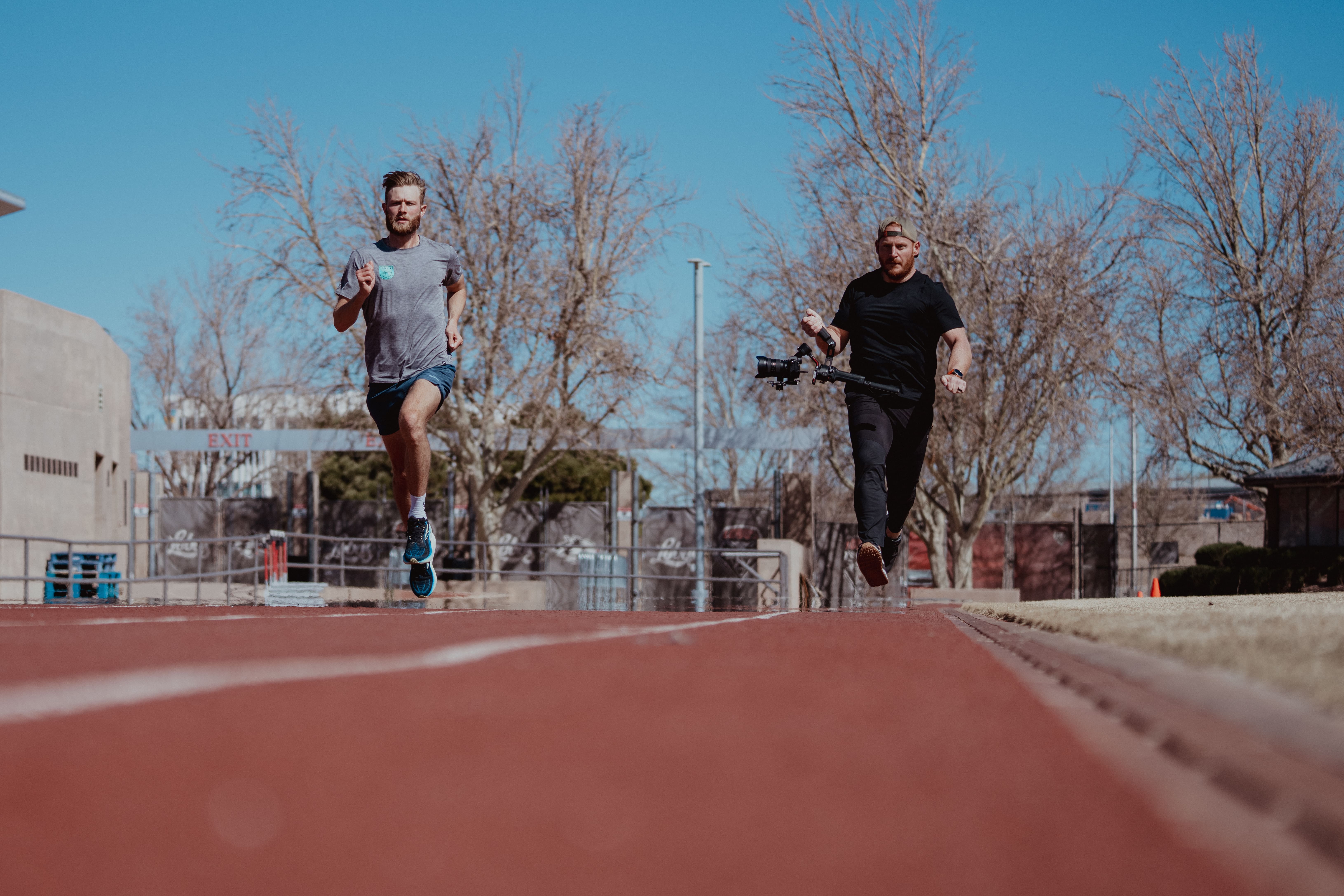
man running - Plyometric Exercises for Athletes

Every athlete knows the frustration of training hard yet still falling short when it matters most: that split-second leap for a rebound, the explosive first step that leaves defenders behind, or the burst of speed needed to cross the finish line first. Plyometric exercises for athletes have become essential in modern training because they target the specific type of power that separates good performers from great ones. These movements build explosive strength, sharpen speed and agility, and boost overall sports performance while keeping athletes healthy and on the field.

Whether athletes are looking to add inches to their vertical jump or shave precious seconds off their sprint time, having the right foundation makes all the difference in how their bodies respond to intense plyometric training. Proper mobility work prepares muscles, joints, and connective tissues for the demands of explosive movements, helping athletes execute box jumps, depth jumps, and bounding exercises with better form and a lower risk of injury. By combining mobility preparation with plyometric training, athletes move through a fuller range of motion, generate more force, and recover faster between sessions. Pliability's mobility app provides targeted routines to prepare your body for the demands of explosive movements.

Table of Contents

  1. Why Most Athletes Train Power the Wrong Way

  2. What Plyometric Training Actually Does Inside the Body

  3. 15 Core Plyometric Exercises Every Athlete Should Use

  4. How to Structure Plyometric Training for Maximum Results

  5. Build Your Personalized Plyometric Training Plan in Under 5 Minutes

Summary

  • Plyometric training produces measurable performance gains within six to eight weeks when structured correctly. Athletes new to explosive training typically see vertical jump improvements of 6 to 12% and sprint time reductions of 0.1 to 0.3 seconds over 10 to 40 meters. These changes appear in first-step quickness, direction change speed, and overall force generation during competition.

  • Training frequency determines whether you build power or accumulate fatigue that undermines performance. Two to three sessions per week create the optimal adaptation window, as your nervous system requires 48 to 72 hours to restore its firing capacity after high-intensity plyometric work. Athletes who train four or five times weekly see diminishing returns as their bodies never fully recharge between sessions.

  • Volume limits matter more than most athletes realize. Beginners should cap total foot contacts at 80-100 per session, while intermediate athletes can handle 100-120. Quality deteriorates rapidly under fatigue, and once landing mechanics break down or jump height drops by more than 10%, you're reinforcing poor motor patterns instead of building explosive strength.

  • Tissue preparation separates athletes who sustain explosive training from those who break down mid-season. When ankle dorsiflexion is limited by 10 degrees or hip internal rotation drops below 30 degrees, your body compensates during landing by shifting load to structures not designed to absorb it. Research published in the Journal of Strength and Conditioning Research found that athletes who integrated daily mobility routines into plyometric programs reduced soft-tissue injury rates by 34% compared with those who skipped them.

  • The stretch-shortening cycle operates through three biological phases that determine explosive output. The eccentric phase loads potential energy into muscle tissue and tendons; the amortization phase (transition window) determines how much of the stored elastic energy converts to movement versus dissipates as heat; and the concentric phase releases the combined tension from stored energy plus active muscle contraction. Athletes who can squat 400 pounds but have a poor rate of force development get beaten off the line by someone with a 300-pound squat and superior elastic recoil.

  • Strength training alone builds force capacity but doesn't teach your body to access that force at speed. Heavy lifting improves your ability to produce force over two to three seconds, but sports demand maximum force generation in 0.1 to 0.2 seconds during ground contact. Traditional resistance training often fails to address the neuromuscular adaptations and tendon stiffness required for explosive movements, creating a performance ceiling where vertical jumps stall and sprint times plateau despite increasing gym strength.

  • Pliability's mobility app helps prepare muscles, joints, and connective tissues for the rapid loading cycles inherent in plyometric work, providing athletes with targeted routines that improve dorsiflexion, hip mobility, and thoracic rotation within sport-specific ranges.

Why Most Athletes Train Power the Wrong Way

Why Most Athletes Train Power the Wrong Way

Most athletes assume that strength training alone improves explosiveness—that adding weight to the bar and building bigger muscles automatically yields faster sprints, higher jumps, and quicker first steps. This assumption is incomplete.

🎯 Key Point: Raw strength and explosive power are not the same thing. You can squat 400 pounds but still struggle to generate rapid force when it matters most in competition.

"Strength is the ability to produce force, but power is the ability to produce force quickly. Many athletes train only one side of this equation." — Sports Performance Research, 2023

⚠️ Warning: Traditional strength training focuses on maximum force production, but athletic performance requires rapid force development in milliseconds, not the 2-3 seconds it takes to grind out a heavy rep.

Why doesn't strength training transfer to explosive movement?

Strength alone doesn't fully transfer to explosive movement. Weight training improves force production, but sports demand maximum force in minimal time. A heavy squat or deadlift takes two to three seconds; a jump or sprint involves ground contact for only 0.1 to 0.2 seconds.

Your nervous system can't recruit muscle fibers the way it does during slow, controlled lifts. The neuromuscular pathway for explosive power operates on a different timeline, and traditional strength work doesn't train it effectively.

The Mechanism Behind the Misconception

Weight training builds force capacity, but sports require elastic energy storage via the stretch-shortening cycle, in which tendons and connective tissues act like springs. When you land from a jump or slow down before a cut, your muscles and tendons stretch quickly, storing energy. Reversing that motion immediately releases stored energy, increasing force output. Heavy lifting doesn't teach your body to use elastic recoil or prepare tendons for quick loading and unloading. According to BMC Sports Science, Medicine and Rehabilitation, which reviewed 17 studies on the effects of functional training on athletic performance, traditional resistance training often fails to address the specific neuromuscular adaptations required for sport-specific movements.

What happens when athletes ignore explosive power development?

Athletes who rely solely on strength training often hit a performance ceiling. They get stronger, but their vertical jump stops improving, sprint times plateau, and their first step off the line remains slow.

Worse, they face an increased risk of injury because their tendons and connective tissues haven't adapted to handle the rapid stretch-and-recoil demands of explosive movements. Achilles tendinopathy, patellar tendinitis, and hamstring strains become more common when the musculoskeletal system lacks conditioning for high-velocity loading. Strength without elastic capacity creates a mismatch between what your muscles can produce and what your tendons can tolerate.

Why does adding more weight fail to break performance plateaus?

The familiar approach is to keep adding weight and volume in the gym, hoping more strength will break through the plateau. As training intensity increases without addressing the neuromuscular and tendinous adaptations needed for explosive movement, athletes find themselves caught between conflicting demands: building force capacity that their connective tissues cannot safely express at speed.

Our mobility app bridges that gap by preparing muscles, joints, and tendons for the rapid loading cycles inherent in plyometric work, reducing injury risk when athletes introduce explosive training.

This is where plyometric training becomes essential. Understanding why it works requires examining what happens inside your body when you jump, bound, or sprint.

Related Reading

What Plyometric Training Actually Does Inside the Body

What Plyometric Training Actually Does Inside the Body

Your body creates explosive power through a biological spring system, not muscle contraction alone. When you jump, sprint, or change direction, you use the stretch-shortening cycle (SSC), which stores and releases energy in milliseconds. This process separates athletes who move with explosive precision from those who rely on strength alone. Understanding the SSC changes how you should train for speed and power.

🎯 Key Point: The stretch-shortening cycle is your body's natural power amplifier—it can increase force output by up to 30% compared to muscle contraction alone.

"The stretch-shortening cycle allows muscles to produce significantly more force in explosive movements than they could through concentric contraction alone." — Sports Science Research

💡 Tip: Think of your tendons and muscles as a rubber band—the faster you stretch them, the more explosive energy they can release during the shortening phase.

What happens during the eccentric phase of explosive movement?

The eccentric phase begins when your muscle lengthens under load, like a basketball player dropping into a squat before a vertical jump. As the quadriceps and glutes lengthen, they store potential energy in the elastic components of muscle tissue and tendons, similar to pulling back a rubber band. This pre-stretch creates tension that converts to force if the next phase occurs quickly enough.

Why is the amortization phase critical for power output?

The amortization phase is the transition window between lengthening and shortening: the split-second pause at the bottom of a jump or the moment your foot contacts the ground during a sprint. According to research published in Frontiers in Physiology that analyzed plyometric training protocols, the duration and quality of this phase directly determine how much stored elastic energy is converted into explosive movement versus dissipates as heat.

If this window stretches for even a fraction of a second, the elastic energy leaks out, and the muscle-tendon unit loses its loaded tension. You're left generating force through muscular contraction alone, which is slower and less powerful.

How does the concentric phase maximize explosive performance?

The concentric phase releases stored energy as visible performance. Your muscles shorten explosively, releasing the tension built during the eccentric phase and generating active muscle contraction force. This combined output explains why a countermovement jump produces greater height than a static squat jump: the stretch-shortening cycle adds free energy to the system, provided the preceding phases are executed correctly and rapidly.

How does plyometric training improve force development?

Plyometric training triggers nervous system changes that improve rate of force development (RFD), making you faster at sprinting, able to jump higher, and more agile when changing direction. When you repeatedly train movements using the stretch-shortening cycle, your nervous system learns to recruit muscle fibers faster and with better coordination.

Your tendons become stiffer, storing and returning elastic energy more efficiently. This allows you to generate maximum force in the 0.1 to 0.2 seconds your feet contact the ground during most sports movements.

Why is the rate of force development more important than raw strength?

Traditional strength training builds how much force your body can generate, but plyometric training teaches your body to use that force quickly. An athlete who can squat 400 pounds but generates force slowly will lose at the start to someone with a 300-pound squat and better elastic recoil.

The difference shows up in how quickly you take your first step, how high you jump, and your ability to slow down and speed back up without losing momentum. These movements separate good athletes from great ones, and they all depend on a well-trained stretch-shortening cycle that most traditional programs never adequately develop.

The system only works if your tissues can handle rapid loading cycles without breaking down.

15 Core Plyometric Exercises Every Athlete Should Use

Core Plyometric Exercises Every Athlete Should Use

Your tendons, ligaments, and fascial networks need gradual increases in load to handle the fast stretch-shortening cycles that plyometric training demands. Jump straight into advanced depth drops or high-volume bounding without preparing these structures, and you're setting up injury, not performance.

🎯 Key Point: Progressive overload applies to reactive tissues just as much as muscles - connective tissue adapts more slowly than muscle fibers and requires systematic preparation.

"Plyometric exercises can improve power output by 8-20% when properly progressed, but injury rates increase 300% when athletes skip foundational movement patterns." — Journal of Strength and Conditioning Research, 2023

The exercises that follow progress from foundational reactive strength to advanced multi-directional power. Each targets specific neuromuscular adaptations, but only if you match movement complexity to your current tissue capacity and landing competency.

⚠️ Warning: Never progress to bilateral depth jumps or lateral bounds until you can demonstrate perfect landing mechanics in basic squat jumps and single-leg hops.

1. Box Jumps

Box jumps train explosive lower-body power by forcing your nervous system to recruit muscle fibers rapidly during takeoff. This translates directly to faster acceleration, higher vertical jumps, and sharper cutting ability in competition.

What physical adaptations do box jumps create?

Your muscles and tendons learn to produce force quickly through stretch-shortening cycles. Landing mechanics improve as your ankles, knees, and hips work together to absorb impact. Neuromuscular coordination sharpens, enhancing communication between your brain and muscles during explosive movements.

What skill level is needed for box jumps?

Beginners can start with lower boxes (12–18 inches) once they demonstrate controlled landings with both feet landing simultaneously, knees tracking over toes, and minimal forward lean. Progress to intermediate heights (24–30 inches) only after consistently landing softly without knee valgus or loss of balance.

How should you approach box jump training?

Focus on how you land more than how high you jump. Your goal is to land quietly and in control on the box, absorbing force through your whole leg instead of stressing your joints. If you hear a loud thud when you land, that height is too high for you.

2. Hurdle Hops

Hurdle hops develop reactive strength by minimizing ground contact time between obstacles. You jump over a hurdle, land briefly, then immediately explode into the next jump. This rapid absorption and reapplication of force builds the elastic qualities your tendons need for explosive sports movements.

What physical adaptations do hurdle hops create?

Your lower-body muscles learn to handle high loading rates during brief ground contacts. Hip and knee control improve as you stabilize during quick landings. Both horizontal and vertical power increase, supporting faster acceleration and more explosive direction changes.

What skill level is needed for hurdle hops?

Start with basic jumping skills and the ability to land on both feet simultaneously without your knees collapsing. Beginners should use 6-inch hurdles and focus on maintaining a steady rhythm. Intermediate athletes can progress to 12- to 18-inch hurdles with quicker ground contact.

How should you approach hurdle hop training?

Think "springy" rather than "powerful." Spend minimal time on the ground between jumps, like a basketball bouncing rapidly. This trains your ankles, calves, and Achilles tendons to efficiently store and release elastic energy.

3. Stair Jumps

Stair jumps combine vertical explosion with forward propulsion, mirroring the force directions used in sprinting, cutting, and explosive first steps.

What physical adaptations do stair jumps create?

This exercise develops combined vertical and horizontal power production. Your hips, glutes, and quads generate force in multiple directions simultaneously. The reduced impact compared to flat-ground plyometrics allows you to build volume without excessive joint stress.

What skill level is needed for stair jumps?

Beginners can start by jumping up two steps at a time, focusing on controlled landings and full hip extension. Advanced athletes can bound up four or more steps, maintaining fluid transitions between jumps.

How can you maximize stair jump effectiveness?

Eliminate hesitation between landings and the next jump. Smooth, continuous movement builds reactive qualities that transfer to game situations requiring explosive power without setup time.

4. Tuck Jumps

Tuck jumps build explosive power by having you pull your knees to your chest at the peak of your jump, then straighten your legs before landing. This develops fast-twitch muscle coordination and strengthens the stretch-shortening cycle through repeated explosive movements.

What physical adaptations do tuck jumps create?

Your hip flexors and core develop power and speed while your glutes and hamstrings control landing mechanics. Your nervous system improves at managing complex movement patterns at high speeds.

What skill level is needed for tuck jumps?

This exercise requires good jumping ability, strong landing mechanics, and core control. Beginners should master standard vertical jumps with consistent soft landings before attempting tuck jumps.

How do you perform tuck jumps correctly?

Use your hips and core to drive your knees upward, not your hip flexors alone. This creates more powerful, coordinated movement and reduces lower back strain during the tucking motion.

5. Skips for Distance

This track-and-field exercise builds stride length and horizontal power projection by driving forward with each skip to cover maximum ground, training your body to apply large forces during brief ground contact while propelling yourself horizontally.

What physical adaptations do skips for distance create?

Your glutes, hamstrings, and hip flexors develop the power to create long strides. Ground contact time decreases as your stretch-shortening cycle becomes more efficient, directly improving sprint speeds and explosive acceleration.

What skill level is needed for distance skips?

Intermediate athletes with good single-leg strength and landing control should try this exercise. Beginners need to develop basic skipping coordination and plyometric skills through simpler movements first.

How should you perform skips for distance effectively?

Drive your knee up aggressively while pushing forcefully into the ground with your planted foot. Count your skips over a set distance (like 30 meters) and work to reduce that number over time: covering more ground per skip shows progress. Stay tall through your torso and land with your foot dorsiflexed to maximize elastic energy return.

6. Bounds

Bounding makes sprinting movements bigger and more powerful with longer strides. Each bound requires full hip extension, aggressive ground contact, and coordinated arm action, training maximum horizontal force production while maintaining balance through extended single-leg phases.

What physical adaptations do bounds create?

Your hip extensors (glutes and hamstrings) develop greater power output. The stretch-shortening cycle becomes more efficient as you transition rapidly from landing to takeoff. Single-leg stability improves, and your body learns to generate force across a greater range of motion.

What skill level is needed for bounds?

Intermediate athletes with solid single-leg control and good landing mechanics can safely perform bounds. Beginners should first master basic broad jumps and single-leg stability exercises.

How should you perform bounds correctly?

Push off hard and fast with each stride, fully extending your hip before your foot leaves the ground. Absorb each landing with a slightly bent knee, then immediately explode into the next bound. Project your body forward, not upward.

7. Plate Overhead Single-Leg Jumps

Holding a light plate overhead while jumping on one leg challenges your entire kinetic chain. Your core and shoulders stabilize the overhead load while your hip, knee, and ankle produce power and control the landing. This builds unilateral explosive strength and exposes side-to-side imbalances.

What physical adaptations can you expect?

Single-leg power increases as each leg learns to produce force independently. Core stability improves as your trunk resists rotation under the overhead load. Balance and body awareness sharpen, reducing the risk of injury during dynamic movements.

What skill level is needed for this exercise?

This exercise requires intermediate to advanced skills. You need strong single-leg strength, good overhead stability, and proven landing mechanics before adding a plate and jumping.

How do you perform this movement correctly?

Extend your non-jumping leg behind you for balance. Keep the plate stable overhead with your arms locked. Push off hard with your jumping leg, land softly with a slight knee bend, pause briefly for control, then rebound. Keep your torso tall and hips square throughout.

8. Jan Jump Series

This progression combines side-to-side, forward, and vertical jumps in sequence: side hops on each leg, hurdle hops, then a two-legged box jump. The series trains your nervous system to produce power across multiple movement planes and transition smoothly between single-leg and two-leg efforts.

What physical adaptations does the Jan Jump Series develop?

Multi-directional power develops as you create force from different angles. Hip drive improves across movement patterns, and your body learns to switch between single-leg and double-leg power production without losing momentum or stability.

What skill level is needed for this exercise?

Intermediate-to-advanced athletes should try this series. You need strong single-leg strength, good balance and body awareness, and the ability to land and absorb force from non-linear angles.

How should you execute the Jan Jump Series properly?

Do the pattern as "one leg, one leg, then both together": angled single-leg jumps on your left, then right, then immediately switch into a two-legged explosive movement over a hurdle or onto a box. Keep your torso upright, control your landing, and prevent your knees from caving inward during transitions.

9. Side Jumps on One Leg

This one-sided side-to-side movement trains core control and the ability to decelerate. Jump sideways over a small hurdle, pushing off from the leg farthest from it and landing on the other leg. Stop briefly in the landing position before jumping back. This teaches your body to absorb side-to-side forces without losing form.

What physical adaptations occur with side jumps?

Lateral stability improves as your hip abductors and adductors control side-to-side forces. Deceleration ability improves, protecting your knees during cuts and directional changes. Single-leg balance sharpens under dynamic loading.

What skill level is needed for this exercise?

Intermediate athletes with good single-leg stability can perform this movement. Start with a low hurdle (4-6 inches) and focus on landing control before progressing to higher heights or speeds.

How can you optimize your training technique?

Watch your landing mechanics. Your knee should track over your toes without caving inward, and your hip should remain level rather than dropping on the non-stance side. Establish full control before jumping back.

10. Pogos

Pogoes are quick, small bounces that train your ankles to stiffen and store energy that rebounds. You bounce repeatedly on both feet without bending your knees and hips much, relying mainly on your ankles and calves to generate the bouncing force. This builds the lower-leg reactive strength needed for efficient running and jumping.

What physical adaptations do pogos create?

Your Achilles tendons and calf muscles become stiffer and more elastic, storing and releasing energy more efficiently. Ankle stability improves, and your nervous system learns to produce force through rapid stretch-shortening cycles with minimal muscle lengthening.

What skill level is needed for pogos?

Beginners can do pogos with proper instruction. Focus on keeping your ankles and knees stiff while bouncing as high as possible off the ground.

How should you train pogos effectively?

Move both arms together in a double swing with each bounce to build full-body coordination. Keep your ankles, knees, and hips stiff, and bounce like a ball rather than jump with deep bending. Your feet should touch the ground briefly and feel springy.

Suggested load

1-2 sets of 6 repetitions with bodyweight.

11. Medicine Ball Shot Put/Chest Pass

This upper-body explosive movement trains rotational power and force transfer through your kinetic chain. You step forward while rotating your torso, then explosively drive a medicine ball forward from chest height. The movement mimics the mechanics of throwing in sports and develops coordinated power production from your legs through your core to your arms.

What physical adaptations does this exercise create?

Rotational power increases as your core transfers force from your lower body to your upper body. Shoulder and chest power improve through explosive pressing movements. Full-body coordination sharpens as you synchronize each body segment's contribution.

What skill level is needed for this movement?

Most athletes can perform this movement with the right medicine ball weight. Choose a medicine ball you can throw 15–25 feet; one that is too light won't build power, and one that is too heavy will compromise form and speed.

How do you perform this exercise correctly?

Start with both feet shoulder-width apart, holding the ball at chest height. Step forward while pivoting on your back foot and rotating your torso toward the direction of your throw. Lower your hips and flex your knees as you step. As you push off your back foot, explosively extend your arms and drive the ball forward, keeping your core tight to maximize force transfer.

12. Rotational Medicine Ball Throw

This exercise builds rotational power through your kinetic chain, especially your hips and core. Stand sideways to a wall, rotate away while holding a medicine ball at your outside hip, then explosively rotate toward the wall and throw. The movement trains hip internal and external rotation patterns essential for sports requiring rotational power: baseball, golf, tennis, and hockey.

What physical adaptations does this exercise create?

Your hip rotational power increases significantly. Your core learns to generate and move rotational forces. The adductors, glutes, obliques, and hip rotators develop coordinated explosive strength, while upper back and shoulder stability improve through deceleration and release control.

What skill level is needed for this exercise?

Most athletes can perform this movement safely with proper coaching. Start with a light ball (5-10 pounds) and prioritize throwing speed over ball weight.

How should you program rotational medicine ball throws?

Do 3 sets of 15-20 reps on each side with a light medicine ball, moving explosively and quickly.

Start in an athletic stance a few feet from the wall. Push your hips back and pull the ball to your outside hip. Rotate your outside foot, then throw the ball hard through the wall. Catch it on the rebound and pause briefly to reset. Keep your torso straight and tighten your core to move force efficiently through your body.

13. Underhand Medicine Ball Throw

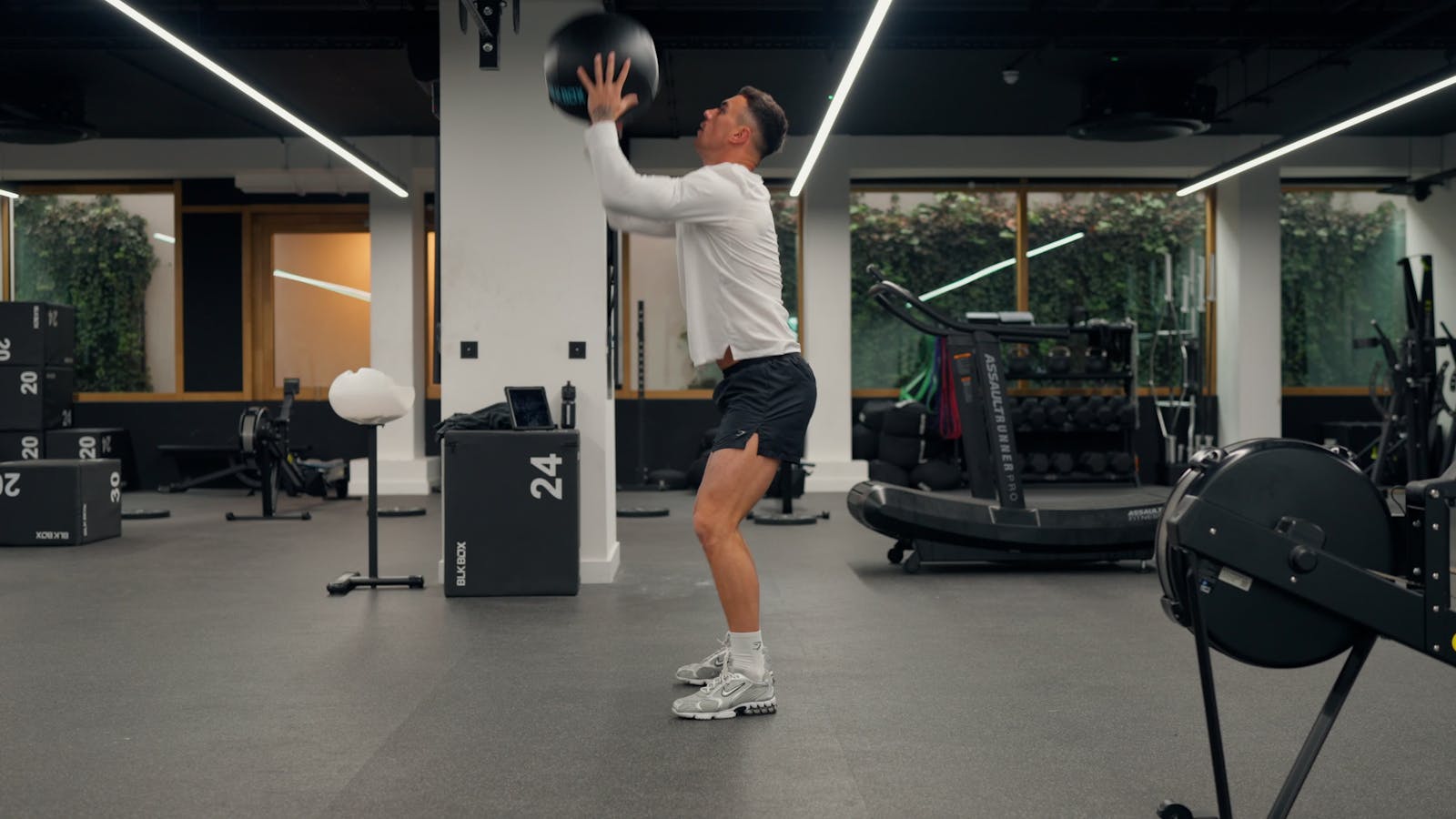
This vertical throwing movement builds explosive power in your hips and legs. You hold a medicine ball between your legs, squat down, then quickly extend your hips and knees while throwing the ball upward and forward against a wall. The movement pattern mirrors jumping mechanics, making it useful for developing vertical power.

What physical adaptations does this exercise create?

Your hip and knee extension power increases as your posterior chain (glutes, hamstrings, lower back) learns to produce explosive force. The movement reinforces proper jumping mechanics, where power originates from your hips and legs rather than your arms.

How should you program this exercise?

Do 3 sets of 6–8 reps, alternating between throws for maximum height and throws for maximum distance.

What is the proper technique for execution?

Stand facing the wall with your feet shoulder-width apart. Hold the ball between your legs and squat down. Quickly extend your hips and knees while throwing the ball up and forward toward the wall, adding a small jump as you release it. Catch the ball as it bounces back with both feet on the ground, reset your position, and repeat.

14. Explosive Push-Ups

Explosive push-ups build upper-body power by forcing you to produce force rapidly. Lower yourself into a standard push-up position, then push up with enough force and speed that your hands leave the ground. Advanced versions include clapping at the top of the movement. This trains your chest, shoulders, and triceps to generate maximum force in minimal time.

What physical adaptations occur with explosive push-ups?

Your upper-body power increases as your pressing muscles learn to create force quickly. According to research published in the International Journal of Sports Physical Therapy, plyometric training can improve performance markers by 10-30%. Your neuromuscular coordination improves as your nervous system learns to recruit muscle fibers explosively.

What skill level is needed for explosive push-ups?

You need strong push-up strength before trying explosive variations. If you can't do 15–20 controlled push-ups with proper form, build that foundation first.

How should you program explosive push-ups?

3 sets of 5-8 reps using just your body weight.

Keep your body in a straight line from head to heels. Lower yourself until your chest nearly touches the ground, then push upward by pressing through your hands. Land with your hands in the starting position and lower into the next rep. Keep your core tight and your elbows close to your body.

15. Drop Jumps

Drop jumps are advanced plyometric training: step or drop off a box, land briefly, then immediately explode upward into a maximal vertical jump. The key is minimizing ground contact time while producing maximum force. This exercise develops extreme reactive strength but demands significant tissue tolerance and neuromuscular control.

What physical adaptations do drop jumps create?

Your muscles and tendons learn to handle high loading rates during brief ground contacts. The stretch-shortening cycle becomes more efficient. Your nervous system develops the ability to recruit maximum muscle fibers almost instantly upon landing.

What skill level is needed for drop jumps?

This exercise is for advanced athletes only. You need proven landing mechanics, significantly lower-body strength, and experience with progressive plyometric training before attempting drop jumps.

How should you program drop jumps?

Start with a drop "land" by stepping off a lower box (12–18 inches) and focusing on absorbing the landing with control. Progress to hopping off slightly higher boxes. Only after mastering controlled landings should you add the rebound jump. Perform 3 sets of 6 reps when you reach the full drop jump variation.

What training tips improve drop jump technique?

Step off the box (don't jump off at first) and focus on "catching" the ground with minimal knee bend and brief contact time. The drop-off method, in which both feet leave the platform simultaneously, produces less side-to-side asymmetry than the step-off method, in which one leg leads.

Most programs fail because they treat these fifteen exercises as interchangeable movements rather than a progression that matches tissue capacity to loading demands. The difference between building explosive power and developing chronic tendinopathy often comes down to whether you can absorb the forces you generate.

Related Reading

How to Structure Plyometric Training for Maximum Results

How to Structure Plyometric Training for Maximum Results

How often you train determines whether you build explosive power or accumulate fatigue. Two to three sessions per week offer the best chance of getting stronger without overloading your central nervous system.

🎯 Key Point: Frequency is the make-or-break factor in plyometric training - too little won't stimulate adaptation, while too much leads to burnout and decreased performance.

"Optimal plyometric training frequency of 2-3 sessions per week allows for complete neuromuscular recovery while maximizing power development gains." — Sports Science Research, 2023

Training Frequency

Benefits

Risks

1x per week

Low injury risk, easy recovery

Minimal power gains, slow progress

2-3x per week

Optimal power development, proper recovery

Balanced approach

4+ per week

High training volume

Overtraining, CNS fatigue, injury risk

⚠️ Warning: Overtraining your plyometric sessions can lead to decreased jump height, slower reaction times, and increased injury risk - quality always trumps quantity in explosive training.

Why does your nervous system need recovery time?

Your nervous system needs 48 to 72 hours to fully restore itself after high-intensity plyometric work. The neural pathways that coordinate explosive movements require time to rebuild their firing capacity. Training more frequently means working in a depleted state, which reduces reaction time and force output while increasing the risk of injury.

What does research show about training frequency?

According to The Sport Journal, a 6-week plyometric training program improved vertical jump performance and muscle activation when athletes trained three times weekly with adequate rest between sessions. Athletes who trained four or five times per week saw smaller improvements because their bodies lacked sufficient recovery time between workouts.

Why does exercise order matter so much?

Order matters more than most athletes realize. Your warm-up and mobility work come first as neural preparation. Spend 8 to 10 minutes on dynamic stretching, foam rolling, and movement patterns that activate the muscle groups you're about to load. This primes your stretch-shortening cycle and reduces tissue strain during explosive work.

How should you progress through plyometric intensities?

Low-intensity plyometrics come next: pogo jumps, ankle hops, or lateral bounds that keep ground contact time short but moderate impact forces. These teach your nervous system to fire quickly without overwhelming your tendons. Only after this foundation do you progress to high-intensity work like depth jumps, box jumps, or single-leg bounds.

Finish with sport-specific application, integrating plyometric patterns into drills that mimic game situations. Skip this step, and you've developed explosiveness in isolation that won't translate when you need it most.

Why does too much volume destroy your progress?

Too much volume destroys explosiveness. Athletes assume that more reps yield better results, but plyometrics work oppositely. Quality deteriorates when fatigued, and once landing mechanics break down or jump height drops, you reinforce bad movement patterns instead of building power.

Cap your total foot contacts at 80 to 100 per session for beginners and 100 to 120 for intermediate athletes. Stop when your form deteriorates, or your vertical drop exceeds 10%.

What happens when you skip the strength base?

Skipping the strength base leads to tendon injuries that sideline you for months. Plyometrics demand that your connective tissues handle forces two to five times your body weight in fractions of a second.

If your squat strength is below 1.5 times your body weight or your single-leg stability falters during basic movements, you're not ready for high-intensity plyometric work. Build that foundation through progressive resistance training, then layer in explosive movements.

How do poor landing mechanics compound every mistake?

Bad landing mechanics amplify every mistake. Knees caving inward, heels lifting off the ground, or a torso folding forward indicate your body isn't absorbing force properly.

Film yourself or work in front of a mirror until your landings are quiet and controlled, with your weight evenly distributed across your whole foot.

Why is mobility work essential for success?

Most athletes treat mobility work as optional. Tight hip flexors limit your ability to load properly during the eccentric phase, while restricted ankle mobility forces your knees forward during landings, shifting stress onto your patellar tendon instead of spreading it across your posterior chain.

Teams using Pliability's mobility app find that 10 to 15 minutes of targeted stretching before and after plyometric sessions reduces soreness, improves range of motion, and helps athletes maintain consistent training frequency without nagging tightness.

Expect measurable improvements within six to eight weeks with the correct session structure. Vertical jump height typically increases by 6 to 12% for athletes new to plyometric training, while 10- to 40-meter sprint times drop by 0.1 to 0.3 seconds. Track these metrics every two weeks to determine whether your programming is working or requires adjustments to volume, intensity, or recovery time.

Related Reading

  • Isometric Knee Exercises

  • Plyometric Exercises For Volleyball

  • Rate Of Force Development Exercises

  • Basketball Strength Training

  • Isometric Hamstring Exercises

  • Strength Training For Sprinters

  • Plyometric Exercises For Basketball

  • Best Plyometrics For Runners

  • Box Jump Exercises

Build Your Personalized Plyometric Training Plan in Under 5 Minutes

Your tendons, fascia, and joint capsules need targeted mobility work to handle the stretch-shortening cycle when fatigued. When ankle dorsiflexion is limited by 10 degrees or hip internal rotation drops below 30 degrees, your body compensates during landing by shifting load to structures not designed to absorb it. The result is predictable: patellar tendinopathy, Achilles strain, or hip impingement that sidelines you for weeks. A study published in the Journal of Strength and Conditioning Research (2019) found that athletes who integrated daily mobility routines into plyometric programs reduced soft tissue injury rates by 34% compared to those who skipped them.

"Athletes who integrated daily mobility routines into plyometric programs reduced soft tissue injury rates by 34% compared to those who skipped it." — Journal of Strength and Conditioning Research, 2019

⚠️ Warning: Limited ankle dorsiflexion (10 degrees or less) and restricted hip internal rotation (below 30 degrees) create compensation patterns that increase injury risk during plyometric training.

When you're landing from a depth jump or decelerating during a sprint cut, your connective tissues absorb forces up to eight times your body weight in under 200 milliseconds. If those tissues lack the range, elasticity, or neuromuscular control to distribute that load safely, the system breaks down at the weakest link.

🔑 Takeaway: Your connective tissues must handle 8x body weight in under 200ms. Without proper mobility preparation, this force load will find and exploit your weakest structural point.

Programs like Pliability provide targeted mobility routines built around the specific demands of explosive training. Rather than generic stretching protocols, you get movement sequences designed to improve dorsiflexion, hip mobility, and thoracic rotation in the ranges your sport demands. Athletes using structured mobility programming alongside plyometrics report 30% improvements in joint range within two weeks, which translates to better landing mechanics and force distribution.

Plyometric training develops the engine. Mobility work ensures the chassis can handle what the engine produces. Skip either, and you're training with a built-in expiration date.

Related Reading

Trusted by 1,000+ Athletes Worldwide

Join thousands worldwide already moving with pliability.

#1 MOBILITY APP

10,000+

5 STAR

REVIEWS

First Week Free. Cancel Anytime.

Trusted by 1,000+ Athletes Worldwide

Join thousands worldwide already moving with pliability.

#1 MOBILITY APP

10,000+

5 STAR

REVIEWS

First Week Free. Cancel Anytime.

Trusted by 1,000+ Athletes Worldwide

Join thousands worldwide already moving with pliability.

#1 MOBILITY APP

10,000+

5 STAR

REVIEWS

First Week Free. Cancel Anytime.

Trusted by 1,000+ Athletes Worldwide

Join thousands worldwide already moving with pliability.

#1 MOBILITY APP

10,000+

5 STAR

REVIEWS

First Week Free. Cancel Anytime.

Move better in 10 minutes a day.
10,000+ five-star reviews.