


LEARN
pliability

You've felt it: the dull ache that creeps into your lower back around mile three, or the stiffness that shows up hours after the run ends. Lower back pain from running rarely starts in the back itself. It usually traces to hips that spend all day in a chair, glutes that fatigue before your miles do, and a training load that grew faster than the tissue supporting it. That's good news, because all three respond to work you can start this week. This guide covers why the ache keeps returning, the see-a-clinician signs to rule out first, and a four-step plan: calm the flare, restore hip mobility, strengthen what stabilizes your spine, and return to mileage at a pace your body can absorb.
One honest note before anything else: this is education, not diagnosis. Most running-related back pain is mechanical and responds well to the approach below, but some back pain needs a professional exam before any stretching or strength plan. Start with the red flags in the next section, and if any of them apply, book the appointment first.
when back pain needs a clinician, not a training fix
Most lower back pain in runners is muscle and joint tissue objecting to how it has been loaded. Some pain is different, and stretching around it wastes time you should spend getting assessed. See a doctor or physical therapist first if you notice any of these:
Sharp or shooting pain that radiates down one or both legs, especially below the knee
Numbness, tingling, or weakness in your legs, feet, or groin
Changes in bladder or bowel control
Pain that wakes you at night or does not ease when you change position
Pain that started with a fall or another direct impact
Pain that persists or keeps worsening after two to three weeks of reduced training
Severe or steadily worsening back pain is not a self-management project. A clinician can rule out the serious causes, and if yours turns out to be the garden-variety mechanical kind, you can work the plan below with real confidence. The timelines and progressions in this article are general patterns, and your clinician should confirm them for your specific case.
why running makes your lower back hurt
Your lower back is usually the messenger, not the problem. Running is repetitive by design: thousands of nearly identical strides, each one asking your hips to extend, your glutes to steady your pelvis, and your core to keep your spine quiet while force moves through it. When any link in that chain underperforms, the lumbar spine picks up the slack. It's a common story in distance running. Surveys of marathon runners suggest roughly two in three deal with low back pain, and restricted hip mobility keeps showing up as one of the most common mechanical contributors.
tight hips shift the work to your spine
Sitting for long stretches shortens your hip flexors. When you stand up and run, those shortened muscles pull your pelvis into an anterior tilt, which exaggerates the curve of your lower spine and compresses the small facet joints that guide its movement. Limited hip extension makes it worse: if your hip can't fully extend during push-off, your lumbar spine extends further than it should to finish the stride. Over five miles, that's thousands of small compensations. If your hips and back feel locked up together, our guide on how to loosen tight hips and lower back walks through that connection in detail.
glutes that clock out before the run ends
Your glutes are built to stabilize your pelvis and absorb impact with every foot strike. A mostly seated day leaves them underused, and a hard training block leaves them undertrained for the load you're asking of them. When they fatigue, your pelvis loses control: it tilts, rotates, and drops slightly on one side, and the muscles along your spine tighten to hold everything upright. That's why the first five miles can feel fine while mile eight brings the familiar ache. The glutes checked out around mile six, and your lower back has been doing their job ever since. The pain often arrives hours later, dull and hard to pinpoint, because it comes from a system compensating unevenly rather than from a single injured structure.
training jumps your tissue wasn't ready for
Your cardiovascular system adapts to new training faster than your muscles, tendons, and connective tissue do, so you can feel ready for more miles before your body is structurally ready to absorb them. Jump from 20 miles a week to 35, or add hill repeats without the hip extension and glute strength they demand, and small asymmetries that never mattered start to matter. One hip slightly tighter, one glute slightly slower to fire: fatigue amplifies both, and your lower back absorbs the difference. The training change doesn't create the problem. It reveals the restrictions and weak links that were already there.
why rest alone doesn't fix it
Rest calms irritated tissue, which is why a few days off makes the pain fade. But rest doesn't lengthen the hip flexors, wake up the glutes, or build the capacity your spine needs at your training load. So the cycle repeats: ache, rest, relief, return, ache. In most runners this pattern points to a capacity problem rather than structural damage, which is exactly the kind of thing a clinician can confirm. The fix isn't more rest. It's rebuilding the movement your back has been covering for.
how to fix lower back pain from running: a 4-step plan
The fix is a system, not a single stretch. Work the steps in order, and expect the process to take weeks, not days.
step 1: calm the flare without going still
If your back hurts right now, reduce the irritation without feeding the deconditioning that caused it:
Cut your running volume by 30 to 50 percent, and skip hills and hard intervals for now
Move your runs to softer surfaces like dirt, grass, or smooth trails
Cross-train to hold fitness without the impact: swimming, cycling with tall posture, or the elliptical
Keep moving through the day; long stretches of sitting or bed rest tend to make a cranky back crankier
Most mechanical flare-ups settle within days to a few weeks. That's a general pattern, not a promise, and pain that doesn't follow it belongs in the clinician conversation above.
step 2: restore the hip mobility your back has been covering for
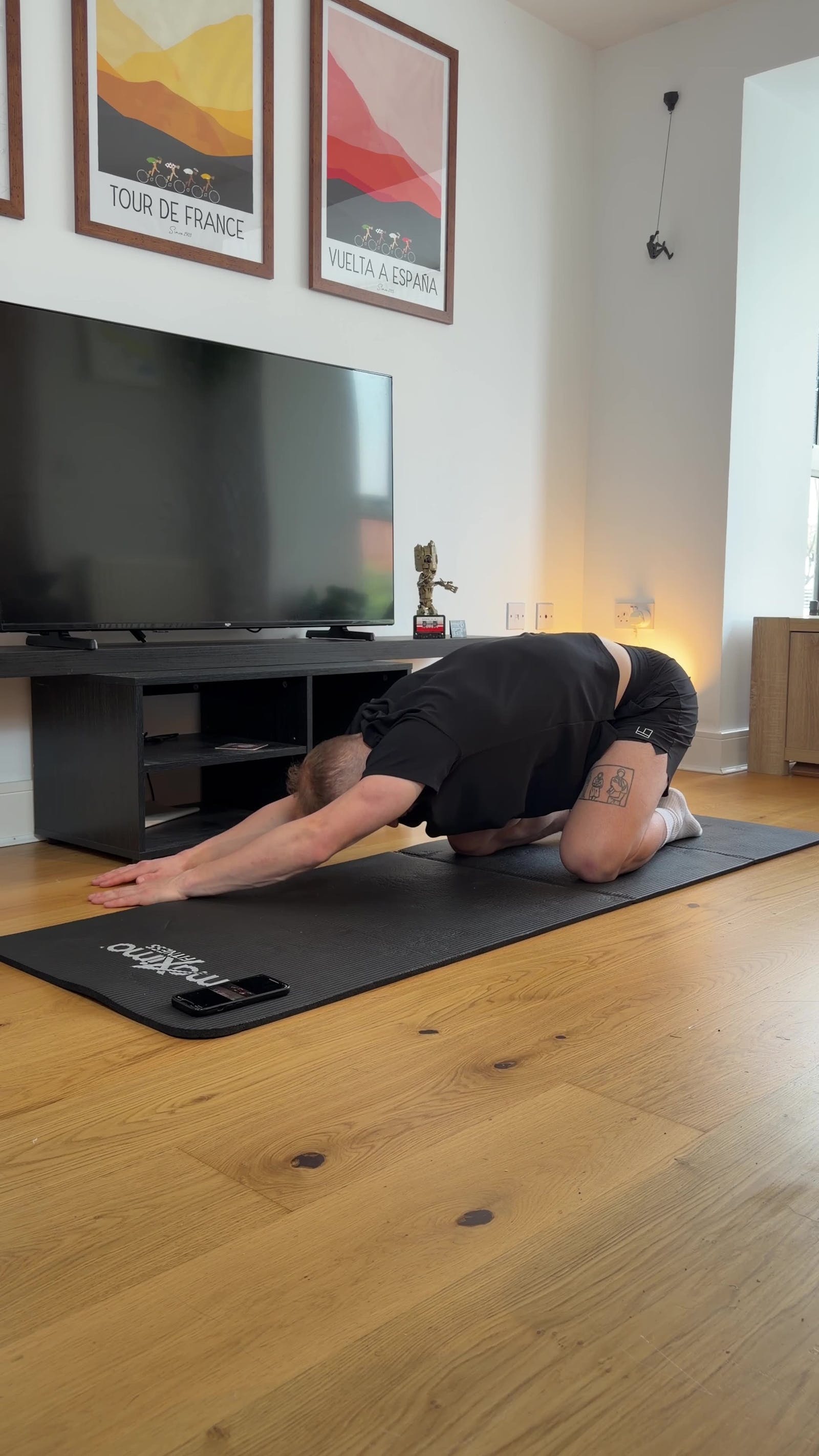
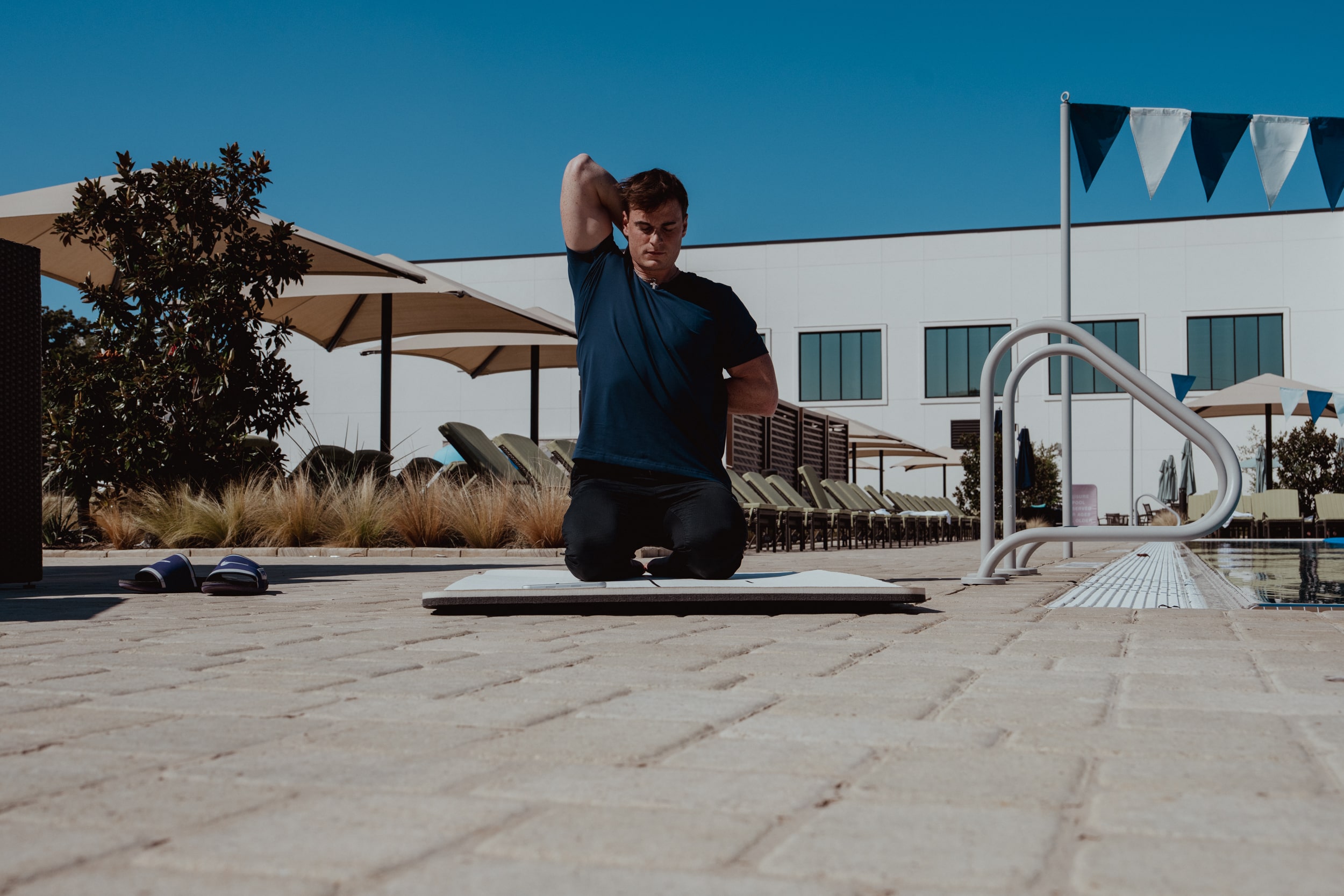
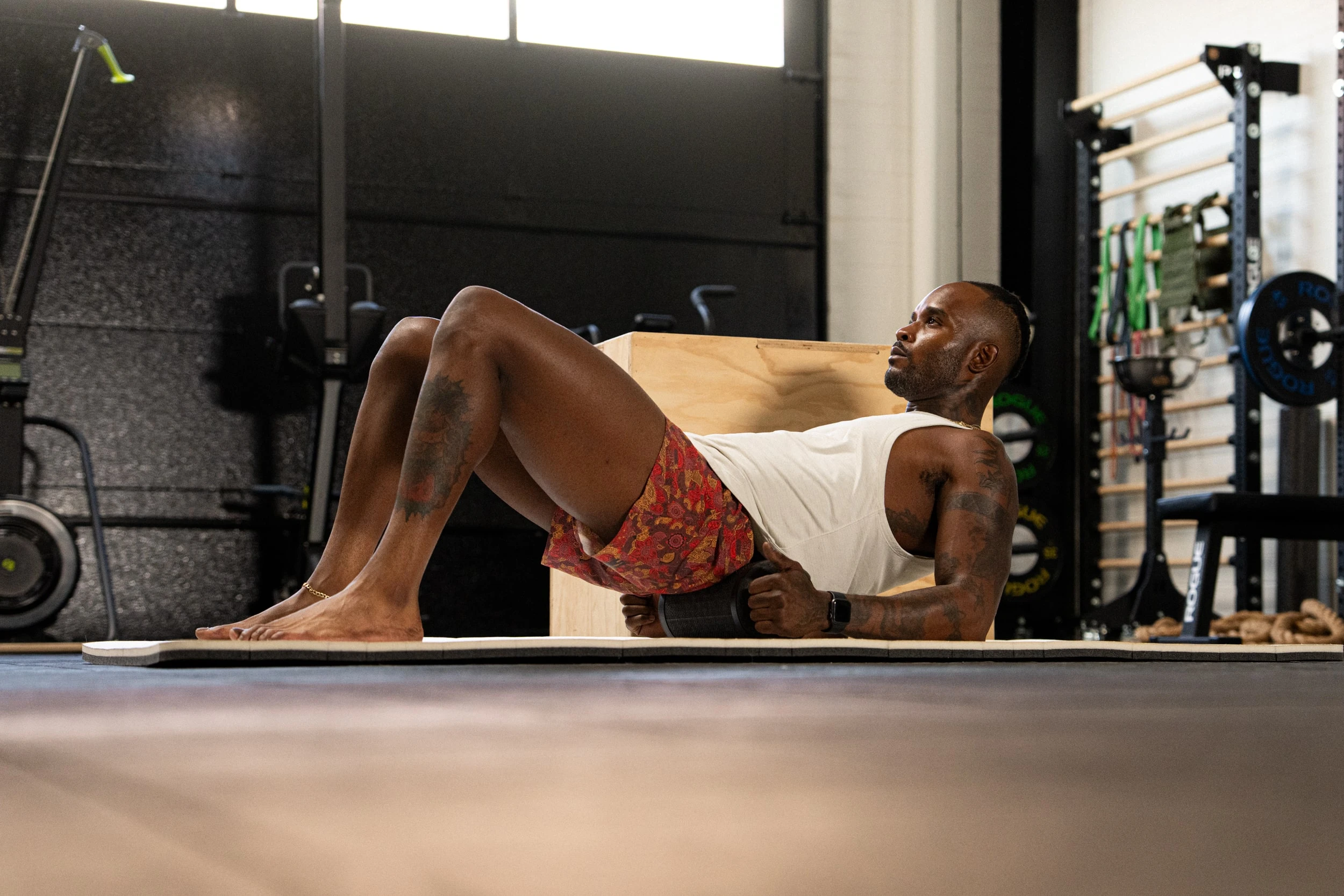
Daily mobility work gives your pelvis its range back so your spine can stop improvising. Target the hip flexors with kneeling lunge stretches, the glutes and deep rotators with pigeon or figure four, the hamstrings with gentle straight-leg work, and the mid-back with rotations that restore the twist running asks of your trunk. Foam rolling your glutes and the muscles along your spine releases tension the stretches don't reach. Ten to fifteen minutes a day beats an hour on Sunday. For a full sequence, start with these hip mobility exercises.
step 3: strengthen your glutes and core
Strength is what makes the mobility stick. Your core, glutes, and hamstrings need enough capacity to stabilize your pelvis and spine through thousands of foot strikes, and two to three short sessions a week builds it:
Glute bridges and weighted bridges rebuild the hip extension running depends on. If your glutes are hard to feel at all, start with these glute activation exercises.
Planks and side planks teach your trunk to hold a neutral spine while forces try to pull it out of position, the exact skill every foot strike demands.
Deadlifts, hamstring curls, and bird dogs strengthen the posterior chain that shares load with your lower back.
One form note on planks: if your lower back hurts while holding one, the position is off. Keep a straight line from shoulders to heels, squeeze your glutes and thighs, draw your belly button toward your spine, and don't let your hips sag or pike. The effort belongs in your thighs, arms, and core, not your lumbar spine. If a full plank is too much, start from your knees and progress when you can hold a minute comfortably. Pilates is a worthwhile addition here too: its slow, precise core work builds the awareness to catch the moment your core disengages and your back takes over. For step-by-step instructions across the whole pattern, our guide to exercises for lower back pain covers 30+ stretches and strength moves.
step 4: return to mileage your body can absorb
Once the pain has settled, come back deliberately. Start with run-walk intervals, around two minutes of running to one minute of walking, and keep the first week's sessions in the 20 to 30 minute range. From there, increase weekly mileage by no more than about 10 percent, and give adaptations four to six weeks to consolidate before you judge them. Skip the trap of comparing your ramp to someone else's plan; their body adapted to that load over months or years. Build from where yours is now.
how to keep lower back pain from coming back
Fixing the current flare is half the work. These habits keep the next one from getting a foothold.
warm up like you mean it
A warm-up shifts your body from sitting mode to running mode: blood flow rises, joints lubricate, and your glutes get reminded they have a job before mile one instead of mile three. Keep it dynamic. Five minutes of leg swings, walking lunges, hip circles, and high knees does more for you than static holds before a run; save the long stretches for afterward. The payoff is real: in one survey of marathon runners, those who skipped warm-ups were about 2.6 times more likely to report low back pain. It's the same principle behind how stretching prevents injury across every sport: prepared tissue handles load that unprepared tissue can't.
run tall: form tweaks that spare your spine
Look ahead, not down. Dropping your gaze rounds your upper back and forces your lower back to counterbalance the weight of your head with every stride.
Relax your shoulders and swing your arms front to back, not across your body. Crossover arm swing twists the torso, and your lumbar spine absorbs the extra rotation.
Shorten your stride so your foot lands under you. Overstriding sends braking forces up the leg and into the spine, and it feeds knee pain too; the same fix shows up in our runner's knee stretches guide.
If you're not sure what your stride is actually doing, a physical therapist can run a gait analysis and spot the compensations you can't feel.
respect shoes, surfaces, and the rest of your day
Replace running shoes every 300 to 500 miles; worn-out cushioning quietly changes your gait long before the shoes look dead
Favor forgiving surfaces when you have the choice; concrete transmits more impact than dirt or grass
Break up long sitting with a couple of minutes of movement every hour; the back you run with is the back you sat with all day
Stay hydrated; spinal discs are mostly water, and they cushion impact better when you're not running dry
The same gradual-load rules that protect your back protect your bones. If you're building toward a race, our guide on how to prevent stress fractures from running applies the identical logic to bone.
keep your miles, lose the pain: try pliability free for 7 days
Everything above works exactly as consistently as you do it, and consistency is where most plans quietly fall apart. That's the gap pliability fills. The Rebuild hub holds corrective, therapy-informed sessions built for working back from setbacks like this one. Daily Sessions give you a short, calming reset to return to after your miles, the Mobility for Runners Path targets the hips, hamstrings, and glutes that keep back pain away, and Build Your Program lets you shape your week around your specific restrictions. Take the mobility assessment to see where your hips actually stand, then let the routines meet you there. If your pain needed a clinician, use pliability alongside their advice, not instead of it. Start your 7-day free trial on iPhone, iPad, Android, or the web, or sign in if you already have an account.
Related Reading






Move better in 10 minutes a day.
10,000+ five-star reviews.