


LEARN
pliability

Your glutes are among the largest, most powerful muscles in your body, and after a day of sitting they are often the last to show up when you train. Glute activation exercises fix that: short, focused drills that wake the muscles up before squats, runs, and deadlifts, so your quads and lower back stop doing work your hips should own. Skip them, and poor glute recruitment quietly turns into caving knees, an irritated lower back, and lifts that feel harder than they should. Here is what glute activation actually is, 19 of the best glute activation exercises grouped into a four-step progression, and how often to do them so the effect carries into your training.
what is glute activation?
Glute activation is a short neural priming step, not a strength phase. The goal is to re-establish the mind-to-muscle connection so the gluteus maximus, medius, and minimus contract on cue and lead the movement when load or speed shows up. Think of it as turning the key in the engine rather than rebuilding it: 5 to 10 minutes of low-intensity, precise work before the session, not another workout stacked on top.
activation vs. strength work
Strength work uses progressive overload to change how much force a muscle can produce. Activation changes whether that muscle fires at the right time in the first place. The drills are brief, low to moderate intensity, pain-free, and heavy on cueing rather than load. You can build strong glutes and still fail to use them; activation closes that gap.
signs your glutes are not firing
Poor glute recruitment follows a predictable pattern. Long hours of sitting keep the hip flexors short, forward-motion training lets the quads take over multi-joint movements, and the gluteus medius loses its job of controlling the knee from the side. Watch for:
Knees drifting inward on single-leg tasks like stairs, lunges, or landings.
Anterior knee pain after squats or low back soreness after training your hips should have handled.
The sense that your legs power everything from the front, while your glutes never feel like they worked.
If that sounds familiar, the drills below are the reset: with consistent pre-workout activation, those compensations tend to fade because the right muscle finally takes the load.
the 19 best glute activation exercises
Use these as a 5 to 10 minute block before lower-body or endurance sessions, or string five or six together as a standalone 15 to 20 minute routine. The groups run in progression order: find the contraction on the floor, add band resistance, move to one leg, then integrate the pattern under load. Move up a step when the current one feels easy and even on both sides.
step 1: bilateral drills to find the contraction
These gluteus maximus activation drills use both legs at once, so all your attention goes to feeling the squeeze.
1. Hip Thrust
Targets: Gluteus maximus, gluteus medius, hamstrings, core
Do: 3 sets of 10–12 reps.
Sit with your upper back against a bench, feet hip-width apart, knees bent.
Drive through your heels until shoulders, hips, and knees form a straight line.
Squeeze at the top without arching the lower back, then lower under control. Once bodyweight feels easy, add a plate or barbell across the hips; the movement does not change.
2. Frog Pumps
Targets: Glutes
Do: 3 sets of 10 reps.
Lie on your back, soles of the feet together, knees wide, propped on your elbows.
Tuck your chin slightly and drive your hips up, squeezing hard at the top.
Hold for two seconds, then lower slowly.
3. Quadruped Hip Extension
Targets: Gluteus maximus, hip extensors
Do: 3 sets of 10 reps per side.
Start on hands and knees, hands under shoulders, knees under hips.
Keeping the knee bent at 90 degrees, lift one leg until the sole faces the ceiling.
Lower with control without letting the lower back arch, then switch legs.
4. Donkey Kick With Resistance Band
Targets: Gluteus maximus
Do: 3 sets of 12–15 reps per side.
Start in quadruped with a band looped around the working foot.
Brace your core and press the foot up and back against the band.
Control the return, and stop the range before your lower back takes over.
step 2: banded and side-lying work for the gluteus medius
The gluteus medius and minimus control your knee from the side. These drills train that lateral control directly.
5. Clamshell
Targets: Gluteus medius, gluteus maximus
Do: 3 sets of 15–20 reps per side.
Lie on your side with hips and knees bent, heels together.
Keep the hips stacked and open the top knee as far as you can without rolling the pelvis back.
Squeeze at the top and lower with control. Add a mini band above the knees once 15 to 20 clean reps feel easy.
6. Side-Lying Hip Abduction
Targets: Gluteus medius, gluteus minimus
Do: 3 sets of 15–20 reps per side.
Lie on your side with both legs straight and stacked.
Lift the top leg toward the ceiling without letting the hips tilt backward.
Lower slowly without resting the leg between reps, then switch sides.
7. Banded Lateral Walk
Targets: Gluteus medius, gluteus minimus, gluteus maximus
Do: 3 sets of 8–10 steps each direction.
Place a mini band above the knees and stand with a slight knee bend.
Step sideways under control, keeping tension in the band and your torso upright.
Do not let the hips collapse toward the trailing leg; reverse direction after each set of steps.
8. Standing Hip Abduction
Targets: Gluteus medius, gluteus minimus, core
Do: 3 sets of 12–15 reps per side.
Stand tall and shift your weight onto one foot, squeezing that glute for stability.
Lift the other leg out to the side, keeping the torso upright and pelvis level.
Lower without touching the floor between reps, then switch sides.
step 3: single-leg drills for control
One leg at a time exposes the side-to-side differences that two-legged drills hide. This is where activation becomes usable stability.
9. Single-Leg Glute Bridge
Targets: Gluteus maximus, gluteus medius, hamstrings
Do: 3 sets of 8–10 reps per side.
Lie on your back, one foot flat, the other leg extended toward the ceiling.
Tuck the pelvis slightly and press through the planted foot to lift the hips.
Hold briefly with the hips level, then lower slowly.
10. Single-Leg Deadlift
Targets: Gluteus medius, gluteus maximus, hamstrings
Do: 3 sets of 8–10 reps per side.
Shift your weight into one foot with a soft knee.
Hinge at the hips with a flat back, letting the free leg travel behind you until your torso is near parallel to the floor.
Drive the standing-leg glute and hips forward to return to standing.
11. Single-Leg Squat to Chair
Targets: Gluteus maximus, gluteus medius, gluteus minimus
Do: 3 sets of 8–10 reps per side.
Stand just in front of a chair and lift one leg so it hovers ahead of you.
Sit back onto the standing hip until your glutes touch the chair briefly.
Press through the heel to stand, keeping the knee tracking over the toes.
12. Step-Up
Targets: Gluteus maximus, gluteus medius, gluteus minimus, hamstrings, quads
Do: 3 sets of 10–12 reps per side.
Place your full foot on a stable step or bench.
Shift your weight into that foot and press up until the trailing foot meets it.
Step down slowly with control, finish the reps, then switch sides.
13. Lateral Step-Up
Targets: Gluteus maximus, gluteus medius, quads
Do: 3 sets of 10–12 reps per side.
Stand beside a step with your feet parallel to it.
Place the entire near foot on the step and press up until the other foot meets it.
Control the descent back to the floor, then switch sides.
step 4: integrate with squat and hinge patterns
The last step is cashing in the priming: full movement patterns where the glutes do their real job. These double as the bridge from activation into your strength work.
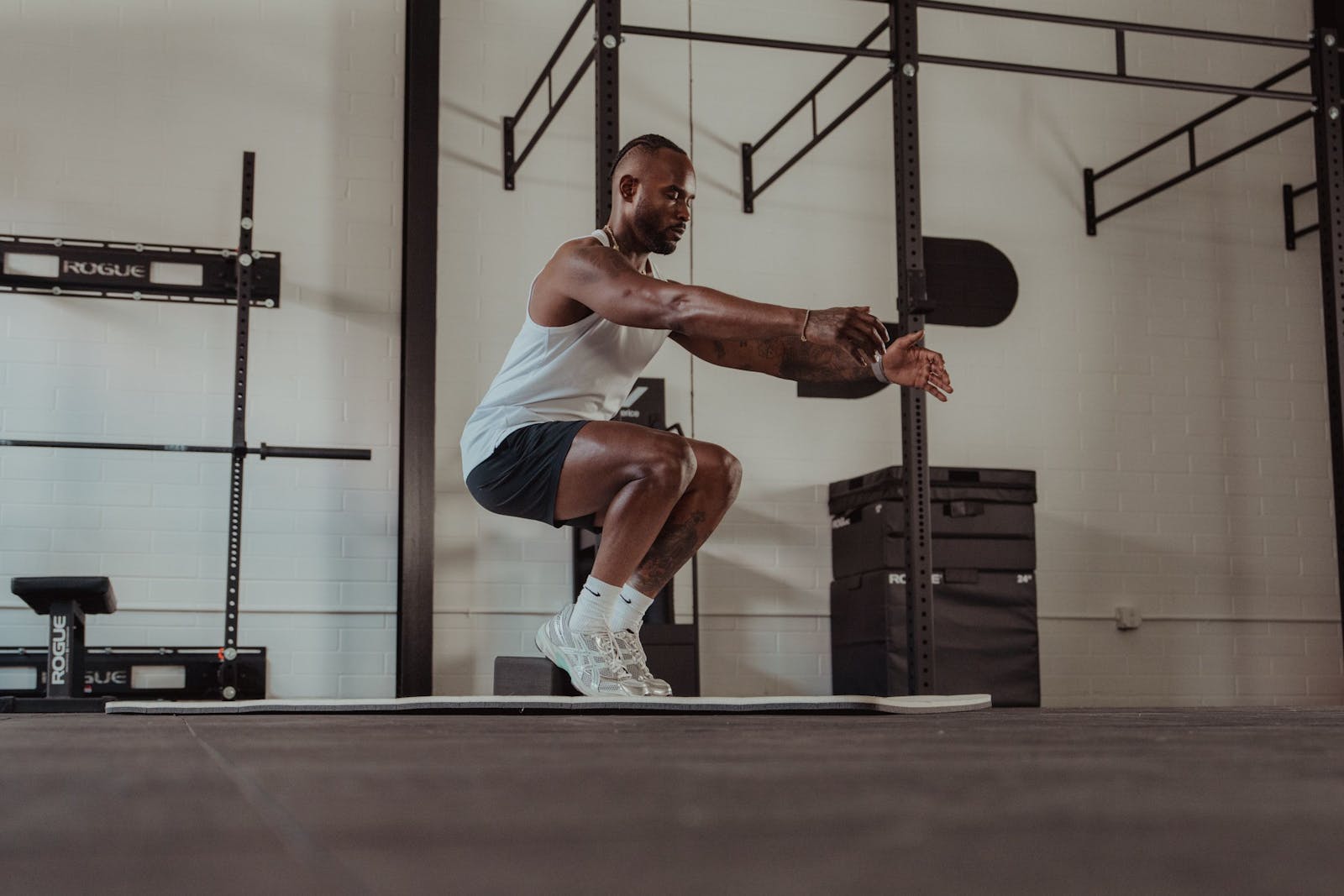
14. Air Squat
Targets: Gluteus maximus, quads, hamstrings, calves, core
Do: 3 sets of 10 reps.
Stand with feet hip-width apart and hinge at the hips and knees to descend.
Keep the knees tracking over the toes and your weight through the heels.
Drive up through the heels and squeeze the glutes at the top.
15. Split Squat
Targets: Quads, glutes, hamstrings
Do: 3 sets of 10 reps per side.
Step one foot forward into a long stance.
Keep the torso upright and bend both knees until the back knee approaches the floor.
Pause, then drive through the front heel to stand.
16. Curtsy Lunge
Targets: Gluteus medius, gluteus minimus, quads, hamstrings, adductors
Do: 3 sets of 10 reps per side.
From hip-width, take a big step back and across, behind the standing leg.
Bend both knees and lower until the front thigh is near parallel to the floor.
Keep the torso upright, return to the start, then repeat on the other side.
17. Staggered-Stance Deadlift
Targets: Glutes, hamstrings, lower back
Do: 3 sets of 10 reps per stance.
Stand with one foot slightly ahead, the other back on its toes, holding weights.
Hinge at the hips with a slight front-knee bend, lowering the weights toward the shins.
Pause at the hamstring stretch, then stand by driving the glutes forward.
18. Conventional Deadlift
Targets: Glutes, hamstrings, upper and lower back
Do: 3 sets of 10 reps.
Stand hip-width, hinge, grip the bar or dumbbells, and brace your core.
Extend the hips and knees together with a neutral spine.
Squeeze the glutes at the top without leaning back, then lower with control.
19. Sumo Deadlift
Targets: Glutes, hamstrings, quads, back
Do: 3 sets of 10 reps.
Stand wider than shoulder-width with toes turned out 30 to 45 degrees.
Hinge at the hips with the chest up and grip the weight.
Drive the hips forward to stand tall, then lower the weight under control.
how often should you do glute activation exercises?
Three to five short sessions a week is the practical target, 5 to 10 minutes each, placed directly before the training they are meant to support. Frequency beats duration here: small, regular primes hold the movement pattern better than one long session on the weekend. Do the work within about 15 minutes of your main session so the priming is still active when you load the pattern.
Starting out: two to three reliable drills, 2 to 3 sets each, before lifting or run days. Focus entirely on feeling the glutes do the work.
Building strength: three to four sessions a week, adding bands and single-leg work, paired with heavy lower-body days and one lighter unilateral day.
High-volume blocks: five to six sessions only when training density demands it, while you watch soreness and movement quality closely.
when to progress, and when to back off
Follow the same order as the exercise list: bilateral isolation, then banded lateral work, then unilateral patterns, then loaded integration. You have headroom to progress when the warm-up feels consistently easier across a few sessions, single-leg balance improves, and your knees stop drifting inward. Add band tension, tempo, or reps, or graduate a drill into your strength work. If the prime starts costing you reps on your main lifts, cut its volume. Runners and cyclists should keep the block dynamic and single-leg biased so it transfers into each stride or pedal stroke; the same habit is a core piece of injury prevention for runners.
make glute activation part of the program
Activation only pays off when it happens every time you train, and consistency is the first thing most warm-ups lose. pliability builds it in: Daily Sessions give you a guided routine every day, Build Your Program shapes mobility and activation work around your training calendar, and Paths spend several weeks on the hips and glutes instead of one hopeful warm-up. Take the mobility assessment to see where your hips are actually restricted, and if you are working back from an injury, the Rebuild hub has gentler corrective sessions. Start with a 7-day free trial on iPhone, iPad, Android, or the web. Mobility isn't extra; it's part of the program.
Related Reading



Move better in 10 minutes a day.
10,000+ five-star reviews.