


LEARN
pliability
Runner's knee has a way of taking over the whole sport. The miles that used to clear your head start ending early, stairs get complicated, and every twinge makes you wonder if you should stop running. For most runners, the way back is not rest alone. Pain around the kneecap usually traces to the muscles above and below it, so the fix is targeted stretching and strengthening of the tissue that controls how your knee tracks. This guide covers the best runner's knee stretches for pain relief, the strength moves that keep the pain from coming back, and the knee stretches for running to do before and after your miles, built on the same principles as our flexibility exercises guide.
One note before you start: this is education, not diagnosis. Garden-variety runner's knee responds well to the work below. If your pain is persistent or getting worse, if the knee is swelling, locking, or giving way under you, or if the pain started with a fall or direct impact, see a clinician before you stretch anything. Severe or worsening knee pain is not a self-management project.
what runner's knee is and why stretching helps
Runner's knee is the common name for pain around or behind the kneecap, what clinicians call patellofemoral pain syndrome (PFPS). It comes from irritation of the knee's soft tissues, including the patellar tendon, the fat pads, and the synovial lining of the joint. The pain tends to show up when you run, go up or down stairs (down is usually worse), squat, kneel, or stand up after sitting a while, and the knee may pop, grind, or swell. Studies estimate it affects roughly 19 to 30 percent of female runners and 13 to 25 percent of male runners.
what causes runner's knee
No single cause has been identified; "runner's knee" describes what you feel more than why you feel it. The pain generally comes from the kneecap rubbing where it should glide, and several things can push it off track:
Weak core, hip, glute, and calf muscles that let the knee drift inward on every stride
Tight quads, hamstrings, hip flexors, or calves pulling on the kneecap and the tissue around it
Restricted motion at the hips, knees, or ankles, or feet left unsupported by worn or ill-fitting shoes
Form breakdowns, overuse, or ramping mileage faster than your tissue can adapt
A direct blow or injury to the knee
Movement is one of the main treatments: stretching eases the tension pulling the kneecap off track, and strengthening rebuilds the support that keeps it there.
when knee pain needs a clinician, not a stretching plan
Stiffness and a dull ache that ease with gentle movement are a mobility project. These signs are not, and they mean get assessed first:
Pain that persists or keeps getting worse despite a few weeks of consistent work
Noticeable swelling, or a knee that feels unstable, buckles, or gives way
Locking or catching, where the joint physically will not move through its range
Pain following a fall, twist, or direct impact, or pain that wakes you at night
A physical therapist can also help when ordinary runner's knee is simply not improving. Timelines vary, and a clinician can confirm whether the general pattern applies to your knee.
the 9 best stretches for runner's knee pain
These stretches target what pulls on the kneecap when tight: quads, hamstrings, hip flexors, calves, adductors, glutes, and the IT band. Do them when your tissue is warm, after a run or five to seven minutes of light activity like walking or easy spinning. Mild stretching discomfort is normal; sharp pain in the knee itself is a stop signal.
1. quadriceps stretch: the knee saver
The quads, the muscles at the front of your thighs, are the knee's main support crew. This stretch loosens them and the tendons at the front of the knee while opening the hip flexors. If the position bothers your knee, there are gentler ways to stretch your quads lying down.
Start by standing arm's length away from a wall with your sore leg farther from the wall.
While facing forward and keeping your core engaged, support yourself with one hand against the wall.
Grab your ankle and pull it up behind you toward your buttocks.
Don't pull your knee out to the side; keep it pointing downward.
Keep your knees together the entire time.
Hold for 30 to 45 seconds, then switch sides.
2. hamstring stretch: the back of the thigh helper
Tight hamstrings pull on the back of the knee with every stride. Do 3 holds per leg.
Lie on your back with one leg extended along the floor.
Slightly bend your other leg and wrap your hands behind that thigh.
Slowly pull the leg toward you, feeling the stretch in the back of the thigh.
Bring the leg as close as you can, aiming to keep it as straight as possible with the heel flexed toward the ceiling.
Hold for 30 seconds, then switch legs.
Pro tip: A standing hamstring stretch with your foot propped on a step or chair allows a deeper stretch and asks more of your hip stability, if your knee tolerates it.
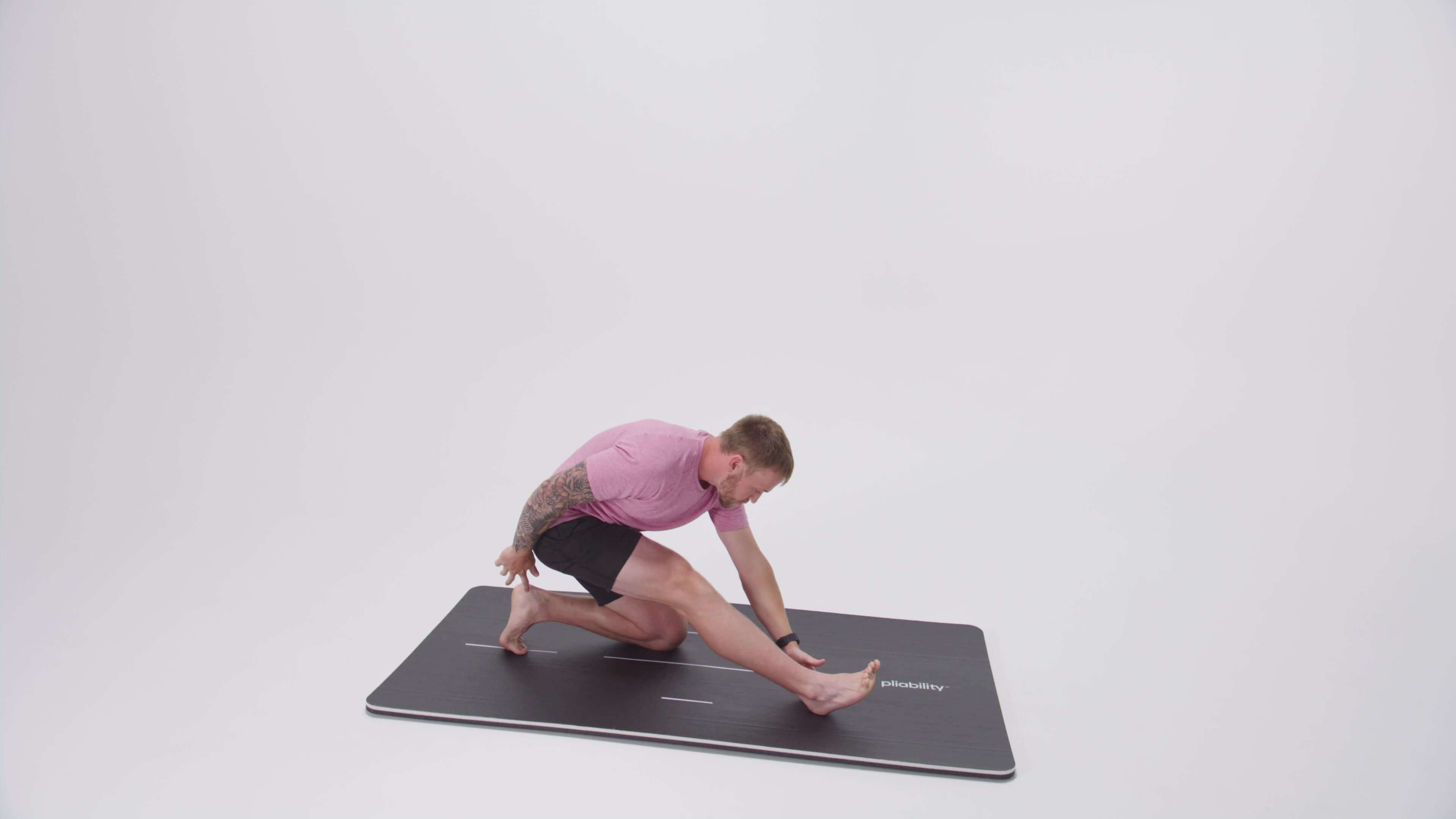
3. hip flexor stretch: the runner's relief
Combine the chair lifestyle with running and the hip flexors get seriously tight. When your hips tighten, your body overworks the quads, which places extra pressure on your knees.
Start by kneeling on your right knee with your left leg at a 90-degree angle in front of you.
Keeping your back flat, put your hands on your left knee and lean forward to feel your hips open up.
Keep your right knee pressed to the floor and lean into your left hip while engaging the muscles in your right glute.
Hold the stretch for 30 seconds, then switch sides.
4. standing calf stretch: the knee protector
Tight calves can pull the knees inward as you run, tug on the ligaments around the knee, and load the feet enough to invite plantar fasciitis. One stretch, a lot of protection.
Stand about three feet from a wall and place your hands on it at about eye level.
Step your left foot back with your toes facing forward.
Keep your back heel on the floor and your back knee straight, bend the front knee slightly, and lean toward the wall.
Try rotating your toes slightly in and out to reach the inner and outer parts of the calf.
Hold for 45 to 60 seconds, then switch sides. Step closer to the wall if you need a milder stretch.
5. calf stretch on stairs: the active calf reliever
This version stretches the calves under a little load, the way running actually uses them.
Stand with the balls of your feet on the edge of a step.
Slowly lower your left heel toward the floor while bending your opposite leg slightly.
Hold the stretch for 5 to 10 seconds, then return to the starting position.
Perform 10 to 15 repetitions on the same side before switching.
Modifications:
Slowly alternate pedaling your heels up and down for a more active stretch.
Combine stretching and strengthening by adding calf raises: standing on the edge of the step, drop and raise both heels together.
6. side lunge stretch: the hip helper
Side lunges loosen the hip adductors, which stabilize the hips and pelvis. When they are tight, your hips lose stability and your knees inherit the wobble.
Begin standing in a wide stance, feet far apart.
Engaging your core, with your feet at a 45-degree angle, lunge to your right side, bending your right knee and keeping the opposite leg straight.
You should feel a deep stretch along the inner thigh.
Place your hands on the floor in front of you for balance.
Hold for 30 to 45 seconds, then switch sides and repeat.
7. butterfly stretch: the adductor relaxer
A gentler seated option for the same muscles, and a good fit alongside other inner thigh stretches on recovery days.
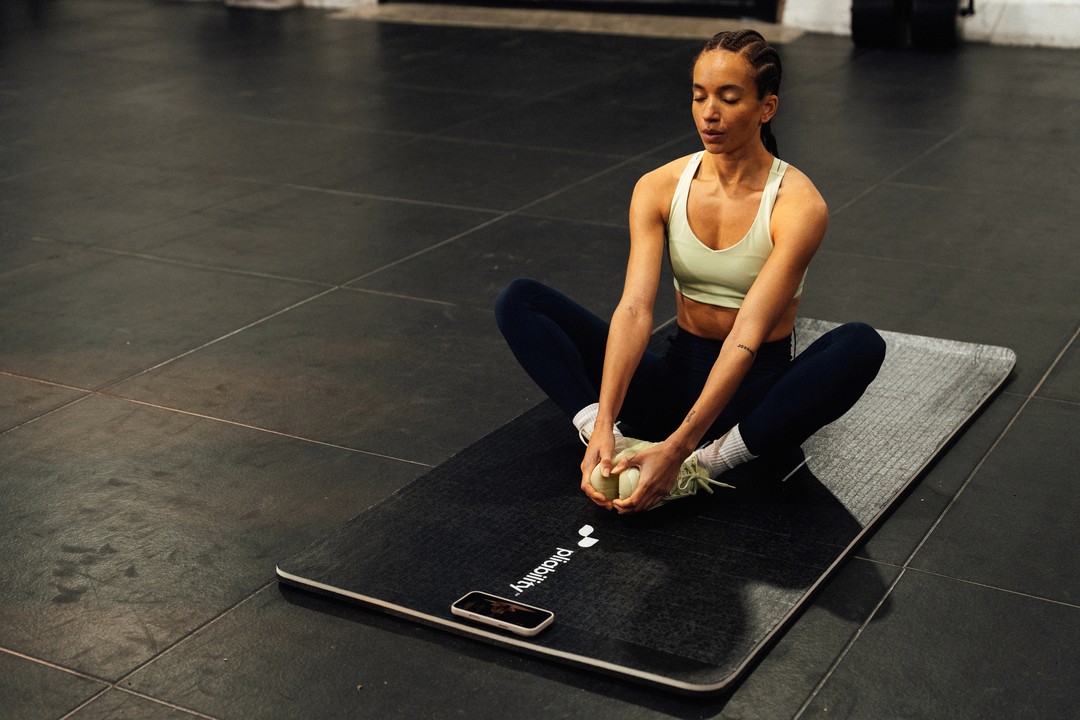
Sit on the floor with the soles of your feet together and your knees bent outward.
Hold your feet with your hands and gently press your knees toward the floor.
Hold the stretch for 30 seconds.
8. glute stretch: the hip and knee helper
Glute tension changes how the knee lines up under you. This figure-four position eases it while freeing up the hips and lower back.
Lie on your back with your knees bent and feet flat on the floor.
Cross your right ankle over your left knee.
Grab the back of your left thigh and gently pull it toward your chest.
Hold for 30 seconds, then switch legs.
Keep your head and shoulders relaxed on the floor.
Use a strap or towel if you can't reach your thigh.
9. IT band stretch: the lateral leg loosener
Muscles are only part of the equation. The IT band, the thick band of tissue running down the outside of your thigh from hip to shin, feeds knee pain when it tightens. Pair this with dedicated IT band exercises if the outside of your knee is the loudest complaint.
Stand upright and cross your right leg over your left.
Shift your weight onto the standing leg.
Raise your left hand overhead and slowly lean to the left until you feel a stretch along the outside of your right leg.
Hold for 30 seconds, then uncross, stand tall, and repeat on the other side.
9 strengthening moves that keep runner's knee from coming back
Stretching eases the symptoms; strengthening removes the cause. Weak glutes, hips, and quads let the knee collapse inward stride after stride, so pairing the stretches above with strength and flexibility training is what makes the relief last. Work these in two to three days a week, and skip anything that causes knee pain rather than muscle effort.
10. straight leg raise: the quad strengthener
Straight leg raises strengthen the quads and hips while the knee stays locked and safe, keeping stress off the kneecap while you rebuild.
Lie on your back with one knee straight and the other bent.
Tighten the muscle on top of the straight leg's thigh, then lift the leg about 15 inches off the ground.
Hold it straight up for a few seconds, then slowly lower.
Repeat 10 to 15 times per leg.
Pro tip: Doing the raise on your back, side, or stomach works different muscles around the hips. For resistance, add a 2 to 3 pound ankle cuff weight or loop a band around your ankles.
11. clamshell: the glute strengthener
The clamshell targets the gluteus medius, a small muscle with a big job: hip stability. When the hips aren't moving well, the knees and low back absorb the stress instead.
Lie on your side with your knees bent and one leg stacked directly on the other.
Slowly lift the upper knee while keeping your feet in contact.
Slowly lower the upper leg back down.
Turn to the other side to work the opposite leg.
Reps: 2 to 3 sets of 10 on each side.
Tip: Add a resistance band around the thighs to make it more challenging.
12. glute bridge: the hip and knee supporter
The bridge strengthens the glutes that support the knees while training hip extension, an essential piece of every stride.
Lie on your back with your knees bent, and slowly lift your hips toward the ceiling, using your glutes to stabilize.
Hold the top position, then slowly lower back down, keeping the knees apart but not bowed outward, parallel and in line with the shoulders.
Reps: 2 to 3 sets of 10, holding 2 to 5 seconds at the top. Once you've mastered it, add a resistance band around your thighs.
13. bridge kick: the single-leg progression
A glute bridge progression that loads the glutes and hamstrings one leg at a time, the way running does.
Lie on your back with your knees bent toward the ceiling and your arms at your sides.
Lift your hips and back off the floor so your weight rests in your feet and shoulder blades.
Shift your weight onto your left foot and slowly raise your right foot until the right leg is at a 45-degree angle. Avoid locking the knee.
Bring the right foot back down without touching the floor, repeat, then switch legs.
Reps: 1 to 3 sets of 6 to 10 per leg.
Pro tip: If the kick is too much for your knee, just raise and lower your hips off the floor. You'll still be strengthening the same muscles.
14. lateral toe tap: the hip stabilizer
This one works the hip abductors and doubles as a diagnostic: if one side is noticeably easier, you've found the weakness worth training.
Standing up straight, loop a resistance band above your knees.
Keep one leg stable and planted while you tap the other leg out to the side.
Try not to let the planted knee collapse inward.
Bring the leg back to center and repeat.
Reps: 2 sets of 10 on each leg.
Tip: To progress, lower the band from your thighs to your shins, then to your ankles or feet.
15. side-lying leg lift: the glute medius strengthener
Reps: 2 or 3 sets of 15 per leg
Lie on your right side with your legs extended and feet stacked.
Rest your head on your right arm and keep your left hand in front of you for support.
Gently raise your left leg off your right leg.
You should feel the work in the side of your glute, right where your jeans pocket would sit. If you feel it mostly in your obliques, you're targeting the wrong muscle.
Bring the leg back down and repeat, then switch sides.
Pro tip: You can do this standing instead. Stand with feet forward and hands on hips, lift your right leg out to the side while your weight settles into the left leg, then bring it back down and repeat on the other side.
16. wall squat: the knee stabilizer
Wall squats work the quads, hamstrings, and glutes at once, and the wall keeps your depth honest.
Stand with your back against a wall and your feet planted 6 to 12 inches from it, about shoulder-width apart.
Gradually slide your back down the wall until your legs reach a 45-degree angle. Don't go deeper; a deep squat can worsen knee pain while you're rebuilding.
Hold for 5 to 10 seconds, then gradually rise to standing.
Repeat 10 to 15 times, up to a few times a day.
Pro tip: Place a stability ball between your back and the wall and let it roll with you as you squat for a smoother slide.
17. step-up: the functional strengthener
The step-up trains the glutes and quads through the single-leg pattern you use on every hill and staircase.
Place your right foot on a step or box.
Press all your weight into your right leg, stepping up to lift your left foot off the floor.
Hold for a few seconds as your right leg straightens and tightens.
Step back down and repeat.
Reps: 2 sets of 10 per leg.
Pro tip: If this one causes too much pain, skip it for now. Once your knee settles, it earns its place back as one of the most running-specific moves on this list.
18. donkey kick: the glute isolator
Start on all fours, cushioning your knees and hands with a mat, blanket, or towel.
Keep your arms straight, knees under your hips, and wrists under your shoulders.
Slowly lift your right leg and extend it behind you to about hip height, keeping your foot flexed.
Press your heel toward the ceiling briefly, then lower it back down and repeat.
Reps: 2 sets of 10 per leg.
Pro tip: Keep your back flat. If it arches, your back muscles are doing the work your glutes should be doing.
knee stretches for running: before and after your miles
The same stretches land differently depending on when you do them. Long static holds are recovery work; before a run, your knees want movement, not stillness.
pre-run stretches for knees
Start with five to seven minutes of light activity, like brisk walking or easy spinning, to raise tissue temperature. Then prep the knees with dynamic movement instead of long holds:
Leg swings, front to back and side to side, 10 per direction per leg
Walking lunges with a tall torso, 10 per side
Bodyweight squats to a comfortable depth, 10 slow reps
Glute bridges to wake up the hips, 10 reps with a brief hold
Heel pedals on a step to prime the calves, 10 per side
If you want a static stretch before a run, keep it short, 10 to 15 seconds per position, and save the deep work for afterward.
the best post-run stretches for knees
The minutes right after a run, while everything is warm, are the highest-value stretching window you get. Run through the quad, hamstring, standing calf, hip flexor, and glute stretches from the list above, holding each for 30 to 60 seconds per side. On heavy weeks, add the IT band and butterfly stretches, and treat the sequence as part of your cool-down stretches rather than an optional extra. If your legs are still heavy the next day, gentle stretches for sore legs beat sitting still.
keep your knees ready for the long run
Every stretch on this list works, but none of them work as a one-time rescue. Knees calm down when the hips, quads, and calves get consistent attention, mile after mile. pliability makes the consistent part easy: Daily Sessions give you a fresh guided routine every day, Paths like Mobility for Runners build the range your stride depends on over several weeks, and Build Your Program shapes the plan around your training calendar. Take the mobility assessment to see whether your hips, ankles, or quads are feeding the knee pain, and if you are working back from a flare-up, the Rebuild hub offers gentler corrective sessions. Start with 7 days free on iPhone, iPad, Android, or the web, and keep the run something you get to do.
Related Reading


Move better in 10 minutes a day.
10,000+ five-star reviews.