


LEARN
pliability

Months of training have prepared your body, but as competition approaches, that familiar chest tightness and racing thoughts return. Performance anxiety affects even the most prepared athletes, creating doubt that can undermine skills developed through countless hours of practice. Learning how to deal with performance anxiety in sports requires building mental resilience that matches physical preparation. The goal is to access your abilities when they matter most, not just to calm pre-game nerves.
Physical anxiety symptoms create a damaging cycle where tight muscles, shallow breathing, and tension in the shoulders and jaw amplify mental stress. Breaking this pattern requires addressing both the physical and mental components simultaneously. When muscles feel loose and responsive, the mind naturally follows, creating space for calm confidence.
summary
Most people experience some degree of performance anxiety, but the athletes who perform best under pressure aren't the ones who eliminate nerves. They're the ones who stop trying to control them. Research shows that attempting to suppress anxiety creates a cognitive burden that disrupts automatic motor programs, pulling mental resources away from the skills you've practiced thousands of times. When you shift attention inward to monitor and regulate your emotional state, you interfere with the procedural memory that makes you fast, fluid, and instinctive. The paradox is clear: the harder you work to calm yourself, the more you disrupt your performance.
Your amygdala doesn't distinguish between a predator and a packed stadium. When pressure hits, your sympathetic nervous system floods your body with adrenaline and cortisol, preparing you to fight or flee rather than execute precise, practiced skills. This creates a fundamental mismatch. Your body is tensing muscles, narrowing vision, and accelerating breathing to help you escape danger, but you need fine motor control, creativity, and fluid movement. A review of thirteen studies on psychological interventions for performance anxiety shows how widespread this physiological response is across athletes and performing artists, yet the sensations themselves aren't the problem. It's the secondary panic, the anxiety about being anxious, that consumes the mental bandwidth you need to perform.
Chronic muscle tension sends constant, low-level threat signals to your brain, amplifying the mental pressure you're already managing. When your hips are tight, your shoulders are locked, and your breathing is shallow, your nervous system registers physical stress as instability, feeding the anxiety loop before you even step into competition. Daily mobility work that releases muscular restriction and restores range of motion reduces this baseline physical stress, creating a foundation where your body feels prepared and responsive. When you can move freely without fighting through tightness, your brain stops flagging movement as effortful or risky, freeing up mental space for execution rather than self-monitoring.
Pre-competition anxiety affects a large share of athletes, but the ones who perform well aren't calm; they have reliable reset protocols they can deploy in seconds. Box breathing (inhale for four, hold for four, exhale for four, hold for four) activates your parasympathetic nervous system, pulling you back from over-activation without dulling readiness. Paired with a single process cue like "drive through" or "stay loose," this gives your brain something concrete to focus on instead of spiraling into outcome-based panic. The intervention works because it's fast, structured enough to anchor attention, and doesn't require you to stop and analyze what's happening.
Reframing physiological activation as readiness rather than danger changes how your nervous system interprets pressure. When your heart pounds and muscles tense before competition, your body isn't signaling that something is wrong. It's mobilizing energy to meet a challenge you care about. Athletes who recognize these sensations as performance preparation rather than threat signals perform better under pressure because they stop wasting mental bandwidth on fighting their own activation. The shift from "I'm too nervous" to "my body is prepared" doesn't eliminate the physical response; it redirects energy toward execution rather than panic management.
why performance anxiety gets worse when you try to control it

Picture this: you're lining up for a free throw with seconds left on the clock. The gym goes quiet. You tell yourself to stay calm, focus, breathe. But suddenly, your shooting motion feels robotic. Your hands get tight. You're thinking about your elbow angle, your release point, details that used to happen automatically. The ball bounces off the rim. You didn't choke because you were nervous. You choked because you tried too hard to control it.
how does trying to control anxiety create cognitive burden?
Most people experience performance anxiety at some point. Suppressing those nerves feels logical, but suppression creates a cognitive burden that disrupts the skills you're trying to execute. When you shift attention inward to monitor and regulate your emotional state, you divert mental resources from the automatic motor programs that make you fast, fluid, and instinctive. The harder you work to calm yourself, the more you interfere with your performance.
what causes athletes to overthink during pressure situations?
Sports psychologists call this "paralysis by analysis." Under pressure, athletes shift from procedural memory (unconscious, automatic movement) to declarative memory (conscious, step-by-step thinking). A basketball player who has taken ten thousand free throws doesn't consciously think about wrist rotation or follow-through during practice. But when anxiety spikes, they micromanage mechanics that should run on autopilot, leading to slower reaction times, hesitation, and errors.
Anxiety doesn't destroy skill on its own, but suppressing it consumes working memory capacity, leaving less brain power for the task itself.
How does cognitive interference affect body awareness?
Simone Biles described experiencing "the twisties" during the Tokyo Olympics: a frightening loss of spatial awareness mid-air. She wasn't undertrained or unprepared. Heightened self-monitoring disrupted her proprioception, the body's unconscious sense of position and movement.
When gymnasts consciously try to control their nerves during complex aerial maneuvers, they override the automatic systems that keep them safe. The danger isn't the anxiety itself, but the cognitive interference created by thinking through movements that require no conscious thought.
how does mobility work address physical stress signals?
Mobility work helps address this problem in a different way. When your muscles are tight and inflexible, your body sends constant low-level warning signals to your brain. Stiff hips, locked shoulders, and shallow breathing patterns all register as physical stress, which compounds the mental anxiety you're already experiencing. Releasing that tension and restoring range of motion lowers the baseline physical stress that feeds the anxiety loop. When your body feels prepared and responsive, you need less conscious effort to manage nerves.
What separates athletes who manage pressure effectively?
The athletes who handle pressure best aren't the ones who eliminate anxiety. They're the ones who stop fighting it. They trust their training, stay present in the moment, and let their bodies do what they've practiced thousands of times.
When your body feels loose, strong, and ready, you don't need to control your emotional state to perform, you move. But understanding the control paradox is only half the picture. What happens inside your nervous system when anxiety hits?
what is actually happening in your body during performance anxiety

Your brain asks one question when you are under pressure: "Are you safe?" The amygdala scans for danger in milliseconds, treating humiliation and letting teammates down as survival-level threats.
how does your nervous system respond to pressure?
Your sympathetic nervous system floods your body with adrenaline and cortisol, shifting you into protection mode: your heart rate climbs, muscles tense, and your vision narrows. This response kept your ancestors alive, but it impairs the fine motor control, creativity, and fluid movement that high-level competition demands.
why does the fight or flight response hurt performance?
Your body gets ready to fight or flee, sending blood to your major muscles and sharpening your senses for quick reaction. But you need to execute a skill you've practiced thousands of times with precision and ease. The protection state your nervous system activates, tensed muscles, narrowed attention, shallow breathing, directly undermines good performance. Your threat system prioritizes keeping you safe over letting you use your full ability.
how does your autonomic nervous system control your body's responses?
Your autonomic nervous system controls breathing, heart rate, and digestion without conscious effort. When your brain senses danger, the sympathetic branch activates. Adrenaline floods your body: your heart pumps faster to deliver oxygen to muscles, breathing accelerates, muscles tense, you sweat to cool down, and your senses sharpen. These changes are evolutionary survival tools that enable quick reactions and powerful movement.
Why doesn't your body distinguish between real and perceived threats?
The problem is context. Your body doesn't distinguish between facing a tiger and stepping up for a penalty kick in front of thousands of people, both trigger the same physiological cascade. A review of 13 studies on psychological interventions for performance anxiety shows how widespread this response is across athletes and performing artists.
Your alarm system prepares you to move, but it fails to remind you: "You've trained for this. You're safe. This is a challenge you care about." Without that reassurance, the physical activation feels like a warning that something is wrong, when it's your body getting ready.
how does anxiety about anxiety sabotage performance?
Athletes often worry about feeling worried. You feel your heart racing during warm-ups and think, "If I'm this nervous now, I'm going to mess up." That second wave of panic, the spiral of self-judgment and catastrophizing, is what hurts your performance. The original nerves might be manageable. The fight against those nerves depletes the mental energy you need to perform well.
Trying to push anxiety away makes it stronger. The harder you ignore the thought, the louder it gets. You end up monitoring how you feel, judging yourself for being nervous, then fearing the panic itself.
What happens when you reframe physical sensations as performance signals?
Another option is to reframe these feelings. Your faster heartbeat isn't a sign of impending failure, it's your heart and lungs delivering oxygen to your muscles for fast, powerful movement. Tight muscles aren't a weakness; they're your body preparing to act. Sweating isn't panic; it's your body cooling itself so you can continue.
When you see these responses as your body preparing to perform well, rather than as warning signs of danger, you stop fighting them. That shift gives you the mental space to stay focused and believe in what you've practiced.
But knowing what's happening inside your nervous system is useful only if you can shift your response in the moment.
10 proven strategies to manage performance anxiety without overthinking

Stop trying to get rid of anxiety. The best performers under pressure turn activation into execution by recognizing physical readiness (elevated heart rate, heightened senses, muscle tension) as preparation rather than panic. The goal isn't to feel nothing, it's to stop the mental interference that converts useful energy into cognitive static.
1. focus on process, not outcome
Thinking about winning pulls you into the future, where you have zero control. Your brain calculates probabilities, imagines failure scenarios, and catastrophizes consequences. That mental time travel drains the attention you need for the present moment. Instead, anchor yourself to specific technical tasks you can execute now: "I need to drive through my hips on this lift." "I'm tracking the ball all the way to my hands." "I'm keeping my shoulders square through the turn." These micro-goals are controllable and give your brain something concrete to focus on instead of spiraling into outcome-based panic. When you execute the small things correctly, winning becomes a byproduct, not a pressure point.
2. build confidence through deliberate practice
Confidence isn't a feeling you create, it's proof you build up. When you've trained hard and stayed focused, your nervous system has proof that you can handle what's coming. That's what "trusting your training" means: your body has performed these movements thousands of times in different situations and knows what to do. Random effort or unfocused practice doesn't build that foundation. A good coach plans training that gradually increases in difficulty, adds competitive pressure, and creates game-like situations. By the time you compete, your preparation becomes real experience your body can draw on when your mind starts to doubt.
3. protect your pre-competition routine
Knowing what to expect reduces cognitive load. When everything feels predictable, your brain conserves energy instead of scanning for problems or adapting to novelty. That's why top athletes protect their routines carefully, the same warm-up sequence, gear, music, meal timing, and visualization protocol. It's not superstition; it's nervous system management. Introducing new equipment, changing arrival time, or skipping familiar steps creates small stressors that accumulate. Under pressure, these disruptions feel destabilizing, diverting mental focus from performance. A steady routine creates psychological scaffolding that tells your brain: "We've been here before. We know what happens next."
4. reframe anxiety as invested energy
You're anxious because this matters. That physical activation, racing heart, adrenaline, heightened awareness, is your body preparing to meet a challenge you care about. Athletes who interpret these feelings as readiness rather than danger perform better under pressure. Instead of thinking, "I'm too nervous, I'm going to blow this," recognize: "My body is mobilizing energy. I'm prepared." That mental shift doesn't eliminate the physical sensations; it changes what they mean. You stop fighting your nervous system and start working with it. The energy is already there. The only question is whether you spend it managing panic or executing skill.
5. set specific, measurable goals
"Play well" is too vague and doesn't tell you what to do. You need goals with clear performance markers you can track during competition: "Complete 80% of my passes." "Maintain my stroke rate between 28 and 30." "Hit my splits within two seconds of target pace." These benchmarks keep you focused on what you're doing rather than whether you'll win or lose.
Challenging goals push your ability without eroding self-belief: too easy and you don't try hard, too hard and you chase something impossible. The sweet spot lies just beyond what you can do consistently now, close enough to reach, hard enough to demand your full effort.
6. prepare backup plans for unpredictable scenarios
Uncertainty creates anxiety. When you don't know how you would handle a disrupted schedule, equipment failure, or unexpected conditions, your brain flags those gaps as weak spots. The solution is scenario planning. Develop a short warm-up you can do in ten minutes if the bus breaks down or your event starts early. Know what you'll do if your main gear fails. Practice adjusting tactics if conditions change during competition. These backup plans don't stop problems; they give you confidence that you can adapt when they happen. You've already thought through the worst-case situations, so your brain doesn't need to worry in real time.
7. use breathing to interrupt the anxiety spiral
Deep, controlled breathing activates your parasympathetic nervous system, which helps calm you. When anxiety spikes, shallow, rapid breathing signals your brain that you're in danger, intensifying the stress response. Inhale for four counts, hold for four, exhale for six. That longer exhale is key, it signals your body that the threat has passed. You're not eliminating nerves; you're creating a brief window of mental clarity to deploy other strategies: a cue word, a refocusing statement, a reminder of your process goals. Breathing gives you a pause button in chaos.
8. replace negative thoughts with constructive ones
Self-doubt becomes automatic without intervention. Miss a shot, and your brain immediately says, "You always choke under pressure." This thought pattern is learned and can be unlearned through cognitive restructuring. When you catch yourself spiraling into negativity, pause and identify the specific thought that's leading you. Challenge its accuracy. Replace it with evidence-based truth: "I've made this shot a thousand times in practice. One miss doesn't define my ability." This isn't toxic positivity, it's factual reframing. You're not pretending everything is perfect; you're refusing to let one mistake become a narrative about your entire identity as an athlete. Over time, constructive thinking becomes your default response, building resilience that holds up under competitive pressure.
9. seek tailored support from a sports psychologist
General advice doesn't address your specific triggers, history, or how your mind works. A sports psychologist identifies the unique ways anxiety affects your performance, such as overthinking technique, fearing judgment, or dwelling on past failures, and develops tailored plans for your sport, personality, and competitive situation. This might include visualization practice before performance, gradual pressure exposure in controlled settings, or reframing perfectionism-driven anxiety. Professional support deserves the same careful planning as your physical training.
how do you trust your preparation and let go?
At some point, you have to stop managing and start playing. You've trained, prepared, built routines, reframed your thoughts, and controlled your breathing. Now trust that foundation and let your body do what it knows how to do.
Over-control is the enemy of flow. When you micromanage every sensation, thought, and technical detail, you pull yourself out of the automatic processing that makes you fast and instinctive. The best performances happen when conscious effort fades, and trained skill takes over. You can't think your way into that state; you have to release into it. But getting ready only matters if you can use these strategies when the pressure is real and the stakes are high.
what to do before and during a game when anxiety hits

You can't get rid of your body's preparation system, and trying to stop it only makes things worse. The goal is to train your response so that physical activation becomes fuel rather than interference. These strategies work because they're fast, specific, and usable when anxiety spikes. You don't need to feel calm, you need to stay functional.
how can box breathing help you reset before a competition?
Two to five minutes before competition, use box breathing to balance your arousal level: breathe in for four seconds, hold for four, breathe out for four, hold for four. Repeat three to five cycles. This activates your parasympathetic nervous system, pulling you back from over-activation without dulling readiness. Pair it with a single focus cue, "drive through," "stay loose," or "trust it," to redirect attention to your process and prevent outcome-based panic.
Why does Progressive Muscle Relaxation prevent performance anxiety?
Progressive Muscle Relaxation (PMR) teaches your body the difference between tension and relaxation. Tense a muscle group for five seconds, then release for ten, moving systematically through hands, arms, shoulders, and legs. The contrast helps you recognize unnecessary tightness. When muscles are locked, your body amplifies mental anxiety. PMR interrupts that loop, teaching you to maintain activation without stiffness, exactly what performance demands.
during performance, reset when anxiety spikes mid-game
When nerves surge during competition, take one deep breath with a longer exhale than inhale, then return to your process cue. You're not analyzing what went wrong or trying to calm yourself completely, you're creating a two-second circuit breaker that stops the spiral. A large share of athletes experience pre-competition anxiety, but those who perform well aren't the ones who eliminate it. They're the ones with a reliable reset they can deploy without thinking.
how do you break the mental replay cycle after mistakes?
Missing a shot or making an error triggers an immediate thought loop. Your brain replays the mistake, analyses what went wrong, and imagines negative consequences. That mental replay consumes the attention you need for the next play.
The reset is physical, not mental. Adjust your stance, tap your leg, reset your shoulders. This small action stops you from dwelling on the mistake and signals: "That moment is over. This is the next one." Then return to your process cue. You're not pretending the mistake didn't happen. You're refusing to let it consume the rest of your performance.
How should you interpret physical sensations during pressure moments?
Reframing sensations matters more than most athletes realize. When your heart pounds before a big moment, the instinct is to think, "I'm not ready. This is going to go badly." That interpretation converts useful activation into a threat signal.
The alternative is evidence-based reframing: "My heart is pounding because my body is preparing me to sustain the energy I need to perform." This isn't positive thinking, it's accurate thinking. Your cardiovascular system is doing exactly what it should. When you stop fighting the sensations and recognise them as preparation, you free up mental bandwidth for execution. Physical readiness starts long before game day.
train your body to stay loose and confident under pressure
Performance anxiety shows up physically before it shows up mentally. Tight hips, locked shoulders, and restricted breathing patterns aren't signs of nerves, they're active contributors to the anxiety loop. When your muscles are chronically tense, your brain receives constant low-level threat signals that amplify mental pressure. The solution isn't to think your way to calm. It's to train your body to move freely so your nervous system has less to fight against.
Most athletes address anxiety through mental strategies alone: visualization, self-talk, and breathing techniques. Those tools help, but they're fighting an uphill battle if your body is physically locked up. When range of motion is restricted and muscles carry leftover tension, your threat detection system flags that physical stress as instability.
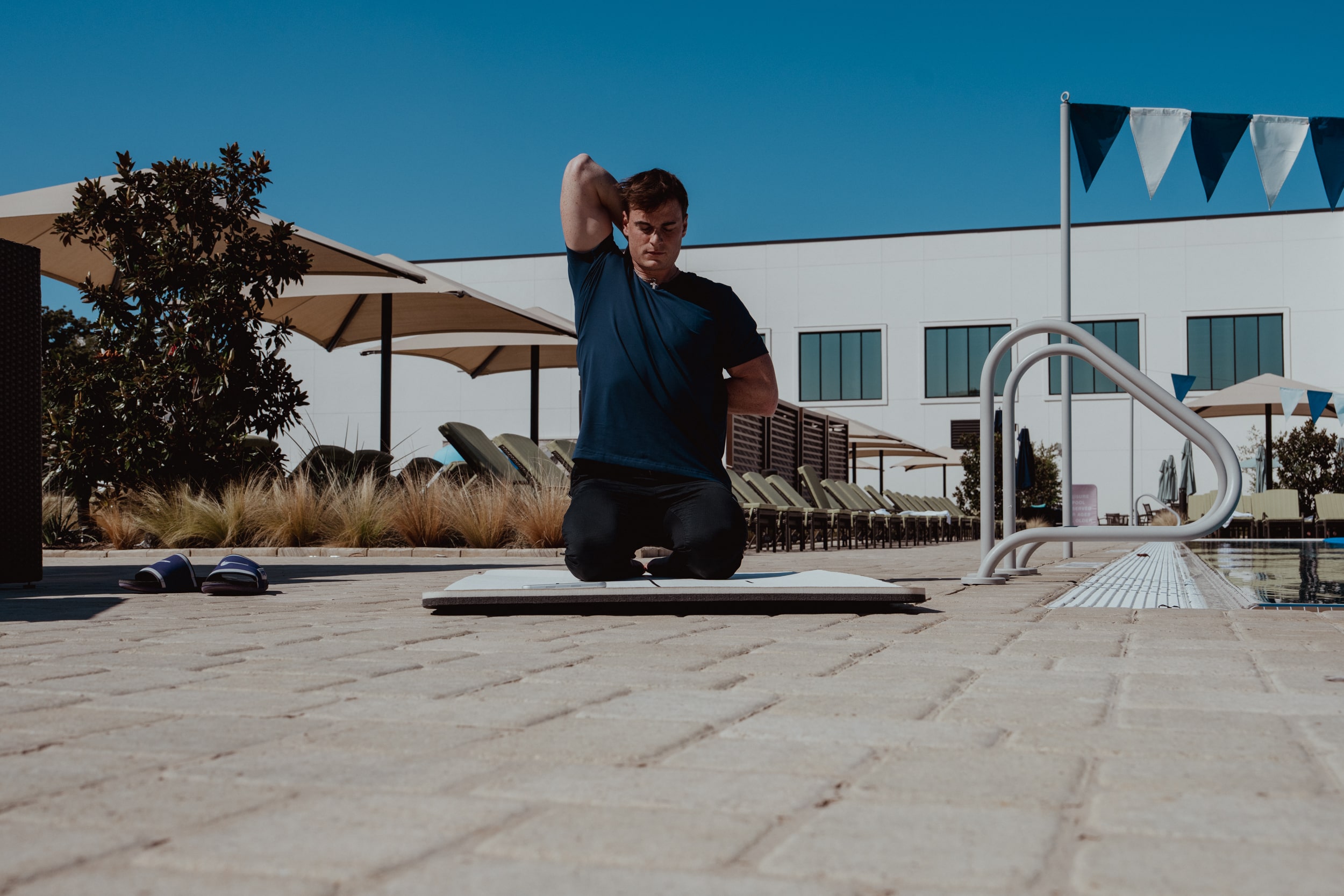
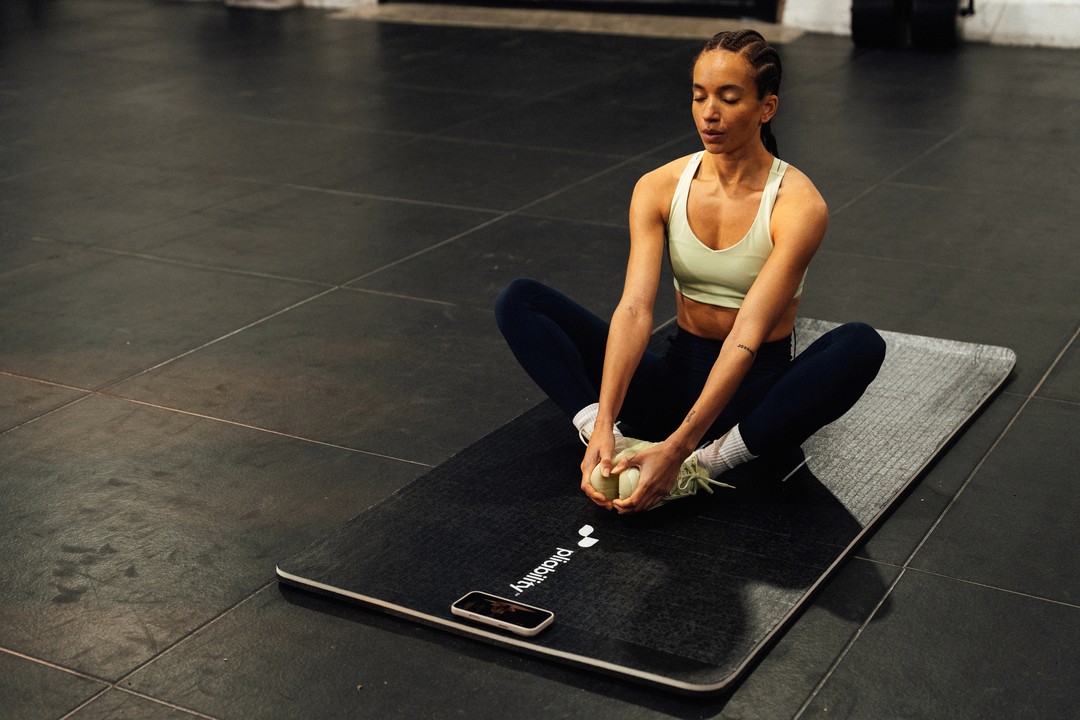
pliability builds the physical half of that equation: run the mobility assessment to find where you're holding tension, then follow Daily Sessions to build the physical readiness that holds up under pressure. When you move freely, your brain stops flagging movement as effortful or risky, creating mental space for execution instead of self-monitoring. Start with 7 days free on iPhone, iPad, Android, or the web.
Related Reading


Move better in 10 minutes a day.
10,000+ five-star reviews.