


LEARN
pliability

After an intense workout, do you find yourself dreading the aftermath? The aches, soreness, and tightness can feel like a cruel punishment for your dedication to improving your performance. What's worse, they can hinder your next workout and overall progress. Thankfully, research shows that hot and cold baths are among the best recovery tools for athletes, helping to ease muscle recovery and reduce feelings of soreness. But which one should you choose? In this article, we'll explore the benefits of each method to help you determine the best choice for your recovery goals.
why do we get muscle soreness after exercise?

Muscle soreness, also known as Delayed Onset Muscle Soreness (DOMS), is the pain we often feel in our muscles after a challenging workout, especially one we are unaccustomed to. DOMS typically kicks in around 12 to 48 hours after exercise and can last up to 72 hours. Anyone can experience it, but it's especially common when returning to exercise after a break or trying a new type of workout. While DOMS can be uncomfortable, it's not a cause for concern; it's a sign that your body is recovering from the stresses of exercise.
We don't entirely understand why DOMS happens, and it's probably a combination of factors, but a widely accepted theory is that microscopic tears appear in your muscle fibers when you exercise. In the hours and days after, your body repairs that damage through inflammation: the area heats up, and your body delivers more nutrient-rich blood to the muscles, which is part of what makes the area feel sore.
sports injury
A sports injury is a much more serious cause of pain after exercise. While some injuries benefit from hot and cold therapy alongside rest, you should still seek medical advice. If your injury goes untreated, it could worsen and take longer to heal.
how ice and heat help muscle recovery
If you get DOMS after exercise, it usually goes away on its own after a couple of days, but applying ice and heat can meaningfully reduce the severity of the soreness in the meantime. That means less unnecessary discomfort and a quicker return to training. Research on hot and cold therapy for sore muscles is still developing and results vary study to study, but the overall pattern favors hot and cold treatment over no treatment at all for easing the intensity of soreness and speeding the return to normal strength.
should you take a hot or cold bath for muscle recovery

While exercise fads come in and out of fashion with alarming regularity, simple things stick around for centuries, including the sauna and cold-plunge culture that traces back to the Nordics. It may look unhinged from the outside, but it has real health and fitness benefits.
If you're strapped for time, or don't have the luxury of a sauna on tap, is there one temperature extreme that helps muscles more efficiently than the other? The answer is nuanced. Before considering an ice bath or sauna, make sure you have the basics sorted in your warm-ups and cool-downs, since that's what does the most to prevent injury and support progress. With that in place, here's how cold and heat therapy can add to your recovery.
cold therapy: the best method for muscle recovery after high-intensity cardio workouts
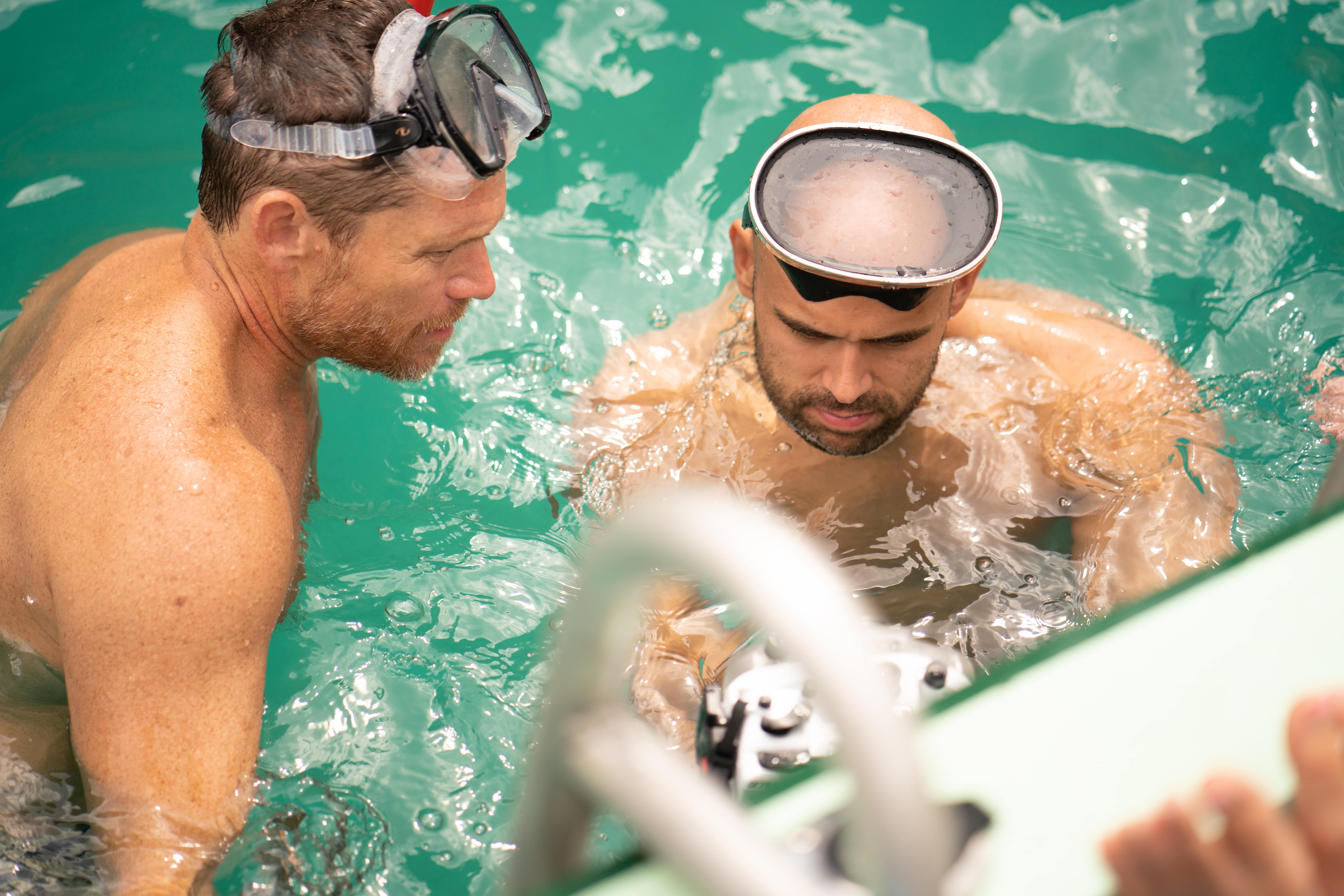
There's a lot to be said for a bag of frozen peas. In the same way that it can help a rolled ankle, cold therapy is a handy way to alleviate extreme pain and microtears caused by working out. It plays a role in reducing inflammation and swelling in muscles and joints: the numbing effect provides fairly quick relief from soreness, and because it constricts blood vessels, cold therapy can help flush waste products such as lactic acid from the muscles. Jumping into an ice bath is particularly good after a cardio session, when reducing inflammation and soreness is the priority, and it has also been linked to a lift in mood beyond the physical recovery benefit.
Safe Cold Therapy Practices
Submerge your body in water at 10 to 15 degrees Celsius (50 to 59 Fahrenheit). Be aware that cold water can shock you, so take a more gradual approach if you have an underlying heart issue or a respiratory condition such as asthma, and don't sit in the ice for longer than 10 minutes.
when should you have an ice bath?
The timing of when to take an ice bath plays a role in how much recovery benefit you get. Most research suggests ice baths are best taken soon after intense exercise, since immediate cold water immersion helps reduce muscle inflammation and supports recovery. The one exception is muscle-building: ice baths can blunt some of the hypertrophy gains from a workout if done in the four hours immediately after training, so if your main goal is to build muscle, it's better to wait about four hours before an ice bath. If your goal is general performance or recovery, as it is for most people, shortly after exercise is best.
how long should you take an ice bath for?
Some people tolerate the cold better than others, so there's no single rule that fits everyone. A reasonable starting point is a warmer temperature, around 10 to 15 degrees Celsius, for about two minutes, then working colder and longer over a period of weeks as your tolerance builds, rather than jumping straight to the coldest, longest version of the practice.
a simple ice bath protocol: temperature, duration, and timing
Pulling the cold-water guidance together, here is a protocol you can follow:
Temperature: 10 to 15 degrees Celsius (50 to 59 Fahrenheit). Colder is not better; water below 10 degrees Celsius adds risk without adding measurable benefit.
Duration: Around 10 minutes in total is plenty. Beginners can break that into two- to five-minute bouts, and nobody should stay in longer than 30 minutes, which raises the risk of hypothermia.
Timing: Soon after intense cardio, competition, or any hard session where soreness is the concern; wait about four hours after strength training if muscle growth is your priority. Ice baths earn their keep most when you have to perform again within 24 hours, such as tournaments or back-to-back training days.
Getting Into an Ice Bath Safely
The cold shock response peaks in the first 30 seconds of immersion, so get in gradually: let your breathing settle before lowering your chest into the water, and keep your face out of the water at all times. Shivering is normal, but dizziness or numbness is a sign to get out. In rare cases, a rapid drop in skin temperature can trigger gasping, hyperventilation, a spike in blood pressure, or an irregular heartbeat, which is why the gradual approach matters, especially if you have a heart or respiratory condition.
Ice Baths for Strength vs Endurance Training
One more timing nuance: the effect of cold water immersion differs by training type. Used frequently after strength sessions, it can blunt the strength and muscle-size adaptations you are training for, so keep it occasional if those are your goals. After endurance work, the picture is friendlier; some evidence suggests cooling the exercised muscles may support the cellular signaling involved in mitochondrial adaptation, so endurance athletes may get a small extra benefit on top of the recovery effect. A cold shower is a reasonable substitute when you have no tub access; full immersion cools more uniformly and adds gentle compression, but a shower still delivers a portion of the benefit.
heat therapy: the best method for muscle recovery after strength training
Hot therapy relaxes muscles and improves flexibility. It also increases blood flow, since heat dilates blood vessels, and that enhanced blood flow delivers more oxygen and nutrients to the muscles, which can accelerate recovery. Heat therapy can also help reduce muscle stiffness and tension, which makes it a good fit for recovering from strength training and other muscle-building workouts, including easing delayed-onset soreness and supporting glycogen replenishment.
Optimal Heat Therapy Practices
A half-hour stint in the sauna or a long soak in a hot bath is usually enough to feel the benefit by your next workout. Heat is also worth using before you warm up: it's especially useful before cardio and strength training sessions to prepare the muscles, reduce the risk of strains, and make sure they're warm and flexible going in.
hot vs cold: which is better for muscle recovery?
The honest answer is both, which is why contrast therapy, alternating hot and cold, is worth building into your recovery routine. Heat increases blood flow and heart rate while relaxing the muscles, which is a good state to be in right after a workout since it starts the repair cycle. Cold, whether a freezing shower or a full ice bath, constricts blood flow by narrowing the blood vessels and slows the heart rate back down. A hard effort creates micro-tears in the muscles that trigger an inflammatory response, and cold water is thought to limit that reaction by constricting blood vessels, which can reduce the onset of DOMS, making cold the better choice directly after a hard effort. Warm baths promote relaxation and can soothe stiff joints, but they don't offer quite the same degree of muscle-recovery benefit, so if your main goal is reducing soreness and speeding recovery, cold has the edge; if it's just relaxation, heat works well too.
Ultimately, your body is a good indicator of what works for you. If you notice heat provides better relief after a cardio session, or cold helps more after strength training, it's worth adjusting your routine accordingly. Hot therapy tends to work best when used immediately after exercise, and many people find the classic pattern, heat first and then cold, easiest to stick with.
alternating hot and cold therapy

Alternating hot and cold therapy, or contrast therapy, involves alternating between heat and cold to aid muscle recovery. The method stimulates blood flow and relieves pain to accelerate the healing process. The alternating temperatures create a pumping effect that aids recovery by reducing soreness and inflammation.
how does alternating hot and cold therapy work?
Hot and cold therapy can both help relieve muscle soreness, but they work in slightly different ways. Heat therapy relaxes tight muscles and increases blood flow to the area. Cold therapy, on the other hand, reduces inflammation by numbing the soreness and constricting blood vessels.
Alternating between the two methods helps you get the benefits of both treatments to aid recovery.
Sequential Heat and Cold Therapy
First, apply heat to sore muscles. This warms the area, encourages blood to flow to the ache, and helps reduce stiffness. After 10-15 minutes, you could apply cold to the area. This helps to numb the soreness and narrows blood vessels to reduce inflammation in the affected area.
Try alternating between hot and cold therapy for a day or two to reap the benefits of both treatments.
should you use cold or heat before or after exercise?
Hot and cold therapy is mainly intended to treat DOMS, minor injuries, and aches after exercise. Consider applying heat before your next exercise session if you already have sore muscles. This could help loosen tight muscles and encourage blood to flow to the area, similar to a warm-up before exercise (you should still do a proper full-body warm-up before training, too).
On the other hand, using ice before exercise wouldn’t be beneficial. Since applying cold causes your veins to constrict, that would mean less blood gets to your muscles, which is precisely where it’s needed when you’re exercising.
practical recommendations for hot cold therapy
If you’ve never tried using hot and cold therapy for treating muscle soreness or minor injuries, here are some more tips to get the most out of it:
Know the limits: Hot and cold therapy has many benefits, but it also has its limits. If you experience pain more than three days after exercising, that might suggest you have a sports injury. You’ll need to rest and seek medical advice.
Won’t fix serious injuries or syndromes: Similarly, hot cold therapy won’t treat more serious injuries such as sprain, plantar fasciitis, tennis elbow, or similar sports injuries. Depending on the injury, you’ll need to rest, and could also benefit from visiting a physiotherapist or sports instructor for advice on proper form and exercises.
Start slow and low: If you’ve never used hot-cold therapy before, start ‘slow and low’. For example, the first time you use an ice bath, you don’t need to spend a full 20 minutes in there - begin with a shorter session and build up as you get more experience. The same goes for heat treatments - use them in limited areas for less time, until you know what you’re comfortable with.
Although more research into the efficacy of ice and hot baths is needed to fully understand the optimal timing, duration, and temperature, if you think taking the plunge will work and you feel better for trying it, it's a reasonable thing to build into your training plan.
why the research is still mixed
Comparing cold-water immersion with other recovery methods, such as active recovery, warm water immersion, cryotherapy, and massage, is harder than it sounds. Studies differ in how they apply heating or cooling, what kind of exercise came before the intervention, how they measure the effect, and how well they control for the placebo effect, so results vary a lot from one study to the next. Most comparisons favor cold-water immersion over other recovery methods, but not all of them reach a level that would count as strong statistical proof.
That's part of why an individualized approach to recovery makes sense. Most of the evidence for these methods is based on how recovered people report feeling rather than hard, objective measurements, so if cold water makes you feel better after hard training, it's worth using; if heat does more for you, that's a reasonable choice too. Tracking your own stiffness, soreness, and performance over time is the most reliable way to know what's actually working for your body.
improve your flexibility with our mobility app today | get 7 days for free on any platform
Hot and cold therapy works best as part of a broader recovery routine. pliability is a mobility app built for performance-oriented individuals and athletes: pair your ice bath or sauna session with a Daily Session or a Path built around your sport, use Build Your Program to plan your training week, and take the in-app mobility assessment to find where you need the most work. If you're working around pain or an injury, the Rebuild hub is built for that.
Sign up today for 7 days free on iPhone, iPad, Android, or the web to aid recovery, reduce pain, and enhance range of motion.
Related Reading



Move better in 10 minutes a day.
10,000+ five-star reviews.