


LEARN
pliability

If pulling a shirt over your head makes you wince, or you get up off the floor like the tin man, your back is asking for attention. Your spine is built to flex, extend, side bend, and rotate, and when it stiffens up, everything from tying your shoes to swinging a club gets harder. The right back mobility exercises restore that motion. This guide covers what back mobility actually means, 10 exercises grouped by the region of the spine they target, and how to turn them into a daily routine that takes 10 minutes or less.
One note before you start: this article is education, not a diagnosis. Mild stiffness and the dull ache of a long day at a desk respond well to movement. Pain that is sharp, radiates down a leg, comes with numbness or tingling, or wakes you at night is a see-a-clinician situation, not a self-management project.
what back mobility actually means
Back mobility is your spine's ability to move through its full range of motion with control: rounding and arching, bending to each side, and rotating. It is related to flexibility, but not the same thing. Flexibility is how far a muscle can lengthen. Mobility is whether the joint can actually use that range, with the strength and coordination to move through it, not just hang out at the end of it.
That is why back mobility exercises look different from static stretching. Instead of holding one position for a minute, most of them move the spine deliberately through its range: cat-cow flows through flexion and extension, thoracic twists work rotation, and moves like bird-dog train the core to keep the spine stable while the limbs move. You are teaching your back to move well, not just to tolerate a stretch.
why back and spinal mobility matter
Nearly every movement you make routes through your spine. When it moves freely, bending, reaching, lifting, and rotating all feel easier and cost less effort. When segments of it stiffen, the joints above and below pick up the slack: hips and hamstrings strain to cover for a rigid lower back, and the lower back twists more than it should to cover for a stiff mid-back. Those compensations are where a lot of everyday aches begin.
Consistent spinal mobility work pays off in a few specific ways:
Less stiffness and discomfort: Moving the spine through its range brings circulation to the muscles and joints that sitting starves, and eases the tension that builds through a workday.
Lower injury risk: A mobile spine adapts to sudden, unplanned movement, an awkward lift, a slip, a hard change of direction, instead of straining against it.
Better posture and breathing: Mobility work helps maintain the spine's natural curves, which supports taller posture and gives your ribs room to breathe fully.
Better performance: Squats, deadlifts, overhead presses, and rotational sports like golf and tennis all depend on a spine that can hold position and transfer power. Restricted back mobility shows up as leaked force and compensated form.
10 back mobility exercises to do daily
These 10 exercises need no equipment and take about 10 minutes as a full circuit. They are grouped by the region they target, starting with gentle full-spine moves that double as a warm-up, so work through them in order the first few times. Move slowly, breathe deeply, and stretch to the point of tension, never into pain.
full-spine warm-ups
Start every session with these two. They wake up the whole spine with gentle, low-load movement and prepare it for the deeper positions that follow.
1. Cat-Cow Stretch
The classic spinal warm-up, moving the back through full flexion and extension while reducing tension in the muscles along it.
Start on all fours with hands directly under shoulders and knees under hips.
Cat: Exhale, round your back toward the ceiling, tuck your chin toward your chest, and draw your belly button toward your spine.
Cow: Inhale, arch your back, drop your belly toward the floor, lift your head, and tilt your pelvis up.
Alternate between the two for 8-10 repetitions, letting the movement come from the spine rather than the shoulders or hips.
2. Pelvic Tilts
A small, subtle movement that gently mobilizes the lower back and teaches the core control you will use in every other exercise here.
Lie on your back with knees bent and feet flat on the floor.
Tilt your pelvis up toward the ceiling, pressing your lower back into the floor, then release.
Repeat for 10-15 repetitions, moving slowly and keeping the abdominals engaged throughout.
lower back mobility exercises
The lower back is where most people feel stiffness first, especially after long stretches of sitting. These three lower back mobility exercises restore flexion, extension, and side bending to the lumbar spine. If pain rather than stiffness is your main complaint, our guide to exercises for lower back pain goes deeper on relief and strengthening work.
3. Lumbar Rocks
A gentle self-massage for the lower back that releases tension and is easy enough to do on your worst days.
Lie on your back and bring both knees to your chest.
Gently rock side to side, keeping your head and shoulders relaxed on the floor so the movement massages the lower back.
Continue rocking for 30-60 seconds, slow and controlled.
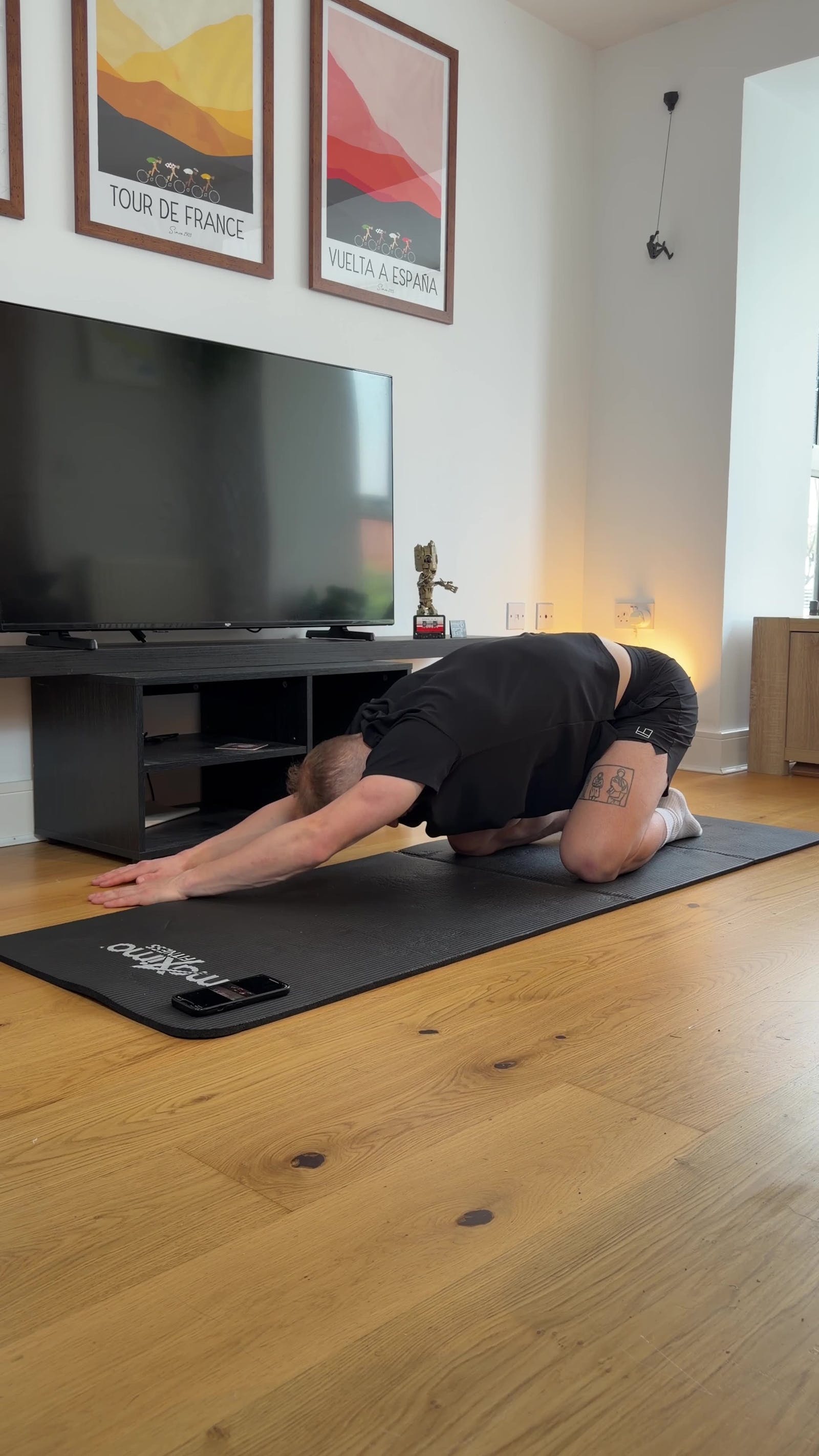
4. Child's Pose with Side Reach
A restorative hold that lengthens the lower back, lats, and obliques, with the side reach adding a lateral stretch most routines skip.
Kneel and sit back on your heels.
Extend your arms forward on the floor and lower your chest toward your thighs.
Walk your hands to the left and hold for 20-30 seconds, breathing into the side of your ribs, then walk them to the right and hold.
5. Cobra Pose with Dynamic Movement
Spinal extension is the motion sitting erases. This dynamic version of cobra restores it while opening the chest.
Lie face down with hands under your shoulders and elbows close to your body.
Press into your hands to lift your chest off the ground, arching the back.
Add gentle side-to-side movement by looking over one shoulder, then the other.
Keep your core engaged and stop short of any pinching in the lower back; height is not the goal.
upper back and thoracic mobility exercises
The thoracic spine, the twelve vertebrae behind your rib cage, is built to rotate, and when it stiffens the lower back and shoulders compensate. These two moves target it directly. For a full progression, see our guide to thoracic mobility exercises.
6. Thread the Needle
A simple rotation stretch that reaches the mid-back and releases tension through the upper back, shoulders, and neck.
Start on all fours with hands under shoulders and knees under hips.
Slide your right arm underneath your body, reaching across to the left, and lower your right shoulder and ear to the floor.
Hold for 20-30 seconds, then switch sides.
Keep your hips stacked and still so the rotation comes from the upper back, not the pelvis.
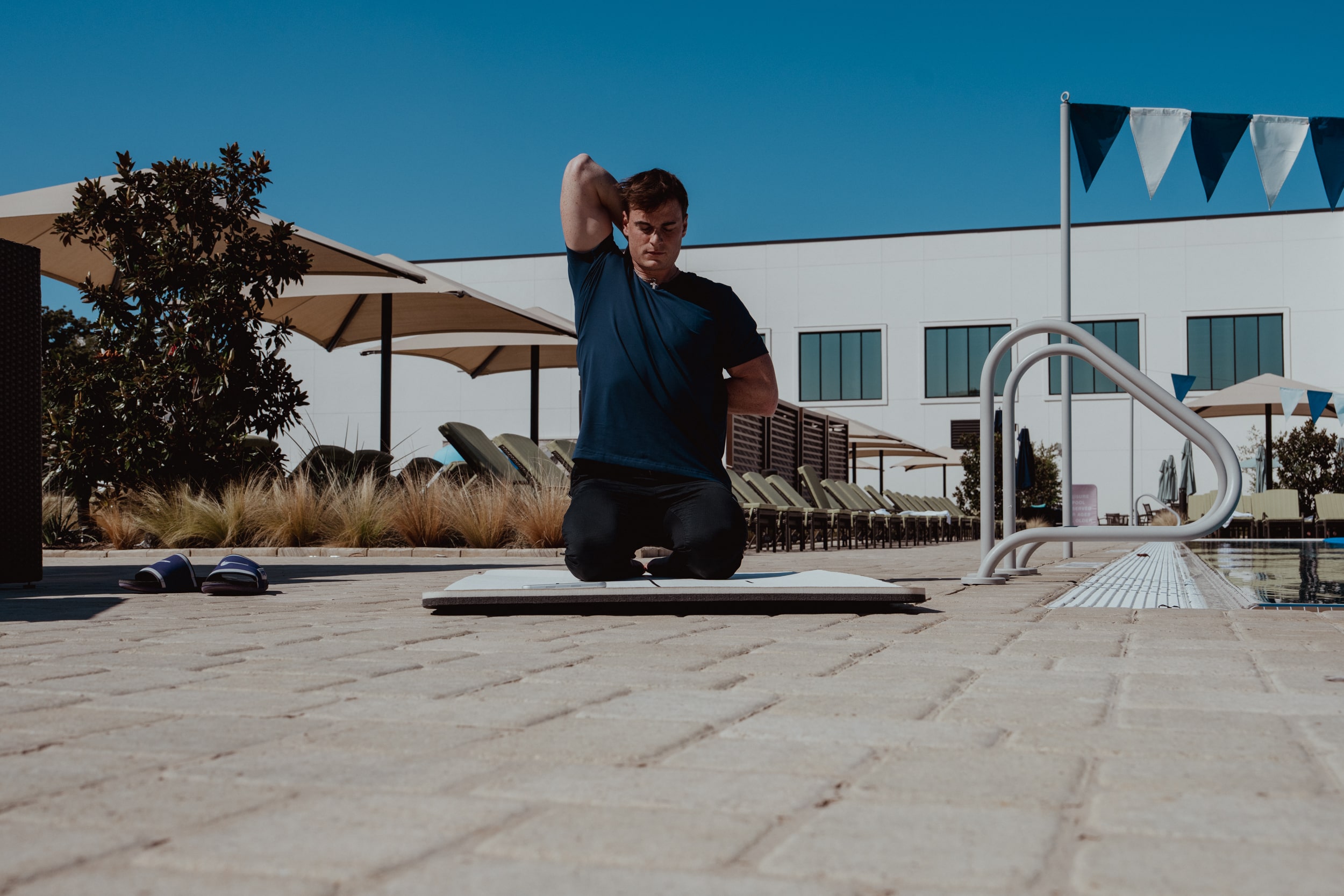
7. Kneeling Thoracic Twists
An active rotation drill that builds usable range in the mid-back, especially valuable if you lift overhead or play a rotational sport.
Start in a kneeling position with your hands behind your head.
Rotate your upper body to the right while keeping your hips stable, then rotate to the left.
Perform 10-12 repetitions per side, bracing your core so the hips do not swing with you.
rotation, hips, and core stability
Your back does not work alone. Tight hips pull on the lower back, and a weak core leaves the spine unsupported. These last three moves tie the whole system together.
8. Seated Spinal Twist
A deeper rotation stretch that reaches the lower back and glutes at the same time.
Sit with your legs extended. Bend your right knee and cross it over your left leg, placing the right foot flat on the floor.
Twist your upper body to the right, placing your left elbow on the outside of the right knee and your right hand on the floor behind you.
Lengthen your spine tall before you twist, hold for 20-30 seconds, then switch sides.
9. Hip Flexor Stretch with Spinal Twist
Tight hip flexors quietly drag the pelvis forward and load the lower back. This stretch opens them and rotates the spine in one move.
Start in a lunge with your right foot forward and left knee on the ground.
Place your left hand on the floor beside your right foot, twist your upper body to the right, and reach your right arm toward the ceiling.
Keep the front knee over the ankle, hold for 20-30 seconds, then switch sides.
10. Bird-Dog
The finisher: a core stability drill that trains your spine to hold neutral while your arms and legs move, which is exactly what daily life asks of it.
Begin on all fours, hands under shoulders and knees under hips.
Extend your right arm forward and left leg back while keeping your spine neutral; think about drawing your belly button toward your spine.
Hold for a few seconds, return to the start, and switch sides.
Perform 10 repetitions per side, slow enough that nothing sags or arches.
how to build a daily back mobility routine
The exercises only work if they happen, and the difference between a mobile back and a stiff one is rarely the exercise selection. It is consistency. A back mobility routine sticks when it is anchored to a time you already own:
Morning: 5-10 minutes after waking loosens overnight stiffness and sets up the day. Cat-cow, pelvic tilts, and lumbar rocks are a solid wake-up trio.
Around training: Use the active moves (cat-cow, kneeling thoracic twists, bird-dog) before a workout to prep the spine and core, and the longer holds (child's pose, seated spinal twist) afterward to wind down.
During the workday: Two or three minutes of movement every couple of hours does more for a desk-bound back than one heroic session a week. Thread the needle and child's pose need nothing but floor space.
Evening: Gentle moves like lumbar rocks and child's pose with side reach release the day's tension and pair well with slow breathing before bed.
Start with two or three exercises done well rather than all ten done in a rush. As the movements get comfortable, add exercises, add repetitions, or slow everything down further. Progress in mobility looks like ranges that come easier week over week, not soreness.
common mistakes that keep your back stiff
Most back mobility routines fail for one of a few fixable reasons:
Rushing: Speed turns mobility work into fidgeting. Move slowly, sync each rep with a deep breath, and let the exhale take you deeper.
Diving into deep stretches cold: Give the spine a few minutes of gentle movement, the warm-up pair above or an easy walk, before the deeper twists and extensions.
Pushing through pain: Work to the point of tension, not pain. Sharp or radiating pain is a signal to back off, and if it keeps showing up, to get assessed rather than stretch harder.
Letting the core sleep: Without core engagement, moves like cobra and bird-dog turn into lower-back hyperextension. Brace lightly, as if zipping up, so the spine stays supported.
Practicing sporadically: Mobility responds to frequency. Ten minutes daily beats an hour on Sunday, every time.
keep your back moving with pliability | get 7 days free on any platform
Knowing ten exercises is the easy part. Showing up for them daily is where a back actually changes, and that is what pliability is built for. Daily Sessions deliver a fresh guided mobility routine every day, so the decision of what to do is already made. Paths like Deskbound Reset run multi-week progressions against the sitting that stiffens most backs, Build Your Program shapes the week around your spine specifically, and the Rebuild hub holds corrective, therapy-informed sessions for working back from pain or a long layoff. Take the mobility assessment to see where your back stands, then start with 7 days free on iPhone, iPad, Android, or the web. Your back carries every move you make. Give it ten minutes a day back.
Related Reading







Move better in 10 minutes a day.
10,000+ five-star reviews.