


LEARN
pliability

When you first wake up, do you need a good hour to start functioning? A good morning stretch can help you feel loose and limber before getting out of bed. Stretching your muscles after a night of rest helps alleviate stiffness and prepares your body for movement. Incorporating flexibility exercises into your morning routine can further enhance mobility and reduce tension. Morning stretches can boost your energy levels to help you feel more alert as you start your day. This article examines the benefits of morning stretches and provides a simple routine to wake up feeling refreshed, effortlessly loosen up your body, and stay energized, flexible, and pain-free throughout the day.
is it good to stretch as soon as you wake up?

Muscle stiffness and joint pain can be a drag, especially in the morning. After a night of sleeping, the body can be stiff, especially with conditions like arthritis, and tight from muscle inactivity. A gentle morning stretching routine helps relieve that discomfort as you ease into your day, increasing circulation, improving flexibility, and reducing muscle tension, which sets the tone for the day ahead.
improve blood flow and circulation
The benefits of morning stretching go beyond easing stiffness. Stretching also boosts circulation, increasing blood flow to your muscles and delivering more oxygen and nutrients around your body. Improved circulation reduces muscle soreness and fatigue, so you feel better as you go about your day.
enhance flexibility
Regularly practicing morning stretches can gradually increase your range of motion, improving flexibility. This can benefit daily activities and help prevent injuries caused by sudden movements or strains.
energize the body
A good stretch may energize you as you wake up. By increasing blood flow and loosening your muscles, you may get a natural energy boost, a healthier, more refreshing alternative to a jolt of caffeine.
calm the mind
Taking a few minutes to stretch can give you a moment of calm before the busyness of the day begins. It's a time to focus on your body and breath, reducing stress and anxiety.
set a positive tone for the day
Stretching in the morning can be a form of self-care. By incorporating mindful movement into your morning, you're telling yourself that your well-being matters, encouraging you to make healthier daily choices.
15 movements to include in your morning stretch routine

1. knees-to-chest stretch
The knees-to-chest stretch is a great one to start with. It's one of the more therapeutic morning stretches because of its gentle way of stabilizing the pelvis and lower back, and it also safely stretches the lower back and helps reduce lower back pain. Drawing the knees into the chest encourages blood flow to the vital organs and can help stimulate digestion. This is also a great stretch for anyone naturally inclined to want to lie down as long as possible each morning, since the first several movements here can all be done right in bed.
How to do it:
Lie on your back, and gently draw your knees to your chest. Hold for 15-30 seconds.
Repeat 2-3 times.
Benefits
Reduces lower-back pain
Encourages blood flow to vital organs
Aids digestion
Modifications: For a deeper stretch, gently rock side to side to target the lower back.
2. supine twist stretch
When you're short on time, it helps to do movements that target multiple parts of the body at once. The supine twist hits your back, hips, and glutes in one movement, and it's also a lovely stretch to help open the chest, restore the spine's natural range of motion, and lengthen the waist. Twists like this one help massage the organs and strengthen the abdominal muscles.
How to do it:
Lie on your back and turn your pelvis so one leg falls over the other. Turn your head in the same direction as your top leg. Repeat on the opposite side.
Benefits
Stretches back, hips, glutes, and chest
It may reduce tension and pain
Stimulates digestion
Modifications: Hold the top leg with your hand for a deeper stretch.
3. supine butterfly stretch
This one feels very open, which makes it a nice way to start the day. It helps create more space in the groin, knees, and hips, and many people find it relieves fatigue and increases overall energy levels.
How to do it:
Lie on your back, and draw your feet up toward your pelvic area.
Bring the soles of your feet together, allowing your legs to fall open with your knees going out to each side.
Hold 15-30 seconds, and then release.
Benefits
Opens the hips and groin
It may relieve fatigue and increase energy.
Modifications: To deepen the stretch, reach your arms overhead and lengthen your spine.
4. glute bridge
If you sit at your desk most of the day, the glute bridge stretch should become your new best friend. It opens up the hips, stretches the hip flexors, and may also help strengthen the glutes and hamstrings.
How to do it:
Lie on your back with your knees bent and feet hip-width apart with the soles flat on the floor.
Straighten your arms, palms down, along your torso toward your feet.
Lift your hips by pressing through your feet and squeezing your glutes.
Take a few deep breaths, then slowly lower your hips back to the starting position.
Benefits
Opens the hips
Stretches the hip flexors
Strengthens glutes and hamstrings
Modifications: To make this stretch easier, reduce the range of motion and lift your hips only a few inches.
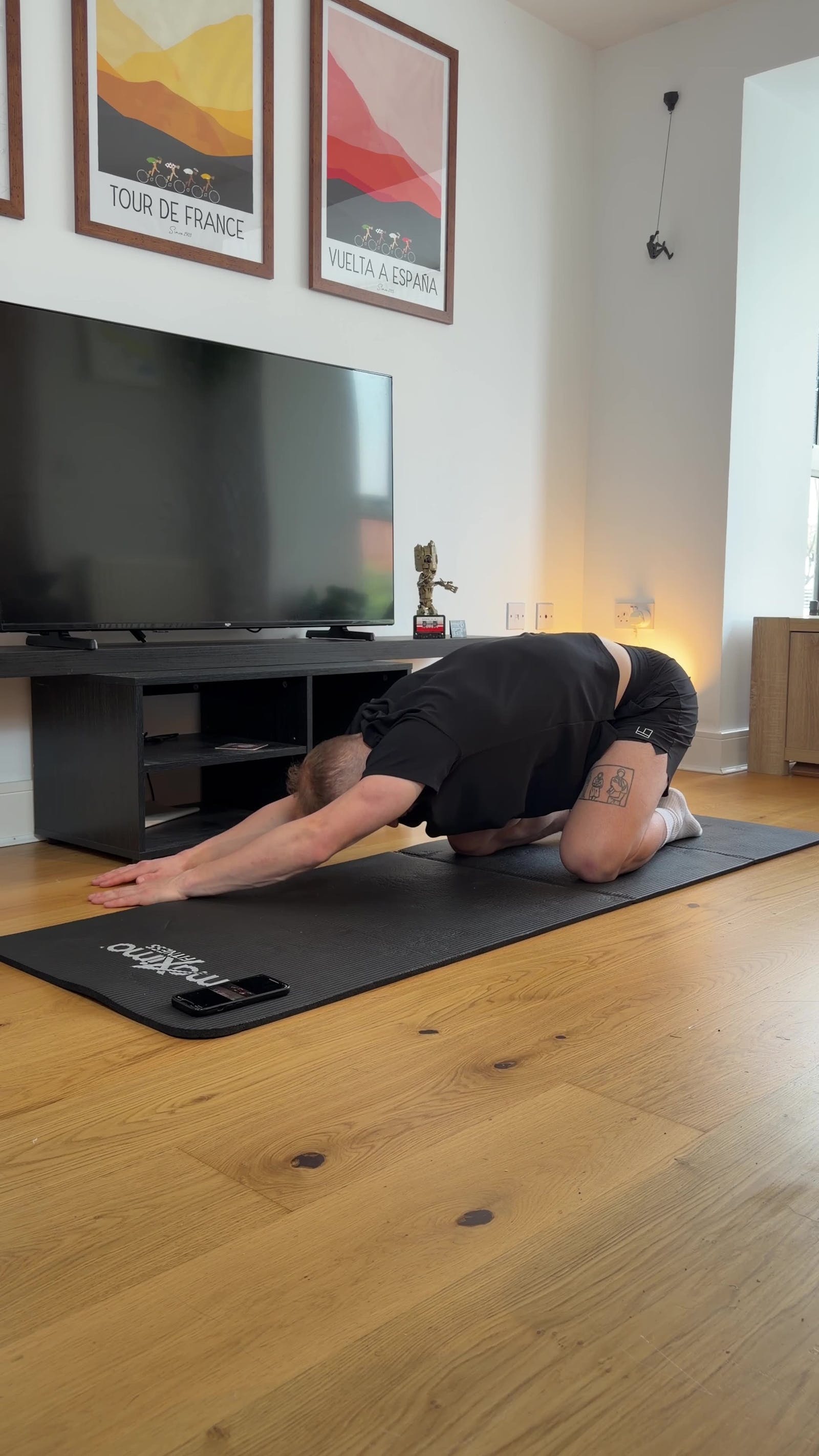
5. child's pose
This yoga staple is a great way to elongate the spine and stretch the shoulders, back, and chest.
How to do it:
Kneel with your knees hip-width apart and your feet coming together behind you.
Exhale while lowering your torso to rest on your thighs as you sit your butt back toward your feet.
Straighten your arms past your head and reach forward, palms down, as far as you can, concentrating on extending your spine.
Benefits
Stretches the spine, hips, shoulders, and chest
Calms the mind.
Modifications: Place a folded blanket under your knees to ease any discomfort.
6. neck stretch
A simple neck stretch helps release any tension that built up while sleeping, since we all find funky sleeping positions sometimes. Be gentle, since most of us are usually quite stiff in the morning, and you don't want to cause injury.
How to do it:
Slowly and gently bring your left ear down toward your left shoulder.
Use your left hand to gently pull the right side of your head toward your left shoulder to bring the left ear and shoulder closer together.
Hold for 15 seconds, breathing deeply and slowly.
Repeat on the other side, using your right arm.
Benefits
Releases tension in the neck.
Modifications: Hold the stretch with your right hand for a deeper stretch.
7. cat-cow
The cat-cow is another excellent stretch for the spine, hips, neck, and core musculature. It gets its name from dynamically alternating between two postures, each reminiscent of one of the animals, and it feels great, which makes it an easy sell for almost anyone.
How to do it:
Kneel on all fours so your hands are on the ground under your shoulders and your knees under your hips.
Start with a flat back and neutral spine.
Engage your abdominals as you inhale deeply.
Exhale while drawing your navel toward your spine and rounding your spine up toward the ceiling.
Bring your chin gently to your chest.
Inhale while arching your back and lifting your head and tailbone toward the ceiling.
Repeat up to 10 times.
Benefits
Stretches and mobilizes the spine.
It may relieve tension and pain.
Modifications: To make this stretch easier, eliminate the dynamic movement and hold the cat and cow poses for a few deep breaths each.
8. seated oblique stretch
This stretch elongates your spine and targets your rib cage and obliques.
How to do it:
Sit cross-legged.
Lace your fingers together (with your palms facing upward), and raise your arms above your head to elongate your spine.
Slowly lean to one side and hold for a few breaths.
Repeat, leaning to the other side.
Benefits
Stretches the spine, obliques, and rib cage.
Modifications: To make this stretch easier, simply perform the movement with your legs extended in front of you.
9. side quad stretch
You use your quads all day, so stretching them in the morning can be especially helpful. The quad is typically a muscle people stretch while standing, but pulling it while lying down is just as effective.
How to do it:
Lie on one side, with your bottom arm straight underneath your head.
Bend your top leg, but keep your bottom leg straight and align your knees.
Activate your glutes as you gently pull your top foot closer to your butt using your top arm.
Your knees should stay together.
Hold for at least 15 seconds, release, then roll over to switch sides.
Benefits
Stretches the quads.
Modifications: To make this stretch easier, perform it while sitting.
10. mountain pose (tadasana)
This yoga pose is a great way to get grounded in the morning and stand tall with ideal posture. You'll open your chest, stretch your hamstrings, and elongate your spine.
How to do it:
Stand with the bases of your big toes together and your heels slightly apart.
Rock onto your heels to lift your toes and the balls of your feet.
Fully spread and fan out your toes as they are elevated, then lay them comfortably on the floor. Make sure your weight is well-balanced between your two feet.
Contract your quads to lift your kneecaps and allow your inner thighs to rotate slightly inward.
Contract your pelvic floor muscles and abdominals so your body is nice and tall.
Take a deep breath, broadening your collarbones and drawing your shoulder blades back.
Relax your face, and imagine the crown of your head reaching up high to the sky as you elongate your spine.
Benefits
Improves posture
Stretches the spine and hamstrings
Opens the chest
Modifications: Perform this stretch near a wall for support if needed.
11. forward fold stretch
What better way to end a morning stretch sequence than with a classic forward fold? It doubles as a place of rest and reflection, which makes it perfect for setting your daily intentions, and it's a great, easy way to stretch your hamstrings and release your lower back.
How to do it:
Stand with your knees slightly bent and your feet hip-width apart.
Hinge at your hips so your upper body hangs over your legs.
Place your hands where they comfortably land (floor, legs, or ankles).
Hold while taking deep breaths, gently swaying back and forth from one side to the other, and nodding your head "yes" and shaking your head "no."
To return to standing, draw your navel toward your spine and slowly roll up one vertebra at a time.
Benefits
Stretches hamstrings
Relieves tension in the lower back
Calms the mind
Modifications: To make this stretch easier, use a yoga block under your hands for support.
12. lumbar flexion stretch
To gently stretch your lower back, perform the seated lumbar flexion exercise. This is a good stretch if you have spinal stenosis.
How to do it:
Sit on the edge of your bed with your feet on the floor.
Bend over, reaching your hands toward your feet.
Round your back.
Hold for a count of 10.
Repeat 5 more times.
Be careful with this stretch if you have a bulging or herniated disc in your spine, since it may place increased stress on the disc and cause pain. If that happens, stop exercising and check in with your healthcare provider immediately.
Benefits
Gently stretches the low back.
Modifications: Avoid this stretch if you have a herniated disc or bulging disc in your lower back.
13. spinal twist
This exercise stretches your neck, shoulders, back, chest, and glutes. It can be done in bed or while on the floor.
How to do it:
Lie on your back and bend your knees.
Stretch your arms straight to the side so your body makes a T shape.
Bring your knees together and raise them above the bed.
Lower your knees towards one side of your body. Ideally, they should rest on the bed or floor.
Turn your head to the opposite side. Hold for 5 breaths.
Slowly return to the starting position.
Repeat on the opposite side.
Don't do this stretch if you have an injury in your knees, hips, or back.
Benefits
Stretches the spine, neck, and shoulders. It may relieve tension and pain.
Modifications: To make this stretch easier, reduce the range of motion and only lower your knees a few inches to the side.
14. runner's lunge
How to do it:
Start in a push-up position with your legs together, arms straight, hands below your shoulders, and body straight from head to heels.
Keeping your core engaged and back flat, step your right foot to a point just outside of your right hand.
Hold for 15 to 30 seconds, then repeat with your other leg.
Benefits
It opens up the hips
Stretches the hip flexors.
Modifications: Lower your back knee to the ground to make this stretch easier.
15. prone press-up
Start your morning by protecting your back with the prone press-up exercise. This McKenzie exercise helps keep your spine in a good position to start your day.
How to do it:
Lie on your stomach with your hands in a push-up position.
Relax your back and hips, and slowly push your upper body up, allowing your back to arch gently.
Hold this position for 2 seconds, and then release.
Repeat 10 times.
This exercise is not safe or recommended for people who have spinal stenosis. If you have back problems, check with your doctor before doing any back stretches.
Benefits
Gently stretch the lower back
It may reduce pain and discomfort.
Modifications: Avoid this exercise if you have spinal stenosis.
how to create an effective at-home morning stretch routine

Designing a personalized morning stretch routine helps you focus on your unique goals and needs. Before diving into your morning stretch routine, getting organized is helpful. Map out your approach by considering your time, particular areas you want to focus on, and the stretches you wish to include.
1. decide how much time you have
If you only have a couple of minutes, don't sweat it. Five to 15 minutes is a wonderful place to start if you can spare more time. Start small and slowly build up from there while being realistic about what you can fit into your morning routine: some is always better than none when it comes to stretching and exercising.
2. pinpoint which areas need attention
If you have injuries or chronic conditions like osteoarthritis, contact your physician or a licensed physical therapist to help prescribe the appropriate stretches. Also, take a moment to scan your body for any spots with tension or slight discomfort. Maybe you slept in a way that left your shoulders clenched up near your ears: take a minute to move your neck and drop your shoulders as you take a few deep breaths.
3. try to pick compound movements that target major muscle groups
Compound movements are worth prioritizing because they recruit several muscles in one movement rather than requiring multiple isolated ones.
how to sequence the best stretching routine
Once you know how much time you have and which areas need attention, the order of your stretches is what turns a handful of movements into a routine that works.
dynamic first, static last
Dynamic stretches, such as leg swings, arm circles, walking lunges, and spinal rotations, move your joints through their full range without long holds. They raise body temperature, increase blood flow, and help your body transition from rest to activity, which makes them the right opener for a morning routine or a pre-workout warm-up. Static stretches, where you ease into a position and hold it for around 30 seconds, work best at the end, when your muscles are warm and ready to relax and lengthen. Holding long static stretches before intense activity can temporarily make it harder for a muscle to contract, so save the deep holds for after you've moved.
active vs. passive stretching
Within your static work, you can stretch actively or passively. Active stretching uses the strength of the opposing muscle to create the stretch, like lying on your back and lifting a straight leg as high as it will go. Passive stretching uses a prop, a partner, or your own body weight to deepen the position, like using your arms to pull a knee into your chest. Passive stretches let you relax and sink a little deeper with each exhale, but never force a position to the point of pain.
a simple baseline to follow
Perform each stretch for two to four repetitions of about 30 seconds, moving from dynamic openers to static holds. Ten to 15 minutes covers a full-body sequence. The same framework applies whether you're building a stretching routine for men or women; the principles don't change, though men often start tighter through the hamstrings and hips and may need to spend extra time there.
want a straighter back? stretch the front of your body
If your goal is to make your back straighter, the fix usually starts on the front of your body. Hours of sitting tighten the chest and hip flexors, which pull your shoulders forward and tilt your pelvis, leaving your back rounded. Pair chest-opening movements and hip flexor stretches like the runner's lunge with spine mobilizers like cat-cow, then practice standing tall in mountain pose to reinforce the new position. Done consistently, this combination helps you stand straighter without forcing your posture.
what to be mindful of during morning stretches
While morning stretches are generally safe and beneficial, approaching them with mindfulness can help you get the most out of your practice and avoid injury. By keeping these points in mind, you can ensure that your morning stretching routine is a safe and enjoyable part of your day.
start slowly
Your body has just rested for hours, so starting with gentle movements is crucial. Rushing into more intense stretches can be counterproductive and may lead to strains. Begin with slow, easy stretches and gradually increase the intensity as your body warms up.
listen to your body
Pay attention to how your body feels during each stretch. Stretching should never cause pain. If you feel any discomfort, ease up. You're not aiming to push your body into painful positions; you're aiming to wake up your muscles and joints gently.
practice consistency
The actual benefits of stretching are seen over time and with regular practice. Even a few minutes of stretching each morning can improve flexibility, mobility, and overall well-being. Try to make it a consistent part of your morning routine.
enhance flexibility over time
You'll likely notice you can stretch further with less effort with consistent practice. Increasing your flexibility is a gradual process, so be patient with yourself.
practice balance
Ensure your routine includes stretches for all the major muscle groups. This can help maintain balanced flexibility and prevent overworking any particular area.
focus on mindful breathing
Incorporate mindful breathing into your stretching routine. Breath is a powerful tool to help relieve muscle tension, reduce pain, and allow you to safely move deeper into a stretch. Diaphragmatic breathing, sometimes called belly breathing, is an approachable practice for anyone and a great way to learn how to breathe more fully and consciously. As you stretch, focus on expanding the belly on your inhale and gently contracting it on your exhale.
be honest with yourself
Being realistic about how much time you can commit to stretching each day matters. If you only have 10 or 15 minutes to spare, don't try to cram in enough stretches to fill 30 minutes, since you'll end up rushing through the routine and lose most of the benefit. It's better to do a few stretches well and consistently than rush through several.
don't skip the warm-up
You might think that stretching is a warm-up in itself, but it helps to wake up the body with a warm-up before you start your routine. Some gentle movement or light activity before stretching warms the body up, which makes the muscles more pliable and reduces the risk of injury. A heating pad or even a warm shower or bath before starting your morning stretch routine can also help. This could be as simple as walking around your home, making your bed, or practicing deep breathing before starting your stretches.
enjoy the process
Morning stretching is a time to focus on yourself and your well-being, so approach it positively and let it be a peaceful, energizing start to your day.
how often should you engage in a morning stretch routine?
The frequency of your morning flow practice is up to you. A common recommendation is to begin with an active warm-up, like walking on the treadmill for 10 minutes, followed by stretching at least two or three times a week.
That said, there's no harm in stretching daily. Just consider checking with your doctor if you're pregnant or have a medical condition that might pose an issue, since the right number of times a week to stretch depends on your physical activity level, goals, other health conditions, and personal preference.
should you modify your morning stretch routine over time?
You don't need to switch up your morning stretches that often. Nevertheless, you'll probably want to make some adjustments periodically. For example, different issues, such as injuries or sore spots, could arise, meaning different body parts may require more attention than others.
It also helps to introduce a more challenging stretch into your routine every so often. The body will eventually plateau over time when doing the exact same exercises at the same intensity each day, so holding a stretch for a few extra seconds, reaching a bit further, or adding a couple more reps to a set are all good ways to keep making forward progress.
If your routine starts feeling stale, try swapping in different exercises altogether. Many trainers find that adjusting a client's stretch or exercise routine every four weeks or so keeps it fresh and effective.
build a morning stretch routine that sticks
pliability turns the movements above into guided video sessions built around your morning: Daily Sessions give you a fresh routine every day, Paths run a multi-week progression toward a specific goal, and Build Your Program shapes a plan around your own schedule. Take the mobility assessment to find out exactly what's restricted before you start, and if you're rebuilding a routine after time off, the Rebuild hub has session series built for that. Start with 7 days free on iPhone, iPad, Android, or the web.
Related Reading




Move better in 10 minutes a day.
10,000+ five-star reviews.