


LEARN
pliability

Ballistic training builds explosive power by accelerating a load, or your own body, through the complete range of motion without slowing down at the end, the way a medicine ball throw, a jump squat, or an Olympic lift variation all demand. Traditional lifting trains you to decelerate and control the weight through the top of every rep. Ballistic training removes that phase entirely: you let go, or you land, and your nervous system has to produce force at speeds regular lifting never touches.
Getting there safely still depends on tissue that can handle those forces. Joints and connective tissue need full range of motion and enough resilience to absorb high-velocity loading, and guided mobility work between sessions is what keeps that capacity intact while you train explosively.
what is ballistic training and why it matters for sport

Ballistic training means speeding up a load, or your own body, through the entire range of motion with no deceleration phase. Throw a medicine ball as hard as you can, or explode upward into a jump squat, and the defining feature in both is the absence of any slowing down, which matters when your sport demands rapid application of force rather than a controlled tempo.
Rate of force development, not just maximum strength, decides who transfers weight-room work to the field. Two athletes with an identical squat max can produce very different vertical jumps because one generates force faster: sport movements happen in 0.1 to 0.2 seconds, while maximum strength develops over 0.4 seconds or longer. Power tends to develop best around 30 to 45 percent of your one-rep max, the point where force and velocity converge, which is why bench pressing at top speed still spends roughly half the rep decelerating the bar. Ballistic training removes that constraint by letting you release the load instead of controlling it, and it teaches your nervous system to recruit muscle fibers at maximum speed without the learned deceleration patterns traditional lifting reinforces. Rate of force development is also what separates good athletes from great ones at the same strength level.
ballistic vs. plyometric: understanding dynamic movements

Ballistic and plyometric training both build explosive power, but through different mechanisms, and treating them as interchangeable leads to programming mistakes. Ballistic movements maximize speed through the entire range of motion and typically end in a throw or release: medicine ball throws, jump squats, push press throws. Plyometric movements exploit the stretch-shortening cycle: you load the muscle quickly while it's stretching, then contract immediately, as in depth jumps or bounding.
Ballistic work is concentric force production: your nervous system learns to fire motor units simultaneously without the inhibitory braking that normally slows movement at end range. Plyometric work instead stiffens tendons and shortens the reflex delay between stretch and contraction, storing and releasing elastic energy the way a compressed spring does; this training style has been shown to meaningfully improve agility and smash times among badminton players.
A box jump counts as ballistic because the dip into it is slow enough that elastic contribution stays minimal; a depth jump counts as plyometric because it minimizes ground contact before the muscle fully lengthens. If you need to generate force from a static position, like throwing or jumping from a standstill, train ballistic. If you need better cutting, landing mechanics, or reactive strength, train plyometric. Either way, mobility work that preserves tendon health and range of motion between sessions is what lets you keep expressing force safely.
10 best ballistic training movement patterns for athletes

Ballistic exercises only work when they match your force direction, coordination capacity, and what your sport actually demands. A power clean builds explosive strength through triple extension with a cushioned catch; pogo hops develop the ankle stiffness needed for rapid ground contact. What matters is understanding the adaptation each creates and whether your body can currently produce that force pattern safely.
1. power clean (high force)
Feet shoulder-width apart, bar over your shoelaces. Drive through the floor, then jump explosively once the bar clears your knees and pull yourself under it into a quarter front squat catch. Triple extension through ankle, knee, and hip mirrors the pattern behind sprinting, jumping, and changing direction. Master the front squat and deadlift hinge first; beginners start with hang cleans from mid-thigh to cut the coordination demand. This is a technical lift: dropped elbows or the bar crashing onto your shoulders means the weight has outrun your technique.
2. box jump (high velocity)
Swing your arms back into a quarter squat facing a 30 to 60cm box, then reverse explosively and land softly, heel to toe. Because the box absorbs landing force, this builds vertical power without the eccentric stress of a depth jump, useful for basketball, volleyball, and soccer athletes or anyone returning from lower-body injury. Add height in roughly 4-inch increments as landing form holds, and pair it with broad jumps or depth drops, since the box itself won't build the deceleration strength you need to change direction.
3. hand release push-up (high force)
From a push-up position, push the floor away hard enough that your hands leave the ground, then land with control, core tight. This builds upper-body pushing power for contact sports and anything requiring explosive arm extension. You need a baseline first: if you can't do 15 strict push-ups through a full range of motion, the landing phase will exceed your capacity and strain your shoulders or elbows. Progress from an elevated-hand version toward clap push-ups once strict form is solid.
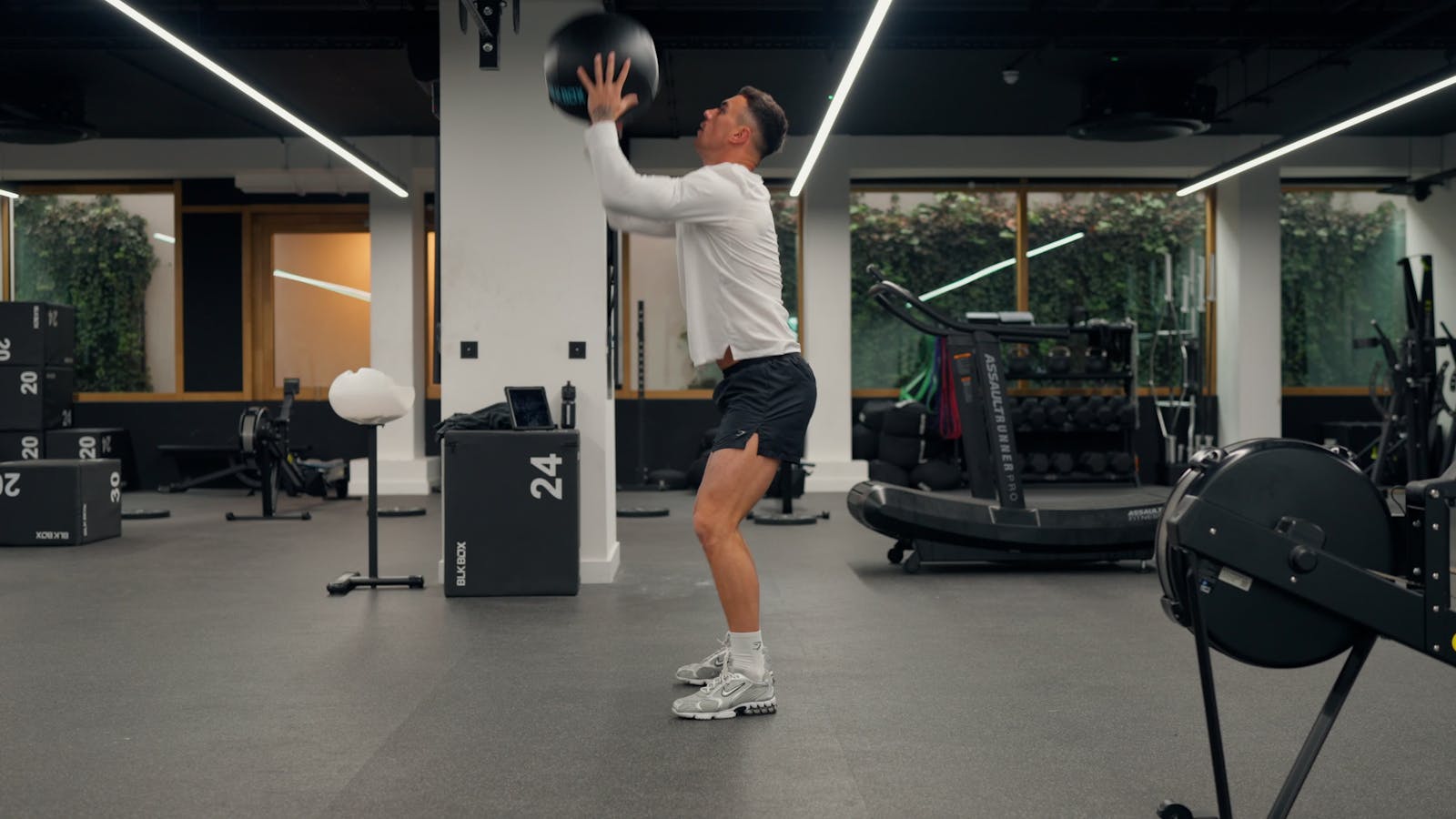
4. ball slam (high velocity)
Raise a slam ball overhead, arms fully extended, then throw it down with maximum force through your lats and core. This trains explosive trunk flexion and shoulder extension for throwing and overhead sports, volleyball spikers and tennis servers included. Start with a 4 to 6kg ball and add load only once your deceleration overhead is controlled and your downward acceleration is aggressive. Address any rotator cuff weakness before loading this pattern; the overhead eccentric phase stresses the shoulder significantly.
5. trap bar jump (high force)
Grip the trap bar, brace, and jump with intent, driving your head toward the ceiling rather than just lifting your feet, then land with bent knees. The neutral grip and centered load make this accessible at any level while building vertical power for repeated jumping or explosive starts. Begin with bodyweight jumps to nail landing mechanics, then add 10 to 20kg, prioritizing jump height over load and progressing in 5 to 10kg increments. Shoulders rising or neck tension means the weight is heavier than your hip drive can handle.
6. broad jump (high velocity)
Swing your arms back, then reverse explosively and jump forward, landing heel to toe. This builds the horizontal force production that vertical-jump-only programs miss, the same pattern athletes use during the first three steps of a sprint. Start with single jumps for maximum distance, then progress to 3 to 5 repeated jumps to challenge the stretch-shortening cycle. Repeated broad jumps also tend to tighten the hip flexors and calves, so pair this work with mobility sessions that keep those areas free.
7. barbell jump squat (high force)
Bar on your traps as in a high-bar back squat, lower into a quarter squat, then drive up as hard as you can and land with bent knees. The load increases demand on the glutes and hamstrings compared to an unloaded jump. Master bodyweight jump squats first, then start at 20 to 30 percent of your back squat max and add 5kg only if jump height holds. Because there's no cushioned catch, a barbell that bounces on your shoulders on landing means you need to reduce the weight immediately.
8. depth jump (high velocity)
Step off a 30 to 50cm box, and the instant you hit the ground, explode upward, minimizing ground contact time. This trains reactive strength and the stretch-shortening cycle that carries over directly to cutting and rebounding. Depth jumps create landing forces that can exceed five times bodyweight, so build eccentric strength through tempo squats and controlled landings first, and don't attempt this exercise until you can land softly from a box jump and control a single-leg squat.
9. snatch (high force)
Same setup as the power clean, but you pull the bar straight into an overhead squat catch in one motion. It trains the entire force-velocity spectrum at once, from the high-force initial pull to the rapid, positional strength of the overhead catch, which is why Olympic weightlifters post some of the highest vertical jumps of any athletes without ever training vertical jumps directly. The tradeoff is technical complexity: most athletes need 6 to 12 months of consistent practice before loading it meaningfully. Learn the overhead squat position and hang snatch first; if your catch deteriorates or you keep missing lifts forward, drop the weight and rebuild the position before adding more.
10. pogo hops (high velocity)
Stand tall with your hands on your hips and bound continuously off the balls of your feet, ankle and calf stiff, minimizing ground contact. This trains the ankle to produce and absorb force the way it does during a sprint or distance stride. It's a poor substitute for athletes who need force through the hips and knees instead: basketball players jumping for a rebound or linemen driving out of a stance need depth jumps or broad jumps. Beginners hold a steady rhythm for 10 to 15 seconds; build toward 20 to 30 seconds with ground contacts under 0.15 seconds before adding a weighted vest or single-leg work.
how do I program plyometrics & ballistics?
Training quality for explosive work drops fast under fatigue, so volume and rest matter as much as exercise selection. Your nervous system needs 48 to 72 hours between hard ballistic or plyometric sessions, which usually means two to three sessions a week, not more. If you're new to this style of training, start with 80 to 100 ground contacts a week (any foot strike during a jump, bound, or hop) and build toward 120 to 140 as you adapt. If your sport already involves repeated explosive actions, basketball, fencing, sprinting, stacking a high-volume session on top adds stress without added benefit.
Progress low-intensity movements like pogo hops or squat jumps before depth jumps or single-leg bounding, and add load only after the bodyweight version holds up under fatigue. According to the International Journal of Sports Physical Therapy, structured plyometric training that respects this progression can produce a 10 to 15 percent improvement in vertical jump height; rushing the intensity instead produces tendonitis, not results. If your landing form breaks down when you're tired, that's the signal to stop, not to add another set.
Match the emphasis to your sport: speed-dominant athletes need short-response work like hurdle hops or ankle pogo drills, power athletes benefit from moderate-intensity ballistic work like medicine ball throws or jump squats, and elasticity-focused training leans on depth jumps and bounding. Recovery is where most people cut corners. Mobility work that restores range of motion and reduces tissue stiffness between sessions is what makes the next explosive session possible at all.
improve mobility, recover faster, and move more explosively
Programming theory and periodization only matter if your joints can access the positions explosive movement requires. Limited hip flexion leaks power, poor ankle dorsiflexion forces compensation, and a stiff thoracic spine caps how explosive you can actually be.
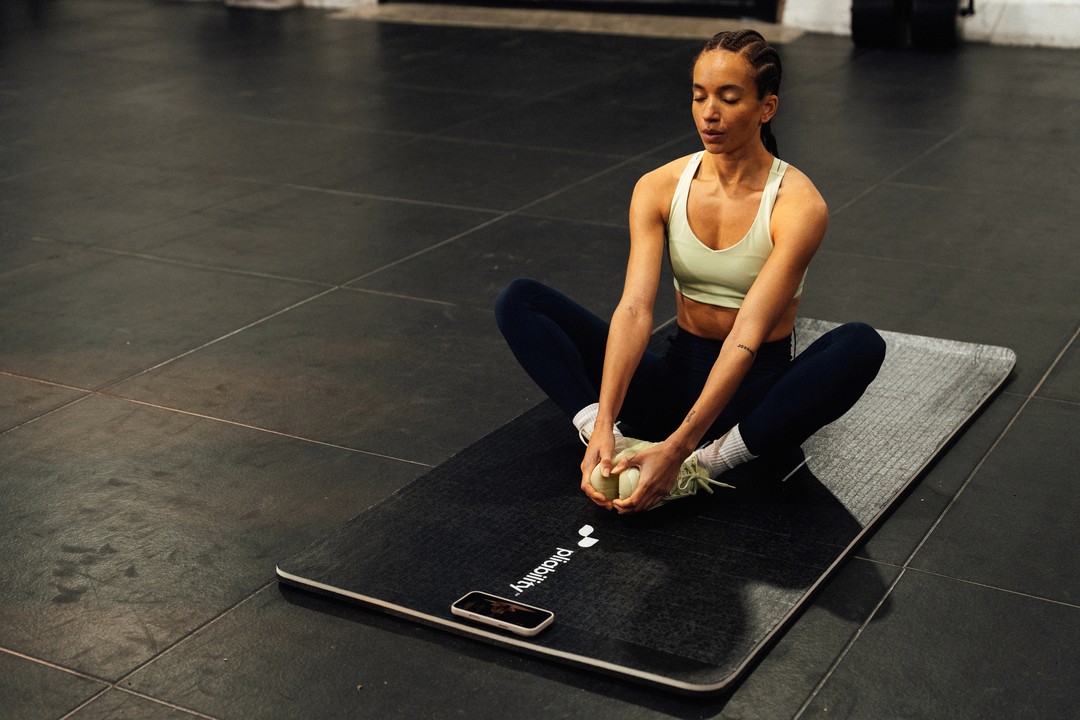
The pliability app's Daily Sessions build guided mobility work into your week so your joints can actually access the positions ballistic training demands. Paths and Build Your Program let you structure that work around your training split, a mobility assessment uses body scanning to flag exactly which restrictions, hip flexion, ankle dorsiflexion, thoracic rotation, are leaking force or inviting injury, and the Rebuild hub keeps recovery-focused sessions in one place if you are coming back from a strain. You can try it with a free 7-day trial on iPhone, iPad, Android, or web, or start at pliability.com.
Related Reading



Move better in 10 minutes a day.
10,000+ five-star reviews.