


LEARN
pliability
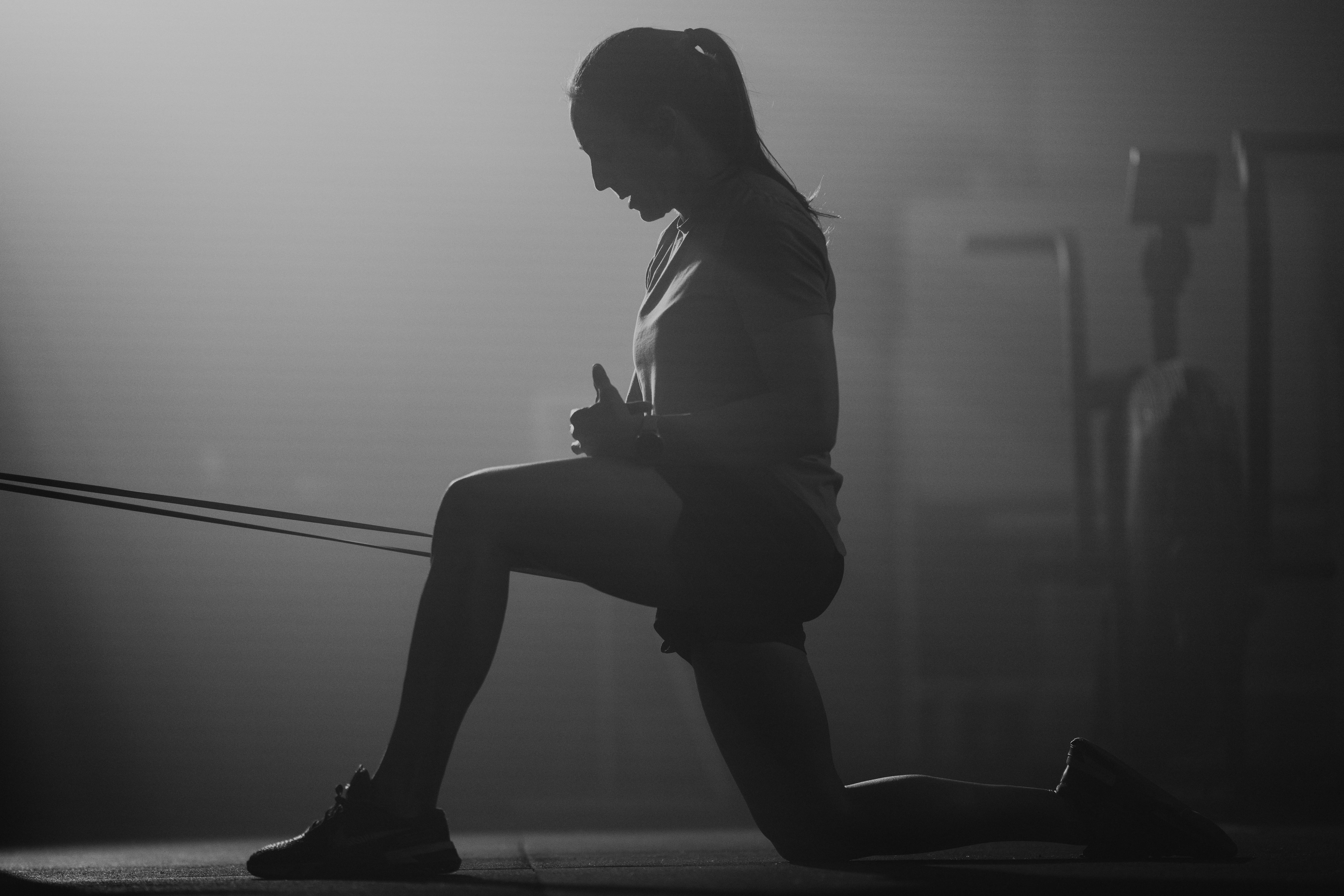
Every throwing athlete knows the frustration of hitting a plateau, where javelin, shot put, or discus performance refuses to budge despite countless hours of practice. Effective plyometric exercises improve overhead throwing power, speed, and coordination while reducing the risk of injury, and building that power takes more than knowing which moves to do: landing mechanics, sequencing, and mobility through the hips and shoulders all have to hold up under speed.
why most throwers lose power (even when they lift heavy)

Throwing depends on rate of force development, how fast you can express strength, not how much strength you have. A heavy squat trains peak force under a slow, grinding load, while a throw asks your body to move maximally in 200 to 300 milliseconds. Without training that speed, gains from explosive strength work stay locked in the weight room instead of showing up in your release.
The missing piece is the stretch-shortening cycle: a muscle lengthens quickly under tension, stores elastic energy in the tendons, then releases it in a reflexive contraction faster than a voluntary one can fire. That stored energy travels up the kinetic chain, foot to hip to trunk to shoulder, like a whip crack. Any link that can't absorb load and transition fast, often from limited hip rotation or thoracic mobility, leaks force as wasted motion instead of ball speed. Plyometrics train that exact transition, rapid eccentric loading followed by an immediate concentric response, overloading your nervous system to switch from brake to accelerator faster. Consistent mobility work through the hips, thoracic spine, and shoulders protects that sequencing so power moves through your body instead of leaking out at a restricted joint.
how plyometrics convert strength into throwing velocity
Most throwers plateau after roughly 8 to 12 weeks of plyometric-only training because tendons can only store and release as much elastic energy as your underlying strength allows. The fix is cyclical: build raw strength, convert it to speed through plyometrics, then build strength again. Structuring that progression deliberately, rather than defaulting to whichever session sounds fun that day, is what separates athletes who keep improving from those stuck at the same velocity. Warming up with lighter elastic work before heavy lifting also primes the same reflexes plyometrics build.
13 best plyometric exercises for throwers (and what each trains)

These exercises convert strength into throwing speed by targeting a specific piece of the throwing motion: storing elastic energy, transferring force through rotation, or releasing power through extension. Early-cycle work builds raw explosive capacity; late-cycle variations add the specificity that matters most before competition.
1. loaded med ball chest pass
Trains leg-to-core-to-shoulder power transfer from a dead stop, mirroring a throw's wind-up. Load one leg in front holding a 6-12 lb medicine ball at chest height, drive off that leg, and press the ball into a wall with full power, switching legs each rep. Use early in a training block or as a warm-up: 3-8 sets of 6-12 reps.
2. explosive pushups
Trains reactive strength and the eccentric control your shoulder needs to decelerate the arm after release. Start belly-down to remove momentum, push hard enough that your hands leave the floor, control the landing, and reset fully before the next rep. Use throughout training, especially phases emphasizing arm health: 3-6 sets of 5-15 reps.
3. explosive landmine press
Builds one-arm pressing power, the true throwing shape, and exposes side-to-side imbalances two-arm lifts hide. Rotate through feet-together, split-stance, and kneeling positions every few weeks to shift the emphasis. Use mid-cycle for sport-specific power: 3-6 sets of 4-8 reps per side.
4. med ball thrusters
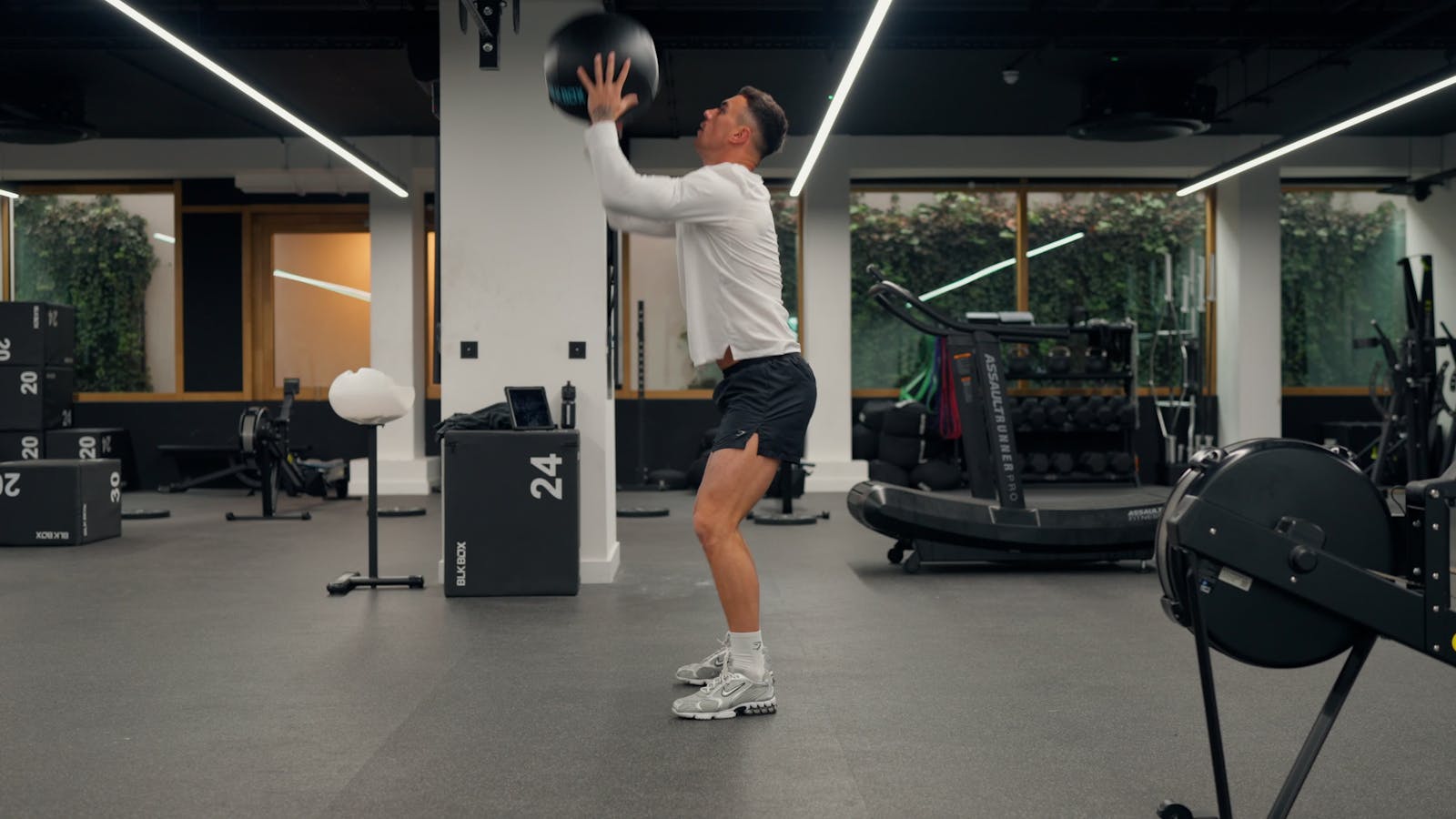
Builds explosive shoulder flexion through the full range a throw travels, starting low and accelerating to overhead. Use an 8-10 lb ball, drive through the legs first, then punch the ball toward the ceiling. Use mid-week when fatigue is lower: 3-5 sets of 5-10 reps.
5. single arm banded chest press
Builds rotational, end-range power right where a throw's force continues past release, since band tension peaks at lockout instead of at the start like free weights. Press straight forward and let the single-arm setup force your core to resist rotation. Use late in a cycle for speed-strength specificity: 3-5 sets of 8-15 reps per side.
6. banded shoulder presses
Builds overhead pressing speed and shoulder-stabilizer endurance under explosive load, protecting the joint capsule as throwing volume rises. Explode straight overhead on a consistent path; if your arm or torso wanders, drop the band tension. Use throughout all phases as a supplement: 3-5 sets of 8-15 reps.
7. shot put
The most specific plyometric on this list, combining hip drive, rotation, and arm extension into one release. Use a 6-10 lb medicine ball, or a resistance band looped underfoot, and start the movement from the hips rather than the arm. Use before competition, tracking distance as your feedback: 3-8 sets of 5 reps per arm.
8. clapping pushup
Demonstrates peak reactive strength by demanding more airtime than a standard explosive pushup. Use the same setup as explosive pushups, generate enough height to clap once, and control the landing. Add this once standard explosive pushups are solid: 3-5 sets of 4-10 reps.
9. close to wide grip pushup
Builds the ability to redirect force and adjust hand position mid-air, useful when mechanics shift under fatigue. Start with hands close to your ribs, push up hard, land with hands outside shoulder width, then alternate back on the next rep. Use mid- to late-cycle to prevent a plateau: 3-5 sets of 6-12 reps.
10. staggered pushup
Trains core anti-rotation under uneven loading, mirroring how one side of your body drives while the other stabilizes during a throw. Stagger one hand forward and one back, explode up, switch hand position mid-air, then reset. Use when building rotational stability alongside pressing power: 3-5 sets of 6-10 reps.
11. medicine ball crossover pushup
Trains single-arm reactive strength and rapid weight shifting under load. Place one hand on a medicine ball and one on the floor, push up hard enough to switch hands in the air, and keep your core tight throughout. Use late in training for a harder coordination challenge: 3-5 sets of 6-10 reps.
12. rotational throw
Isolates hip and torso rotation, the primary power source in throwing, without the complexity of a full throwing motion. Stand perpendicular to a wall, twist away to load tension through your obliques and lats, then snap back and throw as hard as possible. Use throughout all training phases: 3-6 sets of 6-10 reps per side.
13. punch throw
Adds a single-arm release to the rotational throw, syncing hip-shoulder rotation timing the way an actual throw does. Wind up the same way, then release using only your rear hand at the end of the rotation. Use during pre-competition phases for timing refinement: 3-6 sets of 5-8 reps per side.
programming plyometrics for throwers (velocity without injury)
Train plyometrics two or three times a week, never on consecutive days. Your central nervous system needs 48 to 72 hours to recover from true explosive work. Keep total volume to 12-24 reps per session (12 sets of 2, 6 sets of 4, or 5 sets of 5) and stop a set the moment your speed or form drops. Place one to three plyo exercises first in a session, right after your warmup and before heavy lifting, so fatigue never dilutes speed.
Off-season is when you build the raw strength plyometrics later convert into speed: heavy compound lifts paired with moderate plyometric volume. In-season, cut plyometric frequency to one or two sessions a week and drop volume 30-40 percent, leaning on lower-impact options like medicine ball slams to maintain the skill without adding to a nervous system already taxed by competition throwing. Research on periodized plyometric training backs this pattern for lowering injury risk while preserving performance across a season.
Progress in this order: in-place jumps before moving jumps, double-leg before single-leg, paused reps before continuous bounding, no obstacles before boxes or hurdles, and no external load before weighted vests or med balls. Speed of the stretch matters more than depth, you're training a reflex, not a stretch, and you should only advance once every rep in a set looks as sharp as the first. Skip the session entirely if your arm is sore, your legs feel heavy, or you slept poorly, since CNS fatigue trains slow movement, the opposite of the goal. And don't stack a heavy bullpen or high-volume throwing day with high-intensity plyos unless you're early-career and recover fast; your arm and your nervous system draw from the same recovery account.
recover faster and throw harder with structured mobility training
Plyometrics build explosive throwing power, but tight hips, limited thoracic rotation, and poor recovery cause power leaks and mechanical compensation, leading to plateaus. Targeted mobility work is the missing link between plyometric training and actual throwing velocity gains.
pliability closes that gap with guided mobility work built for athletes. Daily Sessions target restrictions in the hips, thoracic spine, and shoulders that limit throwing mechanics, and Paths string sessions into a longer progression as you build toward a competition cycle. Take the mobility assessment to see exactly where you're restricted, then use Build Your Program to build a routine around your throwing schedule. If you're coming back from an arm or shoulder issue, the Rebuild hub has programming built for that. Start with 7 days free on iPhone, Android, or the web.
Related Reading


Move better in 10 minutes a day.
10,000+ five-star reviews.