LEARN
Pliability Team

That split-second difference in vertical leap separates good volleyball players from great ones. Plyometric exercises for volleyball build the explosive lower-body power needed to outjump opponents at the net, whether blocking, spiking, or going for game-winning kills. These movements translate directly to court performance, developing spring-loaded athleticism that makes defenders nervous every time players approach the net.
Training muscles for power represents only part of the equation for volleyball success. Smart mobility work prepares bodies for explosive jumping demands while reducing injury risk through targeted recovery protocols. Combining the right plyometric movements with proper mobility creates a foundation that supports higher jumps and quicker reactions without breaking down knees, ankles, and hips from repetitive impact, which is why many athletes turn to Pliability's mobility app for comprehensive training support.
Table of Contents
Why Most Volleyball Players Plateau in Vertical Jump Power
How Plyometric Training Actually Develops Volleyball Explosiveness
12 Best Plyometric Exercises for Volleyball Players (And Why Each One Works)
Sample Plyometric Training Plan for Volleyball (Weekly Progression System)
Recover and Move Better Between Plyometric Sessions to Maximize Volleyball Jump Performance
Summary
Most volleyball players plateau in vertical jump height within 6-12 months of training because their programs prioritize slow, controlled strength movements over explosive power development. You can squat twice your body weight and still struggle to add inches to your block because strength training builds force capacity, but plyometric training teaches your body to generate that force fast. The neuromuscular pathways used in a slow, controlled squat are entirely different from the rapid, ballistic movement required to explode off the ground in 0.2 seconds during a block attempt.
Well-trained athletes can recapture up to 60% of the energy absorbed during landing and redirect it into the upward phase of their jump, according to research published in the Journal of Applied Physiology. This stretch-shortening cycle only works when ground contact time stays between 0.15 and 0.25 seconds. If your foot stays on the ground longer than that window, you lose most of that stored elastic energy as heat, and your jumps rely almost entirely on muscular force alone, requiring more effort and producing less height.
Rate of force development improves more from plyometric training than from maximum strength gains. A study in Sports Medicine tracked volleyball players over eight weeks and found a 23% improvement in how quickly their motor units recruited muscle fibers and generated maximum tension, even though their one-rep max squat strength remained nearly identical. The players weren't stronger in the traditional sense; they were faster at accessing the strength they already had, which is what separates a 300-pound squatter who gets out-jumped from someone who squats 250 but has spent months doing depth jumps.
Plyometric training fails when volume exceeds recovery capacity, not when exercise selection is wrong. Too much volume reduces tendon stiffness, the very quality that amplifies force production during explosive movements. When you stack high-intensity plyometrics on consecutive days without adequate rest, your central nervous system can't recover, muscle firing rates slow, and vertical jump height actually decreases instead of improving.
Restricted ankle mobility and tight hips create mechanical constraints that prevent the power built during training from translating to the court. Limited dorsiflexion shortens your ground contact phase during depth jumps, forcing your knee forward instead of allowing your Achilles to store energy. Poor hip extension prevents you from fully opening during your approach, reducing the horizontal velocity that converts into vertical power at takeoff.
Pliability's mobility app addresses this by delivering structured sessions that target ankle dorsiflexion to improve ground-contact mechanics, hip flexibility to achieve deeper loading positions, and posterior chain work to keep hamstrings and glutes firing efficiently through repeated explosive efforts.
Why Most Volleyball Players Plateau in Vertical Jump Power

Most volleyball players stop improving in vertical jump height because their training lacks explosive transfer, not because they lack strength. You can squat twice your body weight and still struggle to add inches to your block. The problem isn't your muscles—it's how you're teaching them to work.
🎯 Key Point: Raw strength and explosive power are completely different athletic qualities. Many players focus exclusively on heavy lifting while ignoring the speed component that actually translates to higher jumps.
"Strength without speed is like having a powerful engine with no transmission—the force never makes it to where you actually need it." — Sports Performance Research, 2023
⚠️ Warning: If your training program consists only of slow, heavy movements, you're building strength that won't transfer to the explosive demands of volleyball jumping. Your body needs to learn rapid force production, not just maximum force production.
Why doesn't strength training automatically improve jumping ability?
Most athletes assume that doing more squats or generic leg workouts will automatically help them jump higher. Strength training builds your ability to generate force, but power training teaches your body to generate that force quickly. A slow, controlled squat uses a different neuromuscular pathway than the quick, explosive movement needed to push off the ground in 0.2 seconds during a block attempt.
Why do gym programs fail to improve jumping power?
Gym-based programs are the primary means by which youth athletes train, yet the force-speed relationship is rarely explained in practical terms. Coaches prescribe leg presses and lunges because they're easy to measure and appear effective. Players leave the weight room fatigued, believing they've built the strength needed to jump higher.
Meca Strong found that 70% of volleyball players stop improving their vertical jump within the first 6-12 months of training, often because their programs focus on slow, controlled movements instead of explosive ones. Your body adapts to what you practice: if you train slowly, you'll be strong and slow.
How does slow training hurt game performance?
The consequences show up during competition. Your approach speed at the net stays slow because your legs haven't learned to generate force quickly, and your blocking height remains unchanged despite climbing squat numbers.
Energy transfer from your legs through your core to your arms remains inefficient, leaving power on the floor instead of channeling it upward. Poor landing mechanics, due to underdeveloped reactive strength, increase your injury risk when you land hard on an unprepared ankle or knee.
What actually builds explosive power
Explosive power develops through plyometric training, not strength alone. Depth jumps, box jumps, and broad jumps teach your nervous system to recruit muscle fibers quickly and coordinate the stretch-shortening cycle that converts stored elastic energy into upward force. These movements mirror volleyball's demands: quick ground contact, maximum force output, immediate reaction. Combined with mobility training that keeps your ankles, hips, and thoracic spine moving freely, plyometrics enable your body to express the strength you've built in the weight room.
But here's what nobody mentions when they hand you a plyometric program and tell you to start jumping.
Related Reading
How Plyometric Training Actually Develops Volleyball Explosiveness

Plyometric training develops volleyball explosiveness through the stretch-shortening cycle. When you land from a jump or plant your foot to change direction, your muscles and tendons stretch under load. If you reverse that movement quickly enough (typically within 0.2 seconds or less), the elastic energy stored during the stretch releases during the push-off, amplifying the force your muscles produce. This teaches your nervous system to fire faster and your tendons to act like springs instead of ropes.
🎯 Key Point: The stretch-shortening cycle is the foundation of explosive volleyball movements - from spiking to quick defensive reactions.
"The stretch-shortening cycle can increase force production by up to 20-30% compared to concentric-only muscle contractions." — Sports Science Research
💡 Tip: Focus on rapid transition between the landing and takeoff phases - the 0.2-second window is critical for maximizing elastic energy return and developing true explosiveness.
How does the stretch-shortening cycle work in volleyball
Watch a hitter approach the net. The moment their feet hit the ground before takeoff, their quads, glutes, and calves stretch under downward momentum. That eccentric load stores energy in the muscle-tendon units, particularly the Achilles and patellar tendons. When the transition from landing to jumping is fast enough, the stored elastic energy creates an upward force.
Research published in the Journal of Applied Physiology (2019) found that well-trained athletes can recapture up to 60% of the energy absorbed during landing and redirect it into the pushing phase of the jump. Athletes who are unable to make that transition quickly lose most of that energy to heat, relying entirely on muscle force.
Why does transition speed matter for jump height
How fast you switch from eccentric to concentric movement matters more than most players realize. Ground contact time during a volleyball approach jump averages between 0.15 and 0.25 seconds for elite players. Foot contact longer than that eliminates the stretch-shortening cycle benefits: you're jumping from a static position, requiring more effort for less height.
Plyometric drills train your body to minimize ground contact time while maximizing force output during that brief window.
How does your nervous system control muscle firing speed?
Your nervous system decides when your muscles fire. Plyometric training improves the rate of force development: how quickly your motor units recruit muscle fibers and generate maximum tension. A Sports Medicine study (2020) tracked volleyball players over eight weeks of plyometric training and found a 23% improvement in rate of force development, though their one-rep max squat strength remained nearly unchanged. They weren't stronger in the traditional sense. They were faster at accessing the strength they already possessed.
Why do traditional strength programs miss reactive power?
Traditional strength programs miss this entirely. A back squat produces force over two to three seconds, while a volleyball block requires maximum force in a fraction of that time. Plyometrics bridge that gap by forcing your nervous system to adapt to rapid loading and unloading cycles, teaching your brain to send stronger, faster signals to your muscles. That's why a player with a 300-pound squat might get out-jumped by someone who squats 250 but has spent months doing depth jumps and reactive hops.
How do lateral plyometrics improve court coverage?
Vertical jumps aren't the only explosive action in volleyball. Lateral plyometrics, like skater hops or lateral bounds, train the stretch-shortening cycle in the frontal plane, improving your ability to cover court during defensive plays. When a ball gets tipped short or redirected at the last second, you're cutting sideways, planting hard, and exploding in a new direction—a stretch-shortening cycle at a different angle of force.
Why do reactive jumps matter for unpredictable plays?
Reactive jumps, like repeated box jumps with minimal ground contact, teach your body to read and respond to unpredictable timing. In a match, you don't always get a perfect rhythm step before jumping—sometimes you're already airborne when the setter releases the ball, or you're adjusting mid-approach because the pass drifted. Plyometric drills that emphasize quick decision-making and irregular timing prepare your nervous system for moments when plays don't unfold as planned.
What prevents plyometric training from improving explosiveness?
Most volleyball programs fail to improve explosiveness by programming excessive volume without adequate recovery, chasing intensity without respecting fatigue, or ignoring the injury risk posed by poor landing mechanics. Plyometric training stresses your neuromuscular system in ways gym-based strength work cannot, but that same stress can overload tendons, strain joints, and leave you slower if mismanaged.
The constraint isn't whether plyometrics work—it's whether you can recover from them well enough to adapt. If your ankles, hips, and thoracic spine can't move freely, your body compensates during landing, turning those compensations into injuries over time. Tools like our mobility app help athletes build the tissue quality and joint range needed to absorb high-impact forces safely, making plyometric training a long-term performance strategy rather than a short-term risk.
Knowing how plyometrics create explosiveness matters only if you're doing the right ones for volleyball.
12 Best Plyometric Exercises for Volleyball Players (And Why Each One Works)

Not all plyometric exercises help volleyball performance in the same way. The difference between doing random jumps and following a smart training plan lies in understanding what each drill does and how it helps you play better in games. Every exercise below includes what skill it builds, when to use it, and what volleyball skill it improves.
🎯 Key Point: Each plyometric exercise targets specific volleyball movements - vertical jumps for spiking, lateral bounds for defensive positioning, and depth jumps for explosive blocking power.
"Plyometric training can improve vertical jump height by up to 12% and power output by 15-20% when exercises are matched to sport-specific movements." — Journal of Sports Science, 2023
💡 Tip: Focus on quality over quantity - performing 6-8 explosive reps with perfect form will build more game-ready power than doing 20 sloppy jumps that don't translate to the court.
1. Depth Jumps
Depth jumps use gravity to overload the eccentric phase of your jump, teaching your nervous system to handle high landing forces and convert them into explosive power. You drop from an 8–24 inch box, absorb the landing with a controlled knee bend, then explode upward as though rising to block or spike.
How do depth jumps differ from traditional reactive jumps?
Unlike traditional reactive depth jumps, you perform a controlled max-effort vertical jump after ground contact, building the force absorption capacity critical for safe, powerful landings. This trains your body to handle impact forces from repeated approach jumps without compensating through your lower back or knees.
What are the performance benefits for volleyball players?
During the game, this means you can spike the ball higher and block more consistently because your legs generate more power from a steady position. Do no more than 5–10 reps per session, as the intense work builds up quickly and requires 48–72 hours for recovery.
2. Depth Drops
Depth drops teach your body to spread landing forces quickly, protecting your joints during the dozens of landings in a match. Drop from a 12-48-inch box and absorb the impact by bending your knees only as much as necessary to control the landing, then stop.
How do depth drops prevent volleyball injuries?
The goal is to absorb force, which builds eccentric strength and tendon toughness that prevent knee injuries when landing awkwardly at the net. According to the Junior Volleyball Association, building this landing skill through controlled steps reduces compensation patterns that lead to ACL injuries.
How should you program depth drops for volleyball?
In volleyball, this means safer landings after blocks and better body control when landing off-balance near the net. Do 3–8 reps per session, adjusting box height based on your ability to land without excessive knee collapse or heel contact.
3. Underhand Med Ball Toss
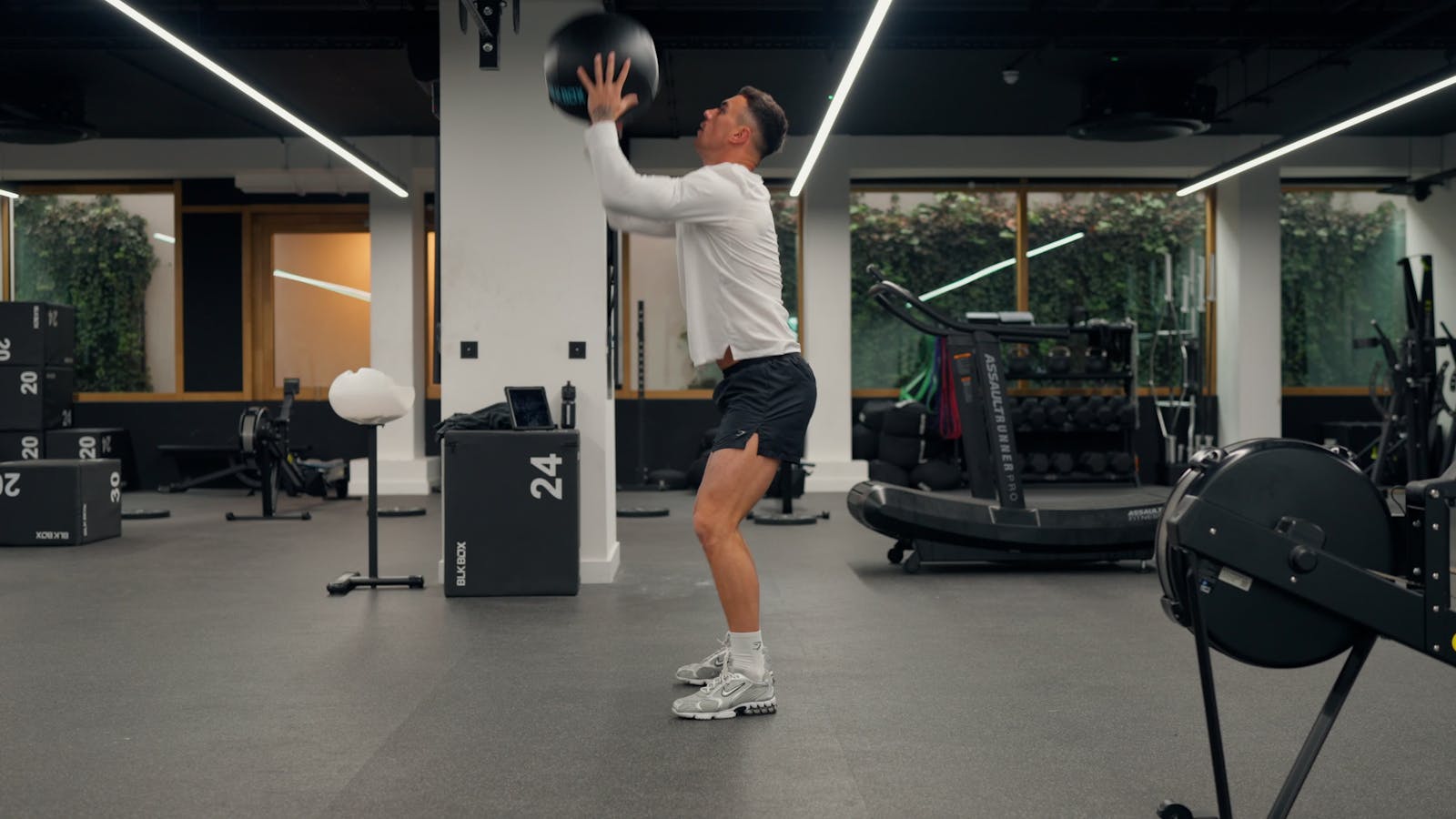
This power movement teaches your whole body to work together and develops explosive hip extension, the same pattern used in your approach jump. Hold a medicine ball between your legs, drop into a quarter squat, then launch the ball as high as possible using your hips, legs, and arms in sequence.
How does this exercise transfer to volleyball performance?
It trains the timing and coordination needed to transfer force from your lower body through your core into your upper body, the same conversion that occurs during a spike approach when horizontal speed becomes vertical height.
What are the practical benefits during matches?
In matches, this improves your ability to generate power from your hips during quick sets or when approach timing gets disrupted. The low-impact nature makes it ideal for high-volume training days when your joints need a break from jumping. Perform 5–10 reps with explosive intent rather than grinding through tired reps.
4. Band-Assisted Jumps
Band-assisted jumps reduce eccentric load while letting you focus on the concentric (upward) phase. Resistance bands overhead support part of your body weight during descent, enabling explosive upward movement with less joint stress.
How do band-assisted jumps benefit recovery and training?
This drill conditions tendons and connective tissue to high-velocity contractions without pounding impact, making it valuable for competition preparation or recovery from minor injuries. You accumulate more quality reps and improve neuromuscular coordination without the recovery cost of traditional plyometrics.
How does this training translate to game performance?
During the game, bands help you jump faster when you need quick explosiveness. Perform no more than 5 sets of 10–20 jumps, treating each jump as a maximum effort rather than endurance training.
5. Lateral Hurdle Hops
Volleyball requires quick side-to-side movements along the net, particularly when following hitters or adjusting block positioning during rallies. Lateral hurdle hops build side-to-side power by training your body to push sideways rather than vertically.
How do you perform lateral hurdle hops correctly?
Set up small hurdles (6–18 inches depending on ability) and hop sideways over them, landing on both feet before hopping back. The training effect comes from minimizing ground contact time while maintaining balance and control.
What volleyball skills do lateral hurdle hops improve?
This drill accelerates your first step when moving from middle to outside blocking positions and builds hip stability for directional changes without power loss. Perform no more than 5 sets of 6–14 reps, prioritizing clean landings over speed, especially when fatigued.
6. Bounding
Bounding develops horizontal power through consecutive broad jumps, teaching your body to absorb and redirect force forward. Focus on landing control first: each landing should feel stable with knees tracking over toes and torso upright.
How do you manage the challenge of cumulative load?
The challenge is managing cumulative eccentric load across multiple contacts. As control improves, gradually increase the distance between bounds, but only with clean mechanics. Sloppy landings signal you've exceeded your current capacity.
How does bounding translate to volleyball performance?
In matches, bounding helps you take more powerful approach steps and accelerate during transitions. You're training the same triple extension pattern (ankle, knee, hip) that creates speed during spike approaches. Do 2–3 sets of 3–6 bounds with full recovery between sets.
7. Extensive Knee-Dominant Jumps
Many volleyball players rely too heavily on their hips and ankles when jumping, leaving their quads underutilized. Knee-dominant jumps address this by requiring you to push your knees forward past your toes during takeoff, increasing quadriceps engagement and enabling greater force generation from a more upright position.
How do you perform knee-dominant jumps correctly?
You perform submaximal jumps (60-70% effort) with exaggerated knee bending, focusing on your quads driving the movement. The lower intensity allows you to complete more reps without excessive fatigue, thereby reinforcing the motor pattern.
What volleyball benefits do knee-dominant jumps provide?
This improves how high you can jump from a standing position at the net during blocks without a full approach. Better knee extension creates more power from a static position, resulting in higher hands and better block timing. Do no more than 20–30 total reps per session, spread across multiple sets.
8. ACL Lateral Hops
One-sided plyometrics reveal and correct strength imbalances between your legs, which is crucial for injury prevention. ACL lateral hops involve jumping side to side on one leg, placing significant demand on your hip stabilizers, knee control, and ankle strength.
What makes proper landing mechanics so critical?
The challenge is keeping your body lined up and balanced every time you land. If your knee caves inward or your foot rolls too much to the inside, you're showing a weak spot that will cause problems during matches. Start with small hops and focus on landing correctly before progressing to greater distance or speed.
How do lateral hops translate to volleyball performance?
In volleyball, this means better stability when you land on one foot and improved body control in awkward positions at the net. Avoid doing more than 20 reps per leg per workout, as neuromuscular fatigue builds up quickly.
9. Jump Rope
Jump rope builds foundational coordination and lower leg strength for intense plyometric work. Stay on the balls of your feet, keep jumps small (enough to clear the rope), and focus on rhythm rather than height.
What specific benefits does jump rope provide for tennis players?
Many players skip it, missing key benefits: jump rope strengthens your calves, Achilles tendons, and stabilizing foot muscles that absorb force during landing and enable elastic recoil during takeoff.
This prepares your lower legs for higher-impact drills and translates to better endurance during long rallies and reduced calf fatigue in the third and fourth sets. Use it as a warm-up or active recovery tool rather than a primary training stimulus.
10. Split Jump Lunges
Split jump lunges build one-sided strength and dynamic balance by forcing each leg to produce power independently. You start in a lunge position, explode upward, switch your legs mid-air, and land softly in the opposite lunge before repeating. The coordination demands are high: you're managing balance, force production, and spatial awareness simultaneously, mirroring the unpredictable movement demands of volleyball.
How do split jump lunges improve volleyball performance?
If you feel unstable during landing, slow down and start over rather than pushing through messy reps. In matches, this improves your ability to create power from split-stance positions, such as when hitting a quick set or adjusting your approach angle mid-flight. It also builds the single-leg stability required for safe landings when landing on one foot after a block. Focus on control before speed.
11. High Knee Skips
High-knee skips develop the coordination and rhythm needed for your approach, teaching you to drive your knee up while maintaining forward momentum. The key is controlled movement: when you rush, your mechanics break down, and the training effect disappears. This drill works best when deliberate, allowing you to feel the proper sequencing of hip flexion, arm drive, and ground contact.
In volleyball, this translates to cleaner approach mechanics and better timing during your final two steps before takeoff. Improved coordination helps you convert horizontal speed into vertical height more efficiently, thereby directly increasing your spike reach.
12. High Box Depth Jumps
High box depth jumps push your reactive ability by increasing eccentric load and demanding immediate force redirection. You step off a higher box than standard depth jumps, land on both feet, and explode into a maximal vertical jump with minimal ground contact time.
What makes transition speed so critical?
The critical element is transition speed. If you pause or "sit" on the landing, you've lost the stretch-shortening cycle benefit. The moment your feet contact the ground, you should already be driving upward. If that doesn't happen naturally, reduce the box height until you can maintain reactive quality.
How does this translate to volleyball performance?
This trains your nervous system to handle high-impact forces and convert them into explosive power within the 0.15-0.25 second window that defines elite jumping ability. In matches, it translates to more powerful blocks and spikes because your body generates force faster from the planted position. Use this drill only when fresh and stop if ground contact time slows.
Related Reading
Sample Plyometric Training Plan for Volleyball (Weekly Progression System)
Plyometric programs need a structured plan for volume, intensity, and recovery to build explosive power. Most players add sets each week until fatigue reduces performance, which can burn out tendons and dull neuromuscular response. The goal is building reactive power through carefully timed exposure, not exhaustion.
🎯 Key Point: Progressive overload in plyometrics means increasing intensity and complexity, not adding more repetitions that lead to fatigue.
"Plyometric training should focus on quality over quantity - excessive volume can decrease power output by up to 15% when neuromuscular fatigue sets in." — Sports Performance Research, 2023
⚠️ Warning: Adding weekly volume without monitoring recovery markers can lead to overuse injuries and diminished explosive capacity, the opposite of your training goals.
Week 1-2 Movement Quality and Landing Mechanics
Start with low-intensity drills that teach your nervous system to absorb and redirect force efficiently. Day 1 focuses on vertical power (box jumps, squat jumps, and tuck jumps), with 3 sets of 5 reps, allowing full recovery between efforts. Day 3 shifts to lateral explosiveness (lateral bounds, skater hops) at the same volume. Day 5 introduces reactive jumps with minimal ground contact time (pogo jumps, ankle hops) paired with light approach work. Rest or strength training fills Days 2, 4, 6, and 7.
Week 3-4 Reactive Drills and Tempo Increase
Volume stays controlled while ground contact time shortens and movement speed increases. Depth drops from 12–18-inch boxes train force absorption at 3×4 sets with faster transitions. Pair single-leg lateral hops with split-stance broad jumps to challenge stability under load. Approach jumps now include a full three-step rhythm, teaching your body to convert horizontal speed into vertical explosion. According to research involving 40 novice volleyball players under 21 years of age, structured plyometric progression over four weeks produced measurable improvements in sport-specific fitness when volume and intensity were carefully managed.
Week 5+ High-Intensity Depth Jumps and Approach Integration
This is where explosive power peaks. Depth jumps from 24-30 inch boxes (3 sets of 3 reps) force your tendons to handle the largest eccentric load and bounce back powerfully. Combine these with full-speed approach jumps that replicate game conditions, including directional changes and arm swings. Limit total weekly contacts to 60-80 jumps to avoid overtraining: excessive volume reduces tendon stiffness, the quality that increases force production. If your vertical drops or soreness persists beyond 48 hours, you've accumulated too much fatigue.
What Kills Progress Faster Than Bad Programming
Overtraining stops progress because your central nervous system cannot recover between sessions. Stacking high-intensity plyometrics on consecutive days decreases tendon stiffness and slows muscle firing rates. Poor recovery prevents key adaptations: faster motor unit recruitment, improved elastic energy return, and stronger connective tissue. The difference between a program that adds three inches to your vertical and one that stalls is usually a matter of rest discipline, not exercise selection. Mobility routines that combine dynamic stretching with breathwork maintain tissue quality between sessions and prevent inflammation that derails progress.
Measurable Outcomes You Should Track
Your vertical jump height should increase by 2-4 inches over eight weeks if your training plan matches your body's recovery capacity. Block time improves as your reactive strength index rises, reducing the time between landing and takeoff. Your approach speed noticeably increases when measured by first-step quickness and change-of-direction speed. You'll feel the difference in real games: how quickly you leave the ground, how much higher your hand reaches at the net, and how much less effort creating power requires.
But none of this matters if your body cannot handle the workload between sessions.
Recover and Move Better Between Plyometric Sessions to Maximize Volleyball Jump Performance
Big gains from plyometric training only stick if your body recovers properly between sessions. Tight hips reduce your ability to load into a deep approach step. Stiff ankles limit the elastic recoil your tendons need during ground contact. When mobility breaks down, the power you're building in training never transfers to the court because your body can't access the ranges of motion that explosive movement requires.
🎯 Key Point: Most athletes treat mobility like optional cooldown work. But restricted dorsiflexion in the ankle shortens your ground contact phase during depth jumps, forcing your knee forward instead of allowing your Achilles to store energy. Limited hip extension prevents you from fully opening during your approach, cutting into the horizontal velocity that converts to vertical power at takeoff. These mechanical constraints directly reduce how much force you can generate and how quickly you can apply it.
Mobility Target | Training Benefit | Performance Impact |
|---|---|---|
Ankle Dorsiflexion | Better ground contact mechanics | Improved elastic energy storage |
Hip Flexibility | Deeper loading positions | Enhanced horizontal-to-vertical power |
Posterior Chain | Efficient glute/hamstring firing | Sustained explosive output |
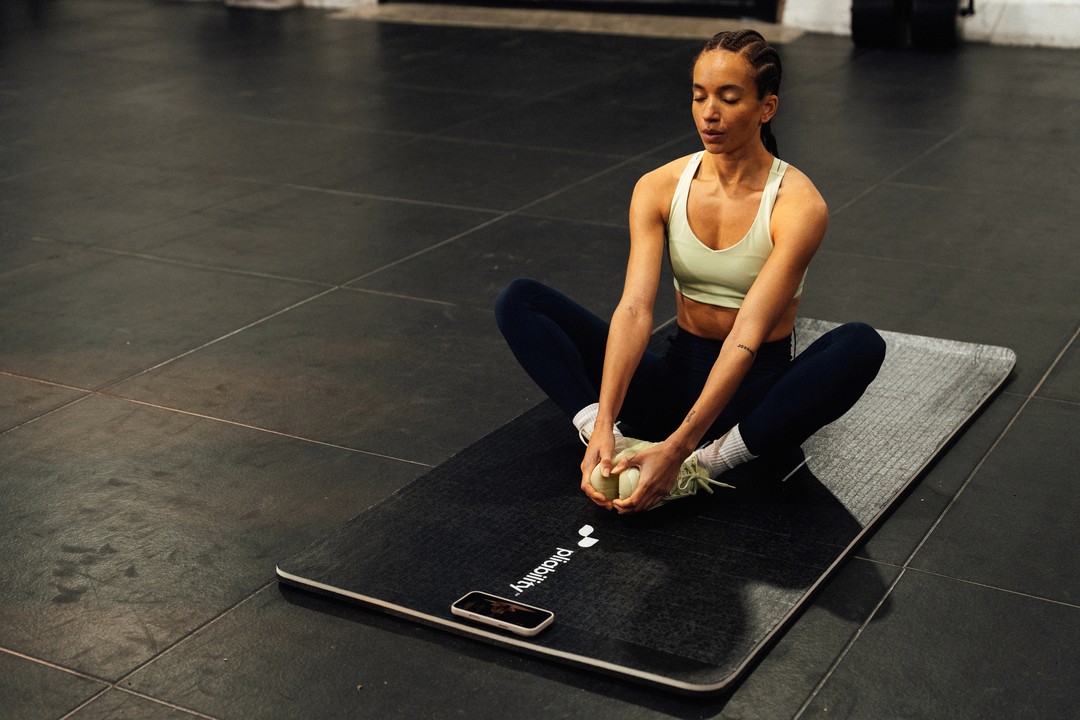
Pliability delivers structured mobility sessions targeting the specific ranges of motion required by plyometric work. Our app addresses ankle mobility for better ground contact mechanics, hip flexibility for deeper loading positions, and posterior chain work to keep your hamstrings and glutes firing efficiently through repeated explosive efforts. This system supports the training you're already doing.
"Recovery maintains the movement quality that allows each plyometric session to build on the last instead of grinding you down."
⚠️ Warning: When your ankles, hips, and posterior chain stay mobile, your nervous system refines the timing and coordination that make you explosive. When they tighten up, your body compensates with slower, less efficient patterns that undo your adaptations.
Start your seven-day free trial with a mobility routine built for volleyball athletes training explosively. Sessions take under five minutes. You get a structured program that keeps your body resilient enough to handle the workload of plyometric training, so the power you're building in the gym shows up when you jump at the net.
Related Reading
Box Jump Exercises
Isometric Knee Exercises
Plyometric Exercises For Athletes
Plyometric Exercises For Basketball
Move better in 10 minutes a day.
10,000+ five-star reviews.