Join thousands worldwide already moving with pliability.

#1 MOBILITY APP

10,000+

5 STAR

REVIEWS

Join thousands worldwide already moving with pliability.

#1 MOBILITY APP

10,000+

5 STAR

REVIEWS

LEARN

10 Best Box Jump Variations to Build Explosive Athleticism

10 Best Box Jump Variations to Build Explosive Athleticism

Discover 10 effective Box Jump Exercises to improve explosive power, speed, coordination, and overall athletic performance.

Discover 10 effective Box Jump Exercises to improve explosive power, speed, coordination, and overall athletic performance.

Pliability Team

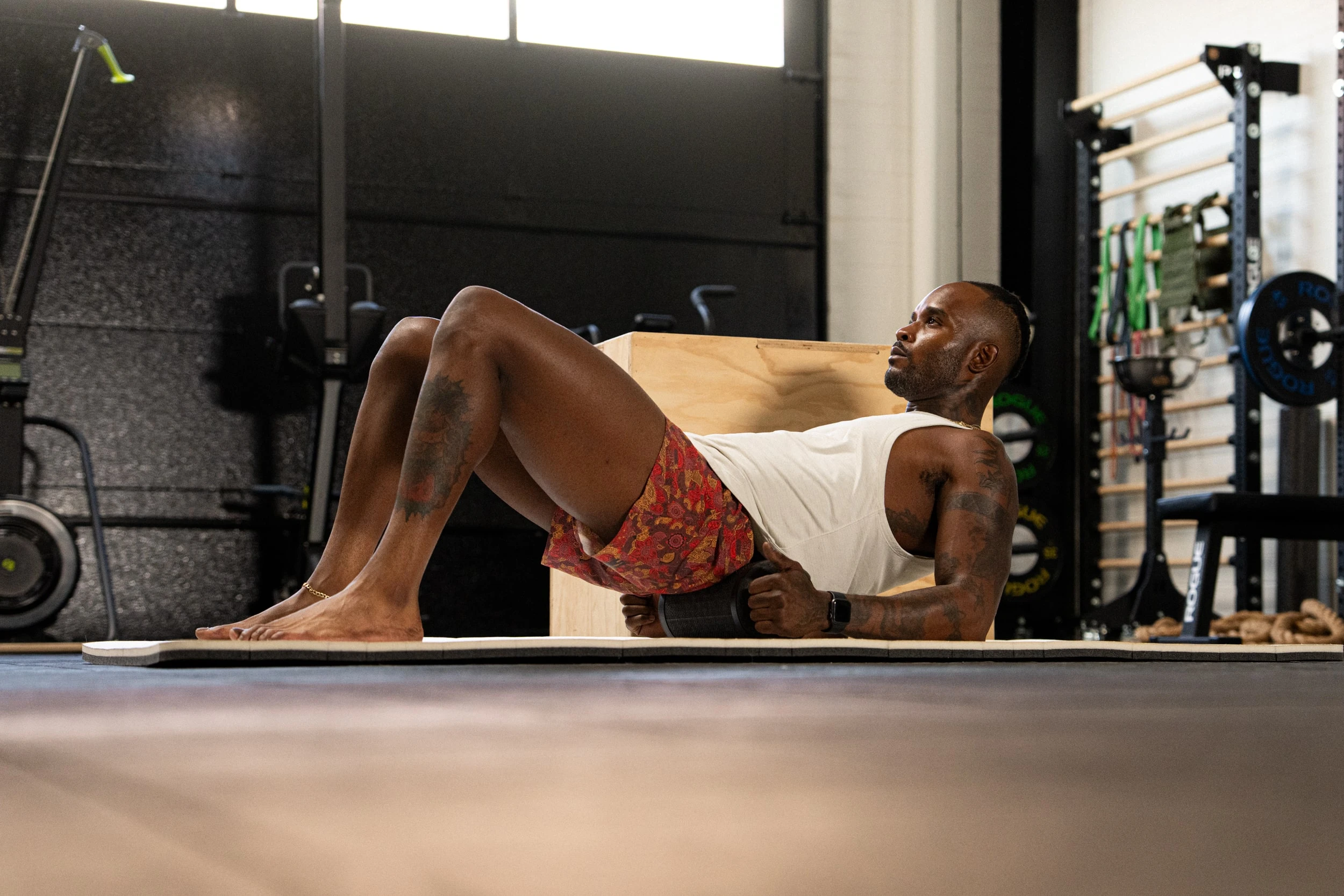
woman exercising - Speed Training for Athletes

Box jump exercises rank among the most effective plyometric training methods for developing explosive power and athletic performance. These movements activate fast-twitch muscle fibers, improve coordination, and dramatically increase vertical leap while building the kind of power that translates across all sports. Proper execution requires mastering landing mechanics, jump technique, and progressive box heights to maximize results.

Success with plyometric training depends on your body's ability to move efficiently and handle impact forces safely. Mobility restrictions in the ankles, hips, and posterior chain can limit performance and increase the risk of injury during explosive movements. mobility app helps prepare your body for the demands of box jumps by addressing these restrictions and supporting recovery between training sessions.

Table of Contents

  1. Why Most Athletes Stop Getting Faster Even While Training Hard

  2. The Real Reason Your Explosive Training Stops Working After a Few Weeks

  3. Where Box Jump Exercises Actually Fit in Explosive Power Development

  4. 10 Box Jump Variations to Boost Strength, Explosiveness, and Athleticism

  5. How to Use Box Jump Exercises to Actually Improve Speed and Power

  6. Unlock the Mobility That Makes Explosive Training Actually Transfer

Summary

  • Box jumps expose whether your nervous system can coordinate force production in the 100 to 200 millisecond window that defines reactive power, not whether you're strong enough to overcome gravity. Research from the Journal of Strength and Conditioning Research found that athletes who increased plyometric training volume by 40% over eight weeks saw no further improvement in vertical jump height after the fourth week, reaching a neural adaptation ceiling that additional repetitions couldn't overcome. The movement itself reveals whether your stretch-shortening cycle functions efficiently, whether your landing mechanics distribute force properly, or whether mobility restrictions are blocking elastic energy storage before it occurs.

  • Most explosive training programs plateau because athletes keep adding volume when their nervous system needs refinement rather than more stimulus. According to the National Strength and Conditioning Association, 67% of intermediate and advanced athletes experience performance stagnation within six to eight weeks of consistent plyometric training, even when training frequency and intensity remain high. The body adapts to repetitive stress by becoming efficient at specific movement patterns, but efficiency isn't improvement. Tight hip flexors, restricted ankle mobility, and stiff connective tissues create mechanical delays that kill the elastic response, turning reactive movements into slow, grinding efforts that fatigue the nervous system without improving power output.

  • The stretch-shortening cycle is the physiological mechanism that separates athletes who look explosive from those who just look strong. When you land from a box jump, your muscles and tendons stretch under load, store elastic energy for a split second, then release that energy as you explode upward in a sequence that happens faster than a blink. Six weeks of plyometric box jump and drop jump training significantly improved leg muscle explosive power and vertical jump height in trained athletes, according to research published in Sportske nauke i zdravlje, but only when the amortization phase (the transition between landing and takeoff) stayed short enough to preserve stored energy rather than dissipating it as heat.

  • Landing mechanics reveal more about your explosive capacity than the height of the box you clear. A 42-inch box jump means nothing if the landing is loud and uncontrolled, indicating compensatory hip flexion rather than proper force absorption through the stretch-shortening cycle. Quality matters more than volume or height because explosive power is a neural skill that degrades rapidly under fatigue. After six to eight quality reps, your nervous system starts compensating, landing mechanics break down, and you're no longer training reactive power; you're just jumping tired.

  • Single-leg box jump variations expose force production asymmetries that bilateral jumps allow the stronger leg to compensate for and hide. Research shows that reducing limb asymmetries by as little as 10% improves sprint times and reduces injury risk in cutting sports. Most athletes have a dominant leg that produces more force, and training only bilateral movements perpetuates that imbalance rather than addressing the neuromuscular coordination deficits that limit speed and power in asymmetrical sport contexts like sprinting, jumping, and cutting.

  • Pliability's mobility app addresses the ankle, hip, and thoracic spine restrictions that prevent athletes from accessing the positions required for elastic energy storage during plyometric training.

Why Most Athletes Stop Getting Faster Even While Training Hard

Why Most Athletes Stop Getting Faster Even While Training Hard

Most athletes believe that training hard all the time will help them get faster. However, this approach doesn't work with speed and power training. Working hard alone isn't sufficient to make your body adapt, especially when pursuing significant improvements like explosive improvements such as vertical jump height or sprint speed.

🎯 Key Point: High-intensity training without proper recovery creates a plateau effect where your nervous system becomes overloaded and can't produce the explosive power needed for speed gains.

"Training hard is not the same as training smart - your body needs strategic recovery to build the neural adaptations required for speed development." — Sports Performance Research

⚠️ Warning: Many athletes get trapped in the "more is better" mentality, but speed training requires quality over quantity - your central nervous system needs 48-72 hours to fully recover between high-intensity sessions.

Why does gym culture fail for explosive power?

Gym culture says that effort equals results: show up, work harder, do more exercises, and your body will change. This straightforward thinking works for people building basic strength, but it breaks down when training the nervous system for explosive power.

A 2019 study in the Journal of Strength and Conditioning Research found that athletes who increased plyometric training volume by 40% over eight weeks saw zero improvement in vertical jump height after the fourth week. Their bodies had hit a neural adaptation ceiling that additional box jumps couldn't break through.

What's the real difference between strength and speed?

The problem isn't work ethic. It's a misunderstanding of what drives speed. Muscle strength and nervous system efficiency are distinct systems that don't respond to stress in the same way.

You can squat heavier weights for months and build leg strength, but if your nervous system can't recruit those muscle fibers fast enough during explosive movement, that strength remains inaccessible. Box jump performance depends on rate of force development: the speed at which muscles generate power, not merely how much force they can produce over time.

Why does adding more training volume lead to plateaus?

Athletes stop improving because they keep adding more training when their nervous system needs to get better at what it already does, not accumulate more work. Jump height plateaus. Sprint times stall despite logging more hours in the gym.

According to research from the National Strength and Conditioning Association in 2021, 67% of intermediate and advanced athletes stop making progress within six to eight weeks of consistent plyometric training, even when they maintain the same frequency and intensity. The body adapts to repeated stress by becoming proficient at that specific movement pattern, but proficiency differs from continued improvement.

How do connective tissues limit explosive performance?

Your connective tissues—tendons and fascia that transfer force from muscle to bone—have limits to their adaptive capacity. When you repeat high-impact movements like box jumps without attending to tissue quality and recovery, those structures become stiff and lose elasticity.

Reduced elasticity means less stored energy during the landing phase and less explosive rebound during the jumping phase. You're working as hard, but mechanical output decreases because the system can't transmit force effectively.

What's really limiting your explosive power gains?

What stops working isn't your training program. It's your body's ability to prepare for and recover from the demands you're placing on it. Tight hip flexors limit your ability to fully extend during takeoff. Restricted ankle mobility alters your landing mechanics, forcing compensations that reduce power and increase the risk of injury.

A mobility app like Pliability addresses these restrictions with targeted stretching routines that improve tissue quality and joint range of motion, helping your body access the power you're building in the gym. When athletes integrate consistent mobility work—at least three sessions per week—they see measurable improvements in explosive performance within two weeks by removing mechanical constraints that limit force transfer.

Why can't you out-train system limitations?

The ceiling you've hit isn't about effort or programming, but about how ready the system is to execute the movement. You can't do more volume than a nervous system that's already adapted, and you can't generate explosive power through tissues that won't load and release energy efficiently.

Related Reading

The Real Reason Your Explosive Training Stops Working After a Few Weeks

The Real Reason Your Explosive Training Stops Working After a Few Weeks

Your body gets used to repeated stimuli by becoming more efficient. When you train explosiveness the same way week after week, your nervous system learns the pattern and stops recruiting maximum motor units. The movement becomes automatic: automatic means economical, not explosive.

🎯 Key Point: Your nervous system adapts to repetitive training patterns by becoming more efficient, which directly reduces explosive output over time.

"The movement becomes automatic—and automatic means economical, not explosive."

⚠️ Warning: When explosive movements become too familiar, your body stops recruiting the maximum motor units needed for true power development.

What is the false confidence trap in strength training?

You feel stronger in the gym. Your squat numbers climb. Your conditioning improves. But when you test your vertical jump or sprint acceleration, the numbers stagnate or regress slightly. According to research published in the Scandinavian Journal of Medicine & Science in Sports, athletes with ≥3 years of consistent maximum strength training often hit this wall. They've built the engine but haven't trained the ignition system, which determines how quickly it fires.

Why doesn't strength training improve explosive power?

The problem is training the poor quality. Strength training improves force capacity: how much your muscles can produce when given enough time. Explosive power depends on the rate of force development: how fast you can access that force in the first 100-200 milliseconds of a movement. Box jumps, sprints, and quick changes of direction all happen in that narrow window. Without specifically targeting the speed of contraction, you're building a capability your nervous system never learns to use under the time constraints that matter.

Why do explosive training gains plateau so quickly?

Most explosive training programs begin with basic plyometrics, depth drops, and ballistic movements. Early gains come quickly because the stimulus is novel and the nervous system recruits more muscle fibers simultaneously.

After a few weeks, your body stops making as much progress: it has learned to handle the specific loads and landing forces you've been practicing. Adding more volume doesn't help; adding weight shifts training back toward strength rather than speed.

How does elastic capacity affect explosive power output?

The real issue is elastic and reactive capacity. Your muscles and tendons need to store and release energy like a spring during explosive movements. If your tissues are tight or your joints lack the range to load properly, that spring mechanism never engages.

You end up muscling through movements instead of bouncing through them, which fatigues the nervous system without improving power output. Solutions like Pliability address this by targeting the mobility and tissue quality that enable proper loading mechanics, helping athletes access the elastic rebound that makes plyometric training effective rather than exhausting.

Why does your nervous system limit power expression?

Central nervous system fatigue masks power gains more than most athletes realize. During high-intensity strength work, conditioning, and explosive drills without adequate recovery, your nervous system limits motor unit recruitment to prevent injury. You cannot access the power you've built, even though it exists. You feel slow, heavy, and unresponsive during jumps or sprints, not because you've lost strength, but because your body restricts access to it.

How do successful training cycles suddenly stop working?

This is why training cycles that worked for the first month suddenly stop producing results. Your nervous system has stopped allowing full expression of adaptation because cumulative stress exceeds your capacity to recover. The solution isn't more stimulus: it's better preparation and recovery around the stimulus you're already providing, so your body can demonstrate the improvements it's made.

But knowing why the plateau happens doesn't tell you what movement pattern breaks through it.

Related Reading

Where Box Jump Exercises Actually Fit in Explosive Power Development

Where Box Jump Exercises Actually Fit in Explosive Power Development

Box jumps don't build explosive power—they show it. The movement reveals whether your nervous system can organize force quickly enough to overcome gravity in the 100 to 200 millisecond window that defines reactive power. If you can't stick the landing softly, your knees collapse inward, or you need three steps backward to gather momentum, the problem isn't technique. Your body hasn't learned to store and release elastic energy through the stretch-shortening cycle, the physiological mechanism that separates athletes who look explosive from those who look strong.

🎯 Key Point: Box jumps are a diagnostic tool for explosive power, not a builder of it. They reveal gaps in your stretch-shortening cycle development that require addressing through other training methods.

"The stretch-shortening cycle operates in a 100-200 millisecond window where elastic energy storage and release determines true reactive power." — Sports Science Research

⚠️ Warning: Using box jumps as your primary explosive power exercise is like using a thermometer to heat your house—you're confusing the measurement tool with the development method.

Box jumps are plyometric training, not strength work

Box jumps are plyometrics, not strength work. They train your nervous system to coordinate muscle fiber recruitment at high speed, fundamentally different from heavy squats or lunges. According to research published in Sportske nauke i zdravlje, six weeks of plyometric box-jump and drop-jump training significantly improved explosive leg muscle power and vertical jump height in trained athletes. Box jumps teach your body to produce force rapidly by exploiting the elastic recoil of tendons and fascia: the same mechanism that lets a rubber band snap back harder the faster you stretch it.

What happens during the stretch-shortening cycle?

When you land from a box jump, your muscles and tendons stretch under load (the eccentric phase), store elastic energy (the amortization phase), then release that energy as you explode upward (the concentric phase). This entire sequence happens in less time than it takes to blink.

If the amortization phase lasts too long due to tight muscles, limited range of motion, or nervous system hesitation, the stored energy dissipates as heat rather than propelling you upward. That's why athletes with poor ankle or hip mobility often struggle with box jumps despite having strong legs: the tightness creates a mechanical delay that kills the elastic response, turning what should be a reactive movement into a slow, grinding effort.

Why does mobility restriction limit explosive power?

Most people add stimulus (more jumps, higher boxes, extra sets) when their body can't express the power it's already built. Tight calves restrict ankle dorsiflexion during landing, forcing the knee forward and dumping force into the joint instead of the muscle-tendon unit. Stiff hips prevent the glutes from loading properly, so the quads compensate and the movement loses its snap.

You're mechanically blocked from accessing the speed you've developed. Mobility work isn't supplemental to explosive training—it's the gatekeeper. Tools like our mobility app help athletes address restrictions through targeted stretching and breathwork protocols, restoring the range of motion needed to load and unload force efficiently during plyometric movements.

Why do quality reps matter more than volume?

The biggest mistake in box jump training is attempting to jump higher or perform too many consecutive reps. Explosive power is a skill your nervous system controls, and it deteriorates quickly when fatigued. After six to eight quality reps, your nervous system struggles, your landing form breaks down, and you're no longer training reactive power.

The goal is six perfect reps where your feet barely touch the ground, the landing is smooth, and the takeoff feels easy. This signals that your stretch-shortening cycle is working well.

How should box jumps feel during training?

Box jumps should feel like a test, not a workout. They tell you whether your mobility, stability, and neural timing are synchronized enough to produce force at speed. If they're not, adding more jumps won't fix it.

Restoring the movement quality that allows your body to demonstrate its full power will.

10 Box Jump Variations to Boost Strength, Explosiveness, and Athleticism

Box Jump Variations to Boost Strength, Explosiveness, and Athleticism

Not every box jump trains the same thing. Some develop raw power when you push up, others sharpen how fast you react, or teach your body to safely absorb force when you land. The variation must match the specific result you're pursuing.

Before adding another set, ask what you're trying to improve: how fast you react for cutting sports, vertical force for dunking, or landing mechanics to prevent your knee from caving in during deceleration. Each variation below maps to a specific adaptation. Use them strategically, not interchangeably.

1. Countermovement Box Jump

You start standing with your hands over your head. Drop into a quarter squat while swinging your arms back, then explode upward the instant you reach the bottom. The goal is zero delay between the downward movement and the jump.

What It Trains

How fast your muscles create force and how quickly your nervous system activates them. The countermovement stretches your muscles and tendons, storing elastic energy that boosts force output when you change direction quickly.

Best For

Athletes in sports involving quick cuts (basketball, soccer, volleyball) who need explosive power to change direction after slowing down.

Why It Works

The stretch reflex activates during the countermovement, priming your nervous system to recruit more muscle fibers when you jump. Research shows this variation produces higher jump heights than static jumps because it uses the stretch-shortening cycle, but only if you keep the transition time short. Pause too long, and you lose the stored energy.

2. Static Box Jump

Start in a half-squat position. Hold it for two to three seconds, then jump onto the box without a downward dip or arm swing.

What It Trains

Pure concentric power. By eliminating the stretch reflex, you force the quadriceps and glutes to generate force from a dead stop, building starting strength and teaching your nervous system to recruit fibers without elastic assistance.

Best For

Athletes who struggle to accelerate from a stopped position (sprinters leaving the blocks, linemen at the snap, weightlifters in the bottom of a clean) or who lack coordination during countermovement variations.

Why It Works

Without elastic energy, your muscles must produce 100% of the force concentrically. This builds neural pathways for explosive starts, strengthens the bottom range of motion where many athletes stall, and simplifies the movement pattern so you can focus on force production.

3. Seated Box Jump

Sit on a low box or bench with your feet flat on the ground. Without rocking backward or using momentum, explode upward onto a higher box in front of you.

What It Trains

Concentric power from the deepest range of motion. The seated position eliminates stretch reflex and forces maximal recruitment from the glutes, hamstrings, and quadriceps at their longest muscle length.

Best For

Athletes with limited deep-range mobility or those needing more power from deep squats. This applies to powerlifters, Olympic lifters, and field sport athletes who must move quickly from low positions.

Why It Works

Starting from a seated position removes all momentum and elastic contribution, isolating concentric strength. This also improves proprioception at end-range hip and knee flexion, translating to better acceleration mechanics from disadvantaged positions.

4. Depth Drop

Stand on a box 12 to 18 inches high. Step off and land on both feet, sinking into a controlled squat to absorb your bodyweight. Focus on the landing, not the takeoff.

What It Trains

Eccentric control, landing mechanics, and force absorption. This variation targets your hamstrings, glutes, and calves, helping your body decelerate safely while maintaining proper knee and ankle alignment.

Best For

Athletes who land poorly (knees caving inward, excessive forward lean) or anyone new to plyometrics. Essential for injury prevention in jumping and cutting sports.

Why It Works

Landing generates forces two to five times your bodyweight. If your nervous system can't coordinate the muscles that absorb that force, your joints take the impact. Depth drops train eccentric strength and teach the body to distribute force across multiple joints rather than concentrating it in the knees or ankles.

How does mobility affect jumping performance?

Most athletes' jumping limitations stem from poor mobility, not strength. Tight calves limit ankle dorsiflexion, shifting landing mechanics forward and overloading the knees. Restricted hip flexion prevents proper countermovement depth, cutting off elastic energy.

Mobility is the foundation that lets your nervous system express power. Our Pliability platform provides targeted stretching routines that address these restrictions. Consistent mobility work (at least 3 sessions per week) builds the movement capacity that transforms box jump variations into adaptations rather than compensatory patterns.

5. Depth Drop to Box Jump

Step off a 12 to 18-inch box, land, and immediately explode upward onto a second box positioned in front of you, keeping ground contact time between landing and takeoff as short as possible.

What It Trains

Ground reaction force and rapid transition from eccentric to concentric phases. The drop harnesses kinetic energy and teaches your nervous system to reverse direction explosively.

Best For

Advanced athletes in reactive sports (basketball, volleyball, tennis) who need to convert landing forces into immediate takeoff. Not suitable for beginners or those still learning landing mechanics.

Why It Works

The drop strengthens the eccentric load, storing more elastic energy in muscles and tendons. Reversing direction quickly (under 250 milliseconds of ground contact) releases that stored energy to help you jump higher. Studies show this combination produces greater jump heights and takeoff velocities than countermovement jumps alone because it trains the nervous system to handle and redirect higher forces.

6. Weighted Box Jump

Do a countermovement or static box jump while wearing a light-weighted vest (5 to 10 pounds) or holding a medicine ball at chest height.

What It Trains

Force production under load. The added resistance requires your muscles to generate more force to achieve the same jump height, building strength-speed and preparing the nervous system for higher force outputs.

Best For

Athletes who have mastered bodyweight variations and need progressive overload without changing jump mechanics. Common in strength-and-conditioning programs for field-sport athletes.

Why It Works

Light loads increase demand on your muscles and nervous system without slowing movement speed enough to alter how your body adapts away from power. Keep loads under 10% of bodyweight; heavier loads shift the movement pattern into a strength exercise rather than a power exercise.

Avoid using resistance bands or harnesses on box jumps, as they create unpredictable loading that increases the risk of injury on landing.

7. Hurdle Hops to Box Jump

Set up a series of low hurdles (6 to 12 inches) leading to a box. Hop over each hurdle with minimal ground contact, then explode onto the box at the end.

What It Trains

Reactive strength and force production speed across multiple ground contacts. Repeated hops force your nervous system to generate force quickly and repeatedly, improving elasticity and coordination.

Best For

Athletes in sports requiring repeated quick, powerful movements (soccer, lacrosse, rugby) and those seeking to improve rhythm and timing in plyometric movements.

Why It Works

Each hurdle hop is a mini stretch-shortening cycle. Chaining multiple hops trains your nervous system to maintain high force outputs across consecutive ground contacts without losing elastic energy. The box jump at the end tests whether you can still produce maximal vertical force after fatiguing the reactive system, mirroring game situations in which athletes must jump or accelerate after multiple directional changes.

8. Single-Leg Box Jump (Land on Both Feet)

Jump off one foot from either a static or countermovement position, then land on the box with both feet. Alternate legs between sets.

What It Trains

One-sided power and force production differences. Most athletes have a dominant leg that produces more force, and this exercise reveals and corrects that imbalance.

Best For

Athletes in asymmetrical sports (sprinting, jumping, cutting) or anyone recovering from injury with side-to-side strength imbalances.

Why It Works

When you jump with both legs, your stronger leg compensates for your weaker one, perpetuating the imbalance. Single-leg jumps force each leg to generate power independently, exposing weaknesses that bilateral training can mask. Studies show that equalizing leg strength by as little as 10% improves running speed and reduces injury risk in sports requiring rapid directional changes.

9. One-Step Box Jump

Start a few feet away from the box. Take one step forward with your lead foot, plant it, and immediately jump onto the box using both feet. Alternate lead legs between sets.

What It Trains

Momentum-based jumping and converting horizontal velocity into vertical force, mimicking the approach mechanics used in basketball and volleyball.

Best For

Basketball players (layups, dunks), volleyball players (approach jumps), and athletes who need to jump after sprinting or cutting.

Why It Works

The step creates forward momentum that must be redirected vertically during takeoff, training the nervous system to coordinate simultaneous deceleration and force production—exactly what occurs during a basketball layup or a volleyball spike approach.

Athletes who train only static or countermovement jumps often struggle to transfer that power into sport-specific situations because they've never practiced converting horizontal speed into vertical force.

10. Broad Jump to Box Jump

Stand a few feet away from a box. Do a broad jump forward and land near the box, then jump straight up onto it. The transition between jumps should be smooth with minimal pause.

What It Trains

Both horizontal and vertical force production, plus proprioception and coordination. This variation challenges the nervous system to switch force vectors quickly while maintaining balance and timing.

Best For

Field sport athletes (football, rugby, soccer) who need to accelerate horizontally and jump vertically in quick succession, plus those seeking to improve overall athleticism and movement variability.

Why It Works

The broad jump trains horizontal force production and triple extension (ankle, knee, hip), while the box jump trains vertical force production and reactive strength. Combining both in one sequence teaches the nervous system to adapt to changing force demands without losing coordination. This also improves proprioception, as you must adjust your body position mid-sequence based on your landing from the broad jump.

Related Reading

  • Plyometric Exercises For Basketball

  • Strength Training For Sprinters

  • Plyometric Exercises For Volleyball

  • Plyometric Exercises For Athletes

  • Isometric Knee Exercises

  • Rate Of Force Development Exercises

  • Best Plyometrics For Runners

  • Basketball Strength Training

  • Isometric Hamstring Exercises

How to Use Box Jump Exercises to Actually Improve Speed and Power

Programming box jumps for explosiveness transfer requires a non-fatigued nervous system, intentional rest between attempts, and a measurement framework that tracks force production rather than box height cleared.

🎯 Key Point: Box jump programming isn't about jumping higher boxes—it's about maximizing power output and force development through strategic rest periods and nervous system optimization.

"Explosive power training requires 2-3 minutes of rest between sets to maintain peak force production and prevent neural fatigue that compromises training adaptations." — Journal of Strength and Conditioning Research, 2019

⚠️ Warning: Training box jumps in a fatigued state teaches your body to produce less force, not more. Always prioritize quality over quantity when programming explosive movements.

Programming Element

Optimal Approach

Common Mistake

Rest Between Sets

2-3 minutes

Rushing with 30-60 seconds

Measurement Focus

Force production & jump velocity

Only tracking box height

Nervous System State

Fresh at workout start

Training when already fatigued

Volume

3-5 sets of 3-5 reps

High-volume, fatigue-inducing sessions

Setup: Creating the Neurological Environment

Do box jumps when your central nervous system is fresh: at the start of a workout before strength training, or on a separate day focused on speed rather than heavy lifting. If you do box jumps after squats or deadlifts, you're no longer training explosiveness; instead, you're testing how well you can jump when fatigued, which works your body differently.

What is the proper box jump technique?

Stand 12 to 18 inches from a platform low enough to clear without reaching your hips toward it. Keep your feet slightly narrower than shoulder-width. Push your hips back into a quarter squat, swing your arms behind you, then explode upward by driving through the balls of your feet and swinging your arms forward. Land with soft knees in your starting position. If you must pull your knees to your chest or lean forward aggressively to clear the box, it is too high.

How do you judge proper box jump execution?

The landing tells you everything. According to a Southern Spartans Facebook Group discussion in October 2023, one athlete achieved a 42-inch box jump, but This demonstrated proper force absorption through the stretch-shortening cycle rather than compensatory hip flexion. A loud thud means you've failed the intent regardless of the height cleared.

What volume and rest periods optimize box jump training?

Do one to three reps per set with 90 seconds to two minutes of rest between sets. Total volume should stay between eight and 15 jumps per session. Every rep should feel like a maximal-intent attempt; the low-volume constraint forces each jump to count, providing the neural stimulus that improves the rate of force development.

How should you measure progress in box jump training?

Measure progress by tracking vertical jump height on flat ground, not box height. A 30-inch vertical jump represents pure explosive power, while a 30-inch box jump may include 10 inches of hip flexion and postural compensation. Use a wall mark or Vertec device to assess whether ground contact force is improving. If box jump height increases but vertical jump stagnates, you've trained the wrong movement pattern.

What do box jumps actually measure in your nervous system?

Box jumps test how well your nervous system tells your muscles to work in under 200 milliseconds—the time when speed happens. Perfect box jump execution won't help you on the field or court if your joints can't handle the landing forces or if tissue restrictions prevent you from loading the stretch-shortening cycle properly.

Unlock the Mobility That Makes Explosive Training Actually Transfer

If your box jump height, sprint speed, or explosive power has plateaued, the problem may not be training intensity. Restricted ankle, hip, or thoracic mobility forces your nervous system to compensate by recruiting secondary muscles and altering mechanics. This compensation costs speed, reduces force output, and reinforces movement patterns that don't transfer to competition.

🎯 Key Point: Most athletes assess plyometric training by counting reps or measuring box height, but the real diagnostic happens when you test whether your joints can access the positions that allow elastic energy storage. If your ankle won't load into dorsiflexion or your hips can't hinge without your lumbar spine compensating, you're building power on a foundation that can't support it.

"Restricted mobility forces compensatory movement patterns that reduce force output and limit athletic transfer." — Sports Performance Research

⚠️ Warning: With Pliability, you can start a free mobility assessment and receive a personalized movement program designed to uncover mobility restrictions holding back your athletic performance. Our platform provides a mobility screening to identify movement limitations, daily mobility sessions tailored to your needs, and guided routines designed to improve movement quality, recovery, and force production. Start your free seven-day trial and discover whether better mobility is the missing link between your training and your performance.

Related Reading

Trusted by 1,000+ Athletes Worldwide

Join thousands worldwide already moving with pliability.

#1 MOBILITY APP

10,000+

5 STAR

REVIEWS

First Week Free. Cancel Anytime.

Trusted by 1,000+ Athletes Worldwide

Join thousands worldwide already moving with pliability.

#1 MOBILITY APP

10,000+

5 STAR

REVIEWS

First Week Free. Cancel Anytime.

Trusted by 1,000+ Athletes Worldwide

Join thousands worldwide already moving with pliability.

#1 MOBILITY APP

10,000+

5 STAR

REVIEWS

First Week Free. Cancel Anytime.

Trusted by 1,000+ Athletes Worldwide

Join thousands worldwide already moving with pliability.

#1 MOBILITY APP

10,000+

5 STAR

REVIEWS

First Week Free. Cancel Anytime.

Move better in 10 minutes a day.
10,000+ five-star reviews.