


LEARN
pliability
Strength is your ability to produce force against resistance; power is how fast you generate that force. Powerlifters chase strength: moving maximum weight regardless of speed. Sprinters chase power: moving moderate weight as fast as possible. Most athletes need both, and the ratio depends on your sport, but training only one end leaves a real gap: you either move heavy weight slowly, or you move fast without enough force behind it to matter.
strength vs. power: what's actually different

Strength | Power |
|---|---|
Force production against resistance | Speed of force generation |
Builds the foundation | Determines explosive output |
Slower, controlled movements | Fast, explosive movements |
Maximum load capacity | Rate of force development |
Getting stronger doesn't automatically make you more powerful. Athletes who chase max lifts without velocity work get slow under load: they can move heavy weight from point A to point B but lack the explosiveness a closing defender, a split-second reaction, or an instant sprint start demands. The force-velocity curve explains why: maximum strength happens at low speed under heavy load, maximum power needs the right balance of load and speed, and training only one end leaves a gap on the field. Power itself is just force multiplied by velocity, so you improve it by training across the full range from unloaded, fast movement up through heavy loads, teaching your nervous system to recruit muscle fibers rapidly under different conditions. Turning a standard back squat into a power movement is as simple as making the concentric phase fast and explosive while keeping the eccentric lowering controlled.
why the two don't develop the same way
Maximal strength training teaches your body to engage as many motor units as possible under heavy load; power training teaches those same motor units to fire quickly in succession. You can't fully optimize both at once because the signals conflict, one says contract everything as hard as you can, the other says contract and release as fast as you can. That's why athletes built around strength alone can hit a ceiling where more squat weight stops improving their sprint or jump: the limiting factor has shifted from force production to how fast that force gets organized. On a vertical jump test, someone who takes noticeably longer to leave the ground despite real strength numbers is power-limited; someone who leaves the ground quickly but jumps low is strength-limited.
Power training can't work in isolation either. Research on loads that maximize power output found a meaningful increase in mean propulsive velocity when training in the 40-60% of 1RM range, but that gain only happened because the underlying strength was already there. Without the motor recruitment and muscle cross-section heavy work builds, lighter explosive movements can't generate enough force to produce meaningful power adaptations. Knowing which quality to prioritize is only useful once you structure a program around it instead of defaulting to whichever one feels familiar.
how to train each
Training Type | Primary Focus | Rep Range | Rest Time | Movement Speed |
|---|---|---|---|---|
Strength Training | Maximum force production | 1-6 reps | 3-5 minutes | Slow and controlled |
Power Training | Speed + force combination | 3-6 reps | 2-4 minutes | Explosive and fast |
Strength training means lifting heavy, more than 85% of your one-rep max, for 6-12 reps across 2-6 sets, slow and controlled through both phases, with 2-4 minutes of rest for full recovery. Compound lifts, back squats, deadlifts, bench presses, overhead presses, weighted pull-ups, form the foundation because they recruit the largest motor unit pools and create the most systemic adaptation. Research in Frontiers in Physiology confirms 8-12 weeks of this approach produces measurable strength gains when load and recovery are managed properly, and powerlifters build entire careers on this progression: adding weight to the bar over months, forcing the nervous system to recruit more motor units.
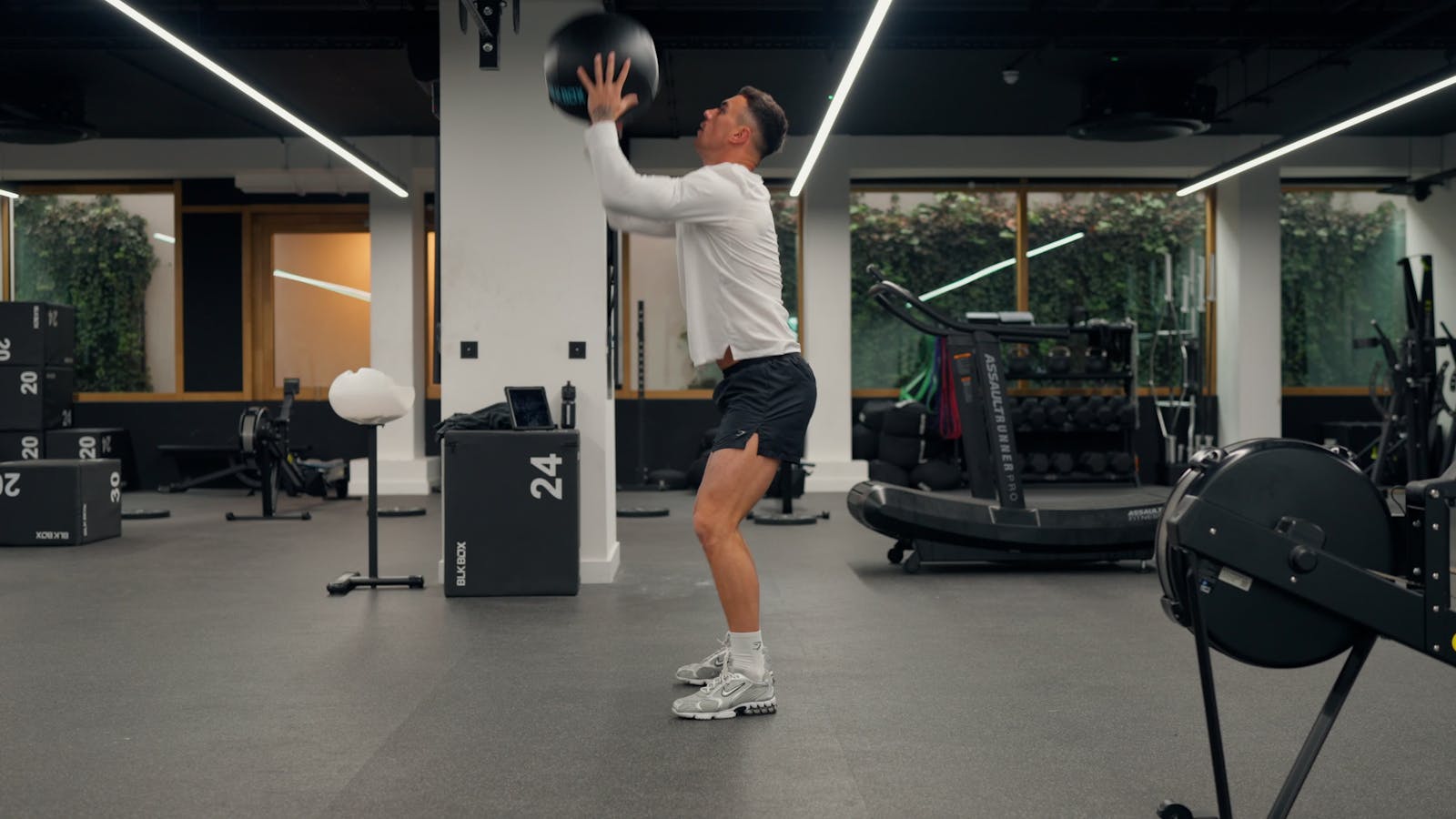
Power training means moderate loads, 30-60% of one-rep max, moved as fast as possible, for 1-5 reps across 3-4 sets with about 2 minutes of rest; speed matters more than load. Exercise selection shifts to ballistic and plyometric work, box jumps, depth jumps, medicine ball throws, kettlebell swings, Olympic lifts, and sprint work, where acceleration continues through the full range of motion. Sprinters and field athletes live in this zone because their sports reward rapid acceleration and direction change, not a slow, heavy grind. Track jump height, sprint times, or bar speed instead of the weight on the bar.
how to combine both
Structure training in phases: a strength phase of 4-6 weeks above 85% 1RM (6-12 reps, 2-6 sets, 2-4 minutes rest) to build your force ceiling, followed by a power phase of 3-4 weeks at 30-60% 1RM (1-5 reps, 3-4 sets, about 2 minutes rest) to teach your nervous system to apply that strength quickly. Contrast training pairs the two in a single session, a heavy lift like back squats followed by an explosive movement like box jumps, so the heavy set primes maximum motor unit recruitment right before the explosive one asks you to fire it fast. This is an advanced method best suited to athletes with a solid strength base already in place.
Most people need at least three dedicated strength days a week, with remaining sessions built around power: lower-body strength, upper-body power, full-body strength, lower-body power, upper-body strength is a workable five-day split. If strength is your priority, alternate four strength days with one power day targeting your specific weakness instead.
build power and strength without losing mobility
Most people hit a wall training half the system. You can load the bar heavier each month and drill explosive movements, but if your hips won't hinge properly or your ankles lack dorsiflexion, you're leaking force at every joint, and mobility work rarely gets the same structured attention strength and power programs do.
pliability closes that gap with structured, personalized mobility sessions that adapt to your training demands, the same way your strength program periodizes volume and intensity. Take the mobility assessment to see where you're most restricted, then follow Daily Sessions or a personalized Path to maintain the positions where force production happens most efficiently. Get 7 days free and see how a few minutes of targeted mobility work fits into your routine.
Related Reading







Move better in 10 minutes a day.
10,000+ five-star reviews.