


LEARN
pliability

Hard training asks a lot of your joints. Sprinting, cutting, jumping, and lifting all load the body at speed, and over time most athletes pick up tight hips, stiff ankles, or a locked-up upper back that quietly erodes performance. The right mobility exercises restore the range of motion those movements depend on, so you produce more power, move cleaner under fatigue, and spend less time managing aches. This guide covers the 10 best mobility exercises for athletes, how to match them to your sport (including soccer, football, basketball, and sprinting), and how to turn them into a mobility routine that fits your training week.
what is mobility for athletes?
Mobility is a joint's ability to move through its full range of motion with control. For an athlete, that means being able to sit into a deep squat, get the arms overhead without arching the low back, or open the hips mid-stride without another joint compensating. When a joint cannot move the way a skill demands, the movement does not disappear; it gets borrowed from somewhere else. That borrowing is where muscle imbalances, poor positions, and many overuse injuries start.
mobility vs. flexibility
Flexibility is how far a muscle can lengthen. Mobility is whether you can control a joint through that range. The difference matters: range you cannot control does not show up in sport, and it can raise injury risk because you can reach positions you lack the strength to stabilize. Mobility training pairs stretching with strength and control, which is why it transfers to the field, court, and platform. For a deeper breakdown, see our guide to flexibility vs. mobility. In practice, the fix is simple: combine static stretches with active drills that make you own the new range.
why mobility training matters for athletic performance
Mobility for athletes is not a warm-up accessory. It shapes four things that decide how you perform and how long you last:
More usable strength and power. Full-range movements like deep squats, lunges, and overhead presses only produce their full output when the hips, ankles, and shoulders can actually reach those positions. Strong athletes with restricted joints leave force on the table.
Lower injury risk. Restricted joints push load into tissues that were not built to take it, which is how sprains, strains, and overuse injuries build up. Joints that move freely spread the work the way it was meant to be spread.
Better recovery between sessions. Mobility work improves circulation and eases the stiffness that follows hard training, so you show up to the next session ready instead of guarding.
Sharper agility and coordination. A soccer player with mobile hips and ankles changes direction faster. A basketball player with the same qualities lands cleaner. Fluid joints mean quicker, more efficient multi-directional movement.
the 10 best mobility exercises for athletes
These ten cover the joints that limit athletes most: hips, ankles, spine, and shoulders. They are grouped by target area so you can build around your sport's weak links. Use them as moving drills with short pauses before training, or as 30-second-plus holds afterward and on recovery days.
hips and lower body
1. Hip Flexor Stretch
How to perform: Start in a kneeling lunge with one foot forward and the other knee on the ground. Gently press your hips forward while keeping your torso upright. Hold for 30 seconds and switch sides.
Benefits: Opens the hip flexors and improves hip mobility, which is essential for anyone who runs or jumps.
Best for: Runners, basketball players, soccer players.
2. Couch Stretch
How to perform: Place one knee on the ground with that back foot resting up a wall or couch. Step the opposite foot forward and press your hips forward while keeping your torso upright.
Benefits: Stretches the hip flexors and quadriceps together, reducing lower-body tension and improving hip extension.
Best for: Runners, cyclists, basketball players.
3. 90/90 Hip Switch
How to perform: Sit on the floor with both legs bent at 90-degree angles, one in front of you and one behind. Rotate your legs to switch sides while keeping your torso upright.
Benefits: Strengthens and stretches the hips at the same time, building the rotational mobility behind lateral movement.
Best for: Martial artists, soccer players, tennis players.
4. Pigeon Pose
How to perform: From a plank position, bring one knee forward and place it behind your wrist, with the foot angled toward the opposite hip. Lower your torso over your front leg and hold.
Benefits: Releases tension in the hips and lower back and improves range in the hip joint.
Best for: Runners and any athlete with chronically tight hips.
ankles and squat depth
5. Ankle Dorsiflexion Stretch
How to perform: From a kneeling position, place one foot forward and gently drive your knee over your toes while keeping your heel on the ground. Hold for 30 seconds per side.
Benefits: Increases ankle mobility, which improves squatting, sprinting, jumping, and landing mechanics.
Best for: Basketball players, track and field athletes, weightlifters.
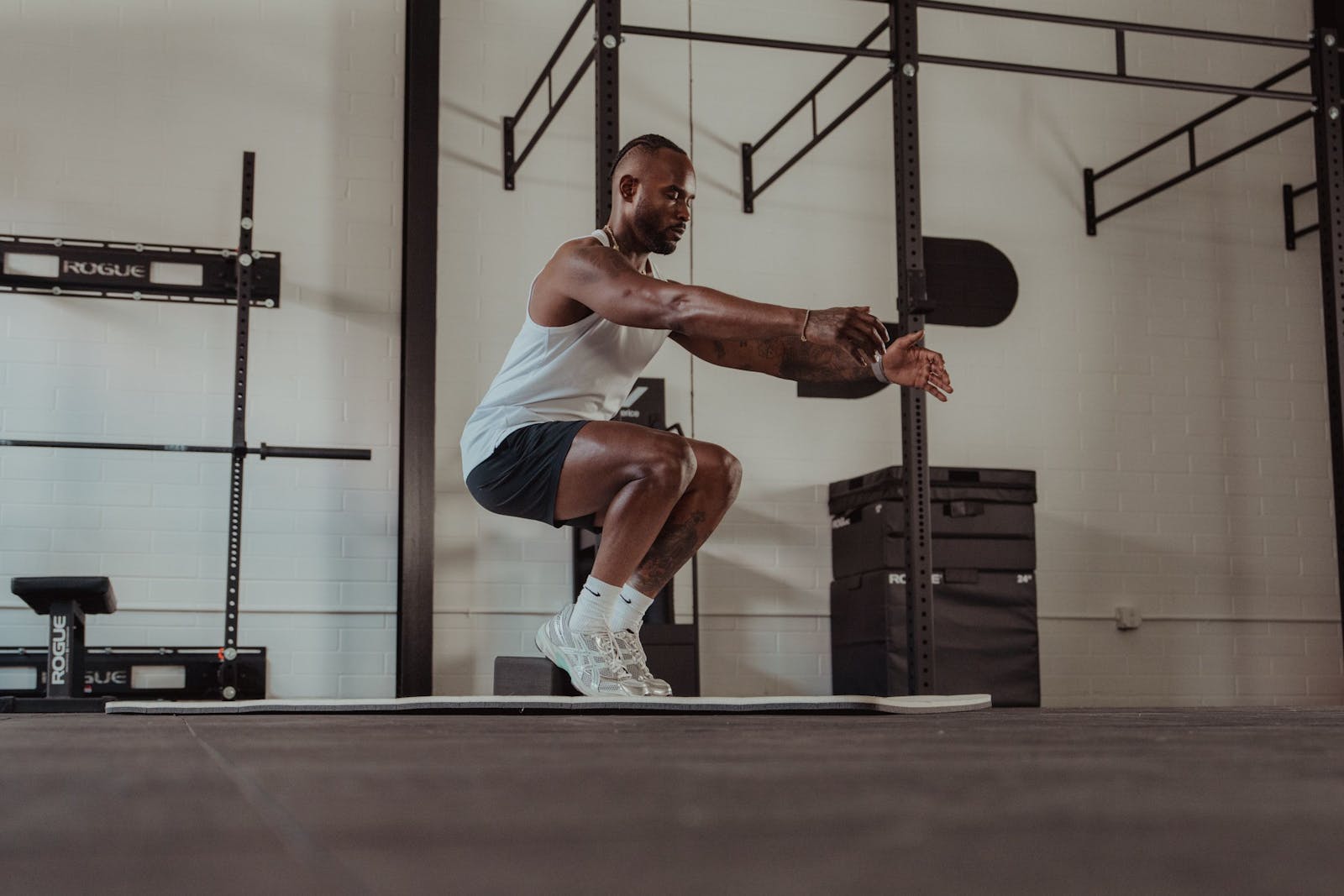
6. Deep Squat Hold
How to perform: Stand with feet shoulder-width apart and squat as low as you can while keeping your heels on the floor. Hold for 30 seconds, chest up throughout.
Benefits: Trains hip, knee, and ankle mobility in one position, the foundation for lower-body strength and explosiveness.
Best for: Weightlifters, football players, track and field athletes.
spine, shoulders, and full body
7. Thoracic Spine Rotation
How to perform: Start on all fours with hands under shoulders and knees under hips. Place one hand behind your head and rotate your upper body, bringing the elbow toward the ceiling. Repeat on both sides.
Benefits: Restores rotation in the upper back, critical for throwing, swinging, and upper-body control.
Best for: Swimmers, golfers, baseball players.
8. Shoulder Dislocations with Resistance Band
How to perform: Hold a resistance band overhead with a wide grip. Slowly bring the band behind your head, feeling the stretch across your shoulders, then return to the start.
Benefits: Builds shoulder mobility for overhead positions without forcing the joint.
Best for: Swimmers, volleyball players, weightlifters.
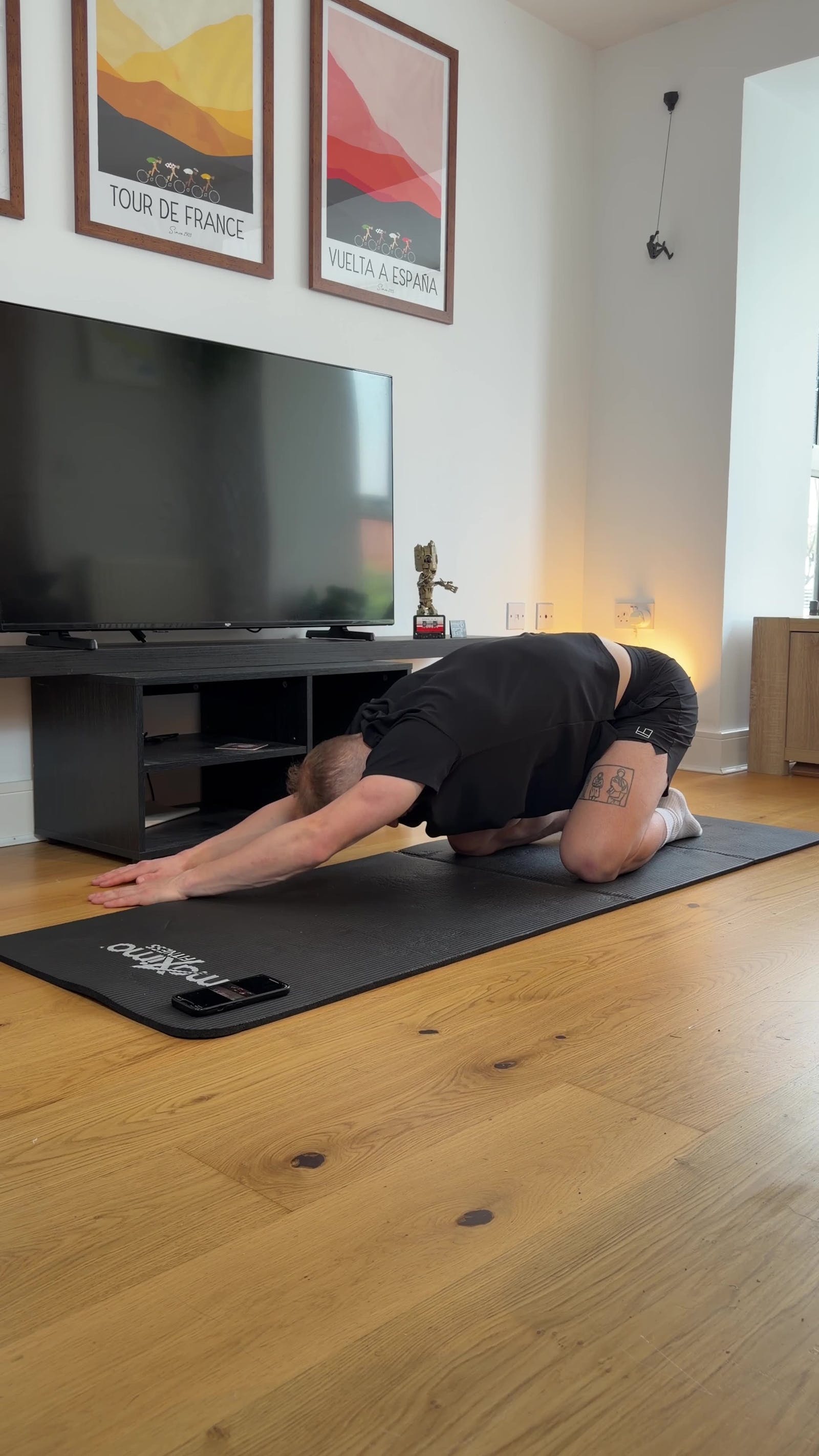
9. Quadruped Rock Back
How to perform: Start on all fours, knees under hips and hands under shoulders. Slowly sit back toward your heels while keeping a neutral spine, then return to the start.
Benefits: Improves hip and spine mobility while taking pressure off the lower back. Useful for athletes who work from low positions.
Best for: Wrestlers, gymnasts, hockey players.
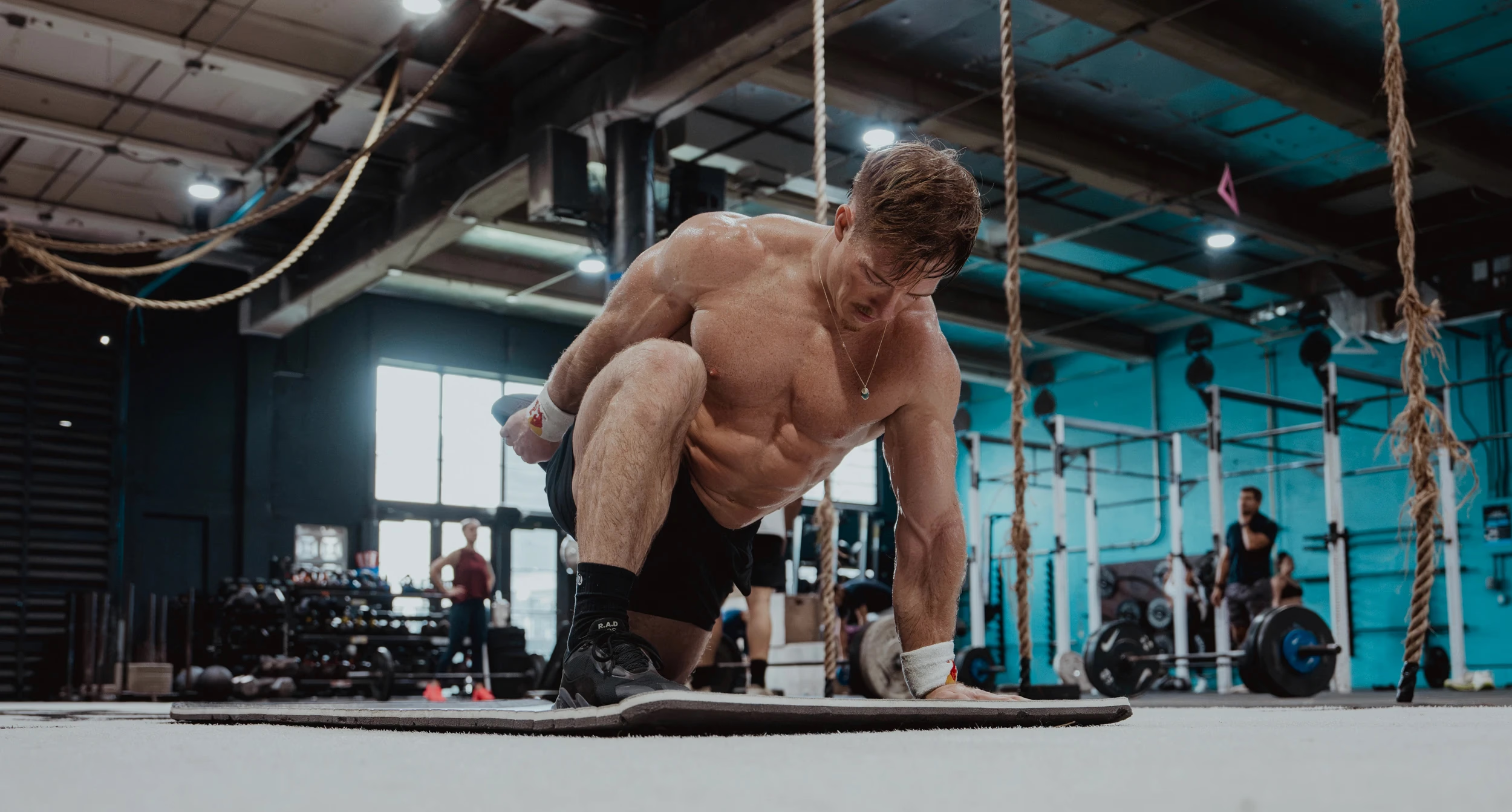
10. World's Greatest Stretch
How to perform: From a high plank, step one foot outside your hand and drop your hips. Reach the same-side hand toward the sky, rotating your torso. Repeat on the opposite side.
Benefits: Hits the hip flexors, hamstrings, and thoracic spine in one movement, a near full-body mobility drill.
Best for: Athletes in rotational sports like tennis, golf, and baseball, and anyone short on time.
mobility exercises by sport
Every sport loads certain joints hardest, so weight your mobility work toward the ranges your sport actually demands. Here is how to apply the list above to the sports we get asked about most.
mobility exercises for soccer players
Soccer is repeat sprints, hard cuts, and striking, and the hips and ankles absorb almost all of it. Tight hip flexors shorten your stride and load the low back; limited ankle dorsiflexion slows every change of direction and makes landings clumsier. Build your soccer mobility work around the hip flexor stretch (1), the 90/90 hip switch (3) for the rotation behind cutting and striking, the ankle dorsiflexion stretch (5), and the deep squat hold (6). Before a match or session, keep it dynamic: leg swings, hip circles, and a few reps of the world's greatest stretch. Save the long holds for after the final whistle, when they double as recovery.
mobility exercises for football and basketball players
Both sports live on explosive jumping, landing, and contact. Mobile ankles and hips are what let you absorb landings instead of letting the knees take them, so prioritize the deep squat hold (6), ankle dorsiflexion stretch (5), and couch stretch (2). Add shoulder dislocations (8) and thoracic spine rotation (7) if you throw, shoot, or take contact overhead.
mobility exercises for sprinters
Stride length lives in hip extension. The couch stretch (2) and hip flexor stretch (1) open the front of the hip so you can finish each stride behind you instead of cutting it short. Pair them with the ankle dorsiflexion stretch (5) for stiffer, cleaner ground contact and the world's greatest stretch (10) to keep the hamstrings and trunk rotation moving with the arm drive.
how to build a mobility routine for athletes
The exercises only work if they show up in your week. Slot them into the training you already do:
Before training: use dynamic mobility drills such as leg swings, hip circles, and moving reps of the world's greatest stretch. Skip long static holds here; parking in a stretch relaxes muscles you are about to ask for power, so save those holds for afterward.
After training: hold static positions like pigeon pose and the couch stretch for 30 to 60 seconds each, targeting whatever the session tightened up.
Between strength sets: fill rest periods with low-effort mobility work, like ankle or hip drills between squat sets. It improves your positions in real time without costing recovery.
On rest days: 15 to 20 minutes of low-intensity mobility stretches keeps joints moving and helps recovery without adding training stress.
Aim for mobility work 3 to 4 times a week. Consistency beats intensity here: sporadic marathon sessions do less than ten focused minutes repeated all week. And progress range gradually with controlled movement; bouncing or forcing a stretch trades long-term mobility for short-term soreness.
a 10-minute full-body mobility routine
When you want one full-body mobility workout that covers everything, run this circuit once, moving with control:
World's greatest stretch: 5 reps per side
90/90 hip switch: 8 slow switches
Deep squat hold: 45 seconds
Ankle dorsiflexion stretch: 30 seconds per side
Thoracic spine rotation: 8 reps per side
Shoulder dislocations: 10 slow reps
Finish with a longer hold, pigeon pose or the couch stretch, on whichever side feels most restricted. The most common mistakes are training only the joints that already feel tight and ignoring the ankles and upper back; this circuit covers both by design.
make mobility part of the program
Ten exercises will loosen you up; a system keeps the range you earn. pliability turns this work into guided video sessions built for athletes: Daily Sessions give you a fresh recovery routine every day, Paths run multi-week progressions for stubborn areas like hips or ankles, and Build Your Program shapes the plan around your sport and training schedule. Take the mobility assessment to find the restrictions actually limiting your performance, then start with 7 days free on iPhone, iPad, Android, or the web.
Related Reading



Move better in 10 minutes a day.
10,000+ five-star reviews.