


LEARN
pliability
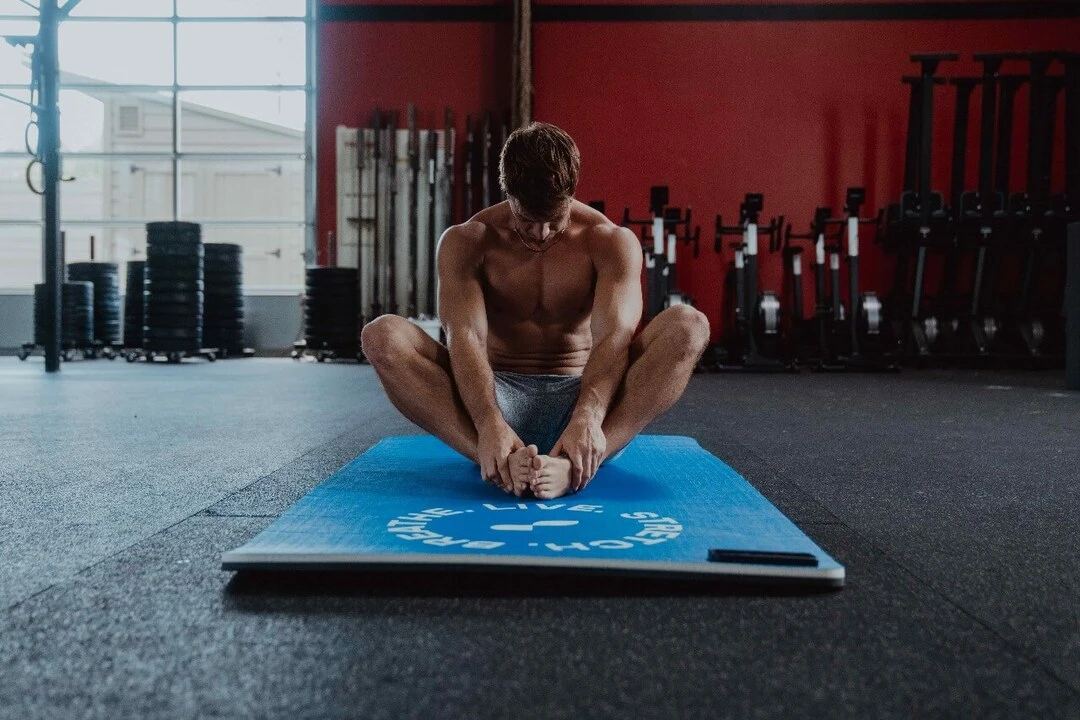
Most mobility work asks you to slow down and let go. Weighted mobility work asks something different: to stay in control while you move through your full range with load in your hands. Done well, it builds strength in the positions where you're weakest, wakes up your nervous system before training, and makes the range you already have actually usable under a bar. Mobility isn't extra work bolted onto your program. It is the program, just a different kind of rep.
This guide covers what weighted (or loaded) mobility training is, when it beats unweighted stretching, and 15 exercises worth building into your week: five you can run with a single dumbbell as a warm-up, and ten drawn from how Olympic weightlifters prepare for the deepest positions in sport. If you're newer to mobility exercises in general, start there and come back when you're ready to load.
why train mobility with weight
Strength and mobility training are usually treated as separate jobs: you lift, then you stretch. Loading your mobility work merges them. When you add a dumbbell to a controlled, full-range movement, three useful things happen:
You activate more muscle. Load increases neuromuscular recruitment, so the muscles that stabilize a position learn to fire in that position. That's what makes new range stick.
Your tissues adapt to being used, not just lengthened. Tendons and ligaments respond to load. Range you've strengthened is range your body trusts, which is why loaded work carries over to lifting, running, and sport in a way passive stretching alone doesn't.
You prep without draining. A light implement, roughly half what you'd use for a working set of a similar movement, raises muscle and nervous-system activity while keeping fatigue low. Even ten controlled reps produce a noticeable difference in how the first working sets feel.
The rule that makes all of this work: the weight should feel substantial but never taxing. If your warm-up leaves you tired, it stopped being a warm-up.
is weighted stretching the same thing?
Close cousins, different intent. Weighted stretching (or stretching with weights) uses load to deepen a held position: think letting a goblet-held kettlebell sink you deeper into a squat and staying there. Weighted mobility exercises move through the range under control rather than holding the end of it.
Both have a place. Use weighted stretches when a position feels restricted and you want time in it. Use weighted mobility movements when you want that position to get stronger. The exercises below mix the two, and the distinction matters less than the shared principle: light load, full range, total control.
5 weighted mobility exercises with a single dumbbell
These five work as a pre-lift warm-up or as a standalone mobility session. Two sets of five reps each, slow, with a dumbbell light enough that the last rep feels as crisp as the first.
1. glute bridge with pullover
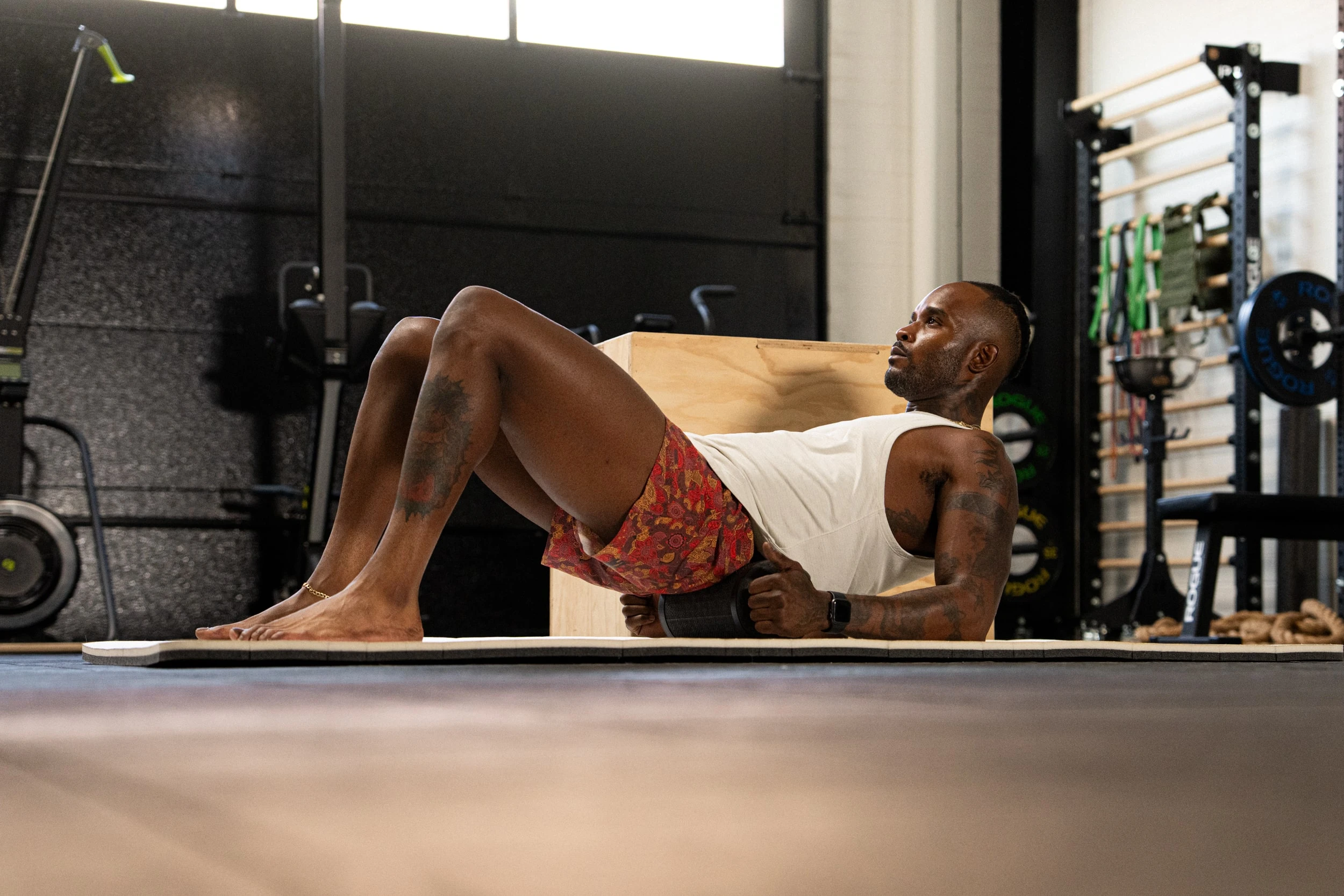
Lie on your back, feet flat, knees bent. Hold each end of one dumbbell with both hands, arms extended overhead. Press through your heels and squeeze your glutes to lift your hips until your body forms a straight line from knees to chest. Holding that bridge, pull the dumbbell in an arc until it touches the tops of your thighs, then reverse it overhead and lower your hips. Trains glutes, back, and chest while opening the front of the body.
2. dumbbell step-down
Stand on a step or low box, arms extended in front of your chest holding the dumbbell in both hands. Bend your standing leg and reach the other leg forward to tap the heel on the floor, then drive through the standing foot to rise. Alternate sides. Builds single-leg control through the exact knee and hip range that squats and lunges demand.
3. single-leg Romanian deadlift
Feet hip-width, dumbbell in your right hand. Soften your left knee and hinge at the hips, extending your right leg behind you for balance, lowering the dumbbell until your torso is near parallel to the floor. Drive through the left heel to stand. All reps, then switch. Hamstring length and hip stability in one movement.
4. Turkish get-up
Lie on your back, right knee bent, dumbbell pressed above your chest in your right hand, left arm and leg angled out. Keeping your eyes on the weight, roll onto your left elbow, then your left hand. Sweep your left leg back to a kneeling position under you, come up to half-kneeling, and stand, weight overhead the whole way. Reverse every step to return. All reps, then switch. The most complete mobility-under-load movement there is: shoulders, hips, core, and every transition between the floor and standing.
5. arm bar
Lie on your side, dumbbell in your left hand pressed toward the ceiling. Rolling your torso toward the floor, let your left shoulder blade pull down and stabilize the load directly over the shoulder joint. Pause, lower with control. All reps, then switch. Quietly one of the best shoulder-stability drills in existence.
10 weighted mobility exercises from Olympic weightlifting
No sport demands more mobility under load than Olympic lifting: deep squats, overhead positions, and ankle, hip, and thoracic range most lifters never touch. These ten drills come from how weightlifters earn those positions.
1. PVC pipe pass-throughs
Hold a PVC pipe (a broomstick works) wider than shoulder width. Arms straight, take it from your waist, up over your head, and behind you as far as your shoulders allow, then back. Narrow your grip over time. The standard for shoulder mobility for anything overhead.
2. deep squat prayer stretch
Sit into a deep squat, feet slightly wider than shoulders, toes out. Press your palms together and use your elbows to gently push your knees outward, keeping your back long. Opens hips, groin, and ankles in the position that matters.
3. deep goblet squat
Hold a kettlebell or dumbbell at your chest, feet shoulder-width, toes slightly out. Sit as deep as your range allows, heels down, knees tracking out, weight tight to your chest. Slow and controlled beats deep and sloppy; depth comes with repetition.
4. 90-90 hip rotation
Sit with your front leg bent 90 degrees in front of you and the back leg bent 90 degrees to the side. With a tall spine, lean gently over the front hip, then rotate at the hips to switch sides slowly. Internal and external hip rotation in one drill, the ranges sitting steals first.
5. supported side lunge
Take a wide stance next to a rack or pole for balance. Sink over one bent knee, other leg straight, and let the support let you go deeper than balance alone would allow. Hips and inner thighs.
6. cat-camel
On hands and knees, alternate slowly between rounding your back toward the ceiling and letting your belly drop while chest and tailbone lift. Segment by segment, not all at once. Full-spine mobility including the thoracic region that overhead lifts depend on.
7. thread the needle
From all fours, slide one arm under your body toward the opposite side, rotating your upper back while your hips stay square. Reach as far as you can, return, repeat, then switch. Thoracic rotation and a deep stretch across the upper back.
8. hammer curl
A strength move that earns its place here: the neutral grip (palms facing each other) takes your elbows and forearms through a full range they rarely see, building the arm stability that keeps heavy front racks and pulls comfortable.
9. overhead triceps extension
Dumbbells overhead, upper arms fixed, hinge at the elbows to lower the weight behind your head through a full range, then extend. Shoulder flexion and triceps length under light load, exactly what a stable overhead position requires.
10. goblet lunge
Weight held at your chest, step forward and lower until both knees are near 90 degrees, then drive back to standing. Alternate legs. Once the forward version feels smooth, add reverse and lateral variations to load the hips from more angles.
how to program weighted mobility work
As a pre-lift primer: five to ten minutes, two sets of five controlled reps of two or three drills that match the day (goblet squats and 90-90s before squatting; pass-throughs and arm bars before pressing). Half your normal working weight or less, zero fatigue. You're not just warm; you're mobile and aligned.
As a standalone session: on recovery days, run six to eight of these movements for two or three sets each at a deliberately easy load. You get a mobility session that also counts as light movement, which beats skipping the day entirely.
How often: consistency wins. Two or three short exposures a week outperform one long session, because range of motion is something your nervous system learns, and it learns from repetition.
Form rules that don't bend: move slowly enough to feel the range and own the position, keep your posture long, and stop shy of anything you can't control. If a rep needs momentum, the weight is too heavy for mobility work.
make it part of the program
Loaded mobility builds range; daily practice keeps it. pliability was built for exactly this pairing: pre-lift primers and joint mobility before you train, passive recovery sessions to downregulate after, and multi-week Paths like Mobility for Lifters and Hip Prep for Squats that work on the same positions as the exercises above. Try it free for 7 days on any platform. Mobility isn't optional; it's part of the program.
Related Reading



Move better in 10 minutes a day.
10,000+ five-star reviews.