


LEARN
pliability
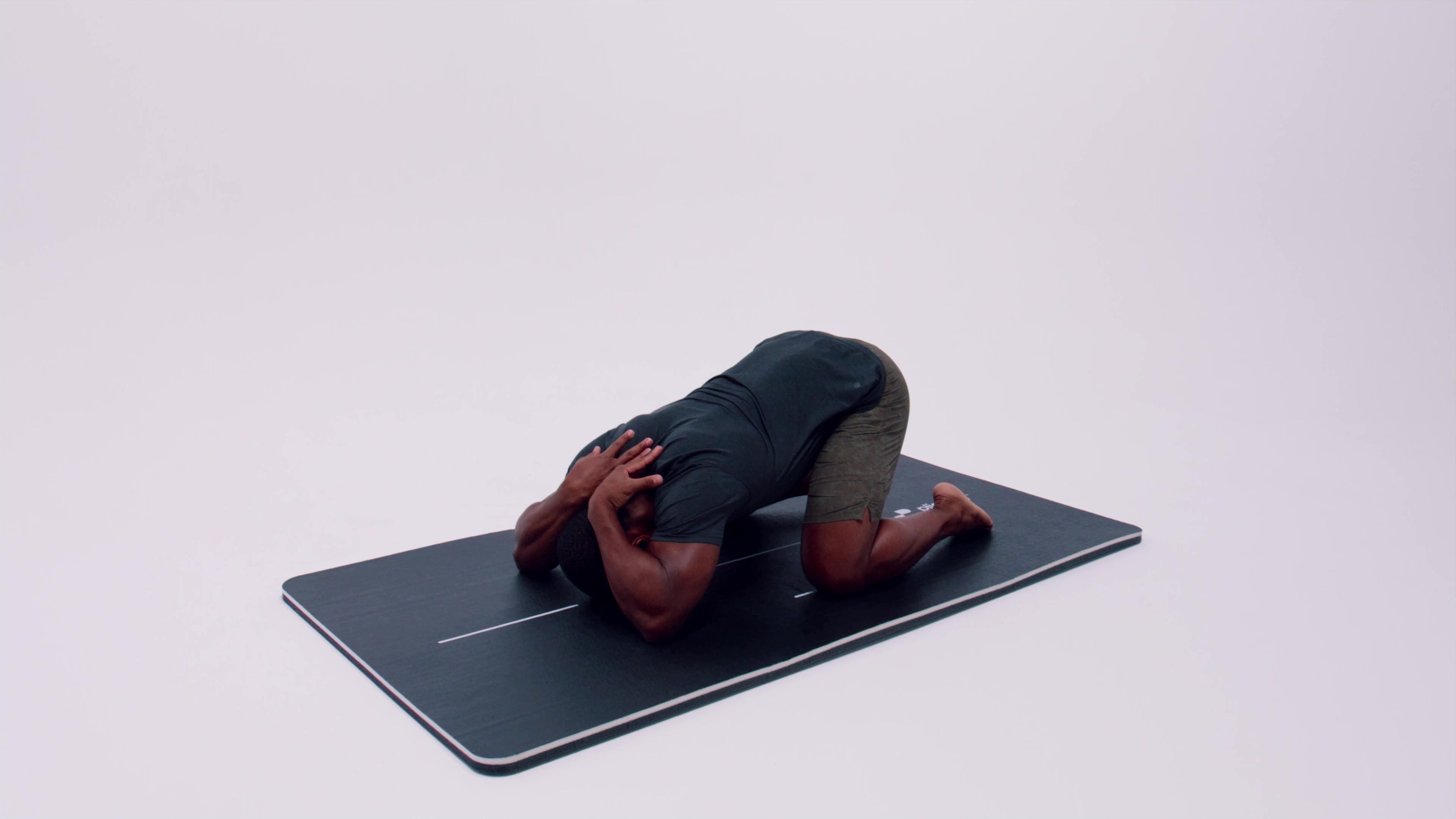
Golf involves a lot more than just swinging clubs and sinking putts. It's a game of precision and power, with your shoulders playing a significant role. Shoulder stiffness can mess with your swing and even lead to injuries. That's where golf shoulder stretches come in. They can help you loosen up, improve your performance, and alleviate pain. This article explores some effective exercises to enhance your shoulder mobility, allowing you to swing more freely and enjoy the game without worry.
how do shoulder stretches for golf specifically benefit golfers?

Golf is a sport that combines precision, power, and mobility, especially in the shoulders. The ball-and-socket joint (glenohumeral joint) and the upper back (including the scapulothoracic joint and thoracic spine) require complete flexibility. This is true for the end of your backswing and without restrictions, all the way into your follow-through. Tightness or weakness in these areas can lead to poor swing mechanics, reduced range of motion, and even injury over time.
For golfers, maintaining shoulder flexibility and mobility is crucial to performance, as it enables faster clubhead speed, more consistent swing mechanics, and reduced fatigue at the end of a round. Incorporating a few targeted stretches and mobility exercises into your routine can enhance your game while maintaining healthy shoulders.
phases of the golf swing
The golf swing is divided into 5 phases:
The backswing: From address to the top of the swing
The downswing: From the top of the swing to the horizontal positioning of the golf club (early part of downswing)
The acceleration phase: From horizontal club position to ball impact (late part of downswing)
The early follow-through: From impact to horizontal club positioning
The late follow-through: From horizontal club position to completion of the swing.
shoulder muscle activity during the golf swing
Different shoulder muscles are active during the 5 phases of the swing. There is high activity of the middle, lower, and upper trapezius of the trailing arm during the backswing.
This helps your shoulder blade retract and upwardly rotate. Any weakness of these muscles leads to irritation of the rotator cuff, bursa, and biceps tendon.
Rotator Cuff Muscles
Your rotator cuff muscles in your trailing arm are also highly active during the backswing. These muscles stabilize your shoulder joint as the larger muscles (your pecs and lats) produce high forces to move the club with speed.
Serratus Anterior
Your serratus anterior in the trailing arm shows high activity during the downswing. This helps stabilize your shoulder blade and produce added power.
Many golfers and overhead athletes demonstrate weakness in this muscle. Dedicated strengthening exercises for your serratus are imperative for long-term shoulder health.
the role of rotator cuff and shoulder muscles in golf
One of your rotator cuff muscles, the supraspinatus, is highly active in the lead arm during the backswing. The lead arm also shows high activity of the trapezius, serratus anterior, and rhomboids during the downswing and acceleration phase of the swing.
As you can see, many muscles around your shoulder contribute to the golf swing. A well-rounded shoulder exercise program addresses all of these muscles.
enhance your golf swing with shoulder stretches
Golf demands precision, power, and mobility, particularly in the shoulders. The glenohumeral joint and the scapulothoracic joint require complete flexibility to execute a fluid swing.
The movement from backswing to follow-through relies on shoulder mobility and flexibility. A limited range of motion can impact swing mechanics and increase the risk of injury.
avoid stiffness and improve performance
Stiffness in the shoulders can hinder performance on the golf course. Rigid shoulders restrict movement, leading to awkward swings and an increased risk of potential injuries.
Incorporating targeted shoulder stretches into your routine can help reduce stiffness and improve your performance. Enhanced flexibility enables you to execute smooth swings with ease, resulting in more accurate shots.
minimize the risk of rotator cuff strains
Rotator cuff strains are common among golfers due to the repetitive nature of the swing. Strengthening and stretching the shoulder can help you avoid these injuries.
The rotator cuff supports the shoulder joint and stabilizes it during the swing. By improving your shoulder strength and flexibility, you can minimize the risk of strains and play pain-free.
enhance your swing mechanics
Shoulder flexibility plays a crucial role in swing mechanics. A smooth and controlled swing requires a full range of motion in the shoulders.
Limited mobility can lead to compensatory movements, which can impact your accuracy and consistency. By enhancing your shoulder flexibility, you can improve your swing mechanics and achieve better results on the course.
22 golf shoulder stretches for better posture, power, and control
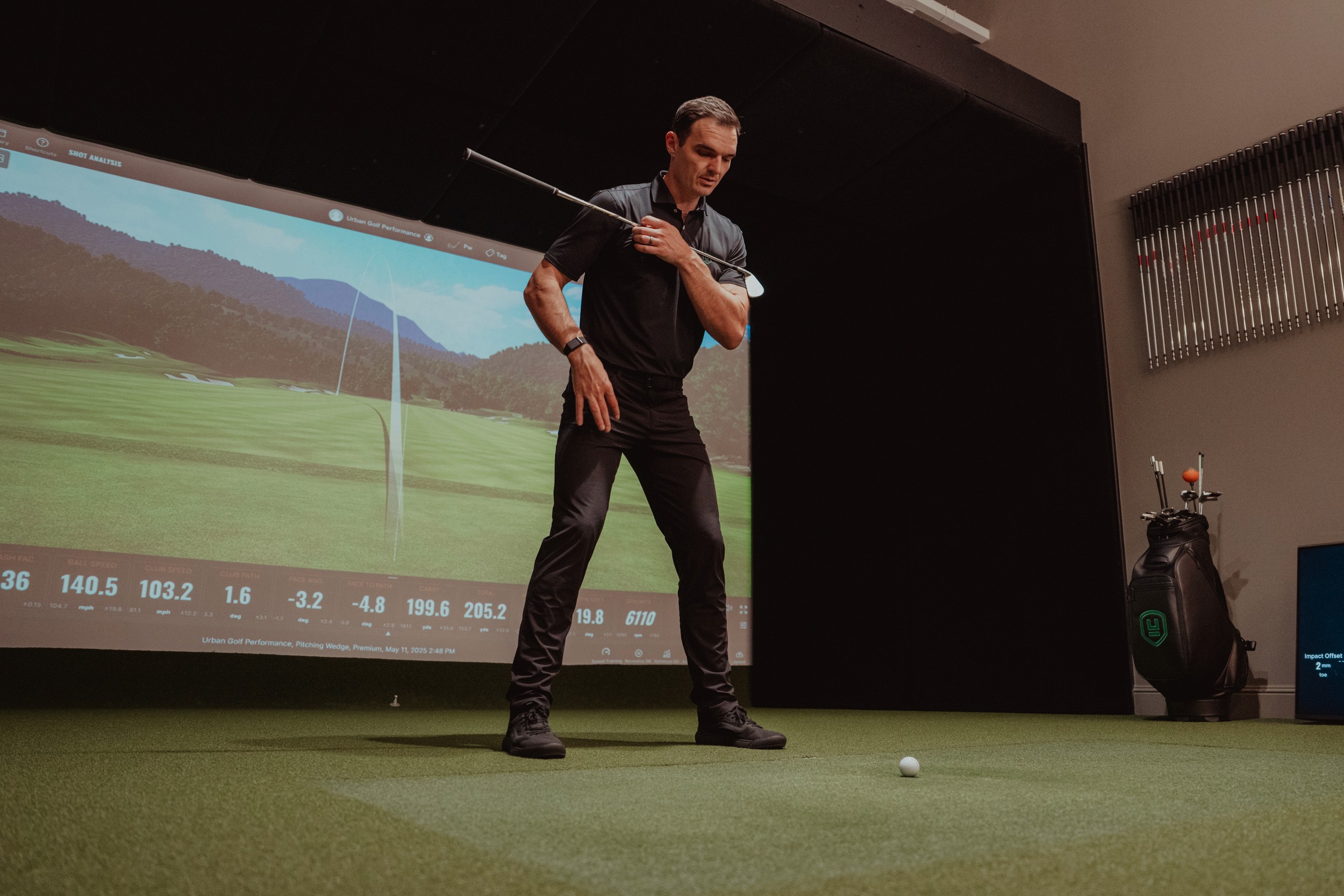
1. cross-body shoulder stretch
This stretch targets the posterior rotator cuff muscles, helping to improve shoulder flexibility for a smoother backswing and follow-through.
How To Do It
Stand tall or sit in a comfortable position.
Bring your right arm across your chest, keeping it straight.
Use your left hand to pull your right arm closer to your body.
Hold for 30 seconds, then switch arms.
2. wall angels
This stretch enhances shoulder external rotation, a crucial component for maintaining proper club positioning throughout the swing.
How To Do It
Stand with your tailbone and shoulder blades against a wall, and your heels can be a few inches forward.
Place your arms low at your side, palms facing forward.
Raise your arms overhead as if you were performing a snow angel or jumping jack, while keeping your forearms against the wall.
Lower your arms back to your side, and repeat 15-20 times.
3. doorway pec stretch
Why it helps: This stretch primarily targets the chest muscles, which, if tight, can limit your backswing.
How To Do It
Stand in a doorway and place your elbow on the frame at shoulder height.
Step forward with one foot until you feel a gentle stretch across your chest and shoulders.
Hold for 30 seconds, then relax.
4. internal rotation stretch with a towel
This stretch increases internal rotation, a crucial movement for achieving a full and controlled backswing.
How To Do It
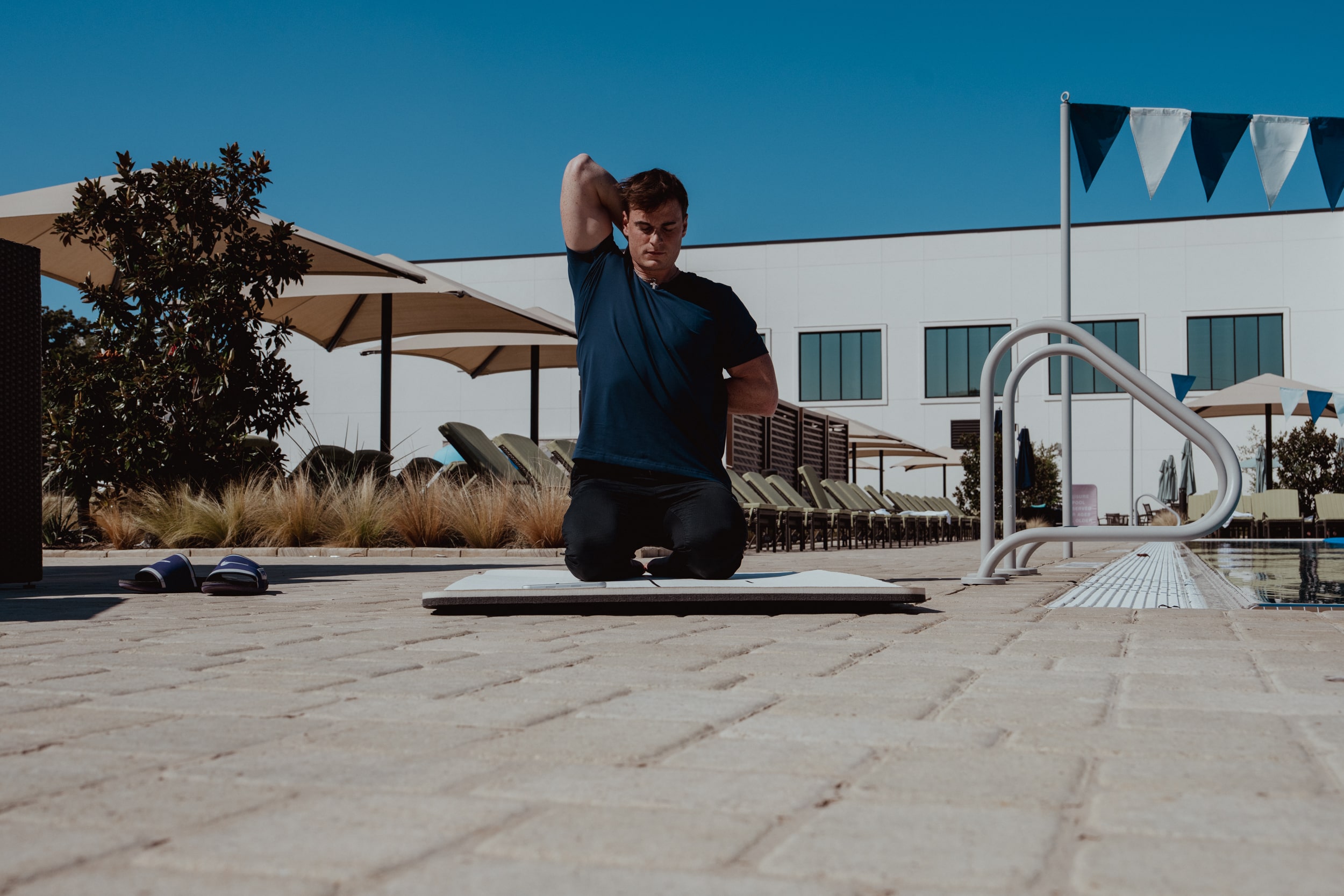
Hold a towel or resistance band behind your back with one hand overhead and the other behind your lower back.
Gently pull the towel upward with your top hand to stretch the lower shoulder.
Hold for 30 seconds, then switch to the other side.
5. thoracic spine wall rotation
This exercise helps improve shoulder mobility by enhancing thoracic spine rotation, a key movement in the golf swing.
How To Do It
Stand with your side next to a wall, with your outside leg on a step.
Place both arms outstretched in front of your body, on the wall.
Raise your inside arm up and overhead against the wall, until it is pointing behind your body.
Raise the same inside arm back overhead to the starting position. Repeat for 15-20 reps, then switch to the other side.
6. thoracic spine extension over foam roller
The pressure on your back provides the same gliding motion at each vertebra required various phases of a golf swing, especially with a driver.
How To Do It
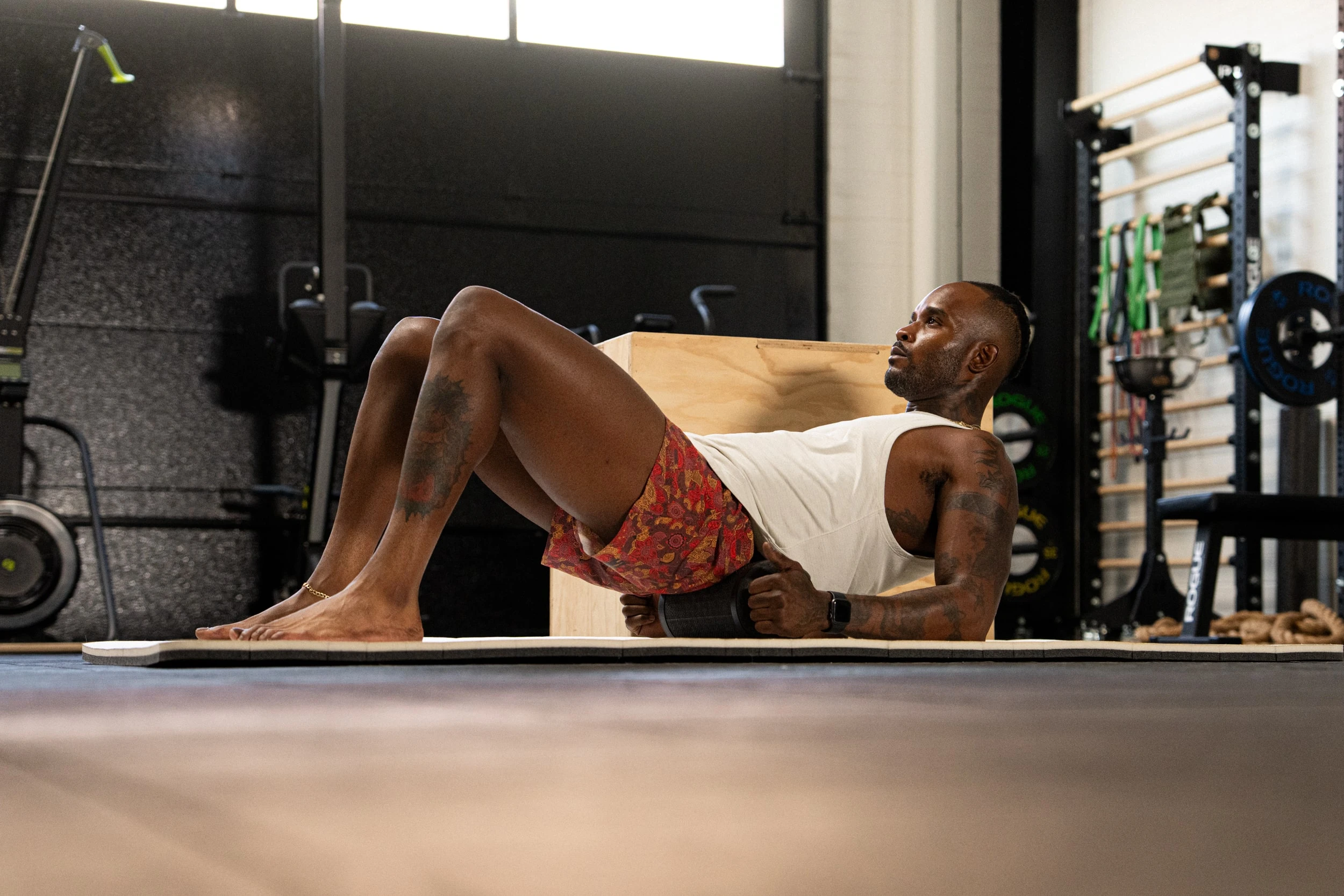
Recline on the floor with a foam roller under your upper back.
Lift your hips and extend your back over the foam roller.
Gently and slowly roll up or down your back (avoid the neck and low back areas).
Try 30-60 seconds, then take a moment to relax.
7. shoulder ER stretch in abduction
How To Do It
Begin in a standing upright position facing a wall. Place one arm out to the side, with your elbow bent to 90 degrees, and your arm flat against the wall.
Gently rotate your trunk away from your arm until you feel a stretch in your chest, then hold.
Be sure not to shrug your shoulders, and avoid arching your back during the exercise.
8. seated shoulder external rotation PROM on table
How To Do It
Begin sitting upright with your forearm resting on a table or bed at the level of your elbow. Your palm should be flat.
Keeping your arm on the table, bend your upper body forward until a stretch is felt in your shoulder and hold.
Make sure to keep your back straight during the exercise and arms resting flat on the table.
9. quadruped full range thoracic rotation with reach
How To Do It
Begin on all fours.
Lift one arm out to your side, then to the ceiling, rotating your trunk at the same time. Next, reach that arm all the way under your body, through your opposite arm and leg, rotating your trunk in the opposite direction. Repeat these movements.
Ensure that your movements are smooth and controlled. Follow your arm with your head as you move.
10. shoulder external rotation in abduction with anchored resistance
How To Do It
Begin in a standing, upright position with your arms out to the side and your elbows bent at 90 degrees, with your palms facing the floor.
Slowly rotate your arms upward until your palms are facing forward and hold.
Ensure that your elbows stay up as you rotate your arms and maintain a gentle chin tuck throughout the exercise.
11. supine shoulder horizontal abduction with resistance
How To Do It
Begin lying on your back with your knees bent and the ends of a resistance band in each hand. Your arms should be straight up toward the ceiling.
Pull your arms apart against the resistance band, straight out to your sides, then slowly bring them back to the starting position and repeat.
Ensure your back remains flat on the floor during the exercise.
12. standing spinal twist
This is an excellent stretch for releasing tension in your hamstrings and lower back, as well as loosening the muscles around your spine to prepare for your swing.
How To Do It
Stand with your feet wider than shoulder width apart.
Place your left hand facing outwards at your lower back. Bend your left leg slightly as you reach your right hand to touch your toes.
From there, reach up to your left.
Repeat on both sides.
13. standing side stretch
This stretch opens up your chest and releases tension throughout your body resulting in reduced lower back pain.
How To Do It
Hold your golf club in your left hand and step forward with your left leg, placing your right foot on the left side of your left foot.
Holding onto the golf club for support with your left hand, reach your right hand up and over your body. Bring your gaze up to the sky.
Do this on both sides.
14. shoulder flossing
Shoulder flossing helps increase mobility in your shoulders, which in turn prepares you for a bigger golf swing.
How To Do It
Hold your golf club in both hands at the front of your body.
Lift your arms up.
Stretch your arms backward as far as you can.
Repeat a few times.
15. stir-the-pot planks
Core stability, ankle mobility and shoulder strength/mobility to control the golf club at higher swing speeds while remaining in posture.
How To Do It
From a modified plank position with your forearms set inward, hands laced together, make circles with your upper body in both directions.
Keep your spine in a neutral (flat) position and your core muscles tight as you perform these exercises for as long as you can, until you become too fatigued to do them correctly.
16. prone shoulder T rotations
Shoulder-joint mobility and scapular stability to control the golf club better.
How To Do It
From a prone (face down) position with your arms extended to your sides as if forming the letter T and your hands thumbs up, make half circles over your head and back down.
Allow your torso to lift off the ground to help complete the movements. Ensure your shoulder blades remain pinched.
After several reps, flip the hands into a thumbs-down position and do several more reps.
17. Y position
How To Do It
Take a resistance band and find a stable piece of equipment to wrap it around, so the band's handles face toward you. Stand with your feet shoulder-width apart, with the band in front of your body at a height between your chest and belly button (whatever feels comfortable).
Grab onto each band and extend your arms to both sides, forming a "Y" shape with your body.
Be sure to extend your arms as far back as you can behind your body to activate muscles in the shoulders, back, and neck. Hold this position for 5 seconds, and extend your arms back to the starting position.
Do this in four rounds of 15 reps. You can also start with this stretch without a resistance band, simply forming the "Y" shape with your arms.
18. T position
How To Do It
Begin by standing with your feet shoulder-width apart, with the exact resistance band instructions as the "Y" move.
Grab onto each band and extend your arms out to both sides, forming a "T" shape with your body. Be sure to extend your arms as far back as you can behind your body to activate muscles in the shoulders, back, and neck.
Hold this position for five seconds, and extend your arms back to the starting position. Do these in four rounds of 15 reps. You can also do this stretch without a resistance band to start, simply forming the "T" shape with your arms.
19. W position
How To Do It
Begin by standing with your feet shoulder-width apart, with the resistance band now in front of your body at about chest height.
Bend your elbows to a 90-degree position, and bring your hands up towards your shoulders, forming a "W" shape. Be sure to extend your arms as far back as you can behind your body to activate muscles in the shoulders, back, and neck.
Hold this position for five seconds, and extend your arms back to the starting position. Do these in 4 rounds of 15 reps. You can also start with this stretch without a resistance band, simply forming the "W" shape with your arms.
20. shoulder pendulum swing
How To Do It
Stand and lean forward slightly, supporting yourself with a table or chair.
Let your affected arm hang down.
Gently swing your arm in a circular motion clockwise and counterclockwise.
Perform this exercise for 1-2 minutes daily to improve blood flow and reduce shoulder stiffness.
21. isometric shoulder contractions
How To Do It
Sit or stand with your back straight.
Place your hands on your thighs with your palms facing down.
Push your hands into your thighs, engaging your shoulder muscles.
Hold the contraction for 5-10 seconds, then release.
Repeat this exercise for 10-15 repetitions, working both shoulders.
22. inferior capsular stretch
How To Do It
Hold arm overhead with elbow bent and arm straight ahead. Using the opposite arm, stretch it further overhead.
Bring the arm to the point where a gentle stretching sensation is felt.
Hold for 5-8 seconds and repeat several times.
golf stretches for better rotation

Rotation is the engine of the golf swing. The torso, hips, and shoulders move together to generate power and control, so if any link in that chain is stiff you lose clubhead speed and consistency. The shoulder work above opens the top of the chain; the rotational stretches below add the torso, hip, and core drills that turn shoulder mobility into a fuller, more powerful turn. Several of these also build the explosive rotational strength behind more driving distance and faster swing speed.
1. standing torso rotation
This drill improves your ability to rotate your upper body independently of your hips, a crucial aspect of the golf swing. It expands your range of motion and helps you generate power while keeping control through the swing.
How To Do It
Stand with your feet shoulder-width apart.
Hold a golf club or similar object with both hands, extended in front of you.
Keeping your hips stable, rotate your upper body to the right as far as comfortable, then rotate to the left.
Perform 10-15 rotations in each direction.
2. seated trunk rotations
Seated trunk rotations build spinal mobility and target the muscles responsible for rotation, helping you hold a balanced, stable posture during your swing.
How To Do It
Sit on the floor with your legs extended straight.
Cross your right leg over your left, placing your right foot flat on the floor outside your left knee.
Place your left hand on the outside of your right knee.
Inhale and lengthen your spine, then exhale and gently twist your torso to the right. Hold for 20-30 seconds, feeling the stretch in your spine and obliques.
Repeat on the other side.
3. kneeling thoracic rotations
This drill enhances rotational mobility in the thoracic spine, which is essential for a full and controlled backswing and follow-through.
How To Do It
Begin in a kneeling position with your knees hip-width apart.
Place your hands behind your head, elbows out to the sides.
Rotate your upper body to the right, aiming to bring your right elbow toward your left knee, then return to center and rotate to the left.
Perform 10-15 rotations on each side.
4. lunge with spinal twist
The hips are one of the most important areas for the golf swing. Limited hip mobility reduces your ability to turn in the backswing and downswing, and proper hip rotation drives the rhythm, tempo, and accuracy that keep the club face square. This lunge opens the hip flexors and adds a spinal twist at the same time.
How To Do It
Start standing with your feet together, then take a big step forward with your left foot into a staggered stance.
Bend your left knee and drop into a lunge, keeping your right leg straight behind you with your toes on the ground, so you feel a stretch at the front of your right thigh.
Place your right hand on the floor and twist your upper body to the left as you extend your left arm toward the ceiling. Hold for 30 seconds to 2 minutes.
Repeat on the other side.
5. 90/90 hip stretch
An efficient golf swing needs both internal rotation (rotating into your hip) and external rotation (rotating out of your hip). This stretch targets both, along with the glutes, flexors, piriformis, and psoas that surround the hip capsule.
How To Do It
Sit on the floor and bend one leg in front of your body with your hip rotated out, so your lower leg and knee rest on the ground at a 90-degree angle with the ankle neutral.
Position your other leg beside you with your hip rotated inward and your shin and ankle on the ground, knee bent to a 90-degree angle in line with your hip.
Keep your back straight and sit into both hips equally, easing the lifted hip straight down toward the ground.
Hold for up to 60 seconds, breathing deeply. Complete 2-3 reps on each side.
6. standing lateral leg swings
Lateral leg swings improve hip flexibility and stability and help open the hips for proper weight transfer during the swing, while engaging the core and leg muscles for balance and coordination.
How To Do It
Stand beside a wall or sturdy support for balance and hold on with one hand.
Swing your outside leg laterally in front of you and then behind you.
Keep your upper body stable and use the swinging motion to engage your hip and torso muscles.
Perform 10-15 swings on each leg.
7. side plank rotations
A strong core transfers power as you transition from the backswing to the downswing and through impact. It also stabilizes your body and protects the lower back by reducing pressure on the spine and pelvis during the swing.
How To Do It
Start in a side plank position with your right forearm on the ground, shoulder directly over your elbow, feet stacked, and hips lifted off the ground.
Reach your left arm straight up to the ceiling and get long through your body from head to toe.
As you exhale, reach your left arm underneath your torso and feel your obliques engage, then inhale and unwind to reach the arm back up to the sky.
Keep your core tight and glutes engaged for stability. Repeat, then switch sides.
8. seated Russian twists
Russian twists build core strength and rotational power, both vital for stability and generating clubhead speed, and they target the obliques that drive torso rotation for more distance.
How To Do It
Sit on the floor with your knees bent and feet flat.
Lean back slightly and lift your feet off the ground, balancing on your sit bones.
Hold a medicine ball or water bottle with both hands close to your chest.
Rotate your torso to the right, bringing the object close to the floor beside your hip, return to center, then rotate to the left.
Continue for 10-15 twists on each side.
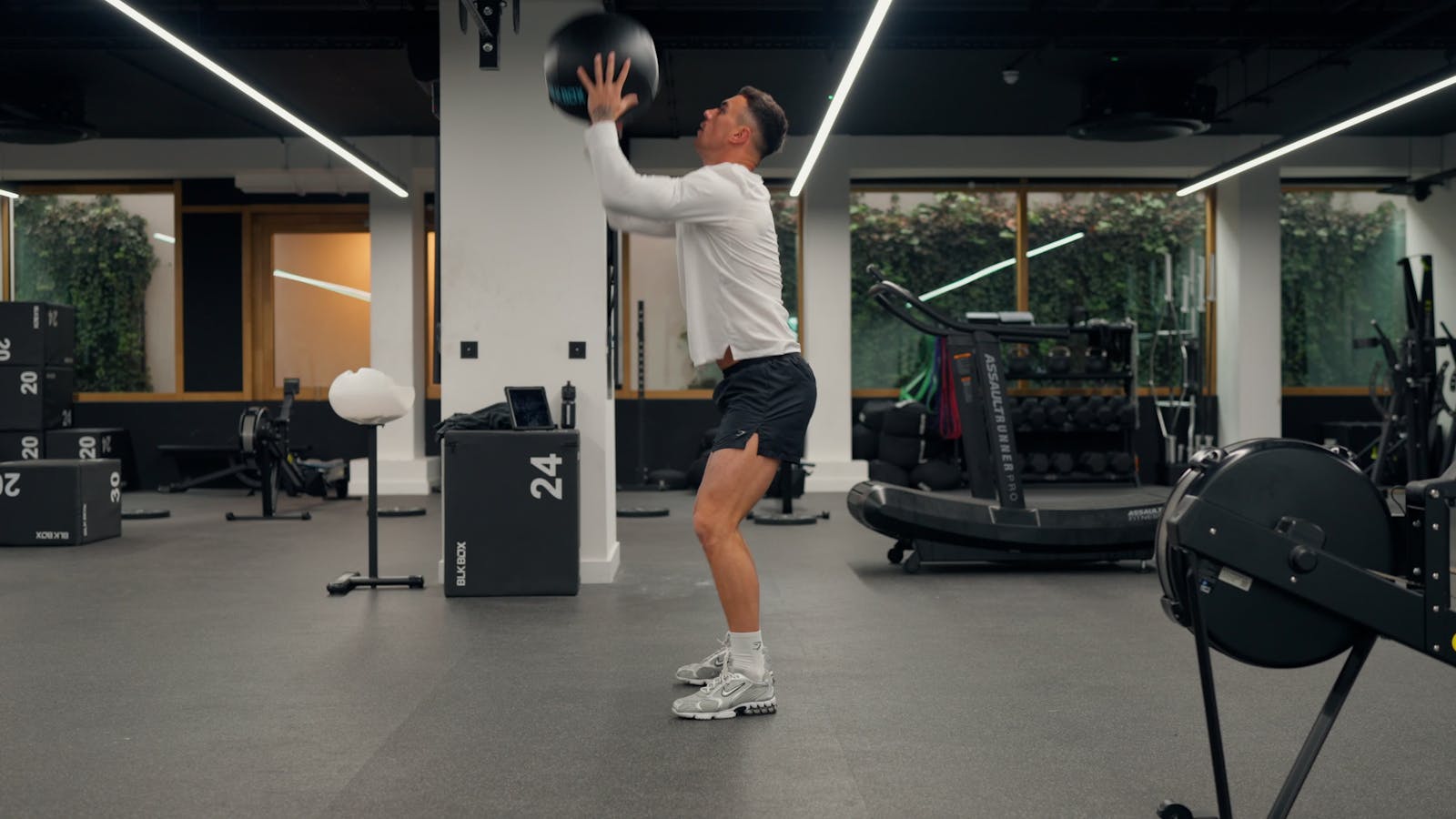
9. medicine ball rotational throws
This exercise simulates the rotational movement of your swing and builds explosive power through the core and hips, training your muscles to work together for more driving distance.
How To Do It
Stand sideways about three feet from a wall.
Hold a medicine ball at chest level with your knees slightly bent.
Rotate your body away from the wall, then forcefully rotate toward it, throwing the ball against the wall.
Catch it and repeat for 10 reps per side.
10. standing resistance band rotations
Adding a resistance band loads your rotation, making it more effective for strengthening and mobilizing the upper-body muscles that drive swing speed.
How To Do It
Attach a resistance band at chest height to a sturdy anchor point.
Stand with your side to the anchor point, holding the band with both hands at chest level.
Rotate your upper body away from the anchor point, then slowly return to the starting position.
Perform 10-15 rotations on each side.
build shoulder mobility into your golf routine
Mobility and flexibility are crucial for golfers and fitness enthusiasts alike. They not only enhance performance but also aid in recovery, reduce pain, and improve range of motion. pliability turns the stretches above into guided daily sessions: Daily Sessions rotate fresh shoulder and rotation work into your week, Paths run a multi-week progression to open up a stubborn shoulder, and Build Your Program shapes a plan around your own swing. Take the mobility assessment to find out exactly what's restricted before you start. Try it free for 7 days on iPhone, iPad, Android, or the web.
Related Reading


Move better in 10 minutes a day.
10,000+ five-star reviews.