


LEARN
pliability

You know the feeling: stepping onto the pitch, your hips and hamstrings are tight, your first sprint feels heavy, and you worry about pulling something before halftime. Dynamic stretching for soccer matters because it wakes up muscles, increases range of motion, and primes speed, agility, and explosiveness without leaving you loose or sluggish. This article provides clear, practical warm-up sequences, best stretching exercises, mobility drills, and muscle activation techniques targeting hip mobility, groin, quads, joints, and neuromuscular control, ensuring you arrive ready to play.
why is stretching important in soccer?

Stretching prepares the muscles, joints, and nervous system for the specific demands of soccer. It raises muscle temperature, increases range of motion, and improves joint mobility, allowing you to reach, twist, sprint, and change direction with less resistance.
That preparation lowers the chance of strains, sprains, and tears by enabling tissues to absorb force more smoothly and by improving proprioception and balance.
movement preparation: dynamic stretching before the match
Dynamic stretching uses active movement to take joints through their full range of motion while gradually increasing speed. Use mobility drills and sport-specific dynamic stretches, such as:
Leg swings front to back and side to side
Walking lunges with a torso twist
High knees
Butt kicks
A skips, lateral shuffles
Hip circles
These drills drive neuromuscular activation, improve hip mobility and ankle mobility, and prime fast-twitch fibers for sprint work and plyometric prep. Perform a dynamic warm-up routine for eight to twelve minutes, starting slowly and gradually increasing intensity to make your sprint prep and agility drills feel natural.
cool down and reset: static stretching after play
Static stretching involves holding a stretch for a controlled period to lengthen muscle tissue and preserve flexibility. After training or a match, hold each targeted muscle for about twenty to thirty seconds:
Hamstrings
Quadriceps
Calves
Hip flexors
Adductors
Glutes
Lower back
Add light foam rolling and breathing work to improve circulation and help the nervous system shift out of high tension. Use these post-match tools to restore range of motion and support recovery.
protect the frame: how stretching reduces injury risk
Stretching improves tissue elasticity and joint mobility, so muscles and tendons tolerate load better. Dynamic mobility before movement sharpens proprioception and coordinated muscle firing, which lowers the chance of missteps that lead to sprains or tears.
Regularly working hip mobility and groin flexibility reduces chronic compensations that cause overuse injuries.
boost your game: stretching effects on speed, agility, and power
Improved range of motion lets you generate longer effective strides, produce cleaner hip extension for acceleration, and achieve larger rotation for stronger kicks. Dynamic flexibility and movement preparation help synchronize hip, glute, and core activation, enabling you to transfer force into the ground and react faster in various situations.
Pair dynamic drills with short sprint and agility sets to translate mobility gains into on-field speed and quickness.
recovery and energy: circulation, soreness, and the nervous system
Active stretching increases blood flow to working muscles, delivering oxygen and nutrients and helping clear metabolic byproducts. That faster circulation eases delayed onset muscle soreness and supports more rapid recovery between sessions.
Gentle mobility and breathing techniques also calm the central nervous system, helping you recover energy and focus during halftime and after matches. Use short mobility breaks during practice to keep tissues ready for repeated efforts.
long game: how consistent stretching extends your playing career
Daily mobility work preserves joint health and delays the loss of range of motion that comes with repeated high loads. Balanced flexibility across the hips, hamstrings, quads, adductors, calves, and ankles reduces compensatory movement patterns that lead to chronic pain.
Combine targeted stretching with strength and eccentric loading to adapt tendons and maintain resilience as you age, keeping you competitive for more seasons.
sample dynamic warm up and post-match static routine you can use today
Dynamic warm-up routine, eight to twelve minutes: light jog for two minutes, leg swings ten each side front to back and ten each side lateral, walking lunges with twist eight each leg, high knees twenty meters, butt kicks twenty meters, A skips twenty meters, lateral shuffles twenty meters, three accelerations thirty meters at increasing intensity.
Post-match static routine:
Hamstring hold for thirty seconds on each side
Quad hold thirty seconds each side
Calf stretch for thirty seconds on each side
Hip flexor kneeling stretch, thirty seconds each side
Glute figure four, thirty seconds each side
Groin butterfly thirty seconds
practical tips to guide your plan
Match your dynamic drills to the work you will do on the field and sequence them before speed and agility work. Perform short dynamic activation sets when substituting into a cold match. Track which stretches free up your stride or cut sooner; adjust the time spent on those areas.
soccer warm-up stretches: how to sequence a complete warm up for soccer
Soccer warm ups work best in a set order: raise your core temperature first, move through dynamic soccer warm-up stretches next, and save long static holds for after the final whistle. Start every session with light aerobic activity, such as jogging, jump rope, or dynamic footwork. Follow that with five to ten minutes of dynamic mobility drills that progress in intensity, and reserve static stretching for the post-session cooldown and for targeted flexibility work on recovery days.
which muscles should soccer warm-up exercises target first?
Target the prime movers for running and kicking first:
Calves
Hamstrings
Quads
Hip flexors
Glutes
Adductors
Add core activation and thoracic mobility to help transfer force and maintain balance during rapid direction changes. Prioritize weak or tight areas based on past injury and positional demands.
a ready-made sequence of soccer warm-ups
Use this sequence when you want a complete warm up for soccer that activates the right muscle groups and the nervous system for sport-specific demands:
Easy jog and mobility flow for two to three minutes.
High knees and butt kicks, 20 meters each, at progressively increasing speed.
Leg swings from front to back and side to side, 10 repetitions for each leg.
Walking lunges with torso twist for 10 to 12 steps.
Carioca or lateral mobility for 20 meters.
Bounding and stride-outs, building up to 80 percent-effort sprints over 30 meters.
Short agility ladder or cone drills for quick feet and change of direction.
open and close the gate: a warm-up drill for coordinated hip motion
March in place, lifting one knee. When the knee is up, open the hip outward like opening a gate and return to the center, then lift and rotate inward to close the gate. Perform 10 to 15 reps per side in a smooth, controlled manner to train the coordinated hip motion used in cutting and dribbling while reducing early game stiffness.
23 best dynamic stretching for soccer warm-ups every player should try

1. world’s greatest stretch: open hips and rotate the chest for quick turns
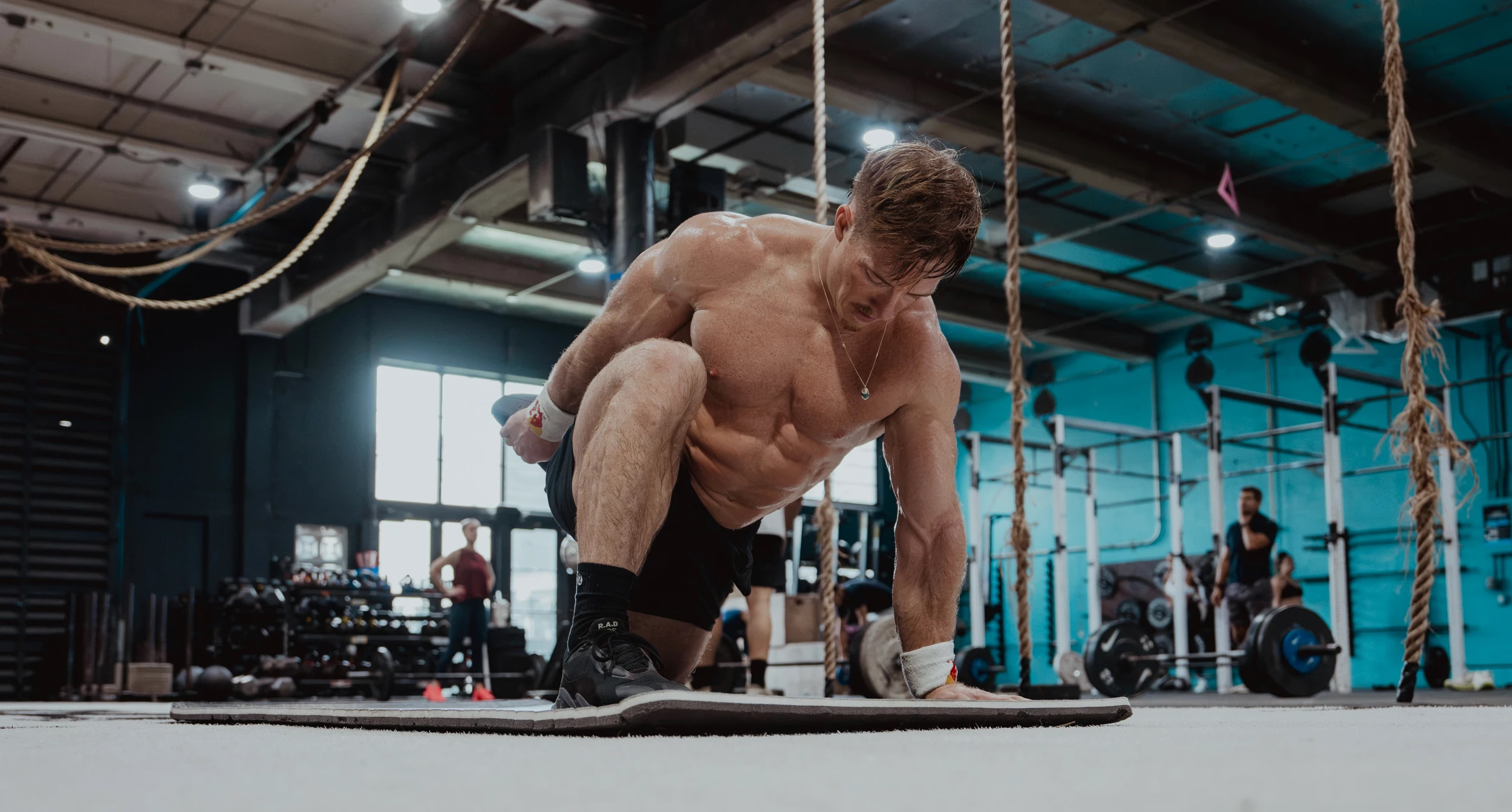
Begin in a high plank position, then bring your right foot beside your right hand, keeping your hands on the ground and your left leg back. Drop your hips toward the floor, then reach your right arm up and rotate your chest to look at the ceiling. Hold the reach briefly and repeat on the other side for mobility that helps sprint starts and cutting maneuvers; do 6 to 8 slow reps per side.
2. hip circles: smooth hip joint mobility for dribbling and change of direction
On all fours, swing one leg out and make controlled small circles forward and backward, then switch legs. Maintain core stability and focus on a smooth range of motion to prime your hip flexors, glutes, and adductors. Perform eight circles in each direction per leg to boost hip mobility for lateral moves.
3. skipping arm swings: warm shoulders and coordinate arm drive with sprinting
Skip forward while crossing your arms in front of your chest like a quick self-hug, then skip back, opening the arms. Match arm swings to leg rhythm to improve arm pump and upper body rotation used in sprints and aerial challenges. Do 20 to 30 meters each way.
4. lunge with a twist: activate quads, glutes, and thoracic rotation for passing power
Step forward into a deep lunge, pause with the back knee just above the ground, then rotate your torso toward the front leg before driving up. Alternate legs as you move forward to activate hip flexors, core stability, and rotational power for long passes and shots. Continue for 20 yards, switching lead leg each step.
5. leg swings: dynamic adductor and abductor activation for kicking and cutting
Maintain a stable support and swing one leg across your body, then move it out to the side, forward, or backward. Start small and increase amplitude to loosen hamstrings, hip flexors, and outer hips while improving neuromuscular readiness. Do 12 to 15 swings per direction per leg.
6. high kicks: stretch hamstrings and rehearse the kicking trajectory
Walk forward and kick one leg up straight while reaching the opposite hand toward the toes, keeping the back straight. Alternate sides and keep the movement controlled to lengthen the posterior chain and reinforce leg swing mechanics for shooting. Cover 20 meters at a steady pace.
7. butt kicks: turn on the hamstrings and prepare the knee drive for sprinting
Jog in place or forward, pulling each heel up toward your glutes while keeping your posture tall and light on your feet. Emphasize quick ground contact to prime hamstrings and improve cadence for acceleration. Perform two sets of 20 to 30 meters.
8. walking toe touch: active hamstring stretch and balance for ball control posture
Step forward, hinge at the hips, and reach both hands toward the toes, then take the next step while maintaining reach. This rhythm warms hamstrings and helps you feel the forward tilt used when sprinting and receiving low passes. Move for 20 yards with a steady tempo.
9. high knees: activate hip flexors, core, and cadence for quick recovery runs
Jog with exaggerated knee lifts toward your chest, pumping your arms, and keeping your torso upright. Increase tempo to rehearse running form and the quick leg turnover needed in transitional play. Do two sets of 20 meters.
10. closed knees: hip and knee control to refine cutting and shield movements
Swing one knee up in front to a 90-degree angle, then back behind you, keeping posture tall and using controlled reps. This dynamic pattern activates hips, hamstrings, and calf coordination for sudden deceleration and turns. Complete 12 swings per leg for rhythm and balance.
11. open knees: lateral knee drives to train inside footwork and change of direction
Swing one knee inward across your body, then outward in a semicircle, toes forward and chest tall. This trains oblique and hip control for inside foot touches, feints, and wide cuts. Repeat 12 reps per leg.
12. leg swing: front-to-back pendulum to ready hamstrings and hip flexors for sprinting
Stand tall and swing one leg forward and backward like a pendulum, starting small, then increasing height while keeping a soft knee if needed. Focus on smooth activation to improve stride length and kicking reach. Do 15 swings per leg.
13. lateral hip swing: side-to-side hip mobility for crossing, defending, and lateral shuffles
Stand and swing one leg out to the side on a horizontal plane, then return and switch legs, keeping hips level. This opens the glute medius and adductors, which are used in side shuffles and blocking crosses. Perform 12 swings per side.
14. arm circles: shoulder activation for throw-ins and upper body balance
Extend arms to a T and make small circles forward, gradually increasing size and speed, then reverse. Maintain a strong posture to warm the rotator cuff and scapular muscles used during aerial contests and long throws. Do 20 forward and 20 backward rotations.
15. Frankensteins: dynamic walking toe touch to rehearse leg swing and hand-eye timing
Stand with arms straight out and march forward, kicking each leg up to meet the opposite hand, alternating as you progress. Maintain control over each reach to target hamstrings, hip flexors, and coordination, enhancing your ability to hit high lobs and volleys. Walk 18 yards, then return using backward arm circles.
16. trunk twist: torso rotation sets up quick passing and body feints
Stand tall with your elbows bent and arms raised, then twist your upper body to each side with controlled pauses before increasing your speed. Perform five slow rotations each way with pauses, followed by five fast rotations to prime core rotation and proprioception for sharp passes. Keep feet planted and knees soft.
17. quadruped rotation: thoracic mobility and chest opening for quick shoulders and vision
On all fours, bring one hand behind your head and rotate your upper body to open the chest toward the ceiling, then switch. Begin with five slow, controlled moves, pausing between each, followed by five faster repetitions to improve shoulder mobility and enhance visual scanning during movement. Keep your hips steady.
18. bridge: glute activation and posterior chain stiffness control for sprint power
Lie on your back with knees bent and feet flat, squeeze the glutes, and lift your hips until your body forms a straight line from your shoulders to your knees. Hold for 30 seconds or repeat shorter holds to recruit the glutes and hamstrings needed for acceleration and jumping. Pause at the top and lower with control.
19. knee to chest: hip flexor release and single-leg stability for drive leg prep
Stand tall, pull one knee toward your chest without leaning back, squeeze the opposite glute, and press the standing foot into the ground. Hold briefly, then step forward on that leg and repeat down the pitch to reinforce single-leg balance for shooting and sprint push off. Continue for 20 yards, alternating legs.
20. heel to rear: quad activation and knee joint readiness for kicking mechanics
Reach one ankle toward the glute, grab it, and stand tall while reaching the opposite arm overhead, then switch sides as you move. Hold each rep briefly to activate quads and hip flexors that power the kicking leg. Move for 20 yards alternating sides.
21. forward walking lunge with a twist: build drive, rotation, and low center of gravity for tackling
Lunge forward with the right leg, touch your left hand near the instep, then twist and reach the right arm up to the sky before stepping through. Hold the twist for three seconds then switch legs and continue to load glutes and core for powerful directional changes. Repeat for 20 yards.
22. inchworms: hamstring stretch plus core and shoulder stability to link ground and ball work
Begin by standing, then hinge forward to touch the ground. Next, walk your hands into a straight arm plank position. Finally, slowly walk your feet up toward your hands, keeping your heels down. When you can no longer pull your feet up, walk hands back out and repeat to prepare the posterior chain and shoulder girdle for sprints and press resistance. Do 10 controlled reps.
23. side shuffle: lateral quickness and hip control for defending and marking players
Take an athletic stance and shuffle sideways with toes and knees facing forward, keeping hips low and hands ready to receive the ball. Keep short, quick steps to train lateral agility, reaction speed, and ankle stability used in tracking opponents. Complete 2 sets of 20 yards each direction.
how to perform effective dynamic stretches before a soccer match

Aim to complete your pre-soccer routine in about 10 to 15 minutes. Include a short period of light cardio and a sequence of dynamic stretching and mobility drills to prime muscles, joints, and neuromuscular control for ball work. Begin with 2 to 4 minutes of easy jogging, skipping, or brisk side steps to raise your heart rate and body temperature, then proceed to the mobility sequence below.
start up cardio: light aerobic moves to wake the system
Begin with low-effort moves that match the movement patterns of soccer. Do 30 to 60 seconds each of the following:
Easy jogging
High knees at a moderate pace
Butt kicks with soft landings
Light skips
Keep breathing steady and land softly through the midfoot to protect joints. Increase speed only when the movement stays smooth.
activation sequence: core and glute wake up for stability
Activate stabilizers before you ask them to produce power. Perform 8 to 12 reps of glute bridges with a 2-second hold at the top. Next, complete 8 to 10 band lateral walks per side if you have a band.
Finally, hold a 20 to 30-second plank, focusing on maintaining a neutral spine. Engage the core and press the knees slightly outward in band work to cue the glutes rather than the quads.
dynamic leg stretches: soccer specific mobility drills
Choose drills that mirror kicking, sprinting, and cutting. Perform each movement in a controlled way for 8 to 12 reps per side unless noted otherwise:
Front leg swings: Swing forward and back, keeping hips tall and soft through the knee.
Lateral leg swings: Swing across the body and then out to the side to open the adductors and abductors.
Walking lunges with spinal rotation: Step forward, lower with knee tracking over toes, twist the torso toward the lead leg.
Keep the movement rhythm steady and stop if you lose balance.
ankle and calf prep: build stability for ball work and acceleration
Work on ankle mobility and calf stiffness for quick changes. Perform 10 to 15 ankle circles each way, followed by 12 to 15 heel raises, moving slowly up and down. Then, complete 10 to 20 quick single-leg taps on a line to test foot speed. Focus on controlled dorsiflexion and push off through the forefoot when you do short hops.
hamstring and quadriceps flow: controlled range of motion for safe power
Use controlled dynamic movements to load the posterior and anterior chains. Perform 8 to 10 straight leg march steps with reach, followed by 8 to 12 controlled front kicks where you actively reach for your toes without jerking. Add slow walking quad pulls for 6 to 8 steps per leg, driving the knee gently back while keeping the pelvis neutral.
groin and adductor opening: side-to-side power and cutting readiness
Include lateral work to protect the groin and improve side-to-side mechanics. Perform 8 to 12 lateral lunges per side with a slow return. Then, add Cossack-style moves with a long range for 6 to 8 reps when you feel stable. Keep weight on the heel of the working leg and do not force depth beyond a comfortable range.
upper body and coordination: arms, shoulders, and movement integration
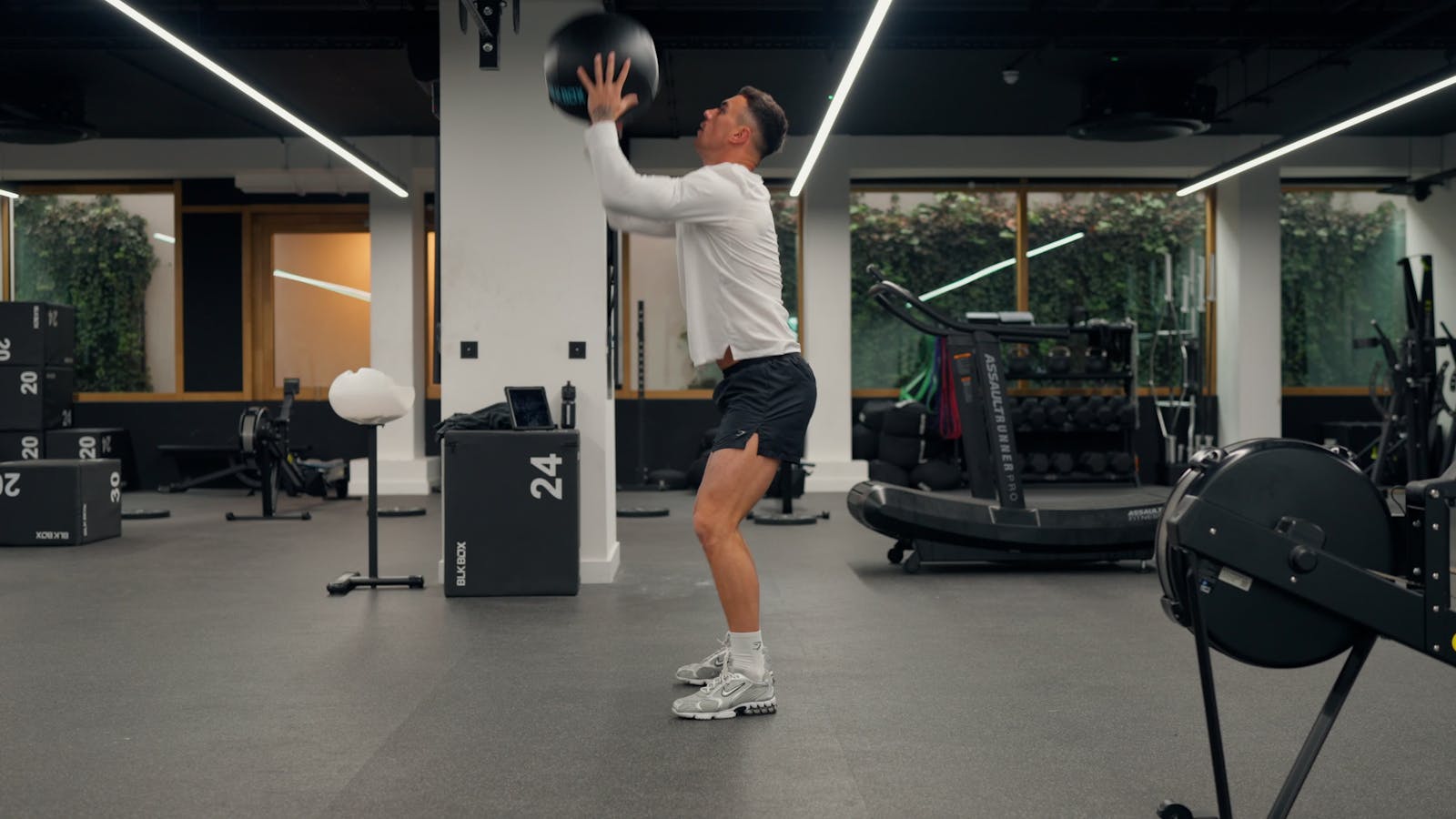
Integrate arm drive and torso rotation so your whole body coordinates during sprints and passes. Do 10 to 15 arm circles forward and back, 8 to 10 torso rotations with soft knees, and 6 to 8 medicine ball or light chest passes if available. Keep the shoulders relaxed and breathe into each rep.
progressive intensity and sprint prep: from walk to game pace
Gradually increase intensity with short accelerations and technical touches. After mobility, do 3 to 5 accelerations of 10 to 20 meters, starting at 50 percent effort and rising to near game pace by the last one. Add 2 to 4 ball drills, such as short passing sequences or dribble drives, at increasing speeds. Avoid maximal sprints until the body feels responsive.
listening to your body: how to spot what needs extra care
Pay attention to one-sided tightness, pull sensations, or an inconsistent range of motion. If a muscle twinges or a joint feels unstable, reduce load and spend extra reps on gentle mobility and activation for that region. Use touch and simple tests such as single-leg balance or a slow controlled squat to confirm which area needs attention.
dealing with discomfort: reps, progression, and when to stop
If discomfort appears, repeat gentle dynamic stretches until the tension eases, typically 3 to 10 repetitions depending on the drill and muscle. For persistent sharp pain or instability, stop and refer to a clinician. Increase repetitions on tight areas, but limit time so the warm-up does not become fatiguing.
form and breathing: control, posture, and core engagement
Breathe rhythmically with movement and keep control through the full range. Inhale during the easier phase and exhale through the active phase of a dynamic stretch. Maintain a neutral spine, head in line with the torso, and draw the belly button toward the spine to engage core stability during lunges, swings, and hops.
reps, sets, and timing: a practical count to fit 10 to 15 minutes
Sample structure to fit a short window:
2 to 4 minutes of light cardio
3 to 6 minutes of activation and core work
3 to 6 minutes of dynamic leg and ankle drills
2 to 4 minutes of progressive accelerations and ball touches
Adjust reps so each drill takes 30 to 90 seconds and rotate through 6 to 10 exercises that target ankles, calves, hamstrings, quads, glutes, adductors, and core.
common mistakes to avoid: keep the warm-up effective and safe
Do not bounce aggressively into ranges you do not control. Avoid holding static stretches for long periods pre-game. Do not jump immediately into maximal sprints. Avoid slumped posture or letting the hips collapse during lunges. Correct these errors with slower repetitions and focus on alignment.
quick checks and cues you can use on the sideline
Ask yourself these quick questions:
Is my breath steady?
Does my knee track over the foot?
Do I feel a smooth rhythm in the hip?
If the answer is no, slow the drill, reduce amplitude, and re-run the movement until you find control so the nervous system adapts without fatigue.
kick off ready: keep energy high and avoid pre-game fatigue
Finish your sequence with short, sharp movements that leave you energized rather than drained, such as 2 to 3 quick 10-meter accelerations or a final round of 8 to 12 dynamic leg swings. The goal is to prepare the muscles and nervous system for explosive soccer actions while preserving energy for the match and for the first whistle.
soccer stretches for after the match: static holds that preserve flexibility
These soccer stretches belong after training or a match, when longer holds safely lengthen the tissue you just loaded. Hold each for 20 to 30 seconds per side with controlled breathing.
hip flexor and psoas stretch
Stand in a split stance with the right foot forward and the left foot straight behind. Bend the right knee to about 90 degrees, keep your hips level and facing forward, and press your hips forward until you feel the stretch in the left front hip and groin, then switch sides. Opening hip extension supports longer kicks, faster acceleration, and a fuller stride.
standing calf stretch
Stand about one foot from a wall, extend one leg behind you with the knee straight, and lean into the wall while keeping the back heel down until you feel the stretch in the calf. This maintains ankle dorsiflexion and push-off power and helps protect the Achilles during sprints and changes of direction.
lying piriformis stretch
Lie on your back, cross the right ankle over the left knee, and lift the left foot toward you, using your hands to gently press the inside of the right knee, then switch sides. Releasing the deep hip rotators keeps cutting and rotation free and supports balance during quick directional shifts.
seated groin and inner thigh stretch
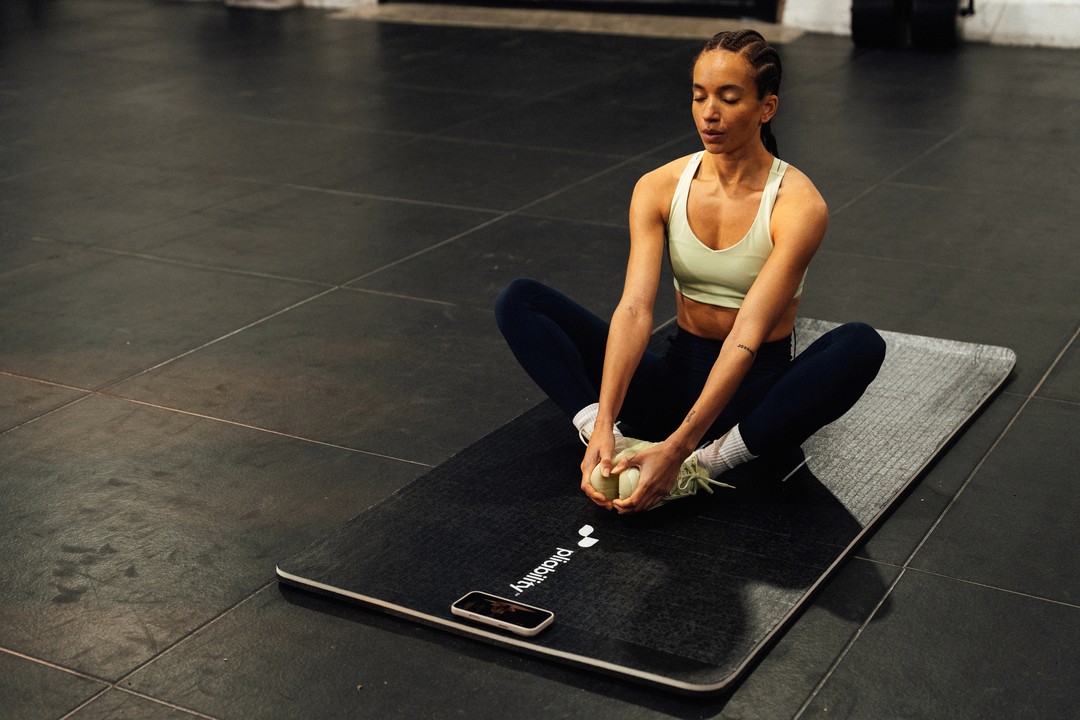
Sit with your feet together and knees out, grasp your feet, sit tall, and let your knees fall toward the floor, gently pressing them down with your elbows while keeping a straight back. This preserves the lateral reach and hip opening used in tackles, side steps, and long passes.
iliotibial band stretch
Stand tall and cross your right leg behind your left. Lean your torso to the left and reach your left arm overhead while slightly bending the left knee, feeling the stretch along the outer thigh, then repeat on the other side. This reduces friction at the lateral knee and hip from repeated running and cutting.
scorpion stretch
Lie face down with arms extended to the sides. Lift one leg and reach it toward the opposite hand behind you, letting your torso twist naturally, then repeat on the other side for 6 to 10 controlled reps per side. This restores spinal rotation and front hip flexibility after the twisting and kicking of a match.
take this warm-up into match season
These drills work as a standalone warm-up, but soccer players who stay mobile all season pair them with regular guided work off the pitch. pliability turns that into video sessions built for movers and athletes: Daily Sessions give you a fresh routine every day, Paths run multi-week progressions for a stubborn area like your hips or ankles, and Build Your Program shapes a plan around your training and match schedule. Take the mobility assessment to find out what is actually restricted, like tight hips or a limited ankle, and if you are working back from an injury, the Rebuild hub has session series built for that. Start with 7 days free on iPhone, iPad, Android, or the web.
Related Reading


Move better in 10 minutes a day.
10,000+ five-star reviews.