


LEARN
pliability
Tight hips can be a frustrating issue that limits how you move. For example, you might struggle to sit cross-legged, get up from a chair, or walk. If these challenges sound familiar, you're not alone: countless people, in both men and women, experience hip tightness, so if you're one of them, you can take comfort in knowing that there are ways to relieve the discomfort and improve your overall mobility. Understanding how to measure flexibility can also help you track your progress as you work on loosening up your hips and improving your range of motion. In this article, we'll explore why hip tightness occurs, why it matters, and how to relieve it so you can get back to doing the things you love.
why are your hips so tight and what to do about it

Hip tightness is one of the most frustrating issues one can experience. It can disturb your focus during the day, make sleeping uncomfortable, and make it hard to move and exercise, leaving you drained of energy. It turns out tight hips are one of the most common complaints physical therapists hear: the ligaments around the joint stiffen up and don't allow for much movement, and that tightness cascades into the surrounding muscles.
When the muscle fibers in the hips don't have enough length to contract adequately, they aren't able to function properly. This can make it uncomfortable to stand, walk, or even sit in certain positions.
Can tight hips cause pain in other areas? Your hips are extremely important to how the rest of your body functions.
Can tight hips cause back pain? If your hips are tight in the front, they can cause you to bend forward slightly at the lower back all day. It may be hardly noticeable at first, but it comes on slowly.
What about knee pain? If there are tight muscles in your hips, there are usually also weak muscles around them. Weakness in the deep stabilizer muscles means your femur (thigh bone) moves around too much, which can cause other muscles, like your quads and hamstrings, to become overactive. This causes a variety of knee issues.
Can tight hips cause ankle or foot pain? Yes: instability at your hips can make your calves tighten up to help you balance better.
Have you had any trouble balancing on one leg? Go ahead, try it. If it doesn't feel as effortless as it did in your 20s, that's a sign of a stability issue. You should be able to stand straight up without leaning over the leg you're standing on.
What about shoulder pain? Again, the answer is yes. Tight hips change how your entire spine moves, and some muscles connect your pelvis to your shoulder, so when the hips move differently, those effects are felt up the chain.
what causes tight hips?
But what are we all doing that's making our hips so tight? With many possible culprits, figuring out what's behind your tight hips can feel a little like solving a mystery, and the answers can sometimes be surprising.
1. Too Much Time Spent Seated
It's not unusual for the hip flexors at the front of the pelvis to get creaky by the end of a workday. When the hip joints stay bent for hours, these muscles shorten up, and a lack of movement puts you at more risk for tight hips.
How to treat and prevent it: If your hips are tight from sitting, work some stretches into your daily routine, such as a standing or kneeling quad stretch, or the couch stretch, where you get into a half-kneeling position with your back foot propped against a couch or chair. Hold either move for 30 to 60 seconds to let the muscle tissue lengthen.
Getting up and moving regularly matters too. Consider a standing desk, or a desk that adjusts up and down, or simply set a timer, since it's easy to get absorbed in work and realize hours have passed without standing once. If you're in a chair for long stretches, choose one higher off the ground so your hips stay in a more lengthened position instead of scrunched up: aim to keep roughly a 90-degree angle at the hips, or a bit more, rather than sitting low to the floor.
2. A Predisposition to Tight Muscles
Depending on your collagen type, you may be prone to tight muscles, including in the hips, and may need to do a bit more maintenance to keep range of motion through the hip joint.
How to treat and prevent it: If you know your muscles tend to stiffen up, do mobility drills proactively before your workouts to keep your body looser, such as bodyweight squats that move through a full range of motion. After your workout, spend some of your cooldown on prolonged stretching, holding positions for 30 to 60 seconds, to lengthen the tissues.
3. A Limiting Hip Socket
If you try to lift your leg as high as you can in a yoga class but can't get anywhere near your neighbor's height, the shape of your hip socket could be the reason. Hip sockets are built differently from person to person: some wrap around the joint more, which limits range of motion regardless of how much you train. Some people are simply born with tighter hips anatomically.
How to treat and prevent it: If you have this kind of hip socket, a career in professional ballet may not be in the cards, but working with a physical therapist can help you build the right kind of movement and strengthening to keep the joint loose without causing impingement pain.
4. A Tilted Posture
Certain pelvic positions shorten the front of the hip. If your pelvis naturally tilts forward when you stand, you're more likely to end up with tight hip flexors.
How to treat and prevent it: For a tilted pelvis, look for length in the hip flexors through moves like quad stretches and kneeling lunges, and work on core and glute strengthening to help keep your hips in a more neutral position. As a general rule, when you're lengthening one side of a joint, strengthen the opposite side to help maintain mobility.
5. An Uneven Pelvis
Believe it or not, most people have legs that are two different lengths, and that can sometimes put the pelvis in a more vulnerable position, making the hip muscles tighten in response.
How to treat and prevent it: If a leg length discrepancy isn't causing you any problems, there's no need to worry about it. But if it's affecting your hips, a physical therapist can assess you and offer specific exercises to help level out the pelvis and keep your hips in a straighter position. They can also suggest practical adjustments, like sitting at a slight angle to readjust the pelvis into a more neutral position, to offset the strain of walking and standing at an angle.
6. Weak Core Muscles
When your core isn't strong enough, you're more likely to slouch, which strains your hip flexors. A weak core and tight hip flexors tend to go hand in hand, and this can also contribute to low back pain.
How to treat and prevent it: The fix here is a regular dose of core strengthening exercises: bird dogs, planks, or whatever you prefer, done consistently. It also helps to look at the ergonomics of your work setup if your job requires sitting, with a focus on core strengthening plus sitting upright in the most advantageous position throughout the day.
7. Neural Tension in the Back of the Hips
It's not always the front of your hips that's the problem. If you feel tightness in the back of your hips and keep stretching your hamstrings without success, you could be dealing with neural tension, where a nerve isn't sliding within your tissues the way it should and is getting stretched instead.
How to treat and prevent it: If you suspect a nerve might be causing your tight hips, see a physical therapist who can pinpoint where exactly your pain is coming from. Treatment might involve massage, joint mobilization, movements that encourage the nerve to glide better, or mobility exercises.
8. Stored Trauma
When you experience a threat, your nervous system goes into fight-or-flight mode, which affects you physically: it pumps cortisol through the body and prepares your muscles, particularly the psoas, for kicking or running. Because most of us never actually have to fight or flee to protect ourselves physically, that tension never gets released, and the hips, where the psoas runs through, can end up carrying it for months or years afterward.
How to treat and prevent it: The best way to release this tension is to get moving, through swimming, cycling, hiking, or whatever brings motion back to the area. Targeted somatic release techniques and hip-opening postures like pigeon pose can help too, but pace yourself: work toward that vulnerability in small bits at a time so you can integrate and process it, rather than all at once. Throughout, deep, diaphragmatic breathing can help communicate to your body that it's safe to let go.
10 best exercises to release tight hips quickly

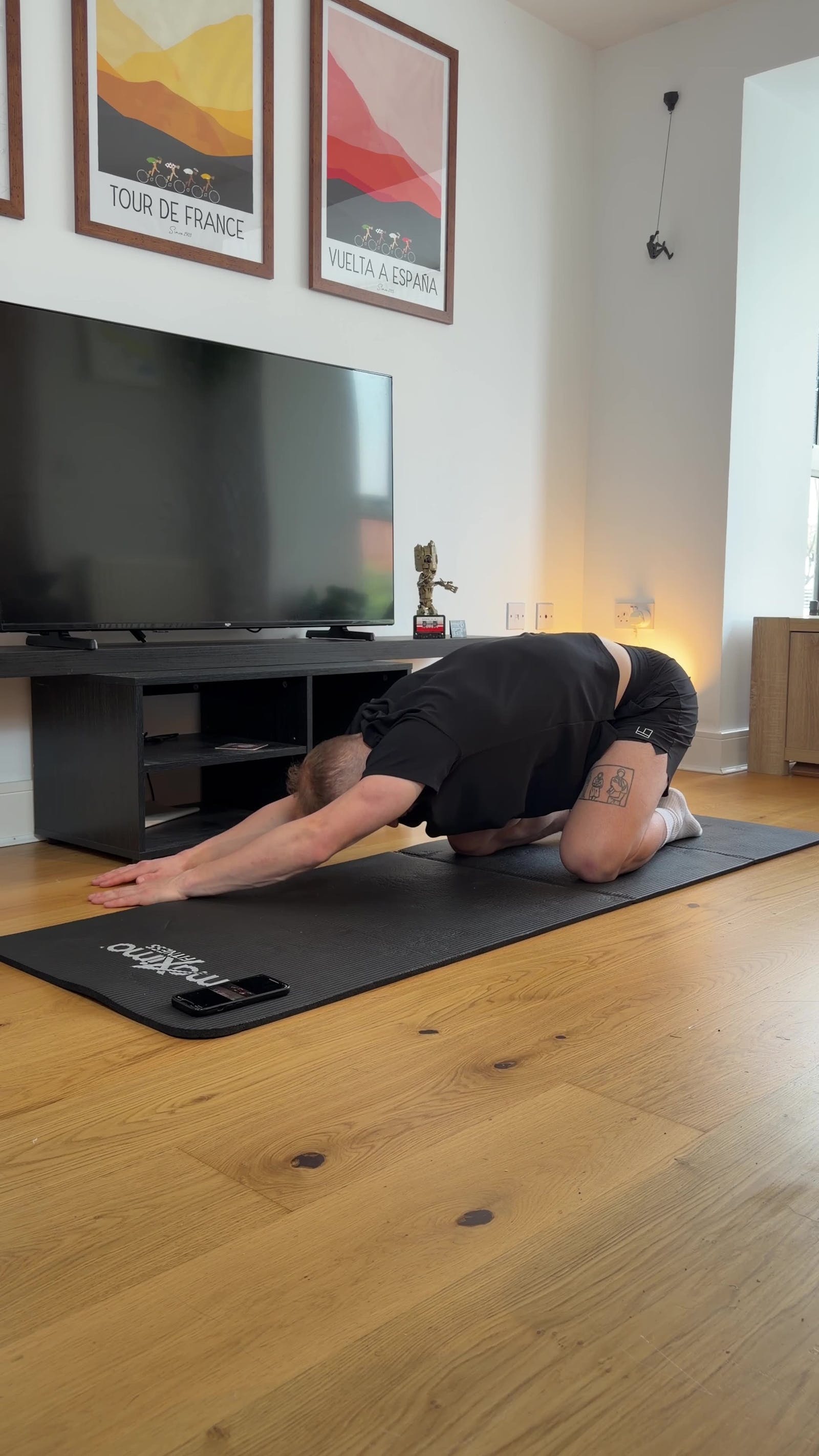
1. low-lunge variation
Start in a low lunge with your right foot planted, right knee bent, and your left knee on the floor.
Place your palms flat on each side of your right foot.
Lift your left arm above your head as you lean to the right.
Hold for five breaths, then repeat on the opposite side.
Strengthens quads and hips, lengthens psoas.
2. crescent lunge knee-up
Start in a high lunge, right foot forward, knee at 90 degrees, hips square and toes facing forward.
Lift your arms as you stand and draw your left knee towards your chest.
Return to the start position.
Do 10 reps, repeat on the left leg.
Strengthens glutes (especially the glute medius) and the hip flexors.
3. one-legged bridge lift and lower
Lie face up, knees bent. Lift your arms.
Engage your glutes to lift your hips.
Transfer weight to your right leg and extend your left leg for five breaths.
Lower your leg, hover over the floor for five breaths, then lift back up.
Do eight reps, then repeat on the left leg.
4. skating squat
Stand with legs just wider than hip-width apart.
Lower into a squat.
Shift your weight to your right leg as you rise to standing. Extend your left leg back, like you're on skates.
Return to a squat and repeat on the opposite leg.
Alternate for 60 seconds.
Strengthens glutes, lengthens hip flexors.
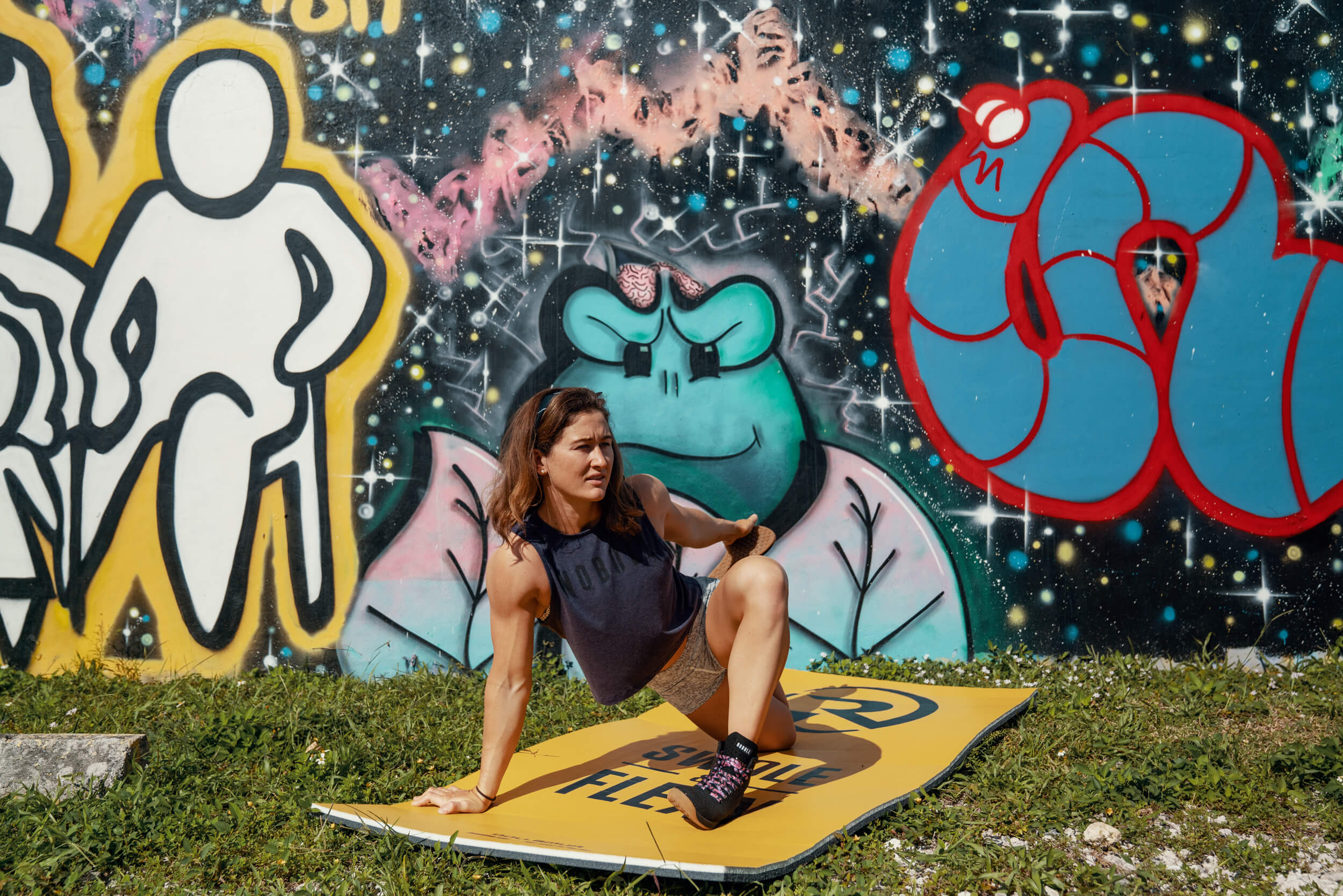
5. full-range figure four
Sit upright with your knees bent, hands on the floor behind you.
Cross your left ankle over your right knee.
Let the left knee travel left, then back to the centre.
Slowly go through the range of motion, then hold for five breaths for good hip stretches.
Repeat on the other leg.
Releases hip joints and stretches the glutes.
6. front foot elevated split squat
This exercise strengthens and stretches the hip flexors, improving balance and stability.
Stand in a split stance with one foot in front of you and one behind you.
Place your front foot on an elevated surface such as a weight plate.
Keeping your torso upright, bend both knees to lower until your rear knee is just above the floor.
Push through your front heel to extend your legs, returning to the starting position.
7. 90/90 hip switch
Sit on the floor with your knees bent and feet flat, wider than shoulder-width apart.
Drop your knees to the right side and rotate your torso to face right, aiming for both knees to rest on the floor.
Return to the start and repeat on the other side.
This move targets internal and external hip rotation, giving your hips a well-rounded stretch.
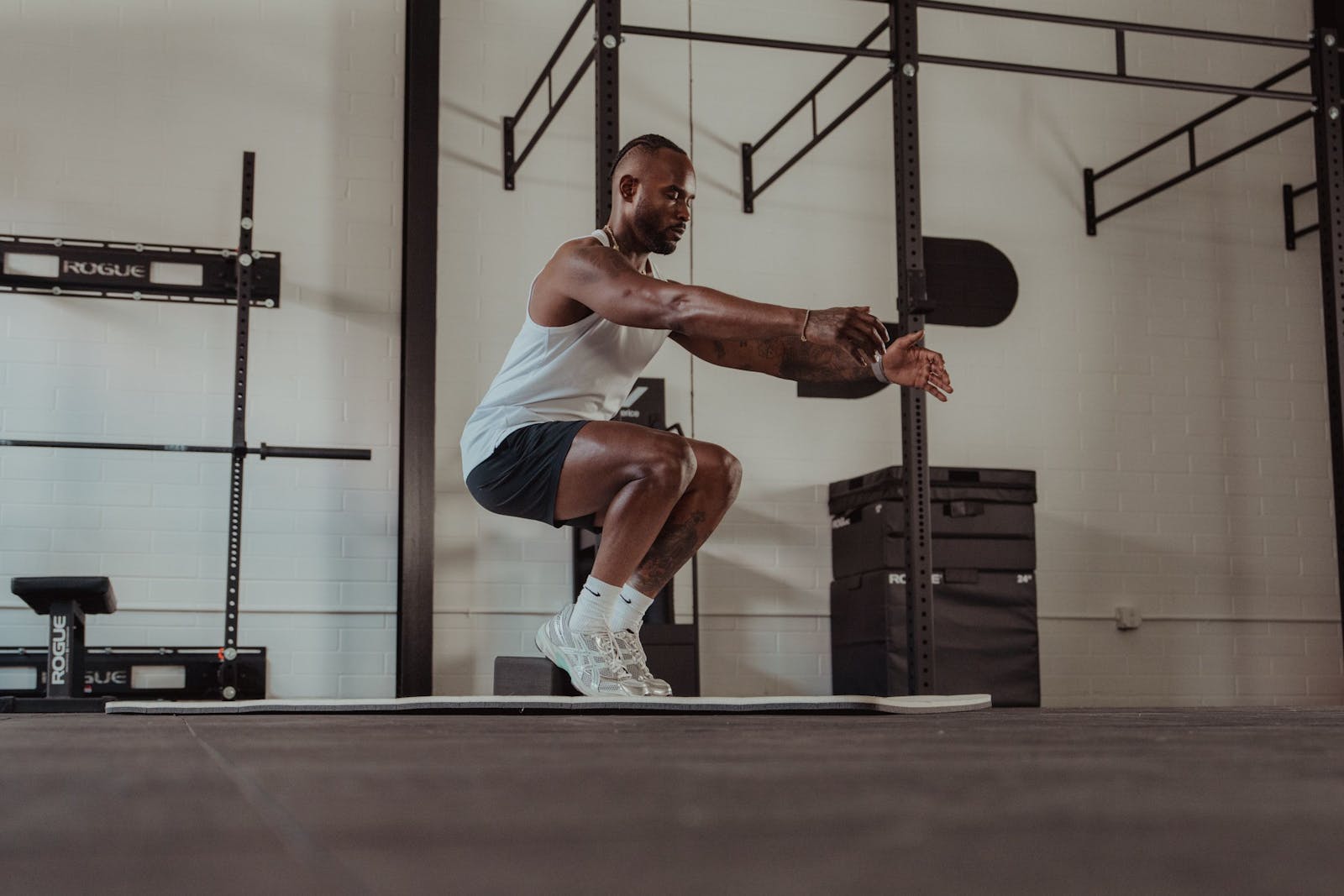
8. squat with single-arm overhead reach
This dynamic stretch enhances hip mobility and the ability to rotate the thoracic spine in the middle of the back.
Stand with your feet shoulder-width apart and hold your arms out in front of you.
Push your hips back and bend your knees to a squat until your hips align with your knees.
Keep your torso upright and push your knees out so they don't cave in.
Lift your right arm up and behind you, twisting your torso to the right so you can look at your right hand.
Return your right arm to the front, then repeat on the other side.
Return your left arm to the front and stand up.
9. foam roller stretch
You can use a foam roller to loosen up tight hips.
Lie face down, with your foam roller beneath and slightly below your right hip.
Place your left leg to the side with the knee bent at a 90-degree angle.
Rest your forearms on the ground in front of you to take some of your body weight off your hip. This will make the stretch less painful.
Stretch your right leg straight out behind you, with your toes pointed backward and the front of your foot flat against the ground.
Slowly move backward and forward over the foam roller.
10. pigeon stretch
This stretch is commonly seen in yoga practices. It can be used daily to improve mobility in your hip flexors.
Begin on your hands and knees in a tabletop position.
Bring your right knee forward and place it behind your right wrist.
Place your right ankle in front of your left hip.
Straighten your left leg behind you, ensuring your left knee is straight and your toes are pointed.
Keep your hips square.
Gently lower yourself to the ground.
Stay in this position for up to 10 seconds.
Release the position by pushing on your hands, lifting your hips, and moving your legs back into your starting position on all fours.
Repeat on the other side.
loosen up your hips with pliability

Tight hips rarely have just one cause, which is why a one-off stretch often doesn't fix them. pliability's mobility assessment checks your hips against the rest of your body to flag where you're actually restricted, then Daily Sessions and structured Paths guide you through hip-focused mobility work with clear video cues. Prefer to build your own routine around the exercises in this article? Use Build Your Program to put one together, or start in the Rebuild hub if you're working around an injury.
Try pliability free for 7 days on iPhone, iPad, Android, or the web, and give your hips a real plan instead of one-off stretching.
Related Reading



Move better in 10 minutes a day.
10,000+ five-star reviews.