


LEARN
pliability

You're in the middle of a workout or playing weekend basketball when you feel that sudden, sharp pain in your thigh or shoulder. A pulled muscle can stop you in your tracks, leaving you wondering whether you need immediate medical attention or if you can treat it at home. This article will help you recognize the warning signs that require urgent care, understand the difference between a minor strain and a serious muscle tear, and learn proven recovery strategies to heal properly without extending your downtime or risking further damage.
summary
Most pulled muscles don't require urgent care and respond well to home treatment with rest, ice, compression, and elevation. The critical distinction lies in recognizing red flags like hearing a popping sound during injury, experiencing severe pain that doesn't improve with medication, or noticing rapid, significant swelling with intense bruising.
Recovery timelines vary dramatically based on injury severity, with mild strains healing in two to three weeks while complete tears require months of structured rehabilitation. The American Academy of Orthopaedic Surgeons emphasizes that managing inflammation well in the first 48 hours meaningfully shortens recovery, compared to letting swelling go unmanaged.
Protein intake directly affects muscle repair speed: sports nutrition guidance generally points to 1.6 to 2.2 grams of protein per kilogram of body weight during recovery to support a faster return of strength compared to typical dietary levels. This requirement, combined with proper hydration to support nutrient delivery and waste removal from injury sites, provides the raw materials your body needs to rebuild damaged fibers.
The transition from ice to heat after 48 to 72 hours confuses many people because pain often persists, making cold therapy feel more appropriate. Heat serves a different function by increasing blood flow to deliver oxygen and nutrients that fuel tissue repair while improving tissue elasticity for gentler, less painful movement.
Most pulled muscles occur not randomly but because underlying mobility restrictions create compensation patterns that overload one area while other muscles can't contribute properly. Tight hip flexors shift excess load to the hamstrings during running, limited ankle mobility forces the calves to work harder during deceleration, and restricted thoracic rotation forces the shoulder muscles to compensate during reaching movements.
do you need urgent care for a pulled muscle?

Most pulled muscles don't require urgent care. You can manage them at home with rest, ice, compression, and elevation. The key is recognizing when symptoms cross from manageable discomfort into territory that signals serious damage requiring immediate medical evaluation.
A pulled muscle happens when you stretch muscle fibers beyond their capacity, sometimes causing small tears in the tissue. The sensation is distinct: sudden, sharp pain during movement, followed by persistent soreness that intensifies when you try to use the affected area. You might notice tenderness when touching the muscle, along with stiffness that limits your range of motion. Mild swelling or bruising often appears within hours.
The severity determines whether you need professional care right now or can safely wait.
Grade 1: Strains involve minimal fiber damage. You feel discomfort, but the muscle still functions.
Grade 2: Strains cause moderate pain, noticeable weakness, and reduced movement.
Grade 3: Strains are complete tears. The pain is severe, the muscle won't work properly, and you might see visible deformity where the tear occurred.
when home treatment is the right call
Minor strains respond well to immediate self-care. If you can still move the affected area despite discomfort, if the pain rates around a 3 to 5 out of 10, and if you didn't hear any popping sounds during the injury, home treatment is appropriate. Apply ice for 15 to 20 minutes every two to three hours during the first 48 hours. Wrap the area with an elastic bandage to control swelling, keeping it snug but not tight enough to restrict blood flow. Elevate the injured area above your heart whenever possible.
Many people worry they're making the wrong choice by staying home. That anxiety compounds when you're unsure whether continuing discomfort means something serious is developing. The 48 to 72-hour window provides clarity. If pain begins decreasing, if swelling starts to resolve, and if you're gradually regaining movement, your home treatment is working. Your body is healing on schedule.
red flags that demand immediate care
Certain symptoms indicate damage beyond the scope of home treatment. If you hear a popping sound at the moment of injury, you may have ruptured the muscle completely. That sound indicates catastrophic fiber failure and requires surgical evaluation.
Severe pain that doesn't improve with rest and medication signals extensive damage. If you can't put any weight on the affected limb, if you can't move the muscle at all, or if the pain is debilitating enough to prevent basic function, you need a professional assessment. Significant swelling that appears rapidly, especially if accompanied by intense bruising, suggests major tissue damage with possible bleeding inside the muscle. Signs of infection require immediate attention:
Increasing redness spreading from the injury site
Warmth that intensifies over hours
Fever, or red streaks extending up the limb
These symptoms indicate bacteria have entered damaged tissue. Numbness or tingling around the injury suggests nerve involvement. Muscles, nerves, and blood vessels run together. Severe strains can compress or damage nerves, creating complications that extend beyond the muscle itself.
the decision point most people struggle with
The hardest moment comes when symptoms sit in the gray zone:
Pain is present but not excruciating.
Swelling exists, but it isn't dramatic.
Movement is limited but not impossible.
You can function, but you're uncomfortable. This is where people hesitate, caught between not wanting to overreact and fearing they're ignoring something serious. Trust your instinct when something feels wrong beyond normal strain discomfort. If you're asking yourself whether you should seek care, that question itself often indicates you should.
The cost of unnecessary evaluation is inconvenience.
The cost of delaying care for a serious tear is prolonged disability, unnecessary surgical intervention, or permanent weakness in the affected muscle.
When symptoms persist beyond 72 hours without improvement, professional evaluation provides answers. A healthcare provider can determine whether you're experiencing delayed healing from a moderate strain or whether underlying factors are preventing recovery. They can identify complications such as compartment syndrome, in which swelling increases pressure within muscle compartments, restricting blood flow.
why muscles pull and how to prevent the next one
Most pulled muscles occur during activity, but they can also result from simple movements when underlying mobility restrictions create vulnerability.
Tight hip flexors increase hamstring strain.
Limited ankle mobility shifts the load onto the calf muscles, unprepared for the demand.
Restricted shoulder range of motion forces compensatory patterns that overload smaller stabilizing muscles.
These restrictions accumulate silently until one ordinary movement exceeds your tissue's capacity.
While immediate care addresses the acute injury, understanding why the strain happened prevents the next one. But knowing when your pulled muscle will actually heal changes how you approach both treatment and return to activity.
how long does a pulled muscle take to heal?

Recovery time depends on the extent of the damage and how well you manage the injury from the start. Mild strains that catch you off guard but don't stop you completely heal within two to three weeks. Moderate strains that significantly limit function take three to six weeks. Complete tears require months, sometimes surgery, and a structured rehabilitation program that rebuilds strength from zero.
The severity grading matters because it sets realistic expectations.
Grade 1 strains involve microscopic fiber damage. You feel it, but the muscle still contracts and moves through most of its range.
Grade 2 strains tear enough fibers that strength drops noticeably, and movement becomes painful across a wider range.
Grade 3 strains are complete ruptures. The muscle can't generate force, and you might see a visible gap or bulge where the tear separated the tissue.
what actually influences your timeline
Early treatment changes outcomes more than most people realize. Proper rest and following the RICE protocol during the first 48 hours significantly impacts how quickly tissue repairs itself. Ice controls inflammation that would otherwise flood the injury site and slow cellular repair. Compression limits swelling that creates pressure and restricts blood flow. Elevation uses gravity to reduce fluid accumulation.
Your activity level before injury matters too. Athletes with strong conditioning and good movement patterns typically heal faster because their bodies are already efficient at tissue repair and nutrient delivery. Someone who's been sedentary faces a longer timeline because their cardiovascular system and cellular repair mechanisms work less efficiently.
injury location creates different challenges
A strained hamstring affects walking, sitting, and nearly every lower-body movement, making complete rest nearly impossible. A shoulder strain might make it easier for you to avoid overhead movements, providing the tissue with better recovery conditions. Back strains complicate everything because your core stabilizes almost every action you take throughout the day.
the recovery pattern nobody warns you about
Healing doesn't follow a straight line. You'll have days when pain decreases, and movement feels easier, followed by days when stiffness returns and discomfort spikes. That fluctuation frustrates people who expect steady improvement.
The pattern is normal:
Tissue repair occurs in overlapping phases: inflammation, proliferation (where new fibers form), and remodeling (where those fibers strengthen and align).
Pain should start improving within the first week for mild strains. If you're not noticing any reduction in discomfort after seven to ten days, something is interfering with healing. You might be moving too much, not resting enough, or dealing with an underlying mobility restriction that keeps stress on the injured tissue. Moderate strains show meaningful improvement around the two- to three-week mark, though full strength takes longer.
when pain medication masks the real problem
Over-the-counter anti-inflammatories help manage discomfort and reduce swelling during the acute phase. They serve a purpose in the first few days. Relying on them long-term creates a different issue.
Pain is Information
It tells you when you're stressing tissue beyond its current capacity. Medication that dulls that signal lets you push into ranges and intensities your muscle isn't ready for yet, extending recovery or causing reinjury without realizing it until the damage is done.
movement as medicine
Movement during recovery serves the same function as medicine when done correctly. Gentle activity increases blood flow, delivers nutrients to healing tissue, and prevents the stiffness that develops when you stay completely immobile. Many people assume complete bed rest accelerates healing, but it doesn't: extended immobility causes muscle atrophy, joint stiffness, and reduced circulation that slows tissue repair. Your body needs movement signals to know where to direct resources and how to organize new muscle fibers, so the goal is finding the threshold where movement aids recovery without exceeding tissue capacity. The key is matching movement to your injury location.
Hip strains respond to gentle stretches that maintain range without loading the muscle.
Leg strains benefit from swimming, where water supports your weight while allowing muscle contraction.
Neck and lower back strains improve with walking, which engages core stabilizers without the impact of running or jumping.
the underlying cause most people ignore
Pulled muscles don't happen randomly. They occur when movement demands exceed your tissue's capacity in that moment. Sometimes that's because the load was too high, speed was too fast, or fatigue reduced muscle control. Often, mobility restrictions create compensation patterns that overload one area while other muscles can't contribute properly.
Tight hip flexors shift more load to the hamstrings during running and jumping. Limited ankle dorsiflexion forces calves to work harder during deceleration. Restricted thoracic rotation leads to shoulder muscles compensating during throwing or reaching movements. These restrictions build gradually. You don't notice them until one movement pushes past the breaking point.
breaking the cycle of recurring injury
Traditional approaches treat the acute injury but ignore the underlying causes. You rest, ice, compress, and elevate. Pain decreases. You return to activity. Then you strain the same muscle again six months later because the underlying mobility limitation never changed. Addressing that mobility limitation, not just the injured muscle, is what actually breaks the cycle.
Physical therapy identifies muscle imbalances and weakness patterns that affect both recovery speed and reinjury risk. A few sessions can reveal whether limited hip mobility, weak glutes, or poor ankle stability contributed to your strain. Your physical therapist develops a program that addresses those specific limitations, not just the injured muscle.
when delayed healing signals something more serious
Most strains show clear improvement within two weeks. If pain isn't decreasing, if swelling persists, or if you're not regaining movement, something is interfering with normal healing. You might be dealing with a more severe tear than initially assessed. Compartment syndrome may be developing, in which swelling increases pressure within the muscle compartment, restricting blood flow. Nerve involvement might be preventing proper muscle activation.
Infection is rare but possible, especially if the injury broke skin or if you have conditions that compromise immune function. Increasing redness, spreading warmth, fever, or red streaks extending from the injury site require immediate medical evaluation. These signs indicate bacteria have entered the tissue and are spreading.
breaking through scar tissue for a full recovery
Some people develop scar tissue that restricts movement even after the pain resolves. The muscle heals, but the new tissue is less elastic and organized than the original fibers. This creates stiffness and increases the risk because the scarred area can't lengthen properly during movement. Manual therapy, specific stretching protocols, and gradual loading help remodel that tissue into more functional alignment.
But knowing how to move forward after the acute phase determines whether you fully recover or set yourself up for the next injury.
how to recover after urgent care and prevent re-injury

The recovery protocols you follow after leaving urgent care matter more than the diagnosis itself. Most people receive instructions to rest, ice, and follow up if symptoms worsen. That's where the real work begins, not where it ends. The difference between full recovery and chronic weakness lies in how you manage the next four to six weeks, particularly the transition from passive rest to active rehabilitation.
the first 48 hours: managing swelling for a faster recovery
Your body starts repair work immediately, but it needs specific inputs to rebuild tissue correctly. During the first 48 hours, ice application remains your primary tool. Apply cold packs for 10 to 20 minutes every two to three hours. This isn't about numbing pain.
Ice constricts blood vessels, limiting the inflammatory fluid that floods damaged tissue and creates pressure, which is why the American Academy of Orthopaedic Surgeons stresses managing inflammation well during the acute phase rather than letting swelling go unchecked.
mastering the art of wrap and lift
Compression works alongside ice, but most people wrap too loosely or too tightly. Use an elastic bandage with consistent tension, snug enough to feel gentle pressure but loose enough to slide two fingers underneath. The goal is to support the muscle and control fluid accumulation without restricting circulation.
If your fingers or toes start tingling
If skin color changes
If the area feels numb
You've wrapped too tightly. Loosen immediately.
let gravity speed up your healing
Elevation uses gravity to drain excess fluid away from the injury site. Prop the affected limb above heart level whenever sitting or lying down. This matters more than people realize.
Fluid pooling around damaged tissue slows healing by creating pressure that restricts nutrient delivery and waste removal. Three 20-minute elevation sessions spread throughout the day make measurable differences in swelling reduction.
the transition nobody explains clearly
After 48 to 72 hours, you switch from ice to heat. This timing confuses people because pain often persists, making cold therapy feel more appropriate. Heat serves a different function. Warmth increases blood flow, delivering oxygen and nutrients that fuel tissue repair. It also improves tissue elasticity, making gentle movement less painful and reducing the stiffness that develops during the acute rest phase.
Apply heat for 15 to 20 minutes before attempting any movement or stretching. Use a heating pad, warm towel, or warm bath. The tissue should feel warm, but not so warm as to cause discomfort. Heat, combined with gentle range-of-motion exercises, prevents scar tissue formation that can lead to long-term stiffness and reinjury.
movement without the strain
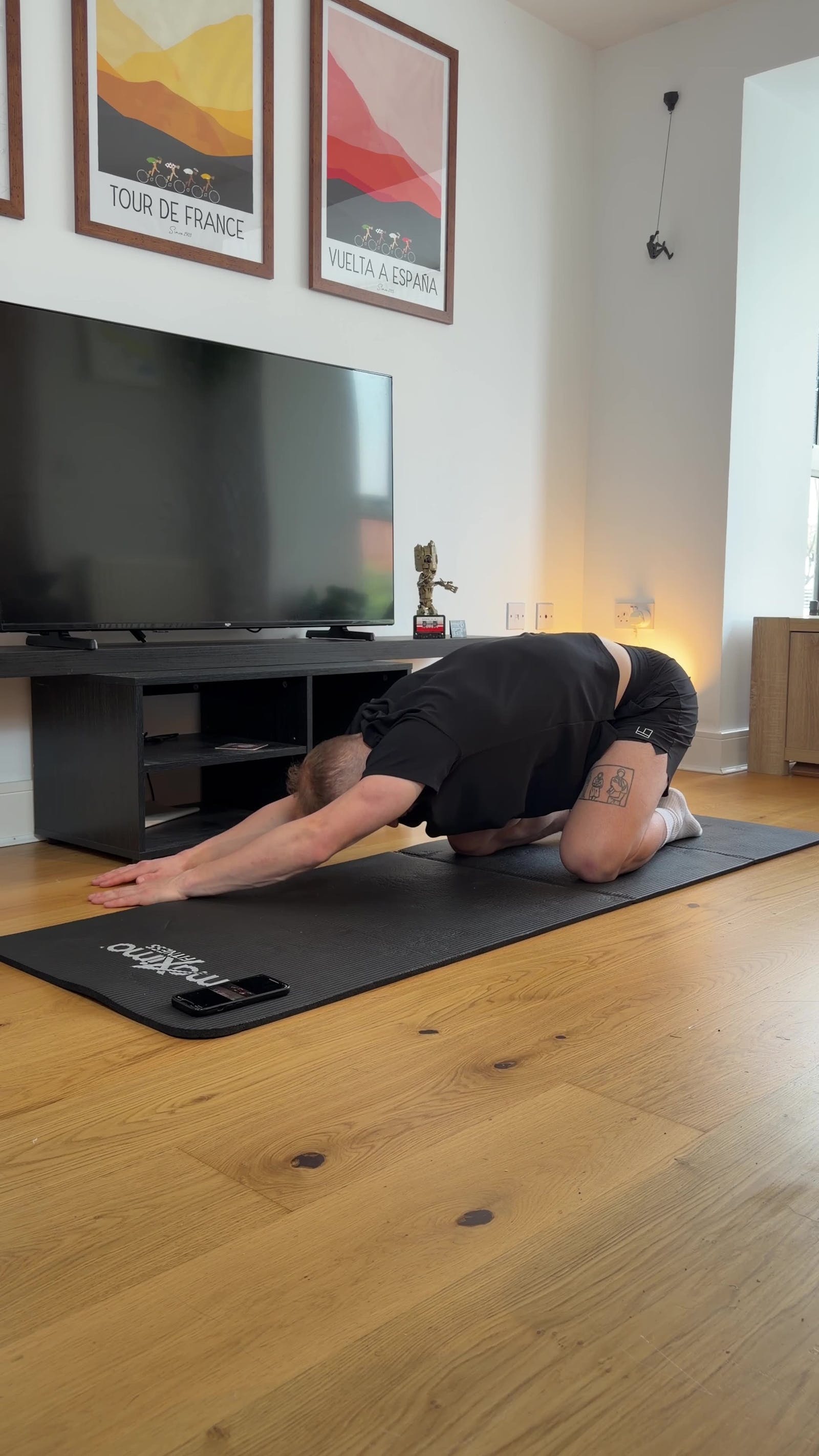
Start with movements that don't load the injured muscle. If you strained your hamstring, gentle hip flexion and extension without resistance maintains range without stressing healing fibers. Calf strains respond to ankle circles and light dorsiflexion stretches. Shoulder strains benefit from pendulum exercises where gravity provides motion without muscle contraction. The key is staying within pain-free ranges. Discomfort signals you're exceeding current tissue capacity.
why protein matters for repair
Muscle repair requires raw materials your body can't manufacture from nothing. Protein provides amino acids that form new muscle fibers, and sports nutrition guidance generally points to 1.6 to 2.2 grams of protein per kilogram of body weight during recovery to support a faster return of strength compared to typical dietary levels.
Spread protein intake across meals rather than loading it into one sitting. Your body can process about 25-30 grams of protein per meal for muscle synthesis. Chicken, fish, eggs, Greek yogurt, and legumes provide complete amino acid profiles. If you're plant-based, combine different protein sources throughout the day to ensure you're getting all essential amino acids.
why hydration matters too
Water maintains blood volume, ensuring efficient nutrient delivery to damaged areas. It supports lymphatic drainage that removes metabolic waste from injury sites. Dehydration thickens synovial fluid in joints, increasing friction and discomfort during movement. Aim for half your body weight in ounces daily, more if you're also managing inflammation or taking NSAIDs that can stress kidney function.
the massage and manual therapy distinction
Not all hands-on treatment serves the same purpose. Massage during the acute phase focuses on areas around the injury, not the damaged tissue itself. Working the surrounding muscles reduces compensatory tension that develops when you unconsciously guard the injured area. If you strain your lower back, tension builds in your hip flexors, glutes, and upper back as they work harder to stabilize movement. Addressing that secondary tension prevents it from becoming a separate problem.
Physical therapists use contract-relax techniques for muscles that develop protective spasms. The muscle contracts against resistance, then relaxes completely while the therapist guides it into a deeper stretch. This neurological override helps reset the muscle's resting length when spasm has shortened it beyond the normal range.
when to start loading the muscle again
The shift from passive recovery to active strengthening determines whether you return to full function or plateau at 80% capacity. Most people resume normal activity too quickly or wait too long, both of which create problems. Returning too soon reinjures tissue that hasn't regained tensile strength. Waiting too long allows atrophy and compensation patterns to become established.
Start loading when you can move through the full range of motion without pain, when swelling has resolved completely, and when you can contract the muscle isometrically without discomfort. Isometric contractions, holding a position without movement, provide the safest initial loading. If you strained your quadriceps, a wall sit, where you hold a squat position, loads the muscle without the dynamic stress of actual squatting movement.
Eccentric Loading
Eccentric loading, where the muscle lengthens under tension, builds strength specifically in the ranges where strains occur. Hamstring strains occur during the terminal swing phase of running, when the muscle lengthens rapidly while contracting to decelerate the leg. Nordic hamstring curls, where you slowly lower yourself forward from a kneeling position, train that exact loading pattern.
Concentric Exercises
Concentric exercises, where the muscle shortens during contraction, come last. These feel most natural but create the least specific adaptation for preventing reinjury. A complete progression includes all three contraction types, gradually increasing load and speed as tissue tolerance improves.
fixing the root cause of recurrent strains
Many people treat the acute injury but never address why the strain happened. Tight hip flexors create an anterior pelvic tilt that overloads hamstrings. Limited ankle mobility forces calves to work harder during deceleration. Weak glutes shift load to smaller muscles not designed for primary force production.
These restrictions build silently until one movement exceeds tissue capacity. Traditional recovery protocols rest the muscle but leave the underlying mobility deficit unchanged, which is exactly why guided mobility work belongs alongside the rest of your recovery plan, not as an afterthought once symptoms fade.
the follow-up care decision
Most pulled muscles don't require follow-up visits if symptoms improve steadily. You should see continued pain reduction, gradual strength return, and increasing range of motion week by week. If any of those trajectories stall or reverse, something is interfering with normal healing.
Persistent pain after two weeks suggests either a more severe tear than initially assessed or compensation patterns creating secondary problems. Continued weakness despite pain resolution indicates the muscle hasn't regained functional capacity. A limited range of motion that doesn't improve with stretching indicates the need for manual intervention to address scar tissue.
recover safely after a pulled muscle, then build back stronger
Recovery doesn't end when you leave urgent care. What you do in the weeks that follow determines whether you rebuild resilience or simply wait for the next injury. Moving too soon overloads tissue that hasn't regained strength. Staying immobile too long lets compensation patterns harden into habits that create new vulnerabilities.
pliability is a mobility app built to take the guesswork out of that stretch of recovery. Take the in-app mobility assessment to see where you're still restricted, then use Daily Sessions or a Path built around your sport or injury to work back in gradually. If you're easing back after a strain, the Rebuild hub is built for exactly that: low-impact routines that respect where your tissue actually is, not where you wish it were.
Get 7 days free on iPhone, iPad, Android, or the web, and let guided mobility work carry you from cautious first steps back to full strength.
Related Reading





Move better in 10 minutes a day.
10,000+ five-star reviews.