


LEARN
pliability

Stretching can feel like a chore. Yet, we all know it's crucial to any good workout routine. But not all stretching is the same. Knowing how to use dynamic and static stretching effectively will help you learn how to get flexible fast, improve your workout performance, and reduce your injury risk. If you’ve ever wondered about dynamic vs static stretching and how to apply them to your training, you’ve come to the right place. This article will cover the differences between dynamic and static stretching when to use each type, and how they can benefit your performance, recovery, and overall health.
why is it important to stretch?

Stretching is to fitness what flossing is to dental hygiene: You know it’s key for tip-top health, but no matter how many experts tell you to carve out time for the practice in your routine, it’s usually an after-thought. Another thing stretching and flossing have in common? You’ve got to do them right to reap the benefits. And when it comes to dynamic vs static stretching, “doing it right” means choosing the right type of stretch and doing it at the right time.
There are two main types of stretching, static and dynamic. Dynamic stretching involves active movements that mimic the activity you're about to do, while static stretching involves holding a position to stretch a muscle for around 30 seconds per pose. Both have a place in your fitness toolbox. Here’s what you need to know about each.
first things first: why stretch?
Increased flexibility is good for a whole lot more than party tricks and impressive contortions. To have optimal muscle function, you need optimal muscle length: your muscles aren't able to contract, relax, or work for you at their strongest without it.
Stretching is also important for improving or maintaining your joints’ range of motion, the amount of motion a joint itself can move through. It’s the amount your hips can open up, the ease with which your arms move in your shoulder sockets (can you clasp your hands behind your back and straighten your arms?), or the degree to which you can bend your knees, for instance. Maintaining that range of motion helps you move in all different ways.
what is dynamic stretching?
The old sit-and-reach from the Presidential Fitness Test we endured in grade school isn’t the only way to work on flexibility. As the name indicates, dynamic stretching lengthens muscles by flowing through a series of movements.
With dynamic stretching, you're continuously moving through your range of motion, not holding anything for longer than 15 seconds.
Think: arm circles, walking lunges, spinal rotations, or a yoga Sun Salutation.
what is static stretching?
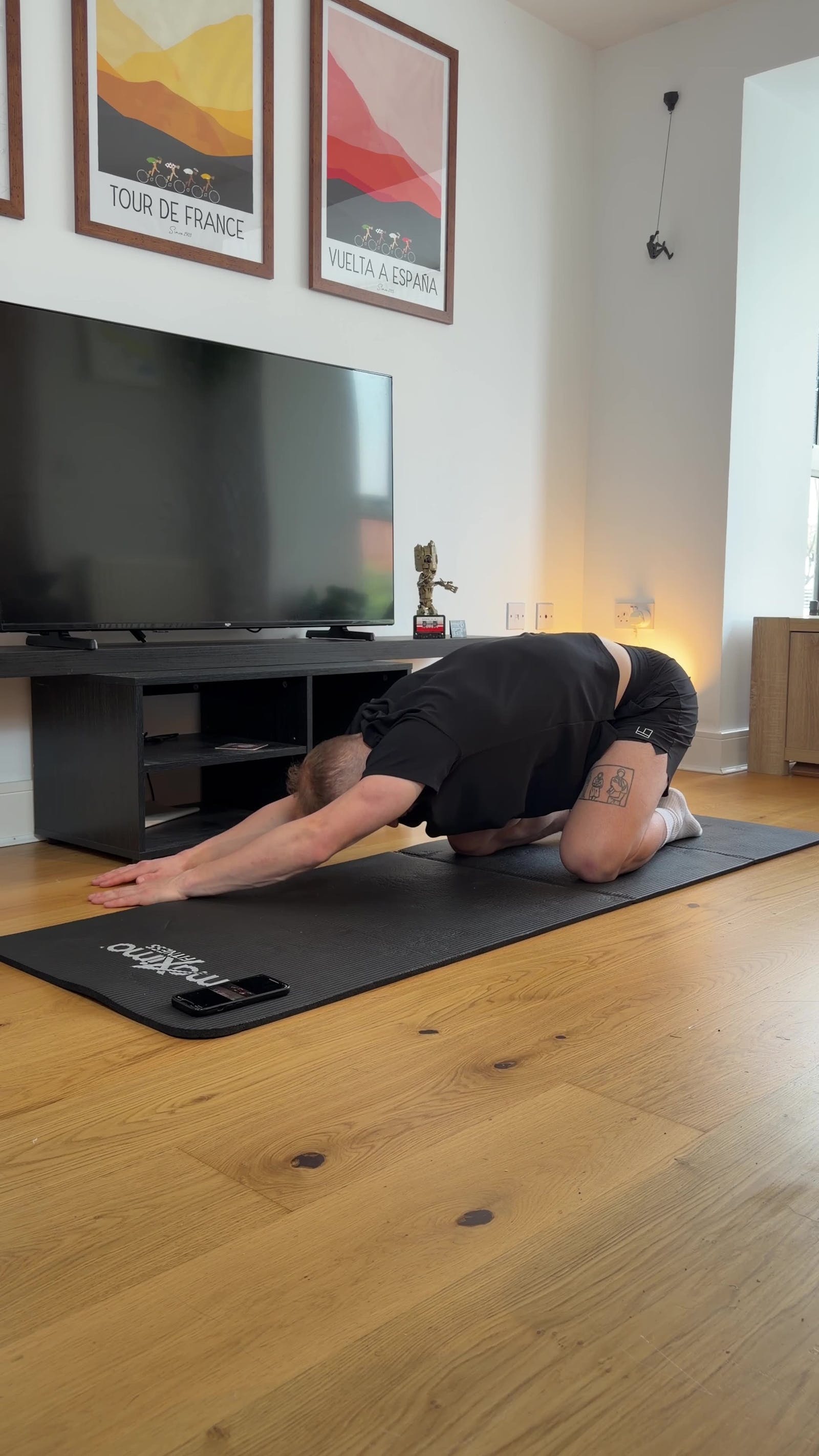
Static stretching is holding a position that stretches your muscles into their full range of motion (without feeling pain; discomfort is okay and probably expected) for a long time, usually for at least 30 seconds. When you think of “stretching,” static stretching is probably what first comes to mind: folding over to touch your toes, sitting in a straddle position, or holding your arm across your chest.
active stretching vs. passive stretching
Other terms you might hear regarding stretching are active and passive. Active stretching (or static-active stretching) is when you stretch a muscle by contracting its agonist or opposing muscle rather than using a prop or another body part to put resistance on the muscle. You engage in an active stretch when you lie on your back and lift your straight leg as high as it can go or when you stretch your calves by flexing your feet.
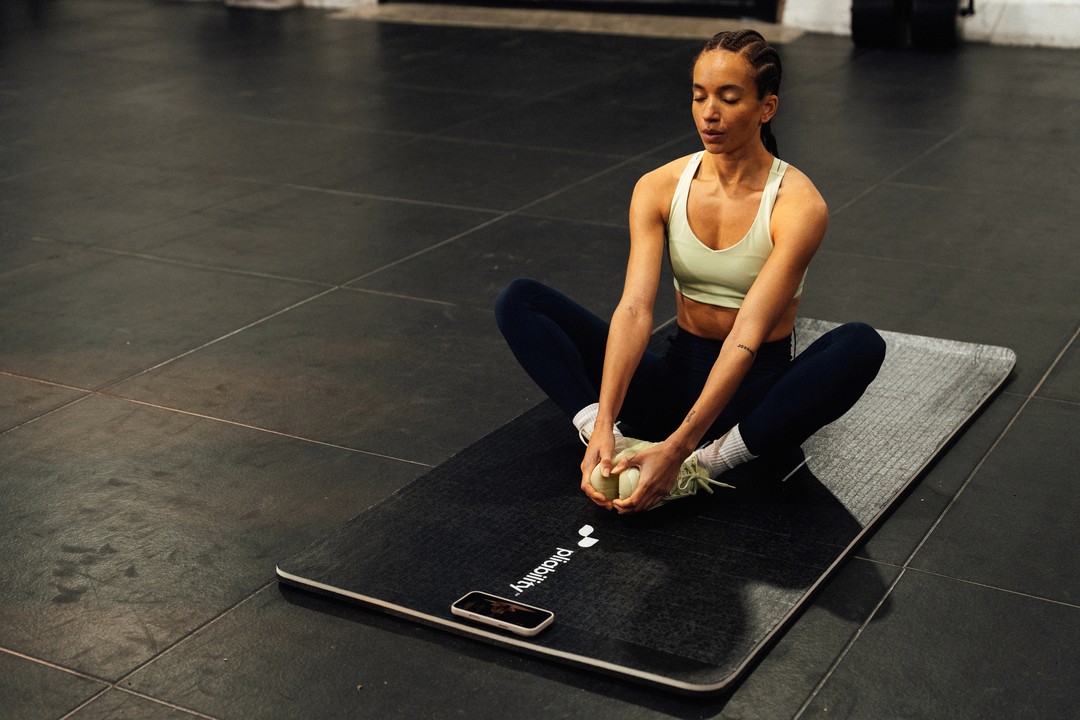
With passive stretching, sometimes called relaxed stretching or static-passive stretching, you use a partner, piece of equipment, or your body weight to extend your muscles.
Picture: using your arms to pull your knee into your chest or when your yoga instructor puts gentle pressure on your back when seated in a butterfly position. During passive stretching, you can relax and deepen the stretch with each breath you take. (But, again, you should never force your body to the point of pain.)
ultimate dynamic vs static stretching guide

The main difference between static and dynamic stretching is the amount of movement involved, or lack thereof. In a nutshell, a static stretch entails holding a specific position that creates tension in the muscle and a "stretching" sensation. In contrast, a dynamic stretch involves moving a limb through its full range of motion.
static stretching: what is it and what are its benefits?
In turn, dynamic and static stretches have different effects on the body. Holding a static stretch for a long period allows the muscle in that lengthened position to release fully. According to the National Library of Medicine, this style of stretching helps to alleviate any tightness, which may ultimately lead to muscle aches and pain if left untreated.
dynamic stretching: what is it and what are its benefits?
On the flip side, a dynamic stretch involves a period of releasing and then engaging again, with the main focus being to create blood flow, get oxygen moving through the body, and increase mobility.
Mobility, or a joint's ability to move through its entire range of motion without pain or compensation, is essential. According to the American Council on Exercise, a lack of mobility can cause movement compensations (i.e., using the wrong muscles to carry out a move), leading to muscle imbalances and an increased risk of injury.
how to know when to perform static vs. dynamic stretching
The amount of time you perform each stretch also varies. You might hold your position for one to three minutes during a static stretch. Sitting in that position for a longer period allows the body to let go: when you're trying to release a muscle or a knot, that time matters more than it does for a quick dynamic movement.
Dynamic Stretching Pre-Workout
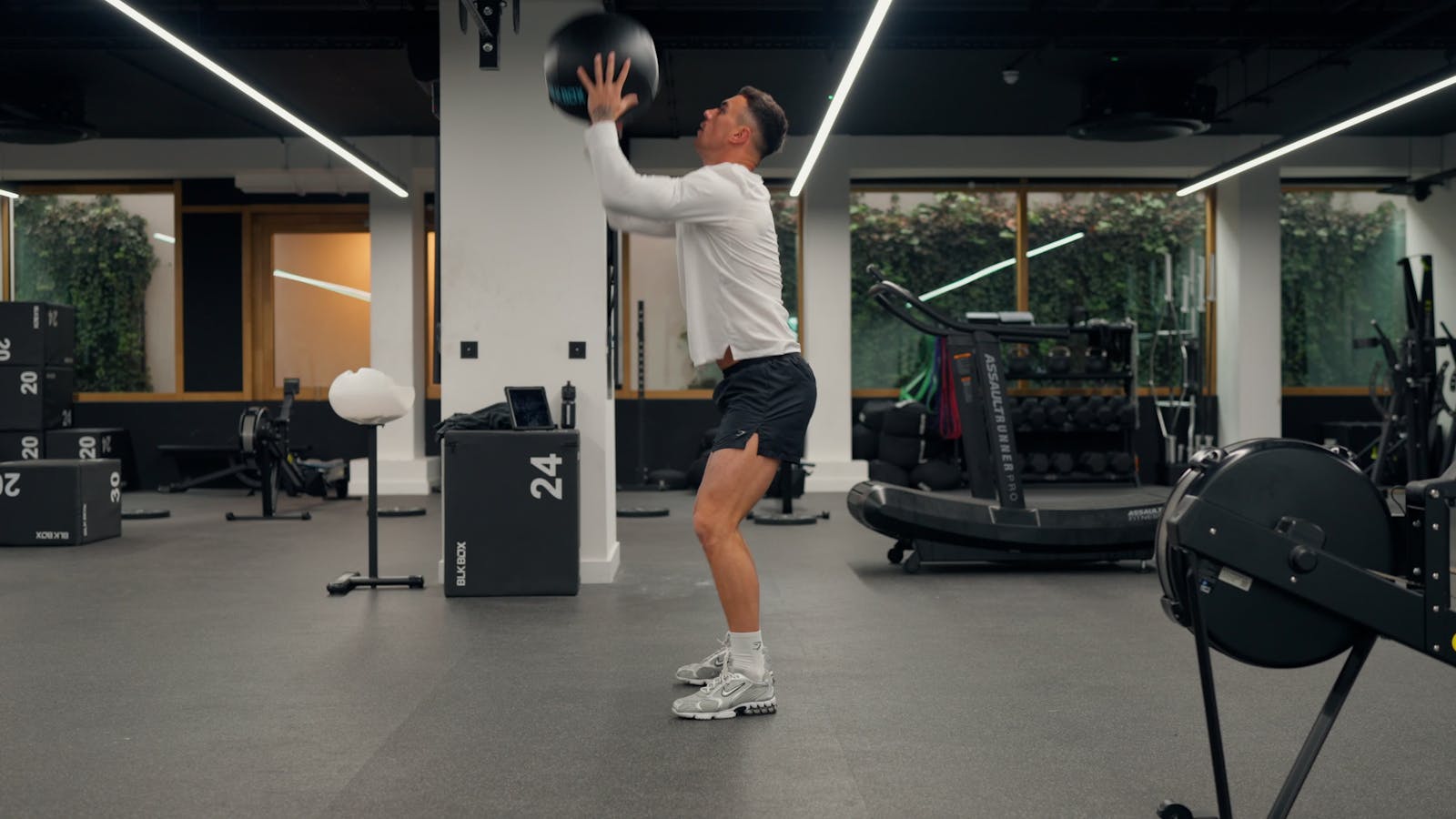
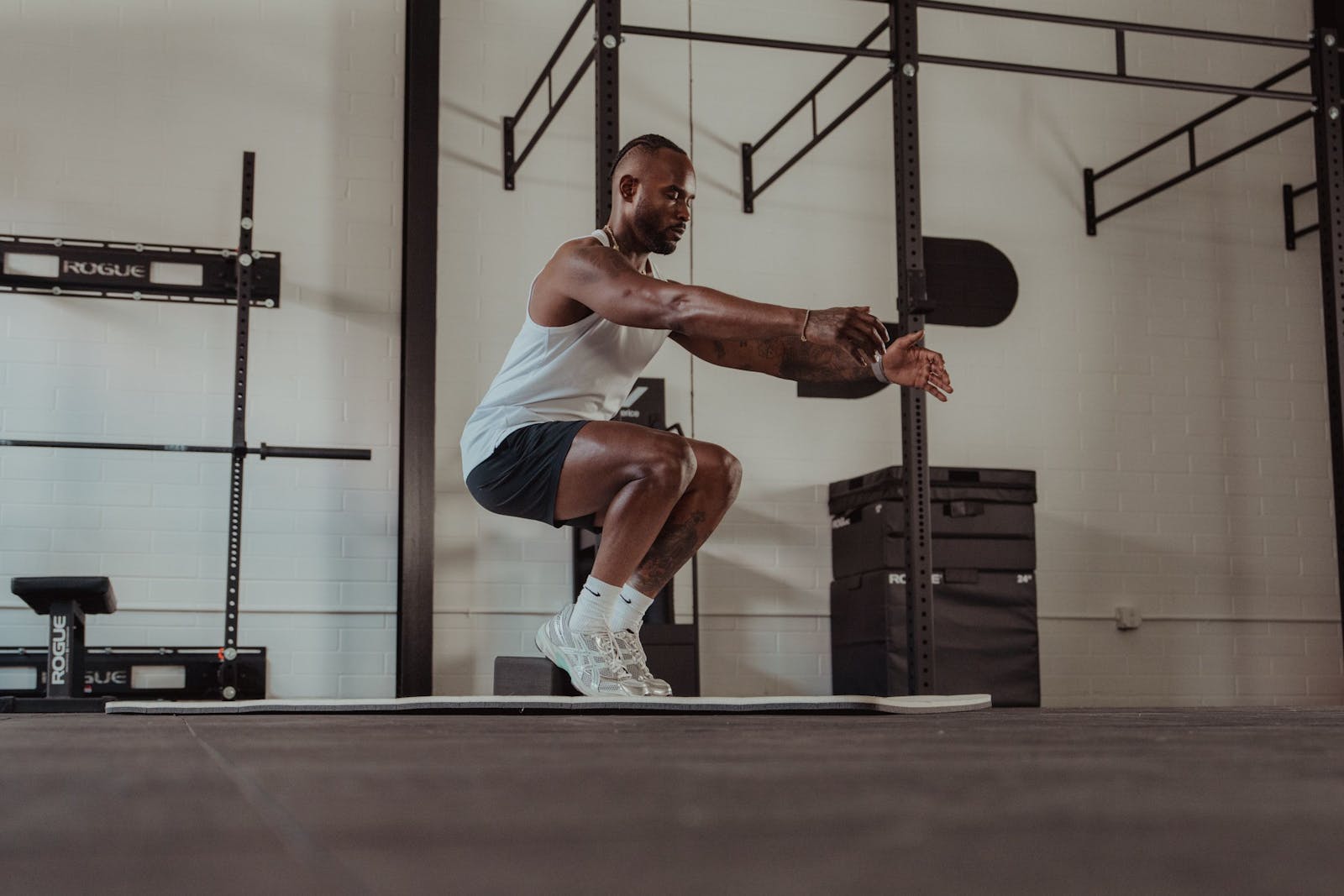
With a dynamic stretch, however, you'd move through a movement for 30 to 45 seconds, which simply helps wake up your body. Generally speaking, you'll want to work through a dynamic stretching routine before exercise: doing it beforehand helps keep your body mobile, so you don't risk injury from tight muscles being overextended or used quickly without any warm-up.
Downsides of Static Stretching Before Exercise
While static and dynamic stretching before a workout both increase your joints' range of motion, research suggests that with static stretches, this improvement may come from an increased tolerance to stretching rather than reduced muscle tension. Studies suggest that powering through static stretching immediately before exercise may decrease muscle strength and performance in running and jumping.
Best Time for Static Stretching
Static stretches aren't the best fit for a pre-workout routine: they don't give you the blood flow and mobility you need to move well right before training. You'll often want to save static stretching for a recovery day rather than a cool-down. Directly after a workout, static stretching probably isn't doing much for you; you might feel something right away, but the long-term benefit is limited.
Research suggests that static stretching post-exercise doesn't do much to enhance recovery compared to rest. You tend to get more out of it when your body is already rested. It can be part of a recovery day once or twice a week, depending on how your body is feeling, but it works best as one piece of your overall programming rather than a substitute for it.
is dynamic stretching or static stretching better?
Static stretching has fallen out of favor as a warm-up routine in recent years, since it can reduce maximal strength, power, and performance when done right before a workout.
That said, there’s still absolutely a role for static stretching. The longer you stretch, the more it tends to hurt performance, so if it’s part of a complete dynamic warm-up, hold each stretch for 15 to 30 seconds rather than 60 to 90. Static stretching after exercise can help prevent post-workout stiffness by restoring muscles to their pre-exercise length, and it works best when combined with other types of stretching: it remains an effective way to increase a joint’s range of motion, and it can be used in short doses as part of a complete dynamic warm-up.
pros and cons of dynamic stretching
Pros
Increases blood flow and heart rate
Improves flexibility and mobility
Enhances athletic performance
Reduces risk of injury.
Cons
May not be suitable for everyone, depending on your range of motion or physical ability.
May not fully prepare for high-intensity activities.
pros and cons of static stretching
Pros
Increases flexibility.
Reduces muscle tension.
Improves posture.
May promote relaxation and stress relief.
Cons
May decrease muscle power and performance.
May cause overstretching and injury.
May not be effective for warming up.
Not suitable for acute injuries.
10 expert-approved dynamic and static stretches to try

dynamic stretching examples
Ready to try some dynamic stretches? Here are some examples and how to do them.
1. Leg pendulum
The leg pendulum is what it sounds like. It involves swinging each leg back and forth 10 to 12 times, or you can swing your leg side-to-side.
Here’s how to do the leg pendulum dynamic stretch:
Stand next to a stable object like a chair or wall for support.
Shift your weight onto one leg and slightly bend that knee.
Swing the opposite leg forward and backward like a pendulum, keeping it relaxed.
Gradually increase the range of motion as you swing your leg.
Repeat on the other side.
2. Walking lunges
A classic for many, the walking lunge stretches your calves, hamstrings, and thigh muscles.
Here’s how to do a walking lunge:
Start standing with your feet hip-width apart and your hands on your hips.
Take a big step forward with one foot and lower your body until both knees are bent at a 90-degree angle.
Keep your front knee aligned with your ankle and your back knee hovering just above the ground.
Push off your front foot to step forward into the next lunge.
Continue alternating legs as you walk forward.
You can also do walking lunges while twisting your torso, giving your lower back more stretch.
3. Cat and Cow Poses
Start on your hands and knees with a neutral spine.
Inhale as you arch your back, dropping your belly towards the floor.
This is a cow pose.
Exhale as you round your back into cat pose, tucking your chin to your chest.
Repeat for several breaths.
4. Arm Circles
Stand with your feet shoulder-width apart.
Extend your arms out to the sides at shoulder height.
Make small circles with your arms, gradually increasing the size of the circles.
Reverse direction after a set number of reps.
5. Small hip circles
Here’s how to do small hip circles:
Stand with your feet hip-width apart and place your hands on your hips for support.
Begin by gently rotating your hips in a circular motion, moving from front to back.
Keep the movement small and controlled, focusing on loosening up the hip joints.
After several repetitions, switch directions and rotate your hips in the opposite direction.
You can gradually increase the size of the circles as your hips start to loosen up.
static stretching examples
Here are some examples of static stretches and how to do them:
1. Hamstring stretch
Sit on the floor with one leg extended straight out in front of you and the other bent, with that foot resting near the straight leg’s thigh.
Lean forward from your hips and reach towards your toes on the extended leg, hinging at the hips and keeping your back straight.
Hold the stretch for 30 to 90 seconds, feeling a gentle pull along the back of your thigh.
Repeat on the other side.
2. Calf stretch
Stand facing a wall with your hands against it at shoulder height.
Step one foot back and press your heel into the ground, keeping your back leg straight.
Lean forward slightly until you feel a stretch in your calf.
Hold the stretch for 30 to 90 seconds, then switch legs.
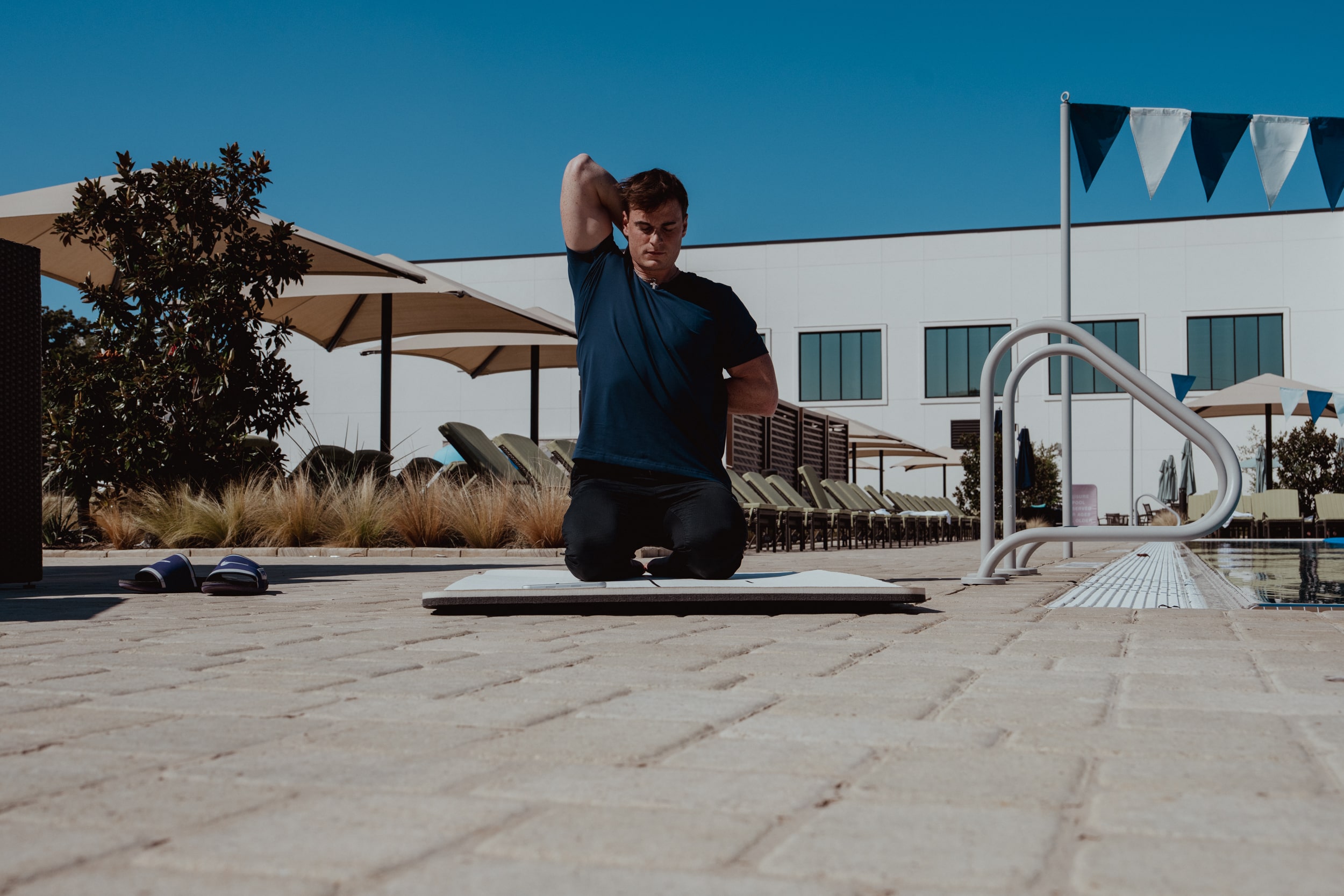
3. Triceps stretch
Reach one arm overhead and bend your elbow, bringing your hand down towards the middle of your back.
Use your other hand to push on your bent arm's elbow gently.
Feel a stretch along the back of your upper arm.
Hold the stretch for 30 to 90 seconds, then switch arms.
4. Quad stretch
If your workout involves a lot of running, jumping, or squatting, a quad stretch may help alleviate any tightness or tension in your muscles.
Here’s how to do a quad stretch:
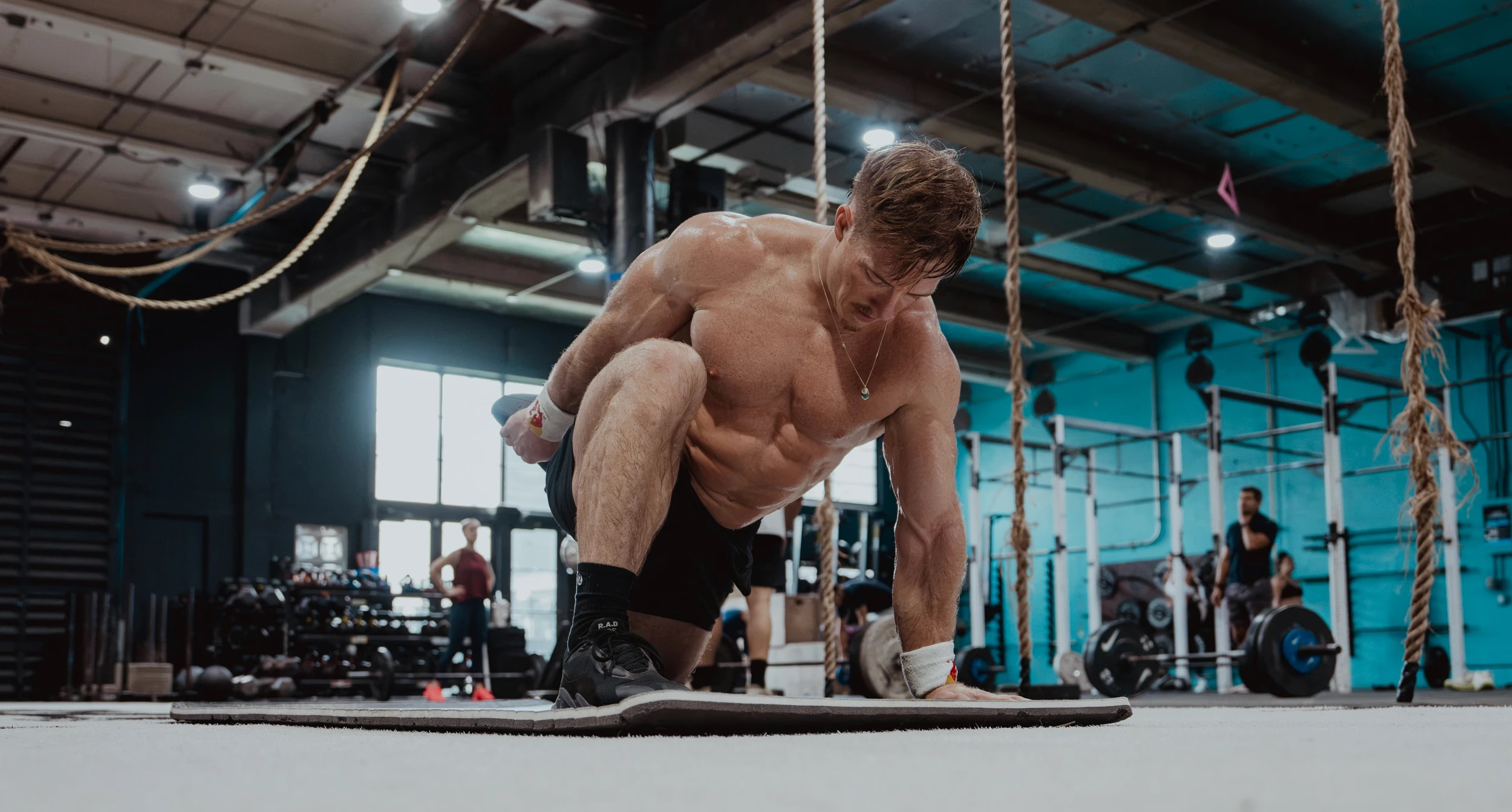
Stand on one leg and bring your other foot towards your buttocks, grabbing your ankle with your hand.
(You can use your other hand to balance on a wall or the back of a chair if needed.)
Keep your knees close together as you gently pull your foot towards your buttocks until you feel a stretch in the front of your thigh.
Hold the stretch for 30 to 90 seconds, then switch legs.
5. Shoulder stretch
Bring one arm straight across your body at chest height.
Use your other hand to press gently on the forearm of your outstretched arm.
Feel a stretch in the back of your shoulder.
Hold the stretch for 30 to 90 seconds, then switch arms.
tips for performing dynamic and static stretches

Dynamic stretches are movement-based stretches that prepare the body for exercise by actively nudging muscles and joints toward their ranges of motion. Static stretches, on the other hand, are the classic stretches that most people picture when they think of "stretching."
They involve holding a position to elongate a targeted muscle or muscle group and improve flexibility. Static stretches improve flexibility but don’t do much to prepare the body for exercise. As such, they are more beneficial for recovery and should be performed after a workout when the goal is to relax the body and improve post-exercise recovery.
get moving with dynamic stretches
When incorporating dynamic stretches into your pre-workout routine, try to mimic the movements you’ll be doing in your actual training session. If you’re about to tackle a lower-body workout that requires a lot of hip and glute movement, for example, focus on dynamic stretches that improve hip mobility (such as fire hydrants and leg swings) and activate the glutes (e.g., bridges and frog pumps). On recovery days, focus on static stretches that target areas where you feel particularly tight.
don’t forget to breathe
Whether you’re performing dynamic or static stretching, you’ll want to use your breath to your advantage. Using the breath to expand the ribs from the inside out helps with areas of your body that need to open up, and long, slow exhales help you release tension you’re trying to let go of.
listen to your body
It’s also important to tune into your body and learn the difference between a stretch that hurts so good and a stretch that’s causing harm. Generally speaking, a good-feeling stretch shouldn’t feel sharp or shooting; that’s typically a bad sign. If you’re getting a jolt in your tendons or muscles, don’t push any further: stop where you are and ease off.
But if you’re noticing a bit of manageable tension, try using your breath to gently push 10 to 15 percent deeper into the stretch. Take note of how you feel as you do so, and if it feels tolerable, stay within that space. Listening to your body is your most important tool.
put dynamic and static stretching to work
Mobility training can help improve your athletic performance and prepare your body for your next workout. The better your body moves, the less likely you are to be injured, and the more effective every movement will be, whether you’re getting back to a sport after an injury or simply looking to move and perform better.
pliability’s Daily Sessions guide you through both dynamic warmups and static cool-downs, so you always know which type of stretch fits the moment. Take the mobility assessment to find your tightest areas, then follow a personalized Path or use Build Your Program to build a routine around your own training schedule.
Start a 7-day free trial today on iPhone, iPad, Android, or the web, to improve your flexibility, aid recovery, reduce soreness, and enhance your athletic performance.
Related Reading



Move better in 10 minutes a day.
10,000+ five-star reviews.