


LEARN
pliability

Stiffness can make everyday activities like reaching for something on a high shelf or getting up off the floor uncomfortable and even painful. It can create a sense of vulnerability and hold you back from the activities you enjoy most. Improving your flexibility can help you perform daily activities more comfortably, reduce your risk of injury, enhance your athletic performance, and improve your overall quality of life. Want to learn how to get flexible fast? This article will show you how to build flexibility quickly and effectively through a structured approach that fits into your daily routine.
what flexibility is and isn't

Flexibility is the ability of a joint or series of joints to move through an unrestricted, pain-free range of motion. Flexibility varies widely from person to person, but minimum ranges are necessary for maintaining joint and total-body health. Many variables affect the loss of normal joint flexibility, including:
Injury
Inactivity
Lack of stretching
Your range of motion is also influenced by the mobility of the soft tissues that surround each joint, including your muscles, ligaments, tendons, joint capsules, and skin. A lack of stretching, especially combined with regular activity, can lead to fatigue-induced soft tissue shortening over time.
how limited flexibility affects your joints and muscles
Inadequate flexibility affects the body in a few significant ways. Joints need to move through a full range of motion to maintain the health of cartilage and other joint structures, which requires good blood supply and adequate synovial joint fluid, the natural lubricant inside the joint. This effect is especially noticeable in weight-bearing joints like the hips and knees.
Inflexible muscles also tire more quickly, forcing opposing muscle groups to work harder. That fatigue can lead to muscular injuries and leave muscles less able to protect joints from more serious injury; the hamstrings, for example, help stabilize the knee and guard against ACL tears. Decreased flexibility can also cause abnormal stress on structures far from the original site of tightness. Tendonitis in the knee, for instance, can sometimes trace back to calf tightness.
why do we lose flexibility?
You may remember being more flexible when you were younger, and age is part of the story, but it's rarely the only factor. As we age, our lifestyles change, and that shift affects how much we actually use our flexibility day to day, whether that's more hours behind a desk or fewer hours doing the kinds of full-range movement that keep tissue supple. Losing flexibility over time can happen for many reasons, including:
Sitting for long periods
Aging
Injury
Inactivity
Stress
Genetics
Medical conditions
Sitting for long stretches actually shortens up several muscle groups over time, which can affect the flexibility of your hips, hamstrings, and even your mid-back or chest muscles.
flexibility vs. mobility: what's the difference?
Flexibility and mobility get used interchangeably, but they aren't the same thing. Mobility is dynamic or active, while flexibility is passive. Flexibility is being able to pull your thumb back toward your wrist with your other hand; mobility is being able to get your thumb to that same spot without any outside help.
Why Stretching Alone Isn't Enough
Flexibility comes from stretching, holding a static position for roughly 30-60 seconds while your muscles relax and lengthen, which reduces tension and nervous system activity in that muscle. Stretching can be a good idea after a workout, but it isn't the only piece of the puzzle. Good mobility depends partly on good flexibility, but being flexible doesn't automatically mean your mobility is up to par, and vice versa. Flexibility is just one piece of the mobility picture.
nine steps to get flexible fast

1. define your flexibility goals
First, clarify why you want to improve your flexibility. Common reasons include:
Decreasing muscle soreness after a workout
Decreasing risk of injury
Improving performance
Improving range of motion
Reducing pain
If you cannot actively reach a position you'd like to be able to move into, that's a sign you need to build toward that range of motion. So, how do you know if you need to stretch a given area? If poor shoulder flexibility keeps your arms from fully raising overhead in a handstand, or tight hips make it hard to get down on the floor to play with your kids, those are your reasons. Find the motivation that's specific to you rather than a generic rule that you "must" stretch; it will get you to your goal faster than any borrowed justification.
2. identify your flexibility limitations
Once you have a goal in mind, figure out what's actually holding you back. It's rarely as simple as "stretch more," since not every muscle needs the same attention. Struggling to touch your toes points to tight hamstrings, but your lower back, hip flexors, or glutes could just as easily be the real restriction.
The best way to find out is to move through a set of basic assessment positions that test your whole body and note where you feel most restricted:
Squat
Cross-legged sitting
Long sitting
Supine hip and knee flexion
Hooklying cross-leg hip rotation
Shoulder combined motions
Prone backbending
Neck motions
Start with your most noticeable restriction first. Like untangling a rope, once you find the primary knot, the rest tends to unravel more easily, and the stretching you do afterward makes the best use of your time.
3. slow down to get flexible faster
The catch with getting flexible quickly is that most people need to ease off, not push harder. You don't improve stretching tolerance by forcing a stretch until it hurts; pulling back from a painful stimulus is a reflex your body won't override. The inability to move through a given range because of "tightness" can come down to a few different factors: soft tissue scarring, joint hypomobility from injury or a congenital factor, or simply higher resting muscle tone, your muscle's natural resistance to being stretched. The first two are best addressed with a professional in person, but the last explains why most people should take their stretching routine a little slower than they expect.
Higher resting muscle tone varies naturally from person to person, which is part of why some people seem naturally bendier than others. It's tempting to bring the same intensity you use elsewhere in training, since pushing through fatigue builds stamina. But fighting your body's natural tone is a losing battle for flexibility specifically. Coaxing your body toward a stretch, easing in rather than forcing it, tends to produce better results: you'll feel your muscles resist a hard push but relax into a softer, rhythmic approach instead. There's a place for pushing harder into a stretch, but that's for more advanced flexibility training, used sparingly for small additional gains, not the approach to take if you're currently struggling to touch your toes.
4. follow your plan consistently
Once you've set your goal, identified your restrictions, and eased into the right intensity, the last piece is sticking to a consistent plan built around your specific goals and restrictions. Gains build session to session, and that comes down to consistent practice and giving your body time to adapt to what you're asking of it.
5. start and end each day with static stretches
Holding static stretches may be the simplest way to build flexibility. Static stretching means holding a muscle in a lengthened position for a substantial amount of time, usually around 30 seconds, which lets you isolate and deeply stretch it. Just 5 to 10 minutes of static stretching at the start and end of your day can make a noticeable difference in how flexible your muscles feel. Familiar static stretches include:
Forward fold (touching your toes)
Standing quad stretch
Cross-body shoulder stretch
Seated single-leg hamstring stretch
Triceps stretch
Seated twist
Butterfly stretch
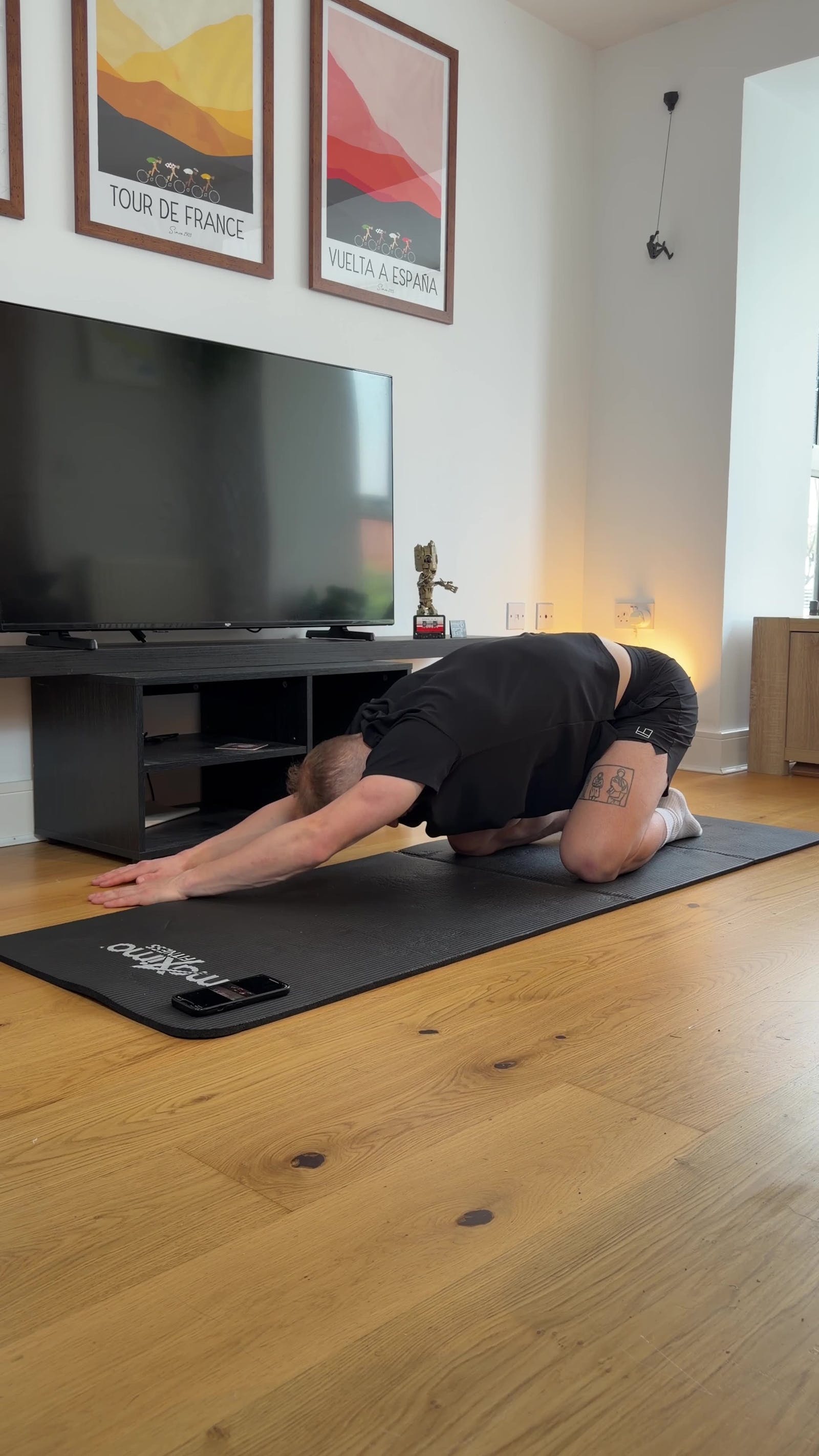
Child's pose
Overhead side reach
More advanced static stretches include pigeon pose, figure four, and plow pose.
6. perform dynamic stretches before and after you exercise
Dynamic stretches, in contrast to static stretches, continuously move your muscles and joints through their full range of motion. This style of stretching feels more vigorous than static stretching and may even raise your heart rate a bit. It doesn't isolate one muscle at a time the way static stretching does; instead it works several muscles together and trains you to engage them for deeper, more fluid motion. Doing dynamic stretches before a workout makes a good warmup, and a few afterward help ease your body back to its resting state rather than stopping cold after an intense session. Examples include:
Cat-cow pose
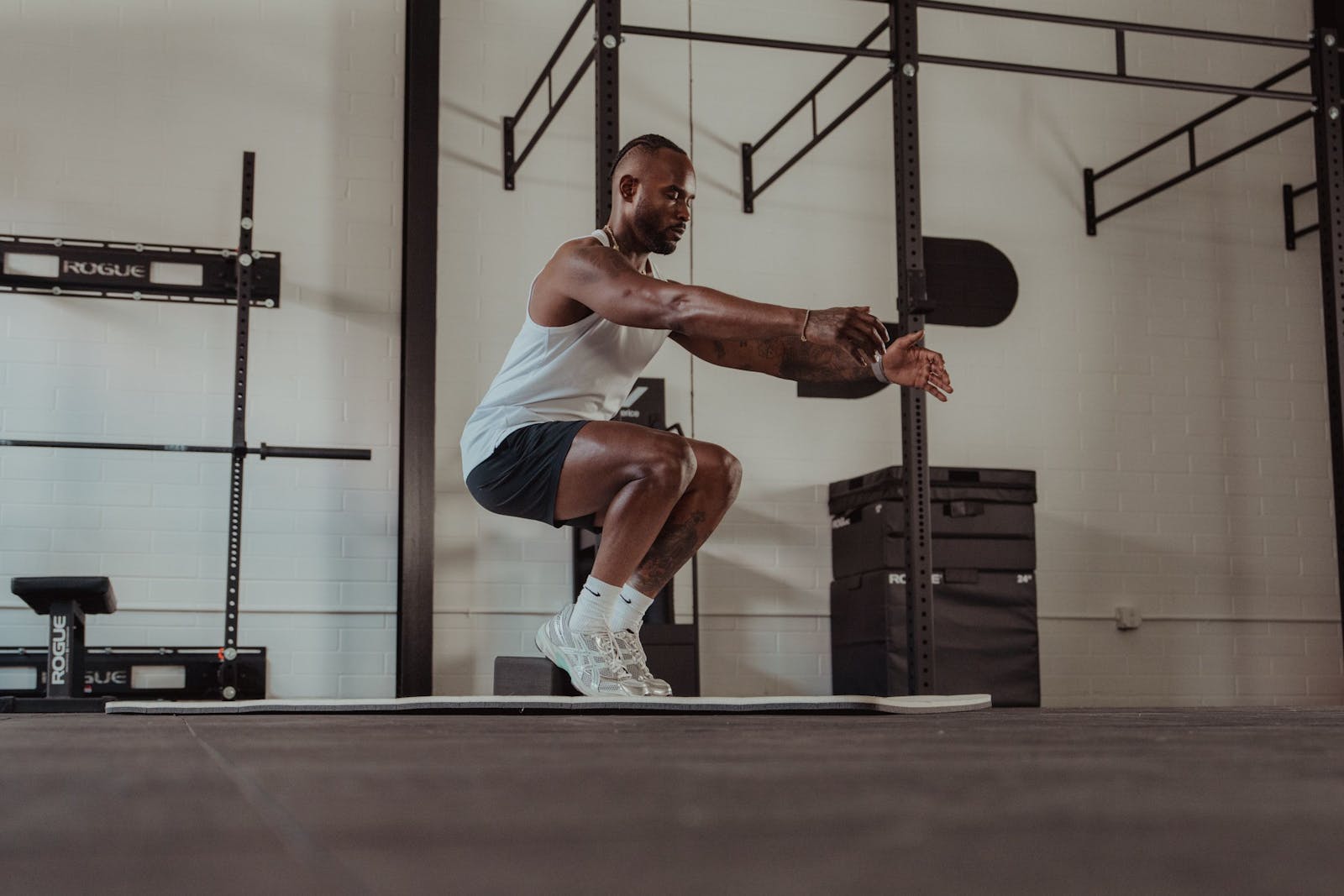
Squat-to-stand
Downward dog to cobra
Kneeling lunge stretch
Cossack squats
Walking knee-to-chest
Toy soldiers
Iron cross and scorpion
Wall angels
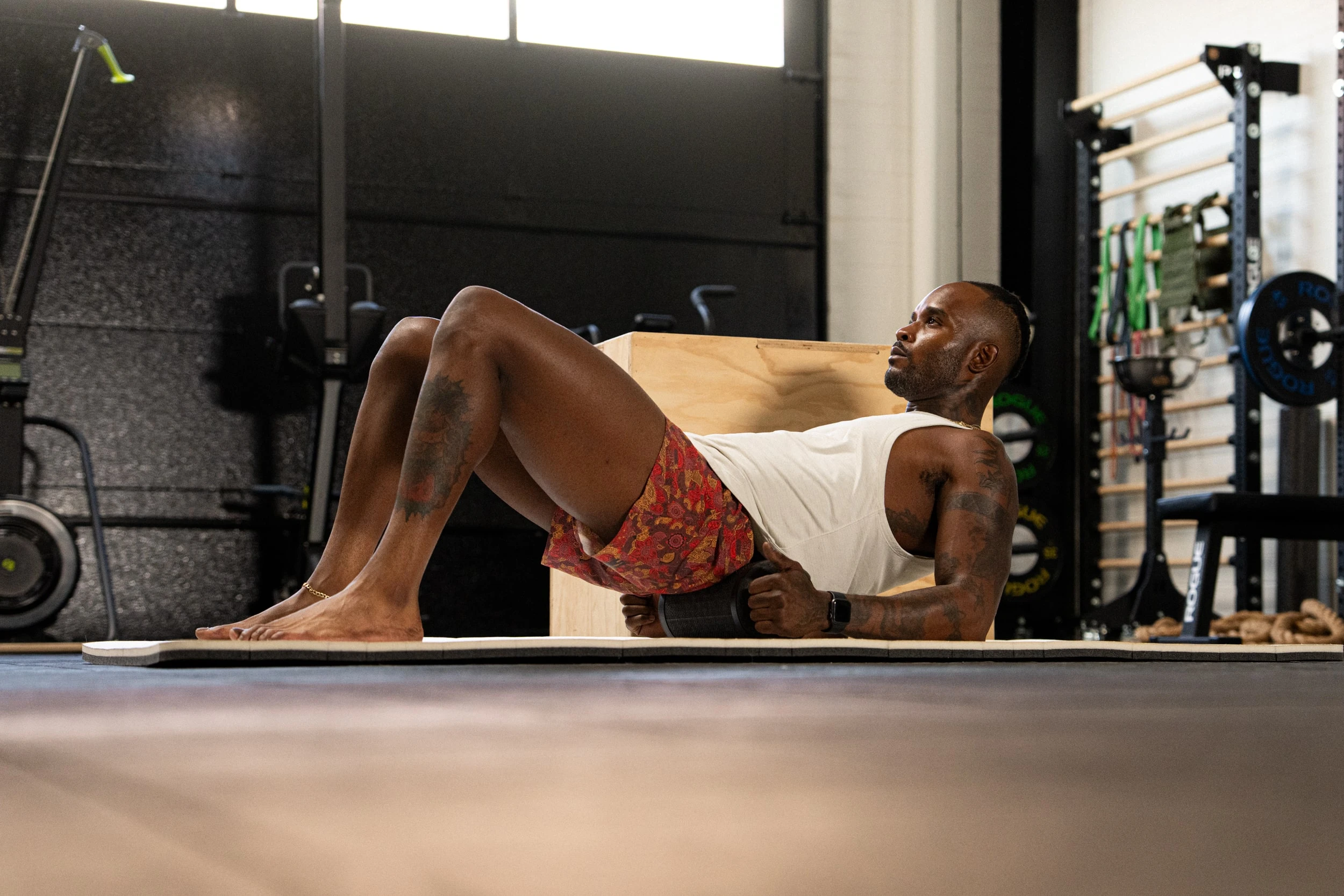
7. mash your muscles a few times each week
Feeling inflexible can come down to adhesions in your fascia, the connective tissue covering your muscles, bones, and joints (though your muscle tissue itself can develop knotty areas too). What people call "muscle knots" often actually live in the fascia. These adhesions can build up from long periods of sitting as well as from intense physical activity, so adding self-myofascial release, essentially self-massage to work those tight knots loose, can help. You can do this with a foam roller, a lacrosse ball, a muscle roller, or a massage gun. Useful moves include:
Foam roller sit-ups
Foot rolls with a lacrosse ball
Figure four stretch on a lacrosse ball
Quadriceps foam roll
Hamstrings foam roll
Calf rolls with a lacrosse ball or foam roller
8. practice rotational movements
Your ability to fully rotate your spine and your ball-and-socket joints, the hips and shoulders, has an outsized influence on your overall flexibility. Your spine, hips, and shoulders are involved in most of your daily movement, whether you notice it or not: every time you step, reach, bend, turn, sit, or stand, you're using your spine along with your hips or shoulders. Actively practicing rotation through these joints helps you tap into flexibility you might otherwise be missing out on. Try:
Shoulder internal and external rotation
Shoulder upward external rotation
Seated hip internal and external rotation
Standing hip internal and external rotation
Shinbox
Windmills
Seated spinal twist (alternating)
sample whole-body flexibility program

This program contains eleven basic stretches. Most are general and you may have done them before, but done consistently, they'll help you build flexibility quickly.
1. flexion and extension
From a sitting or standing position, begin with the neck upright.
Flex your neck by tucking your chin towards the chest. If your chin touches the chest, attempt to touch the chin further down the chest.
Hold this position for 20-30 seconds.
Extend your neck trying to bring the back of the head as close to the back as possible.
Hold this position for 20-30 seconds.
2. left and right look
From a sitting or standing position, begin with the neck upright.
Turn your head to the right and hold this position for 20-30 seconds.
Turn your head to the left and hold this position for 20-30 seconds.
3. lateral shoulder and upper back
From a sitting or standing position, raise your right arm to shoulder height.
Flex your right arm across to the left shoulder.
Grasp your raised arm just above the elbow with your left hand.
Exhale and pull your raised arm across your chest.
Hold this position for 20-30 seconds and repeat on the opposite side.
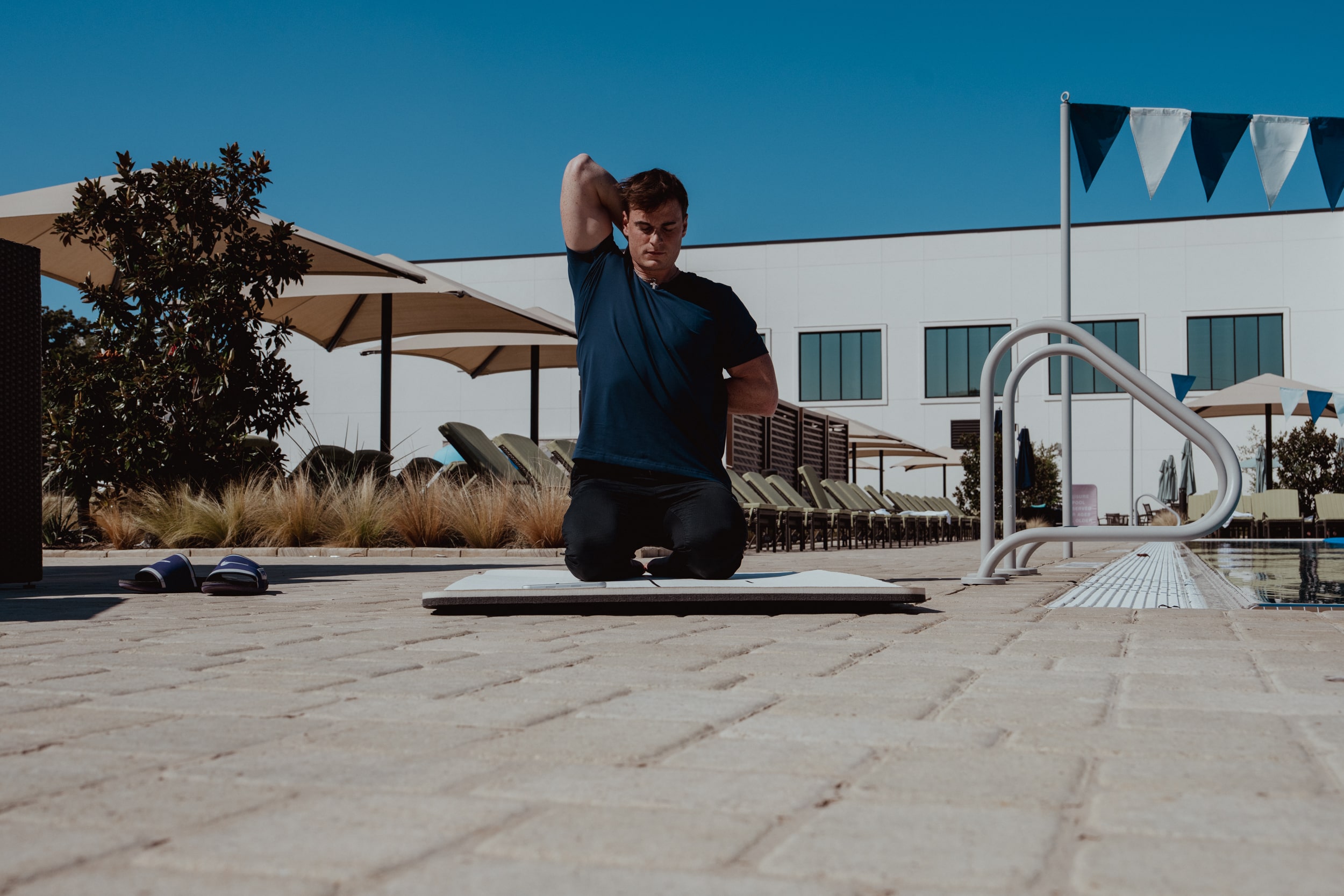
4. triceps
From a sitting or standing position, raise and flex your right arm overhead next to your ear.
You should reach your right hand towards your scapula.
With your left hand grasp your right elbow, exhale, and pull your right elbow behind your head.
Hold this position for 20-30 seconds, and repeat on the opposite side.
5. chest and shoulders
From a standing position, face the edge of a door frame or corner of a wall.
Flex your right arm at the elbow and place your hand on the wall or frame.
Exhale and lean forward.
Hold this position for 20-30 seconds and repeat on the opposite side.
Note: You can do both arms simultaneously when using a door frame.
6. torso
From a standing position, place your feet shoulder width apart.
You may place your left arm on your hip and raise your right arm over your head, or raise both arms over your head and interlock your fingers.
Keep your right arm straight (or both arms if used) and lean from your waist to the left side.
Hold this position for 20-30 seconds and repeat on the opposite side.
Note: Do not lock your knees but do not allow them to bend as you lean to each side.
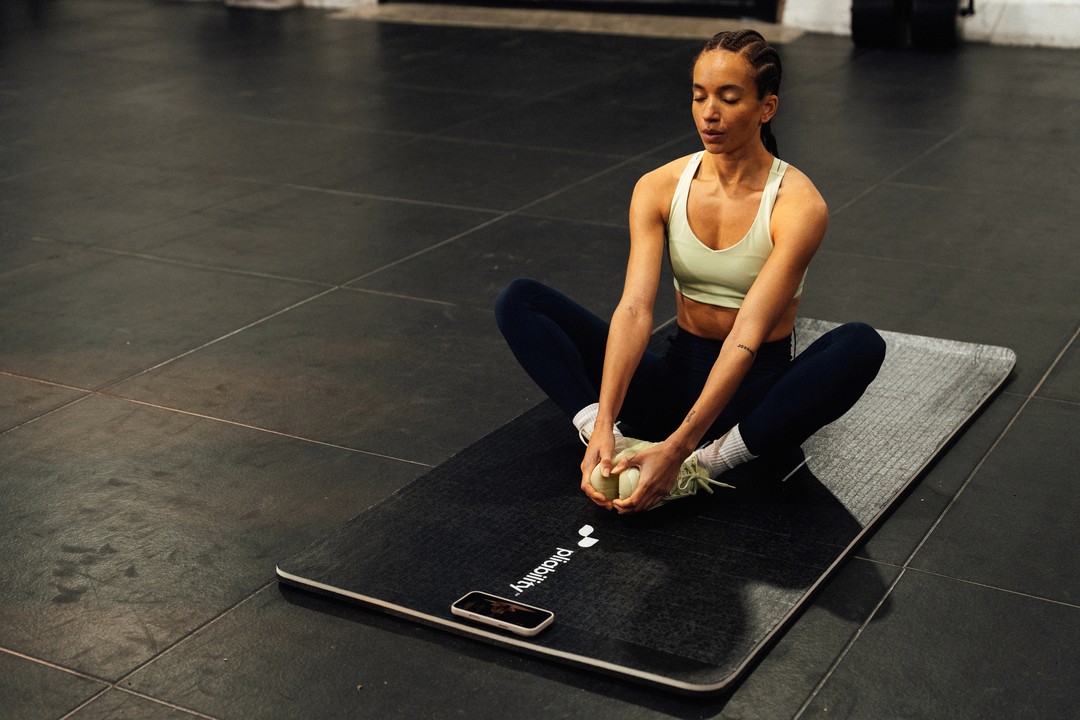
7. groin
From a sitting position keep your body near vertical. You may choose buttocks and lower back against a wall.
Flex your knees with your legs spread pulling your feet towards your body and place your heels together.
Place your hands on the inner thighs or knees, exhale and press your legs towards the floor.
Hold this position for 20-30 seconds.
Note: You may use your hands to hold your heels together and press your legs toward the floor with your elbows.
8. hips
Lay on your back with legs flat on the floor.
Bring your right thigh close to your chest by flexing your knee and hip.
Exhale and with both hands placed behind the thigh, pull your knee closer to your chest.
Hold this position for 20-30 seconds and repeat on the opposite side.
9. hamstrings
From a standing position, raise your right leg and place it upon a stable, elevated surface at a comfortable height.
Exhale while you bend your left leg slightly, then lean forward and round your back.
Hold this position for 20-30 seconds and repeat with the opposite leg.
10. quadriceps
From a standing position place one hand about shoulder height up against a wall or stable surface.
Reach back with the opposite hand and grab the ankle on the same side.
Exhale and slowly pull your heel toward your buttocks while avoiding too much pressure on your knee.
Ensure your upper body stays tall and does not lean toward the wall.
Hold this position for 20-30 seconds and repeat with the opposite leg.
11. calf and Achilles tendon
From a standing position, place both hands on the wall approximately shoulder-width apart.
Move one leg forward while maintaining a slight bend, while the other leg stays straight.
Slightly bend your arms and lean forward while keeping your heels on the floor.
Make sure both feet and entire body are pointing forward while your upper body stays tall.
Hold this position for 20-30 seconds and repeat with the opposite leg.
how often to do this routine
Do these stretches after each workout, right after your cool-down. They aren't especially intense, but they matter for preventing injury and muscle tension. All of the above are static stretches, so hold each one for 30-60 seconds.
build flexibility faster with pliability
Getting flexible fast comes down to knowing where you're restricted and working that specific range consistently, not grinding through generic stretches and hoping something changes. pliability's mobility assessment helps you identify exactly where you're tight, and your Daily Sessions and Paths adjust to target those areas so your stretching time is well spent. If you'd rather build your own routine around the steps above, Build Your Program lets you do that, and the Rebuild hub has structured programs if you're working around pain or a past injury.
Sign up for a 7-day free trial on iPhone, iPad, Android, or on our website to improve flexibility, aid recovery, reduce pain, and enhance your range of motion.
Related Reading


Move better in 10 minutes a day.
10,000+ five-star reviews.