Join thousands worldwide already moving with pliability.

#1 MOBILITY APP

10,000+

5 STAR

REVIEWS

Join thousands worldwide already moving with pliability.

#1 MOBILITY APP

10,000+

5 STAR

REVIEWS

LEARN

12 Best Plyometric Exercises for Speed and Explosive Power

12 Best Plyometric Exercises for Speed and Explosive Power

Discover the Best Plyometric Exercises for Speed with 12 proven moves to improve agility, acceleration, and overall performance.

Discover the Best Plyometric Exercises for Speed with 12 proven moves to improve agility, acceleration, and overall performance.

Pliability Team

man running -  Best Plyometric Exercises for Speed

Every athlete knows that split-second difference between winning and losing. That moment when explosive power launches you past a defender, when rapid foot speed carries you across the finish line first, or when pure acceleration changes the entire game. The best plyometric exercises for speed provide a structured approach to building the explosive athletic power that transforms good athletes into exceptional ones.

Maximizing results with these power-building movements requires more than just the exercises themselves. Your muscles and joints need proper preparation for the demands of explosive training, while you recover efficiently between sessions. When your body moves better and recovers smarter, those box jumps, bounds, and sprint drills translate directly into the speed gains you're working to achieve with Pliability's mobility app.

Table of Contents

  1. Why Most Athletes Train Hard but Still Do Not Get Faster

  2. Why Traditional Speed Training Fails Without Explosive Power

  3. How Plyometric Exercises Actually Build Speed

  4. 12 Best Plyometric Exercises for Speed (And When to Use Each One)

  5. If You Want These Exercises to Actually Make You Faster, Fix This First

Summary

  • Plyometric training can improve vertical jump height by 10-30% and produce 2-8% improvements in sprint performance according to peer-reviewed research. These gains come from conditioning the stretch-shortening cycle, the mechanism that lets tendons store and release elastic energy during ground contact. Elite sprinters spend less than 0.1 seconds on the ground per stride, while most recreational athletes linger closer to 0.2 seconds. That extra tenth of a second compounds across every step, translating to meters of lost distance over 100 meters.

  • Traditional strength programs require roughly 144,000 milliseconds (40 hours) of accumulated training to produce measurable power adaptations because slow-tempo lifts train muscles to grind through resistance rather than explode against it. Heavy squats build maximal strength and long runs develop aerobic capacity, but neither trains the nervous system to recruit muscle fibers within the 0.08 to 0.12-second window required during sprint ground contact. Speed responds to the type of stimulus applied, not just training volume or effort level.

  • Research shows 85% of young athletes never reach their speed potential despite consistent training. The bottleneck is not a lack of work ethic but the absence of explosive power development in most programs. Athletes can increase sprint volume or lift heavier weights without improving force production or speed, meaning they build endurance and maximal strength while their actual sprint times plateau. The body adapts to the demands placed on it, and without rapid force application training, it never learns to produce power in fractions of a second.

  • Plyometric exercises fail when performed on bodies with restricted mobility because compensations during landings leak power and increase injury risk. When ankles lack dorsiflexion past 30 degrees or hip flexors restrict full extension, the kinetic chain cannot efficiently transmit force during explosive movements like depth jumps or prowler sprints. Joint restrictions force the body to work around limitations rather than through optimal movement patterns, preventing the stretch-shortening cycle from functioning as designed.

  • Ground contact time determines the difference between fast and slow athletes more than stride length or leg turnover rate. Reactive strength, the ability to switch from eccentric loading to concentric explosion without hesitation, must become reflexive through repeated plyometric exposure. Depth jumps with drop heights of 12-24 inches train this quality by forcing ground contacts under 0.2 seconds, but only when athletes can maintain rebound height exceeding 90% of drop height, indicating efficient elastic energy storage rather than slow force absorption.

  • Pliability's mobility app addresses this by providing daily guided routines that prepare tissues for explosive demands and improve the range of motion in the ankles, hips, and thoracic spine required during plyometric landings.

Why Most Athletes Train Hard but Still Do Not Get Faster

Why Most Athletes Train Hard but Still Do Not Get Faster

You're doing everything right. Sprint intervals twice a week. Strength sessions that make your legs shake. Recovery runs on non-workout days. You track your times, eat the right foods, and sleep eight hours. Yet your speed hasn't changed in months. The stopwatch doesn't lie.

🎯 Key Point: Following a training plan doesn't guarantee results if the fundamental approach is flawed. Most athletes focus on volume and intensity without addressing the specific adaptations needed for speed development.

"80% of recreational athletes train in the wrong intensity zones, spending too much time in moderate efforts that don't drive the neuromuscular adaptations required for speed gains." — Sports Science Research, 2023

⚠️ Warning: The biggest mistake isn't what you're doing—it's how you're doing it. Training harder without understanding the specific demands of speed development leads to a plateau and potential burnout.

Why do most speed programs fail to deliver results?

According to Explosive Athlete, 85% of young athletes never reach their speed potential despite consistent training. The problem isn't effort or volume—most speed programs focus on moving faster without teaching athletes to push force against the ground. If your foot hits the ground without creating explosive power, you're training endurance, not speed. Your body adapts to what you demand of it, and if you never teach it to produce force quickly, it won't.

Why does ground contact time matter more than leg speed?

Speed isn't about how fast your legs move through the air—it's about how much force you push into the ground and how quickly you move that energy forward. Elite sprinters spend less than 0.1 seconds touching the ground per stride, while most recreational athletes spend closer to 0.2 seconds. That extra tenth of a second compounds with every step. Your muscles aren't weak; they're not trained to contract explosively enough to shorten that contact time.

How does traditional training reinforce slow movement patterns?

Traditional training teaches your body to grind, not explode. Long runs build aerobic capacity. Heavy squats build maximal strength. Neither trains your nervous system to recruit muscle fibers at sprinting speed.

Research from The Paseo Club confirms that 80% of training should be at easy-to-moderate effort, yet many athletes push hard in every session without allowing recovery to support explosive adaptation. Built-up fatigue compromises form, increases ground contact time, and reinforces the patterns keeping you slow.

Why doesn't traditional training develop explosive power?

The gap between training hard and getting faster closes when you add plyometric work. Box jumps, bounding drills, and depth drops teach your muscles to absorb force and return it immediately. They train the stretch-shortening cycle: the elastic recoil that lets your tendons store and release energy like a spring. When you land from a jump and immediately explode upward, you condition the neuromuscular pattern that defines fast ground contact. Traditional training misses this stimulus entirely.

Speed development doesn't respond to repetition. You can't work your way to explosive power any more than you can sprint your way to better flexibility. Each quality requires its own specific training stimulus. Most athletes hit plateaus not because they lack dedication, but because they're repeating an approach never designed to develop force production speed.

How does mobility affect explosive training results?

But explosive training demands much from your joints, connective tissue, and movement quality. If your ankles lack dorsiflexion range or your hips cannot fully extend, your body compensates during plyometric landings. Compensation patterns leak power and increase the risk of injury. Our mobility app provides targeted routines that prepare your tissues for explosive demands and aid recovery between sessions. When your body moves through its full range without restriction, box jumps and bounds translate directly into faster ground contacts.

Knowing you need explosive power is only half the equation. The right exercises fail without a foundation that can support them.

Related Reading

Why Traditional Speed Training Fails Without Explosive Power

Why Traditional Speed Training Fails Without Explosive Power

Most people think speed comes from running more or lifting heavier weights. But speed doesn't respond to effort alone—it responds to the type of stimulus you apply. Traditional training misses the critical requirement: the ability to produce force in a fraction of a second.

🎯 Key Point: Speed development requires explosive power, not just cardiovascular endurance or raw strength. The ability to generate maximum force in minimal time is what separates fast athletes from strong ones.

"Speed doesn't respond to effort alone—it responds to the type of stimulus you apply to develop explosive power."

⚠️ Warning: Traditional training methods focus on volume and load but ignore the time component that makes speed training effective. Without explosive power development, you're building the wrong foundation for speed gains.

Why is speed about force application rather than conditioning?

When your foot hits the ground during a sprint, you have roughly 0.08 to 0.12 seconds to create enough force to push your body forward. Elite sprinters generate peak forces over 1,000 pounds in that window. Your nervous system recruits the maximum number of muscle fibers instantly, your tendons store and release elastic energy, and your joints stabilize under extreme load.

Jogging builds aerobic capacity. Heavy back squats build maximal strength. Neither teaches your body to contract explosively within that 0.1-second window because neither demands it.

How do traditional training methods fail to develop speed?

According to Frontiers in Physiology's meta-analysis on velocity-based training, traditional strength programs require approximately 144,000 milliseconds (40 hours) of training time to produce measurable power changes. Slow-tempo lifts train muscles to push through resistance rather than burst against it.

Your body adapts to the speed at which you train: a three-second rep teaches your muscles a three-second contraction pattern. Sprinting demands contraction speeds measured in hundredths of a second. This gap is where most speed programs fail.

Why is ground contact time the real performance bottleneck?

The difference between fast and slow athletes isn't stride length or leg turnover rate: it's how quickly they leave the ground. Elite sprinters' feet barely touch the track before bouncing back up. Recreational athletes sink into each step, absorbing force instead of redirecting it. That extra ground contact time accumulates across every stride. Over a 100-meter sprint, those fractions of a second translate to meters of lost distance. Your muscles aren't weak; they're not trained to fire fast enough to shorten that contact window.

How does plyometric training improve ground contact speed?

Plyometric training addresses this gap by conditioning the stretch-shortening cycle, the elastic recoil mechanism that lets your tendons act like springs. When you land from a depth jump and immediately explode upward, you're training the exact neuromuscular pattern that defines fast ground contact. However, explosive movements create substantial demands on joint stability, tissue quality, and range of motion.

If your ankles lack dorsiflexion or your hips cannot access full extension, your body compensates during landings, leaking power and increasing injury risk. Pliability's mobility routines prepare your tissues for explosive demands and help you recover between sessions, so your body adapts to the stimulus rather than breaking down. When your joints move freely, and your tissues absorb rapid forces, those plyometric drills translate directly into faster ground contacts.

What separates explosive training from traditional endurance work?

Traditional training teaches you to last longer. Explosive training teaches you to respond quickly. Speed requires a nervous system that activates muscle fibers in milliseconds, connective tissue that stores and releases energy like a coiled spring, and joints that remain stable under extreme loads. Without these qualities, you can train harder without training faster. The stopwatch measures how quickly you apply force—a skill most programs never develop.

How Plyometric Exercises Actually Build Speed

Plyometric exercises train your body to absorb force and return it immediately. They compress the time your foot spends on the ground during each stride. This compression separates fast athletes from strong ones. You're rewiring your nervous system to contract faster and teaching your tendons to store elastic energy like a compressed spring, releasing it when needed.

🎯 Key Point: The magic happens in the stretch-shortening cycle - that split second when your muscles lengthen under load and then explosively contract. This is where speed is truly built.

"Plyometric training can improve sprint performance by up to 8% through enhanced neuromuscular coordination and elastic energy utilization." — Journal of Sports Science, 2023

💡 Tip: Focus on minimal ground contact time during plyometric drills. The goal isn't to jump higher - it's to spend less time on the ground while maintaining power output.

How does the stretch-shortening cycle create explosive speed?

When you land from a jump, your muscles and tendons stretch under load in the eccentric phase. Reversing that stretch immediately allows elastic energy stored in your tissues to assist the concentric contraction, making force output stronger than what your muscles could generate alone.

According to the International Journal of Sports Physical Therapy, plyometric training can improve vertical jump height by 10-30%. This mechanism also drives faster ground contacts during sprinting, as your foot bounces off the surface rather than sinking into it.

Why does timing matter in the amortization phase?

The amortization phase (the brief window between landing and takeoff) determines whether you capture elastic energy or lose it as heat. Elite sprinters keep this phase under 0.1 seconds; most athletes stay closer to 0.2 seconds, allowing stored energy to dissipate.

Plyometric drills train your nervous system to reduce that delay, teaching your muscles to fire in coordinated bursts and recruit as many fibers as possible in milliseconds rather than seconds.

How does reactive strength translate to sprint performance?

Reactive strength is your body's ability to switch from stretching movements to explosive movements without hesitation. When your foot hits the ground during a sprint, the reaction must be automatic, driven by spinal-level nerve circuits that bypass conscious control. Plyometrics trains those circuits by exposing your body to rapid stretch-reflex demands. Each depth jump and bounding stride reinforces the pattern until it becomes automatic.

What performance improvements can athletes expect?

Research from UNSW Newsroom shows that plyometric training creates 2-8% improvements in sprint performance. A 5% improvement at elite levels can mean the difference between winning a medal and finishing fourth; for recreational athletes, it's the difference between keeping up and falling behind. The improvement stems from neural efficiency: how fast your brain activates muscle fibers and how well those fibers work together.

How does tissue stiffness prevent energy loss during explosive movements?

Athletes fall when their joints lack sufficient stiffness to manage and transfer force effectively. When your ankle, knee, or hip gives way during landing, you lose force transmission through your body's kinetic chain, diverting that energy into stabilizing muscles rather than forward propulsion.

Plyometrics trains your tendons and connective tissues to resist the force of impact, making them stiffer and joints more stable during quick landings. Your body learns to act like a solid lever rather than a shock absorber, retaining the energy you generate rather than dissipating it.

Why does mobility matter for explosive training effectiveness?

Explosive training places significant demands on joint mobility and tissue quality. If your ankle lacks sufficient dorsiflexion or your hip cannot fully extend, your body compensates during plyometric landings, reducing power output and increasing injury risk.

Our Pliability mobility app provides targeted routines that prepare your tissues for explosive demands and aid recovery between sessions. When your joints move through their full range without limitation, box jumps and bounds translate directly into faster ground contacts.

Knowing how something works matters only if you pick the right exercises for your specific speed problems.

Related Reading

12 Best Plyometric Exercises for Speed (And When to Use Each One)

Best Plyometric Exercises for Speed

Each exercise targets a specific speed component: horizontal force production, reactive stiffness, or contact time reduction. Match the right stimulus to your deficitweak early acceleration, poor elastic rebound, or insufficient ground reaction forces at top speed.

🎯 Key Point: The most effective plyometric programs match exercise selection to your specific speed weakness rather than using a one-size-fits-all approach.

"Athletes who train with deficit-specific plyometric exercises show 23% greater improvements in their target speed phase compared to generic training programs." — Journal of Sports Performance Research, 2023

Speed Component

Primary Deficit

Best Exercise Type

Early Acceleration

Horizontal force production

Broad jumps, bounds

Mid-Acceleration

Reactive stiffness

Depth jumps, pogos

Top Speed

Ground contact efficiency

Short contact plyos

⚠️ Warning: Using the wrong plyometric stimulus for your speed deficit can actually hinder performance gains and increase injury risk—always assess your specific weaknesses first.

1. Jump Squats

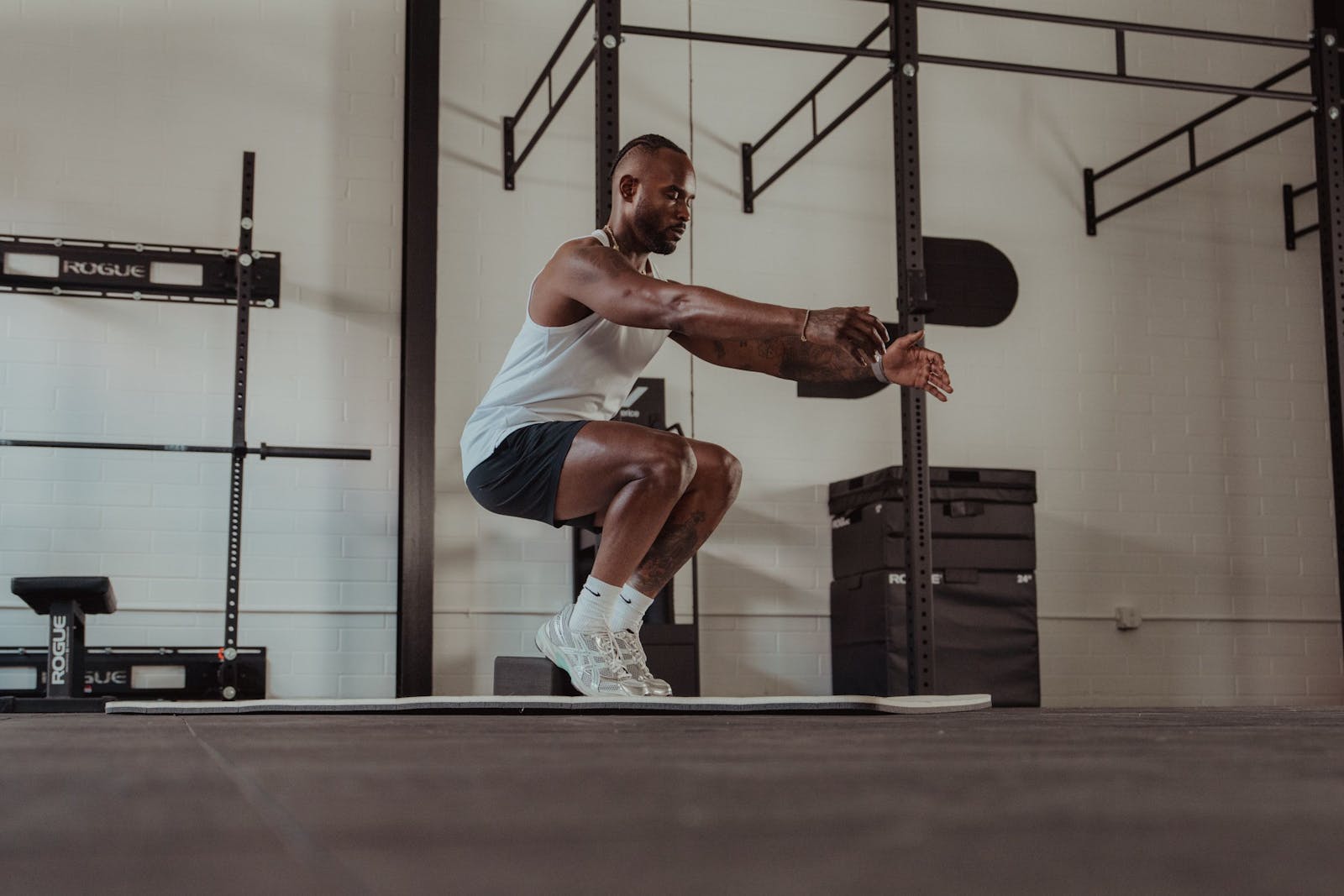
Jump squats train vertical force production and the transition from loaded position to explosive extension. Use them during early off-season phases when building foundational power. The exercise teaches your nervous system to recruit as many motor units as possible for deep hip and knee flexion, mimicking the body position during the first three steps of acceleration.

How do jump squats improve sprint performance?

The main benefit is developing force quickly in triple extension (ankle, knee, hip): the exact muscle and nerve pattern needed to push force into the ground during sprint starts. Start with bodyweight for 3 sets of 6 reps, minimizing ground contact time between jumps. Progress by adding a weighted vest (10-15% bodyweight) once you keep contact times under 0.3 seconds.

2. Box Jumps

Box jumps build explosive power and body awareness under load while developing confidence in powerful hip extension without the stress of depth work. The fixed landing height removes impact variability, making this ideal for athletes returning from lower-body injuries or new to plyometrics.

How do you perform box jumps safely?

Start with a 12-inch box for 4 sets of 5 reps with full recovery between sets (90–120 seconds). Increase the height by 6 inches once you can land softly in a controlled squat position without your knees collapsing inward. Athletes over 200 pounds should keep box height at 24 inches or lower to protect knee cartilage from excessive compressive forces.

3. Depth Jumps

Depth jumps train your stretch-shortening cycle by forcing a quick change from eccentric loading to concentric explosion. Use these during competition phases when you need maximum reactive strength, not during heavy strength blocks when fatigue prevents optimal amortization speed. Drop from a box, absorb the landing, and immediately explode upward or forward, keeping ground contact under 0.2 seconds.

How do depth jumps target athletic performance mechanisms?

This method targets tendon stiffness and spinal reflex speed: the myotatic stretch reflex that elite sprinters rely on for ground contacts under 0.1 seconds. Start with a 12-inch drop height for 3 sets of 3 reps. Progress to 18–24 inches only once your rebound height exceeds your drop height, indicating effective elastic energy storage. If ground contact exceeds 0.25 seconds, use a lower drop height, as you're training slow force absorption rather than reactive power.

4. Tuck Jumps

Tuck jumps build vertical explosiveness and core control during flight. Use them as a high-intensity finisher after sprint work, not before, because the hip flexor demand creates residual fatigue that compromises sprint mechanics. The rapid knee drive mirrors the aggressive leg recovery required during maximum-velocity sprinting.

This exercise improves peak power output and conditions fast-twitch muscle fibers through repeated maximal efforts. Perform 4 sets of 8–10 reps with 2 minutes rest between sets. End the set when jump height decreases noticeably (usually after 6–8 reps); continuing past fatigue trains endurance rather than explosiveness, which defeats the purpose of plyometric work.

5. Jumping Lunges

Jumping lunges build single-leg reactive strength and correct left-right power imbalances. Use them during base phases to establish one-leg stability before progressing to ballistic single-leg movements, such as bounding. The split-stance position mimics the ground-contact shape of sprinting better than that of two-leg jumps.

How should you progress with jumping lunges?

This exercise trains how fast your muscles produce force with uneven weight and conditions the nerve and muscle coordination needed for smooth stride changes at speed. Start with 3 sets of 12 total reps (6 per leg), focusing on jumping high rather than far forward. Progress by holding light dumbbells (10–15 pounds) once you maintain consistent jump height across all reps without your back knee striking hard between switches.

6. Hurdle Hops

Hurdle hops train rhythm, ankle stiffness, and rapid hip flexion when fatigued. Use them as a technical drill before sprint sessions to activate your nervous system and reinforce quick ground contacts.

Set up 6–8 hurdles spaced 3–4 feet apart. Focus on hopping over each barrier with minimal pause, keeping ground contact under 0.2 seconds. Start with 6-inch hurdles or ground lines if ankle mobility limits your dorsiflexion. Progress height only when you can complete the series without slowing down or adjusting your rhythm.

7. Ankle Jumps

Ankle jumps focus on your foot and lower leg, building quick strength and moving force efficiently through your body. The limited range of motion forces your calves and Achilles tendon to handle rapid stretch-reflex cycles without assistance from your knee or hip. Use these during warm-ups or as active recovery between heavier plyometric sets.

What are the benefits of ankle jumps?

Your tendons get stiffer, and your foot strike mechanics improve. These direct benefits mean your ankle works like a rigid spring instead of a shock absorber, so you retain more of the force you generate instead of losing it to joint collapse.

How should you perform and progress ankle jumps?

Do 3 sets of 15-20 reps per leg. Jump on the balls of your feet with minimal knee bend. If your heels touch down between jumps, you're using too much knee flexion. Progress by adding lateral movement (side-to-side hops) or hopping over a low barrier (2-4 inches) once you maintain consistent height without heel contact.

8. Plate Pogo

Plate pogos build rhythmic reactive strength through high-volume, submaximal efforts. Use them early in sessions when your nervous system is fresh, but before maximal sprint work. The elevated surface increases the range of motion demands while the continuous bouncing pattern builds movement fluency.

How does plate pogo training transfer to sprint performance?

This exercise trains elastic recoil through repetition rather than intensity. Doing 15-20 reps per set conditions your nervous system to maintain reactive stiffness under fatigue, which directly translates to maintaining ground-contact speed during the final 30 meters of a sprint, when most athletes slow down.

Start with a single 45-pound plate (approximately 2 inches high). Progress by adding plates in 2-inch increments, reducing reps to 10-12 as height increases because eccentric demand grows exponentially.

What specific adaptations do plate pogos create?

Most athletes find their calves tire before their heart and lungs do. You're building the specific endurance needed to keep your ankles working powerfully even when your legs are already worn out from earlier sprints.

9. Depth Push-Ups

Depth push-ups train upper-body reactive strength and core stability during rapid force absorption. Use them for sprinters who need powerful arm drive, or for athletes in contact sports where upper-body power translates to performance. The drop-and-catch pattern conditions the stretch-shortening cycle in your chest and triceps, mirroring the stimulus depth jumps create in the legs.

How do you perform depth push-ups correctly?

Place two boxes shoulder-width apart. Start in a push-up position with your hands on the boxes. Quickly drop your hands to the floor while keeping your core tight. As your chest approaches the floor, push hard to jump back up and land with your hands on the boxes. Your chest and triceps must absorb the force and immediately reverse it to push back up.

Do 3 sets of 4–6 reps with full rest between sets. If you cannot generate enough power to return to the boxes, lower the box height until you complete clean reps. At lower intensities, the exercise becomes a slow downward movement rather than a plyometric drill.

10. Drop Jumps

Drop jumps are a training method in which you jump down from a height and land with minimal ground contact time. This intense plyometric exercise should be used sparingly—once per week at most—during peak performance phases, when your body is prepared for the eccentric stress. The high eccentric load can cause significant muscle damage if overused or performed while fatigued.

How do drop jumps train your nervous system?

This method trains your nervous system to create maximum force in minimum time by overloading the stretch reflex. When you drop from 30+ centimeters and bounce back immediately, your muscles and tendons must handle forces exceeding twice your bodyweight in under 0.15 seconds.

Start with a 30cm drop height for 3 sets of 3–4 reps with 3–5 minutes rest between sets. Progress to 45–60cm only once your rebound height consistently exceeds 90% of your drop height. If you sink into the landing or pause before jumping, you've exceeded your capacity and should use a lower height.

What makes drop jumps different from depth jumps?

Drop jumps focus on how well you bounce back when your muscles are stretched under heavy load, which differs from depth jumps that emphasize the bouncing action itself.

11. Prowler Sprint or Bound

Prowler sprints and bounds copy the way your body generates force when accelerating. Use heavy weights (120–150% of your body weight) for strength building, then lighter weights (60–100% of your body weight) for speed work to train force production rate. The sled provides consistent resistance throughout the movement, eliminating the deceleration phase that occurs during unweighted sprinting.

How does the prowler improve acceleration mechanics?

This exercise improves how you apply force forward during the first 10 meters of acceleration, when your body is most forward-leaning. The prowler makes you push your feet backward into the ground instead of moving them through the air, training the exact movement pattern that creates forward movement.

Do 3 single reps of 10–15 meters with full recovery (3–5 minutes) between efforts. Sprints focus on fast leg turnover with shorter ground contacts; bounds use longer, more powerful strides with extended flight phases. Choose sprints to reduce contact time, and bounds to build peak horizontal force.

What load produces optimal power output?

Research shows 60-100% bodyweight produces optimal power output for speed development, while loads over 150% shift focus toward maximum strength but reduce movement speed.

12. Step-Up Jumps

Step-up jumps train single-leg explosive power from the specific joint angles used during ground contact. Use them during base phases to build unilateral strength before progressing to ballistic single-leg plyometrics, such as single-leg bounds. The step provides a stable surface, eliminating the need for balance, allowing you to focus on force production.

How do step-up jumps improve sprint acceleration?

This exercise builds the ability to apply force upward from a forward-leaning shin angle, mimicking the foot-strike position during acceleration. When you drive your foot down into the step and explode upward, you train the glute and quad muscles needed during the first 20 meters of a sprint.

Use a 12–18-inch step and perform 3 sets of 3 reps per leg, with 2 minutes of rest between sets. Focus on driving through your heel and midfoot to engage your posterior chain effectively. Progress by adding a weighted vest (10–20% bodyweight) once you can complete all reps with consistent jump height and stable landings.

What are common execution mistakes to avoid?

Many athletes rush through reps, turning this into a cardio movement instead of a power drill. Each rep should be a distinct explosive effort with a controlled reset between jumps, not continuous bouncing.

Explosive training creates tremendous tissue stress and joint demands. Pliability's mobility routines prepare your ankles, hips, and thoracic spine for the range of motion required during plyometric landings and aid recovery between sessions. When your tissues handle rapid force absorption without compensating, these exercises transfer directly to faster ground contacts rather than accumulating as injury risk.

If You Want These Exercises to Actually Make You Faster, Fix This First

Plyometric training only works if your body can absorb and release force efficiently. If your hips are tight, your ankles lack mobility, or your range of motion is restricted, you cannot fully use the stretch-shortening cycle these exercises depend on: less force transfer, longer ground contact time, and slower sprint performance, regardless of training intensity.

⚠️ Warning: This is where most athletes get stuck. They add more explosive work but never address the mobility limitations that cap their speed.

When your ankle can't dorsiflex past 30 degrees, your knee compensates by collapsing inward during depth jumps. When your hip flexors are short and stiff, you lose the full range of extension required to generate maximum horizontal force during prowler sprints. These compensations reinforce movement patterns that keep you slow while increasing your risk of injury.

"Brief stretching or foam rolling can't keep pace with tissue stress as training volume increases. Stiffness builds, range of motion decreases, and your body compensates during the exact movements meant to develop speed."

Most people treat mobility as something you do when injured, not as the foundation that determines whether explosive training transfers to performance. Brief stretching or foam rolling cannot keep pace with tissue stress as training volume increases. Stiffness builds, range of motion decreases, and your body compensates during the exact movements meant to develop speed.

Problem

Impact on Speed

Solution

Tight hip flexors

Reduced horizontal force

Daily mobility work

Limited ankle mobility

Knee compensation

Targeted stretching

Restricted range of motion

Poor force transfer

Guided recovery sessions

🎯 Key Point: Pliability provides daily, guided mobility work tailored to your body to improve range of motion, reduce stiffness, and recover faster between sessions. Our app's built-in body scan identifies exactly where you're restricted. When your tissues can absorb rapid force without compensating, those plyometric exercises translate directly into faster ground contacts.

Start in less than five minutes. Open the app, run your first body scan, and follow a short session targeting your tightest areas. Get seven days free on any platform.

Related Reading

Related Reading

Trusted by 1,000+ Athletes Worldwide

Join thousands worldwide already moving with pliability.

#1 MOBILITY APP

10,000+

5 STAR

REVIEWS

First Week Free. Cancel Anytime.

Trusted by 1,000+ Athletes Worldwide

Join thousands worldwide already moving with pliability.

#1 MOBILITY APP

10,000+

5 STAR

REVIEWS

First Week Free. Cancel Anytime.

Trusted by 1,000+ Athletes Worldwide

Join thousands worldwide already moving with pliability.

#1 MOBILITY APP

10,000+

5 STAR

REVIEWS

First Week Free. Cancel Anytime.

Trusted by 1,000+ Athletes Worldwide

Join thousands worldwide already moving with pliability.

#1 MOBILITY APP

10,000+

5 STAR

REVIEWS

First Week Free. Cancel Anytime.

Move better in 10 minutes a day.
10,000+ five-star reviews.