


LEARN
pliability

A strained quad raises one question before anything else: how long until you can train again. Here is the short answer. A grade 1 (mild) quad strain generally settles in one to three weeks. A grade 2 (moderate) strain usually takes four to eight weeks of structured recovery. A grade 3 strain, a complete or near-complete tear, is measured in months and belongs under a clinician's care from day one. Those windows are general patterns, not a diagnosis; your leg gets its timeline from an exam, not from an article.
That is the frame for everything below: education, not diagnosis. And before any timeline matters, rule out the serious version. If you cannot bear weight on the leg, felt or heard a pop when it happened, have severe swelling or bruising that keeps spreading, can see a dent or gap in the muscle, or notice numbness or tingling, stop self-managing and get evaluated now. For everything milder, here is what each grade means, what slows healing, and how to rebuild a quad that holds up when you go back to speed.
quad strain recovery time by grade
Muscle strains are graded by how much of the tissue tore, and the grade drives the timeline. Two honest caveats before the numbers. First, these ranges assume you actually rehab the muscle, not just rest it until the pain fades. Second, grading your own strain is guesswork; a clinician confirms the grade, and with it, your real timeline.
grade 1 quad strain recovery time: one to three weeks
A grade 1 strain tears only a small number of fibers. You feel a twinge or a pull in the front of the thigh, strength stays mostly intact, and you can usually walk without a limp. Most grade 1 strains settle in one to three weeks. The trap is that this grade feels fine early: day five arrives, the ache is gone, and a "light" run re-tears fibers that had only just started knitting together. That is how a two-week injury becomes a two-month one.
grade 2 quad strain recovery time: four to eight weeks
A grade 2 strain is a partial tear through a larger portion of the muscle. The pain is sharp, walking is uncomfortable, and you can feel the strength deficit on every stair. Expect roughly four to eight weeks, and treat the longer end as normal rather than a setback. This is the grade where an early clinical assessment pays off most: a structured, progressive plan is the difference between eight good weeks and a recurring problem.
grade 3 quad strain: months, with a clinician leading
A grade 3 strain means the muscle has torn completely or nearly so. It usually announces itself: a pop, immediate intense pain, a leg that will not take weight, and often a visible defect in the muscle. Recovery runs three to six months or longer, and some tears need surgical repair. A grade 3 strain is not a self-management project. Get assessed quickly and follow the plan you are given; timelines at this grade are set case by case, not by a chart.
when to see a clinician before anything else
Whatever grade you suspect, these signs mean an evaluation comes first:
You cannot bear weight on the leg, or walking requires support
You felt or heard a pop at the moment of injury
Severe swelling, or bruising that keeps spreading over the first days
A visible gap, dent, or bulge in the front of the thigh
Numbness, tingling, or a leg that feels like it is not responding
Pain that has not clearly improved after a week of sensible care
what a quad strain actually is
The quadriceps are four muscles on the front of the thigh that straighten your knee and help flex your hip. One of them, the rectus femoris, crosses both joints, which is why it takes the most abuse in sprinting, kicking, and jumping, and why it is the one most often strained. A strain happens when fibers are loaded past what they can handle: a sprint on fatigued legs, a kick with a tight hip, a sudden stop your conditioning did not cover. A direct blow to the thigh causes a different injury, a contusion, but the early rules below apply to both.
Either way, this is structural damage, not soreness. Whether a muscle tear heals well on its own depends far less on the calendar than on what you do while it heals.
how long a quad strain takes to heal depends on what you do
Two people with the same grade of strain can have very different recoveries. These are the levers that move the timeline.
Coming back too soon. The most common mistake by a wide margin. Pain fades before the tissue is ready, and training on a half-healed quad restarts the whole process, usually with a worse tear.
Skipping the rebuild. Fibers left to heal in a shortened, disorganized pattern feel fine on a walk and fail on the first sprint. Rest alone produces a quad that is healed on paper and fragile under load.
Age. Tissue repair runs slower with the decades. The same grade 2 strain that costs a 25-year-old five weeks can cost a 45-year-old closer to eight. That is biology, not a mistake.
Sleep, food, and hydration. Muscle repair happens disproportionately during deep sleep, runs on protein (a common target is around 1.6 grams per kilogram of body weight daily), and depends on circulation that dehydration blunts. Alcohol works against all three. Natural muscle recovery covers the fundamentals.
the first 48 hours: calm it down
The first two days are damage control, not healing. The goal is to limit bleeding and swelling around the torn fibers so the rebuild starts from a cleaner site.
Protect the muscle with relative rest: keep walking gently if it is tolerable, but stop training the leg.
Ice in short, regular sessions with a cloth between ice and skin, never directly on it.
Wrap the thigh with light, even compression, snug but never tingling or numb.
Elevate the leg above heart level when you are resting.
Just as important is what not to do early: no heat, no alcohol, no massage into the injured area, and no training through it. All four increase bleeding or irritation in tissue that is still torn; heat and massage earn their place later, once the acute phase has passed. If the swelling itself worries you, how long swelling should last after an injury is a useful gauge of normal.
rebuilding after a quad strain: the phased return
Recovery is not waiting for pain to leave. It is rebuilding the muscle's range and strength so the repaired tissue can do its old job. The phases below are the general shape of quad rehab; a physical therapist tunes them to your injury, and each phase is earned by how the leg performs, not by the date.
phase 1: restore range without force
Once the acute phase settles, begin gentle, pain-free range of motion: bending and straightening the knee, easy walking, light movement that keeps the healing fibers from organizing into a short, stiff pattern. The rule is non-negotiable: mild pulling is acceptable, pain is a stop signal.
phase 2: load it gradually
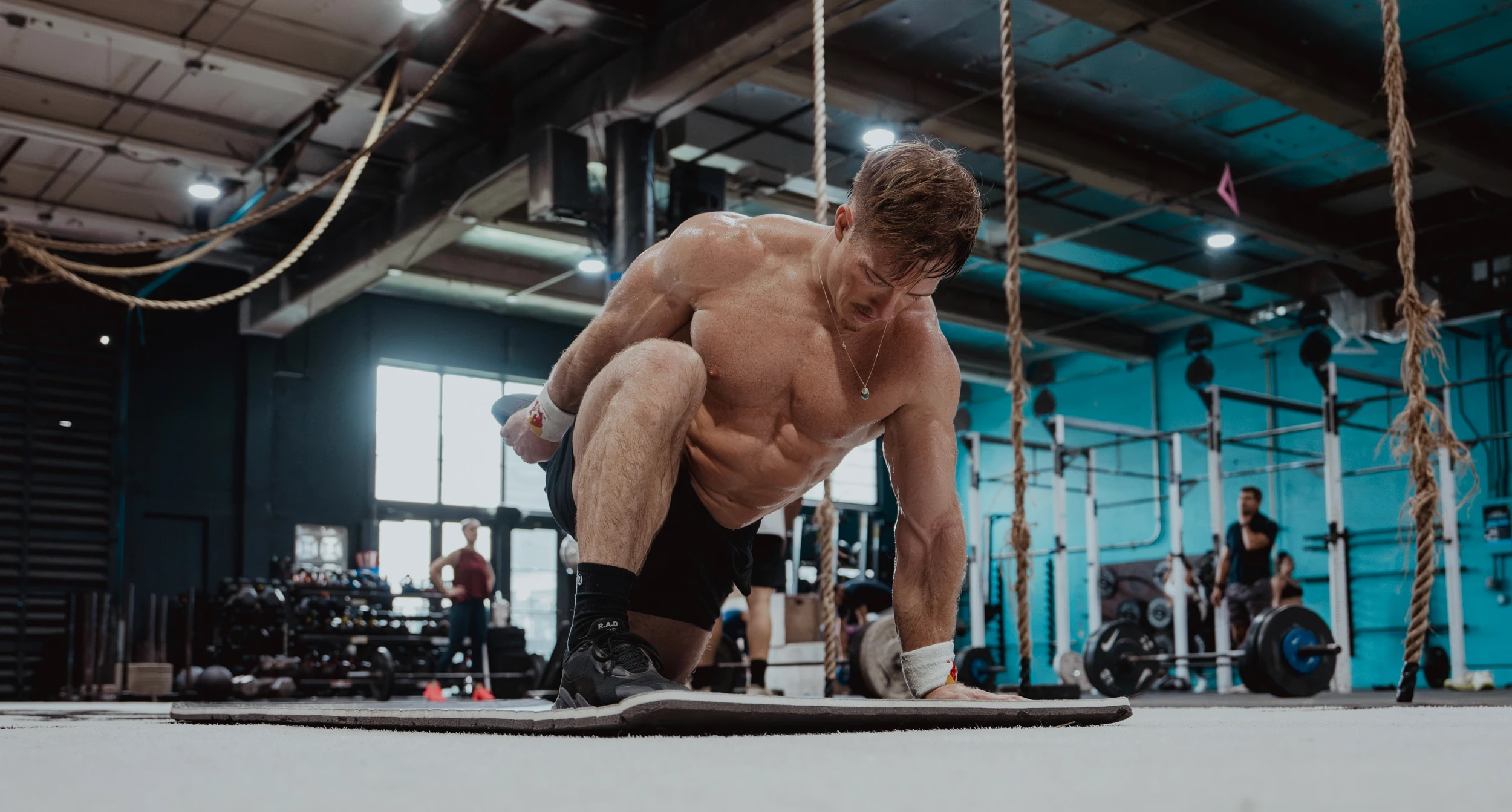
Strength work starts with isometrics, contracting the quad without moving the joint, which wakes the muscle up without stressing the repair. From there, progress to controlled movement: bodyweight squats to a comfortable depth, step-ups, gentle lunges, adding range and load week by week as the leg proves it can handle them. Easy quad stretching enters here too, never forced. This is the phase people skip, and it decides whether you come back once or keep coming back.
phase 3: return to speed
Before you call it healed, the quad has to handle sport again: jogging before striding, striding before sprinting, drills before games. The benchmarks are symmetry and silence: range of motion that matches the other leg, strength close to even side to side, and no pain during or the day after. If a session flares it up, step back a phase rather than push through. The same phased logic applies across muscle strains; if you have been through a calf strain, this road map will feel familiar.
rebuild the quad, then make it harder to strain
Most quad strains do not fail in the acute phase. They fail in the rebuild, when nobody is telling you what today's work should be. That is the lane pliability was built for. The Rebuild hub holds corrective, rehab-inspired sessions designed for working back from strain and injury, with the controlled, progressive movement this phase demands. Once you are cleared for regular training, Daily Sessions and Paths keep the quads, hips, and the rest of the chain moving well so the next sprint is not the next setback, and Build Your Program shapes the work around your schedule. Already a member? Sign in and head to Rebuild. If not, start with 7 days free on iPhone, iPad, Android, or the web. Rest gets you out of pain. Rebuilding gets you back.
Related Reading



Move better in 10 minutes a day.
10,000+ five-star reviews.