


LEARN
pliability

As we age, we inevitably face specific physical challenges. One of the most common, and least appreciated, is the gradual loss of flexibility. Perhaps you’ve noticed that you can’t reach your toes as quickly as you could a few years ago. Or maybe your workout regimen is starting to feel stiffer and more rigid. Incorporating flexibility exercises into your routine can help counteract this decline, improving mobility and reducing stiffness. At what average age does flexibility begin to diminish for most people? This article answers that question and shares practical ways to maintain mobility, prevent stiffness, and stay active for as long as possible.
how does age affect flexibility?

Flexibility is an important consideration at any age, but its significance grows with the increase in the number of years. Research has consistently shown that flexibility decreases with age. Interestingly, this gradual age-related loss of flexibility occurs with little difference between the sexes. But why does this age-related decline in flexibility happen?
Muscles and tendons exhibit a remarkable capacity for stretch and recovery during our youth. This property allows for a wide range of motion and the swift, graceful movements often taken for granted. However, as we advance in years, these tissues transform, becoming stiffer and less forgiving.
The reason is twofold:
The natural decrease in physical activity accompanying aging reduces muscle mass and strength, a phenomenon known as sarcopenia.
The biochemical composition of our muscles and tendons changes with a decrease in elastin, the protein responsible for the elasticity of these tissues.
the relationship between aging, muscle stiffness, and the extracellular matrix
This combination of reduced physical activity and biochemical alteration impacts our flexibility by increasing passive stiffness, rendering movements that were once effortless now fraught with difficulty.
The increase in passive muscle stiffness is a subject of considerable debate and inquiry. It cannot be divorced from the complex interactions between the mechanical properties inherent within muscle fibres and the extracellular matrix (ECM) that cradles them.
the extracellular matrix and flexibility
The ECM IS a dynamic entity, secreted by the cells themselves, consisting mainly of proteoglycans and fibrous proteins, with collagen taking the lead in abundance. However, understanding the ECM solely in terms of its components would mean missing the forest for the trees.
It's the structural support, yes, but it's also the origin of biochemical and mechanical cues that guide and regulate the behaviours of cells. The ECM experiences tensional, compressive, and shear forces.
the role of the extracellular matrix in muscle structure and function
These physical stresses are translated into biochemical signals through a process known as mechanotransduction. This allows cells to remodel their surrounding matrix, striving to maintain structural integrity, also known as tensional homeostasis.
In skeletal muscle, the ECM is a complex scaffold composed of the endomysium, perimysium, and epimysium. It provides structural support that delicately balances the forces governing our physical form. The endomysium gently enfolds each muscle fibre, the perimysium groups these fibres into bundles or fascicles, and the epimysium encapsulates the entire muscle belly. These components are pivotal in the overall stiffness of muscle.
what research says about flexibility decline with age
In the pursuit of empirical clarity, researchers have conducted ex vivo studies of isolated muscles in rodents. These investigations revealed a steeper incline in the length-tension curves of muscles in older animals compared to their younger counterparts. These findings confirm the age-dependent escalation of stiffness in mammals.
how ECM properties affect muscle force
Its mechanical properties are a tangible facet of our biological reality that directly influences muscle mechanics, both in states of rest and during the dynamic act of contraction. This fact is particularly evident when we consider the lateral transmission of fibre forces to the tendons, a phenomenon that is as fascinating as it is essential.
The degradation of this ability, a subtle yet significant shift, may illuminate why muscle force wanes more precipitously than muscle mass as we age. Here:
Multi-scale finite elements modelling: a computational tool that breaks down a large, often complex problem into smaller
More manageable sub-problems: becomes an indispensable tool for biomechanics researchers.
how age affects muscle properties and flexibility
The methodology of examining skinned muscle fibres strips away the mechanical influence of extracellular connective tissue, offering a purer glimpse into the muscle's inherent properties.
This approach reveals a striking contrast:
“When researchers liberate muscle fibres from the ECM, the elastic modulus of a single fibre pales in comparison to that of a fibre bundle ensconced in the ECM, with the latter being four times as stiff, assuming the ECM occupies just 5% of the bundle's cross-sectional area.”
Research into ageing tibialis anterior fibres found that the passage of time does not alter their passive mechanical attributes. Instead, alterations in the ECM's properties solely caused the increased stiffness. This narrative finds its counterpoint in comparing single muscle fibres of the vastus lateralis in elderly subjects to those of their younger counterparts.
Findings from this research painted a different picture:
“The elderly fibres not only bore a greater passive force but also unveiled a shift towards more pronounced viscoelastic properties, suggesting that the very mechanics of the muscle fibres themselves transform with age, becoming the primary architects of increased muscle stiffness.”
what can be done to maintain flexibility?
When we look closely and examine the passive mechanical properties inherent to single fibres and fibre bundles of both young and elderly subjects at any sarcomere length, the resting passive tension is conspicuously higher in the fibre bundles of older people when compared to younger individuals.
This age-related disparity in passive tension vanishes when the lens narrows to focus on single fibres in isolation. There is no discernible difference, suggesting that the fibres may not be the primary agents of change.
This leads us to a fascinating conclusion:
The divergence between the young and the elderly in mechanical stiffness can largely be attributed to the ECM that interlaces the fibres within a bundle.
at what average age does flexibility start to diminish for most people?

There isn’t a certain age when we wake up and realize that our flexibility has officially declined. But it is true that as we age, our flexibility declines, which affects our mobility and functional ability. In our 20s, we pop in for a HIIT class and sneak out before the cool down. We sit all day at work with few breaks and never feel any ill effects.
We enter our 30s, and suddenly, these habits leave us with a sore back, neck pain, and muscle tightness.
Why does it seem like stretching becomes a necessity once you hit 30?
Is it three decades of wear and tear catching up with us?
Is something else going on?
Age-related change happens every year, but it becomes more noticeable across decades. Younger bodies carry more collagen and elastin, which keeps tissue firm, resilient, and quick to rebound, and with age comes more wear and tear.
Around 30, many people start experiencing sarcopenia, the gradual decline of muscle tissue that comes with aging. The body gets weaker and loses stamina, so it has to work harder just to maintain a base level of fitness, and the effects of exercise are felt more directly.
This shift can raise the risk of pain and injury, especially in the low back, shoulders, and knees, and it often shows up as postural issues tied to being more sedentary or skipping a proper warmup and cooldown.
why stretching is so important as we age
Are we doomed to a less flexible, more painful existence once we enter our 30s? Thankfully, no. But it means mobility and stability work need a permanent spot in the routine. Making sure the joints move well, with support from the deep stabilizer muscles, helps take the load off the aches and pains that show up in our 30s when we call on the global muscles to function and move.
Global muscles are the large muscles responsible for movement, like the rectus abdominis, obliques, and quadriceps.
Why is Stretching So Important?
Flexibility work matters because it helps keep the muscle and tendon tissue at an optimal resting length, not too short and not too long. Working out too much can shorten tissue, while too much sitting with poor posture can shorten some tissues and lengthen the opposite ones. At either extreme, the muscle works too hard and becomes less effective for movement, and skipping stretching altogether can add compression into the joints or raise the risk of injury if a muscle gets overstretched during activity.
Stretching matters at any age, but the type shifts as we get older. Static stretches lengthen the tissue, while dynamic stretches lengthen and warm the tissue up for activity at the same time. Older bodies tend to feel more stiffness and tightness, so moving dynamically first gets blood into the area and reduces the discomfort of stretching a muscle cold.
what are some stretches for flexibility?
Here are a few stretches that target the areas of the body that tend to tighten up as we age, like:
Hips
Calves
Back
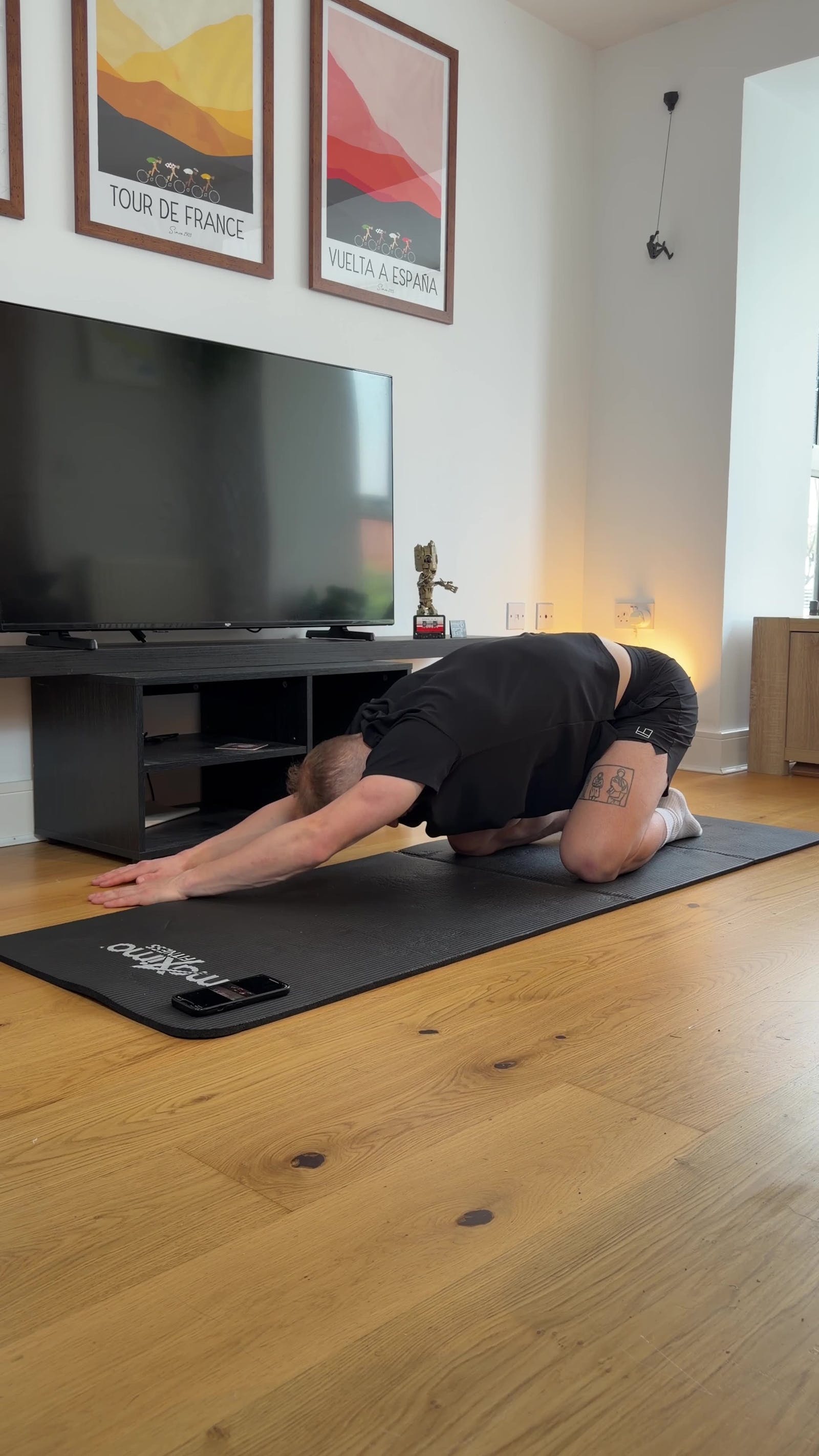
1. Downward Dog to Upward Dog
This is a good example of a dynamic stretch. It moves through the entire posterior chain and then the anterior chain, elongates the spine, and doubles as a shoulder and arm strengthening exercise.
2. Calf Stretch
The calf is easy to overlook, but it is used daily whenever we are on our feet walking around, and it is also the only muscle that stays active during quiet standing, keeping us upright.
The runner's stretch targets the more superficial calf muscle: place both hands on the wall, standing in a forward lunge position with toes pointing forward. Shift the weight forward onto the front leg, bending the knee, and keep the back leg straight, heel down. Then, switch sides.
3. Low Lunge
The lunge gives you an additional calf stretch and stretches the hip flexors, the muscles on the front of the hip that can get short and tight from sitting and affect how the low back and hip work together.
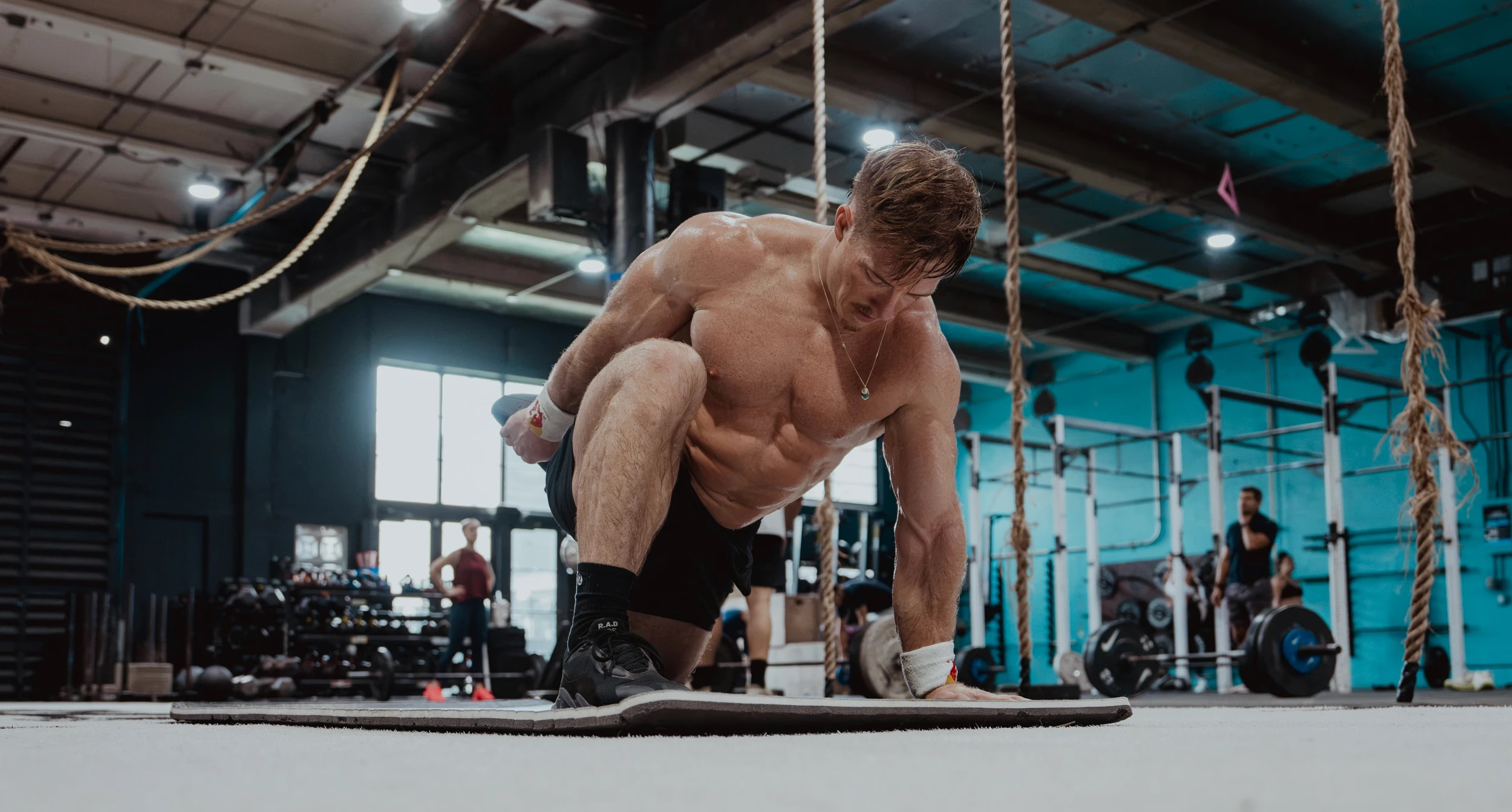
4. Figure Four
Another stretch for the hips, the figure four stretch should be felt in the back of the buttock and can be done standing or sitting.
5. Side Bends
Side-bending stretches for the latissimus dorsi are excellent, as they affect the low back, shoulders, and even the ribs for thoracic mobility and breathing. Dynamic stretching, moving through the stretches rather than holding them, is a great way to warm up before a workout.
If you don't have any extra time to add stretching to your day, start with just five minutes. A short stretch in the morning can help get your blood flowing before you start your day, or five minutes at night can help you wind down before bed.
what is the impact of age on flexibility?
The stiffness we feel with age is not only a muscle story. Age changes the bones, cartilage, ligaments, and joints too, and each of those shifts feeds into how freely we move. Understanding the full impact of age on flexibility is the first step toward countering it.
bone and cartilage changes with age
Aging affects our bones as well as our muscles. The mineral content of bones decreases, so bones become less dense and more fragile. Osteoporosis develops when bones begin to lose mass, affecting both women and men, and in the spine it can cause crush fractures of the vertebrae; it is also a leading cause of hip fractures in older adults. The chemistry of cartilage, which cushions our bones, changes too. As the water content of cartilage decreases, it becomes more susceptible to stress, and as cartilage degenerates, arthritis is more likely to develop.
joint and ligament changes with age
Ligaments, the connective tissue between bones, become less elastic, directly reducing flexibility. Joint motion becomes more restricted as tendons and ligaments change, and joints can become inflamed and arthritic as cushioning cartilage breaks down from a lifetime of use. This all sounds discouraging, but as the active and vibrant lives of many older adults demonstrate, there are ways to counteract the effects of aging on flexibility.
at what age does flexibility peak?
Flexibility tends to peak during childhood and adolescence. Children generally have greater flexibility than adults due to their developing musculoskeletal system and higher levels of physical activity. There is no fixed age at which flexibility reaches its peak, as individual factors such as genetics, lifestyle, and physical activity levels all play significant roles in determining one's peak flexibility and the rate at which it declines with age.
how flexible should I be for my age?
There are no rigid standards for flexibility that apply universally, as individual flexibility can vary significantly based on genetics, physical activity levels, and other factors. Instead of chasing a specific benchmark, aim for functional flexibility: enough range of motion to perform daily activities and tasks with ease and minimal discomfort. Bending down to tie your shoes, getting up off the floor, and reaching overhead without strain are far better markers than any single number. Staying flexible as you age helps prevent injury and supports your overall health.
how to preserve flexibility as you age
While we tend to lose flexibility as we age, that does not put us at the mercy of those changes. Muscle elasticity can be maintained at any age with consistent effort. Stretching is the foundation, but a few other habits round out the picture and keep the payoff coming: staying active and independent for longer.
strength training for flexibility
Strength training builds muscle mass and can also enhance flexibility when performed with proper technique through a full range of motion. Exercises such as squats, lunges, and deadlifts challenge the muscles across their full length. Yoga and Pilates combine strength work with stretching to promote flexibility and balance at the same time.
use a foam roller
A foam roller is an affordable tool for self-massage that, used properly, helps release tension that builds up over time in the muscles and connective tissues, increasing flexibility and improving mobility.
diet and hydration
A balanced, nutrient-rich diet supports joint health and helps maintain flexibility as you age. Adequate protein supports muscle recovery and repair, while vitamins and minerals contribute to connective tissue health. Omega-3 fatty acids, found in fish, flaxseeds, and chia seeds, can help reduce inflammation and support joint function. Staying hydrated matters just as much, since water helps maintain the elasticity of connective tissues and lubricates the joints.
rest and recovery
Giving your body time to rest and recover is crucial for preserving flexibility and preventing overuse injuries. Get enough sleep each night, since that is when your body repairs itself, and build rest days into your schedule so your muscles and connective tissues can recover fully. This matters not only for flexibility but also for working back from issues such as tight glutes, back pain, tight calves or hamstrings, or plantar fasciitis.
stay ahead of the decline
Flexibility loss after 30 is common, but it is not a fixed sentence, and a few consistent minutes a day change the trend. pliability turns that consistency into guided video sessions built for exactly this: Daily Sessions give you a fresh routine every day, Paths run multi-week progressions for a stubborn area like your hips or back, and Build Your Program shapes a plan around your own schedule. Take the mobility assessment to find out what is actually restricted, and if you are working back from an injury, the Rebuild hub has session series built for that. Start with 7 days free on iPhone, iPad, Android, or the web.
Related Reading



Move better in 10 minutes a day.
10,000+ five-star reviews.