


LEARN
pliability

Do you ever feel tightness in the front of your thighs when you squat, lunge, or run? This discomfort can make it harder to perform these movements and limit your performance. The standing quad stretch targets the quadriceps, a group of four muscles on the front of your thighs. Stretching them can help ease tightness so you can move more freely and reduce your risk of injury. This article covers the standing quad stretch benefits and proper technique, plus a few variations, so you can build the flexible exercises that support peak performance in workouts and daily life.
what is the standing quad stretch?

The standing quad stretch is a simple, effective way to target the front of your leg, specifically your quadriceps muscles. This classic stretch can support healthy aging by lengthening stiff leg and hip muscles, building balance, and keeping lower back pain at bay.
muscle worked
1. Primary Muscle Groups
Quads: your quadriceps femoris muscles, which flex your leg at the hip joint and extend your leg at the knee joint.
2. Secondary Muscle Groups
Hip Flexors: the hip flexors flex your leg at the hip joint, helping you extend your leg forward.
benefits of the standing quad stretch for healthy aging
1. It Elongates Your Quads
You rely on your quads for many everyday movements, including:
Walking
Climbing stairs
Standing up from a seated position
Countless other everyday activities
When the quadriceps become tight from overuse or inactivity, they can lose some of their ability to stabilize the knee and control the leg during walking or running. As we age, we tend to move less, which often makes the quads less flexible. The standing quad stretch applies steady tension that lengthens the muscle and eases that tightness, supporting better circulation and function.
2. It Lengthens Your Hip Flexors
The standing quad stretch also lengthens the hip flexors, since the rectus femoris (one of the four quadriceps muscles) crosses the hip joint and doubles as a hip flexor. Hip flexors tend to tighten with long periods of sitting, and tight hips can contribute to knee and back issues over time.
3. It Can Help With Back Pain
The standing quad stretch can also help ease back soreness. Because the rectus femoris doubles as a hip flexor, tight hip flexors can pull the pelvis out of its neutral position, a common contributor to low back pain, especially as we age and become more sedentary.
4. Improves Balance
Because this stretch is performed while standing on one leg, it also builds single-leg balance, which carries over to everyday movements like walking. Balance matters at any age, but it becomes especially important later in life, when falls are more common and more likely to cause a serious injury.
how to do the standing quad stretch properly

You can do the standing quad stretch just about anywhere in under a minute, but it works especially well as part of a post-workout stretch session. Holding a static stretch after training signals the muscle fibers to relax, which is an important part of cooling down, especially after quad-heavy routines like long runs or leg days.
how to do the standing quad stretch
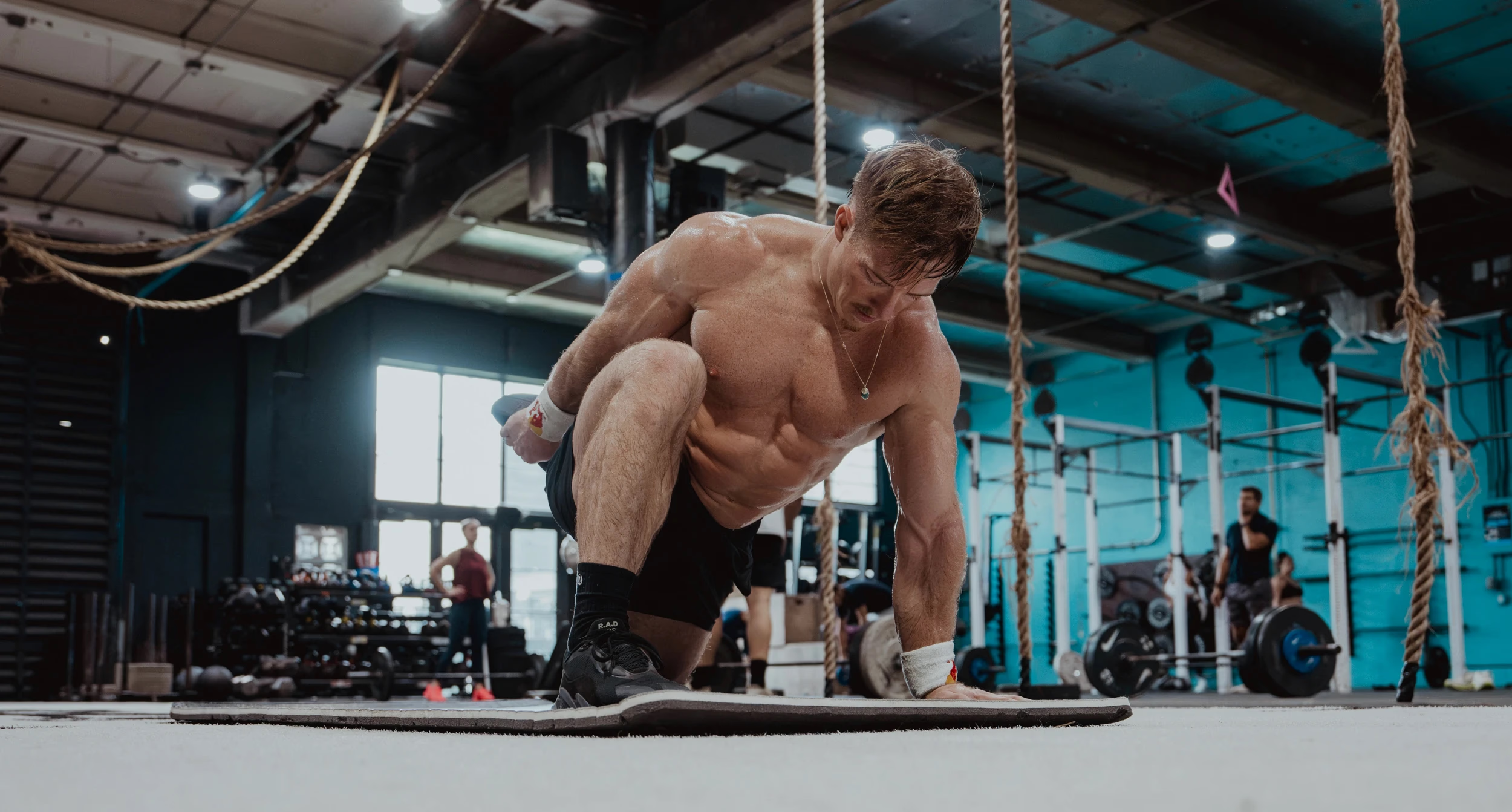
Start in a Standing Position: Stand tall with your feet hip-width apart.
Lift One Foot: Gently lift your right foot behind you, bending your knee, and grab your ankle with your right hand.
Knees Together: Bring your knees as close together as possible. This alignment ensures that you're stretching the correct muscles.
Balance: To help with balance, extend your left arm out to the side or place it on your hip. You can also focus your gaze on a fixed point to steady yourself.
Hips Rolled Under: Slightly tilt or roll your hips under, which will deepen the stretch in your quadriceps. Imagine tucking your tailbone in.
Press Down with Your Hand: Gently press your ankle down into your hand to intensify the stretch. This action increases the stretch on the quadriceps.
Hold the Stretch: Hold this position for 15-30 seconds, or longer if you can maintain good form, then switch to the other leg.
Repeat on the Other Side: Follow the same steps with your left leg to stretch both sides evenly.
adjusting the stretch: adding a pelvic tuck
The standing quad stretch is worth keeping in your routine as is, but one small adjustment can make it even more effective and provide extra relief for tight muscles: tucking your pelvis under as you stretch.
why you should tuck your pelvis when stretching your quads
To perform this adjustment, start in the same position as the standard stretch, but stand near a stable object like a table, wall, or chair if you want extra support. You can also do this stretch unassisted.
Bring your left heel back behind you as if you were going to kick yourself in the butt. Hold your ankle, foot, or pant cuff with your left hand. Keep your right knee slightly bent, not locked.
Tuck your pelvis under (this may cause your left knee to move forward in space) and squeeze your glutes.
Holding this pelvic tuck, draw your left knee back in space so it's directly next to or behind your right knee (the standing leg).
Hold this position for 30 seconds or longer.
Switch legs and repeat.
tips for the standing quad stretch
As a static stretch, the purpose is to hold a position for a specified period, which helps:
Loosen the muscle
Decrease stiffness
Increase flexibility and range of motion
That means stretches like the standing quad stretch work best at the end of a workout when your muscles are warm and you're ready to cool down. Aim to stretch each leg 2 to 3 times, holding for 30 seconds or longer.
why the pelvic tuck works
It helps to understand a bit of anatomy to see why this tweak works. The quadriceps attach above the hip joint and insert below the knee joint, so fully lengthening the muscle means opening both joints. Tucking your pelvis opens the front of the hip, which lengthens the upper portion of the quadriceps.
Drawing your knee back in space increases the distance between the quadriceps' two anchor points (the hip and the knee), which deepens the stretch further. As with any stretch, it helps to listen to your muscles: overstretching can trigger the stretch reflex, causing the muscle to recoil and limiting how much it lengthens.
As you move into position, you should feel a mild stretch in the quadriceps, one that eases up over the first few seconds you hold it. If the stretch intensifies instead of easing, back off your positioning a bit until it feels mild and relaxed again.
standing quadriceps stretch variations & alternatives

1. seated quadriceps stretch
The seated quadriceps stretch is an effective way to loosen tight quads and improve flexibility. This variation is low to the ground, which makes it easy to balance during the stretch. The seated position also helps stabilize the pelvis and lower back, allowing you to isolate the stretch in the quads.
To perform the stretch:
Start by sitting on the floor with your legs extended in front of you.
Next, bend your right knee and bring your heel toward your glutes.
Use your hands to grasp your ankle or foot and gently pull to increase the stretch.
Hold the position for 20 to 30 seconds before switching sides.
2. lying quadriceps stretch
The lying quadriceps stretch is another effective variation for targeting tight quad muscles. This stretch can help relieve tension in the quads to enhance performance and reduce the risk of injury. Lying on the ground provides stability and support for your back and pelvis.
To perform the stretch:
Lie on your right side and pull your right heel toward your glutes
Use your right hand to grasp your ankle and gently pull to increase the stretch
Hold the position for 20 to 30 seconds and switch sides.
3. wall quadriceps stretch
The wall quadriceps stretch is an excellent option for athletes who want to increase their flexibility before hitting the field. This variation is easy to perform and helps stabilize the body during the stretch.
To perform the wall quadriceps stretch:
Stand a few feet from a wall and lift your right leg behind you.
Bend your knee and place your foot against the wall.
Step closer to the wall to deepen the stretch and maintain the position for 20 to 30 seconds.
Switch sides and repeat.
4. standing quad stretch with a towel or resistance band
If reaching your ankle directly is hard to balance with, a towel or resistance band gives you extra length to work with, letting you ease into the stretch gradually instead of grabbing your foot with your hand. It can also help relieve tension in the lower back, which may improve your performance and stability during exercise.
To perform the stretch:
Stand upright and hold a towel or resistance band in your right hand.
Bend your right knee and loop the towel or band around your ankle.
Slowly extend your leg while using the towel or band to support the stretch, then switch sides and repeat.
improve your flexibility with our mobility app today | get 7 days for free on any platform
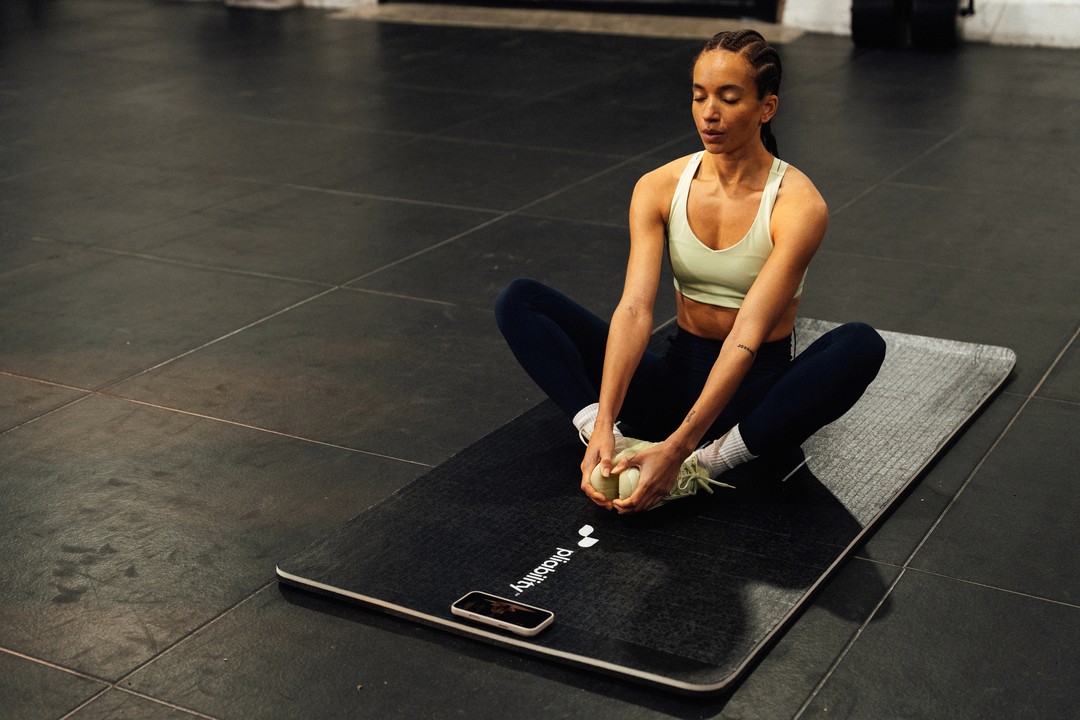
Loosening up your quads is just one piece of a bigger mobility picture. pliability is a mobility app built for performance-oriented individuals and athletes. Follow a Daily Session as part of your warm-up or cooldown, pick a Path for your sport or a problem area, use Build Your Program to shape routines around your training week, and take the in-app mobility test to pinpoint the tight spots that need the most work. If you are working around pain or an injury, the Rebuild hub is built for that.
Sign up today for 7 days free on iPhone, iPad, Android, or the web to move better, recover faster, and keep your legs and hips as flexible as your training demands.
Related Reading


Move better in 10 minutes a day.
10,000+ five-star reviews.