


LEARN
pliability

Athletic performance can feel like a race against time. With age, most of us get slower, weaker, and less agile, and those changes take the fun out of sports and raise the risk of injury until it's tempting to hang up your cleats for good. Learning how to become more athletic can help you avoid that scenario, so you can keep playing the sports you love and performing at a high level for years. In this article, we cover how to increase athleticism: the training, mobility, and recovery habits that make you stronger, faster, and more agile while slowing that decline over time.
what is athleticism and its core components

Spend enough time around strength and conditioning circles and you'll find plenty of disagreement between:
Strength coaches
Pitching/hitting coaches
Movement-focused trainers
They argue and criticize each other's ideas about athletic performance and how to improve it. These disagreements are usually fueled by the fact that one person's concept, theory, or protocol doesn't line up with another's.
unless it's movement based, it's not that athletic
Some think training like an athlete simply means squatting instead of using the leg press. Steering clear of machine training is reasonable advice, but performing a squat by itself isn't especially athletic. It's the first significant movement pattern you mastered as an infant.
Since then, you've probably lost some of that quality and may not be able to do it as well, but there is nothing athletic about:
Taking two steps back
Squatting down
Compound Movements
It's a great exercise that does more for you and incorporates more muscle groups than most people give it credit for. It requires more hip and ankle mobility, core strength, and stability than any machine.
Don't expect to magically move like a pro just because you put a bar on your back instead of lying on the hack squat machine. Exercises like the handstand pushup, overhead squat, and one-arm row all enhance your ability to perform athletically (provided you don't do anything reckless or injure yourself).
Dynamic Movement
Those are all exercises performed from a stationary position. To improve or maintain your athleticism, you have to move. It's as simple as that. No matter how functional an exercise may be, a huge component is still missing if you stay stationary while performing it.
The 10 Components of Complete Athleticism
Strength: The ability to create force.
Speed: The ability to minimize the time cycle of a given movement.
Power: The ability to create maximal force in minimal time.
Aerobic Capacity: The maximal amount of physiological work an individual can do as measured by oxygen consumption.
Anaerobic Capacity: The maximal work performed during maximum-intensity short-term physical effort.
Balance & Coordination: The ability to perform movements with precision and grace.
Agility: The ability to be nimble on your feet and move quickly from one movement pattern to another.
Stability: The ability to prevent movement in one part of the body while creating movement in another, thus protecting vulnerable areas.
Mobility: Flexibility in motion, the range of motion through muscles and joints.
Recovery: The ability to recover or bounce back, restoring physiological and psychological processes.
how to increase athleticism

up your mobility game
Improving your athleticism starts with increasing your mobility. Before you become a speeding bullet, you must ensure your joints are stable and mobile. If you're tight and locked up, your muscles will be restricted, and they won't work to the best of their ability. It's like driving with the emergency brake on.
Stable and mobile joints will help you perform better and reduce your risk of injury. Start every workout with a good warm-up. These exercises, known as "fillers," can also be included in rest periods and downtime. Do enough to get yourself in the proper position to perform the exercise safely.
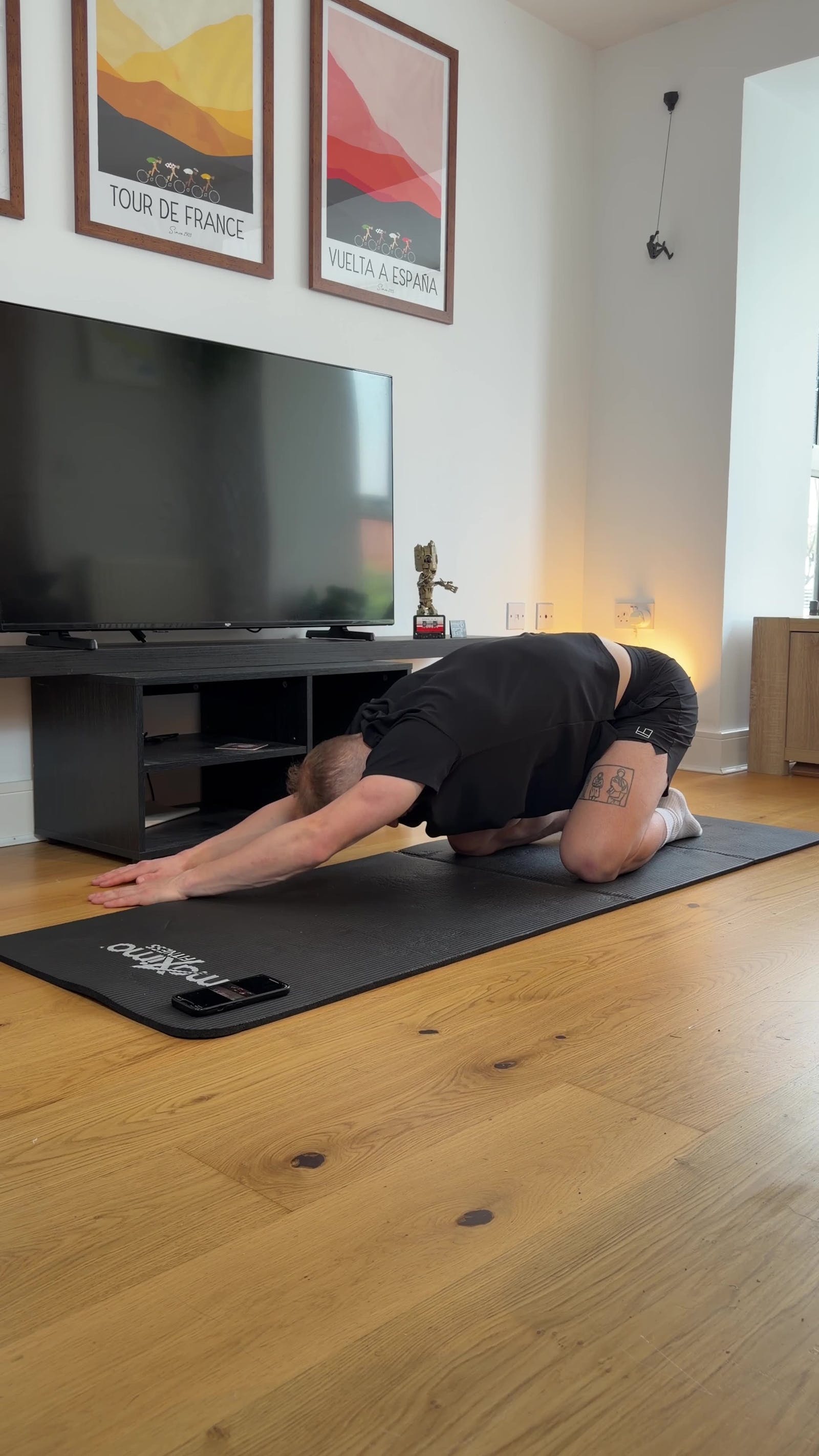
Mobility Work
If you have a super tight back and hips from sitting at work all day, you will need a bit more to get into good positions. You don't need to become a yogi here. Don't lose sight of your actual goal, and that's to become more athletic. Your warm-up will depend on your restrictions and what you will be training.
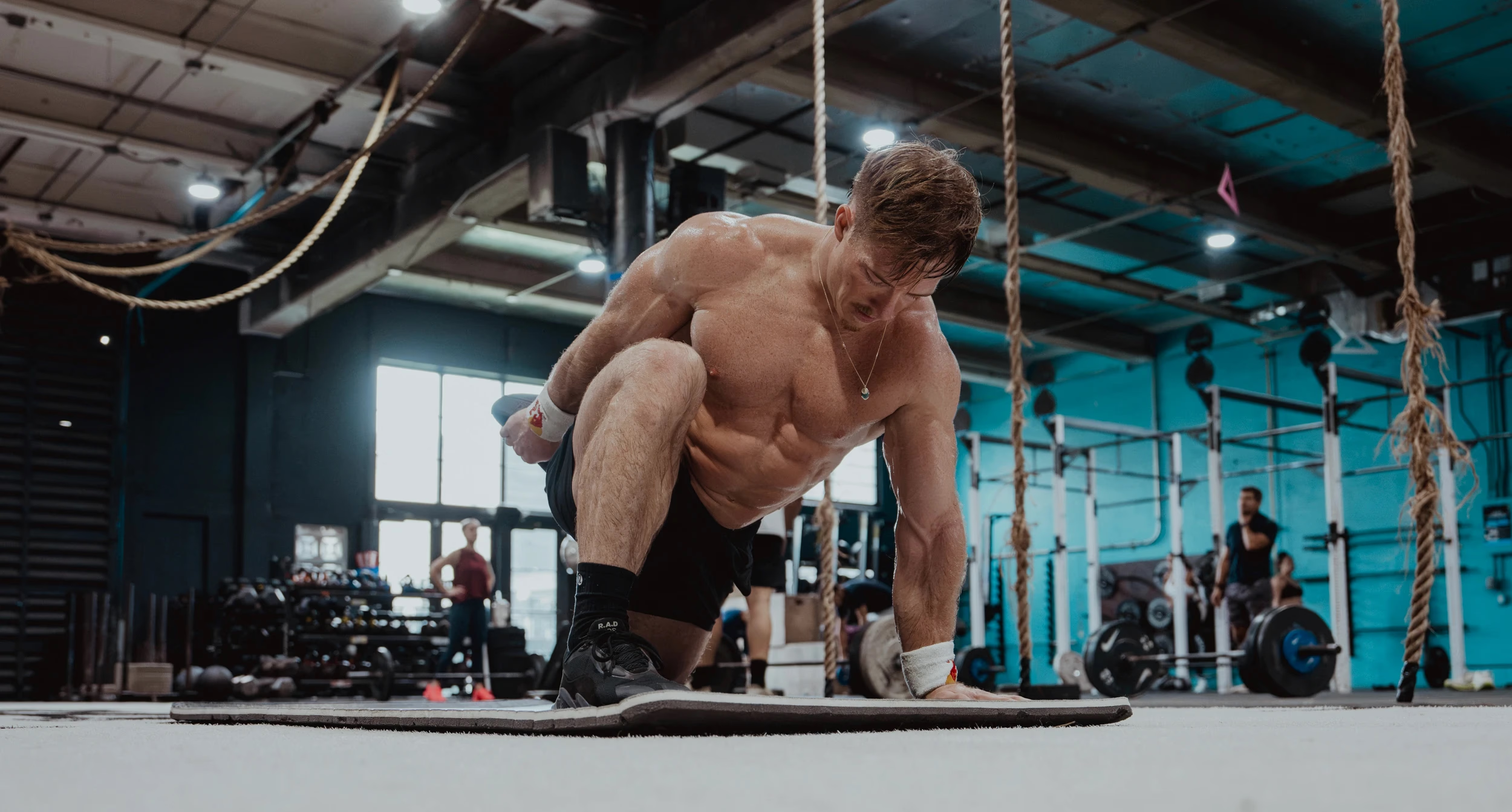
A great example is a simple flow that combines a few exercises to help most people loosen up tight areas.
Effective Warm-up
You can even start by jumping rope, jogging, performing mobility drills, performing bodyweight movements, or wearing extra layers of clothes, then move on to some other basic warm-up exercises, like the ones in the sample workout below.
Do something for 5-10 minutes that will increase your body temperature and prepare your muscles and joints for working out. Then, rehearse the main movement you are about to do for a few minutes to practice it. Now, you are ready for the next step.
up your strength
The next puzzle piece is using your newly found range of motion to build a solid strength base. This means compound exercises with heavy weights that will:
Challenge you
Ensure your form is perfect
Before you go swinging weights around and dive-bombing into the bottom of a squat, keep reading. A good strength base is like a solid foundation of a house. It might look good on the outside, but you won't last long without it. Think of your strength as a glass. Inside that glass, we have water, which represents your athleticism. As a general rule, the greater the base of strength, the greater the potential to increase your athleticism.
Single-Leg Focus
A bigger glass means more potential for more water. There comes a point where you can be close to your strength potential and will see better gains by improving other characteristics, like:
Power production
Reaction time
How do you get strong and athletic? You are better off focusing on getting strong in single-leg exercises and using bilateral (two-legged) variations to supplement. There are a few reasons for this; the two main ones are that most sports and athletic events include a flight phase where you will spend most of your time on one leg, so it makes sense to train that way.
Reduced Stress
Single-leg exercises limit the amount of external load you can use, which will reduce the overall:
Stress
Recovery demand
That way, you can focus on getting strong, powerful, and better at whatever activity you want to improve. Here are a few exercises:
Heavy sled pushes and drags
Bulgarian split squats
B-stance variations
Single-leg deadlift variations
Hip thrust variations
Goblet squats
Hex bar deadlifts
Exercise Selection
Pick 1-3 of these exercises and perform them for 3-4 sets each in the 5-10 rep range, and you will quickly increase your athleticism.
up your power
Power is a product of strength and speed, so it's how fast you can do something. That is why developing a solid strength base is essential before getting to this point. Power is defined as the rate of force development. The scientific equation for power is P=F X V, where: P= power, F= force, V= velocity or speed.
When training to become more athletic, you need to increase your ability to produce power. This means we have to get stronger and faster. When training for power, it's essential to perform these exercises fast, hard, and with intent, but under control.
Explosive Power
Think of a boxer who moves well, is strong, and throws every punch with intent. This simple tweak in how you perform an exercise can be the difference between strength and power exercises.
There is a big difference between box squatting with chains and trying to move the bar as fast as you possibly can versus performing the same movement with a slower tempo and easing off at the point of the movement when it becomes easier. Here are a few power exercises:
Sprints
Sled Sprints
Dynamic Effort Squats
Bench Presses against bands or chains
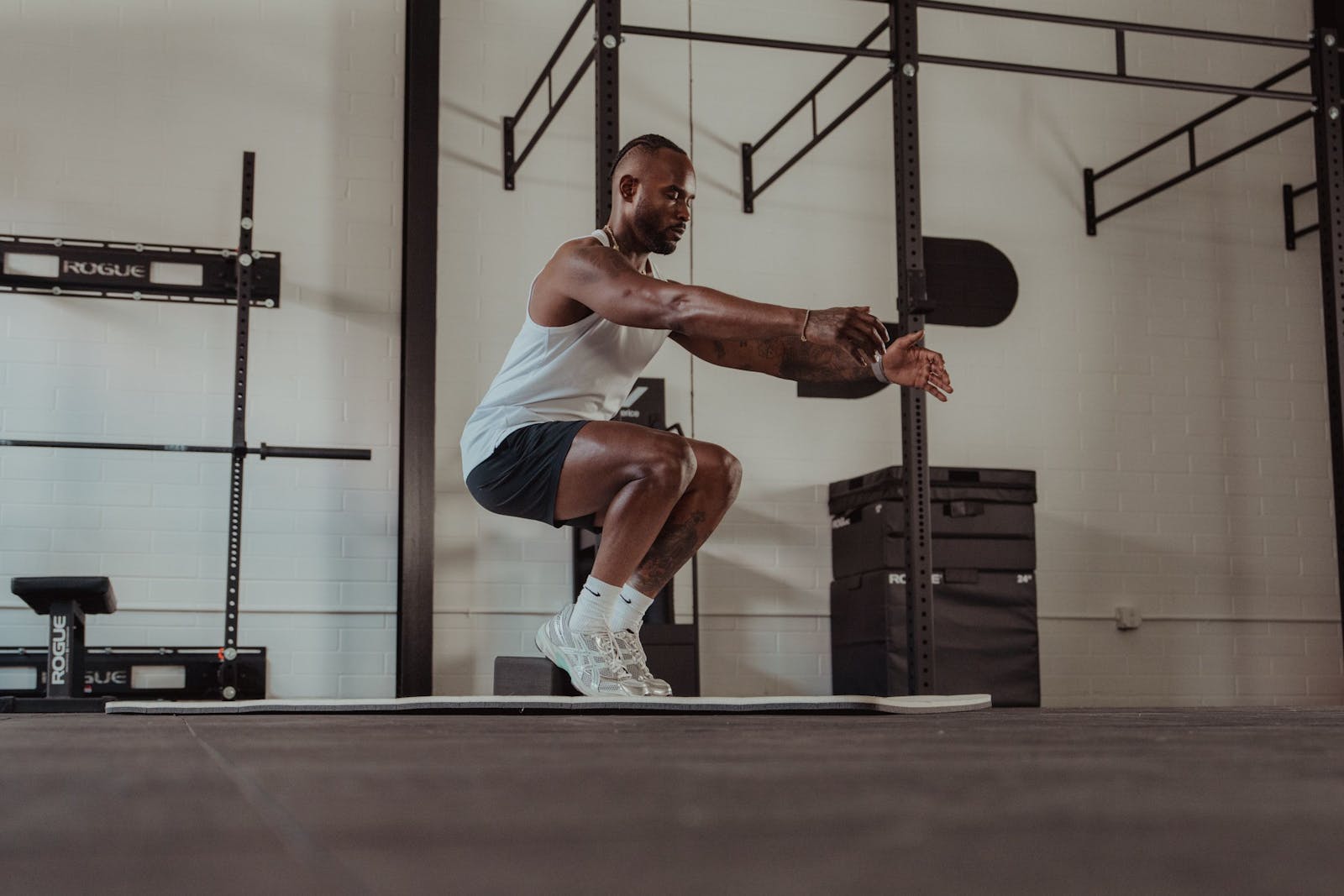
Jump variations
Heavy or Band Resisted Kettlebell Swings
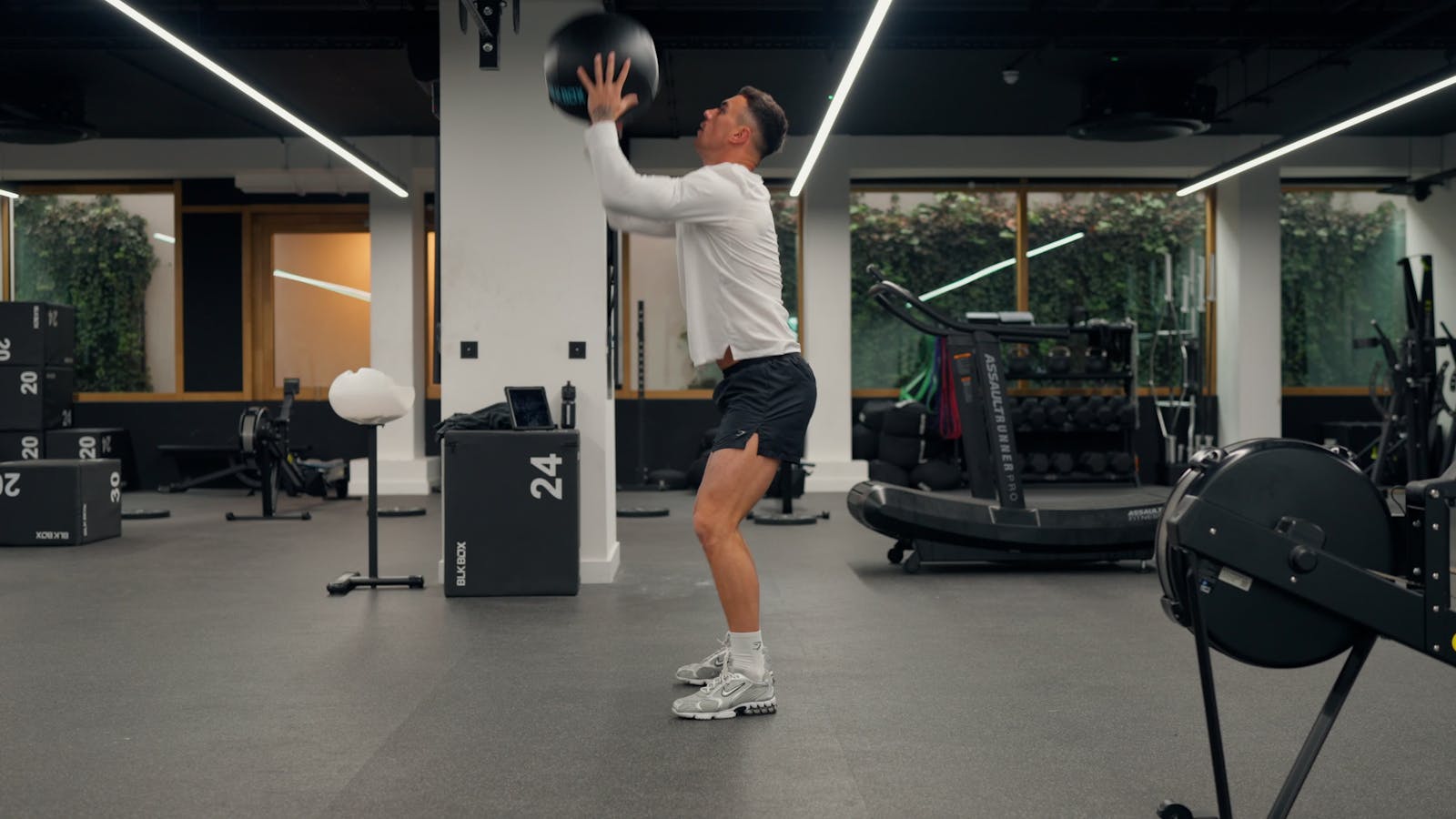
Medicine ball throws
Push Press to overhead toss from chest
Vertical jump to overhead toss from chest
Kneeling jump to overhead toss from chest
Kneeling jump to overhead scoop toss
Prioritize Power
When incorporating power exercises, fully recover between your sets, typically 90 seconds to 3 minutes. You don't want to perform these exercises in a fatigued state. Power exercises should be done early in your workouts when you are fresh and can put all your effort into them, before your strength work.
You have to develop a strong base before becoming powerful and more athletic, which is why power work comes after strength work in this order rather than before it. Pick 1-3 of these exercises and perform them for 3-6 sets in the 3-6 rep range. Exercises like banded kettlebell swings are typically done for sets of 6-12. Some say, "why should athletes learn weightlifting if they aren't weight lifters?"
Weightlifting Benefits
That's like saying, "why should athletes learn proper running mechanics if they aren't track athletes?" It sounds just as silly applied to running. Weightlifting is simply another tool, a very effective one, to improve athletic performance, just as proper running mechanics are.
A well-structured strength and conditioning program will have different components. A powerful athlete is both strong AND fast. Don't get left in the dust.
lose body fat to boost your performance
A leaner you can probably move faster than a heavier you. Many athletes feel lighter and faster after dropping pounds. This will depend on the sport you play and your position. Being heavier is essential for some sports and positions (being a football lineman).
This is no excuse to let yourself go. If you fit into a particular weight class, keep your weight up, too. On the flip side, if you're a weight class athlete and generally weigh near the bottom of your weight class, you might want to consider attending the class below (if it can be done safely with enough time between competitions).
Lean Muscle
This may allow you to be larger than most of the opponents you face in your class, giving you an advantage. Of course, getting lean will help to a point. If your weight is going down, but you are also losing an appreciable amount of muscle mass, you should re-evaluate your approach.
Muscles are what move weight, not fat, and maintaining as much muscle as you can as an athlete is often essential. How do you get leaner? A proper overall diet suited to the individual and a good training program to match.
put 100% effort into what you do
Every single thing on this list can be controlled with effort. You can put as much effort into getting stronger, practicing the skills needed in your sport, dialing in your nutrition and training to get lean, and training in a full range of motion.
Some people claim that their genetics limit them. This is true in some areas, but genetics doesn't limit how much effort you can put into applying the other components on this list. The best athletes I know have a relentless work ethic.
6 ways to maintain or improve your athleticism

1. conduct a 60-second body test
Before figuring out how to become more athletic, it's crucial to understand what's currently limiting your athleticism. A quick body test will help you identify areas for improvement and tailor your training accordingly. You can focus on doing each activity for the listed time and recording how it went for you on a 1-10 scale, one being easy and 10 being impossible.
Print off and fill in a chart to explore where you are starting on your athletic journey, and retest this after a few weeks of training to see if you are improving. For each exercise below, note how many reps you completed, your 1-10 ranking, and whether you felt any pain or discomfort, and where. You can add anything into your test that falls under your definition of athletic.
Jump Rope: 60 seconds
Box Hop: 60 seconds
Air Squats: 60 seconds
Light Jog: 60 seconds
Sprints: 6 x 10 seconds
Balance on only the right leg: 60 seconds
Balance on only the left leg: 60 seconds
Quick Tip: Keep a detailed performance record in each test to track your progress and adjust your training as needed. You will use this for your training plan.
2. acknowledging, managing, and erasing pain
You get more out of a year of consistent, pain-free training than you do lifting heavy in the gym. Time compounds, and building a solid foundation will lead to lasting progress. Understanding and acknowledging pain is a crucial part of enhancing your athleticism. Here's how to effectively address and manage pain during your training:
Track Aches and Pains: Note where you feel different aches and pains during each exercise. Use a scale of 1-10 to rate the intensity of each discomfort, with one being minimal and 10 being severe. It is ideal if your pain decreases as your training cycle continues. More pain is not more gain when it comes to being athletic.
Identify Patterns: Look for patterns in your pain reports. Are certain exercises causing more discomfort? Are there specific movements or positions that exacerbate the pain?
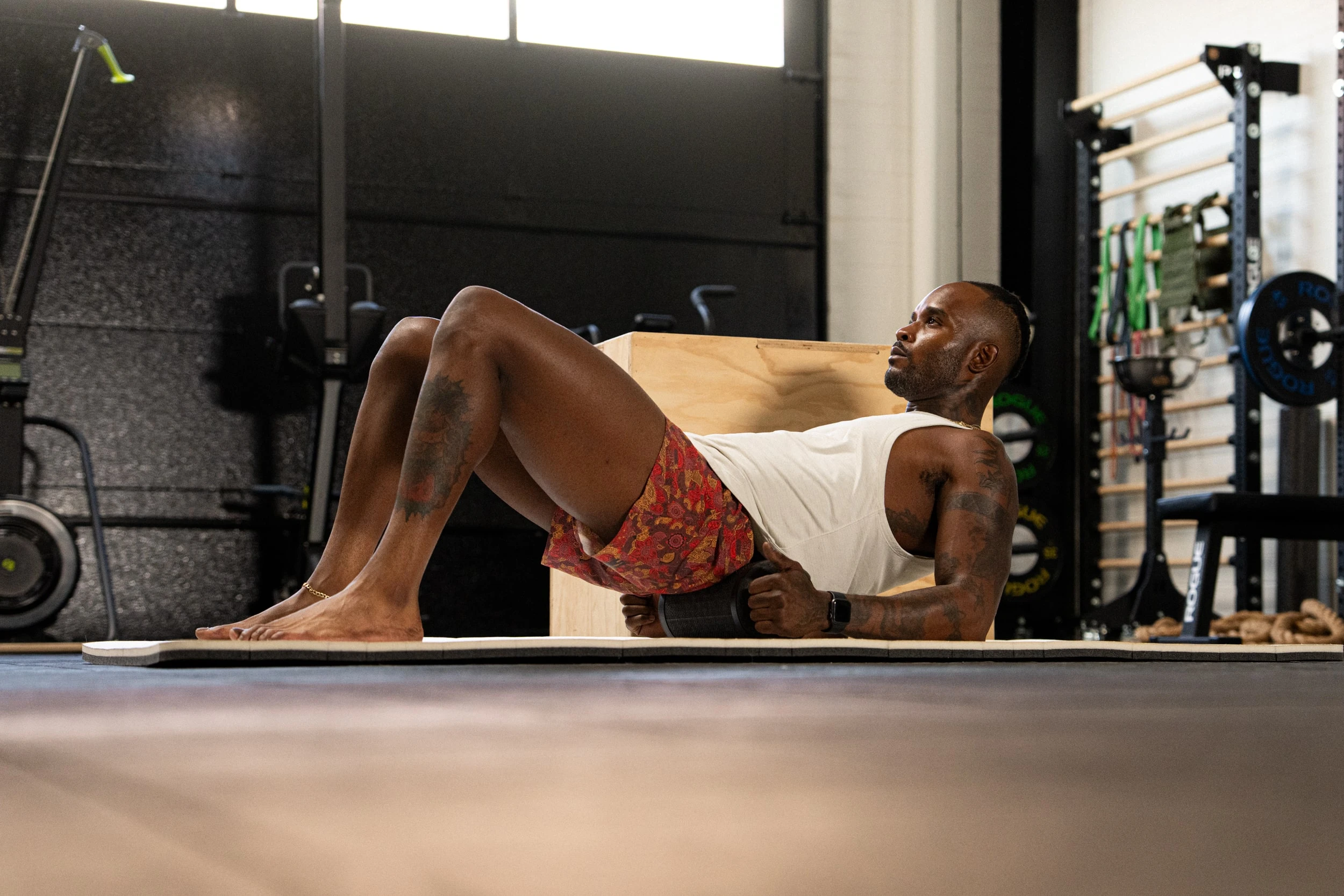
Incorporate Recovery Techniques: Use foam rolling, massage, heat and cold therapy, and stretching to address areas of discomfort and promote recovery. Test what types of recovery techniques are working best for you. Some people recover better with heat, while others do better with cold; your body is unique.
Therapeutic Self-Massage During Activity: Learn self-massage techniques to alleviate muscle tension and improve circulation during rest periods between physical activity. Tools like massage balls, foam rollers, and your hands can help target specific areas of discomfort.
Learn Body Care: Understanding how to care for your body is essential. Educate yourself about proper body mechanics, recovery strategies, and how to prevent common injuries.
Stay Hydrated and Nourished: Proper hydration and nutrition can help manage and reduce muscle soreness and fatigue, and decrease the risk of injuries.
Consult a Professional: If you notice persistent or severe pain, seek advice from a healthcare professional or physical therapist to address potential issues and get personalized treatment.
Quick Tip: A pain journal will help you manage discomfort more effectively and make informed decisions about your training adjustments. Combine your pain journal with the body test above to track physical activity alongside pain.
3. create a structured training plan
Here is the central part that can often be confusing: creating the training plan. This approach involves planning your training in phases, usually four-week blocks, each with specific goals and focuses, to:
Ensure progressive improvement
Prevent burnout
Each phase builds on the previous one, creating a solid foundation for athleticism to build. But how do you start making a training plan? Here's how to start structuring it:
Prep Phase (around 15 training sessions): Focus on building a solid foundation with general strength and conditioning.
Strength Phase (around 9 training sessions): Emphasize heavy lifting and muscle building.
Power Phase (around 9 training sessions): Integrate plyometrics and explosive movements.
Performance Phase (around 9-11 training sessions): Refine skills and peak your performance with sport-specific drills or advanced techniques.
Assess Your Current Fitness Level: Evaluate your strengths and weaknesses from your body test above, and use this information to tailor your training phases.
Recovery: Working in a full recovery week every 4th week will help you stay on track while limiting injuries. Your body needs to rest when reaching for athleticism.
Set Specific Goals: Define your goal in each training phase. For example, you might focus on strength in one phase, speed in another, and endurance in a third. This can be very specific.
Adjust as Needed: Review your progress regularly and adjust your plan based on how your body responds and any changes in your goals.
Quick Tip: A structured training plan helps manage training loads and optimize performance. A well-organized plan keeps you on track and ensures continuous improvement.
4. make every movement count
Athletic means that every movement you perform, whether in sports or daily life, becomes more efficient and effective. Here's how enhancing your athleticism translates into improved performance and ease in various activities:
Sport-Specific Benefits: For athletes, developing strength, agility, and coordination directly translates into better performance in their sport. Enhanced physical abilities make complex movements feel more natural and less exhausting.
Skill Development: Focus on refining skills specific to your sport or activities. For example, a soccer player might work on dribbling, passing, and shooting technique, while someone focused on everyday fitness might practice squats and lunges to improve functional strength.
Everyday Life Enhancements: If you're not involved in competitive sports, becoming more athletic still has significant benefits. Improved strength and flexibility make daily tasks like lifting groceries or climbing stairs easier and less tiring.
Functional Training: Focus on exercises that mimic everyday movements or the specific demands of your sport. This functional approach ensures that your training translates effectively into real-world activities.
Skill Specifics: Pay attention to the specific skills related to your activities or sports. For instance, if you're training for basketball, incorporate shooting drills, agility drills, and core strengthening exercises to improve your overall performance.
Quick Tip: Apply athletic principles to all your physical activities. Whether playing a sport or simply going about your daily routine, the more functional and efficient your movements, the easier and more enjoyable they become.
5. consistency and patience
Consistency and patience with a focused approach are the real formula. The promise is that you will not be good when you start, but can continually improve. Athleticism grows from the consistent repetition of movements and skills. As these patterns become second nature, you'll find that your dedication has transformed you into someone others perceive as naturally athletic.
Consistency: Consistent effort is one of the most critical factors in improving athleticism. Regular training, proper nutrition, and adequate rest are all essential.
Patience: Athletic improvement takes time. Stay committed to your training plan and understand that progress will come with sustained effort.
Quick Tip: Set small, achievable milestones to maintain motivation and track your progress over time.
6. genetic factors and training
Genetics undeniably influence certain aspects of athletic potential, such as:
Muscle fiber type
Natural strength
Endurance levels
Still, exposure has much to do with where you are today, too. While you may not have the ideal genetic profile for a specific sport, dedicated training can help you overcome these natural predispositions and give yourself new exposure.
Understanding Genetics: Understand what you are naturally good at and be open to identifying it. Everyone has something they are great at. For you, it might be the mental ability to understand how something works. For another, it might be jumping over a hurdle. No matter what, use your genetic gifts and then develop the rest.
Environmental Influences: Consider how your upbringing and daily activities have shaped your physical abilities. Walking to school, playing outside as a child, or engaging in manual labor can influence your athleticism and movement skills. If you work a desk job and sit for 8+ hours a day without movement, your body becomes accustomed to that sedentary state.
Your training must incorporate exercises that put your body in various positions and counteract the effects of prolonged sitting. To balance out the impact of a sedentary lifestyle, incorporate movements that challenge your stability, flexibility, and strength in different positions.
Tailored Training: Adjust your training based on your strengths, weaknesses, and specific goals. This personalized approach helps maximize your potential. Use insights from your performance assessments and your background to tailor your training, focusing on areas that need improvement.
build athletic mobility with pliability
Athletes often think of training and performance first when looking to improve athleticism, but recovery and injury prevention carry just as much weight. The better you recover from workouts, the more progress you actually get to keep. pliability's mobility app gives you Daily Sessions to build the habit, guided Paths that progress your mobility over weeks, and Build Your Program if you want a routine shaped around your sport and trouble spots.
Not sure where you're most restricted? Start with the in-app mobility assessment to pinpoint the joints and muscles holding your athleticism back, then use the Rebuild hub if you're working around an injury or a long layoff. Try it free for 7 days on iPhone, iPad, Android, or on our website, and start turning better mobility into real athletic gains.
Related Reading


Move better in 10 minutes a day.
10,000+ five-star reviews.