


LEARN
pliability

That moment when your lungs burn, your legs go heavy, and you wonder if you'll ever push past the wall happens to every athlete. Building stamina and endurance isn't about surviving longer workouts or running farther distances, it's about training your body to perform consistently, recover faster, and sustain energy without crashing. The right strategy builds that capacity steadily, without tipping into overtraining or burnout.
What most training plans miss: endurance work needs a foundation of supple, responsive muscles that move efficiently. Mobility work helps your muscles and joints handle rising cardiovascular demands, and it cuts the tension and tightness that drain energy reserves before you even start sweating.
why most people struggle to build stamina (even when they train regularly)

You train constantly. Your workout schedule includes sunrise runs, spin classes, and evening yoga, yet that same five-mile loop still feels just as hard as it did months ago. That's a stamina problem, not a discipline problem: your body adapts to routine stress within 2 to 3 weeks and then stops improving. If your heart rate, breathing, and perceived effort feel identical to a month ago, you're maintaining fitness, not building it. The fix is progressive overload, gradually increasing intensity, duration, or complexity, plus enough rest to let that stimulus turn into adaptation.
Endurance and stamina get used interchangeably, but they're not the same thing. Endurance is measurable: cardiovascular endurance (how efficiently your heart and lungs deliver oxygen) and muscular endurance (how long your muscles work before fatigue), tested with a timed run or a VO2 max assessment. Untrained adults typically score 35 to 40 ml/kg/min on VO2 max; trained athletes reach 60 to 70. Stamina is broader: the ability to sustain effort while still feeling energetic, built by becoming fitter across strength, mobility, cardiovascular capacity, and recovery, not by any single metric.
That gap explains why you can improve measurable endurance markers, a faster mile, a few more reps, and still feel breathless climbing stairs or tired after a 20-minute walk. The missing piece is usually tissue quality and joint mobility. When muscles can't lengthen and joints move through a limited range, every movement costs more energy: your body compensates by recruiting extra muscle, raising your heart rate, and burning through glycogen faster. That's a movement efficiency problem, and more cardio won't fix it.
What actually drives adaptation is stimulus plus recovery, not raw volume. Training four days a week at higher intensity with full recovery between sessions usually beats training seven days at moderate intensity: the first just teaches your body to survive fatigue, the second forces it to rebuild stronger than before.
the biggest mistakes that kill your stamina and endurance progress
Most athletes fail not from lack of effort but from three things: training at the wrong intensity, skipping real recovery, and following no structured progression. Each one blocks adaptation, so you keep logging hours without getting faster, stronger, or more resilient.
Mistake | What Happens | Result |
|---|---|---|
Wrong Intensity | Training in no-man's land | Chronic fatigue, no adaptation |
Skipping Recovery | The body can't rebuild stronger | Plateaus and burnout |
No Progression | Random training loads | Stagnant performance |
The fix is simple to state, harder to live by: make your hard days genuinely hard and your easy days genuinely easy, at a conversational pace, and space intense sessions apart instead of stacking them on back-to-back days. Smart training beats hard training. Your body adapts during recovery, not during the workout itself.
how stamina and endurance actually improve
Your body improves during recovery, not during training: the workout is the stress, the rest is where you rebuild stronger. Your cardiovascular system adapts by increasing stroke volume and improving oxygen delivery, which is why consistent training can meaningfully raise your VO2 max within a couple of months. Your energy systems work like a three-tier fuel tank: phosphocreatine covers 0 to 10 seconds of maximum effort, glycolysis handles 10 seconds to 2 minutes, and your aerobic system takes over for anything longer. Stamina training specifically targets that aerobic system, improving how efficiently it uses oxygen and fat as fuel.
1. the SAID principle: your body adapts to exactly what you demand
SAID stands for Specific Adaptation to Imposed Demands: your body doesn't get generally fitter, it gets specifically better at the exact stress you repeatedly apply. Run every session on flat ground at a steady pace and that's exactly what you'll get better at, nothing more. No new adaptation happens without new demand, so vary intensity, duration, terrain, and movement patterns on purpose.
2. progressive overload: the only path to continued improvement
Progressive overload means deliberately increasing training stress: longer distances, faster pace, added elevation, more reps, less rest, or slower tempo for more time under tension. Skip it and you maintain your current fitness rather than build new capacity. Higher-rep training tends to boost muscular and aerobic endurance; lower-rep, heavier-load training builds more strength and size.
3. aerobic base training: building the foundation for sustained effort
Around 80% of your training should sit in Zone 1 to 2 heart rate: Zone 1 (50 to 60% of max heart rate) is an easy warm-up pace, Zone 2 (60 to 70%) is a steady effort you can still talk through. Estimate max heart rate as 220 minus your age, so a 30-year-old tops out around 190 bpm. Training here builds the aerobic engine, fat-burning efficiency and delayed fatigue, that lets your harder sessions produce real gains instead of just fatigue.
4. interval training: teaching your body to recover under stress
High-intensity interval training alternates short all-out bursts with brief rest, forcing your anaerobic system to adapt while improving lactate clearance and power output. Work intervals should push your heart rate into Zone 4 to 5 (80 to 95% of max), with incomplete recovery before the next one. If you can hold a conversation during a work interval, it isn't hard enough to trigger adaptation.
5. muscular endurance training: sustaining force over time
Muscular endurance is your muscles' ability to produce force repeatedly without fatigue, built with higher reps and lighter loads. The sweet spot is usually 15 to 25 reps: if you can breeze through 30, the weight's too light; if you can barely finish 10, you're training strength, not endurance.
6. nasal breathing: improving oxygen efficiency and reducing fatigue
Breathing through your nose during lower-intensity work increases oxygen uptake and engages your diaphragm more fully, lowering the energy cost of breathing itself. Practice it during warm-ups and Zone 2 efforts; once you find yourself switching to mouth breathing, you've crossed into a higher intensity zone.
7. recovery and nutrition: the conditions that enable adaptation
Training only gives your body a reason to improve, rest is when it actually happens. Eat a meal with moderate carbs and protein two to three hours before training, and carbs plus protein again within 30 to 60 minutes after to speed recovery. Aim for roughly 1.2 to 1.7 grams of protein per kilogram of body weight daily, and drink around 500 milliliters of water two hours before exercise, sipping steadily during longer sessions and replacing electrolytes on hot or heavy-sweat days. Sleep matters just as much: at least seven hours lets growth hormone peak, muscle protein synthesis run, and your nervous system lock in the patterns you practiced.
how to build stamina and endurance faster (a simple weekly plan)
Building stamina faster means raising your VO2 max, the amount of oxygen your body uses during exercise, through a week that alternates high-intensity work, aerobic base work, and active recovery instead of sitting in an undefined middle effort every session. Fix movement quality first: poor form wastes energy and caps how much intensity you can safely add.
A good rule of thumb: increase duration or intensity by roughly 10% each week. Walking 30 minutes becomes 33, then 36, then 40. A 20-minute mile becomes 18, then 16. Structure the week as two high-intensity sessions at least 48 hours apart, three to four low-intensity aerobic sessions, one strength circuit, and one full rest day, enough stress to trigger adaptation, enough recovery to let it happen.
week 1: establish your baseline and build aerobic foundation
Pick one benchmark, a timed mile, max push-ups in two minutes, or 20 minutes at a conversational pace, and record it. Then spend the week entirely on Zone 2 aerobic work: run, cycle, swim, or walk at a pace you can hold a conversation through, 30 to 40 minutes, four sessions. Keep your heart rate at 60 to 70% of max (roughly 111 to 130 bpm at age 35). It should feel deceptively easy: you're building the aerobic base everything else depends on.
week 2: introduce interval work and muscular endurance
Keep two Week 1 aerobic sessions unchanged. Add one interval session: 10-minute warm-up, then six rounds of 90 seconds hard (Zone 4, 80 to 85% of max) with 90 seconds easy recovery, then a 10-minute cooldown, you should be unable to hold a full sentence during the hard portions. Add one muscular endurance circuit: bodyweight squats, push-ups, lunges, and planks, 15 to 20 reps each (45 to 60 seconds for planks), 60 seconds rest, four rounds. The final reps of each round should demand real effort.
week 3: increase volume by 10% and add tempo work
Raise your two aerobic sessions by 10% (35 minutes becomes 38 to 39). Extend interval work intervals to two minutes with 90 seconds recovery, same rep count. Swap one easy session for a tempo run: 10-minute warm-up, 15 to 20 minutes at a comfortably hard pace (Zone 3, 70 to 80% of max) where you can speak in short phrases but not hold a conversation, then a 10-minute cooldown. This trains your lactate threshold directly.
week 4: peak volume and test your progress
Increase aerobic sessions by another 10%. Push intervals to 2.5 minutes of work with 2 minutes of recovery. Stretch tempo runs to 20 to 25 minutes. Add a fifth round to your muscular endurance circuit, or push reps to 20 to 25 per movement. At week's end, retest your Week 1 benchmark, the mile, the push-up test, the 20-minute effort, and compare.
Schedule at least one full recovery day after every high-intensity session: an easy three-mile walk for a marathoner, gentle yoga or mobility work if you're building baseline stamina. Training creates the stimulus; recovery is what turns it into adaptation. Skip the rest day consistently and you'll accumulate fatigue faster than you build fitness.
build stamina faster by fixing the limiting factor most people ignore
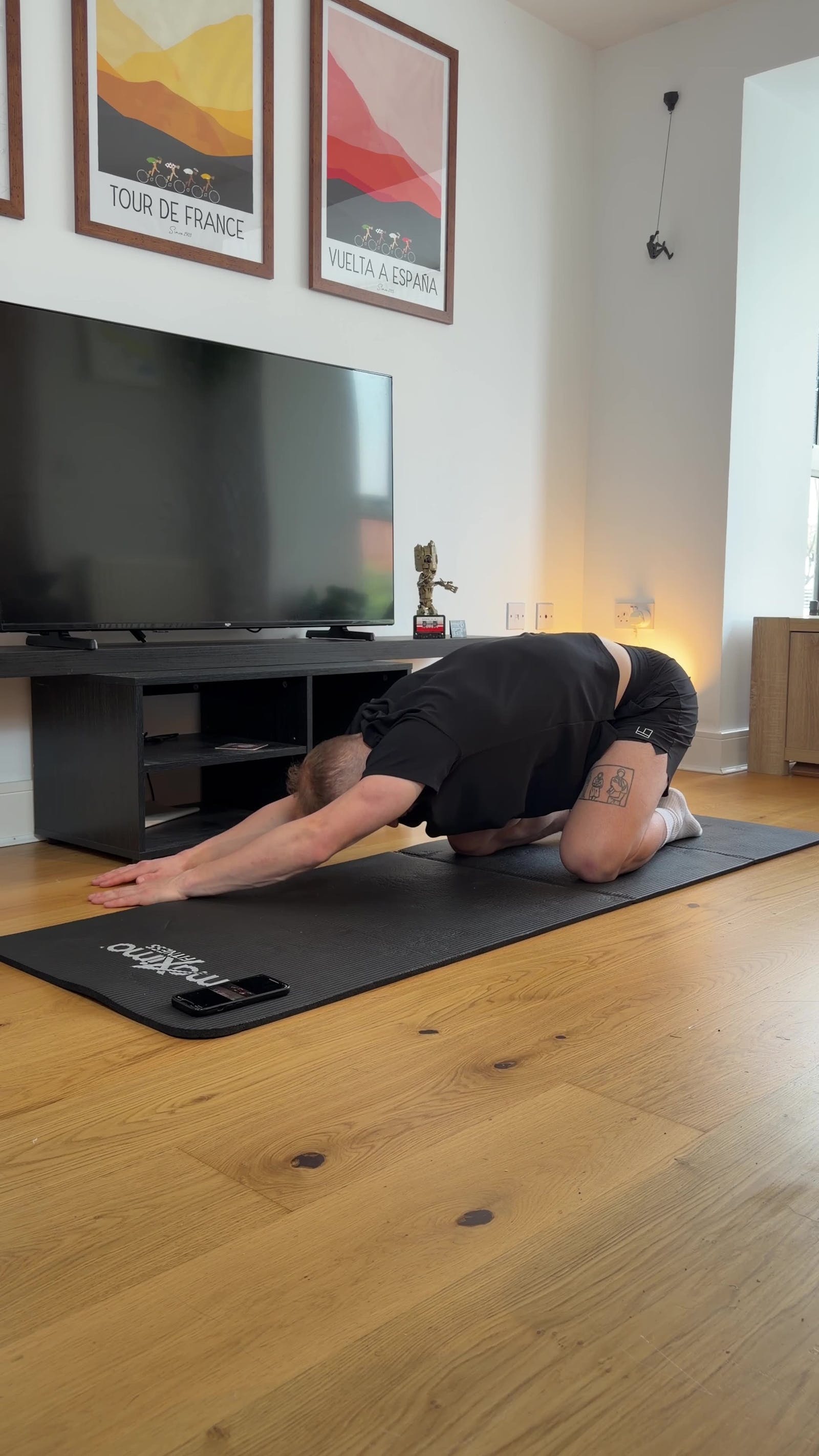
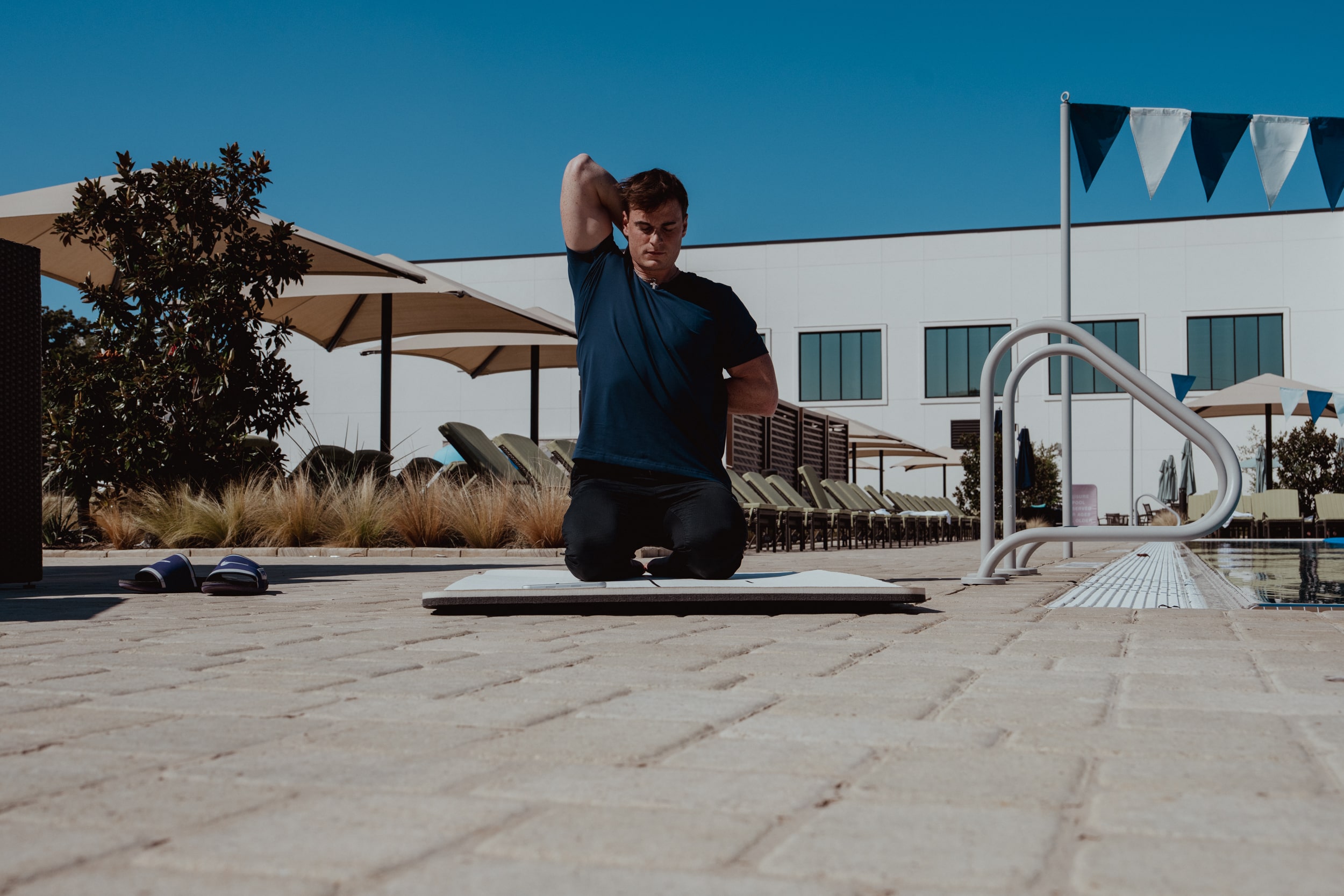
That limiting factor is mobility. Tight hip flexors shorten your stride, bound calves limit ankle movement, and a restricted thoracic spine compromises breathing mechanics, all of which cost you energy before effort even begins, not just injury risk. Most athletes stretch occasionally after workouts; real improvement comes from daily, targeted mobility work that addresses the specific restrictions limiting your movement.
Don't let poor mobility quietly cap your stamina gains.
pliability's Daily Sessions give you a fresh guided routine every day, and Paths string sessions together into a multi-week progression if you're building toward steadier endurance without burning out. Take the mobility assessment, which uses a body scan to show exactly where you're restricted, then use Build Your Program to build a routine around it. If you're coming back from an injury, the Rebuild hub has session series built for that. Try pliability free for 7 days on iPhone, iPad, Android, or the web.
Related Reading








Move better in 10 minutes a day.
10,000+ five-star reviews.