


LEARN
pliability

Every athlete knows that split second when their body fights to stay upright during a sharp cut, a sudden pivot, or an unexpected collision. That moment reveals a truth: raw strength and speed mean little without the stability to control them. Balance exercises for athletes aren't just supplementary drills to fill time between workouts. They're the foundation that transforms athletic potential into consistent, injury-resistant performance on the field, court, or track.
Whether recovering from an ankle sprain, preparing for competition season, or simply looking to move with more confidence and precision, targeted balance training can reshape how the body responds under pressure. Professional-level protocols focus on building proprioception, strengthening stabilizer muscles, and enhancing neuromuscular coordination. Instead of guessing which single-leg exercises or stability progressions will actually move the needle, athletes need structured programs designed around the specific demands of athletic movement.
table of contents
Why Athletes Lose Balance Even When They Are Strong and Fit
Why Traditional Balance Training Fails Most Athletes
15 Balance Exercises for Athletes That Actually Transfer to Sport Performance
How to Structure Balance Training for Maximum Athletic Transfer
If Your Balance Breaks Under Pressure, Flexibility Alone Is Not the Fix
summary
Athletes with strong quads and cardiovascular endurance often wobble during landings or pivots because balance under dynamic load requires entirely different neuromuscular pathways than raw force production. The muscles that generate power and the systems that control stability operate on separate tracks, and training one doesn't automatically improve the other. A basketball player might drain practice shots all day but miss when landing awkwardly after contesting a rebound because their stabilizers can't fire fast enough to control the shift in momentum under pressure.
Research published in the Journal of Athletic Training (2019) found that athletes with a history of ankle sprains show measurably slower stabilization times during single-leg landings, even after pain and swelling resolve. Injury doesn't just damage ligaments. It degrades proprioception, the sensory system that tells your brain where your foot is in space without you having to look. The hardware might heal, but the software stays glitchy until you deliberately retrain it through targeted balance work that restores the feedback loop between joints and brain.
Static balance drills like wobble board holds create false confidence because they don't replicate the chaos of competition. You can balance on an unstable surface for minutes in a controlled gym environment, but that doesn't mean your proprioceptors can react when a cutting motion shifts your center of mass laterally while absorbing contact from an opponent. According to PLOS ONE, out of 6,910 potentially relevant studies on balance training, only 26 met rigorous eligibility criteria, revealing how little research actually transfers from lab settings to real-world athletic demands.
Balance training reduces injury risk when it challenges the right systems. A study in the Scandinavian Journal of Medicine & Science in Sports (2020) found that targeted balance training reduced the incidence of ankle sprains by up to 35% among team-sport athletes. The improvement comes from training stabilizing muscles to fire microseconds faster to correct imbalances, often before you consciously realize you were unstable. This happens only when drills replicate the speed, unpredictability, and decision-making demands of actual sport rather than isolated static holds.
Limb asymmetries exceeding 10% significantly correlate with increased risk of lower-extremity injury, according to research in the Journal of Athletic Training. Standardized assessments like the Y-Balance Test and Star Excursion Balance Test reveal deficits that are invisible to observation alone, including excessive sway velocity or multi-second delays in stabilization, which increase injury risk. Without objective baseline data, programs address assumed weaknesses rather than the athlete's actual control gaps under load.
why athletes lose balance even when they are strong and fit

Strength and balance are not the same thing. You can squat twice your body weight or run a sub-5-minute mile and still wobble when you land from a jump or get nudged during a pivot. Balance under dynamic load requires a different skill set than raw force production. The muscles that generate power and the neuromuscular pathways that control stability operate on separate tracks, and training one doesn't automatically improve the other.
how do control problems affect athletic performance?
A basketball player makes practice shots all day but misses when they land awkwardly after fighting for a rebound. A soccer midfielder with strong quads and hamstrings gets beaten on a cut because their stabilizer muscles can't fire fast enough to control the shift in momentum. These aren't conditioning problems: they're control problems. Milliseconds of instability translate directly into missed opportunities and lost advantages in high-stakes moments.
what is the difference between static and dynamic balance?
Static balance is your ability to keep your body steady over a fixed base of support while not moving, like a single-leg stand with eyes closed. It's foundational and predictable: your environment remains constant, your center of mass doesn't shift, and your brain has time to make corrections.
How does dynamic balance differ in athletic performance?
Dynamic balance is the ability to maintain balance while your body moves, reacts to unexpected forces, and changes direction quickly. A powerlifter setting their feet for a heavy squat relies on static control. A defender absorbing contact mid-sprint and staying upright relies on dynamic stability.
Only dynamic balance mirrors the chaotic, high-speed nature of sport. A smart program masters the foundation first, then progressively challenges you with movements that demand reactive, real-time adjustments under fatigue.
causes of balance difficulties in athletes
Injury and trauma break the feedback loop between your joints and your brain. An ankle sprain damages ligaments and impairs proprioception, the sensory system that tells your brain where your foot is in space without looking.
According to research published in the Journal of Athletic Training (2019), athletes with a history of ankle sprains show measurably slower stabilization times during single-leg landings, even after pain and swelling resolve. The hardware heals, but the software stays glitchy until deliberately retrained.
Why do muscle imbalances create balance problems?
Muscle imbalances lead to uneven development that manifests under stress. Training hard in one plane of motion overdevelops some muscles while leaving smaller support muscles underdeveloped.
A soccer player with strong quads but weak hamstrings can sprint in a straight line but struggles with sharp cuts or slowing down. The imbalance surfaces in split-second changes where smaller, reactive muscles cannot keep up.
What happens when proprioceptive deficits reduce coordination
Problems with body awareness reduce coordination and reaction time, even when you have strength. Fatigue, repetitive stress, or insufficient variety in training dulls the sensory receptors in muscles, tendons, and joints.
When feedback slows down, your brain guesses instead of reacting. Movements feel hesitant and stiff. Most athletes attribute this to poor conditioning, but the real issue is dull sensory input and sluggish neuromuscular communication.
the true foundation of athletic performance
Balance is the critical link that turns strength into skillful, game-winning movement. Without it, you cannot effectively transfer force, react to a chaotic game, or express your full potential. It involves controlling your body's center of mass over a constantly shifting base of support, whether standing still or moving at high speed: an active, dynamic process of making constant, tiny adjustments to stay in control when the environment refuses to cooperate.
How does proprioception improve athletic reactions?
The secret ingredient is proprioception, your brain's internal GPS. Sensory receptors in your muscles, tendons, and joints constantly send feedback to your central nervous system.
Targeted balance work produces faster muscle reactions, improved coordination, and greater joint stability. Research from the Scandinavian Journal of Medicine & Science in Sports (2020) found that balance training reduced ankle sprains by up to 35% among team-sport athletes. Your stabilizing muscles learn to fire microseconds faster to correct imbalances before you consciously register instability.
Why do most balance programs fail to deliver results?
Most balance programs treat stability like generic stretching: a few wobble drills added to practice with no progression, personalization, or tracking. But knowing balance is trainable and improving it under pressure are two different challenges.
why traditional balance training fails most athletes

Most athletes think balance training means standing on one leg or using unstable surfaces. But static drills don't replicate the chaos of competition. BOSU ball exercises occur in controlled environments at slow speeds, without contact or decision-making. You're training stability in isolation from the forces your body faces during a game.
Traditional Balance Training | Game Situations |
Controlled environment | Unpredictable chaos |
Slow, deliberate movements | High-speed reactions |
No external forces | Contact and collisions |
Single-plane focus | Multi-directional demands |
static balance doesn't predict athletic performance
Your body doesn't lose its balance when standing still. It loses balance when things get chaotic. When you move your foot to change direction, your nervous system has milliseconds to tell your muscles what to do, handle the force from the ground, and change your momentum without compromising your form. That's not the same job as standing on one leg. According to PLOS ONE, out of 6910 studies that might have addressed balance training, only 26 were rigorous enough to use, revealing how little research translates to real sports situations rather than laboratory settings.
why traditional drills create false confidence
Athletes who excel at wobble board routines often feel stable during practice, then lose control at game speed when conditions become unpredictable. You can balance on an unstable surface for minutes, but your body's balance sensors can't react when a cutting motion shifts your center of mass sideways while you absorb contact from an opponent. The muscle and nerve coordination needed for reactive balance operates on different timescales and in different force directions than that of static holds. Your brain learns the specific task you practice, not a general ability to stabilize under any condition.
the missing elements in conventional programs
Balance in sports requires proprioception under speed, the ability to absorb and redirect force, and the ability to maintain alignment while processing visual and tactical information simultaneously. Traditional balance drills separate stability from these contextual demands. A runner who practices single-leg stands won't necessarily improve their ability to stabilize after landing on uneven terrain mid-stride, because the drill doesn't train their nervous system to react to unexpected perturbations at high velocity.
closing the gap between drills and game speed
Static balance is not athletic balance. Performance gains come from drills that improve your body's reaction time and stability under pressure.
15 balance exercises for athletes that actually transfer to sport performance

Most balance drills fail because they train stability in conditions that don't resemble competition. Standing on one leg with chair support doesn't prepare you for contact during cuts or stabilizing after awkward landings under pressure. The exercises below are organized around specific sport failures they solve, not generic "balance improvement." Each drill addresses a concrete performance deficit, explains the neuromuscular mechanism it targets, then provides execution steps that replicate speed, instability, or decision-making demands.
1. single-leg stance with perturbation (solves unstable landings under contact)
Athletes often lose control when landing from a jump, when an opponent makes contact, or when uneven ground disrupts their foot placement. Traditional single-leg stands train static balance in predictable environments that do not transfer to dynamic situations.
How does perturbation training improve balance control?
This variation introduces external pushes, pulls, or thrown objects you must catch, forcing your muscles and nerves to make quick corrections while under load.
How do you perform a single-leg stance with perturbation?
Stand on one leg without chair support, core engaged, and knee slightly bent. Have a partner give you light, unpredictable pushes to your shoulders from different angles, or throw a medicine ball that you must catch and throw back while maintaining balance. Do 8–10 reps for each leg. As you improve, try it with your eyes closed or standing on an unstable surface.
2. reactive single-leg hop to stabilization (solves poor deceleration mechanics after explosive movements)
Many athletes can generate power but cannot control it upon landing, leading to knee valgus collapse, ankle rolls, or loss of directional control. This drill trains your body to absorb force and improve proprioceptive feedback under dynamic load, mirroring the demands of cutting, jumping, and rapid deceleration.
Stand on one leg and hop forward 2-3 feet. Land on the same leg and stabilize for 3 seconds without wobbling or knee cave. Absorb impact through your hip and ankle, not your knee. Perform 6-8 hops per leg, then progress to lateral and diagonal hops requiring mid-air directional adjustments.
3. BOSU ball plank with alternating limb lifts (solves core instability during upper-body contact)
Athletes lose torso control when they absorb contact through their shoulders or arms in sports requiring blocking, hand-fighting, or overhead reaching under resistance. The core must stabilize the spine while the limbs generate or resist force, a coordination pattern that static planks on stable ground do not challenge. This drill forces the core to counteract rotational and lateral forces while maintaining spinal alignment.
How do you perform this exercise correctly?
Place your forearms on a BOSU ball (dome side down) and extend into a plank position. Slowly lift one arm forward while keeping your hips and shoulders aligned, hold for 2 seconds, then return and switch arms. Progress to lifting the opposite arm and leg simultaneously to increase rotational demand. Perform 8–10 lifts per side, focusing on preventing hip rotation or shoulder collapse.
4. single-leg Romanian deadlift with reach and rotation (solves loss of control during multi-planar movements)
Sports rarely happen in one direction. Athletes lose their balance when they bend, reach, or twist while standing on one leg, common when fielding ground balls, picking up loose objects, or changing direction while carrying weight. Traditional single-leg deadlifts train stability in one direction but ignore twisting and side-to-side demands. This variation adds reaching and twisting to challenge balance across multiple directions simultaneously.
How do you perform this multi-planar movement?
Stand on your right leg while holding a light dumbbell in your left hand. Bend at the hip and extend your left leg behind you while lowering the dumbbell toward the outside of your right foot. Rotate your torso to increase your range of motion. Return to standing by pushing through your right heel. Do 8–10 reps on each side. As you get stronger, use heavier weights or perform this exercise on unstable surfaces.
5. lateral bound to single-leg stick (solves instability during lateral direction changes)
Cutting and lateral shuffles break down when athletes cannot control their center of mass during side-to-side transitions. The failure point occurs during deceleration, when the landing leg must absorb lateral momentum and redirect force in a new direction. This drill trains lateral force absorption and single-leg stability under speed, directly replicating the demands of defensive slides, crossover cuts, and lateral evasion.
Stand on your right leg, then explosively bound laterally to your left, landing on your left leg only. Stabilize for 3 seconds without allowing your knee to collapse inward or your torso to lean excessively. Focus on "sticking" the landing as quietly as possible. Perform 6–8 bounds per side, progressing to longer distances or reactive cues, such as a partner calling out direction mid-air.
6. single-leg squat on unstable surface (solves knee valgus and ankle instability under load)
Athletes often show good squat mechanics on two legs but lose control when loading one leg on unstable ground, such as uneven turf or sand. Failure occurs when the ankle, knee, and hip cannot maintain alignment under load, leading to compensatory patterns that increase injury risk. This drill trains neuromuscular coordination throughout the kinetic chain while replicating the instability of real-sport surfaces.
Stand on one leg on a foam pad or balance disc. Slowly lower into a single-leg squat, keeping your knee tracking over your toes without inward collapse. Descend as far as you can control, then drive back to a standing position. Perform 8–10 reps per leg, progressing to holding a weight at chest height or closing your eyes.
7. stability ball plank with partner disruption (solves core collapse under unpredictable forces)
Contact sports require keeping your torso stable when opponents apply unexpected pushes, pulls, or strikes. Static planks on stable surfaces don't replicate this reactive core engagement. This drill trains the core to resist sudden changes while maintaining spinal alignment, directly transferring to blocking, hand-fighting, and absorbing contact.
Assume a plank position with your forearms on a stability ball. Have a partner apply light, random pushes from different angles while you resist movement and prevent the ball from rolling or your hips from sagging. Perform 30–60 seconds per set, progressing to heavier pushes or removing visual cues (eyes closed).
8. crossover step to single-leg balance (solves instability during direction changes under speed)
Athletes lose control when crossing one leg over the other during cutting maneuvers, particularly when slowing down from high speed. Failure occurs when the body's center of mass shifts too far outside the base of support, and stabilizing muscles cannot correct it quickly enough.
How does this drill train crossover mechanics?
This drill trains your nervous system and muscles to control crossover movements and maintain balance on one leg after a quick shift in weight. Stand on your right leg, then step your left leg across your body (as if cutting to the right), plant your left foot, and immediately lift your right leg off the ground. Hold the single-leg balance for 3 seconds, focusing on keeping your torso from rotating excessively. Perform 8–10 reps per side, progressing to higher speeds or unstable surfaces.
9. single-leg calf raise with perturbation (solves ankle instability during push-off and landing)
Your ankle stability can break down when you push off or land on uneven surfaces, leading to rolls, sprains, or loss of pushing power. Your calf and foot muscles must work together to control your ankle joint under pressure, something slow, controlled calf raises don't challenge sufficiently. This drill adds outside disruption to train your ankle to stabilize quickly under dynamic conditions.
Stand on one leg at the edge of a step with your heels hanging off. Rise onto the ball of your foot, then have a partner apply light, random pushes to your shoulders or throw a ball you must catch while maintaining the raised position. Lower slowly and repeat for 10–12 reps per leg, progressing to harder pushes or unstable surfaces.
10. reverse lunge with rotation and reach (solves loss of balance during multi-directional movements under load)
Athletes lose their balance when lunging backward while twisting their upper body, a movement pattern used in defensive positioning, reaching for ground balls, or avoiding contact. The problem occurs when hip stabilizers cannot control the pelvis during rotation, causing the trunk to lean to the side or the knee to collapse inward. This drill trains rotational stability during dynamic lunging patterns that replicate sports movements.
How do you perform the reverse lunge with rotation and reach?
Stand tall, step your left leg behind you into a reverse lunge, and rotate your torso to the right while reaching your left hand toward your right foot. Return to standing by driving through your right leg while rotating your torso back to center. Perform 10 reps per side, progressing to holding a weight during the reach or performing on unstable surfaces.
11. single-leg deadlift to explosive hop (solves inability to generate power from unstable positions)
Athletes need to create a powerful force from one leg or from unbalanced positions, such as pushing off after a trip or accelerating after an awkward landing. Regular deadlifts teach force production from stable, two-legged stances that don't carry over to these messy, real-game moments.
How does this drill train power generation under instability?
This drill combines single-leg force absorption with explosive power generation, training the neuromuscular system to transition rapidly between eccentric and concentric phases under instability.
How do you perform the single-leg deadlift to explosive hop?
Do a single-leg Romanian deadlift on your right leg, lowering with control. At the bottom position, explosively drive through your right heel to jump vertically, landing on the same leg and immediately stabilizing. Minimize ground contact time during landing. Perform 6–8 reps per leg, progressing by holding a weight or landing on unstable surfaces.
12. triplanar toe taps with reactive cues (solves slow neuromuscular response during multi-directional movements)
Athletes lose their balance when changing direction quickly across multiple planes without preparation time. Static triplanar toe taps train the movement pattern but lack the reactive component needed for sport transfer. This variation introduces unpredictable directional cues that require quick decision-making and motor responses in unstable conditions.
Stand on your left leg with knees slightly bent. Have a partner call out directions (forward, lateral, backward) randomly, and immediately tap your right toe in that direction, then return to the center and stabilize on your left leg. Perform 15–20 taps per leg, progressing to faster cue delivery or adding a resistance band around your thighs to increase demand on your hip stabilizers.
13. single-leg squat to lateral hop (solves inability to redirect force after deceleration)
Many athletes can slow down on one leg but cannot immediately change direction sideways, a skill critical in defensive slides, lateral cuts, and evasive maneuvers. This drill trains the transition from eccentric loading (taking in force) to concentric propulsion (making force) in a new direction, mirroring rapid directional changes.
Stand on your right leg and lower into a single-leg squat. From the bottom position, explosively hop sideways to your left, landing on your left leg in a squat position. Immediately stabilize, then repeat in the opposite direction. Perform 8-10 hops per side, focusing on minimizing ground contact time and maintaining knee alignment.
14. heel-to-toe walk with head turns and perturbations (solves vestibular instability during dynamic movement)
Athletes lose their balance when their visual or vestibular systems are disrupted during movement, such as tracking a ball while running or recovering from contact that causes head movement. Traditional heel-to-toe walking trains balance in predictable, visually stable conditions. This variation adds head turns and external pushes to challenge the vestibular system's ability to maintain stability during visual disruption.
Walk forward in a heel-to-toe pattern, turning your head left and right every 2–3 steps to track a moving target or follow a partner's hand. Have a partner apply light, random pushes to your shoulders during the walk. Perform 20–30 steps, progressing to closing your eyes during portions of the walk or increasing push intensity.
15. single-leg stand with ball catch and throw (solves instability during upper-body tasks performed on one leg)
Many sports require athletes to perform upper-body tasks (catching, throwing, blocking) while standing on one leg or during single-leg loading phases. Failure occurs when the core and lower body cannot stabilize the torso while the arms generate or absorb force, resulting in loss of balance or compensatory movements. This drill trains the integration of upper-body tasks with single-leg stability, replicating the coordination demands of sport.
Stand on one leg with core engaged. Have a partner throw a medicine ball from various angles and heights. Catch the ball, stabilize, then throw it back without shifting your planted foot or rotating your torso excessively. Perform 10-12 catches per leg, progressing to heavier balls or faster throws.
Why do sport-specific balance drills work better than static holds?
These exercises share a common principle: they copy the conditions under which balance matters in sport. Static holds and slow, controlled movements do not prepare athletes for the speed, chaos, and decision-making demands of competition. Performing balance work two to three times a week is generally sufficient for adaptation, provided the drills match real performance demands. Training balance without copying the sport context is like practicing free throws while sitting down.
Athletes who struggle with balance under pressure often train balance in quiet gyms on wobble boards, focusing on holding still rather than recovering from disruption. The body adapts to what you ask it to do. Real sport demands the opposite: the ability to stabilize when you cannot predict the force, the surface, or the timing. These drills prioritize perturbation, speed, and reactive cues over duration of holds or repetitions.
What makes balance training transfer to actual performance?
The difference between effective balance training and wasted effort comes down to specificity. If a drill cannot answer "What sport problem does this fix?" it belongs in a general fitness class, not an athletic development program. Every exercise above solves a specific on-field failure, trains the neuromuscular mechanism that corrects it, and replicates the conditions under which the failure occurs.
how to structure balance training for maximum athletic transfer

A structured progression is essential for balance training in sports. Skipping basic control steps leaves athletes unstable when competition becomes chaotic. The system works as follows: establish a baseline using data, progress through static, dynamic, and reactive phases, and continuously assess to adjust the program as the athlete improves. Anything less creates "false stability," where athletes appear controlled in drills but collapse under competition pressure.
why do standardized assessments matter for programming?
Good programming starts by knowing exactly where an athlete stands. Standardized assessments such as the Single Leg Stance, Y-Balance Test, and Star Excursion Balance Test provide objective measurements that reveal problems that are invisible to observation. Force-plate data might show excessive sway velocity or a three-second stabilization delay on the dominant leg: gaps between appearance and reality where injuries can hide.
How do data-driven metrics guide targeted programming?
According to research published in the Journal of Athletic Training in 2019, limb asymmetries exceeding 10% are significantly associated with an increased risk of lower-extremity injury. These numbers reveal which leg needs targeted work, the degree of instability across different movement planes, and whether visual input compensates for poor proprioception. Without them, you're guessing; with them, you build programs addressing the athlete's actual weaknesses.
how should you progress from static to dynamic balance training?
Start with static balance on stable surfaces: single-leg stands, tandem stance holds, and exercises that teach the neuromuscular system to control the center of mass over a fixed base. Master this phase before introducing unstable surfaces like foam pads or balance discs, which demand greater work from ankle, knee, and hip stabilizers.
Athletes who cannot control their center of pressure on solid ground will develop compensatory patterns on unstable surfaces that appear to be balanced but are not.
What makes dynamic balance training essential for athletes?
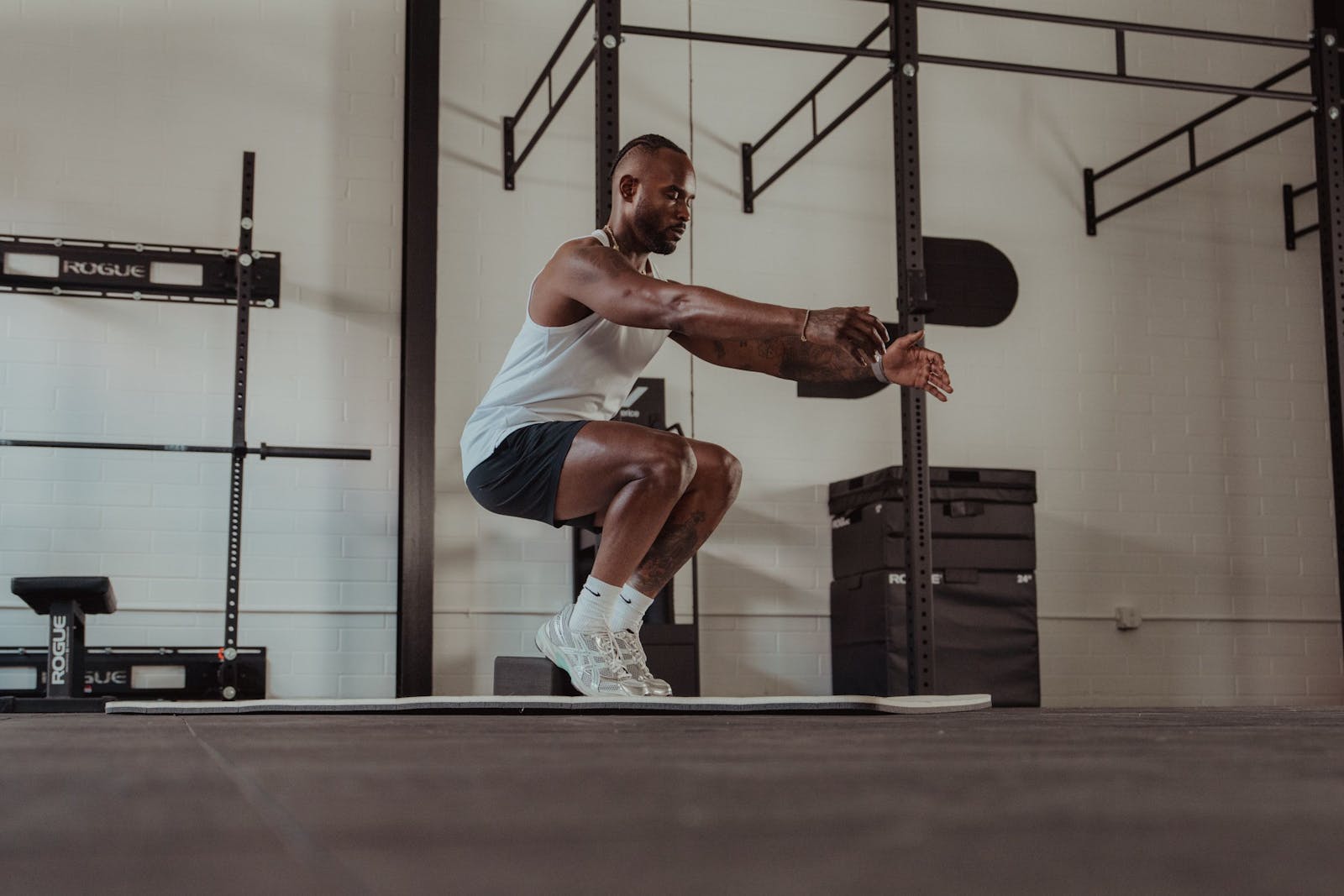
Dynamic balance comes next. Single-leg squats, controlled box landings, and forward and lateral lunges all require maintaining equilibrium while moving.
A basketball player cutting to the basket or a soccer midfielder changing direction at speed must stabilize while moving, not while standing still. The goal is teaching the body to absorb force, redirect it efficiently, and maintain control through full ranges of motion under load.
how do reactive drills prepare athletes for unpredictable competition scenarios?
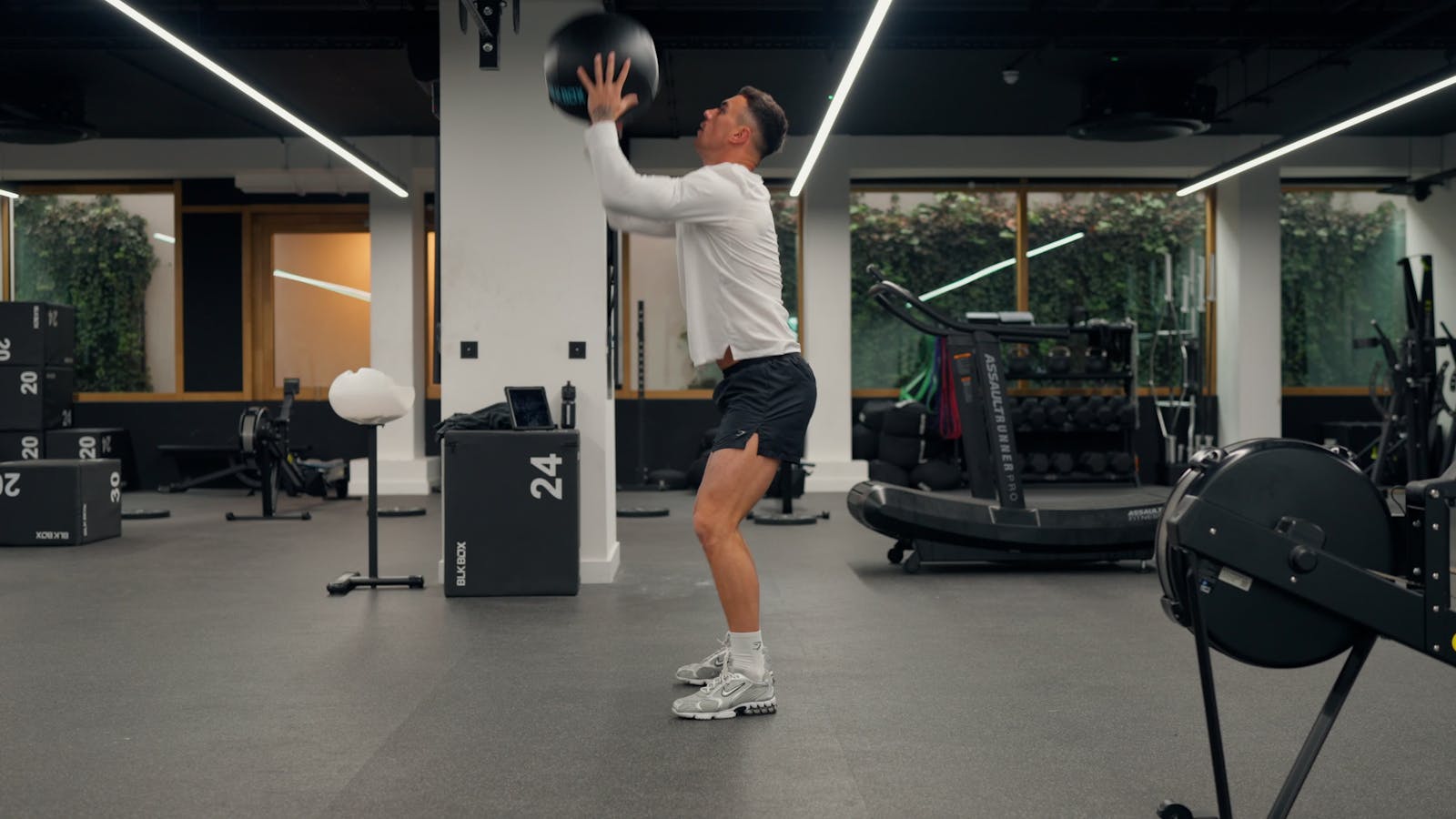
The final phase introduces unpredictability. In competition, athletes react to contact, uneven surfaces, and sudden directional changes in milliseconds. Reactive balance drills replicate this chaos through external perturbations: a coach applying light pushes during single-leg holds, catching a medicine ball thrown from unexpected angles, or responding to visual cues while maintaining stability. These drills sharpen the connection between sensory input and motor output, building automatic reflexive responses that require no conscious thought.
What role does daily mobility work play in balance development?
Many athletes struggle to maintain the daily mobility and recovery work that supports balance development, especially once in-season fatigue, travel, and competing priorities take over. Short, consistent sessions build the movement quality and body awareness that advanced balance training depends on far more reliably than occasional long ones.
the continuous cycle assessment informs evolution
Balance training isn't linear. It's a cycle: assess, analyze, plan, train, reassess. As athletes adapt, their baselines shift. The asymmetry that appeared in initial Y-Balance testing might resolve after six weeks of targeted work, but new deficits could emerge as training volume increases or fatigue builds. Data from ongoing assessments guide program adjustments, ensuring training stays aligned with current needs rather than outdated assumptions.
But if your balance foundation crumbles when fatigue sets in or pressure mounts, you're missing a critical piece that most training programs ignore.
if your balance breaks under pressure, flexibility alone is not the fix
The gap between controlled training and chaotic competition isn't flexibility. Most athletes can touch their toes or hold a deep squat in warmups, but that range disappears during sprints, cuts, or contact. The missing piece is control under load: the ability to stabilize joints through full ranges of motion when speed, fatigue, and instability converge. Flexibility gives you the capacity to move. Control determines whether you can use that movement when it matters.
Most balance training programs assume that holding a position statically transfers to dynamic performance. Your nervous system doesn't work that way. Controlling a single-leg stance on solid ground for 30 seconds doesn't prepare your hip stabilizers to fire correctly when you land awkwardly off a rebound or slow down from a sprint. Your body needs practice transferring stability into unpredictable, high-velocity contexts through drills that replicate the demands of sport.
A structured protocol closes that gap better than a random drill list. pliability turns balance and stability work into guided video sessions: Daily Sessions give you a fresh routine every day, Paths run multi-week progressions for a specific weak link like ankle stability or hip control, and Build Your Program shapes the plan around your sport and schedule. If you're coming back from a sprain or another setback, the Rebuild hub holds corrective, rehab-informed sessions built for that phase. Take the mobility test to see what's actually limiting your control, then start free for 7 days on iPhone, iPad, Android, or the web.
Related Reading


Move better in 10 minutes a day.
10,000+ five-star reviews.