


LEARN
Pliability Team

Skipping rest days sounds productive until soreness sidelines progress entirely. Active recovery offers a smarter middle ground: low-intensity movement performed between harder training sessions that keeps blood circulating, reduces muscle soreness, and helps athletes stay consistent without burning out. The approach works because gentle motion accelerates the repair process rather than stalling it.
Building active recovery into a routine does not have to be complicated, but knowing what to do on lighter days makes a real difference. Pliability's mobility app provides guided recovery sessions that remove the guesswork and help the body feel better between workouts.
Table of Contents
Why Doesn't Resting More Always Help You Recover Faster?
How Active Recovery Helps Your Body Recover Faster
How to Use Active Recovery Without Slowing Your Progress
How Do You Know if Active Recovery Is Actually Working?
Build Your Personalized Active Recovery Routine in 5 Minutes
Summary
Active recovery, defined as low-intensity movement between harder training sessions, works through a specific physiological mechanism rather than general wellness logic. When muscles are sore, blood flow to the affected tissue is reduced, slowing the delivery of repair materials and the clearance of metabolic byproducts such as hydrogen ions and lactate. Light movement raises circulation just enough to accelerate that process. A 2012 randomized controlled trial published in the Journal of Strength and Conditioning Research found that low-intensity cycling significantly reduced perceived muscle soreness and restored performance markers faster than passive rest in the 24 to 48 hours following eccentric exercise.
Neuromuscular fatigue is a quieter but equally significant recovery factor that passive rest handles poorly. After intense training, motor unit recruitment becomes less precise, reaction times slow, and force output drops. The Journal of Human Kinetics notes that insufficient recovery between sessions can temporarily impair performance by 10 to 20 percent due to the accumulation of residual fatigue. Low-load movement sends repeated signals through fatigued motor pathways, helping the nervous system recalibrate without adding new training stress.
Intensity control is where most athletes make their biggest mistake in active recovery. According to the Cleveland Clinic, active recovery should stay within 30 to 60 percent of maximum heart rate, a range where conversation flows easily and effort is never chased. Athletes who train four or more times per week are especially prone to treating recovery sessions as additional training, which eliminates the physiological buffer between hard days and prevents the body from fully resetting.
Recovery strategy should be matched to the specific problem the body is dealing with, not applied as a one-size-fits-all approach. Heavy leg soreness from strength training calls for 20 to 30 minutes of easy cycling or walking to promote blood flow without reloading fatigued motor patterns. Runners benefit from cross-training modalities like swimming that maintain cardiovascular stimulus while engaging different muscle groups. HIIT athletes need walking intervals and light stretching rather than extended low-intensity cardio. The mismatch between the recovery tool and actual need is where recovery stops functioning as a tool and becomes a routine without measurable effect.
Recovery progress can be tracked through several concrete markers rather than relying on feel alone. DOMS that peaks at 24 to 48 hours and clears by 72 hours indicates a functioning repair cycle. Heart rate variability (HRV) trending upward or holding stable across a training week signals that the autonomic nervous system is recovering between sessions. A declining HRV paired with an elevated resting heart rate is an early indicator of overreaching. The range of motion is tested each morning, using a simple forward fold or hip flexor stretch, and consistently reflects whether soft tissue tension is resolving or accumulating.
There are clear conditions under which active recovery is the wrong choice. Fever, sharp localized pain from an acute injury, significant illness, or fatigue that extends well beyond normal training tiredness all indicate the body needs passive rest, not movement. Exercise is a physiological stressor, and adding even low-intensity movement while the body is managing illness or injury can extend the recovery timeline rather than shorten it. Nutrition and hydration on recovery days are equally non-negotiable, as muscle protein synthesis remains elevated for up to 48 hours following resistance training and depends on available fuel to continue.
Pliability's mobility app bridges the gap between knowing recovery matters and knowing what to do on a given day, offering guided sessions tailored to daily body signals rather than fixed programming.
Why Doesn't Resting More Always Help You Recover Faster?
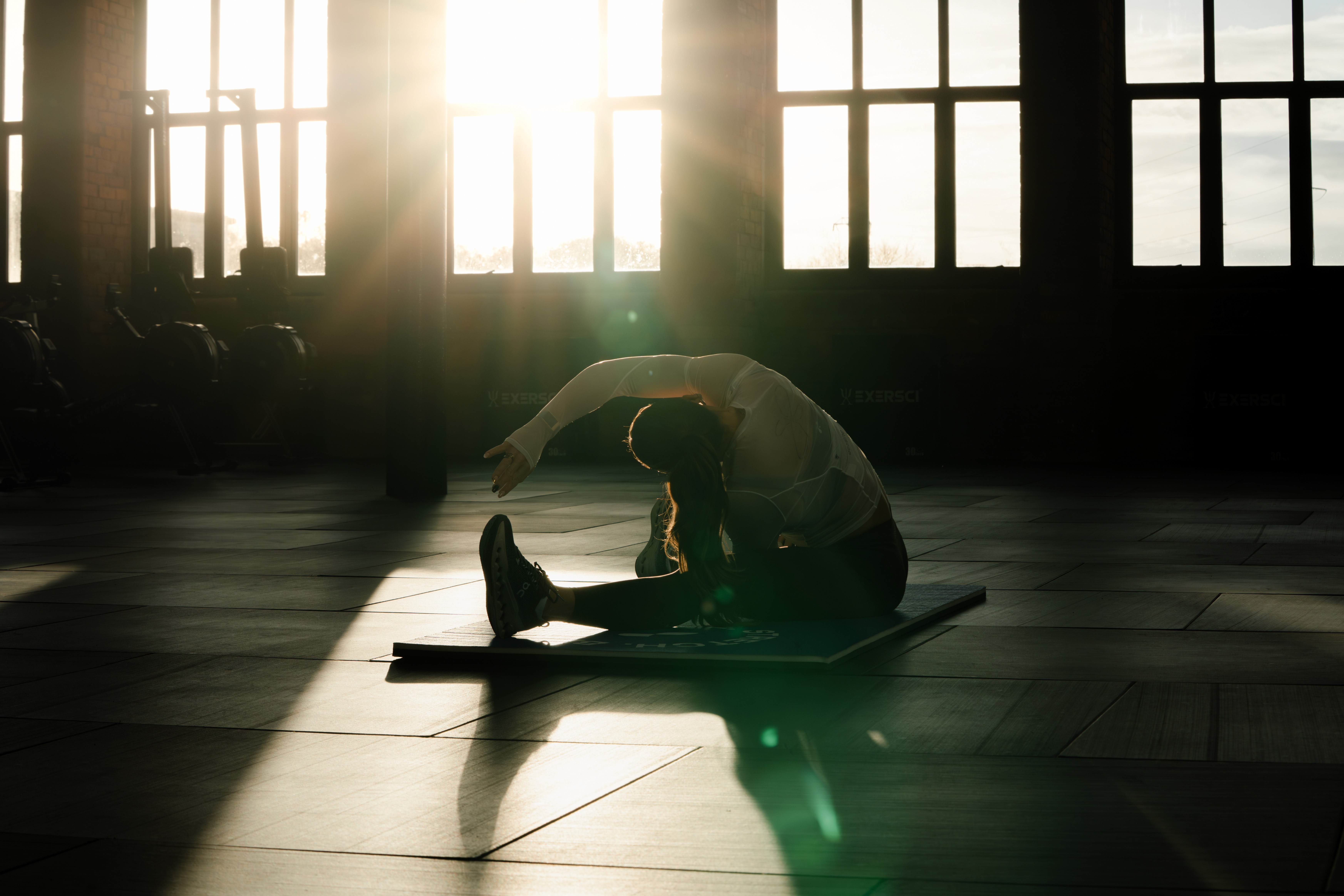
Many people believe the best way to recover after a tough workout is to wait until they feel completely normal again. Soreness feels like damage, and when your legs hurt climbing stairs, or your shoulders hurt reaching overhead, stopping feels right. But taking this belief too literally can work against you.
"The instinct to stop moving when you're sore is understandable — but complete rest is often the least effective recovery strategy your body can follow." — Recovery Science Insight
⚠️ Warning: Waiting until you feel 100% normal before moving again can extend your recovery window rather than shorten it. Passive rest alone is rarely effective.
Soreness after hard training is not a sign that your tissue is broken. It is delayed onset muscle soreness, a normal response your body has to mechanical stress on muscle fibers. Your body does not need to stay still — it needs blood flow, nutrients, and to keep moving through its full range of motion, none of which complete rest reliably gives you.
💡 Tip: Instead of defaulting to total inactivity, prioritize active recovery — light movement, mobility work, and circulation-boosting activity that keeps your body in a healing state without adding more stress.
Recovery Approach | What It Provides | Effectiveness for DOMS |
|---|---|---|
Complete Rest | Stillness, no load | Low — limits blood flow and nutrient delivery |
Active Recovery | Light movement, circulation | High — promotes healing and range of motion |
Mobility Work | Full range of motion stimulus | High — maintains tissue quality and flexibility |
🔑 Takeaway: Delayed onset muscle soreness is a normal biological process — and your body heals faster when you keep it moving, not when you force it to stay still.
Is recovery really a passive process?
Fitness culture swings between extremes: glorifying grinding through pain with no rest, then treating any post-workout discomfort as a reason to stop entirely. Neither reflects how the body works. Recovery is not the absence of stress, but the restoration of your body's capacity to adapt to stress, and that process is active, not passive.
Muscles begin losing mass and strength within three to five days of complete inactivity. Ligaments, tendons, and joints stiffen without movement. Blood flow, which carries oxygen and nutrients to repairing tissue, depends on movement to circulate effectively. According to Health and Wellbeing Queensland, 48 to 72 hours of recovery time are recommended between intense training sessions targeting the same muscle group, but this window applies to structured rest between hard efforts, not total inactivity. Light movement within that window supports repair rather than interfering with it.
What fills the gap between pushing hard and doing nothing?
People tracking recovery data often notice a disconnect between feeling tired and having metrics that look fine. What is missing is the middle ground between pushing hard and doing nothing: the zone where light loading, gentle stretching, and low-intensity movement keep blood flowing and tissue pliable without adding training stress. A mobility app like Pliability offers guided recovery sessions that take the guesswork out of lighter-touch recovery.
What does the research say about active versus passive rest?
A 2012 randomized controlled trial in the Journal of Strength and Conditioning Research found that active recovery, specifically low-intensity cycling, significantly reduced perceived muscle soreness and restored performance markers faster than passive rest in the 24 to 48 hours following eccentric exercise. The ACSM's position on recovery emphasizes that light aerobic movement, mobility work, and flexibility training between hard sessions improve blood lactate clearance, reduce inflammatory markers, and preserve neuromuscular function. Passive rest is rarely optimal.
If complete rest is not always the answer, the next question matters more than most people realize: what kind of movement helps?
Related Reading
How Active Recovery Helps Your Body Recover Faster

Active recovery is low-intensity movement done after intense exercise without adding stress to your body. According to Addison Tarr, a physical therapist and strength coach at the Performance Therapy Center at Providence Saint John's Health Center, active recovery is a strategy for peak performance. Recovery is not something that happens to you; it is something you actively do.
"Active recovery lets you refresh tired muscles after an intense workout. This puts you in control of your body, ensuring you can perform at your best and helps prevent injury." — Addison Tarr, Physical Therapist & Strength Coach, Providence Saint John's Health Center
🎯 Key Point: Active recovery is not passive rest; it is a deliberate, low-intensity practice that keeps your body moving while allowing tired muscles to rebuild and repair.
✅ Best Practice: After every intense workout, incorporate active recovery movement to maintain control of your body's ability to perform at its best and prevent injury over time.
What Actually Happens Inside Your Muscles
Exercise creates tiny muscle tears that heal and grow stronger during rest, not during exercise itself, according to UCHealth Today. Complete stillness allows metabolic waste, including blood lactate and hydrogen ions, to accumulate in tired tissue. Hydrogen ion buildup makes muscle contraction harder, causing the heavy, unresponsive soreness you feel the next morning. Low-intensity movement increases blood flow to damaged tissues, flushing out byproducts while delivering oxygen and nutrients needed for repair.
Why is passive rest not always the better choice?
Athletes often treat rest days as a complete shutdown, assuming the body recovers best when inactive. But staying immobile slows the clearing of metabolic byproducts that cause discomfort. An American Council on Exercise study found that athletes who continued moving at 50 percent of maximum effort after fatigue recovered faster than those who stopped completely. Passive recovery suits injury, significant pain, or extreme exhaustion, not general post-workout soreness.
What happens when recovery days lack structure?
Most people who choose complete rest lack structured options. When rest days feel unclear, doing nothing becomes the easiest choice. Our mobility app solves this by offering guided, low-intensity routines focused on muscle restoration, breathwork, and flexibility, giving recovery days a clear purpose rather than leaving athletes to guess what "light movement" means.
Muscle soreness
When you stop moving after hard exercise, blood flow to your muscles decreases, allowing waste products to build up and your tissues to stiffen. Light movement increases blood flow to tired muscles, helping remove lactic acid and hydrogen ions, which reduces soreness and improves tissue flexibility before your next workout.
Neuromuscular fatigue
Hard training temporarily impairs communication between your nervous system and muscles. Research published in the Journal of Human Kinetics (2024) shows you need 48 to 72 hours to recover between workouts targeting the same muscle group. Light movement during that time keeps your muscles active at a low level, keeping motor pathways engaged without accumulating additional fatigue.
Joint stiffness
Hard training puts pressure on your joints and slows the fluid that keeps them moving smoothly. Gentle, controlled movement through your full range of motion spreads this fluid across your joint surfaces, reducing stiffness and restoring better movement. This maintains joint health for your next training session.
Metabolic recovery
Blood lactate clearance is the most studied mechanism in active recovery research. Sustained low-intensity movement keeps the aerobic energy system active, processing lactate more efficiently than rest alone. Working at no more than 50 percent of maximum effort—walking, easy cycling, or swimming—sustains this clearance without generating new metabolic stress.
Psychological recovery
Physical and mental tiredness are interconnected. Hard training raises cortisol levels and stresses your central nervous system. Low-intensity movement, especially rhythmic activities like walking or light yoga, activates the parasympathetic nervous system, shifting your body from stress response toward tissue repair and mental restoration. As certified strength and conditioning specialist Rocky Snyder notes, active recovery reduces muscle soreness and boosts athletic performance by helping your body recover faster, allowing you to arrive at your next session mentally ready.
Movement quality
Active recovery activates key stabilizing muscles and releases muscle tension, resetting the body's movement system. When stabilizers aren't engaged regularly, compensation patterns develop, where injuries begin. Maintaining movement quality between sessions is a structural investment in how long you can keep training without breaking down.
The frustrating part is that knowing all of this still doesn't tell you how to use it without overdoing it.
Related Reading
How To Recover Muscles Faster
How To Relieve Sore Muscles
How To Get Rid Of Lactic Acid In Muscles
Crossfit Recovery
How To Activate the Parasympathetic Nervous System Quickly
Active Recovery
How To Get Rid Of Doms
Contrast Therapy Timing
How Many Rest Days Should I Have
How to Use Active Recovery Without Slowing Your Progress

Most people struggle to apply recovery science effectively. The ideas are clear, but using them poorly wastes effort or stops progress entirely.
"Active recovery is only effective when applied with intention — the difference between strategic rest and wasted time often comes down to execution." — Recovery Science Research
💡 Tip: Active recovery is not the same as doing nothing — it requires deliberate, low-intensity effort to keep your body moving without adding stress to your system.
⚠️ Warning: The most common mistake athletes make is treating all rest as equal. Passive recovery, active recovery, and full training days each serve a distinct purpose — confusing them can stall your progress fast.
Recovery Type | Intensity Level | Best Used When |
|---|---|---|
Active Recovery | Low | After hard training sessions |
Passive Recovery | None | After injury or extreme fatigue |
Full Training Day | High | When fully rested and ready |
✅ Best Practice: Match your recovery method to your actual fatigue level — not just your schedule — to ensure you're making consistent, measurable progress.
What does "low intensity" actually mean in practice?
According to the Cleveland Clinic Health Essentials, active recovery should be done at 30 to 60% of your maximum heart rate. At the lower end, you walk at a comfortable pace, breathing easily and able to hold a conversation without stopping mid-sentence. At the upper end, you move on a bike or in a pool with purpose but without pushing hard. Once you start trying hard, you have moved from recovery into training.
Why do easy days need to be genuinely easy?
The most common mistake is turning recovery into a third workout. Athletes who train four or more times weekly often bring competitive intensity to recovery sessions, eliminating the physiological separation between hard and easy days. A marathon runner who analyzed ten years of Strava data made this error during one training block, running every session at the same effort level regardless of intent. His performance suffered dramatically. When training pace equals race pace with no recovery buffer, the body never fully resets between sessions. Easy days need to be easy.
How hard should you actually work?
Intensity is where most people get it wrong. They treat a recovery day as a lighter version of their regular workout, cutting sets or reducing weight while keeping the same overall effort. That is not active recovery—that is a smaller workout. According to the Cleveland Clinic, active recovery should be performed at 30 to 60 percent of your maximum heart rate, the zone where blood flow increases without generating metabolic stress that demands its own recovery. NASM-certified trainer Amanda Katz offers a practical field test: if you cannot hold a steady conversation during the activity, you are working too hard.
The same logic applies to strength training schedules. Research published in the Journal of Human Kinetics found that fatigue from resistance training can persist for 48 to 72 hours post-exercise. Stacking hard efforts too close together builds accumulated fatigue that eventually forces an unplanned break, rather than faster fitness gains.
When to choose rest over recovery
Active recovery is not always the right choice. If you are dealing with sharp pain, a fever, serious illness, or chronic sleep deprivation, movement will slow healing. Dr. Wichman is clear: exercise stresses the body, and adding stress to an already-struggling system does not aid recovery. Passive recovery options like sleep, massage, or contrast therapy are smarter choices. The goal is to return to your next session in better shape.
How often should you schedule active recovery each week?
For most people training at moderate to high frequency, one to two dedicated active recovery days per week suit those doing four or more intense sessions, one day for those training three to five times weekly at moderate effort, and light movement on off days for beginners to build a habit without adding load. Sessions need only be 20 to 30 minutes. Recovery does not need to be complicated to be effective: it needs to be consistent, intentional, and low-intensity.
How many active recovery days do you actually need each week?
If you do high-intensity workouts four or more times per week (HIIT, heavy compound lifting, or intervals), plan one to two days for active recovery. People who work out at a moderate level three to five times per week need one recovery day. Beginners should focus on working out regularly before perfecting their recovery plan, though light movement on days off still aids circulation.
How long should an active recovery session actually be?
Twenty to thirty minutes is enough. According to the Cleveland Clinic Health Essentials, active recovery should be done at 30 to 60 percent of your maximum heart rate, meaning you can have a full conversation easily. This benchmark keeps the session restorative rather than additive. Push past it, and you're training, not recovering.
How does active recovery address soreness from a heavy leg day?
Heavy leg day soreness involves neuromuscular fatigue and reduced joint mobility, not general tiredness. Twenty to thirty minutes of easy cycling or walking promotes blood flow to affected tissue without reloading the motor patterns that caused the fatigue. Expected outcome: improved range of motion by the next session, without accumulated fatigue.
What recovery strategies work best for runners and high-intensity athletes?
Runners face a different problem: repeating the same running movements loads the same muscles in every workout, and cumulative overuse builds up faster than most athletes realize. Cross-training on recovery days through cycling or swimming keeps your heart and lungs working hard and builds other muscle groups while giving your main running muscles genuine rest.
Research published in The Importance of Recovery in Resistance Training Microcycle Construction confirms that performance deficits due to insufficient recovery can persist for up to 72 hours after hard resistance exercise. For HIIT athletes and team sport competitors, active recovery during workouts is equally important. Walking or light stretching between hard intervals maintains blood flow without adding stress, preserving performance quality throughout the session.
How do structured recovery routines deliver more complete results than informal rest?
Structured recovery routines that combine mobility work, breath-focused movement, and targeted stretching address recovery more completely than informal rest by engaging the parasympathetic nervous system and restoring range of motion simultaneously. A mobility app like Pliability provides expert-led daily routines that adapt to training load, eliminating guesswork about what to do and for how long.
The Mistakes That Quietly Undermine Recovery
The most common mistake is turning a recovery session into a second workout. Working too hard, adding extra sets, or choosing high-impact activities undermines the day's purpose. A less obvious mistake is treating low-intensity days as days off from nutrition and hydration. Recovery is an active biological process: muscle repair, glycogen replenishment, and connective tissue adaptation all require adequate fuel. Eating too little on recovery days slows the processes the movement is meant to support.
When is active recovery the wrong choice?
Active recovery is sometimes the wrong tool entirely. NASM-certified personal trainer Amanda Katz puts it directly: exercise is a stress on the body. If you're dealing with a fever, significant congestion, sharp localized pain, or serious sleep deprivation, passive recovery takes priority. Sleep, massage, and other restorative strategies become the right choice. Knowing when to step back keeps you training consistently over months, where real adaptation lives.
What makes a recovery routine actually stick?
The hardest part is not knowing what to do, but building a routine specific enough to follow without having to think about it.
How Do You Know if Active Recovery Is Actually Working?

Measuring recovery without clear markers is like training without tracking sets — you have no reliable way to know if it's working. Your body broadcasts its recovery status through specific, trackable signals if you know what to listen for.
"Your body broadcasts its recovery status through specific, trackable signals — but only if you know what to listen for." — Active Recovery Principle
💡 Tip: Track at least 2–3 recovery signals consistently after each session — things like resting heart rate, muscle soreness levels, and perceived energy — to build a reliable picture of how well your body is bouncing back.
⚠️ Warning: Ignoring recovery markers doesn't mean recovery is happening — it means you're training blind, which dramatically increases your risk of overtraining and injury.
Recovery Signal | What It Tells You | Good Sign |
|---|---|---|
Resting Heart Rate | Nervous system recovery | At or below baseline |
Muscle Soreness | Tissue repair progress | Noticeably reduced within 24–48 hours |
Perceived Energy | Overall readiness | Feeling motivated and fresh |
Sleep Quality | Systemic recovery | Deep, uninterrupted sleep |
Performance Output | Functional recovery | Maintained or improved reps/load |
How long should soreness last before training again?
DOMS that peaks around 24 to 48 hours after training and clears by hour 72 signals healthy recovery. Soreness lingering past 72 hours or intensifying on day three indicates stalled repair. Watch the trend across multiple weeks: shortening soreness duration means your active recovery strategy is working.
How do you know if your body is ready to train again?
Training readiness is the practical test. Can you hit similar or better numbers in your next session targeting the same muscle group? Improved performance—even small gains in range of motion or faster strength return—signals that tissue repair and neuromuscular recalibration are on track. A plateau or regression despite adequate sleep and nutrition points to accumulated fatigue that active recovery alone cannot resolve.
How does perceived fatigue work as a recovery metric?
Feeling tired is an important sign of how well you're recovering. A quick morning check, where you rate your energy, mood, and motivation from one to ten, reveals whether your body is ready to exercise. Research from The Lab Liverpool shows that active recovery sessions should keep your heart rate between 60 and 70 percent of your maximum. If you feel worn out after sessions in that range, you may need a complete break rather than more exercise.
How does heart rate variability add an objective layer to recovery?
Heart rate variability (HRV) adds an objective layer to that subjective read. A rising or stable HRV trend across a training week indicates your autonomic nervous system is recovering between sessions. A declining HRV, especially when paired with an elevated morning resting heart rate, signals overreaching. A basic wearable or free HRV app used consistently at the same time each morning provides enough data to make smarter decisions about when to move and when to stop.
What happens when you rely on feeling alone for too long?
Most people handle recovery by feel alone, which works until it doesn't. When fatigue builds up over weeks, the first sign is usually a bad workout, not a bad recovery day. A mobility app like Pliability uses personalized onboarding and progress tracking to match daily routines to your body's response, so recovery adapts to you rather than forcing you to adapt to a fixed program.
What does range of motion tell you about recovery?
Range of motion is one of the most overlooked recovery markers. A simple test, such as a standing forward fold or a hip flexor stretch performed each morning, shows whether soft-tissue tension is improving or accumulating. According to a Sports Medicine systematic review citing Dupuy et al., light aerobic activity at 30 to 60 percent of heart rate reserve improves muscle soreness and speeds recovery more than total rest, with improved range of motion as a measurable outcome. When mobility expands from session to session, you are recovering. When it tightens despite active work, the load is outpacing repair.
How do you match your recovery method to what your body needs?
The best recovery strategy matches the right method to what your body is telling you. That match between effort and recovery, movement and stillness, separates athletes who stay healthy and improve from those who experience soreness and setbacks.
Once you know what your body is telling you, the next step is building a routine around those signals that fits your life.
Related Reading
Workout Recovery Tips
What Are Doms In Weightlifting
How Often Should You Do Contrast Therapy
Should You Workout With Doms
Benefits Of Contrast Therapy
Best Recovery Methods For Athletes
Ice Bath Vs Contrast Therapy
How Long Does Doms Last
Does Drinking Water Help With Sore Muscles
Does Protein Help With Muscle Soreness
Build Your Personalized Active Recovery Routine in 5 Minutes
If you notice soreness that sticks around, less movement in your joints, or feeling sluggish during training, you need a mobility plan that fits where you are right now, not a generic program made for someone else.
"A recovery routine built around your actual needs, not a one-size-fits-all template, is the difference between consistent progress and chronic breakdown." — Pliability
💡 Tip: Pay attention to three key warning signs: lingering soreness, restricted joint mobility, and low training energy. These are your body's signals that your current recovery approach isn't working.
⚠️ Warning: Following a generic mobility program that doesn't account for your training load, body type, or movement history can worsen tightness and delay recovery instead of fixing it.
Our mobility app uses a body scan and daily-updated recovery sessions to match your flexibility work, tissue restoration, and movement quality goals to what you actually need. Whether you're dealing with tiredness after strength training or working through tight hips after long runs, every session is tailored to your training load. Start your free 7-day trial on iPhone, iPad, Android, or the web.
Recovery Need | App Feature That Addresses It |
|---|---|
Lingering soreness | Daily-updated recovery sessions |
Tight hips after running | Targeted tissue restoration |
Post-strength fatigue | Training load-matched flexibility work |
Overall movement quality | Body scan personalization |
🎯 Key Point: The mobility app doesn't guess — it uses a body scan to deliver personalized sessions that evolve with your body every single day, so your recovery is always working as hard as you are.







Move better in 10 minutes a day.
10,000+ five-star reviews.